
Implementation of Nitrous Oxide at SNHMC Emergency Department
- Slides: 1
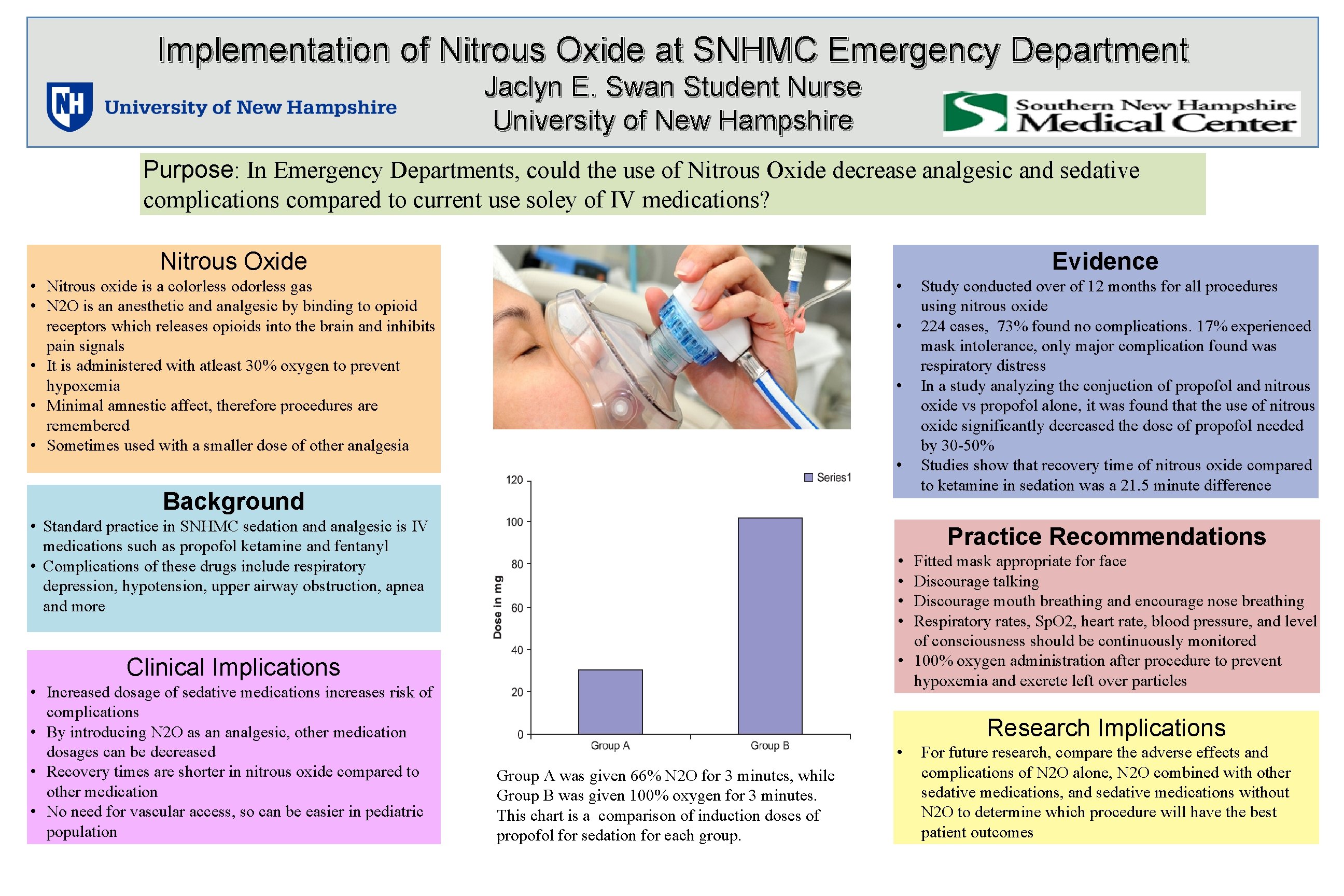
Implementation of Nitrous Oxide at SNHMC Emergency Department Jaclyn E. Swan Student Nurse University of New Hampshire Purpose: In Emergency Departments, could the use of Nitrous Oxide decrease analgesic and sedative complications compared to current use soley of IV medications? Nitrous Oxide Evidence • Nitrous oxide is a colorless odorless gas • N 2 O is an anesthetic and analgesic by binding to opioid receptors which releases opioids into the brain and inhibits pain signals • It is administered with atleast 30% oxygen to prevent hypoxemia • Minimal amnestic affect, therefore procedures are remembered • Sometimes used with a smaller dose of other analgesia • • Background • Standard practice in SNHMC sedation and analgesic is IV medications such as propofol ketamine and fentanyl • Complications of these drugs include respiratory depression, hypotension, upper airway obstruction, apnea and more Practice Recommendations • • Fitted mask appropriate for face Discourage talking Discourage mouth breathing and encourage nose breathing Respiratory rates, Sp. O 2, heart rate, blood pressure, and level of consciousness should be continuously monitored • 100% oxygen administration after procedure to prevent hypoxemia and excrete left over particles Clinical Implications • Increased dosage of sedative medications increases risk of complications • By introducing N 2 O as an analgesic, other medication dosages can be decreased • Recovery times are shorter in nitrous oxide compared to other medication • No need for vascular access, so can be easier in pediatric population Study conducted over of 12 months for all procedures using nitrous oxide 224 cases, 73% found no complications. 17% experienced mask intolerance, only major complication found was respiratory distress In a study analyzing the conjuction of propofol and nitrous oxide vs propofol alone, it was found that the use of nitrous oxide significantly decreased the dose of propofol needed by 30 -50% Studies show that recovery time of nitrous oxide compared to ketamine in sedation was a 21. 5 minute difference Research Implications • Group A was given 66% N 2 O for 3 minutes, while Group B was given 100% oxygen for 3 minutes. This chart is a comparison of induction doses of propofol for sedation for each group. For future research, compare the adverse effects and complications of N 2 O alone, N 2 O combined with other sedative medications, and sedative medications without N 2 O to determine which procedure will have the best patient outcomes