
IMPLEMENTATION OF DISTANCE TRANSFORMATION USING PROCESSING Masters Project

![References • [1]. Borgefors G. 1984. Distance transformations in arbitrary dimensions. Comput. Vision, Graphics,](https://slidetodoc.com/presentation_image_h2/5b929b131fd5ce09745c7f30da521b10/image-12.jpg "References • [1]. Borgefors G. 1984. Distance transformations in arbitrary dimensions. Comput. Vision, Graphics,")

- Slides: 13
IMPLEMENTATION OF DISTANCE TRANSFORMATION USING PROCESSING Master’s Project Proposal By Rama Prasada Reddy Peddireddy
Outline of the Talk • • Introduction Distance Transformation techniques Processing Tasks & schedules Deliverables References
Introduction • • Objective Image processing Purpose of the project Introduction for Processing
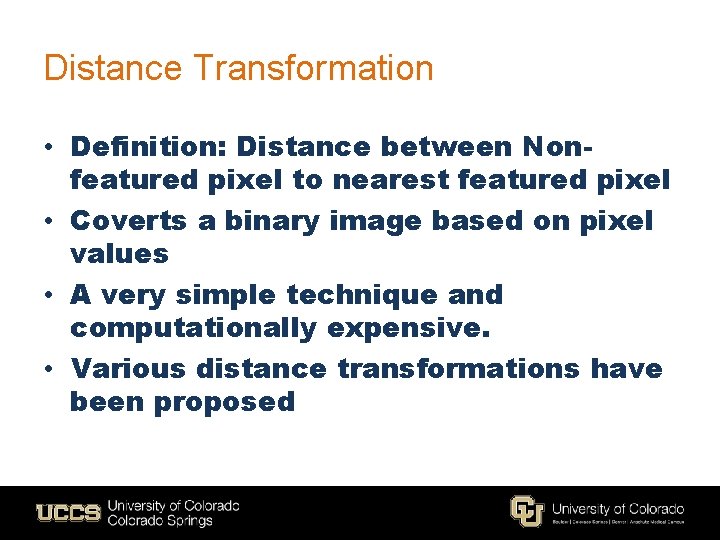
Distance Transformation • Definition: Distance between Nonfeatured pixel to nearest featured pixel • Coverts a binary image based on pixel values • A very simple technique and computationally expensive. • Various distance transformations have been proposed
Distance Transformation Techniques • These techniques uses different distance metrics. Based on these metrics they have been proposed. • The following are different distance transformation techniques. • Chessboard • City Block • Euclidean distance
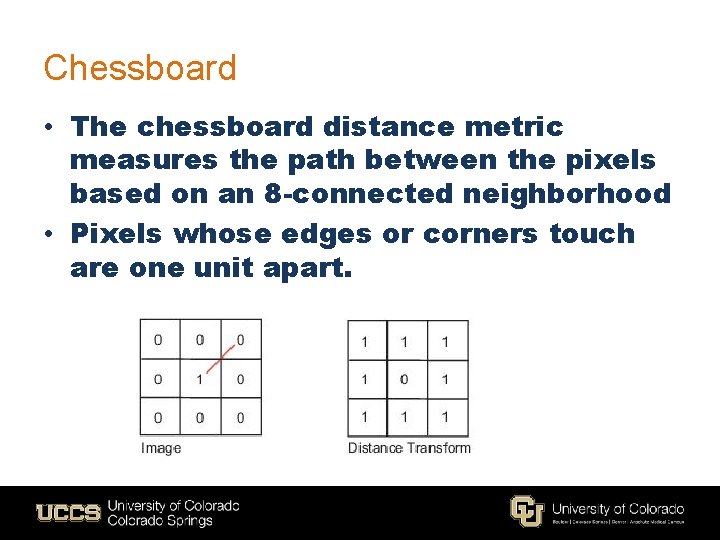
Chessboard • The chessboard distance metric measures the path between the pixels based on an 8 -connected neighborhood • Pixels whose edges or corners touch are one unit apart.
City block • The city block distance metric measures the path between the pixels based on a 4 -connected neighborhood. • Pixels whose edges touch are one unit apart, pixels diagonally touching are two units apart.
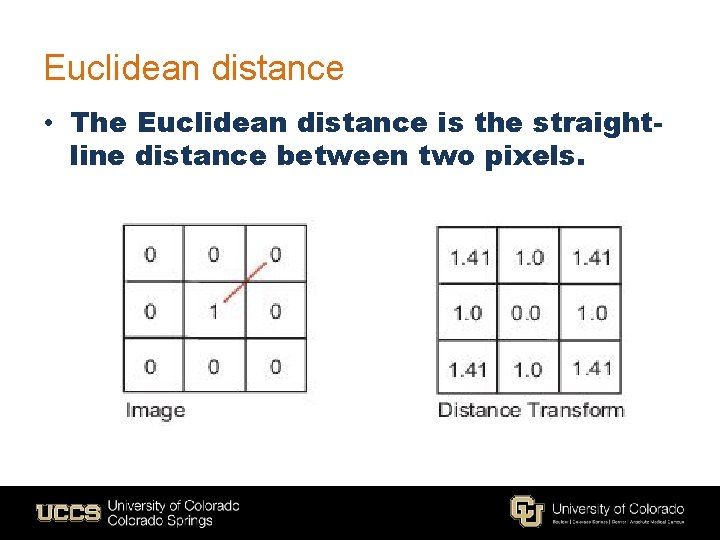
Euclidean distance • The Euclidean distance is the straightline distance between two pixels.
Processing • Flexible • Cross platform • Is a language for learning how to code with in the context of the visual arts. • Open source • Runs on Mac, Windows and GNU/Linux platforms. • Inspired by BASIC and Logo.
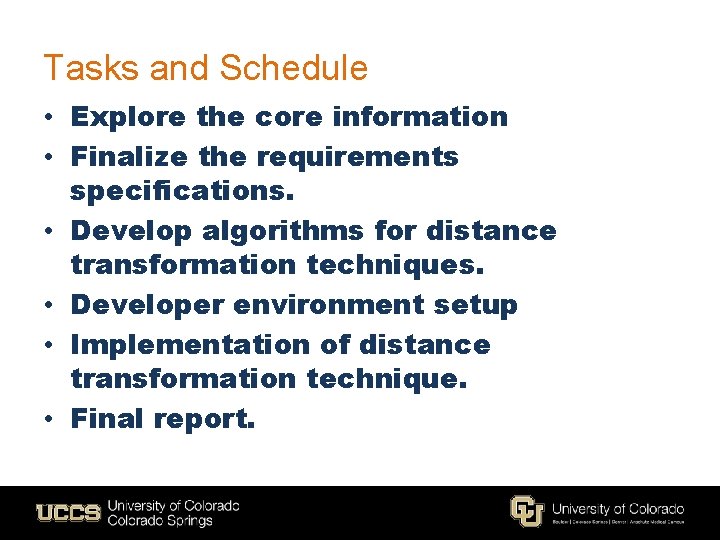
Tasks and Schedule • Explore the core information • Finalize the requirements specifications. • Develop algorithms for distance transformation techniques. • Developer environment setup • Implementation of distance transformation technique. • Final report.
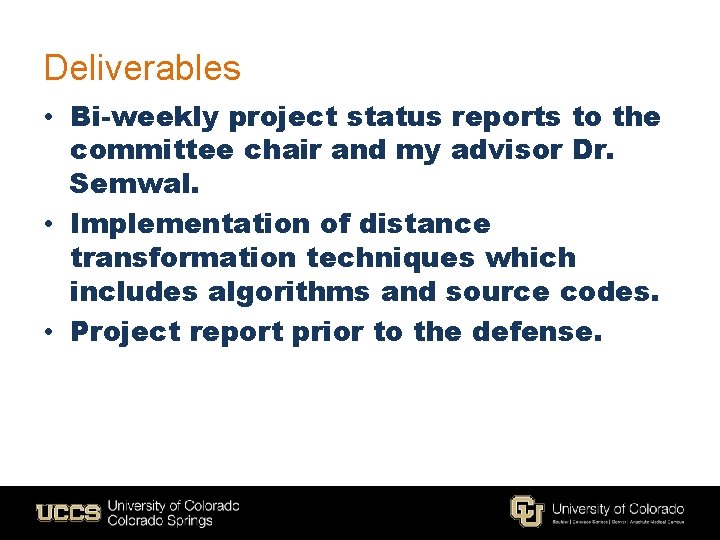
Deliverables • Bi-weekly project status reports to the committee chair and my advisor Dr. Semwal. • Implementation of distance transformation techniques which includes algorithms and source codes. • Project report prior to the defense.
References • [1]. Borgefors G. 1984. Distance transformations in arbitrary dimensions. Comput. Vision, Graphics, Image processing. • [2]. Borgefors G. 1986. Distance transformations in digital images. Comput. Vision, Graphics, Image Processing. • [3] SK Semwal and Hakan Kvanstrom, The Directed Safe Zones and the dual extent algorithms, Graphics Interface, …, pp.