
Implantation and Placenta Describe the stages between fertilisation
Implantation and Placenta • Describe the stages between fertilisation and implantation • Describe the role of h. CG • Outline the structure and function of the placenta
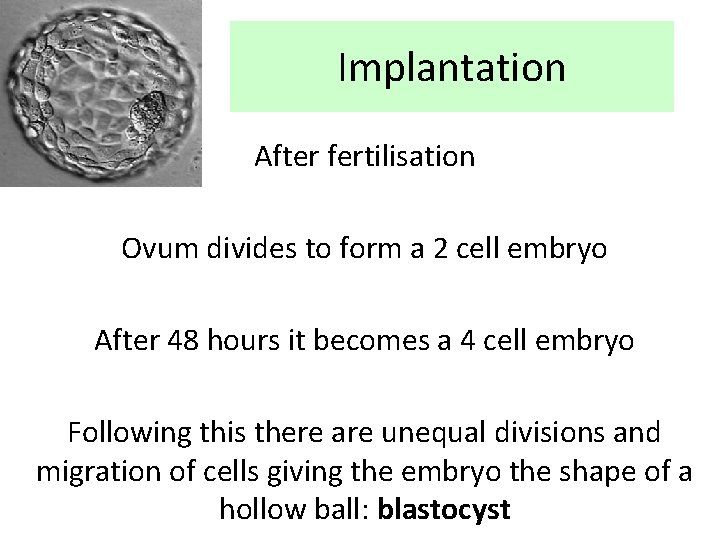
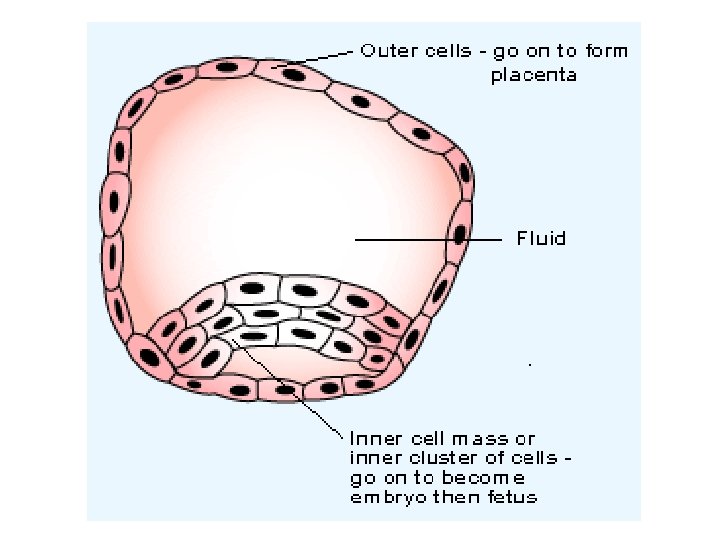
Implantation After fertilisation Ovum divides to form a 2 cell embryo After 48 hours it becomes a 4 cell embryo Following this there are unequal divisions and migration of cells giving the embryo the shape of a hollow ball: blastocyst
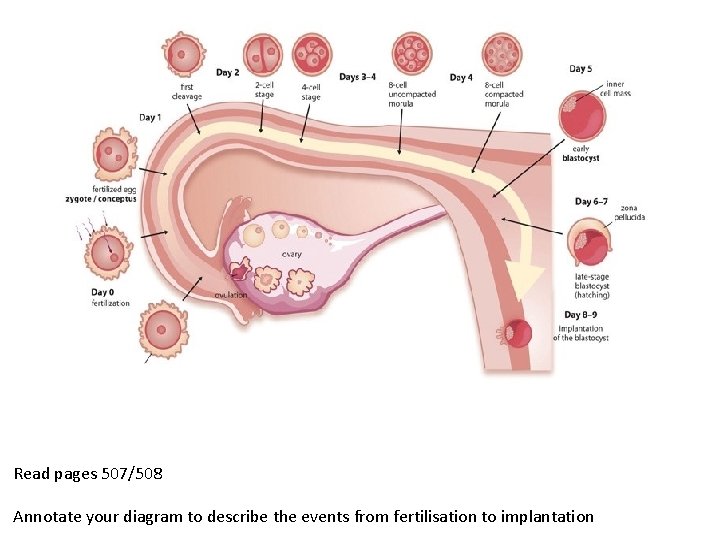
Read pages 507/508 Annotate your diagram to describe the events from fertilisation to implantation
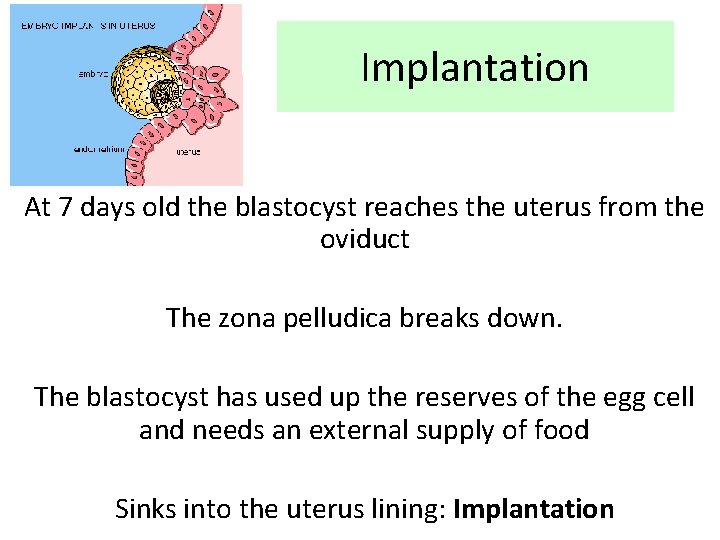
Implantation At 7 days old the blastocyst reaches the uterus from the oviduct The zona pelludica breaks down. The blastocyst has used up the reserves of the egg cell and needs an external supply of food Sinks into the uterus lining: Implantation
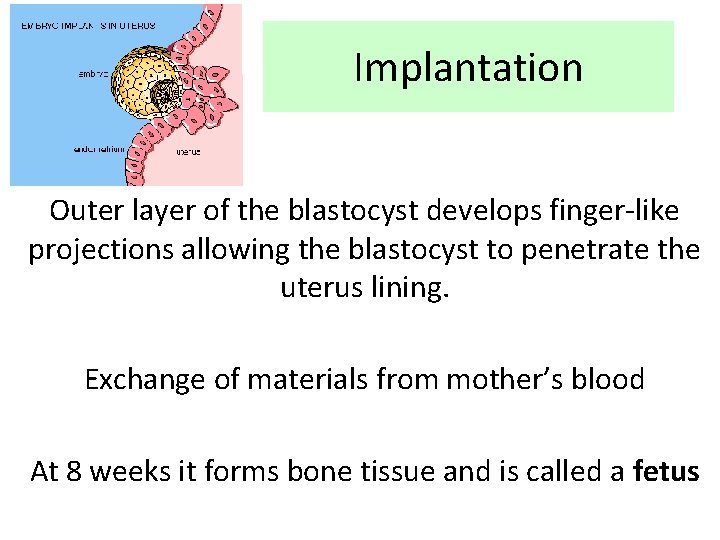
Implantation Outer layer of the blastocyst develops finger-like projections allowing the blastocyst to penetrate the uterus lining. Exchange of materials from mother’s blood At 8 weeks it forms bone tissue and is called a fetus
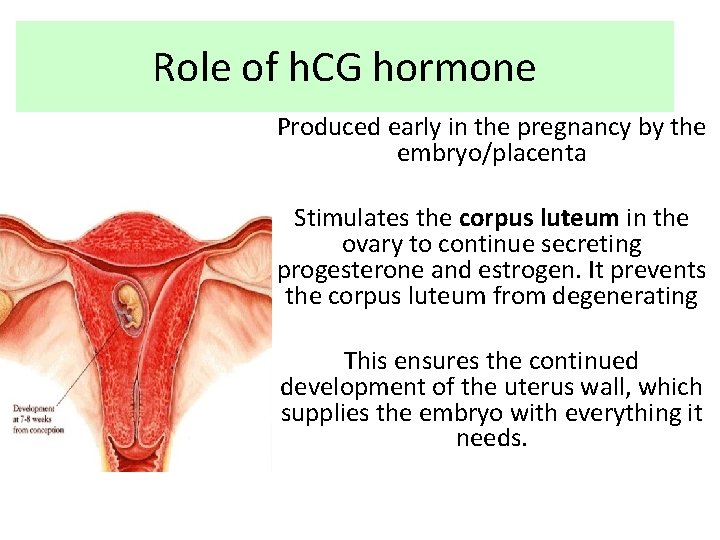
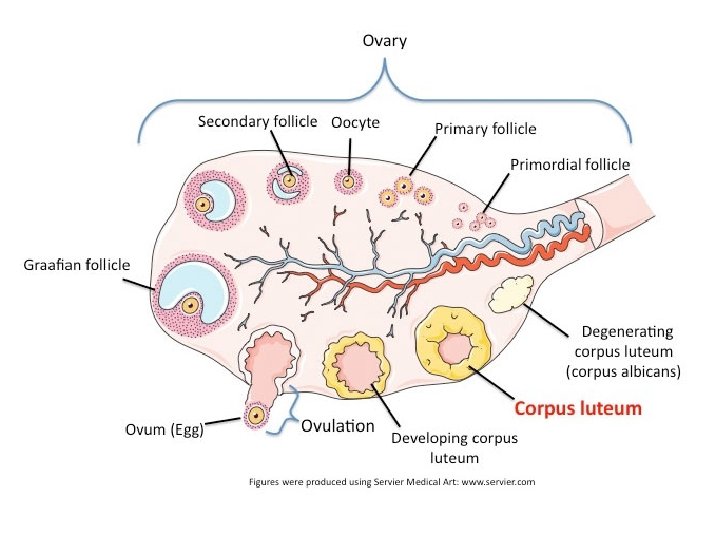
Role of h. CG hormone Produced early in the pregnancy by the embryo/placenta Stimulates the corpus luteum in the ovary to continue secreting progesterone and estrogen. It prevents the corpus luteum from degenerating This ensures the continued development of the uterus wall, which supplies the embryo with everything it needs.
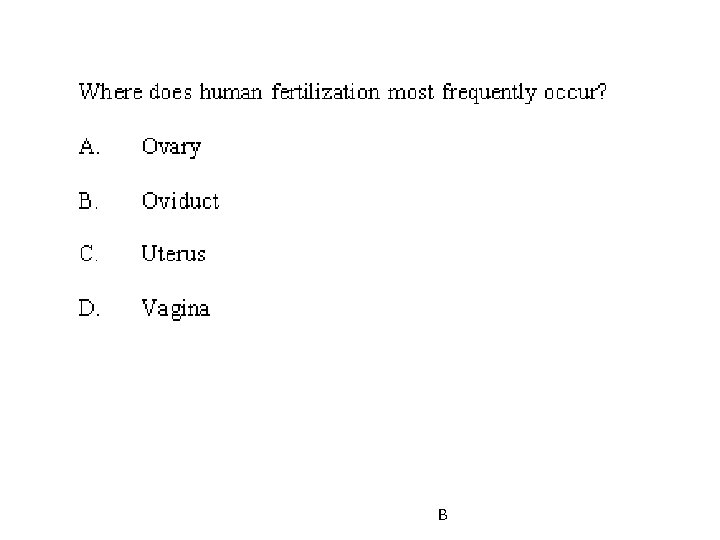
B
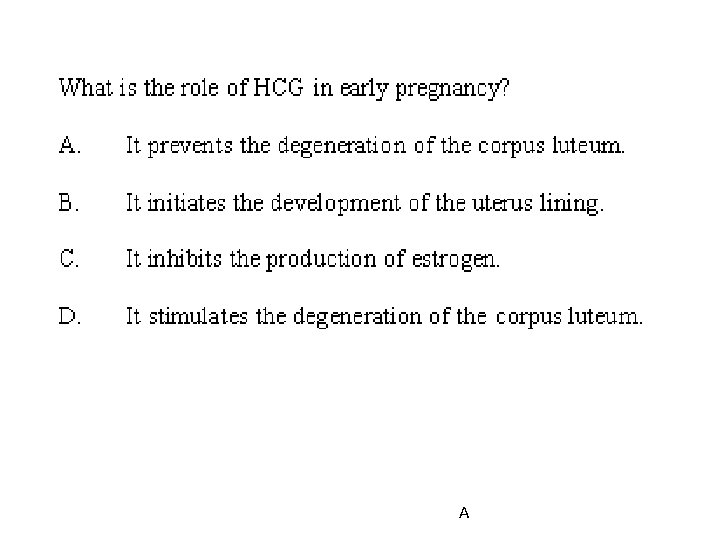
A
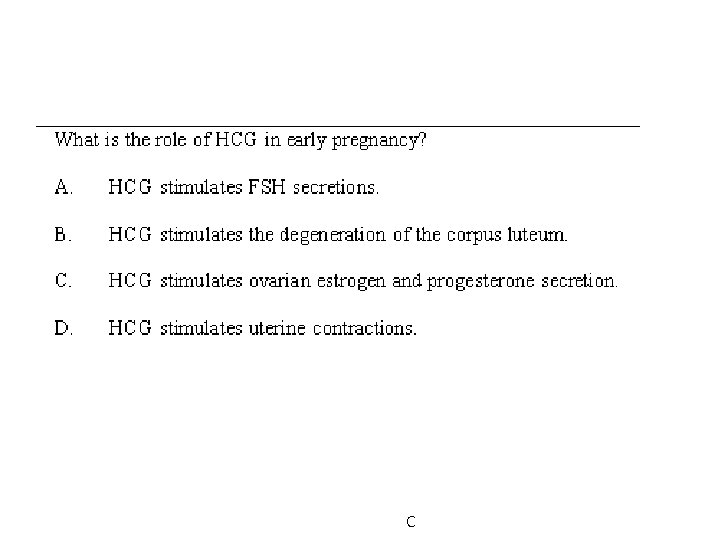
C
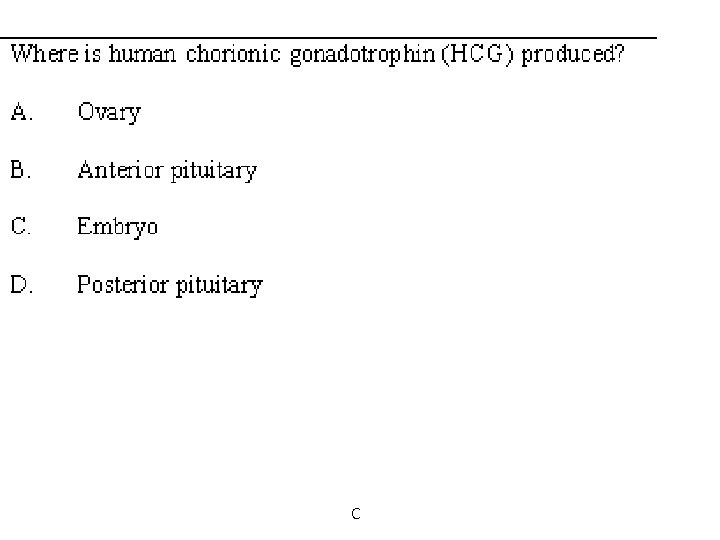
C
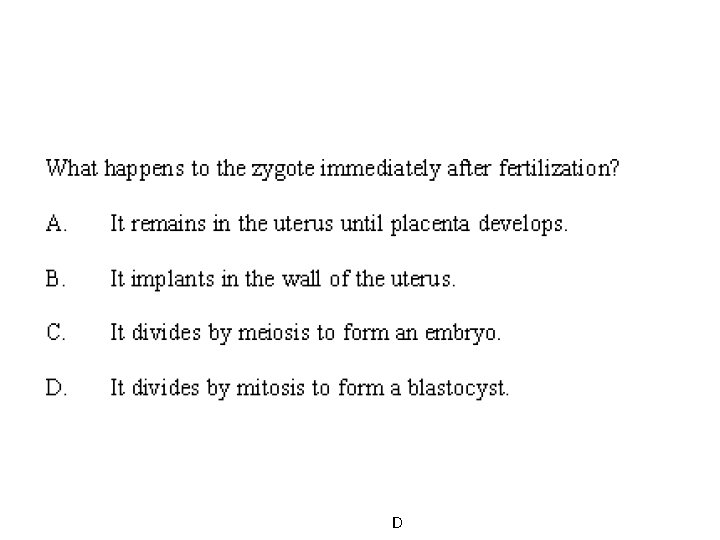
D
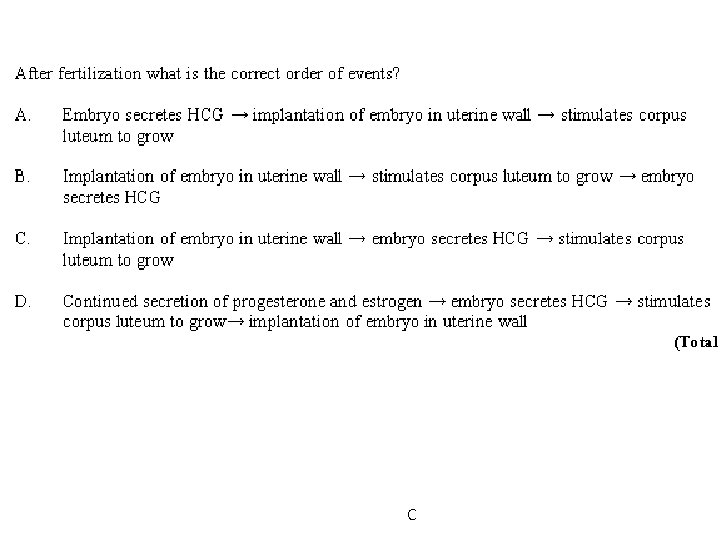
C
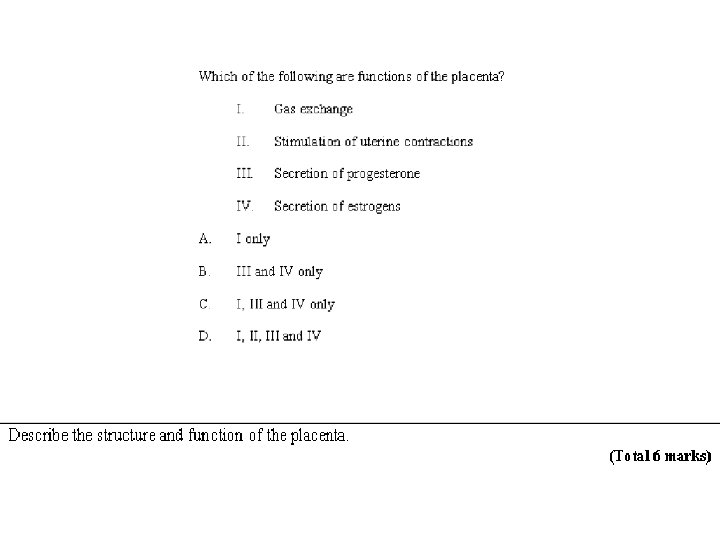
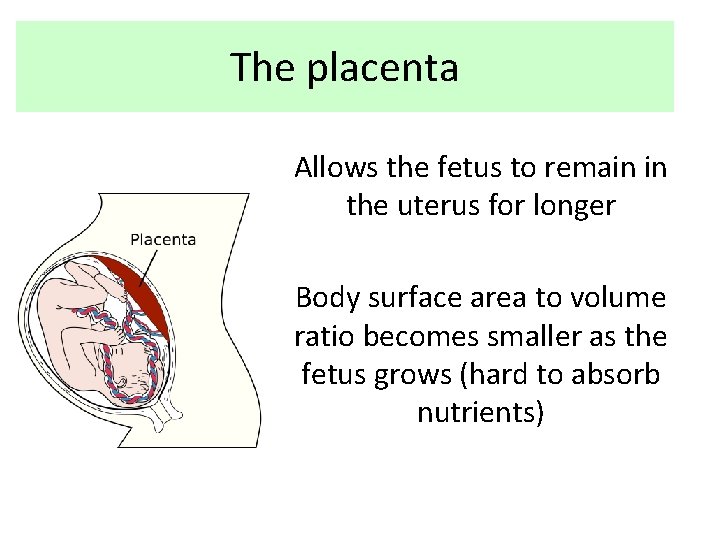
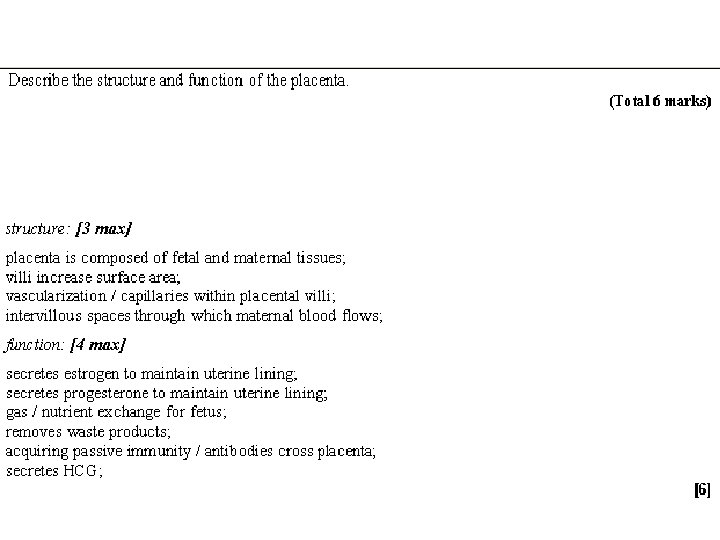
The placenta Allows the fetus to remain in the uterus for longer Body surface area to volume ratio becomes smaller as the fetus grows (hard to absorb nutrients)
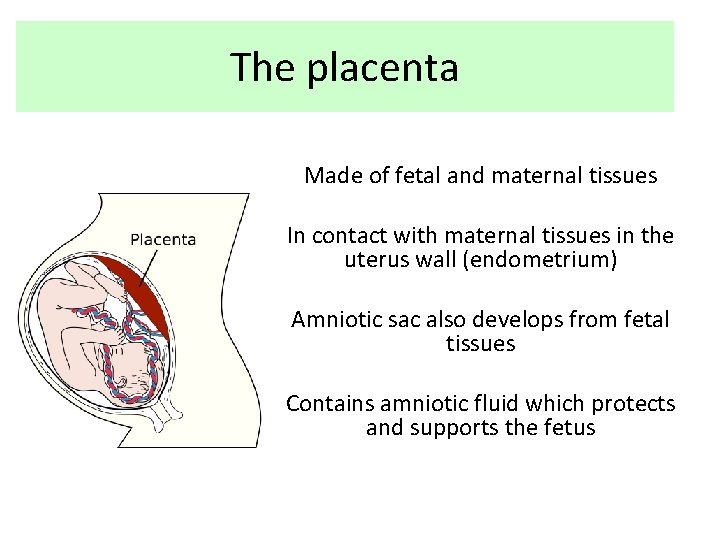
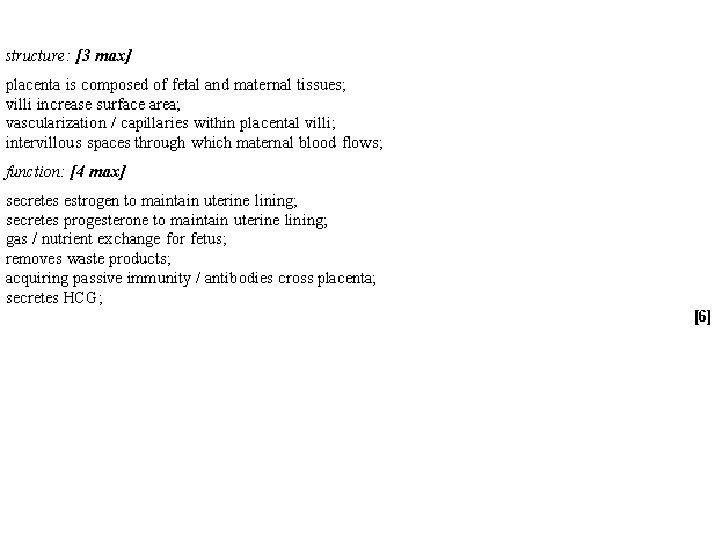
The placenta Made of fetal and maternal tissues In contact with maternal tissues in the uterus wall (endometrium) Amniotic sac also develops from fetal tissues Contains amniotic fluid which protects and supports the fetus
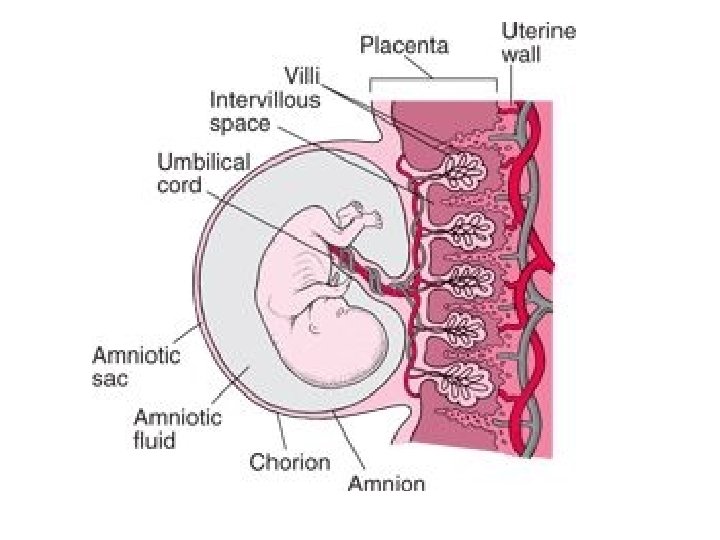
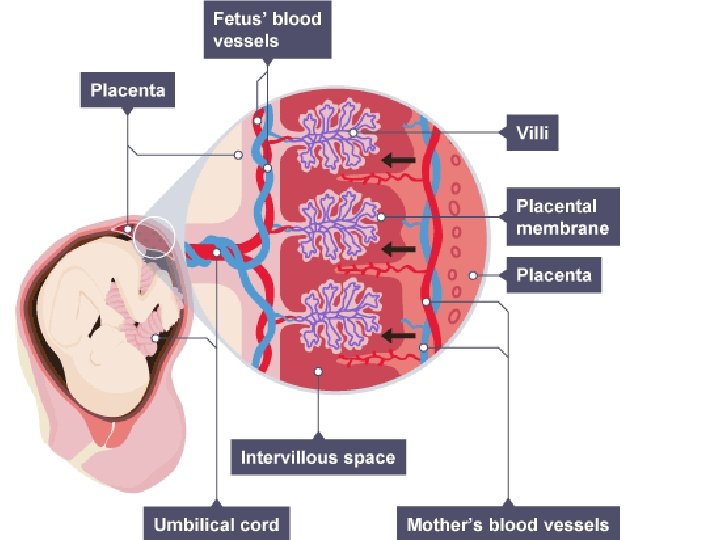
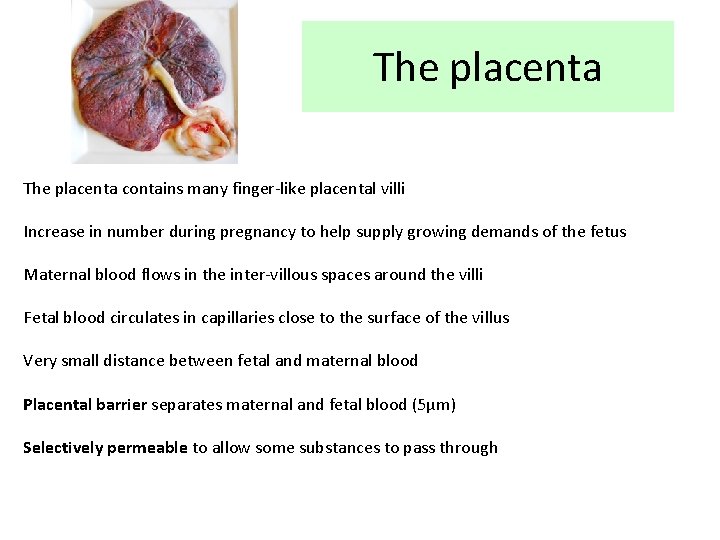
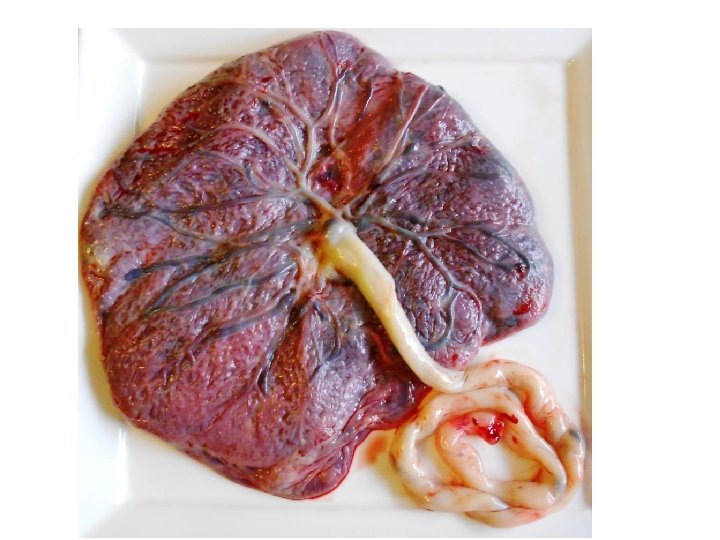
The placenta contains many finger-like placental villi Increase in number during pregnancy to help supply growing demands of the fetus Maternal blood flows in the inter-villous spaces around the villi Fetal blood circulates in capillaries close to the surface of the villus Very small distance between fetal and maternal blood Placental barrier separates maternal and fetal blood (5μm) Selectively permeable to allow some substances to pass through
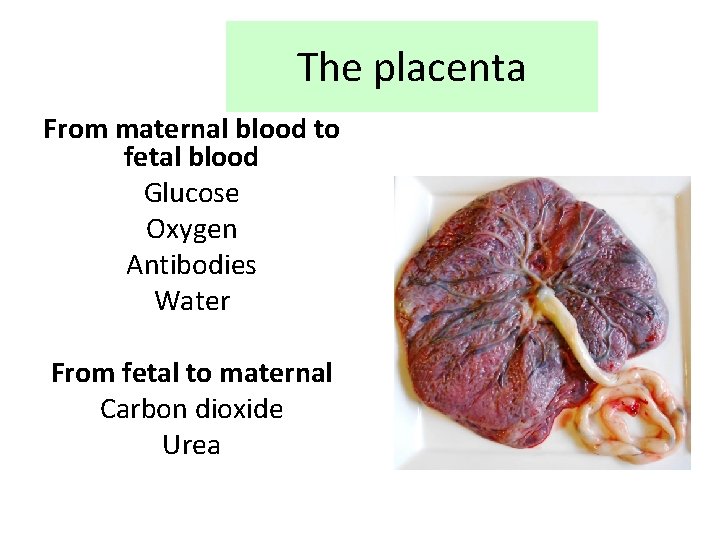
The placenta From maternal blood to fetal blood Glucose Oxygen Antibodies Water From fetal to maternal Carbon dioxide Urea
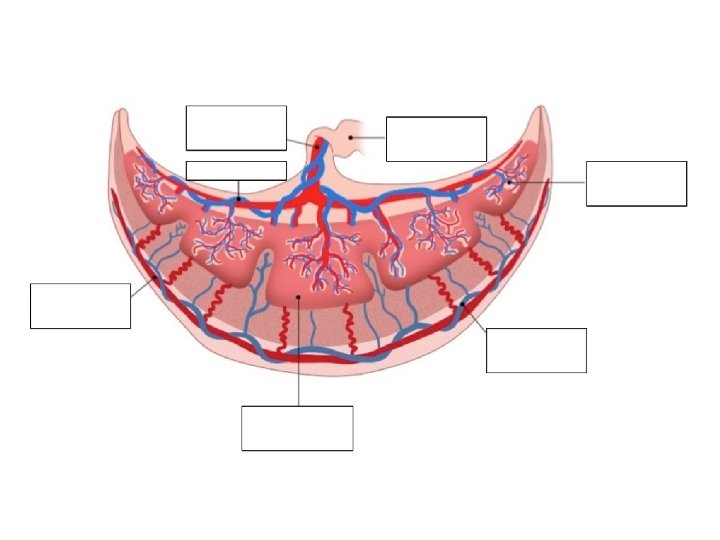
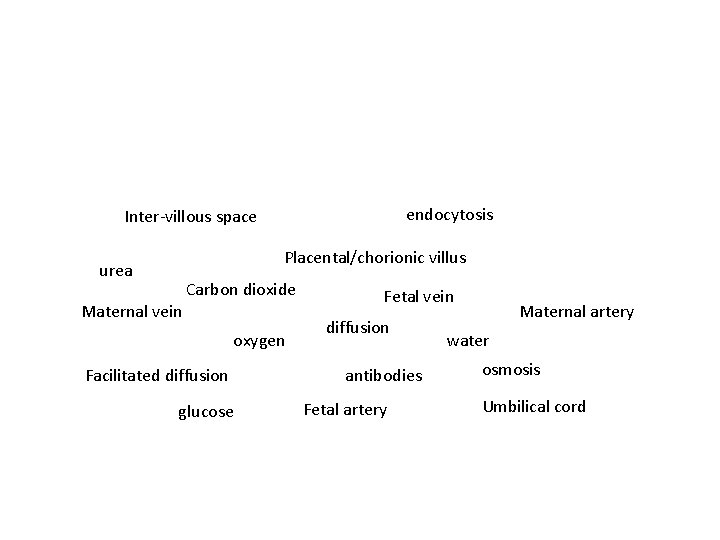
endocytosis Inter-villous space Placental/chorionic villus urea Carbon dioxide Maternal vein oxygen Facilitated diffusion glucose Fetal vein diffusion antibodies Fetal artery Maternal artery water osmosis Umbilical cord
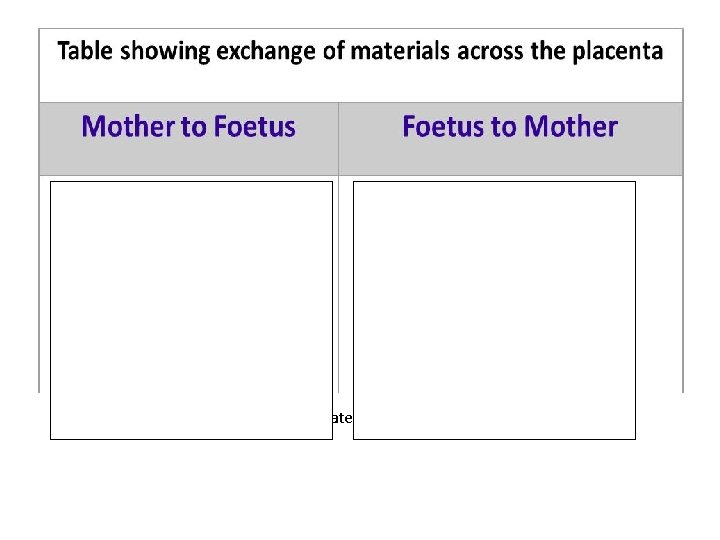
• Water
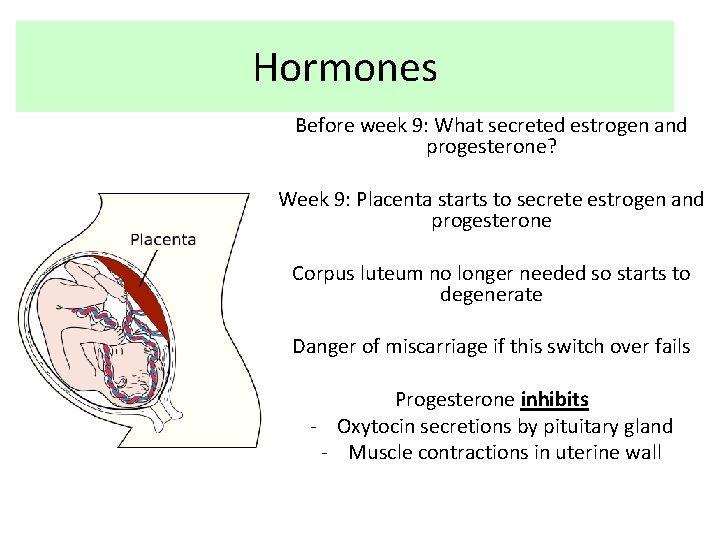
Hormones Before week 9: What secreted estrogen and progesterone? Week 9: Placenta starts to secrete estrogen and progesterone Corpus luteum no longer needed so starts to degenerate Danger of miscarriage if this switch over fails Progesterone inhibits - Oxytocin secretions by pituitary gland - Muscle contractions in uterine wall
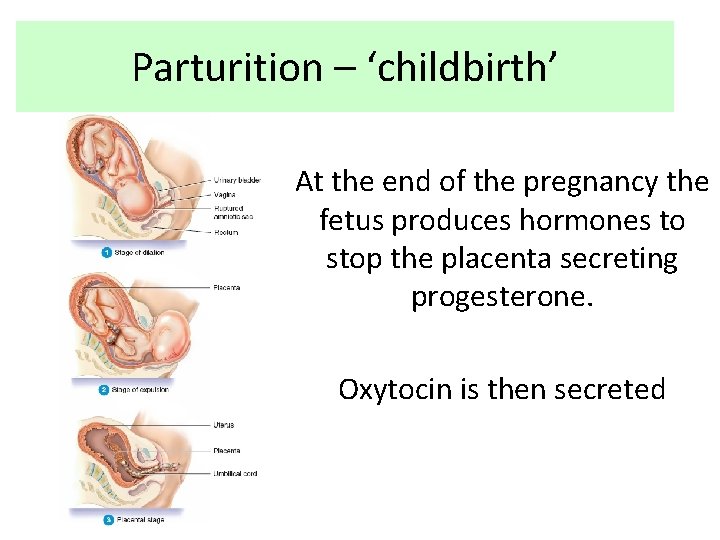
Parturition – ‘childbirth’ At the end of the pregnancy the fetus produces hormones to stop the placenta secreting progesterone. Oxytocin is then secreted
Parturition Oxytocin stimulates contractions of the muscle fibres in the outerus wall (myometrium). Contractions detected by stretch receptors. This causes more oxytocin to be secreted Which means more contractions (frequent and vigorous) Which means more oxytocin secretions
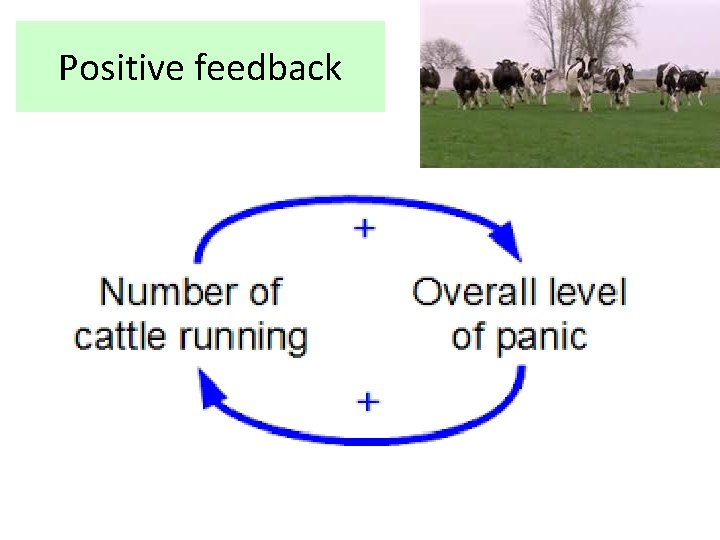
Positive feedback
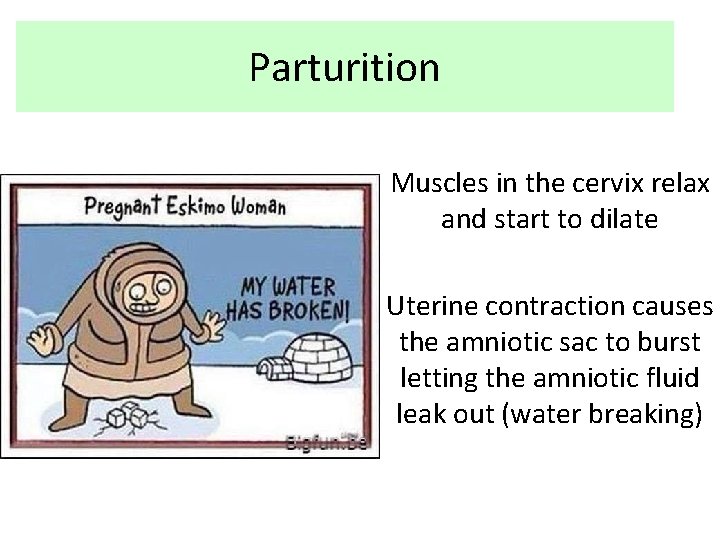
Parturition Muscles in the cervix relax and start to dilate Uterine contraction causes the amniotic sac to burst letting the amniotic fluid leak out (water breaking)
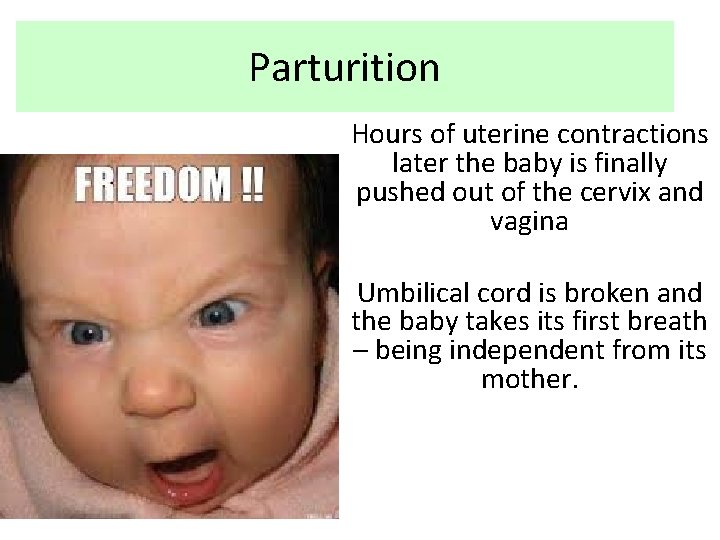
Parturition Hours of uterine contractions later the baby is finally pushed out of the cervix and vagina Umbilical cord is broken and the baby takes its first breath – being independent from its mother.
Create a flow diagram to describe what happens during parturition. Frequent Amniotic fluid Oxytocin Secretion Cervix Amniotic sac Vagina Umbilical cord Independence Dilate Progesterone Contractions Positive feedback Uterus wall Vigorous Relaxation
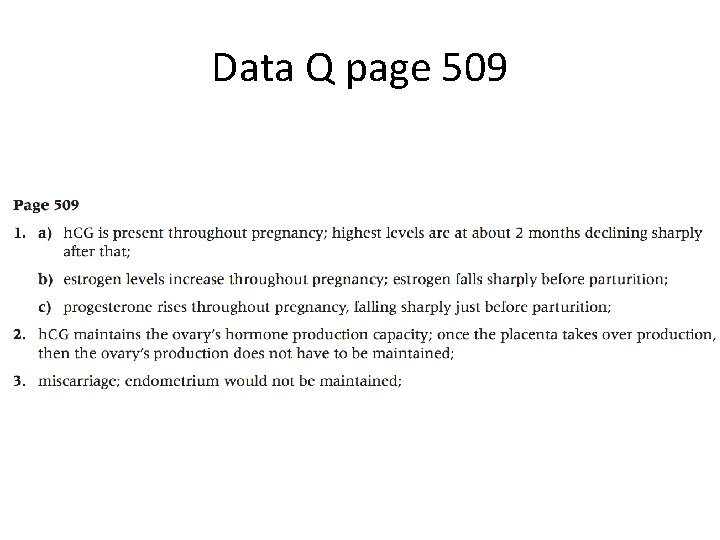
Data Q page 509
Gestation times Mammals have different growth and development strategies Altricial Precocial What are they? What size are the animals usually? Do they have a longer or shorter gestation time? Give an example of each
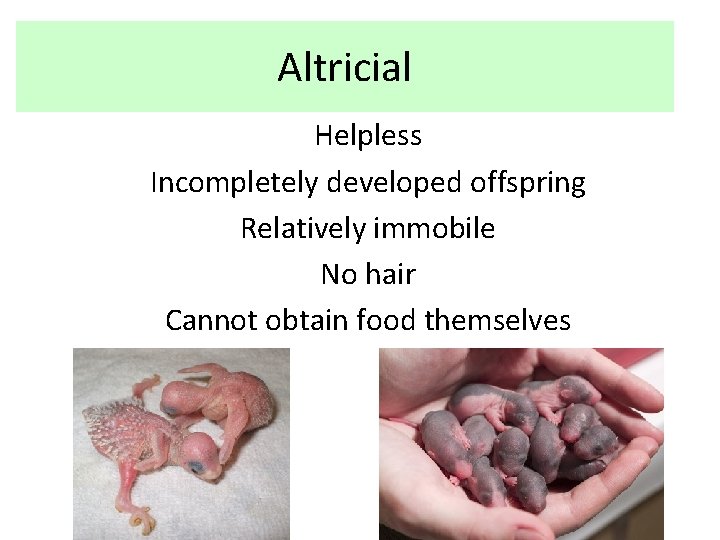
Altricial Helpless Incompletely developed offspring Relatively immobile No hair Cannot obtain food themselves
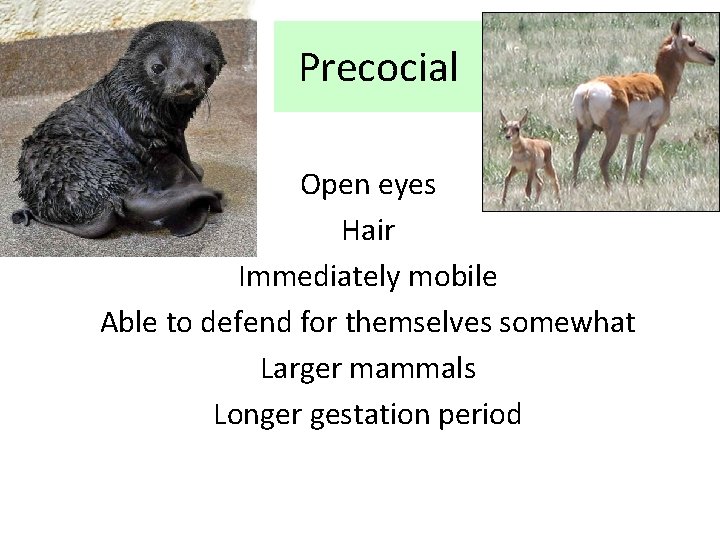
Precocial Open eyes Hair Immediately mobile Able to defend for themselves somewhat Larger mammals Longer gestation period
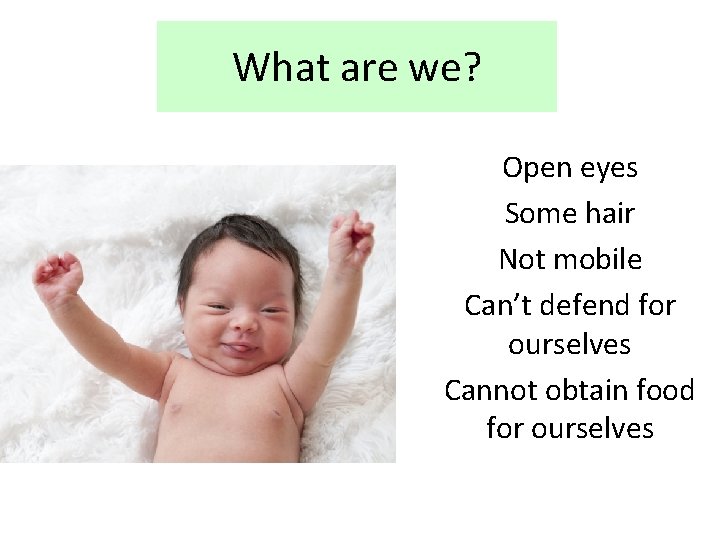
What are we? Open eyes Some hair Not mobile Can’t defend for ourselves Cannot obtain food for ourselves
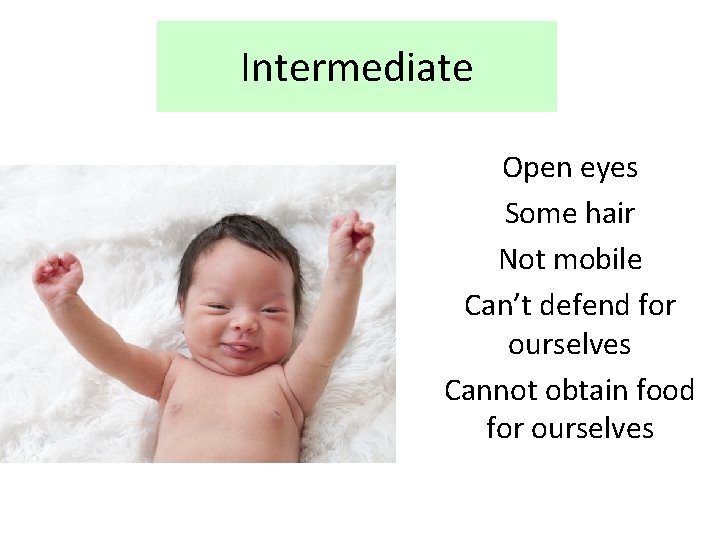
Intermediate Open eyes Some hair Not mobile Can’t defend for ourselves Cannot obtain food for ourselves
- Slides: 40