
Implantable Drug Delivery Systems and Devices Kevin Ita
Implantable Drug Delivery Systems and Devices Kevin Ita, Ph. D
Learning objectives • • Introduction Preparation of implants Types of implants Examples of implantable systems and devices

Implants • Implantable drug delivery systems provide a convenient, patient-friendly alternative to current therapies for long-term treatment of various chronic conditions. Such systems allow drugs to be delivered automatically without intervention of the patient or caregiver.
Implants contd. • In addition to significantly reducing the cost of care, continuous drug therapy can free the patient from repeated treatment or hospitalization, improving convenience and quality of life. • The patient receives continuous medication and does not have to worry about taking pills, receiving injections, or changing transdermal patches.

Implants contd. • The physician has the added assurance that the patient is getting the right dose of medicine and does not have to be concerned with the possibility of a lost prescription, noncompliance, or diversion of an abusable drug substance
Implants • An implant is a drug delivery system designed to deliver a drug moiety at a desired rate over a prolonged period • Implants are sterile solid products made by compression, melting or sintering • For compression, a hydraulic press is typically used • Sintering means heating a material below its melting point until it forms a coherent mass
Implants contd. • Sintering for hydroxyapatite-based implants containing pentoxyfilline (hemorrheologic agent, i. e. an agent that affects blood viscosity has been performed at 1200 or 1250°C
Implants contd. • Polymeric drug implants can deliver and sustain drug levels in the body for an extended period of time • Both biodegradable and nonbiodegradable polymers can be impregnated with drugs in a controlled drug delivery system
Implant preparation • Implants are usually prepared by mixing the drug and the polymer • Next the mixture is compressed using a hydraulic press such as Carver press • Depending upon physicochemical properties, the mixture may be compressed at about 250 N for 10 seconds • A newton is the amount of force required to accelerate a mass of one kilogram at a rate of one meter per second squared 1 N = 1 kg·m/s 2
In vitro drug release from implants • Drug release from implants can be measured in different media such as phosphate buffered saline (PBS) • The implant is placed in either glass tubes or screwcapped bottles containing PBS • The tubes are placed in a thermostated shaker • Samples are taken at different periods for analysis
Implants contd. • Implants are particularly desirable where compliance with a particular regimen is critical • Such devices allow drugs to be delivered at a specific rate without regular physician or patient intervention • Currently available implants can be divided into polymeric implants or minipumps
Passive implantable systems • Polymer depots are the most common passive implantable drug delivery systems • They are designed to maintain a constant diffusion rate of drug out of the polymer based on polymer degradation rate • Representative commercial products that employ this method include Gliadel wafers for malignant brain tumors (gliomas) and Zoladex implants for prostate cancer
Passive implantable systems contd. • The primary disadvantage of passive implantable delivery systems is that they cannot be actively controlled • Once implanted, they continue to release the drug until they are removed or their drug supply is exhausted
PLGA systems • A number of implantable systems being developed are based on the polymer poly (lactic-co-glycolic acid) PLGA because it is biocompatible and biodegradable • Some of these systems containing anticancer drugs may be injected into tumor cavities to prevent recurrence • However, the use of PLGA can significantly affect the biological activity of incorporated drugs especially proteins due to acidity resulting from PLGA degradation

PLGA systems contd • Several strategies are currently being developed to overcome this restriction including the use of lipids • In addition to avoidance of acidic microclimates upon degradation, lipids do not swell upon contact with aqueous media • This property is important especially for brain delivery systems because significant swelling in the brain may cause adverse effects
Gliadel • A glioma is a type of primary central nervous system (CNS) tumor that arises from glial cells. The most common site of involvement of a glioma is the brain, but they can also affect the spinal cord, or any other part of the CNS, such as the optic nerves.

Gliadel contd • Glial cells, commonly called neuroglia or simply glia, are non-neuronal cells that provide support and nutrition, maintain homeostasis, form myelin, and participate in signal transmission in the nervous system. In the human brain, glia are estimated to outnumber neurons by as much as 50 to 1
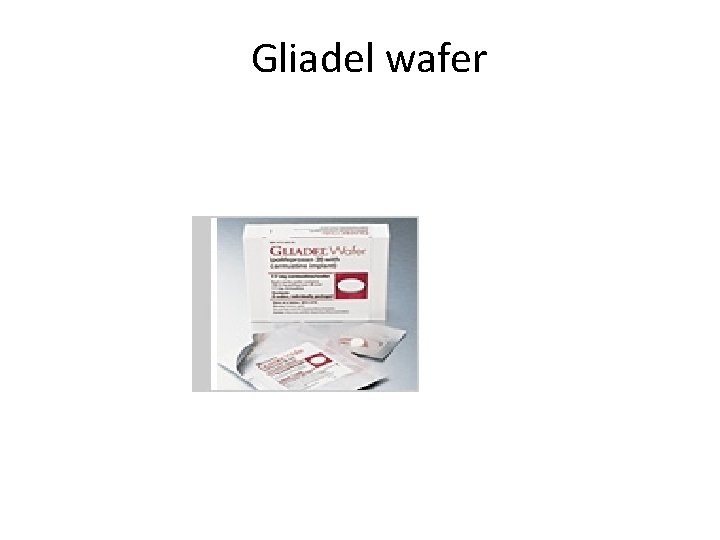
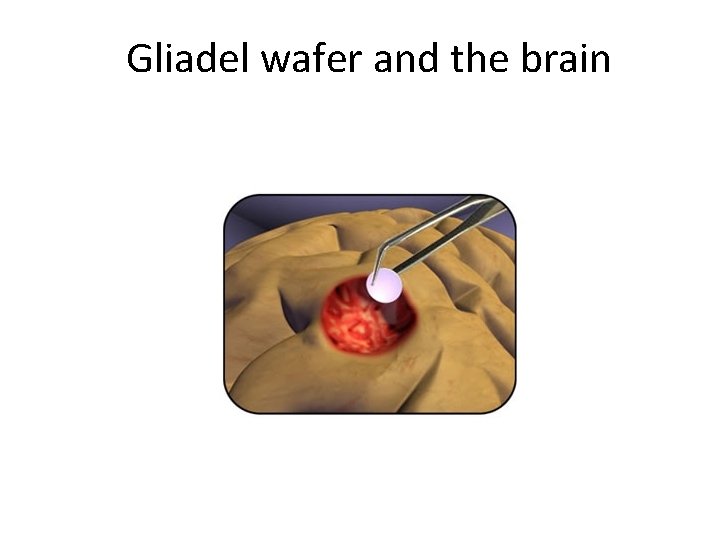
Gliadel contd. • Gliadel wafer is a sterile off-white to pale yellow implant measuring about 1. 45 cm in diameter and 1 mm thick • Each wafer contains 192. 3 mg of a biodegradable polyanhydride copolymer and 7. 7 mg of carmustine • Carmustine is distributed uniformly throughout the copolymer matrix • Gliadel is formulated to deliver carmustine directly into the surgical cavity created from brain tumor resection
Gliadel contd. q The formulation also contains Polifeprosan 20 q Polyfeprosan 20 is made of poly[bis(pcarboxyphenoxy) propane: sebacic acid in the ratio 20: 80 q Anhydride bonds in the copolymer are hydrolyzed on exposure to water in the resection cavity releasing carmustine, carboxyphenoxypropane and sebacic acid q The active drug, carmustine is released from the wafer and diffuses into surrounding brain tissue
Gliadel wafer
DNA Alkylation by carmustine • Carmustine acts by alkylating DNA and RNA to produce an antineoplastic effect • In three weeks, more than 70% of the copolymer degrades • Carboxyphenoxypropane is eliminated by the kidney while sebacic acid is metabolized by the liver and eliminated as carbon dioxide • Each wafer contains 7. 7 mg of carmustine and 8 wafers delivers 61. 6 mg of the drug • Each wafer is double-pouched in foil with a sterile inner pouch
Gliadel wafer and the brain
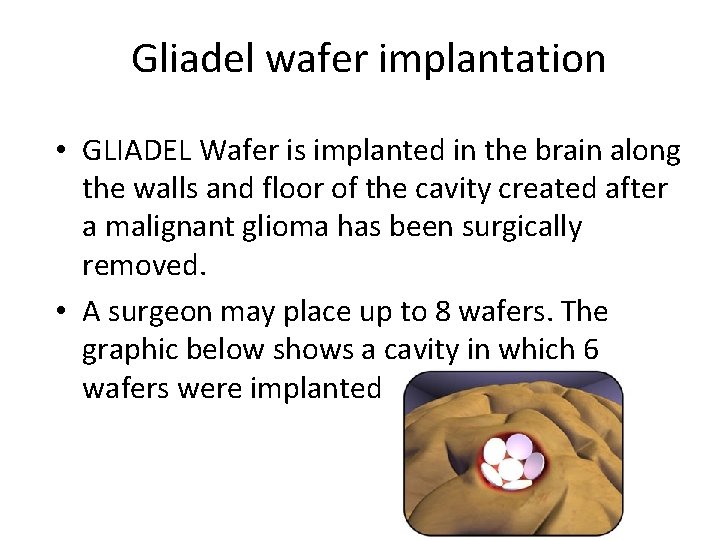
Gliadel wafer implantation • GLIADEL Wafer is implanted in the brain along the walls and floor of the cavity created after a malignant glioma has been surgically removed. • A surgeon may place up to 8 wafers. The graphic below shows a cavity in which 6 wafers were implanted
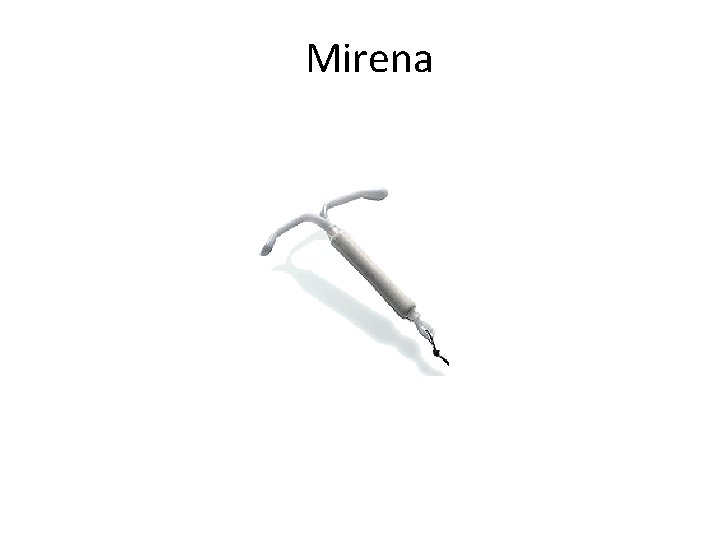
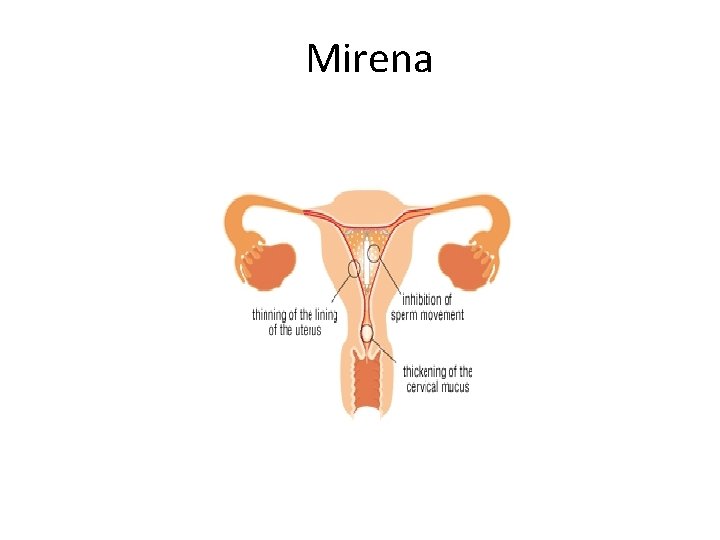
Mirena • Mirena (levonorgestrel-releasing intrauterine system) consists of a T-shaped polyethylene frame (T-body) with a steroid reservoir (hormone elastomer core) around the vertical stem • The reservoir consists of a cylinder, made of a mixture of levonorgestrel and silicone (polydimethylsiloxane)
Mirena
Mirena contd. • Mirena contains 52 mg of levonorgestrel • The reservoir is covered by a silicone membrane • The T-body is 32 mm in both horizontal and vertical directions • The polyethylene of the T-body is compounded with barium sulfate, which makes it radiopaque
Mirena
Mirena contd. • A monofilament brown polyethylene removal thread is attached to a loop at the end of the vertical stem of the T-body • Upon administration, levonorgestrel is released at a rate of approximately 20µg/day. This rate decreases progressively to half that value after 5 years • Mirena is indicated for intrauterine contraception for up to 5 years. Thereafter, if continued contraception is desired, the system should be replaced
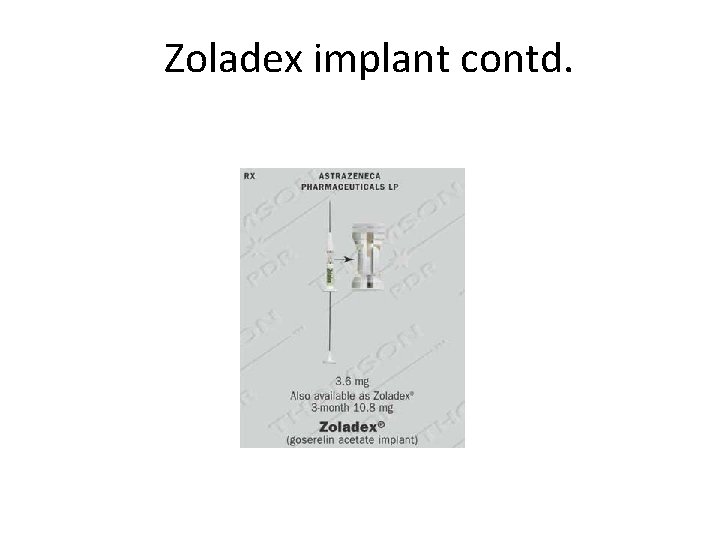
Zoladex implant • Gosereline acetate implant is marketed by Zeneca Pharmaceuticals as Zoladex • It is a sterile biodegradable product developed for subcutaneous injection • It delivers gosereline continuosly over 28 days • Gosereline acetate is dispersed in a matrix made of D, L-lactic acid and glycolic acid copolymer • It is a sterile 1 mm cylinder preloaded in a single-use syringe with a 16 -guage needle
Zoladex implant contd.
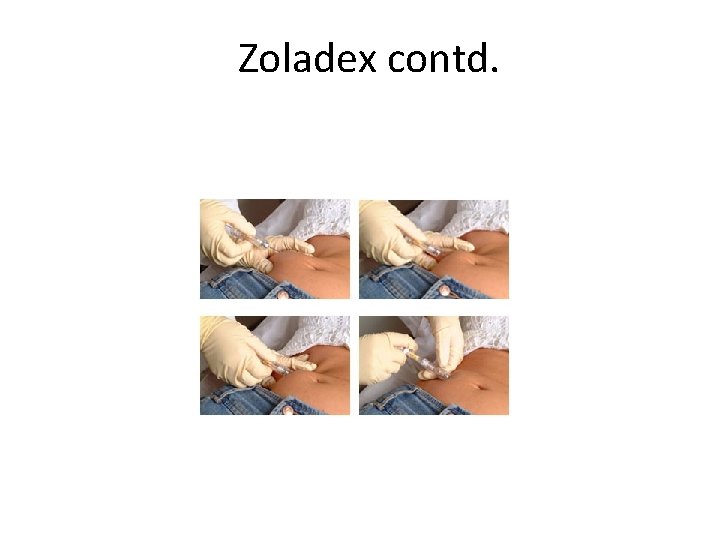
Zoladex implant • The unit is packaged in a sealed light- and moistureproof aluminum foil • Zoladex is used for the palliative management of advanced prostate carcinoma as well as endometrosis and advanced breast cancer • The formulation is usually administered into the upper abdominal wall using aseptic technique
Zoladex contd.

Active delivery systems • Active implantable delivery systems deliver drugs under the influence of an external force such as magnetism • They deliver drugs in a pulsatile manner. They are flexible enough to also function in a continuous mode • A number of these systems are currently under development
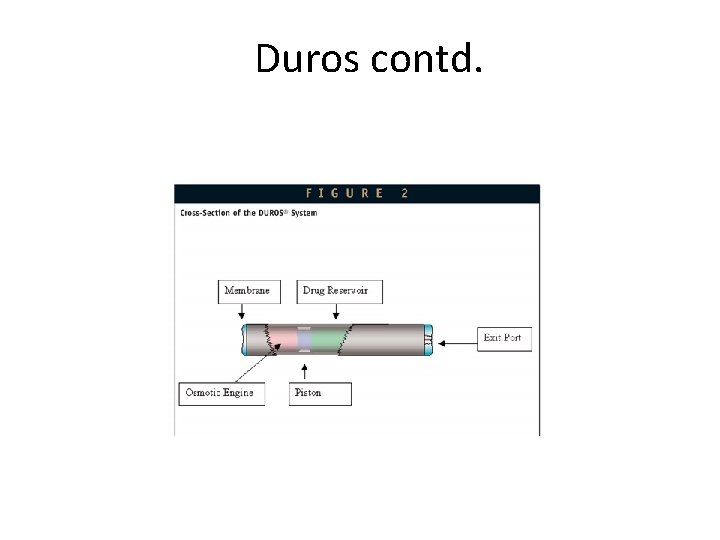
Viadur • Viadur implants achieve continuous release of leuprolide acetate for prostate cancer through the use of osmotic pressure generating agents that push the drug out of a titanium tube
Viadur • Viadur is about the size of a matchstick that is placed just under the skin of a man’s upper arm. • The implant delivers the drug leuprolide at a constant rate. • Until Viadur, leuprolide was administered by injections every one, three, or four months. • Viadur delivers treatment for the symptoms of advanced prostate cancer continuously for a whole year.
Viadur • Viadur, a once-yearly implant for the palliative treatment of advanced prostate cancer, is the first approved product to incorporate ALZA's proprietary DUROS® implant technology. A single Viadur® implant continuously delivers precise levels of the peptide leuprolide for a period of one full year, providing an alternative to frequent leuprolide injections.
Magnetism-activated implants • In this system, drug and small magnetic beads are dispersed throughout a polymer matrix • Upon exposure to biological fluids, the drug is released slowly by diffusion • When the system is under the influence of an external magnetic field, the rates of drug release from the polymer matrix are higher

Magnetism-activated implants • Higher drug release rates are likely attributable to the movement of dispersed magnetic beads • The release rates can be changed by manipulating the orientation and strength of magnetic field • Insulin release from a matrix containing magnetic beads is being developed • The drug release is triggered by using a magnetic field
Heat-controlled implants • Implants that release drugs into the body – on demand – by applying small variations in heat are also currently being developed. • The technology could allow patients to forgo injections and pills, with the implants delivering the active drug for several weeks. • Insulin were loaded in layers of microgel films and bursts of insulin were released by applying heat to the films. They are stable and can release the drug for more than a month
Heat-controlled implants contd. • Subjection of the film to many thermal cycles enables the embedded insulin to solubilise and subsequently partition through film layers • This means that applying heat could be used to release pulses of insulin to mimic the usual release of this hormone in the body.
Heat-controlled implants • Once implanted, the pharmaceutical-loaded films could be placed on chips with heat sensors and scheduled to release drugs according to a time schedule • One potential use is tying the implant to a blood glucose monitor • When the monitor detects that a diabetic patient has high blood sugar, it could send a signal to the chip to heat the film and release insulin into the bloodstream
Ultrasound-modulated implants • Ultrasound-controlled polymeric systems are also being developed for implantation • Polymeric devices containing insulin were exposed to ultrasound • There was a significant drop in glucose levels when these systems were implanted in rats

Mechanical systems • Mechanical driven pumps are also used to control drug infusion rates • They can facilitate zero-order and intermittent drug release • The Infusaid pump is a fixed-rate (nonprogrammable pump) which uses vapor pressure activation • The vapor chamber contains a fluid that vaporizes at body temperature • The drug is released under the influence of increased vapor pressure
Minimed Pump • The Minimed Pump delivers insulin intraperitoneally • Insulin infused into the peritoneum is absorbed faster and more completely compared to subcutaneous injections • In this pump a piston drives insulin through a delivery catheter • Pumping rate can be varied to deliver the desired insulin dose
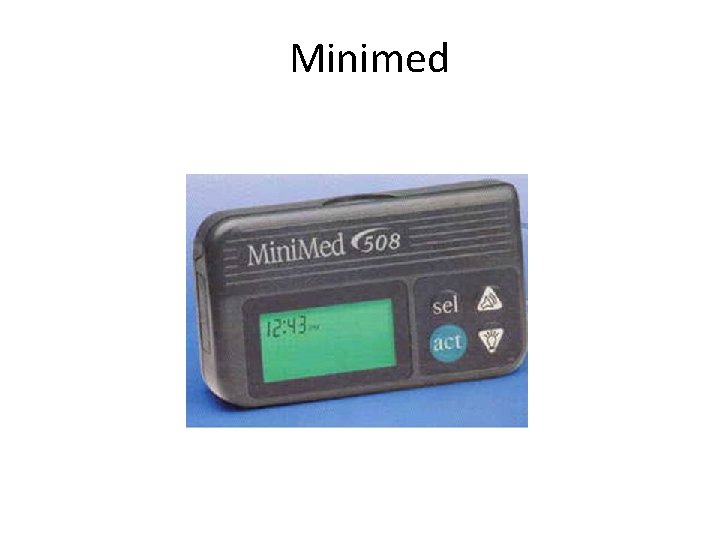
Minimed
Duros • The DUROS® implant is a miniature cylinder made from a titanium alloy, which protects and stabilizes the drug inside, using ALZA's proprietary formulation technology. The non-biodegradable, osmotically driven system is intended to enable delivery of small drugs, peptides, proteins, DNA and other bioactive macromolecules for systemic or tissue-specific therapy.
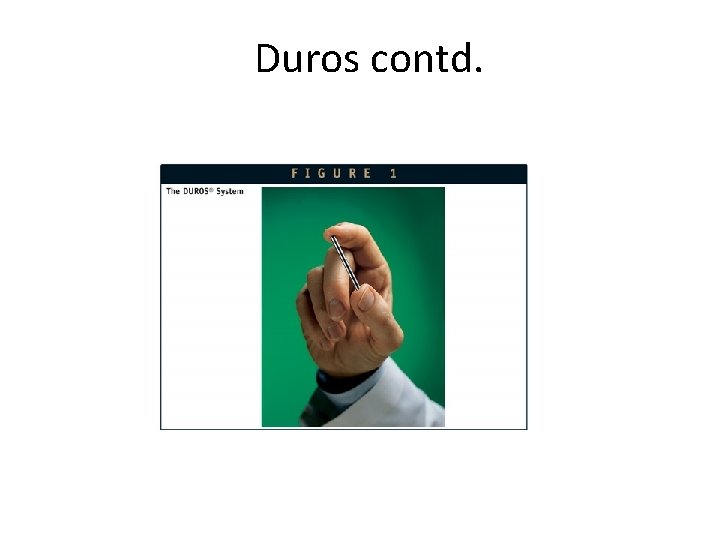
Duros contd.
Duros contd.
Chronogesic • To address the needs of chronic pain sufferers, DUROS technology has been applied to the delivery of the opioid drug sufentanil. The resulting DUROS system, the CHRONOGESIC™ (sufentanil) Pain Therapy System, is designed to deliver the drug at physician-specified doses for 3 months, and is targeted to patients with opioid-responsive chronic pain that results from a variety of causes
Chronogesic contd. • The Chronogesic system is implanted in the inside of the upper arm using a specially designed sterile implanter • The Implanter is a device that facilitates precise, efficient subcutaneous placement of the Chronogesic implant

Chronogesic contd.
Chronogesic contd. • The Chronogesic system has completed Phase II clinical trials. In a post-Phase II study survey, 60% of patients indicated a preference for Chronogesic over their pre-study medication, and 35% of patients preferred their previous medication (5% of patients indicated no preference
Suspension of sufentanil trials • Durect initiated Phase 3 trials with sufentanil for moderate to severe chronic pain. • However, the trial was suspended due to premature shutdown of devices
Ocular implants • Currently marketed, reservoir-based ocular implants utilizing drug diffusion through polyvinyl alcohol include Vitrasert® and Retisert® • Both of these products were developed by p. Sivida based on their Medidur™ platform
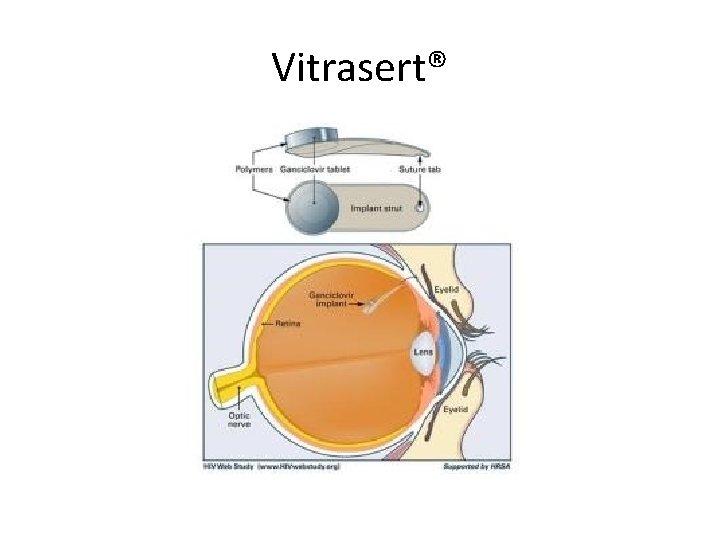
Vitrasert® • The Vitrasert® implant contains 4. 5 mg ganciclovir for the treatment of CMV retinitis in patients with AIDS. The ganciclovir tablet reservoir (3. 5 mm) is coated with polyvinyl alcohol (PVA) and ethylene vinyl acetate (EVA) polymers and attached to a tab, which is sutured to the inside wall of the eye.
Vitrasert®
PVA and EVA • The PVA controls the drug release and the EVA controls the surface area of the device through which ganciclovir can permeate. • The device releases the drug into the vitreous of the eye for a period of approximately 5 -8 months
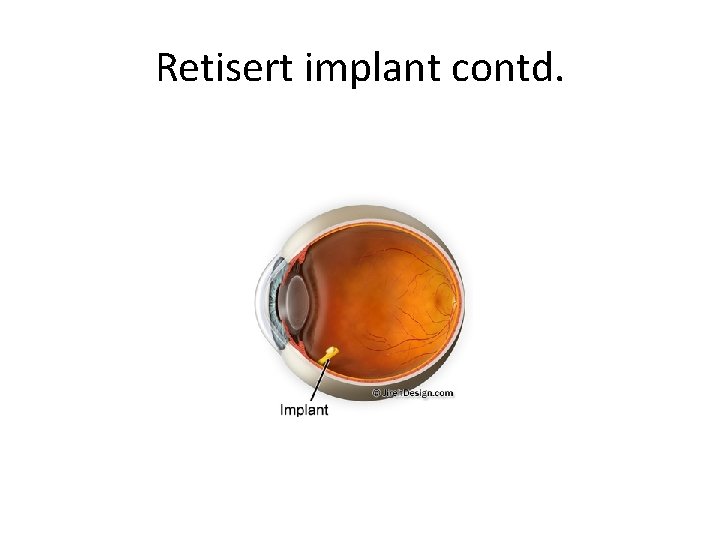
Retisert® • The Retisert® implant measures 3 mm × 2 mm × 5 mm and uses the second generation Medidur™ technology. The implant consists of 0. 59 mg fluocinolone acetonide in a 1. 5 mm tablet reservoir. The tablet is encased in a silicone elastomer cup containing a release orifice and a PVA membrane positioned between the tablet and the orifice
Retisert implant contd.
Retisert® implant contd. • The silicone elastomer cup assembly is attached to a PVA suture tab with silicone adhesive that is surgically implanted through 3 -4 mm incision. Retisert® releases fluocinolone acetonide into the vitreous of the eye at a nominal initial rate of 0. 6 μg/day, decreasing over the first month to a steady state between 0. 3 -0. 4 μg/day over ~30 months, where the rate is controlled by the PVA membrane
Iluvien™ implant • Iluvien™ is inserted into the vitreous of the eye with a 25 G needle during an outpatient procedure and is not sutured to the eye. • The implant is a cylinder 3. 5 mm long and 0. 37 mm in diameter and consists of a polyimide tube reservoir containing 190 μg fluocinolone in a PVA matrix • Iluvien™ has been developed for the management of diabetic macular edema (DME)
Exenatide implant • Intarcia Therapeutics uses the DUROS® implant for the delivery of exenatide (type 2 diabetes) and ω-interferon • Exenatide was formulated for a 6 month (45 μg/day), 9 month (30 μg/day), and 12 month (10 μg/day) duration and showed good stability at 25°C and 37°C for 12 months
ω-interferon implant • Intarcia also has ω-interferon in clinical trials (Phase 1 b) [25 μg/day and 50 μg/day] for Hepatitis C • ω-interferon was formulated as a suspension and showed good stability for 2 years at 30°C. The protein was delivered from the device at 9 μg/day and 22 μg/day for 6 months at 37°C
Hydron® technology • The Hydron® technology is used in a cylindrical, non-bioerodible implant 3 mm in diameter by 3. 5 cm in length. The implant is made from a hydrogel polymer blend (2 - hydroxyethyl methacrylate, 2 -hydroxypropyl methacrylate, trimethylolpropane trimethacrylate, benzoin methyl ether, Perkadox-16, Triton X-100) called Med. Launch™, and is spun cast into small tube reservoirs. The implant is supplied prehydrated and contains micropores that allow drug diffusion in a zero order fashion for a year or longer
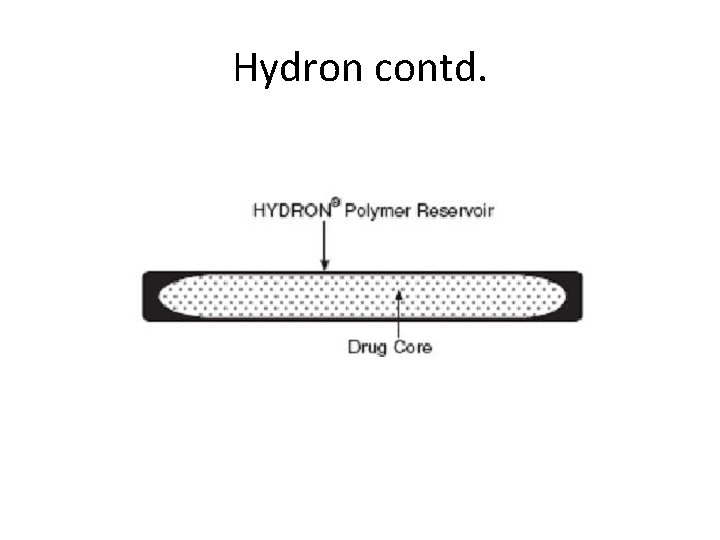
Hydron contd.
Vantas® and Supprelin® • The implant is supplied prehydrated and contains micropores that allow drug diffusion in a zero order fashion for a year or longer. Vantas® for prostate cancer and Supprelin® LA for precocious puberty are both implanted with a trocar, and contain 50 mg histrelin acetate, and last for one year with a release rate of 41 μg/day.
The Nano. GATE™ implant • i. MEDD Inc. developed a small cylindrical titanium implant for continuous release of α- interferon for 3 -6 months for the treatment of Hepatitis C. The implant is designed to be inserted under the skin and to maintain drug plasma level above 50 pg/ml in order to maintain an antiviral effect without side effects associated with higher doses. The Nano. GATE™ implant is 4 -5 mm in diameter, 20 -35 mm in length, and can contain a 75 -300 μl reservoir
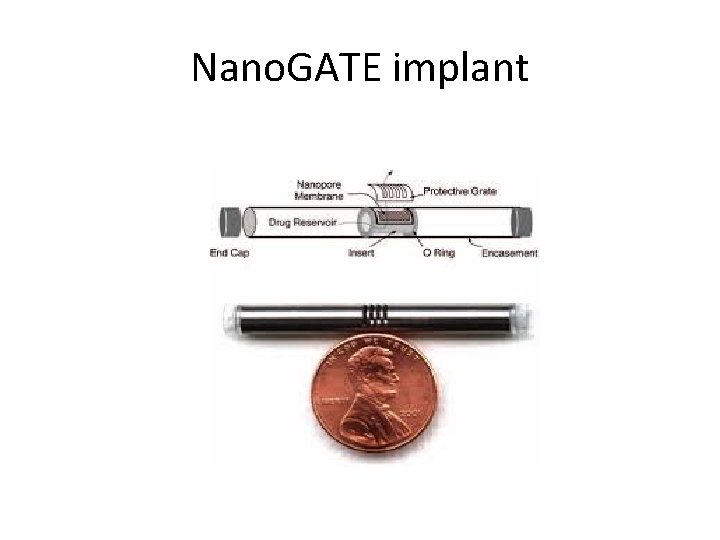
Nano. GATE implant
- Slides: 68