
Implantable Cardiac Monitor Heart Loop Recorder Kaitlyn Chin
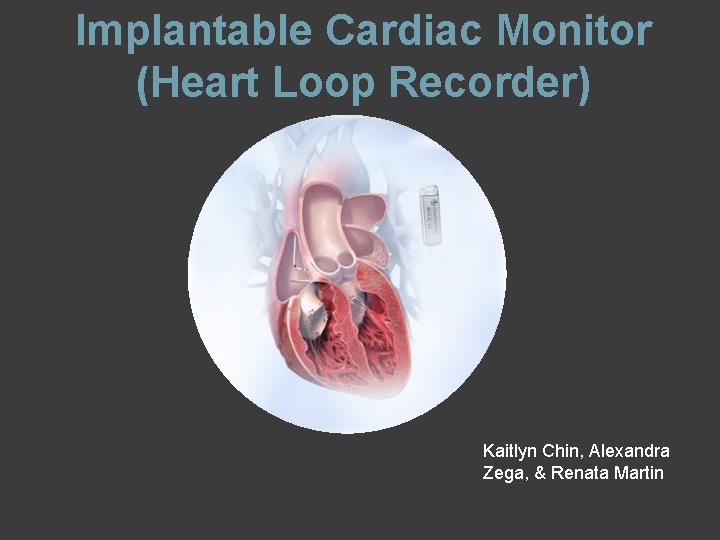
Implantable Cardiac Monitor (Heart Loop Recorder) Kaitlyn Chin, Alexandra Zega, & Renata Martin
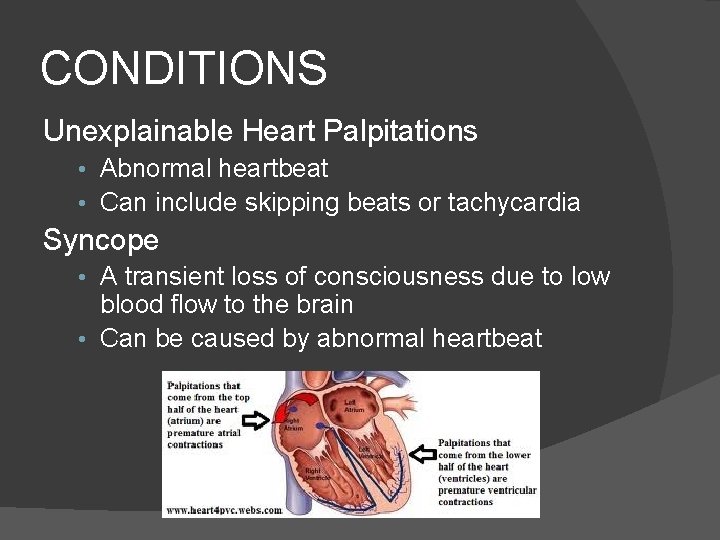
CONDITIONS Unexplainable Heart Palpitations • Abnormal heartbeat • Can include skipping beats or tachycardia Syncope • A transient loss of consciousness due to low blood flow to the brain • Can be caused by abnormal heartbeat
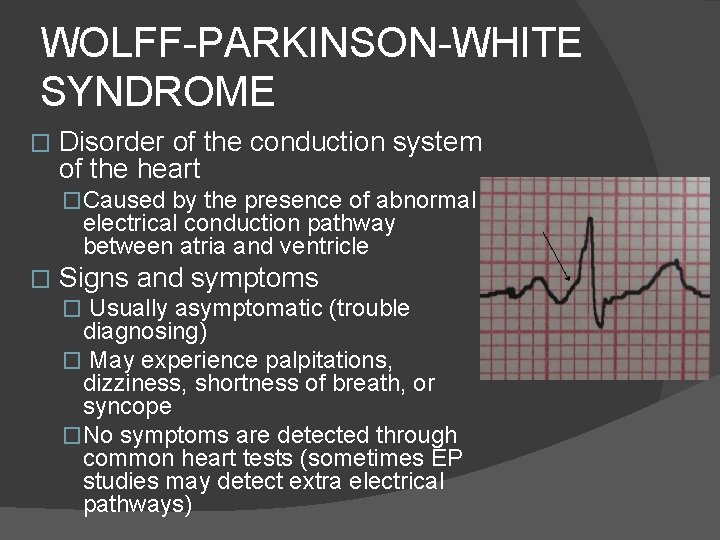
WOLFF-PARKINSON-WHITE SYNDROME � Disorder of the conduction system of the heart �Caused by the presence of abnormal electrical conduction pathway between atria and ventricle � Signs and symptoms � Usually asymptomatic (trouble diagnosing) � May experience palpitations, dizziness, shortness of breath, or syncope �No symptoms are detected through common heart tests (sometimes EP studies may detect extra electrical pathways)
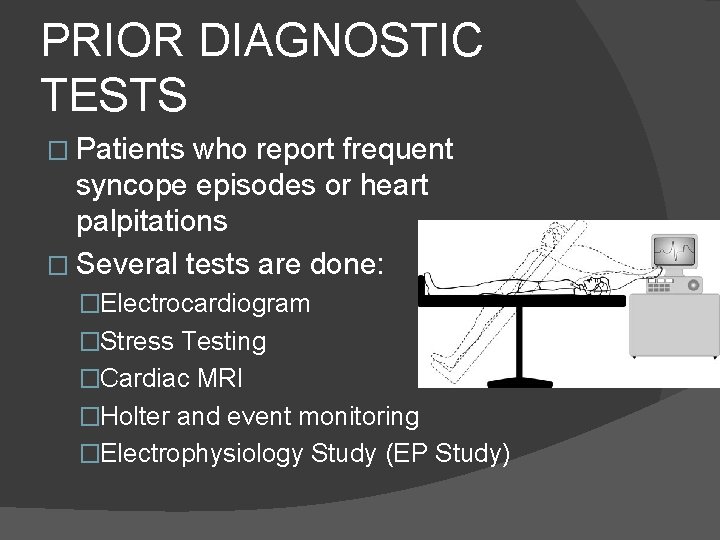
PRIOR DIAGNOSTIC TESTS � Patients who report frequent syncope episodes or heart palpitations � Several tests are done: �Electrocardiogram �Stress Testing �Cardiac MRI �Holter and event monitoring �Electrophysiology Study (EP Study)
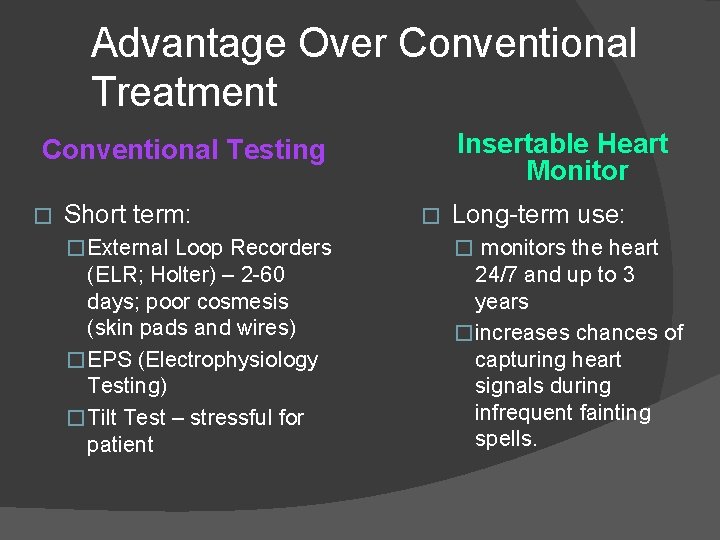
Advantage Over Conventional Treatment Insertable Heart Monitor Conventional Testing � Short term: � Long-term use: � External Loop Recorders � monitors the heart (ELR; Holter) – 2 -60 days; poor cosmesis (skin pads and wires) � EPS (Electrophysiology Testing) � Tilt Test – stressful for patient 24/7 and up to 3 years � increases chances of capturing heart signals during infrequent fainting spells.
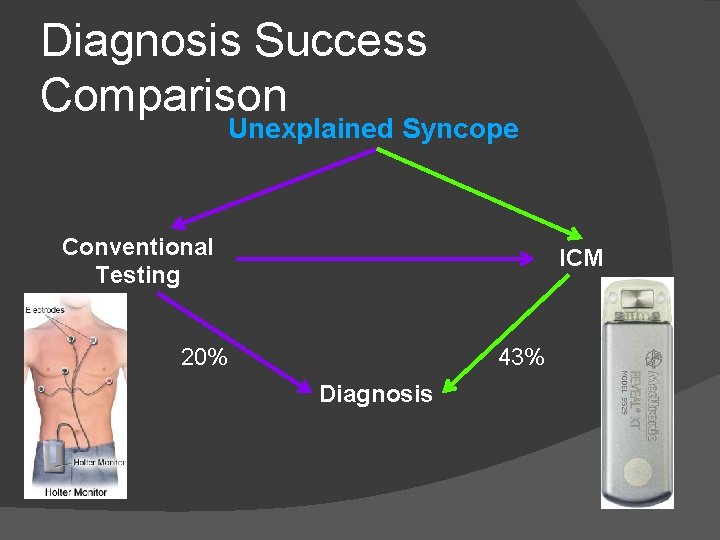
Diagnosis Success Comparison Unexplained Syncope Conventional Testing ICM 43% 20% Diagnosis
COST & INSURANCE � Cost per diagnosis of ICM is 26% less than conventional testing � Cost is approximently $40, 000 - $45, 000. � Monitoring is required after the procedure and cost about $600 a month � Most health insurances cover this implant for unexplained fainting spells � Charity care can cover if a person does not have insurance
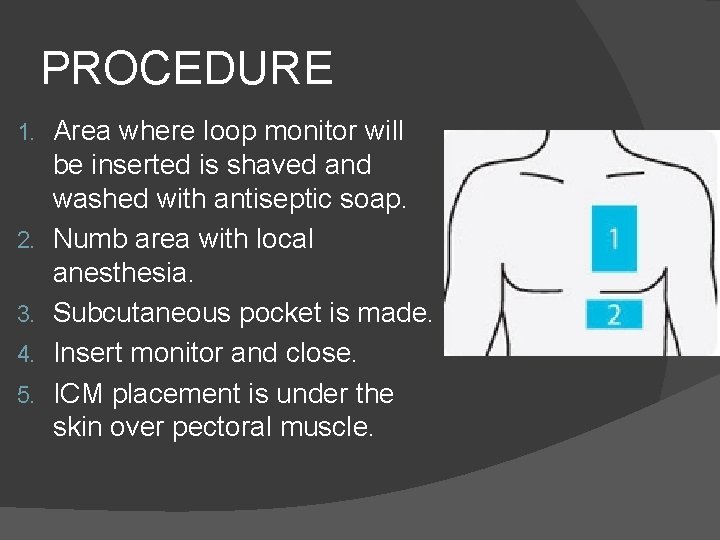
PROCEDURE 1. 2. 3. 4. 5. Area where loop monitor will be inserted is shaved and washed with antiseptic soap. Numb area with local anesthesia. Subcutaneous pocket is made. Insert monitor and close. ICM placement is under the skin over pectoral muscle.
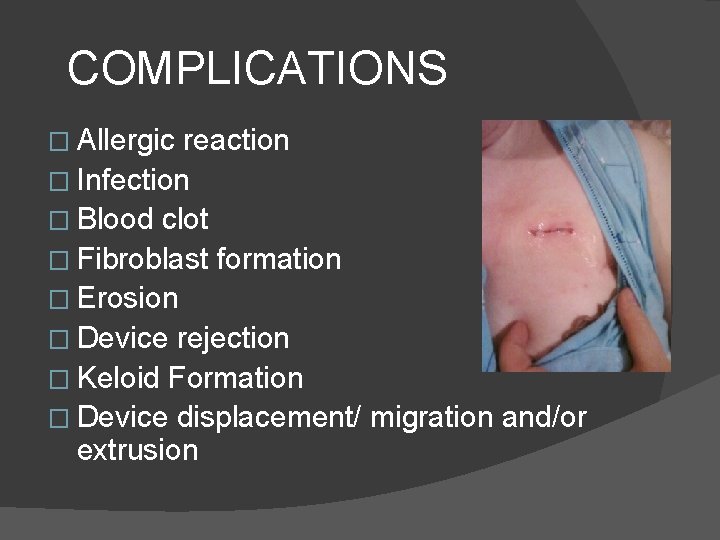
COMPLICATIONS � Allergic reaction � Infection � Blood clot � Fibroblast formation � Erosion � Device rejection � Keloid Formation � Device displacement/ migration and/or extrusion
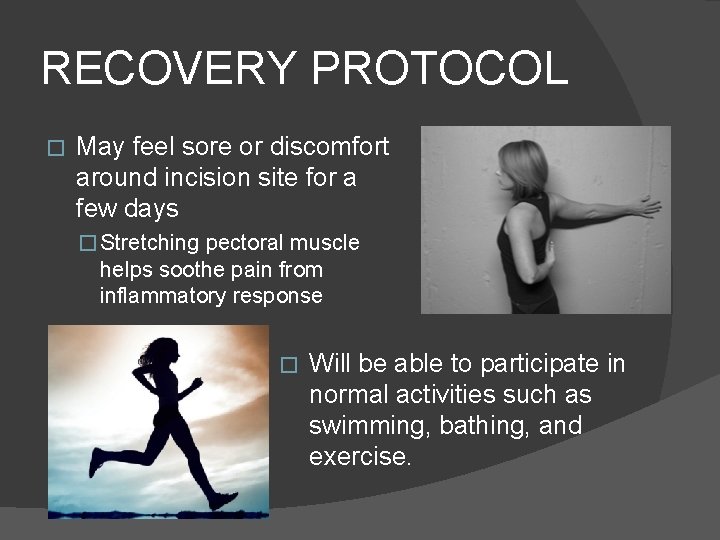
RECOVERY PROTOCOL � May feel sore or discomfort around incision site for a few days � Stretching pectoral muscle helps soothe pain from inflammatory response � Will be able to participate in normal activities such as swimming, bathing, and exercise.
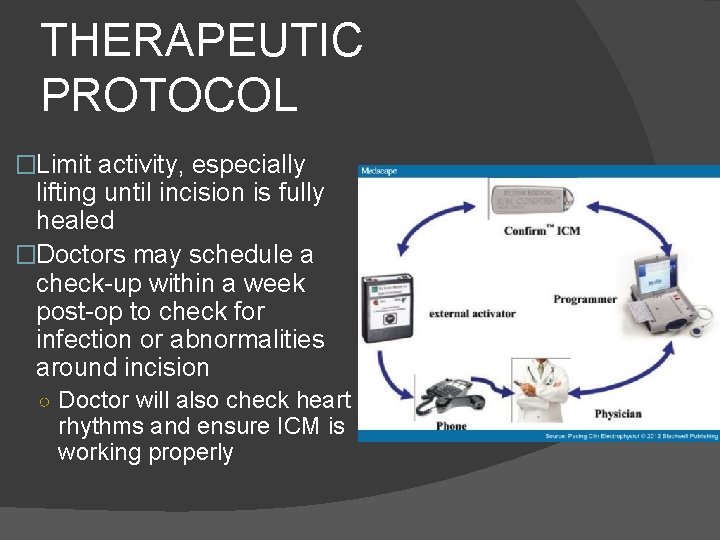
THERAPEUTIC PROTOCOL �Limit activity, especially lifting until incision is fully healed �Doctors may schedule a check-up within a week post-op to check for infection or abnormalities around incision ○ Doctor will also check heart rhythms and ensure ICM is working properly
EXPECTED OUTCOMES & MONITOR DIAGNOSIS � Allows for quicker and more efficient study of heart events � Help in diagnosis of palpitations and syncope • Can continuously monitor and thus always record events even when they are infrequent
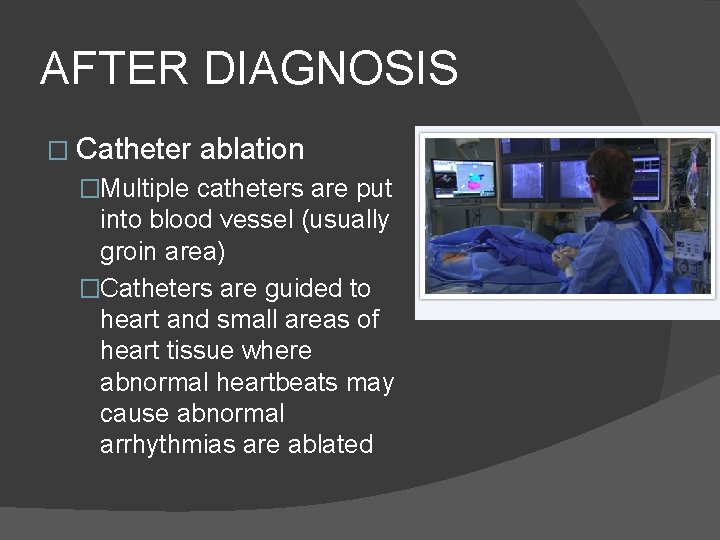
AFTER DIAGNOSIS � Catheter ablation �Multiple catheters are put into blood vessel (usually groin area) �Catheters are guided to heart and small areas of heart tissue where abnormal heartbeats may cause abnormal arrhythmias are ablated
WORKS CITED � � � "After The Procedure. " If You Have a Fainting Spell after You Have Your Reveal® ICM, Promptly Call Your Doctor's Office to Schedule an Appointment. N. p. , n. d. Web. 03 May 2013. Dugdale, David. "Wolff-Parkinson-White Syndrome: Medline. Plus Medical Encyclopedia. " U. S National Library of Medicine. U. S. National Library of Medicine, n. d. Web. 03 May 2013. "Insertableloopmonitor. " Insertableloopmonitor. N. p. , n. d. Web. 03 May 2013. Krahn. "Holter Monitoring. " - Care Guide. N. p. , n. d. Web. 03 May 2013. "Medtronic’s Reveal XT Subcutaneous Heart Monitor Now Available in the US. " Medtronic's Reveal XT Subcutaneous Heart Monitor Now Available in the US. N. p. , n. d. Web. 03 May 2013. Staff, Mayo Clinic. "Definition. " Mayo Clinic. Mayo Foundation for Medical Education and Research, 25 Feb. 2011. Web. 03 May 2013.
- Slides: 14