
Imperialism Basics Chapters 27 28 Imperialism Imperialism empire
Imperialism Basics Chapters 27 & 28
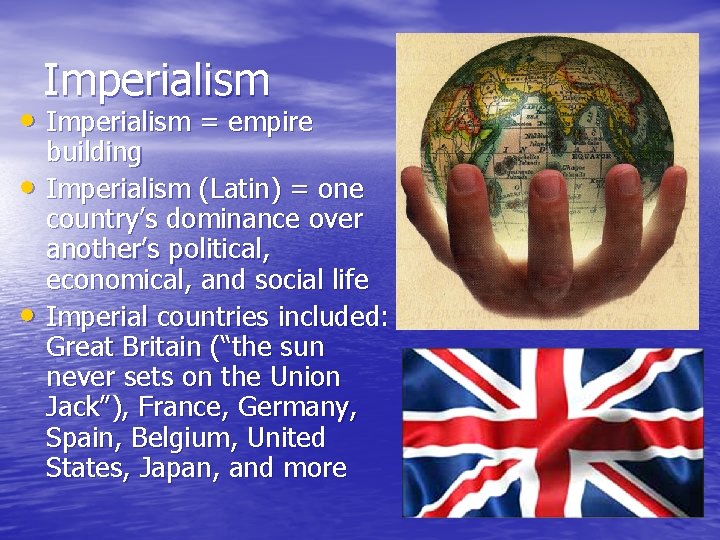
Imperialism • Imperialism = empire • • building Imperialism (Latin) = one country’s dominance over another’s political, economical, and social life Imperial countries included: Great Britain (“the sun never sets on the Union Jack”), France, Germany, Spain, Belgium, United States, Japan, and more

Political Reasons • Rivalries between European nations (nationalism) – If Great Britain has a colony, France needs one, then Germany needs two, etc. • Lack of communication led to fighting – Colonial governors left on their own to rule and control borders – European nations drawn into fighting in Africa and Asia
Economic Reasons • Industrial Revolution – Raw materials needed to fuel industry • Rubber, copper, & gold from Africa • Cotton from India • Tin from South Asia – New markets needed to sell finished goods to • Tools, weapons, clothing, finished goods • New products from around the world brought to Europe – Bananas, oranges, melons, tea, coffee, cocoa, soap
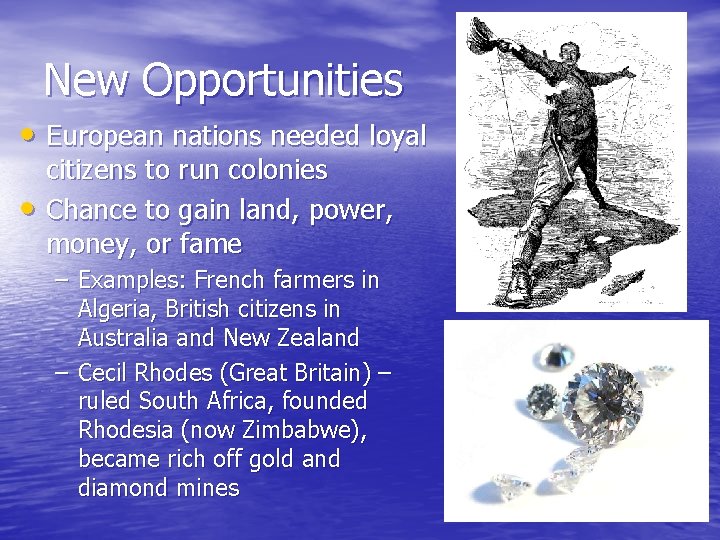
New Opportunities • European nations needed loyal • citizens to run colonies Chance to gain land, power, money, or fame – Examples: French farmers in Algeria, British citizens in Australia and New Zealand – Cecil Rhodes (Great Britain) – ruled South Africa, founded Rhodesia (now Zimbabwe), became rich off gold and diamond mines
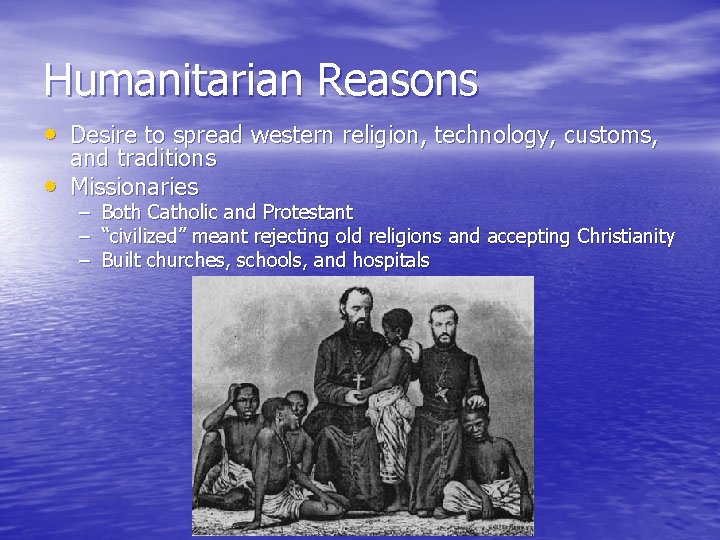
Humanitarian Reasons • Desire to spread western religion, technology, customs, • and traditions Missionaries – – – Both Catholic and Protestant “civilized” meant rejecting old religions and accepting Christianity Built churches, schools, and hospitals
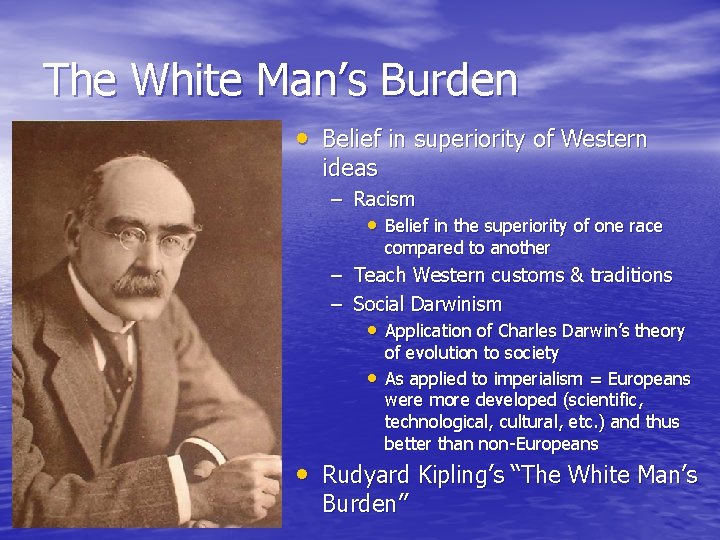
The White Man’s Burden • Belief in superiority of Western ideas – Racism • Belief in the superiority of one race compared to another – Teach Western customs & traditions – Social Darwinism • Application of Charles Darwin’s theory • of evolution to society As applied to imperialism = Europeans were more developed (scientific, technological, cultural, etc. ) and thus better than non-Europeans • Rudyard Kipling’s “The White Man’s Burden”

Types of Imperialism • Colony – Territory with direct control from a colonial official – Example: Great Britain’s control of South Africa • Protectorate – Own domestic government, but policies directed by a foreign power – Example: United States control of Cuba • Sphere of Influence – Region of country controlled by a power that had exclusive economic rights – Example: Great Britain and Germany in China
- Slides: 8