
Imperial County Community Air Monitoring Project Using low
- Slides: 24
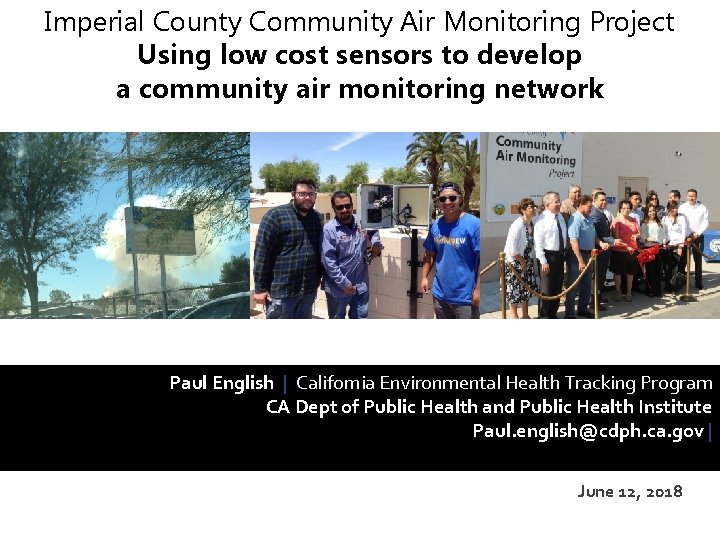
Imperial County Community Air Monitoring Project Using low cost sensors to develop a community air monitoring network Paul English | California Environmental Health Tracking Program CA Dept of Public Health and Public Health Institute Paul. english@cdph. ca. gov | June 12, 2018
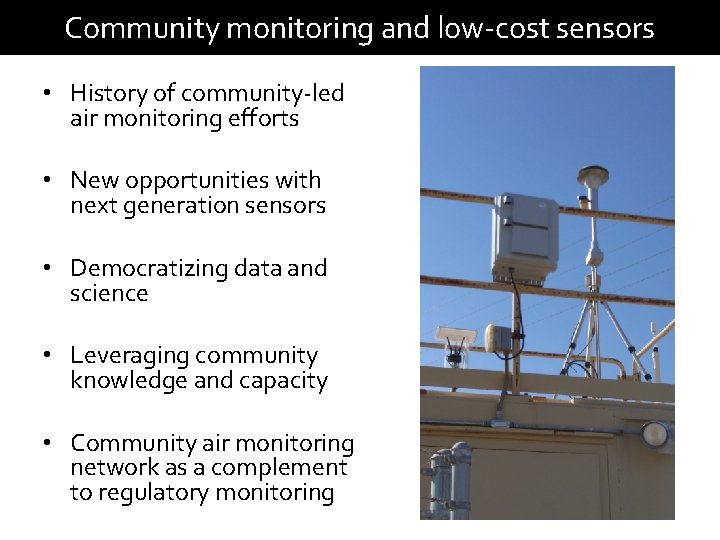
Community monitoring and low-cost sensors • History of community-led air monitoring efforts • New opportunities with next generation sensors • Democratizing data and science • Leveraging community knowledge and capacity • Community air monitoring network as a complement to regulatory monitoring
BACKGROUND
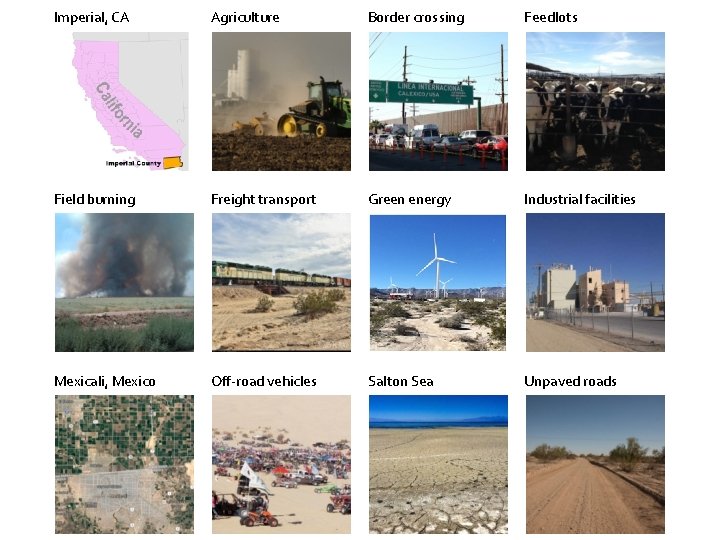
Imperial, CA Agriculture Border crossing Feedlots Field burning Freight transport Green energy Industrial facilities Mexicali, Mexico Off-road vehicles Salton Sea Unpaved roads
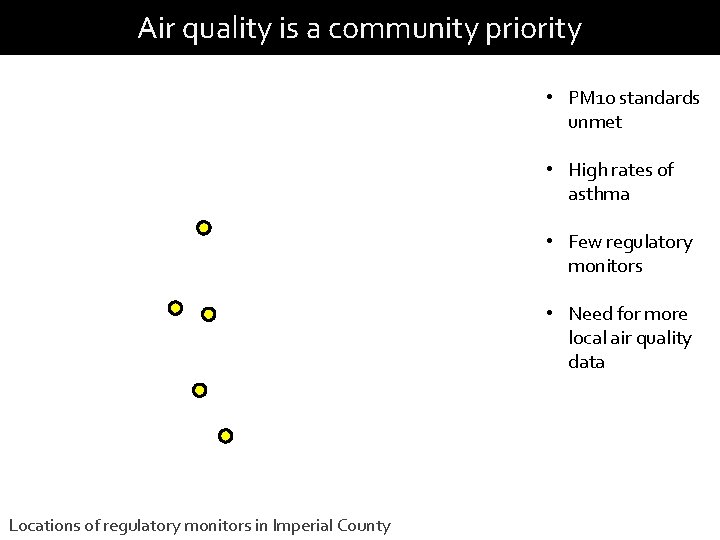
Air quality is a community priority • PM 10 standards unmet • High rates of asthma • Few regulatory monitors • Need for more local air quality data Locations of regulatory monitors in Imperial County
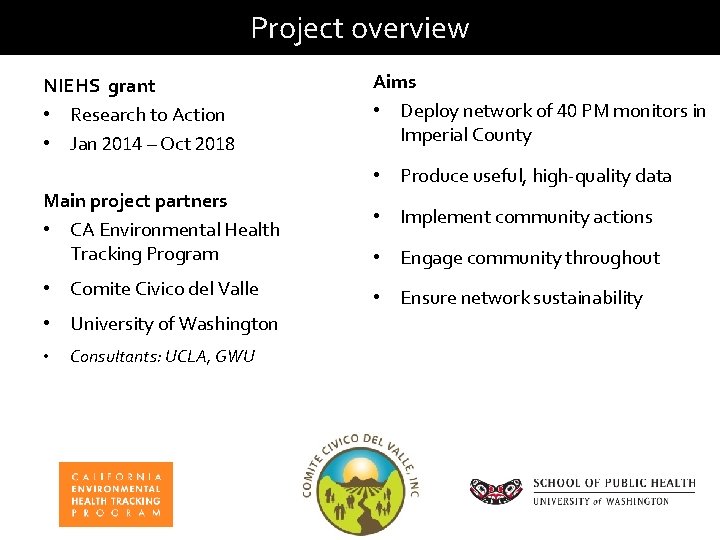
Project overview NIEHS grant • Research to Action • Jan 2014 – Oct 2018 Aims • Deploy network of 40 PM monitors in Imperial County • Produce useful, high-quality data Main project partners • CA Environmental Health Tracking Program • Comite Civico del Valle • University of Washington • Consultants: UCLA, GWU • Implement community actions • Engage community throughout • Ensure network sustainability
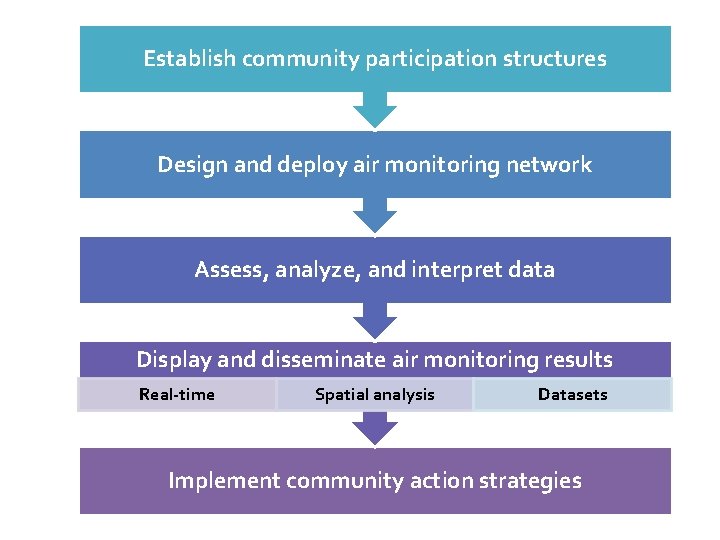
Establish community participation structures Design and deploy air monitoring network Assess, analyze, and interpret data Display and disseminate air monitoring results Real-time Spatial analysis Datasets Implement community action strategies
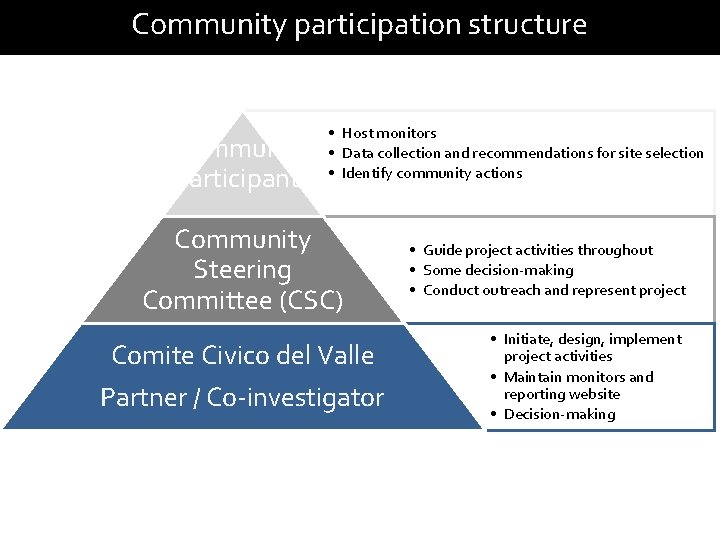
Community participation structure Community participants • Host monitors • Data collection and recommendations for site selection • Identify community actions Community Steering Committee (CSC) Comite Civico del Valle Partner / Co-investigator • Guide project activities throughout • Some decision-making • Conduct outreach and represent project • Initiate, design, implement project activities • Maintain monitors and reporting website • Decision-making
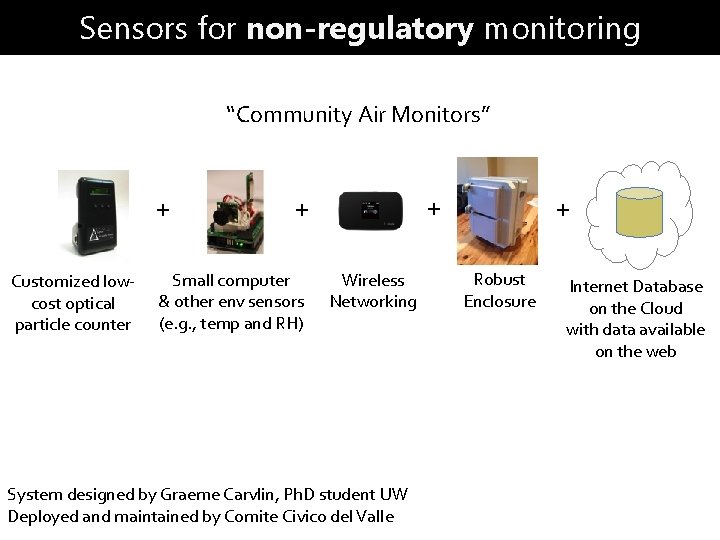
Sensors for non-regulatory monitoring “Community Air Monitors” + Customized lowcost optical particle counter + + Small computer & other env sensors (e. g. , temp and RH) Wireless Networking System designed by Graeme Carvlin, Ph. D student UW Deployed and maintained by Comite Civico del Valle + Robust Enclosure Internet Database on the Cloud with data available on the web
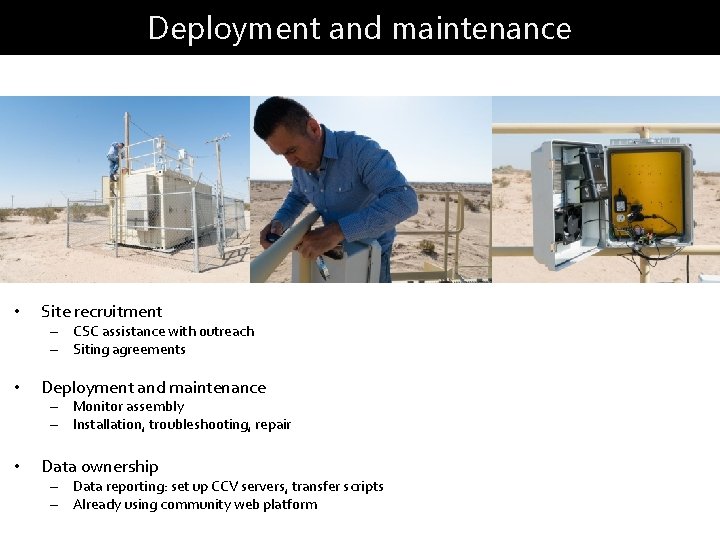
Deployment and maintenance • Site recruitment – CSC assistance with outreach – Siting agreements • Deployment and maintenance – Monitor assembly – Installation, troubleshooting, repair • Data ownership – Data reporting: set up CCV servers, transfer scripts – Already using community web platform
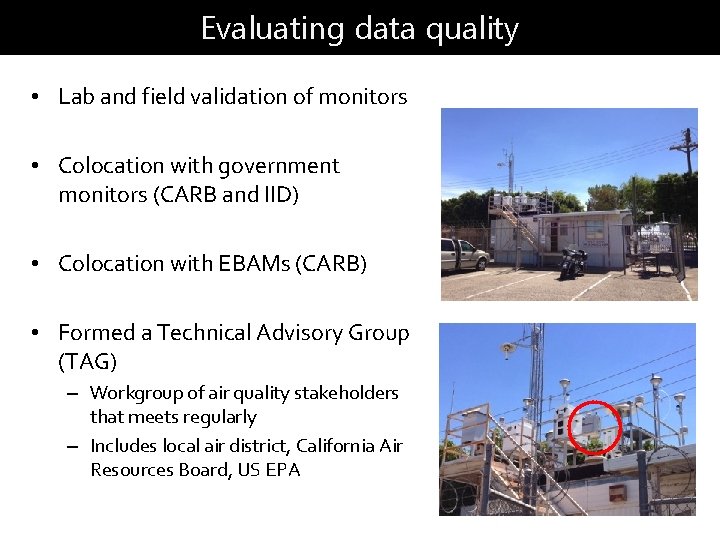
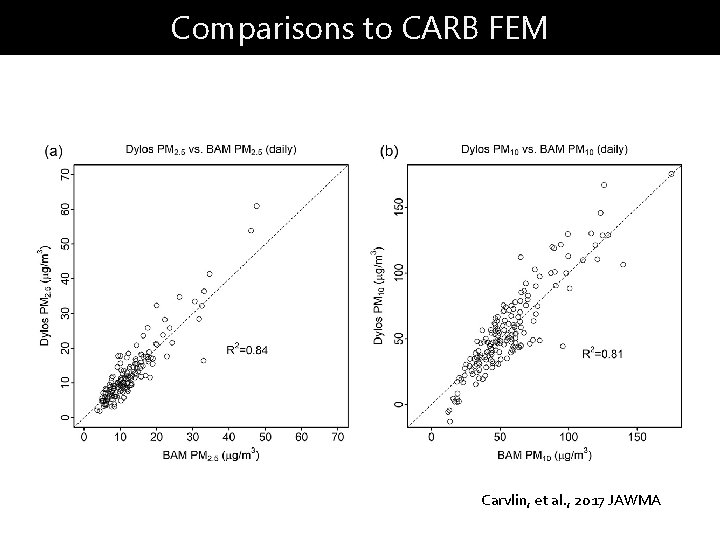
Evaluating data quality • Lab and field validation of monitors • Colocation with government monitors (CARB and IID) • Colocation with EBAMs (CARB) • Formed a Technical Advisory Group (TAG) – Workgroup of air quality stakeholders that meets regularly – Includes local air district, California Air Resources Board, US EPA
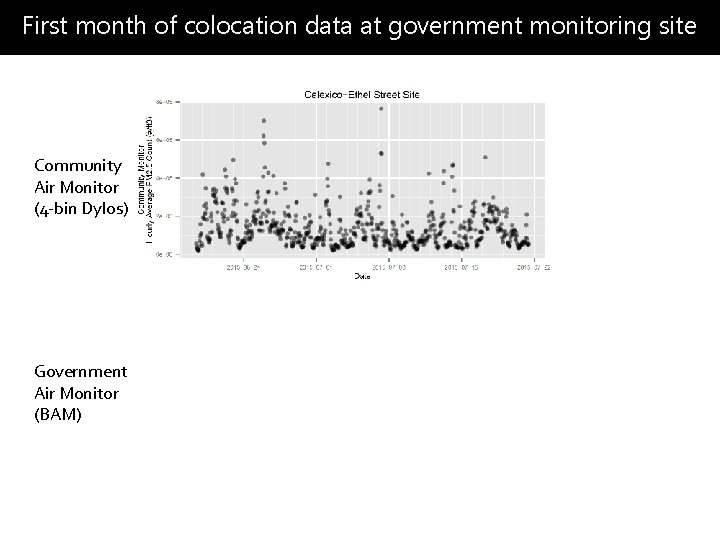
First month of colocation data at government monitoring site Community Air Monitor (4 -bin Dylos) Government Air Monitor (BAM)
Comparisons to CARB FEM Carvlin, et al. , 2017 JAWMA
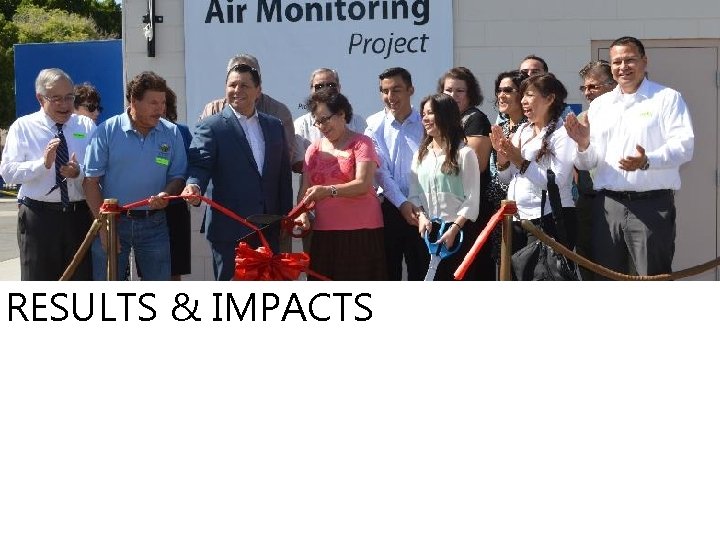
RESULTS & IMPACTS
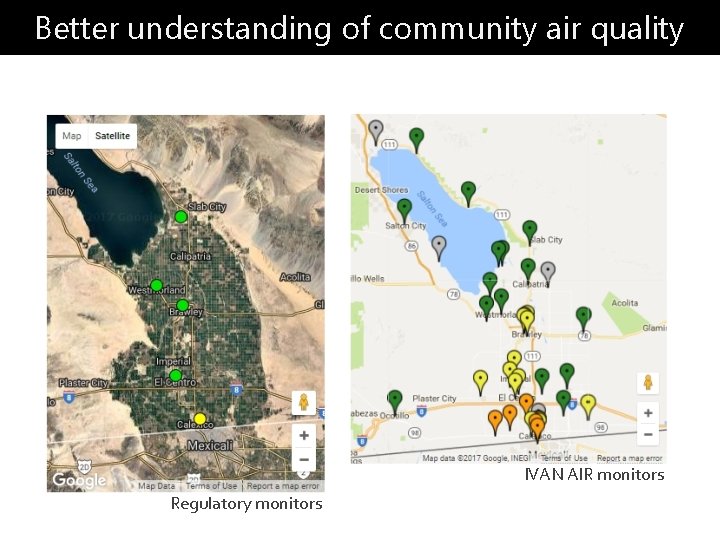
Better understanding of community air quality IVAN AIR monitors Regulatory monitors
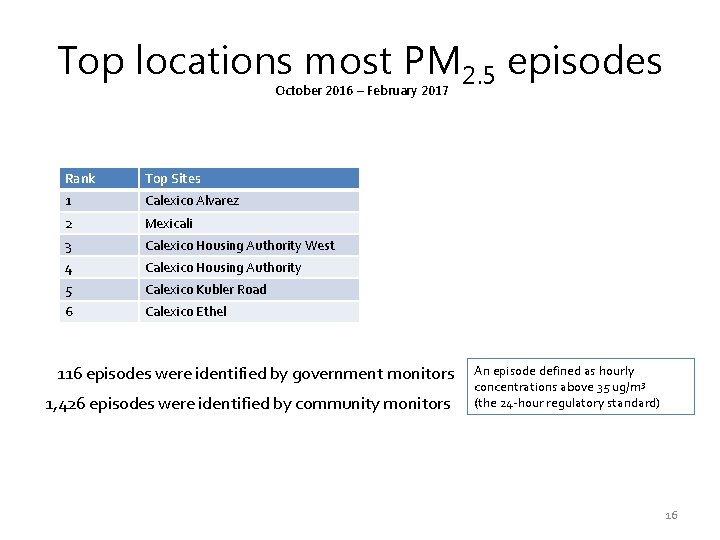
Top locations most PM 2. 5 episodes October 2016 – February 2017 Rank Top Sites 1 Calexico Alvarez 2 Mexicali 3 Calexico Housing Authority West 4 Calexico Housing Authority 5 Calexico Kubler Road 6 Calexico Ethel 116 episodes were identified by government monitors 1, 426 episodes were identified by community monitors An episode defined as hourly concentrations above 35 ug/m 3 (the 24 -hour regulatory standard) 16
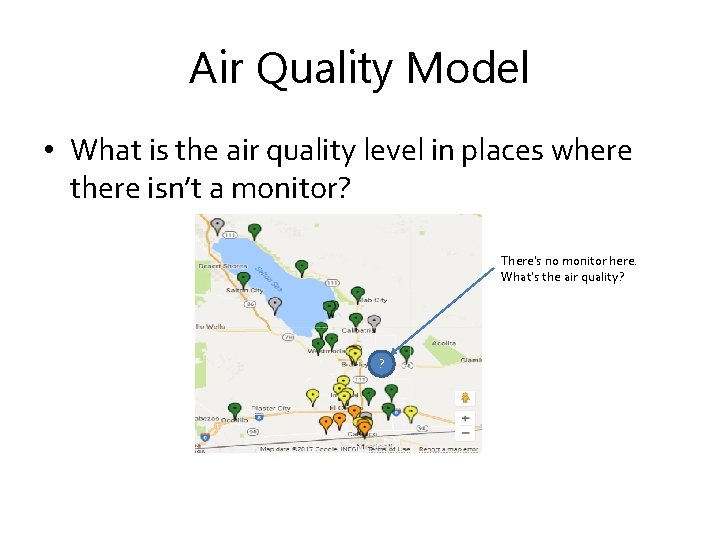
Air Quality Model • What is the air quality level in places where there isn’t a monitor? There’s no monitor here. What’s the air quality? ?
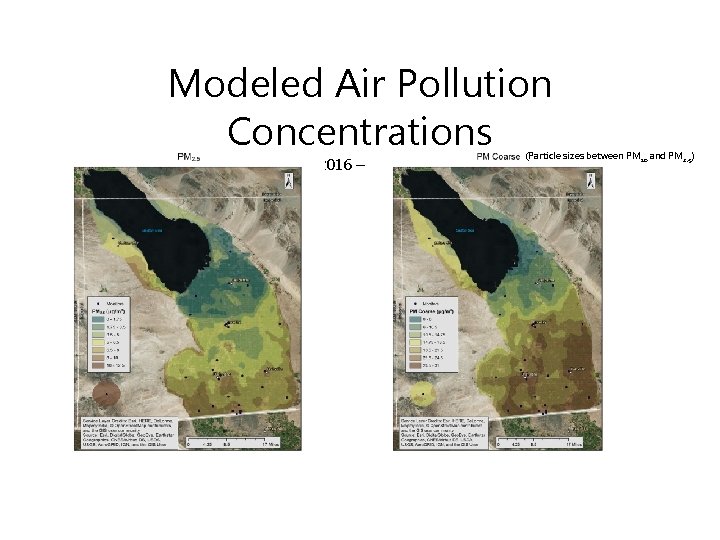
Modeled Air Pollution Concentrations 10/1/2016 – 10/1/2017 (Particle sizes between PM 10 and PM 2. 5)
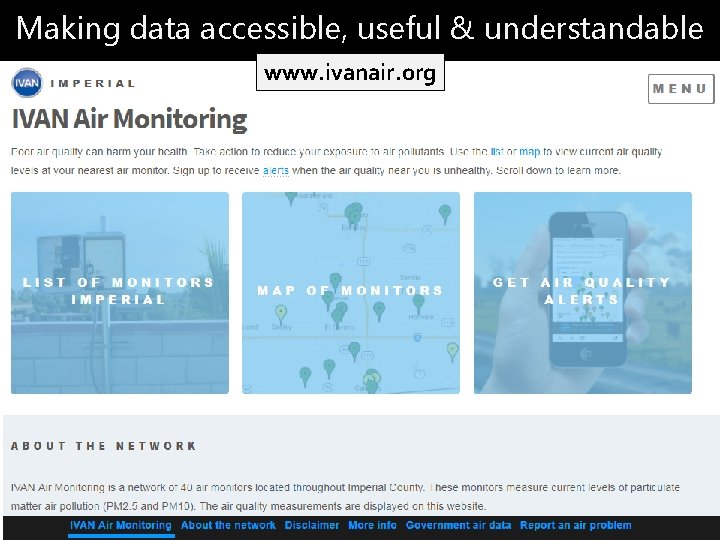
Making data accessible, useful & understandable www. ivanair. org
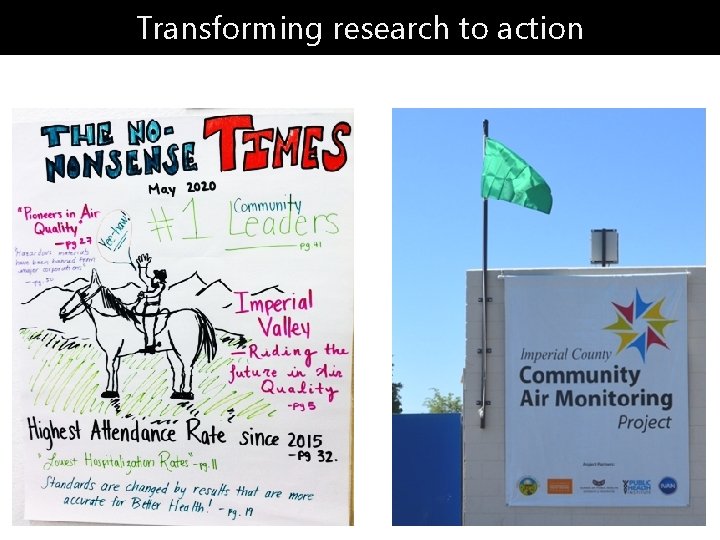
Transforming research to action
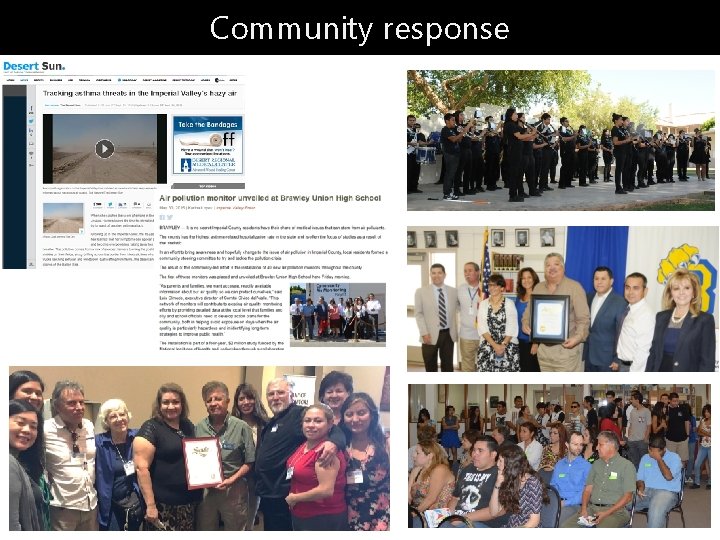
Community response
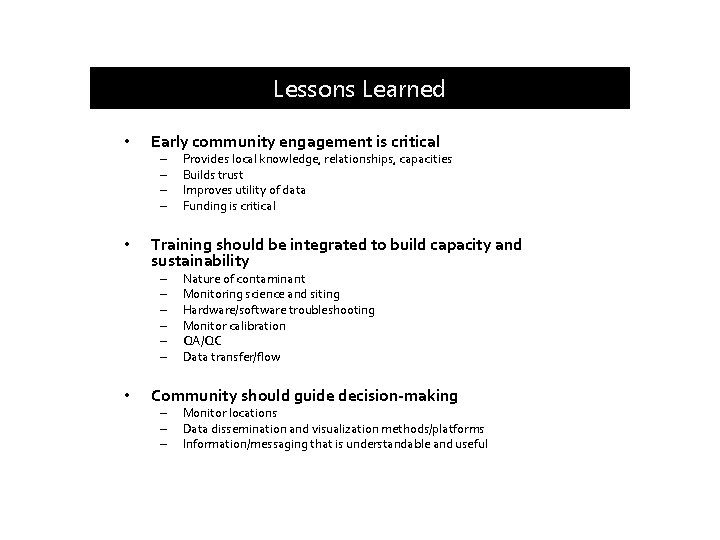
Lessons Learned • Early community engagement is critical – – • Training should be integrated to build capacity and sustainability – – – • Provides local knowledge, relationships, capacities Builds trust Improves utility of data Funding is critical Nature of contaminant Monitoring science and siting Hardware/software troubleshooting Monitor calibration QA/QC Data transfer/flow Community should guide decision-making – – – Monitor locations Data dissemination and visualization methods/platforms Information/messaging that is understandable and useful
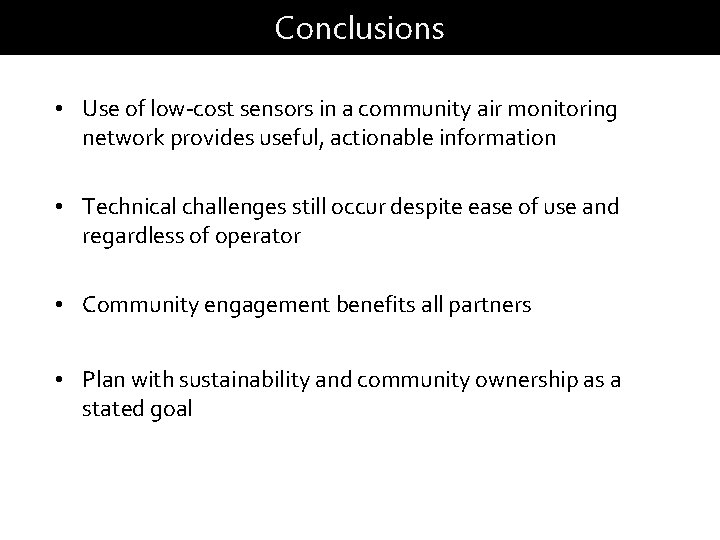
Conclusions • Use of low-cost sensors in a community air monitoring network provides useful, actionable information • Technical challenges still occur despite ease of use and regardless of operator • Community engagement benefits all partners • Plan with sustainability and community ownership as a stated goal
Acknowledgments California Environmental Health Tracking Program § Paul English § Galatea King § Dan Meltzer § Alexa Wilkie § Michelle Wong Comite Civico del Valle § Esther Bejarano § Israel Cruz § Humberto Lugo § Luis Olmedo University of Washington § Graeme Carvlin § Katie Fellows § Edmund Seto George Washington University § Amanda Northcross University of California, Los Angeles § Michael Jerrett Web Developers § Tyler Lopez § Eduardo Murillo § Carlos Zamora Community Participants and Air Monitor Hosts Technical Advisory Group Equipment loans/colocations § CA Air Resources Board § Imperial Irrigation District § US EPA Community Steering Committee § Ray Askins § Alejandro Bejarano § Astrid Calderas § Claudia Cristerna § Edie Harmon § John Hernandez § Jose Flores § Leticia Ibarra § Arturo Medina § Raul Navarro § Anita Nicklen § Frances Nicklen § Vincent Orfiano § Elizabeth Swerdfeger § Bianka Velez § Jose Luis Velez § Carolina Villa § Elizabeth Villa § Patricia Zarate § Juan Zarate This project funded by National Institute of Environmental Health Sciences grant R 01 ES 022722 CEHTP is a collaboration of the Public Health Institute and the California Department of Public Health