
Imperial County Community Air Monitoring Project Using low
- Slides: 24
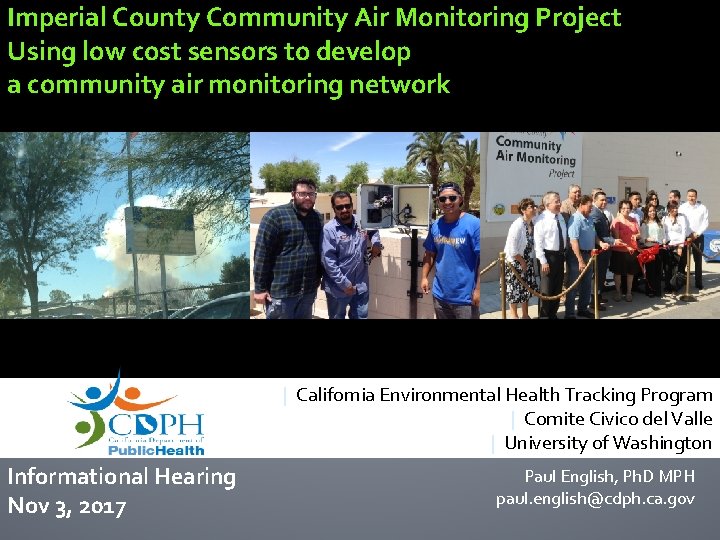
Imperial County Community Air Monitoring Project Using low cost sensors to develop a community air monitoring network | California Environmental Health Tracking Program | Comite Civico del Valle | University of Washington Informational Hearing Nov 3, 2017 Paul English, Ph. D MPH paul. english@cdph. ca. gov
Project overview NIEHS grant � Research to Action � Jan 2014 – Oct 2018 Main project partners � CA Environmental Health Tracking Program � Comite Civico del Valle � University of Washington � Consultants: UCLA, GWU Aims � Deploy network of 40 PM monitors in Imperial County � Produce useful, high-quality data � Implement community actions � Engage community throughout � Ensure network sustainability
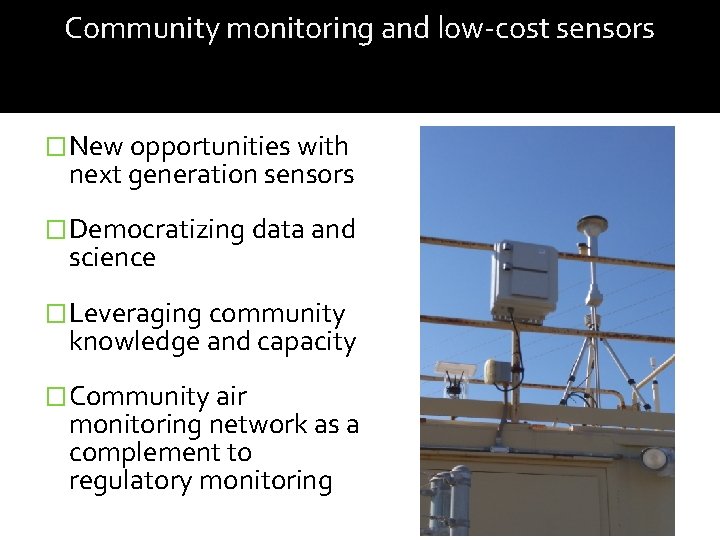
Community monitoring and low-cost sensors � New opportunities with next generation sensors � Democratizing data and science � Leveraging community knowledge and capacity � Community air monitoring network as a complement to regulatory monitoring
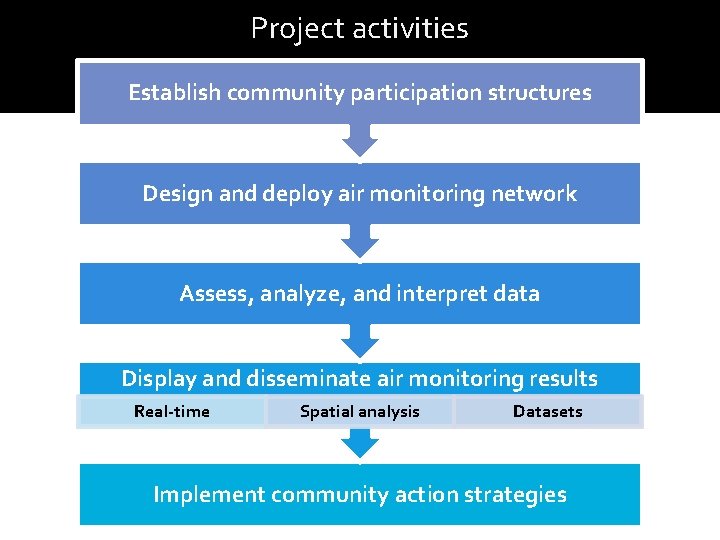
Project activities Establish community participation structures Design and deploy air monitoring network Assess, analyze, and interpret data Display and disseminate air monitoring results Real-time Spatial analysis Datasets Implement community action strategies
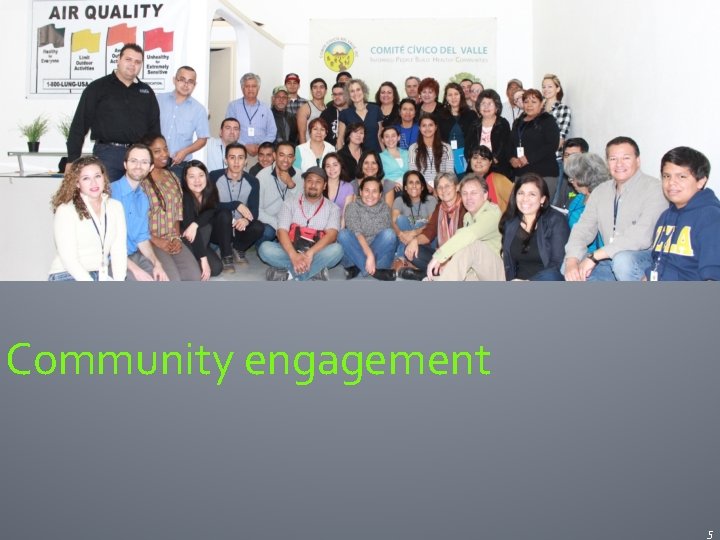
Community engagement 5
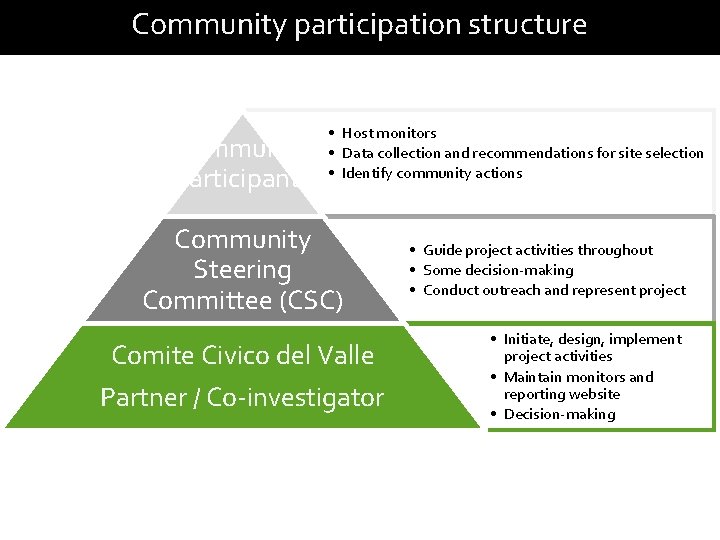
Community participation structure Community participants • Host monitors • Data collection and recommendations for site selection • Identify community actions Community Steering Committee (CSC) Comite Civico del Valle Partner / Co-investigator • Guide project activities throughout • Some decision-making • Conduct outreach and represent project • Initiate, design, implement project activities • Maintain monitors and reporting website • Decision-making
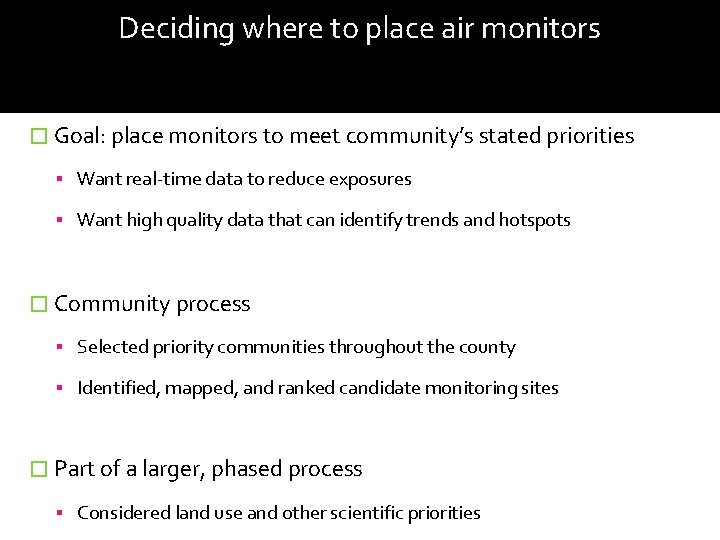
Deciding where to place air monitors � Goal: place monitors to meet community’s stated priorities Want real-time data to reduce exposures Want high quality data that can identify trends and hotspots � Community process Selected priority communities throughout the county Identified, mapped, and ranked candidate monitoring sites � Part of a larger, phased process Considered land use and other scientific priorities
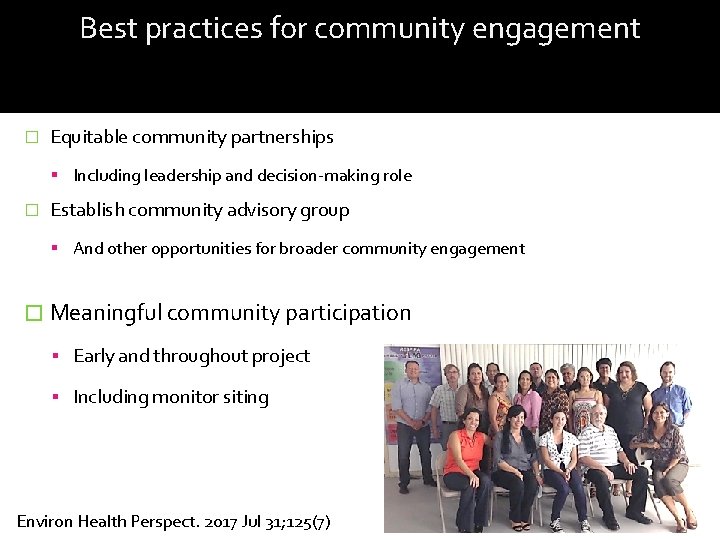
Best practices for community engagement � Equitable community partnerships Including leadership and decision-making role � Establish community advisory group And other opportunities for broader community engagement � Meaningful community participation Early and throughout project Including monitor siting Environ Health Perspect. 2017 Jul 31; 125(7)
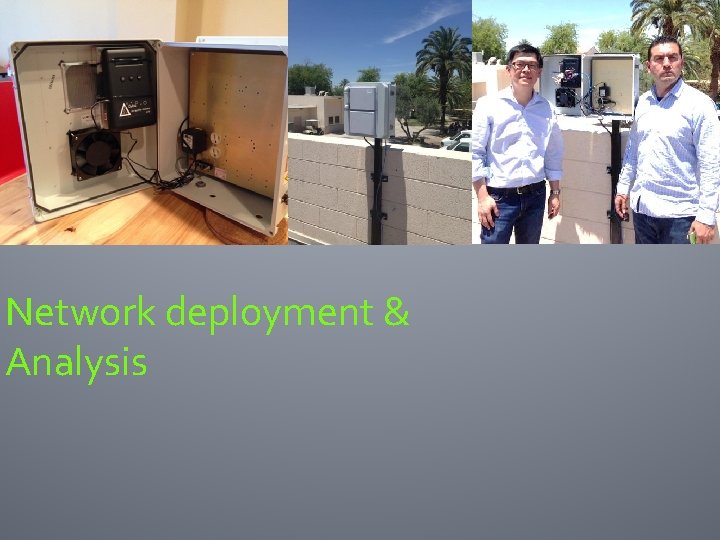
Network deployment & Analysis
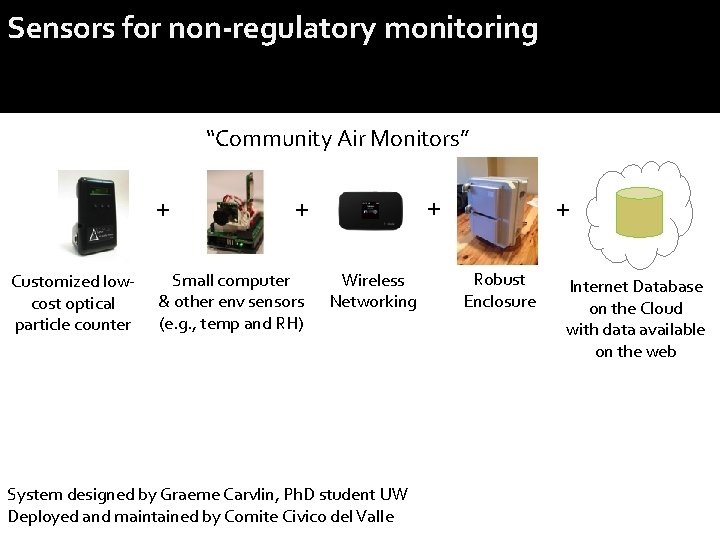
Sensors for non-regulatory monitoring “Community Air Monitors” + Customized lowcost optical particle counter + + Small computer & other env sensors (e. g. , temp and RH) Wireless Networking System designed by Graeme Carvlin, Ph. D student UW Deployed and maintained by Comite Civico del Valle + Robust Enclosure Internet Database on the Cloud with data available on the web
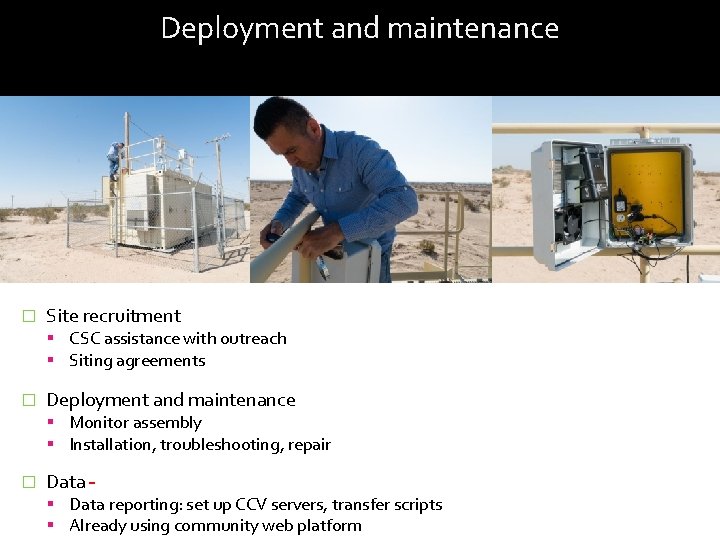
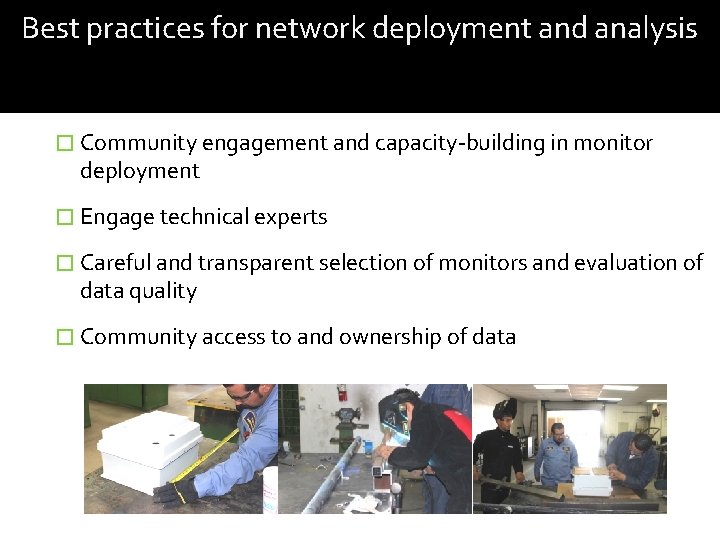
Deployment and maintenance � Site recruitment CSC assistance with outreach Siting agreements � Deployment and maintenance Monitor assembly Installation, troubleshooting, repair � Data reporting: set up CCV servers, transfer scripts Already using community web platform
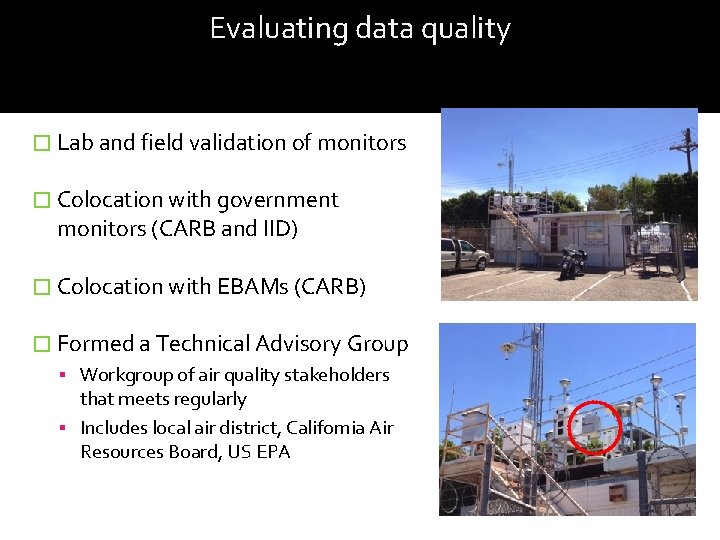
Evaluating data quality � Lab and field validation of monitors � Colocation with government monitors (CARB and IID) � Colocation with EBAMs (CARB) � Formed a Technical Advisory Group Workgroup of air quality stakeholders that meets regularly Includes local air district, California Air Resources Board, US EPA
Best practices for network deployment and analysis � Community engagement and capacity-building in monitor deployment � Engage technical experts � Careful and transparent selection of monitors and evaluation of data quality � Community access to and ownership of data
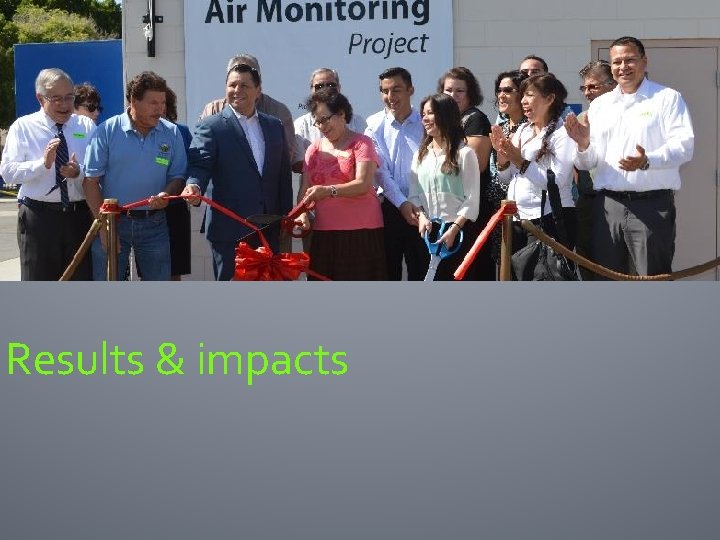
Results & impacts
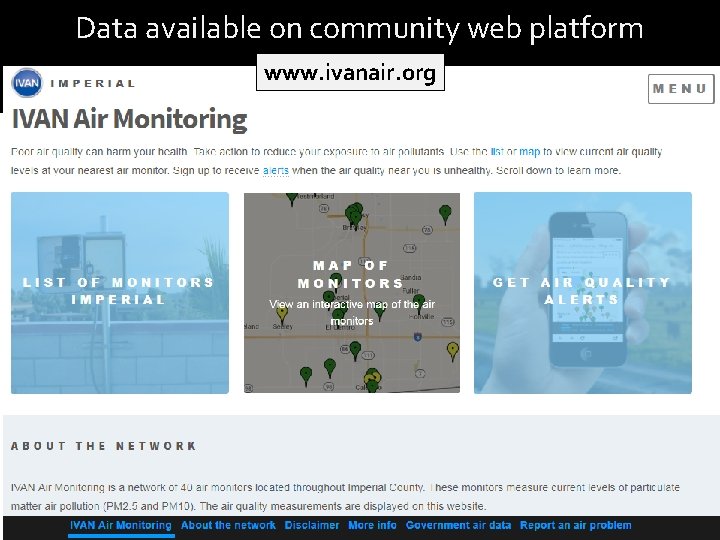
Data available on community web platform www. ivanair. org
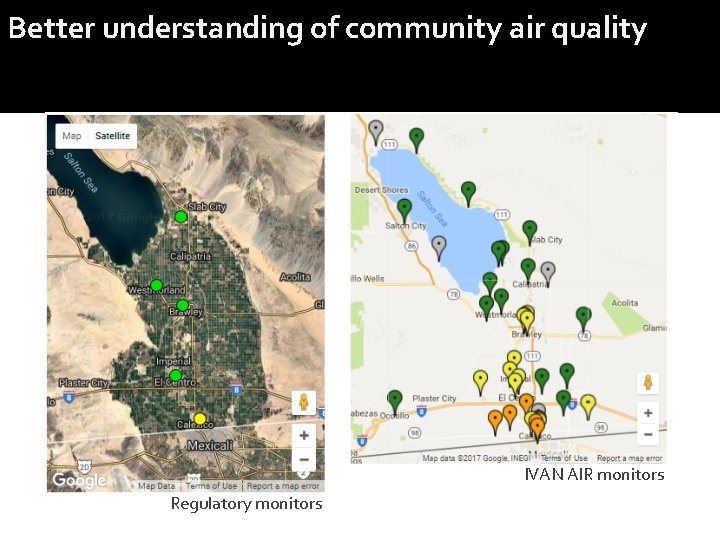
Better understanding of community air quality IVAN AIR monitors Regulatory monitors
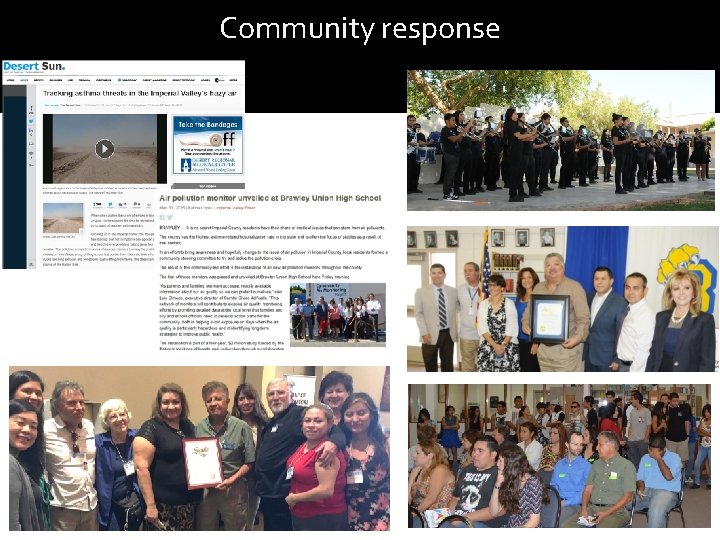
Community response
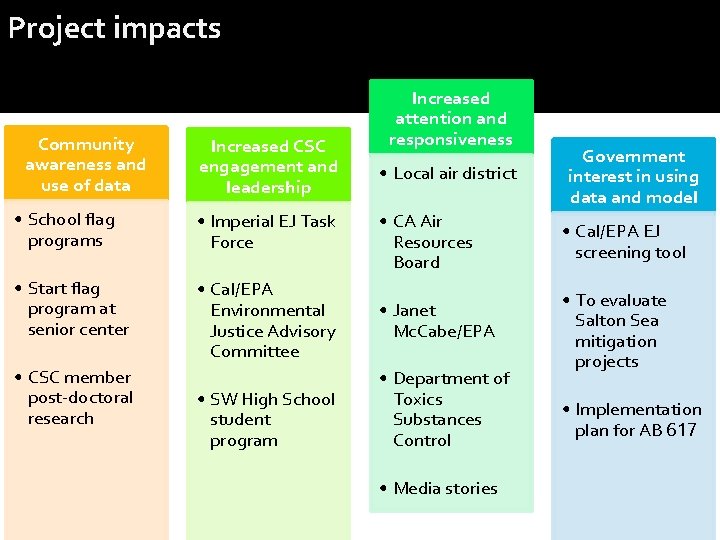
Project impacts Community awareness and use of data Increased CSC engagement and leadership • School flag programs • Imperial EJ Task Force • Start flag program at senior center • Cal/EPA Environmental Justice Advisory Committee • CSC member post-doctoral research • SW High School student program Increased attention and responsiveness • Local air district • CA Air Resources Board • Janet Mc. Cabe/EPA • Department of Toxics Substances Control • Media stories Government interest in using data and model • Cal/EPA EJ screening tool • To evaluate Salton Sea mitigation projects • Implementation plan for AB 617
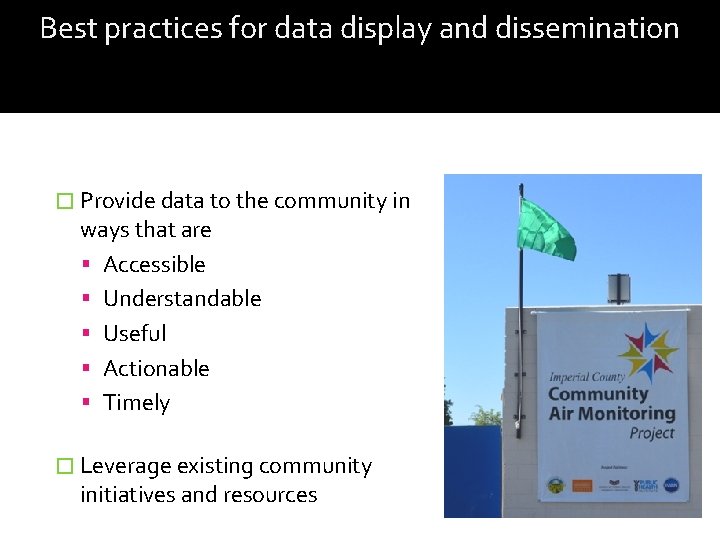
Best practices for data display and dissemination � Provide data to the community in ways that are Accessible Understandable Useful Actionable Timely � Leverage existing community initiatives and resources
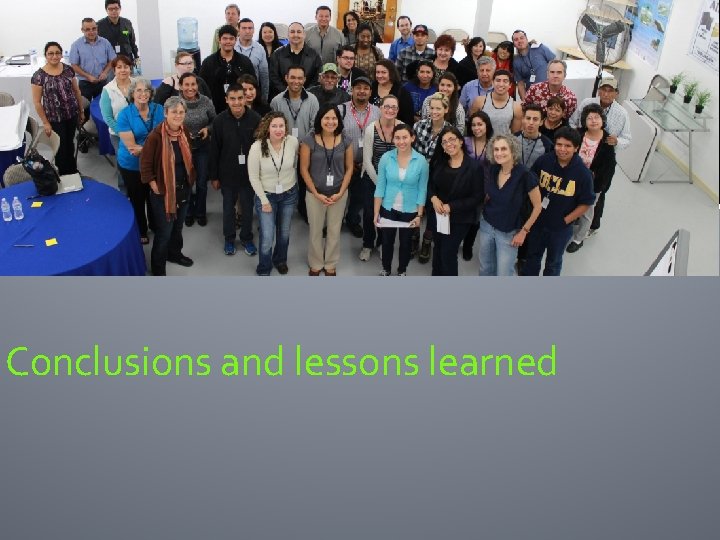
Conclusions and lessons learned
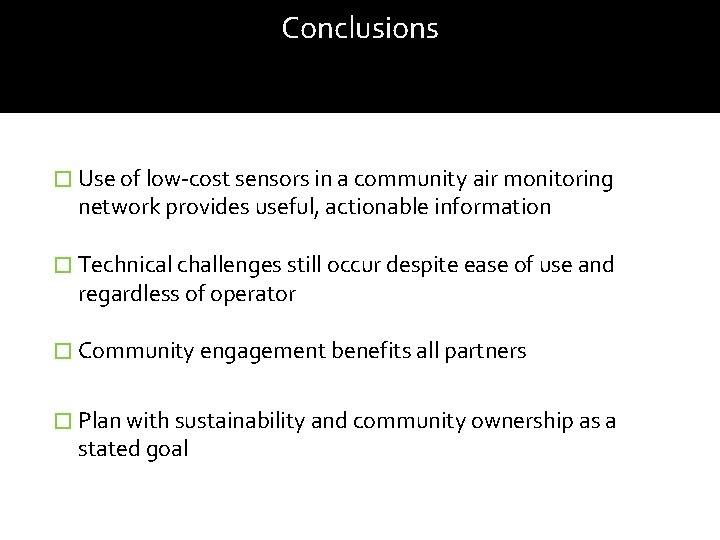
Conclusions � Use of low-cost sensors in a community air monitoring network provides useful, actionable information � Technical challenges still occur despite ease of use and regardless of operator � Community engagement benefits all partners � Plan with sustainability and community ownership as a stated goal
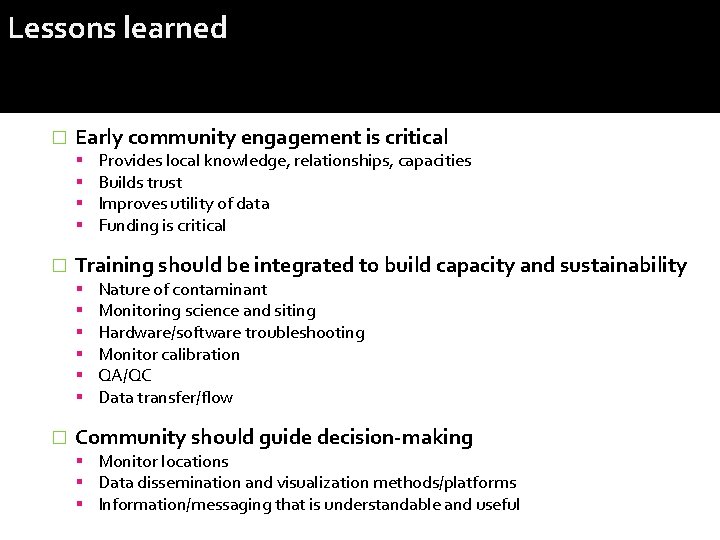
Lessons learned � Early community engagement is critical � Training should be integrated to build capacity and sustainability � Provides local knowledge, relationships, capacities Builds trust Improves utility of data Funding is critical Nature of contaminant Monitoring science and siting Hardware/software troubleshooting Monitor calibration QA/QC Data transfer/flow Community should guide decision-making Monitor locations Data dissemination and visualization methods/platforms Information/messaging that is understandable and useful
Acknowledgments California Environmental Health Tracking Program Paul English Galatea King Dan Meltzer Alexa Wilkie Michelle Wong Comite Civico del Valle Esther Bejarano Israel Cruz Humberto Lugo Luis Olmedo University of Washington Graeme Carvlin Katie Fellows Edmund Seto George Washington University Amanda Northcross University of California, Los Angeles Michael Jerrett Web Developers Tyler Lopez Eduardo Murillo Carlos Zamora Community Participants and Air Monitor Hosts Technical Advisory Group Equipment loans/colocations CA Air Resources Board Imperial Irrigation District US EPA Community Steering Committee Ray Askins Alejandro Bejarano Astrid Calderas Claudia Cristerna Edie Harmon John Hernandez Jose Flores Leticia Ibarra Arturo Medina Raul Navarro Anita Nicklen Frances Nicklen Vincent Orfiano Elizabeth Swerdfeger Bianka Velez Jose Luis Velez Carolina Villa Elizabeth Villa Patricia Zarate Juan Zarate This project funded by National Institute of Environmental Health Sciences grant R 01 ES 022722 CEHTP is a collaboration of the Public Health Institute and the California Department of Public Health
Contact us California Environmental Health Tracking Program Paul English, Ph. D, MPH paul. english@cdph. ca. gov Michelle Wong, MPH michelle. wong@cdph. ca. gov University of Washington Edmund Seto, Ph. D eseto@uw. edu Comite Civico del Valle Humberto Lugo humberto@ccvhealth. org Luis Olmedo luis@ccvhealth. org ivanair. org