
Impella Innovation Karim Benali M D VP Chief
Impella Innovation Karim Benali, M. D VP & Chief Medical Officer Abiomed, Inc
Disclaimers Dr Karim Benali is an employee of ABIOMED, Inc. This information includes statements regarding product development efforts. ABIOMED’s actual results may differ materially from those anticipated in these forward-looking statements based upon a number of factors, including uncertainties associated with the development, testing and related regulatory approvals. The Company undertakes no obligation to publicly release the results of any revisions to these forward-looking statements that may be made to reflect events or circumstances that occur after today’s date or to reflect the occurrence of unanticipated events. • Impella 2. 5 510(k) is cleared for partial hemodynamic support for up to six hours. • Impella 5. 0/LD is 510(k) cleared for full hemodynamic support for up to six hours. • Impella has been, or is, in FDA trials for HR PCI, AMI, Post Surgery, for up to 5 days of support. IMPELLA® Pediatric, Right Percutaneous are Not Available for Sale in the United States
Outline • Technology Overview • Clinical Experience and Investigations • Future Directions
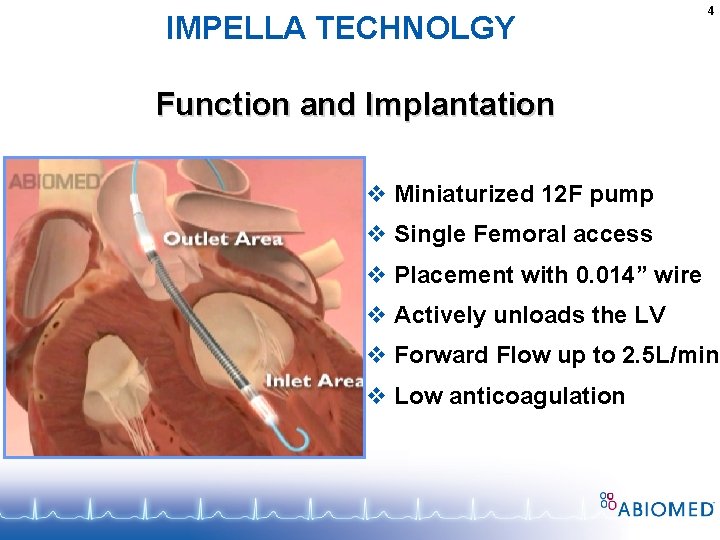
IMPELLA TECHNOLGY 4 Function and Implantation v Miniaturized 12 F pump v Single Femoral access v Placement with 0. 014” wire v Actively unloads the LV v Forward Flow up to 2. 5 L/min v Low anticoagulation
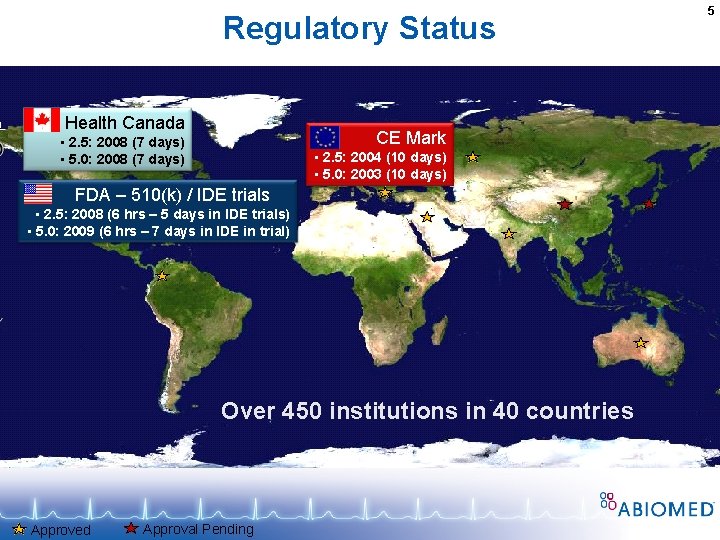
Regulatory Status Health Canada CE Mark • 2. 5: 2008 (7 days) • 5. 0: 2008 (7 days) • 2. 5: 2004 (10 days) • 5. 0: 2003 (10 days) FDA – 510(k) / IDE trials • 2. 5: 2008 (6 hrs – 5 days in IDE trials) • 5. 0: 2009 (6 hrs – 7 days in IDE in trial) Over 450 institutions in 40 countries Approved Approval Pending 5
Outline • Technology Overview • Clinical Experience and Investigations • Future Directions
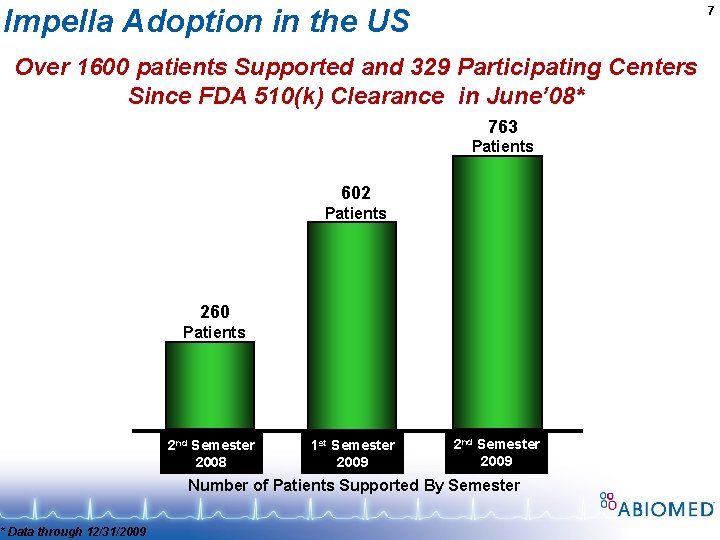
Impella Adoption in the US 7 Over 1600 patients Supported and 329 Participating Centers Since FDA 510(k) Clearance in June’ 08* * Data through 12/31/2009 763 Patients 602 Patients 260 Patients 2 nd Semester 2008 1 st Semester 2009 2 nd Semester 2009 Number of Patients Supported By Semester
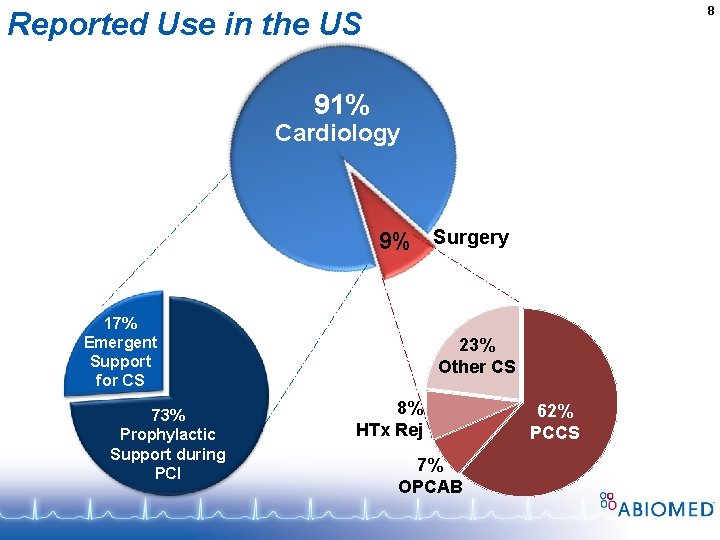
8 Reported Use in the US 91% Cardiology 9% Surgery 17% Emergent Support for CS 73% Prophylactic Support during PCI 23% Other CS 8% HTx Rej 91% 7% OPCAB 62% PCCS
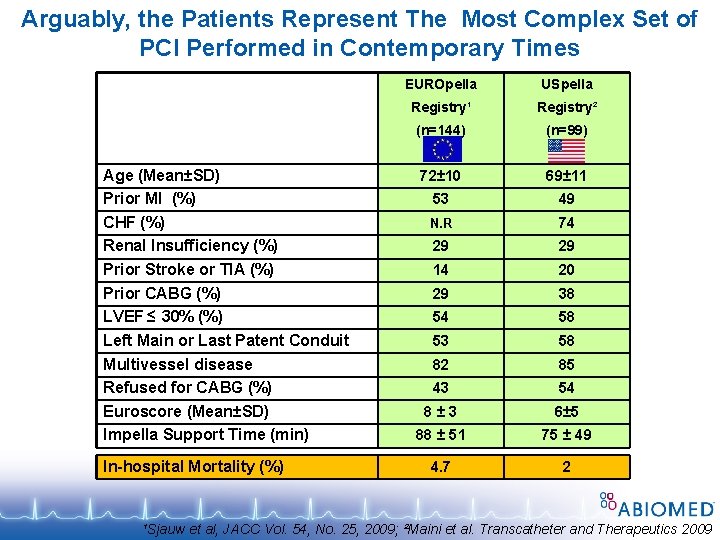
Arguably, the Patients Represent The Most Complex Set of PCI Performed in Contemporary Times Age (Mean±SD) Prior MI (%) CHF (%) Renal Insufficiency (%) Prior Stroke or TIA (%) Prior CABG (%) LVEF ≤ 30% (%) Left Main or Last Patent Conduit Multivessel disease Refused for CABG (%) Euroscore (Mean±SD) Impella Support Time (min) In-hospital Mortality (%) EUROpella USpella Registry¹ Registry² (n=144) (n=99) 72± 10 69± 11 53 49 N. R 74 29 29 14 20 29 38 54 58 53 58 82 85 43 54 8± 3 6± 5 88 ± 51 75 ± 49 4. 7 2 ¹Sjauw et al, JACC Vol. 54, No. 25, 2009; ²Maini et al. Transcatheter and Therapeutics 2009
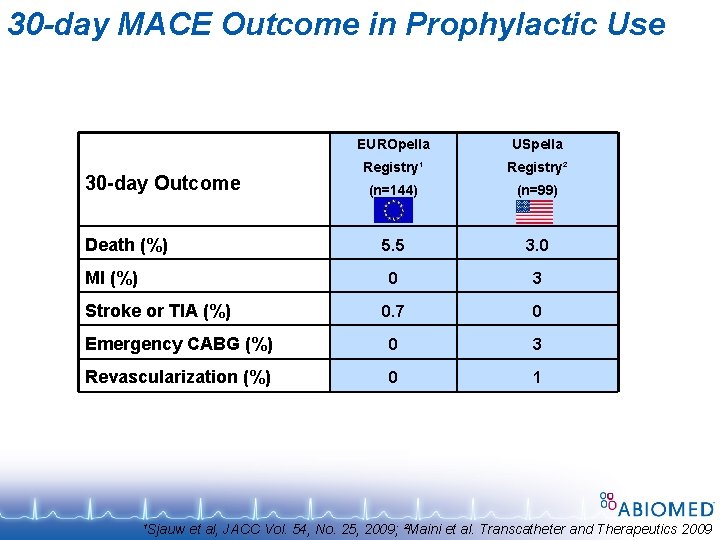
30 -day MACE Outcome in Prophylactic Use EUROpella USpella Registry¹ Registry² (n=144) (n=99) 5. 5 3. 0 0 3 0. 7 0 Emergency CABG (%) 0 3 Revascularization (%) 0 1 30 -day Outcome Death (%) MI (%) Stroke or TIA (%) ¹Sjauw et al, JACC Vol. 54, No. 25, 2009; ²Maini et al. Transcatheter and Therapeutics 2009
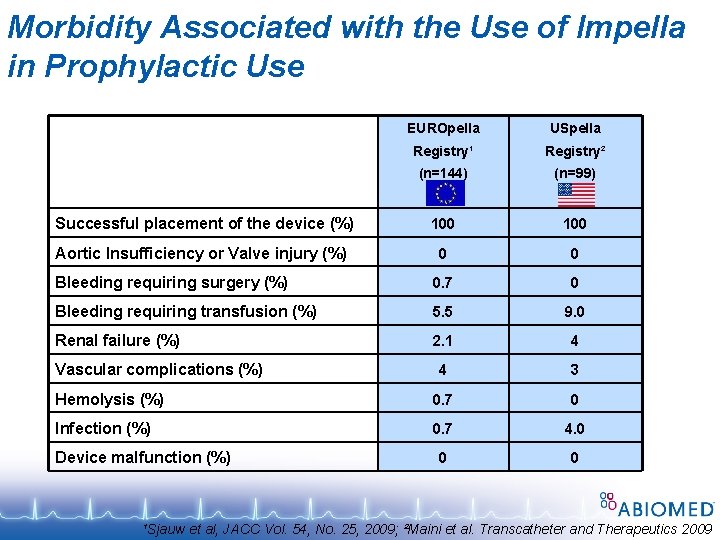
Morbidity Associated with the Use of Impella in Prophylactic Use EUROpella USpella Registry¹ Registry² (n=144) (n=99) Successful placement of the device (%) 100 Aortic Insufficiency or Valve injury (%) 0 0 Bleeding requiring surgery (%) 0. 7 0 Bleeding requiring transfusion (%) 5. 5 9. 0 Renal failure (%) 2. 1 4 4 3 Hemolysis (%) 0. 7 0 Infection (%) 0. 7 4. 0 0 0 Vascular complications (%) Device malfunction (%) ¹Sjauw et al, JACC Vol. 54, No. 25, 2009; ²Maini et al. Transcatheter and Therapeutics 2009
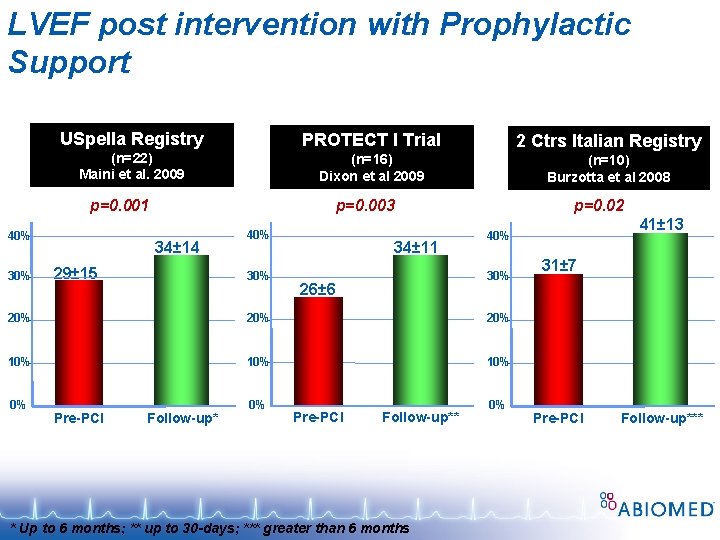
LVEF post intervention with Prophylactic Support USpella Registry (n=22) Maini et al. 2009 PROTECT I Trial 2 Ctrs Italian Registry (n=16) Dixon et al 2009 (n=10) Burzotta et al 2008 p=0. 003 p=0. 001 40% 34± 14 29± 15 40% 34± 11 p=0. 02 30% 26± 6 20% 20% 10% 10% 0% Pre-PCI Follow-up** * Up to 6 months; ** up to 30 -days; *** greater than 6 months 41± 13 40% 0% 31± 7 Pre-PCI Follow-up***
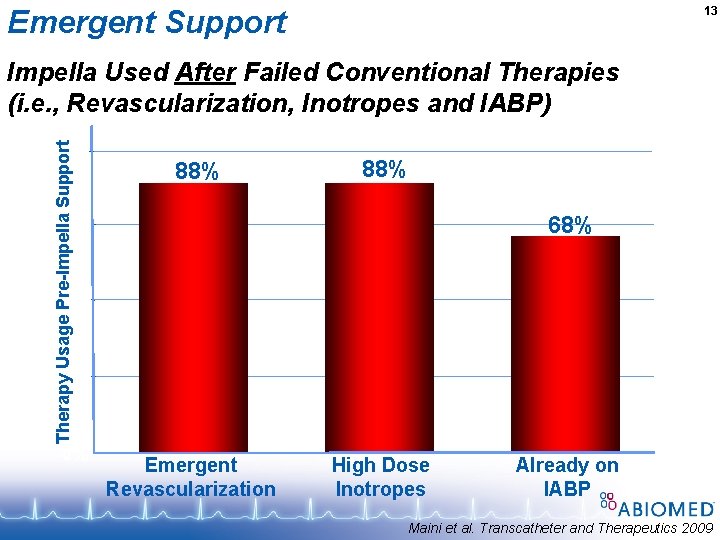
Emergent Support 13 Therapy Usage Pre-Impella Support Impella Used After Failed Conventional Therapies (i. e. , Revascularization, Inotropes and IABP) 100% 88% 68% 75% 50% 25% 0% Emergent Revascularization High Dose Inotropes Already on IABP Maini et al. Transcatheter and Therapeutics 2009
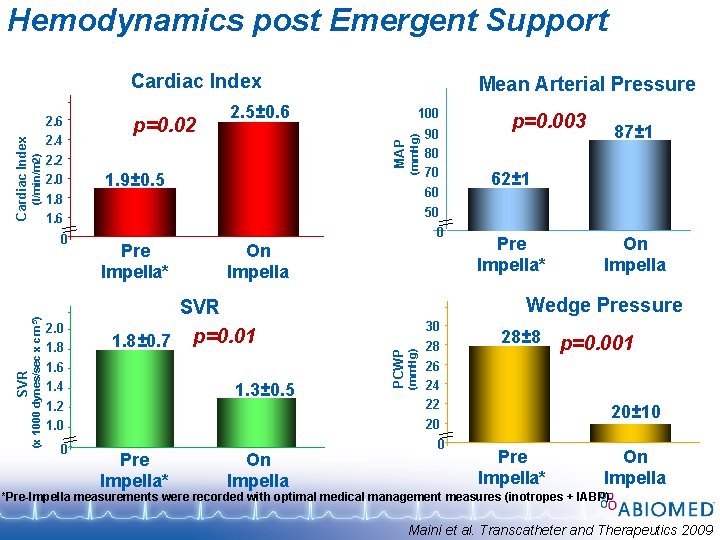
Hemodynamics post Emergent Support Cardiac Index 100 1. 9± 0. 5 0 On Impella SVR 1. 8± 0. 7 p=0. 01 1. 3± 0. 5 p=0. 003 87± 1 6 62± 1 9 Pre Impella* On Impella Wedge Pressure 30 (mm. Hg) Pre Impella* 1. 2 1. 0 0 80 70 50 PCWP (x 1000 dynes/sec x cm-5) 2. 0 1. 8 1. 6 1. 4 90 60 1. 6 0 SVR 2. 5± 0. 6 MAP 2. 4 2. 2 2. 0 1. 8 p=0. 02 (mm. Hg) (l/min/m 2) Cardiac Index 2. 6 Mean Arterial Pressure 28 28± 8 p=0. 001 26 24 22 20± 10 20 Pre Impella* On Impella *Pre-Impella measurements were recorded with optimal medical management measures (inotropes + IABP) Maini et al. Transcatheter and Therapeutics 2009
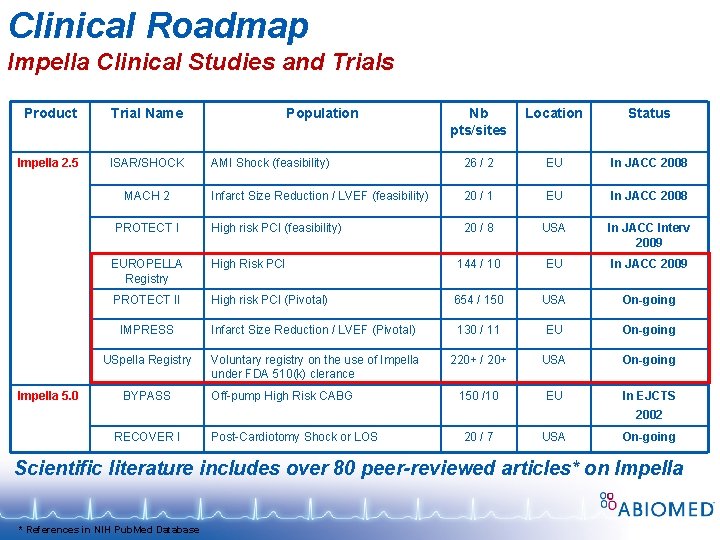
Clinical Roadmap Impella Clinical Studies and Trials Product Trial Name Impella 2. 5 ISAR/SHOCK MACH 2 PROTECT I Impella 5. 0 Population Nb pts/sites Location Status AMI Shock (feasibility) 26 / 2 EU In JACC 2008 Infarct Size Reduction / LVEF (feasibility) 20 / 1 EU In JACC 2008 High risk PCI (feasibility) 20 / 8 USA In JACC Interv 2009 EUROPELLA Registry High Risk PCI 144 / 10 EU In JACC 2009 PROTECT II High risk PCI (Pivotal) 654 / 150 USA On-going IMPRESS Infarct Size Reduction / LVEF (Pivotal) 130 / 11 EU On-going USpella Registry Voluntary registry on the use of Impella under FDA 510(k) clerance 220+ / 20+ USA On-going 150 /10 EU In EJCTS BYPASS Off-pump High Risk CABG 2002 RECOVER I Post-Cardiotomy Shock or LOS 20 / 7 USA On-going Scientific literature includes over 80 peer-reviewed articles* on Impella * References in NIH Pub. Med Database
Outline • Technology Overview • Clinical Experience and Investigations • Future Directions
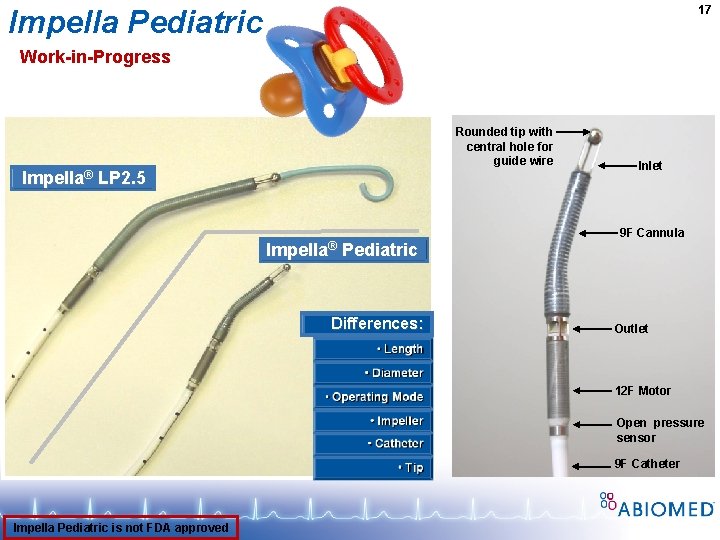
17 Impella Pediatric Work-in-Progress Rounded tip with central hole for guide wire Impella® LP 2. 5 Impella® Pediatric Differences: Inlet 9 F Cannula Outlet 12 F Motor Open pressure sensor 9 F Catheter Impella Pediatric is not FDA approved
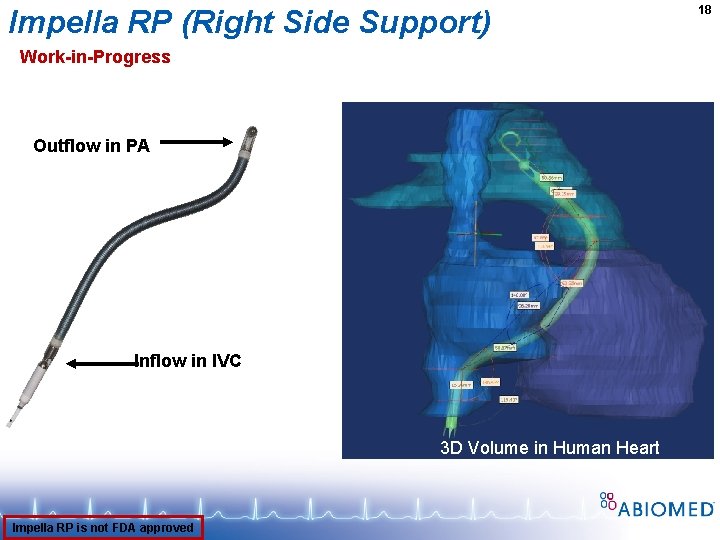
Impella RP (Right Side Support) Work-in-Progress Outflow in PA Inflow in IVC 3 D Volume in Human Heart Impella RP is not FDA approved 18
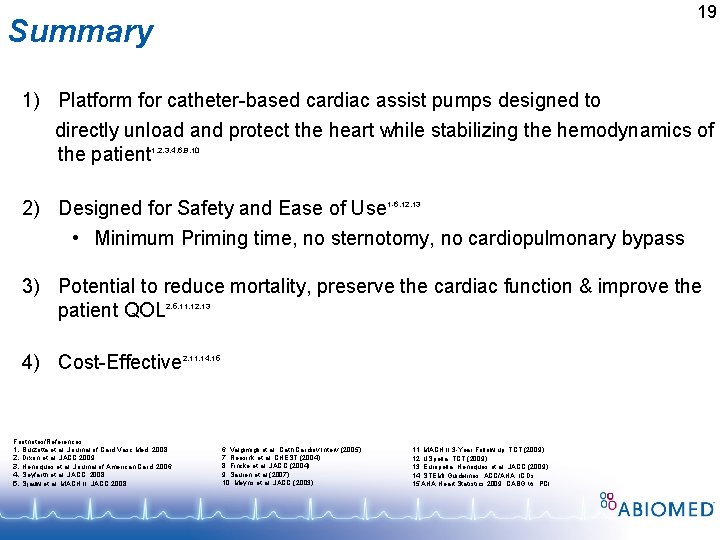
19 Summary 1) Platform for catheter-based cardiac assist pumps designed to directly unload and protect the heart while stabilizing the hemodynamics of the patient 1, 2, 3, 4, 6, 8, 10 2) Designed for Safety and Ease of Use • Minimum Priming time, no sternotomy, no cardiopulmonary bypass 1 -6, 12, 13 3) Potential to reduce mortality, preserve the cardiac function & improve the patient QOL 2, 5, 11, 12, 13 4) Cost-Effective Footnotes/References: 1. Burzotta et al, Journal of Card Vasc Med, 2008 2. Dixon et al, JACC 2009 3. Henriques et al, Journal of American Card, 2006 4. Seyfarth et al, JACC, 2008 5. Sjauw et al, MACH II, JACC 2008 2, 11, 14, 15 6. Valgimigli et al, Cath Cardiov Interv (2005) 7. Reesink et al, CHEST (2004) 8. Fincke et al, JACC (2004) 9. Sauren et al (2007) 10. Meyns et al, JACC (2003) 11. MACH II 3 -Year Follow up, TCT (2009) 12. USpella, TCT (2009) 13. Europella, Henriques et al, JACC (2009) 14. STEMI Guidelines, ACC/AHA, ICDs 15 AHA Heart Statistics 2009: CABG vs. PCI
Appendix
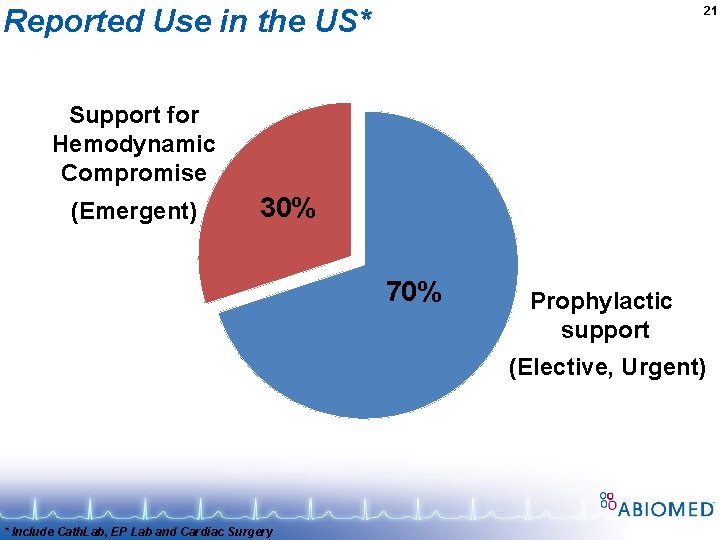
Reported Use in the US* 21 Support for Hemodynamic Compromise (Emergent) 30% 70% Prophylactic support (Elective, Urgent) * Include Cath. Lab, EP Lab and Cardiac Surgery
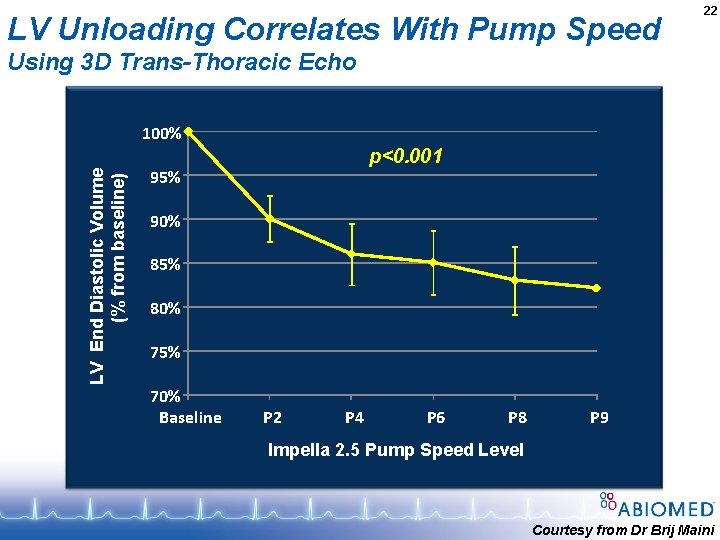
LV Unloading Correlates With Pump Speed 22 Using 3 D Trans-Thoracic Echo LV End Diastolic Volume (% from baseline) 100% p<0. 001 95% 90% 85% 80% 75% 70% Baseline P 2 P 4 P 6 P 8 P 9 Impella 2. 5 Pump Speed Level Courtesy from Dr Brij Maini

- Slides: 23