
Impedance matching analogy between optical and microwave problems
Impedance matching – analogy between optical and microwave problems 7/20/2017 Jiansong Gao 1
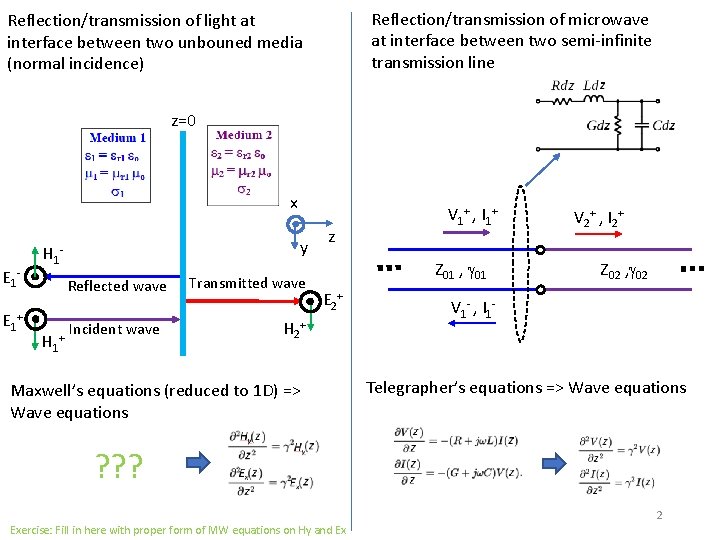
Reflection/transmission of microwave at interface between two semi-infinite transmission line Reflection/transmission of light at interface between two unbouned media (normal incidence) z=0 x E 1 E 1+ y H 1 Reflected wave H 1+ Incident wave Transmitted wave z V 1+ , I 1+ Z 01 , g 01 E 2+ H 2+ Maxwell’s equations (reduced to 1 D) => Wave equations V 2+ , I 2+ Z 02 , g 02 V 1 - , I 1 - Telegrapher’s equations => Wave equations ? ? ? 2 Exercise: Fill in here with proper form of MW equations on Hy and Ex
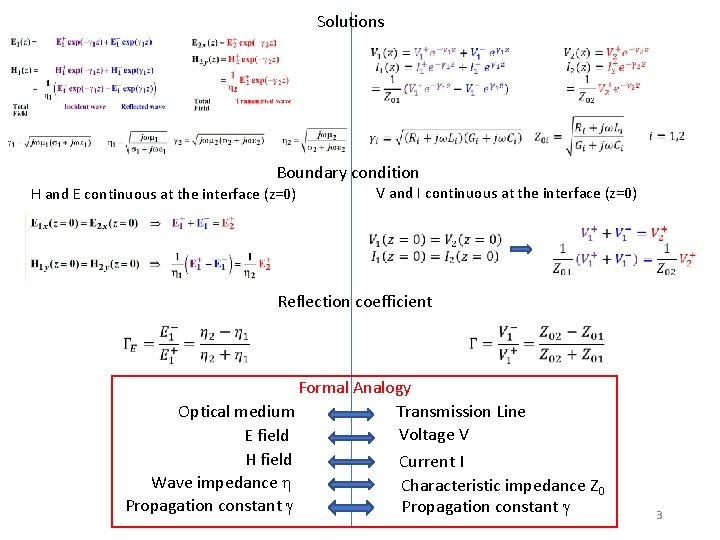
Solutions Boundary condition V and I continuous at the interface (z=0) H and E continuous at the interface (z=0) Reflection coefficient Formal Analogy Optical medium Transmission Line Voltage V E field H field Current I Wave impedance h Characteristic impedance Z 0 Propagation constant g 3
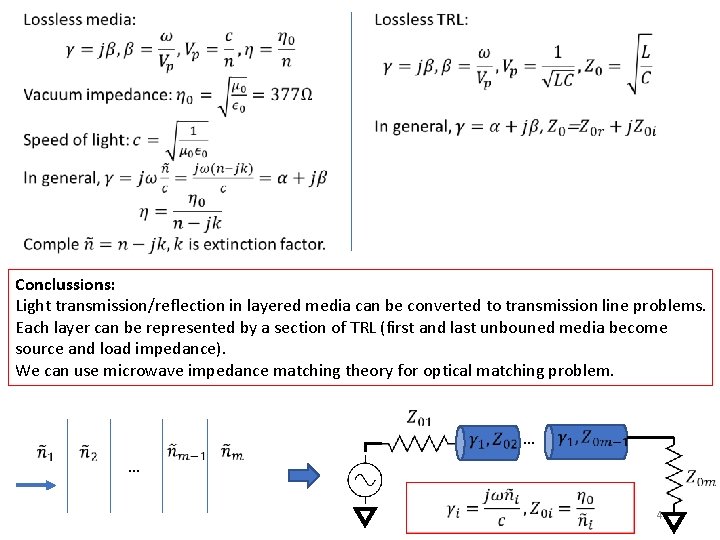
Conclussions: Light transmission/reflection in layered media can be converted to transmission line problems. Each layer can be represented by a section of TRL (first and last unbouned media become source and load impedance). We can use microwave impedance matching theory for optical matching problem. … … 4
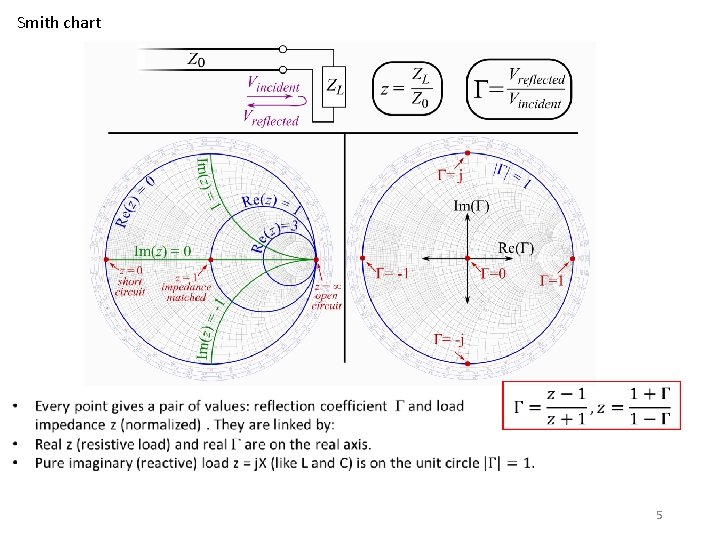
Smith chart 5
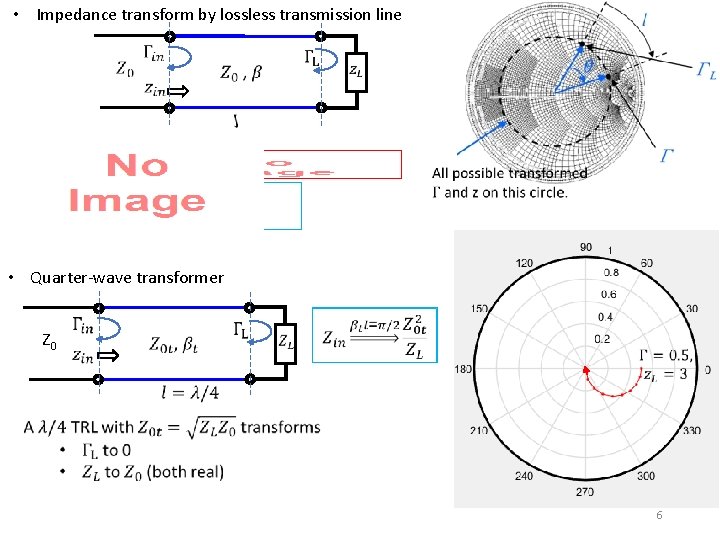
• Impedance transform by lossless transmission line • Quarter-wave transformer Z 0 6
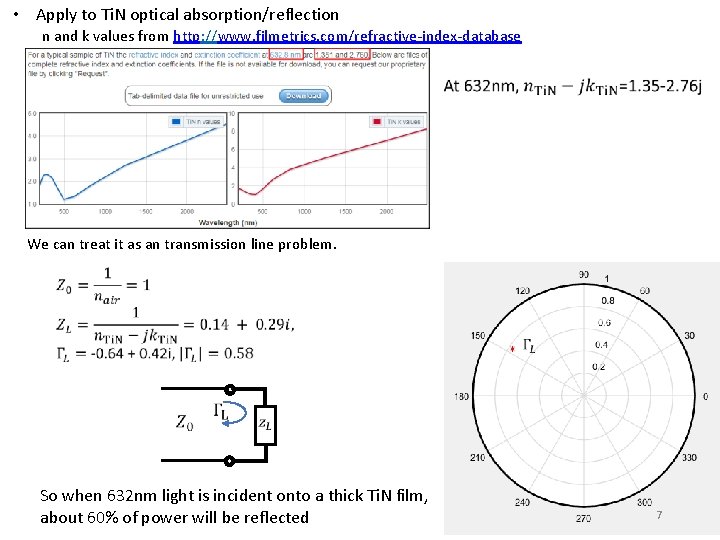
• Apply to Ti. N optical absorption/reflection n and k values from http: //www. filmetrics. com/refractive-index-database We can treat it as an transmission line problem. So when 632 nm light is incident onto a thick Ti. N film, about 60% of power will be reflected 7
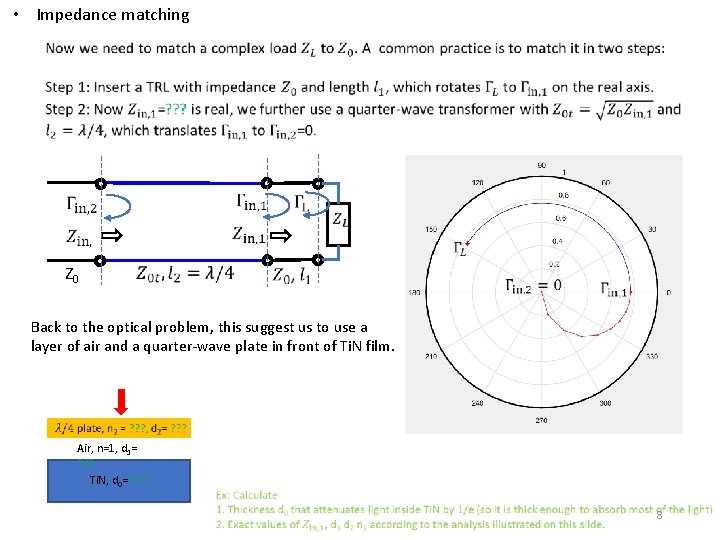
• Impedance matching Z 0 Back to the optical problem, this suggest us to use a layer of air and a quarter-wave plate in front of Ti. N film. Air, n=1, d 1= ? ? ? Ti. N, d 0= ? ? ? 8
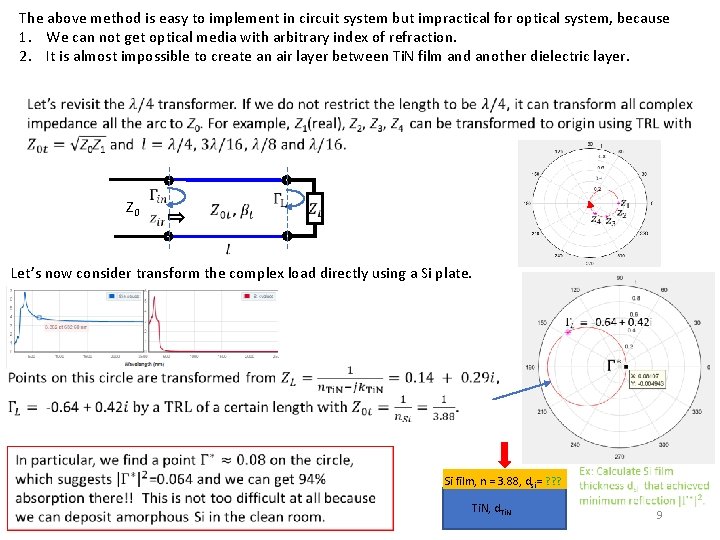
The above method is easy to implement in circuit system but impractical for optical system, because 1. We can not get optical media with arbitrary index of refraction. 2. It is almost impossible to create an air layer between Ti. N film and another dielectric layer. Z 0 Let’s now consider transform the complex load directly using a Si plate. Si film, n = 3. 88, dsi= ? ? ? Ti. N, d. Ti. N 9
- Slides: 9