
Imparfait formation and explanation The imperfect tense limparfait
- Slides: 8
Imparfait formation and explanation
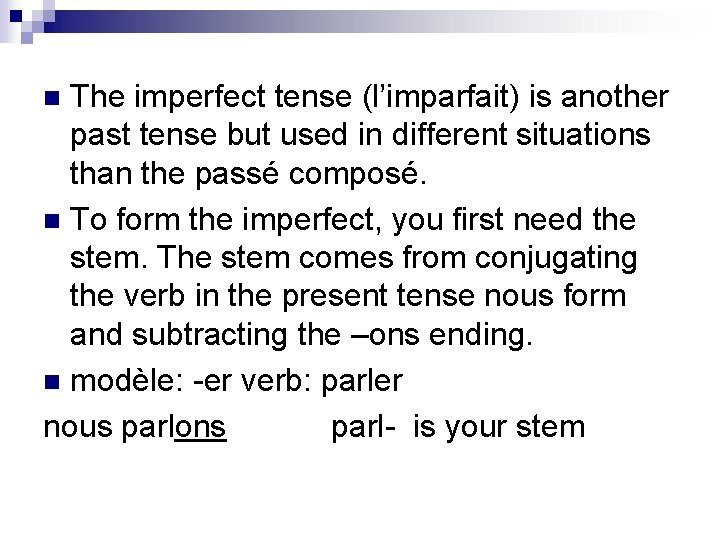
The imperfect tense (l’imparfait) is another past tense but used in different situations than the passé composé. n To form the imperfect, you first need the stem. The stem comes from conjugating the verb in the present tense nous form and subtracting the –ons ending. n modèle: -er verb: parler nous parlons parl- is your stem n
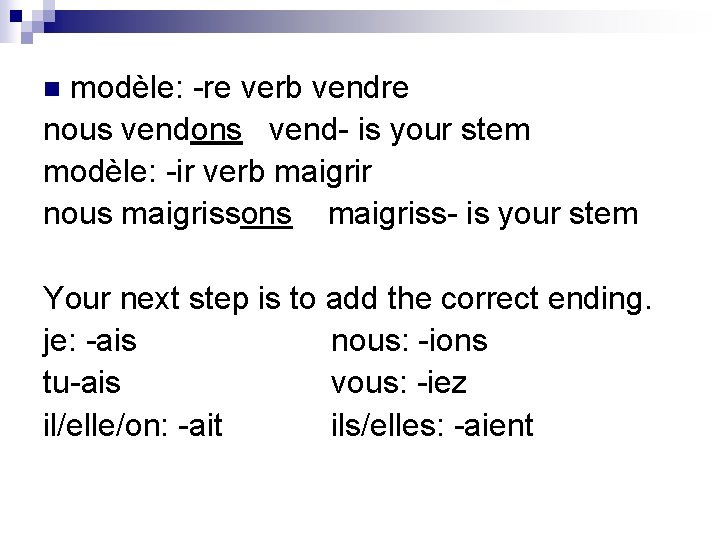
modèle: -re verb vendre nous vendons vend- is your stem modèle: -ir verb maigrir nous maigrissons maigriss- is your stem n Your next step is to add the correct ending. je: -ais nous: -ions tu-ais vous: -iez il/elle/on: -ait ils/elles: -aient
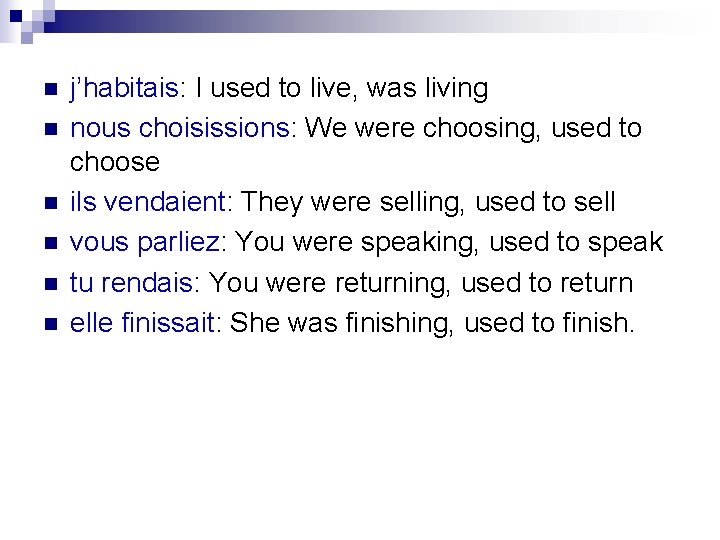
n n n j’habitais: I used to live, was living nous choisissions: We were choosing, used to choose ils vendaient: They were selling, used to sell vous parliez: You were speaking, used to speak tu rendais: You were returning, used to return elle finissait: She was finishing, used to finish.
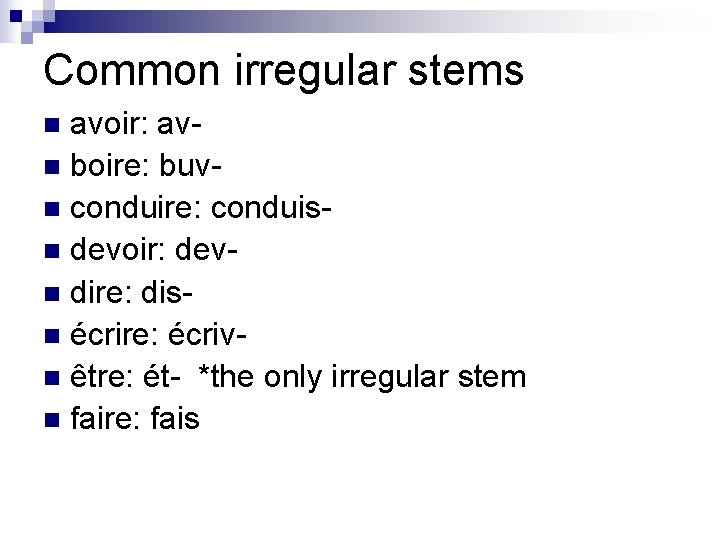
Common irregular stems avoir: avn boire: buvn conduire: conduisn devoir: devn dire: disn écrire: écrivn être: ét- *the only irregular stem n faire: fais n
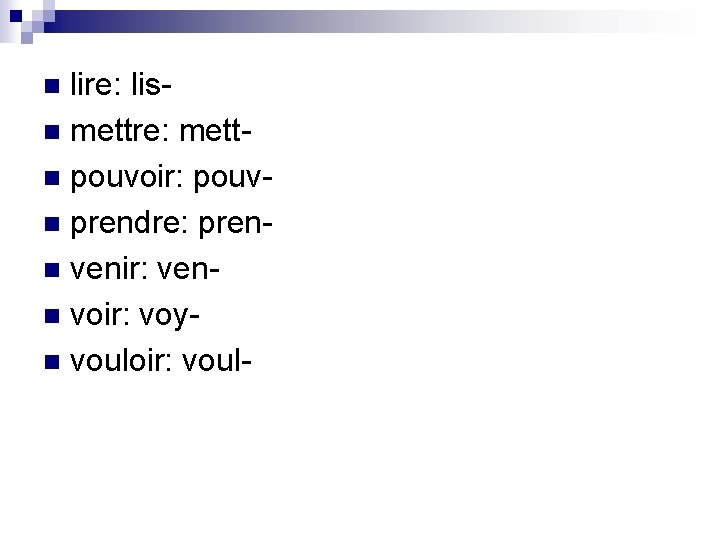
lire: lisn mettre: mettn pouvoir: pouvn prendre: prenn venir: venn voir: voyn vouloir: vouln
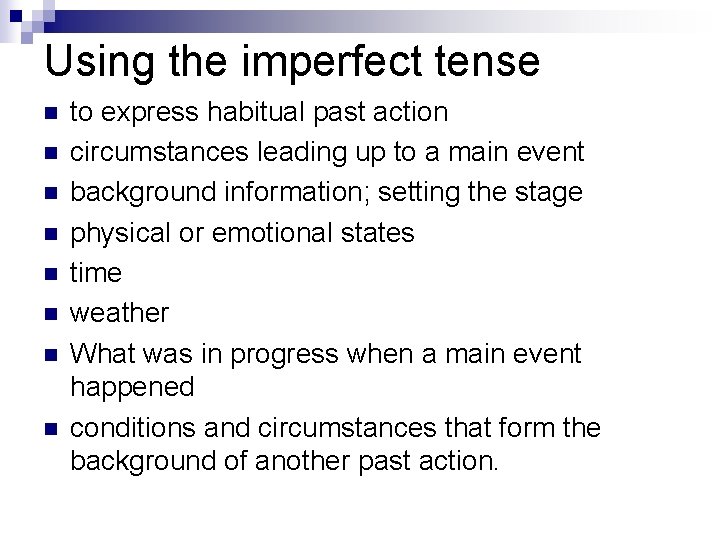
Using the imperfect tense n n n n to express habitual past action circumstances leading up to a main event background information; setting the stage physical or emotional states time weather What was in progress when a main event happened conditions and circumstances that form the background of another past action.
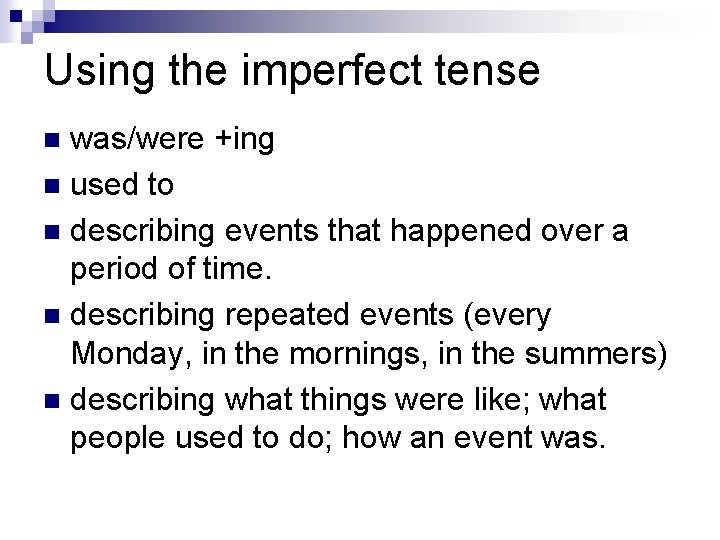
Using the imperfect tense was/were +ing n used to n describing events that happened over a period of time. n describing repeated events (every Monday, in the mornings, in the summers) n describing what things were like; what people used to do; how an event was. n