
IMPACT STUDY OF GAP MANAGEMENT ON TRAFFIC OPERATION

- Slides: 45
IMPACT STUDY OF GAP MANAGEMENT ON TRAFFIC OPERATION THROUGH CONNECTED/AUTOMATED VEHICLES Dr. Ping Yi, Professor, P. E. , Director, Center for Transportation Research The University of Akron ITITS 2015, Xi’an, China December 12, 2015
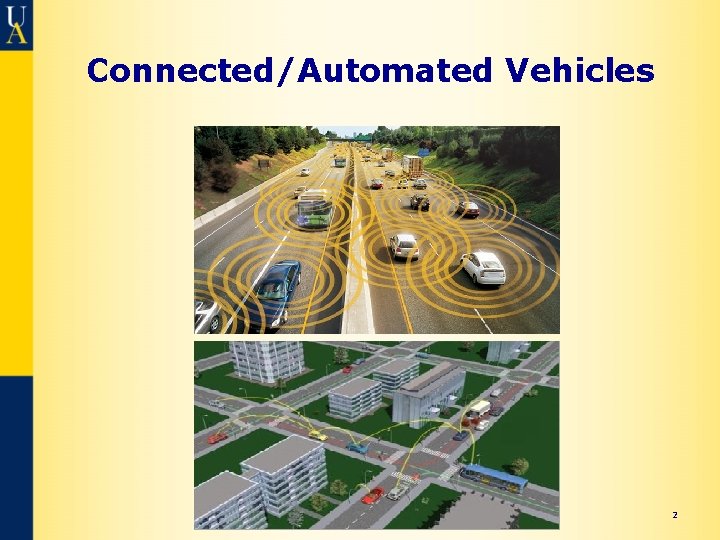
Connected/Automated Vehicles 2
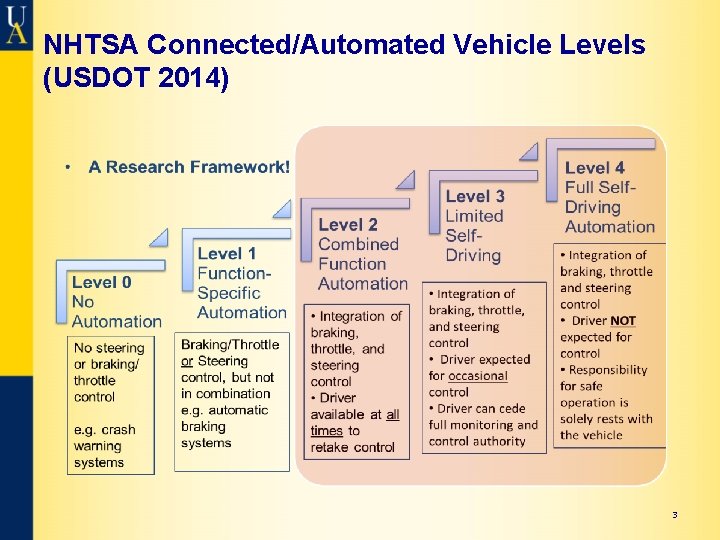
NHTSA Connected/Automated Vehicle Levels (USDOT 2014) 3
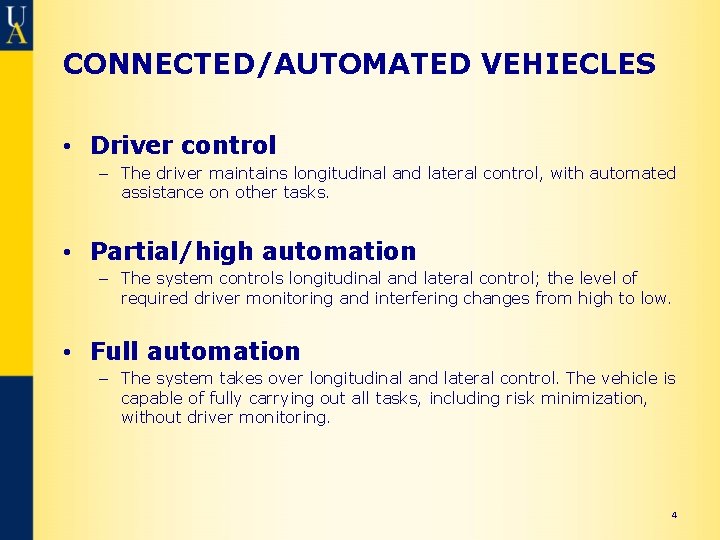
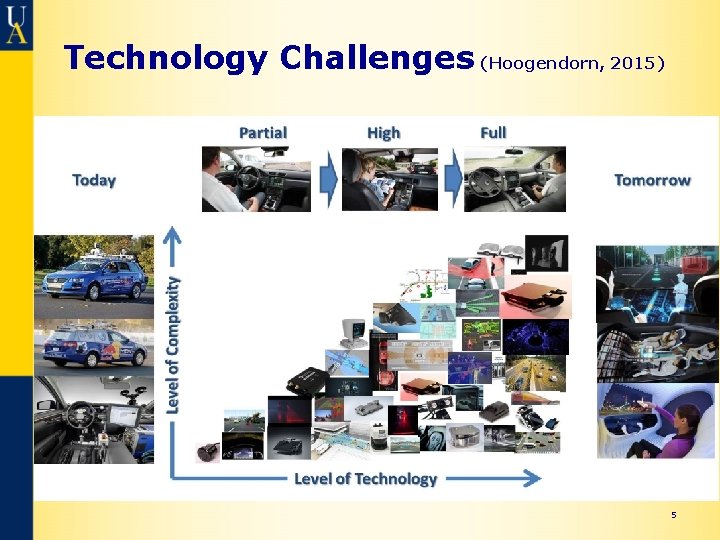
CONNECTED/AUTOMATED VEHIECLES • Driver control – The driver maintains longitudinal and lateral control, with automated assistance on other tasks. • Partial/high automation – The system controls longitudinal and lateral control; the level of required driver monitoring and interfering changes from high to low. • Full automation – The system takes over longitudinal and lateral control. The vehicle is capable of fully carrying out all tasks, including risk minimization, without driver monitoring. 4
Technology Challenges (Hoogendorn, 2015) 5
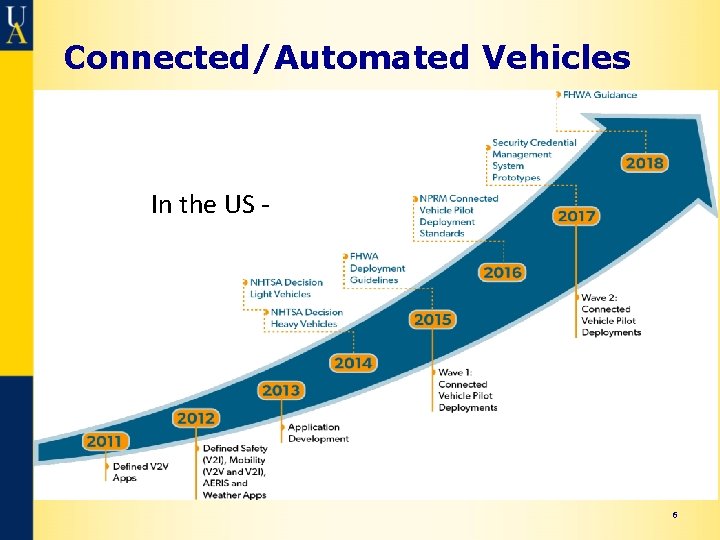
Connected/Automated Vehicles In the US - 6
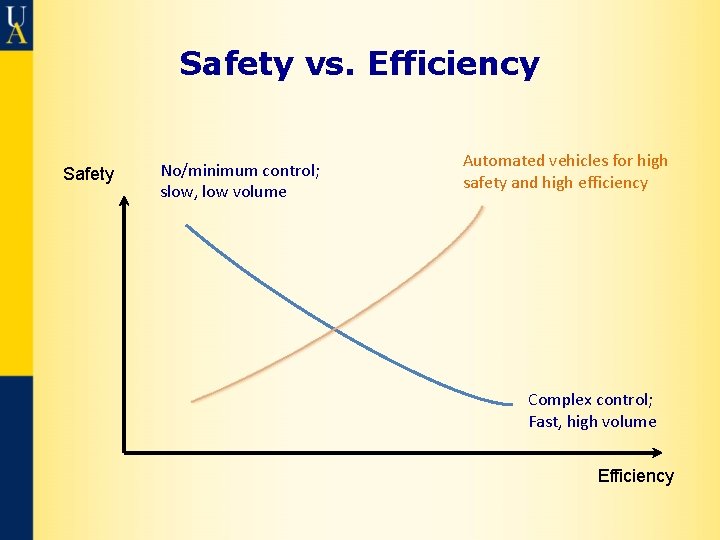
Safety vs. Efficiency Safety No/minimum control; slow, low volume Automated vehicles for high safety and high efficiency Complex control; Fast, high volume Efficiency
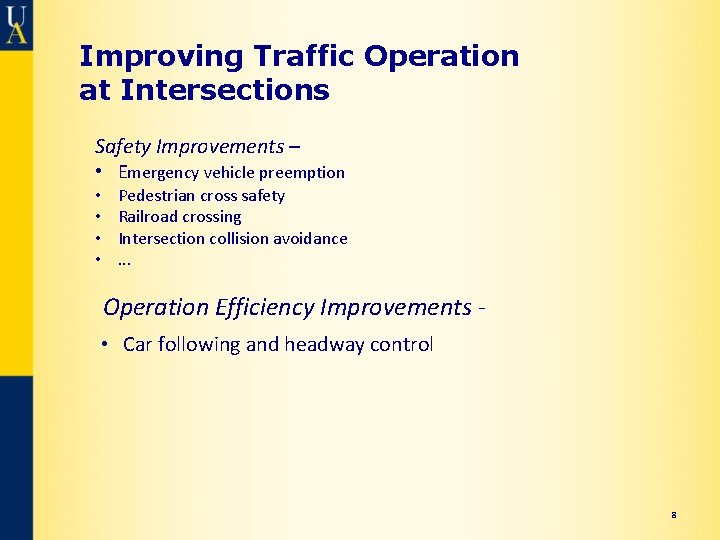
Improving Traffic Operation at Intersections Safety Improvements – • Emergency vehicle preemption • • Pedestrian cross safety Railroad crossing Intersection collision avoidance. . . Operation Efficiency Improvements • Car following and headway control 8
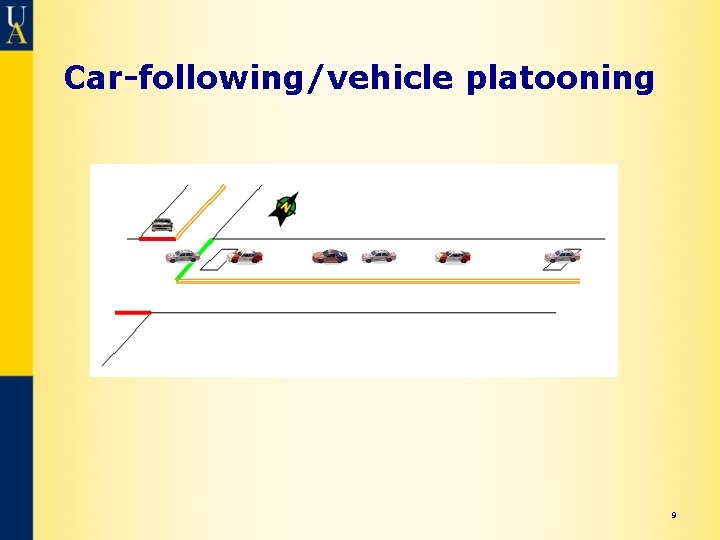
Car-following/vehicle platooning 9
Improving Traffic Operation at Intersections Safety Improvements – • Emergency vehicle preemption • • Pedestrian cross safety Railroad crossing Intersection collision avoidance. . . Operation Efficiency Improvements - • Car following headway control • Start-up and change of phase delay reduction 10
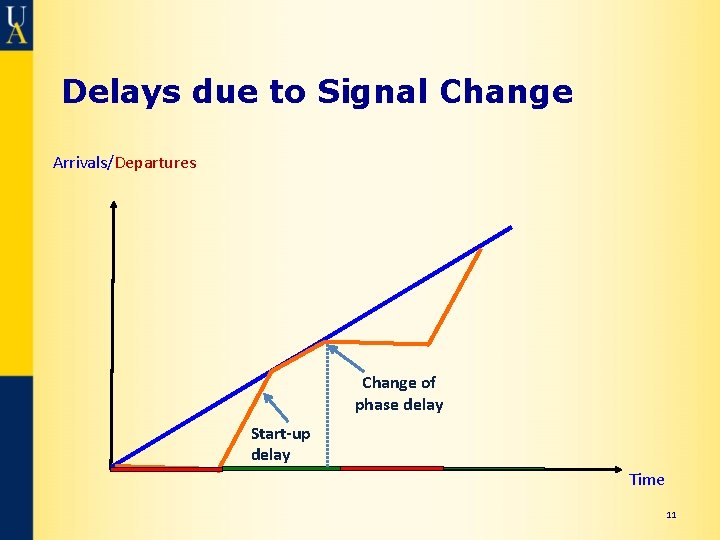
Delays due to Signal Change Arrivals/Departures Change of phase delay Start-up delay Time 11
Improving Traffic Operation at Intersections Safety Improvements – • Emergency vehicle preemption • • Pedestrian cross safety Railroad crossing Intersection collision avoidance. . . Operation Efficiency Improvements - • Car following headway reduction • Start-up and change of phase delay reduction • Side street entry optimization 12
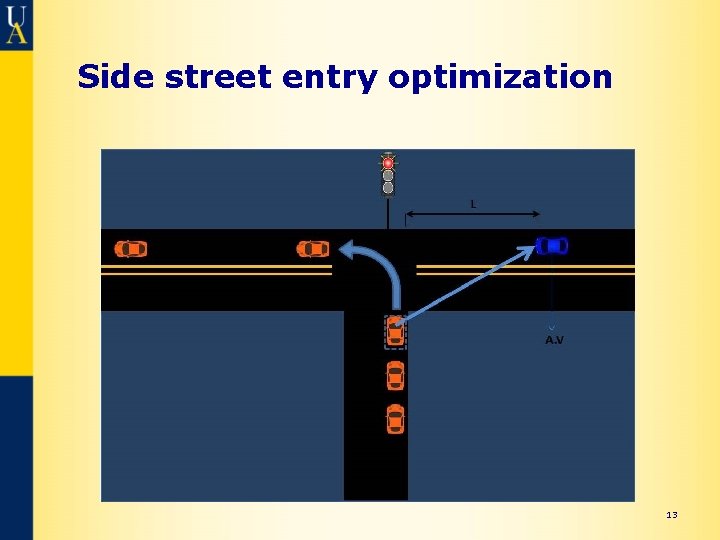
Side street entry optimization 13
Improving Traffic Operation at Intersections Safety Improvements – • Emergency vehicle preemption Pedestrian cross safety Railroad crossing Intersection collision avoidance. . . • • Operation Efficiency Improvements • • Car following headway reduction Start-up and change of phase delay reduction Side street entry optimization Dilemma zone minimization 14
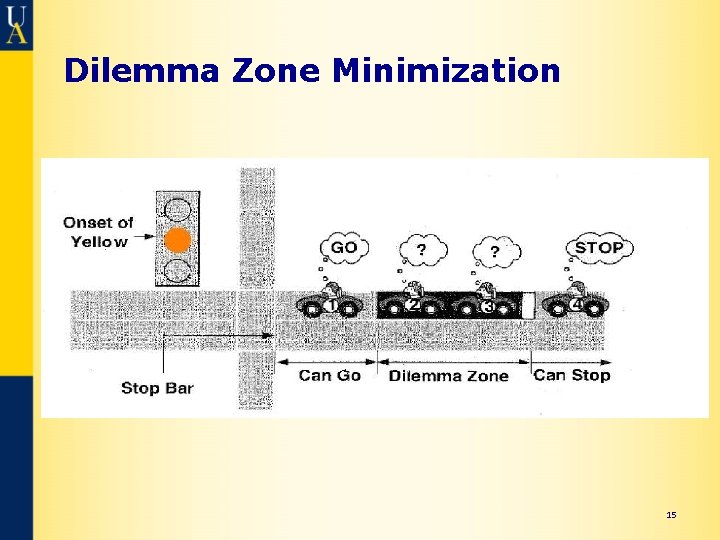
Dilemma Zone Minimization 15
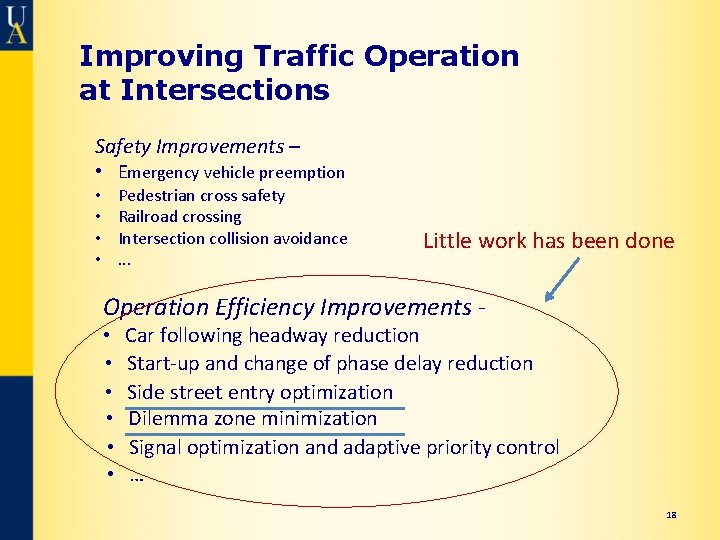
Improving Traffic Operation at Intersections Safety Improvements – • Emergency vehicle preemption Pedestrian cross safety Railroad crossing Intersection collision avoidance. . . • • Operation Efficiency Improvements • • • Car following headway reduction Start-up and change of phase delay reduction Side street entry optimization Dilemma zone minimization Signal optimization and adaptive priority control … 16
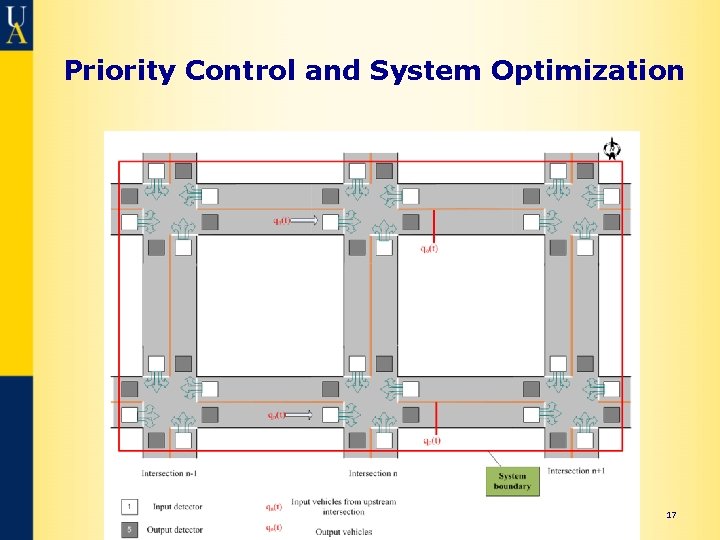
Priority Control and System Optimization 17
Improving Traffic Operation at Intersections Safety Improvements – • Emergency vehicle preemption Pedestrian cross safety Railroad crossing Intersection collision avoidance. . . • • Little work has been done Operation Efficiency Improvements • • • Car following headway reduction Start-up and change of phase delay reduction Side street entry optimization Dilemma zone minimization Signal optimization and adaptive priority control … 18
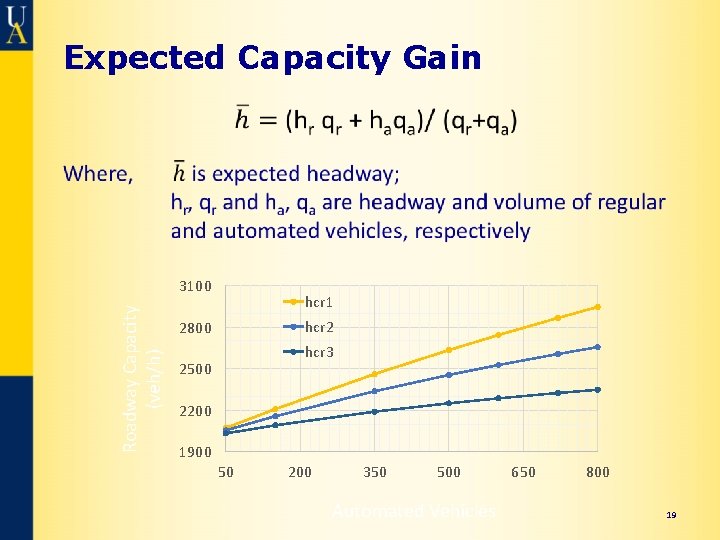
Expected Capacity Gain Roadway Capacity (veh/h) 3100 hcr 1 hcr 2 2800 hcr 3 2500 2200 1900 50 200 350 500 Automated Vehicles 650 800 19
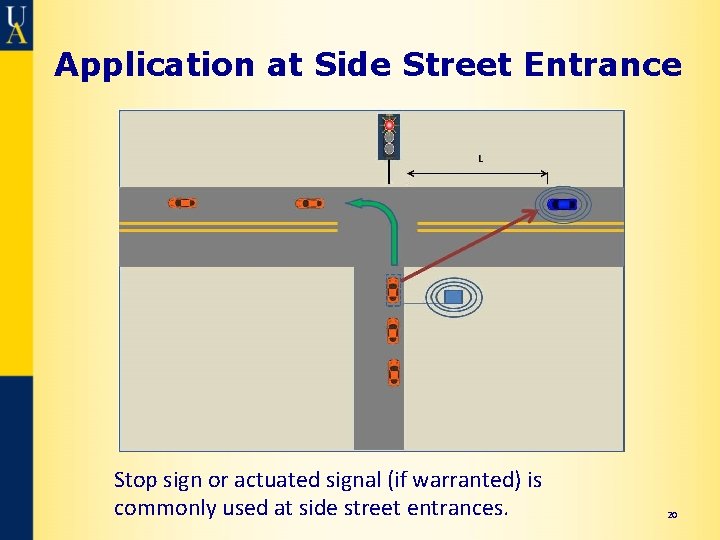
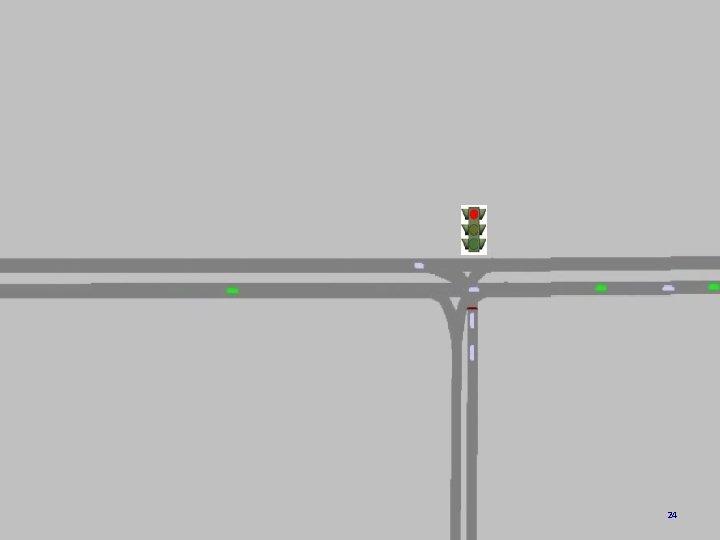
Application at Side Street Entrance Stop sign or actuated signal (if warranted) is commonly used at side street entrances. 20
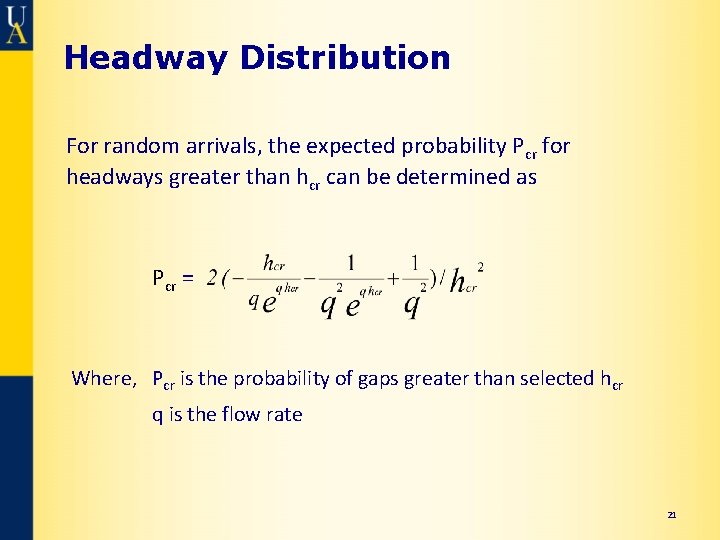
Headway Distribution For random arrivals, the expected probability Pcr for headways greater than hcr can be determined as Pcr = Where, Pcr is the probability of gaps greater than selected hcr q is the flow rate 21
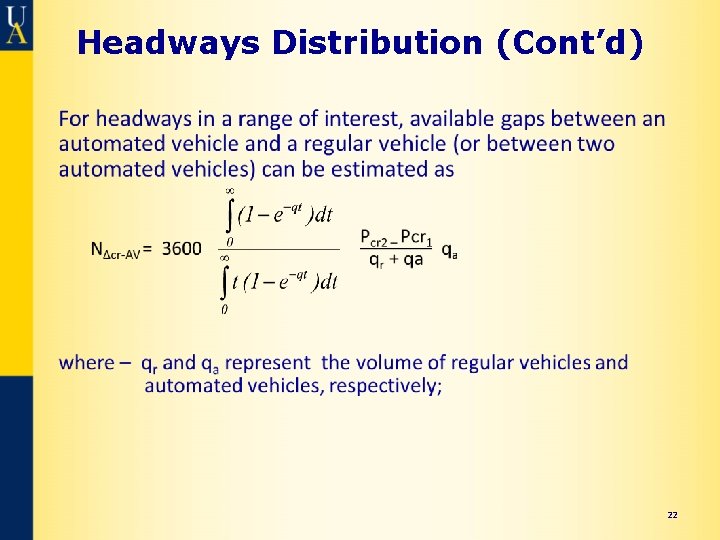
Headways Distribution (Cont’d) • 22
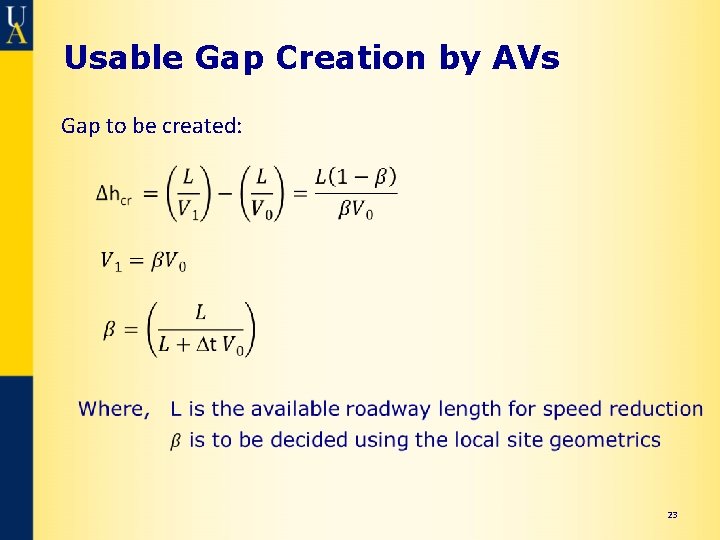
Usable Gap Creation by AVs Gap to be created: • 23
24
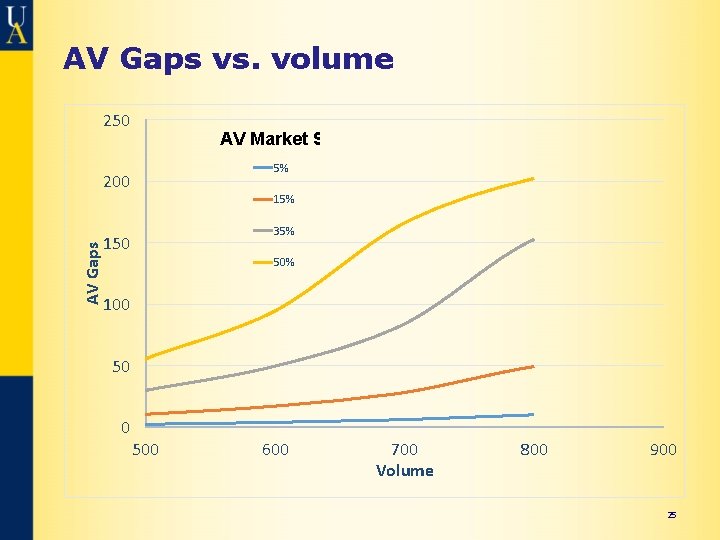
AV Gaps vs. volume 250 AV Market Share 5% AV Gaps 200 15% 35% 150 50% 100 500 600 700 Volume 800 900 25
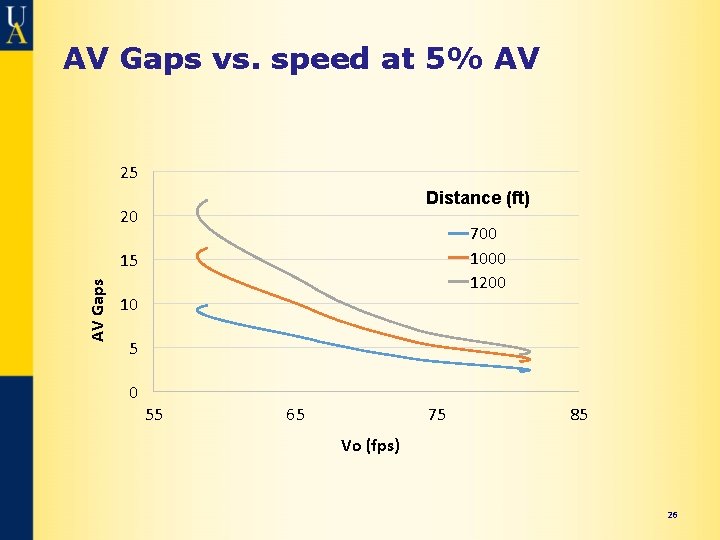
AV Gaps vs. speed at 5% AV 25 Distance (ft) 20 700 1000 1200 AV Gaps 15 10 5 0 55 65 75 85 Vo (fps) 26
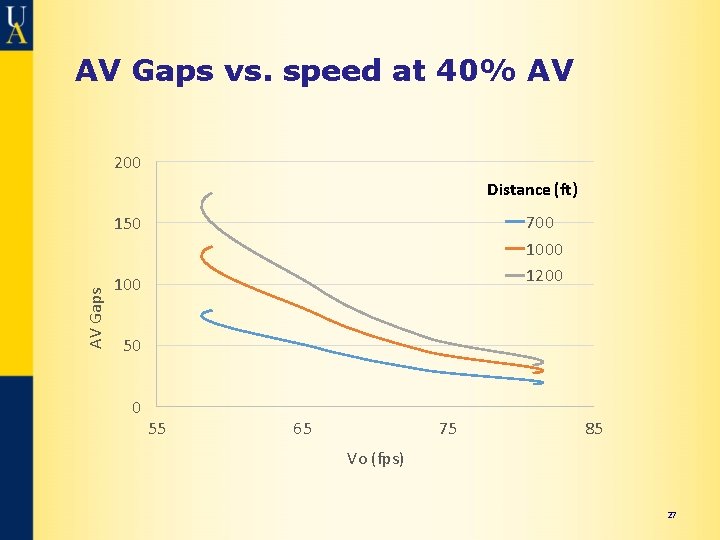
AV Gaps vs. speed at 40% AV 200 Distance (ft) 700 1000 1200 AV Gaps 150 100 50 0 55 65 75 85 Vo (fps) 27
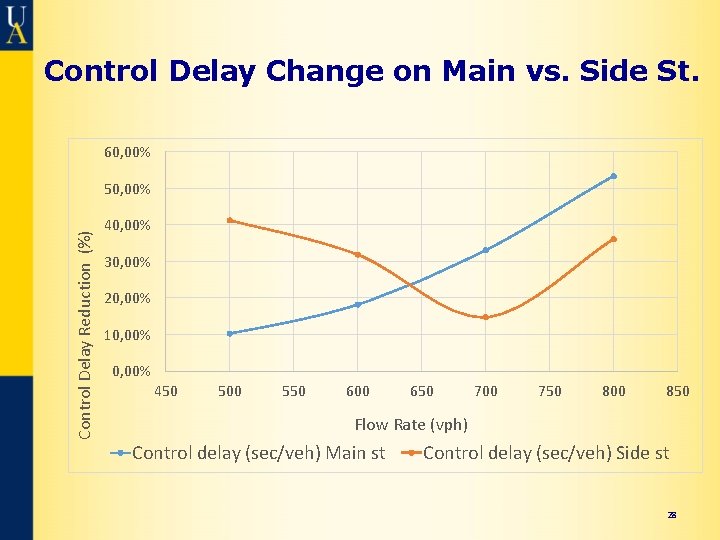
Control Delay Change on Main vs. Side St. 60, 00% Control Delay Reduction (%) 50, 00% 40, 00% 30, 00% 20, 00% 10, 00% 450 500 550 600 650 700 750 800 850 Flow Rate (vph) Control delay (sec/veh) Main st Control delay (sec/veh) Side st 28
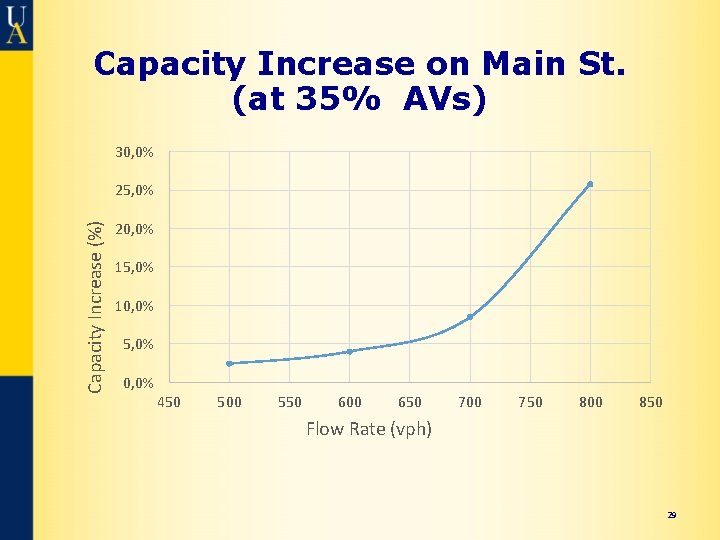
Capacity Increase on Main St. (at 35% AVs) 30, 0% Capacity Increase (%) 25, 0% 20, 0% 15, 0% 10, 0% 5, 0% 0, 0% 450 500 550 600 650 700 750 800 850 Flow Rate (vph) 29
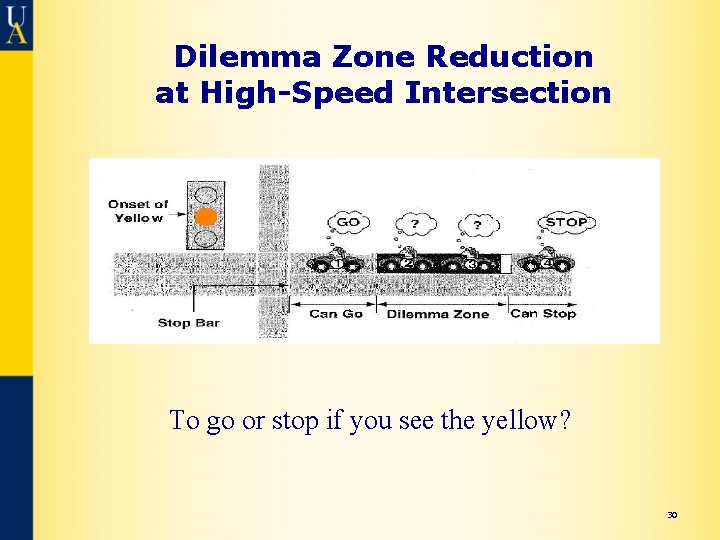
Dilemma Zone Reduction at High-Speed Intersection To go or stop if you see the yellow? 30
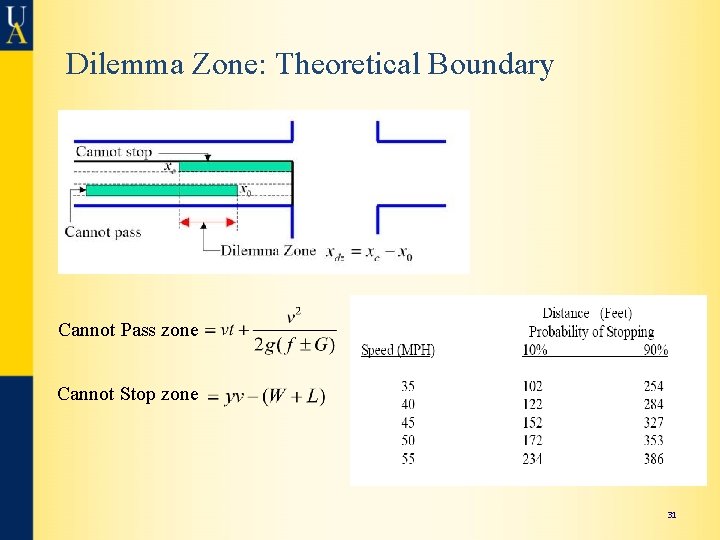
Dilemma Zone: Theoretical Boundary Cannot Pass zone Cannot Stop zone 31
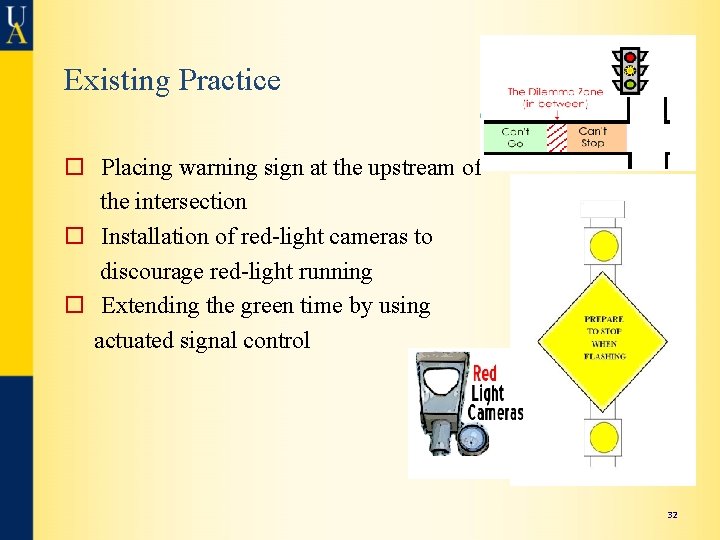
Existing Practice o Placing warning sign at the upstream of the intersection o Installation of red-light cameras to discourage red-light running o Extending the green time by using actuated signal control 32
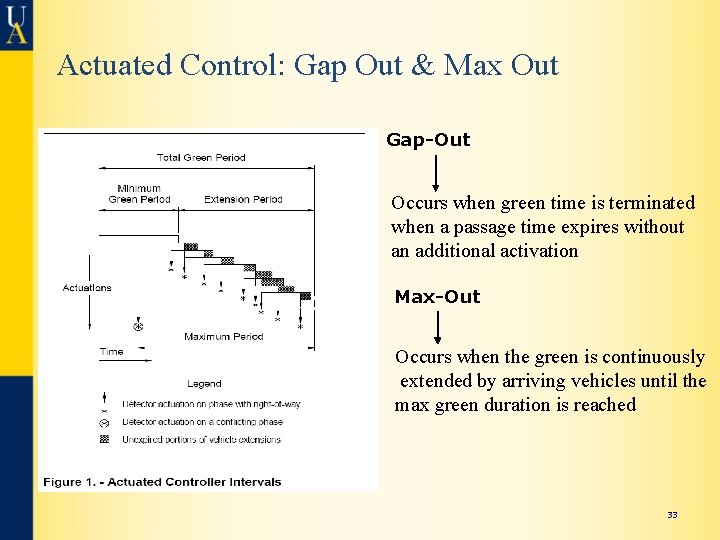
Actuated Control: Gap Out & Max Out Gap-Out Occurs when green time is terminated when a passage time expires without an additional activation Max-Out Occurs when the green is continuously extended by arriving vehicles until the max green duration is reached 33
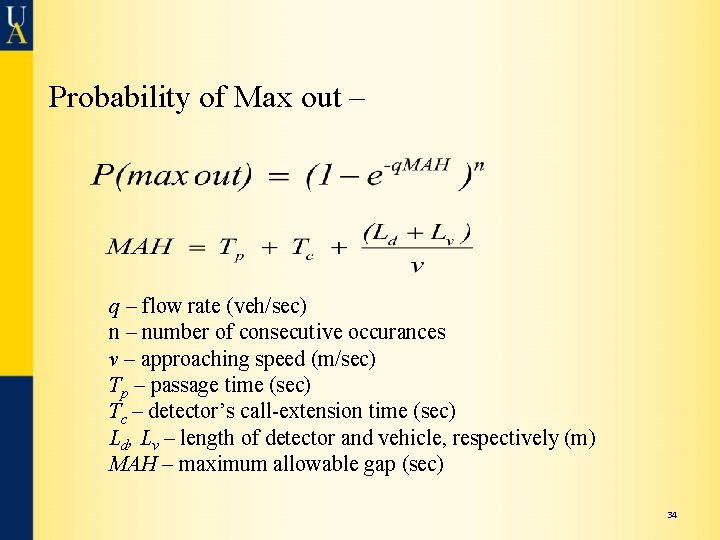
Probability of Max out – q – flow rate (veh/sec) n – number of consecutive occurances v – approaching speed (m/sec) Tp – passage time (sec) Tc – detector’s call-extension time (sec) Ld, Lv – length of detector and vehicle, respectively (m) MAH – maximum allowable gap (sec) 34
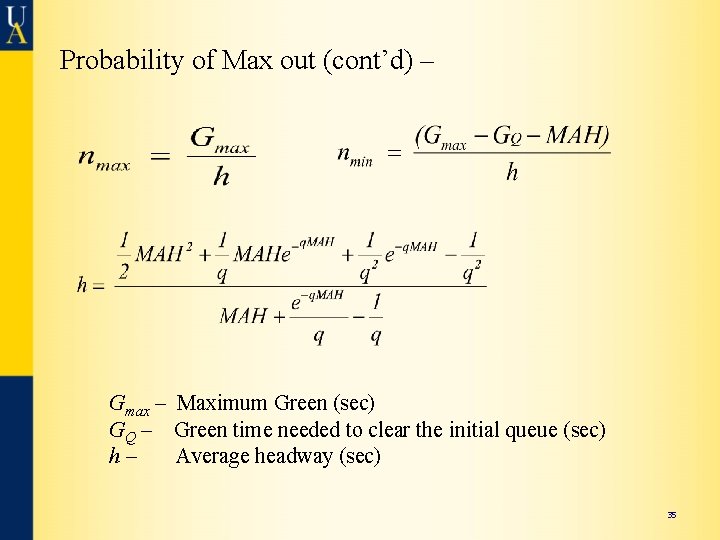
Probability of Max out (cont’d) – Gmax – Maximum Green (sec) GQ – Green time needed to clear the initial queue (sec) h– Average headway (sec) 35
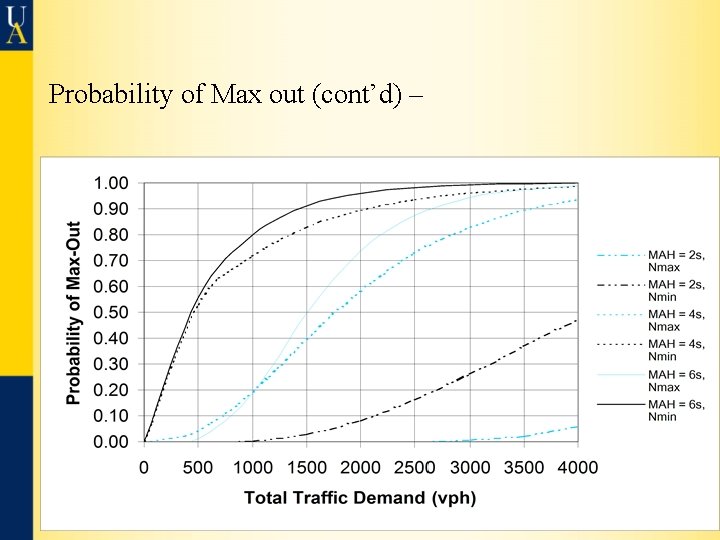
Probability of Max out (cont’d) – 36
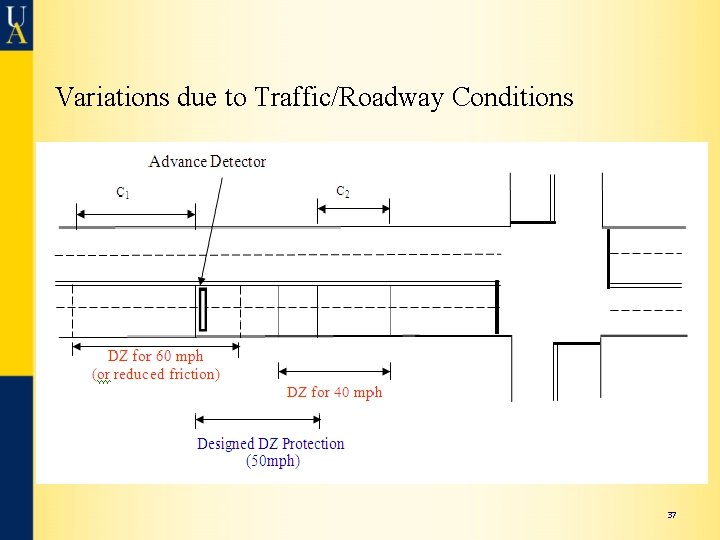
Variations due to Traffic/Roadway Conditions 37
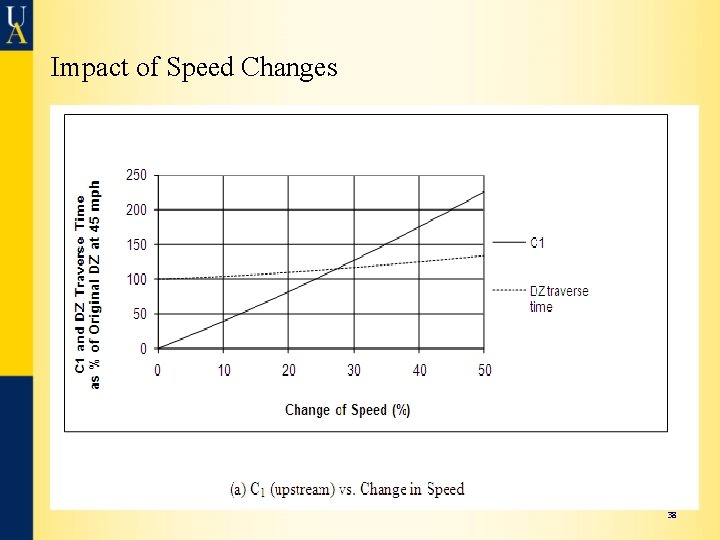
Impact of Speed Changes 38
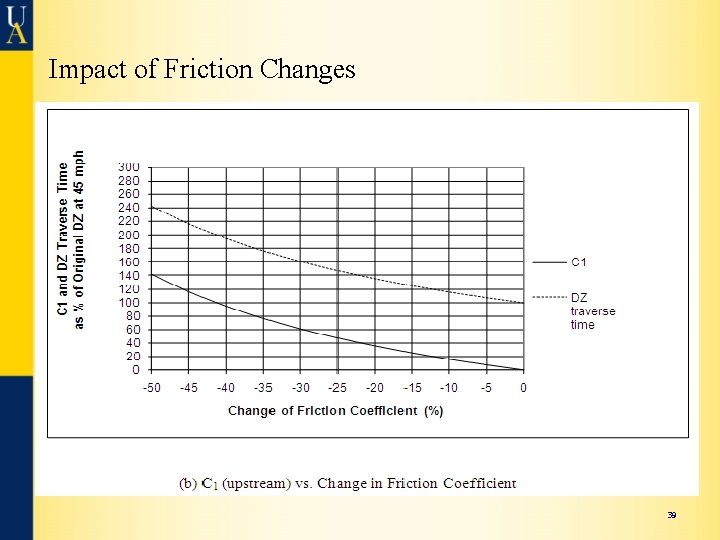
Impact of Friction Changes 39
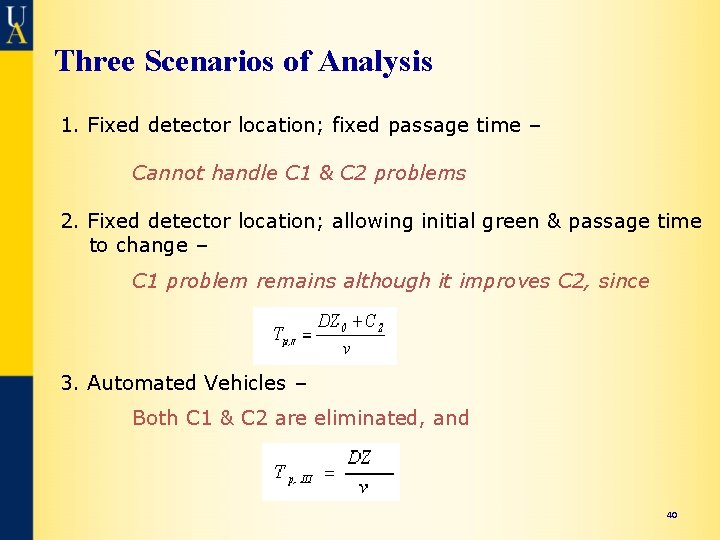
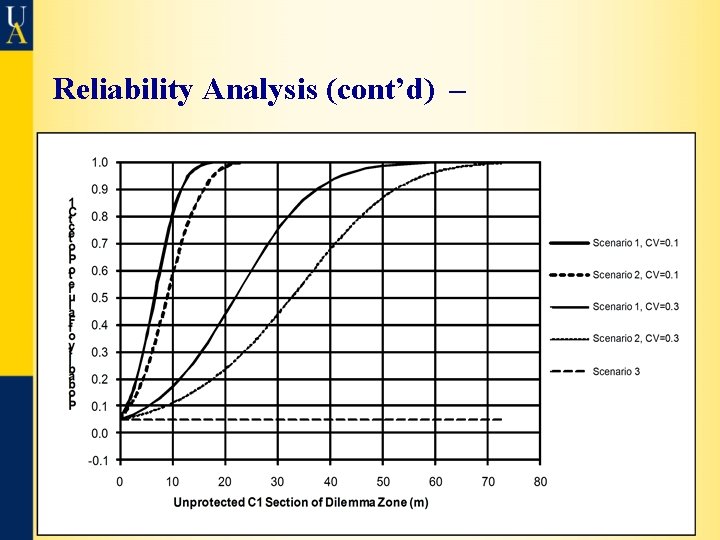
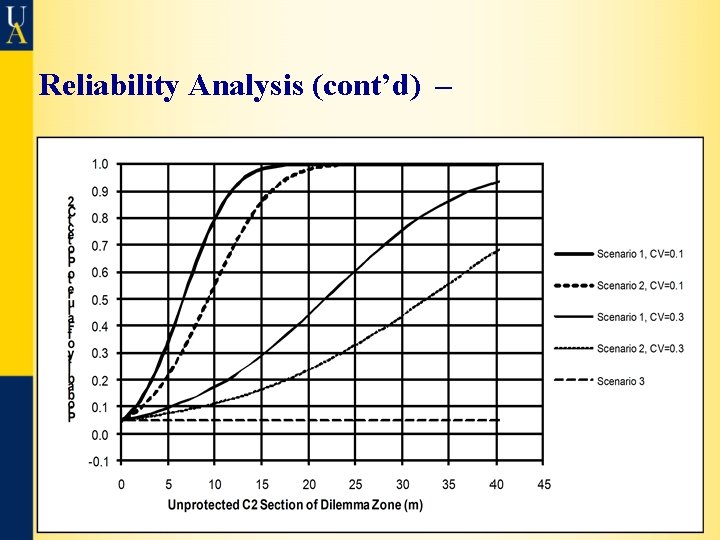
Three Scenarios of Analysis 1. Fixed detector location; fixed passage time – Cannot handle C 1 & C 2 problems 2. Fixed detector location; allowing initial green & passage time to change – C 1 problem remains although it improves C 2, since 3. Automated Vehicles – Both C 1 & C 2 are eliminated, and 40
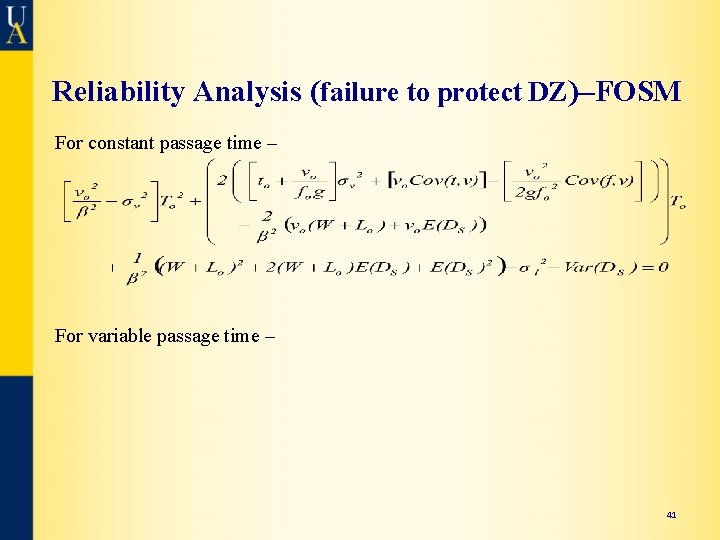
Reliability Analysis (failure to protect DZ)–FOSM For constant passage time – For variable passage time – 41
Reliability Analysis (cont’d) – 42
Reliability Analysis (cont’d) – 43
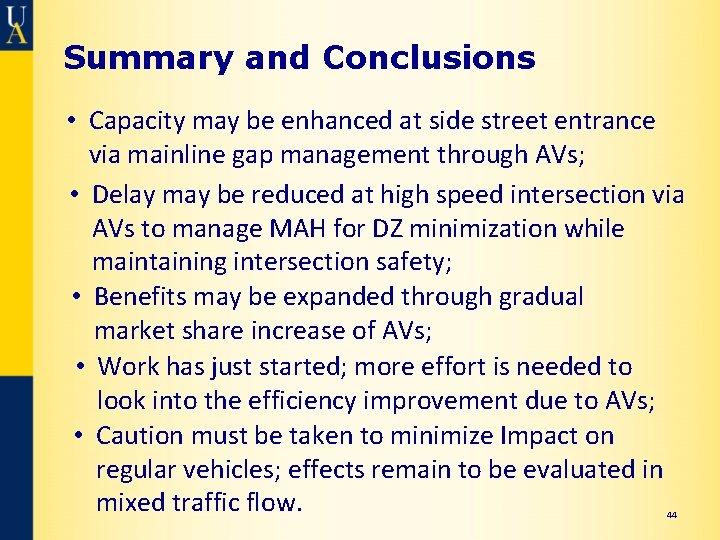
Summary and Conclusions • Capacity may be enhanced at side street entrance via mainline gap management through AVs; • Delay may be reduced at high speed intersection via AVs to manage MAH for DZ minimization while maintaining intersection safety; • Benefits may be expanded through gradual market share increase of AVs; • Work has just started; more effort is needed to look into the efficiency improvement due to AVs; • Caution must be taken to minimize Impact on regular vehicles; effects remain to be evaluated in mixed traffic flow. 44
Questions ? 45