
IMPACT PHASE Session 5 SCRIPTURE INTERNALIZATION Colossians 1
- Slides: 18
IMPACT PHASE Session 5
SCRIPTURE INTERNALIZATION Colossians 1: 28 -29
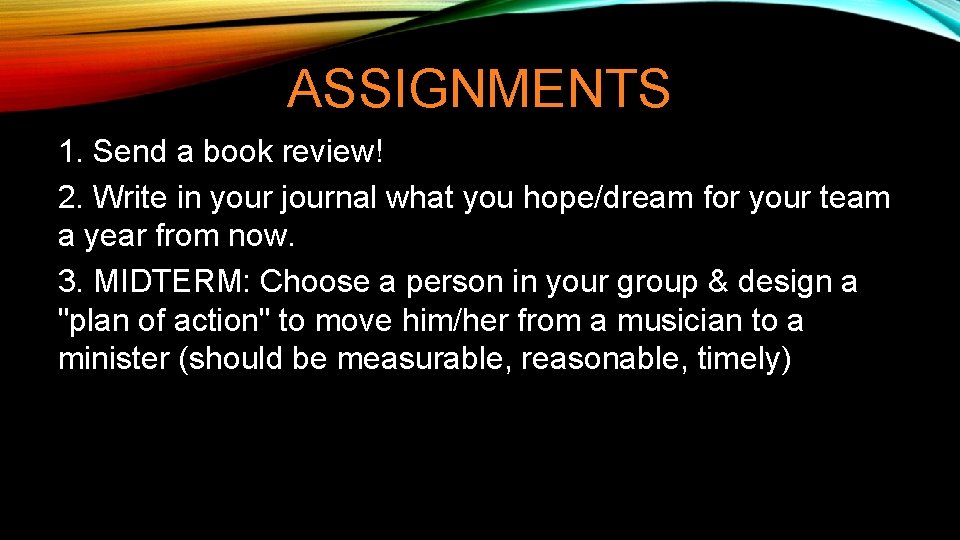
ASSIGNMENTS 1. Send a book review! 2. Write in your journal what you hope/dream for your team a year from now. 3. MIDTERM: Choose a person in your group & design a "plan of action" to move him/her from a musician to a minister (should be measurable, reasonable, timely)
WELCOME! Susan Plemons, M. M. Assistant Professor of Worship Cedarville University in OH
WELCOME! Susan Plemons, M. M. Assistant Professor of Worship Cedarville University in OH "Why I love teaching at CU: Engaging with excellent faculty and students who honor God by giving their best (and really sweet therapy dogs on campus). "
NEXT LEVEL WORSHIP CONTEMPORARY VOCAL TECHNIQUES Presented by Susan C. Plemons, Assistant Professor of Worship Cedarville University
WHAT IS YOUR INSTRUMENT? • What areas of your body are engaged? • What affects your instrument and how quickly can it change? • Vocal Health – water, clearing throat, coughing, Hall's Breezers, never numb the throat
THE GOAL: VOCAL VERSATILITY AND VIBRANT HEALTH WITH VITAL COMMUNICATION
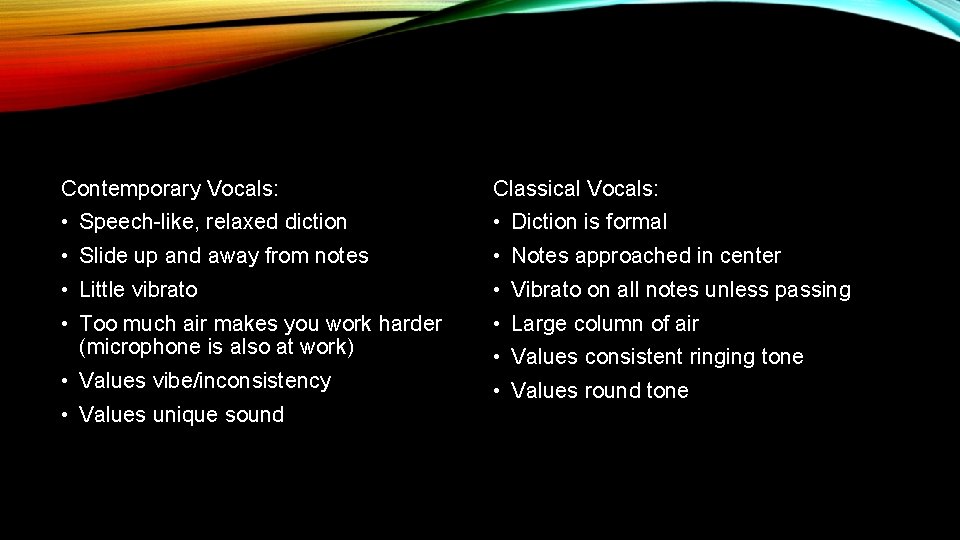
Contemporary Vocals: Classical Vocals: • Speech-like, relaxed diction • Diction is formal • Slide up and away from notes • Notes approached in center • Little vibrato • Vibrato on all notes unless passing • Too much air makes you work harder (microphone is also at work) • Large column of air • Values vibe/inconsistency • Values round tone • Values unique sound • Values consistent ringing tone
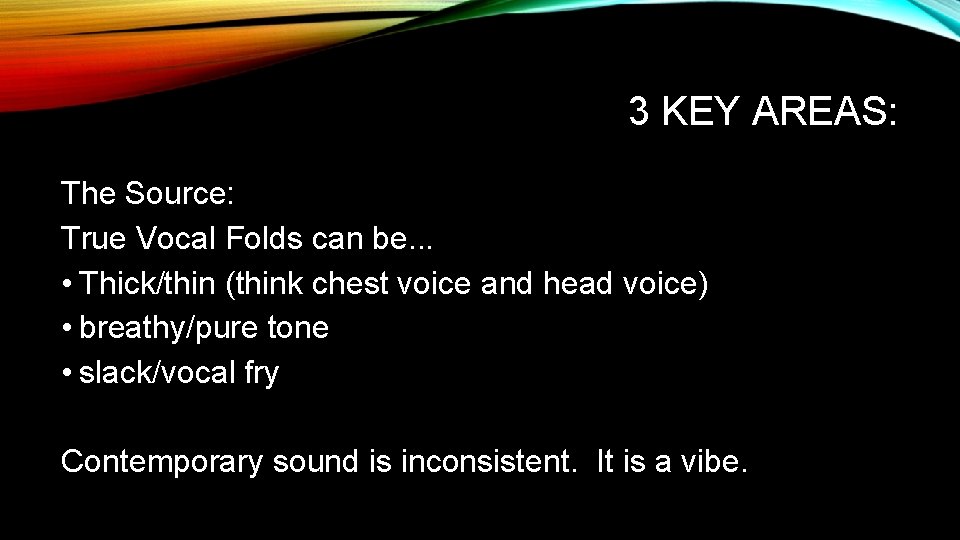
3 KEY AREAS: The Source: True Vocal Folds can be. . . • Thick/thin (think chest voice and head voice) • breathy/pure tone • slack/vocal fry Contemporary sound is inconsistent. It is a vibe.
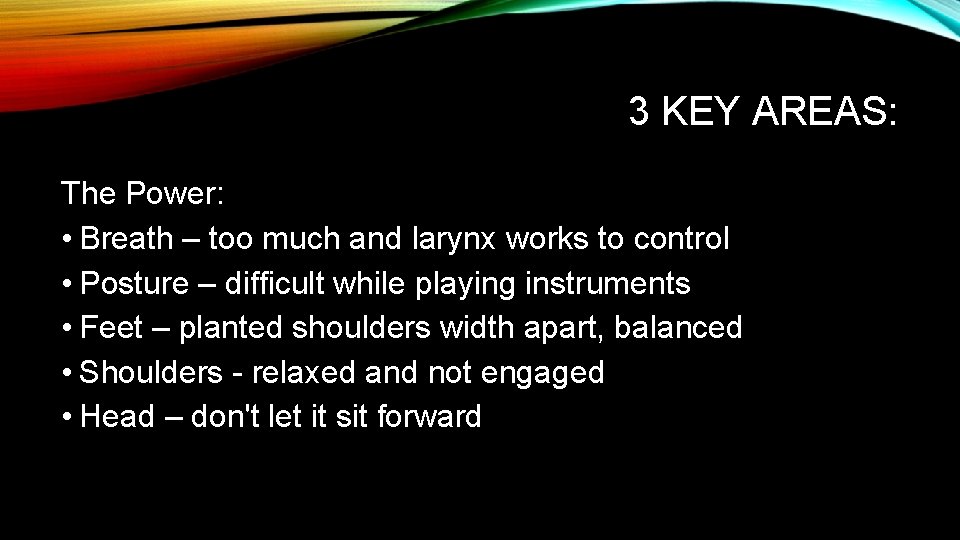
3 KEY AREAS: The Power: • Breath – too much and larynx works to control • Posture – difficult while playing instruments • Feet – planted shoulders width apart, balanced • Shoulders - relaxed and not engaged • Head – don't let it sit forward
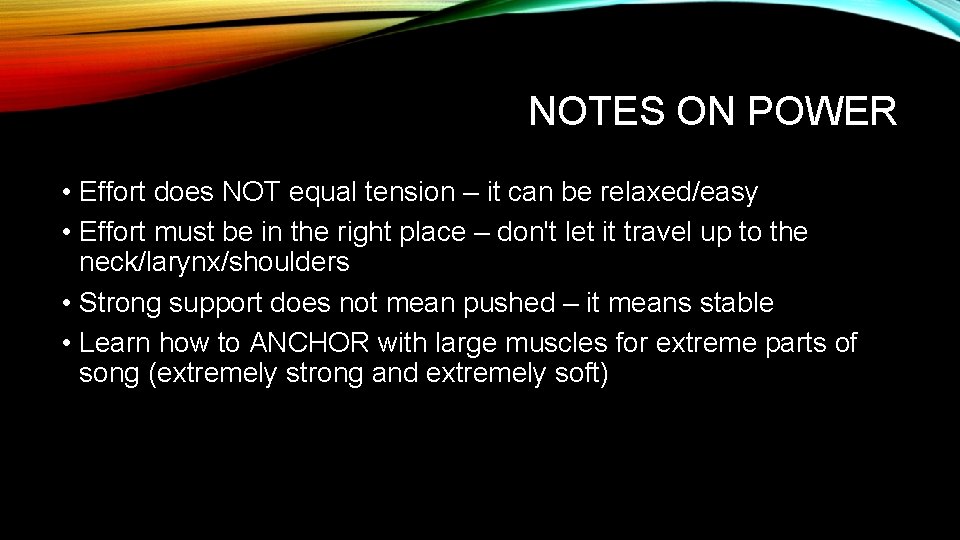
NOTES ON POWER • Effort does NOT equal tension – it can be relaxed/easy • Effort must be in the right place – don't let it travel up to the neck/larynx/shoulders • Strong support does not mean pushed – it means stable • Learn how to ANCHOR with large muscles for extreme parts of song (extremely strong and extremely soft)
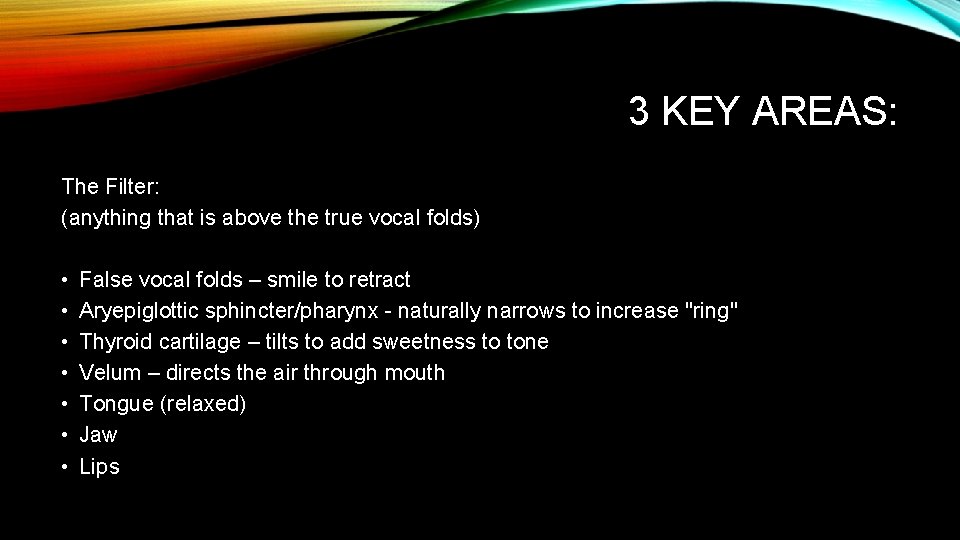
3 KEY AREAS: The Filter: (anything that is above the true vocal folds) • • False vocal folds – smile to retract Aryepiglottic sphincter/pharynx - naturally narrows to increase "ring" Thyroid cartilage – tilts to add sweetness to tone Velum – directs the air through mouth Tongue (relaxed) Jaw Lips
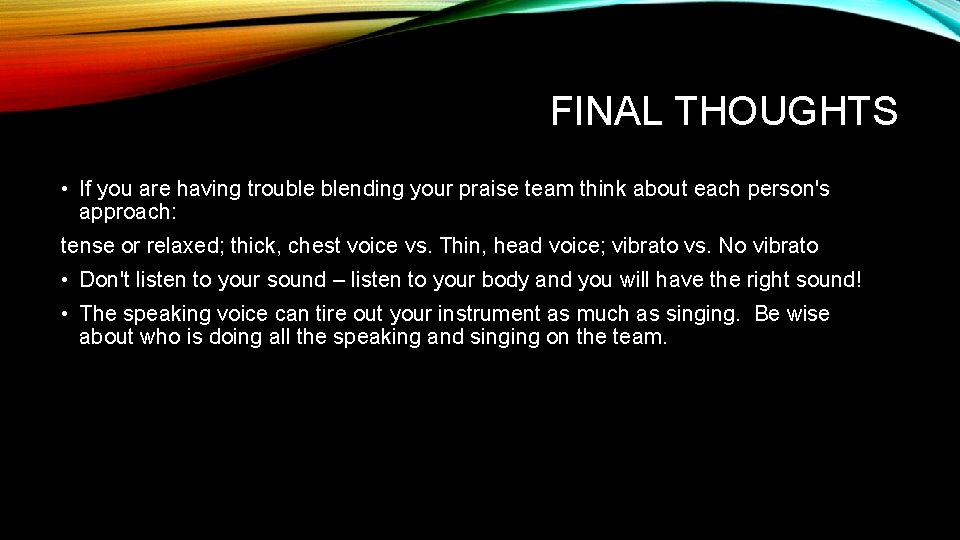
FINAL THOUGHTS • If you are having trouble blending your praise team think about each person's approach: tense or relaxed; thick, chest voice vs. Thin, head voice; vibrato vs. No vibrato • Don't listen to your sound – listen to your body and you will have the right sound! • The speaking voice can tire out your instrument as much as singing. Be wise about who is doing all the speaking and singing on the team.
Q&A Susanplemons@cedarville. edu
ASSIGNMENTS 1. Send a book review! 2. Write in your journal what you hope/dream for your team a year from now. 3. MIDTERM: Choose a person in your group & design a "plan of action" to move him/her from a musician to a minister (should be measurable, reasonable, timely)
PRAYER REQUESTS
THANKS SUSAN!!!