
Impact of screen time on brain development Dr
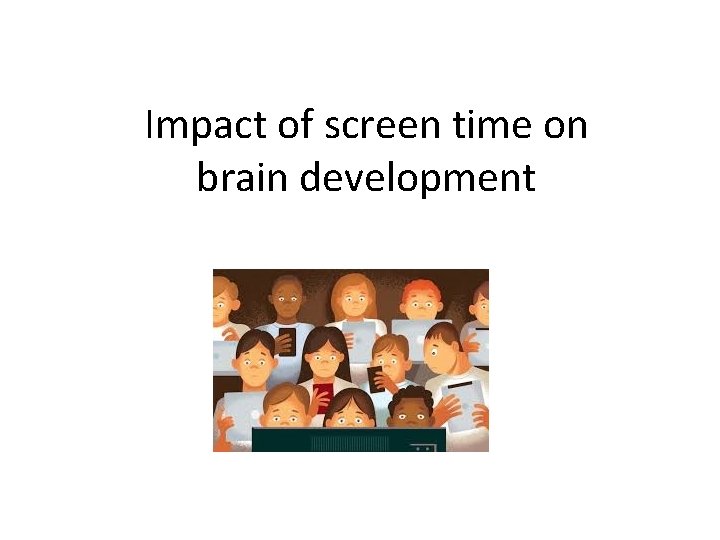
Impact of screen time on brain development

Dr. Steve Hughes • Ph. D. in Clinical Psychology • Post-doctoral fellowship in pediatric neuropsychology • Montessori Parent • Studied neurodevelopmental benefits of classical Montessori education • http: //www. goodatdoingthings. com/Ste ve. Hughes/Welcome. html
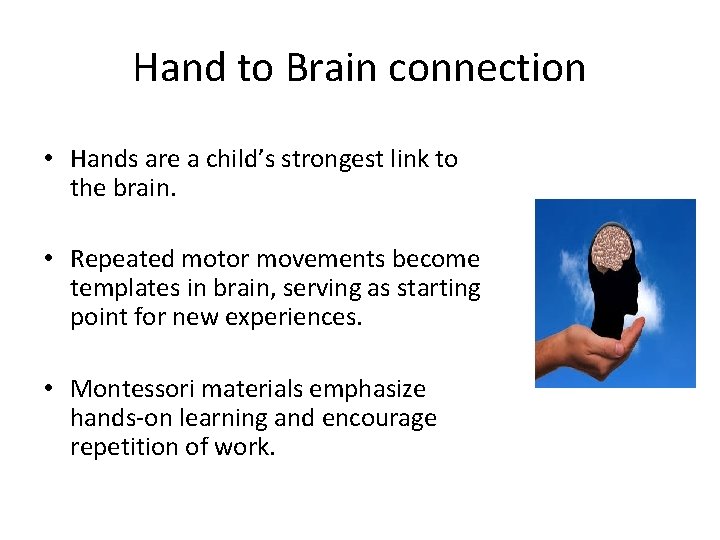
Hand to Brain connection • Hands are a child’s strongest link to the brain. • Repeated motor movements become templates in brain, serving as starting point for new experiences. • Montessori materials emphasize hands-on learning and encourage repetition of work.
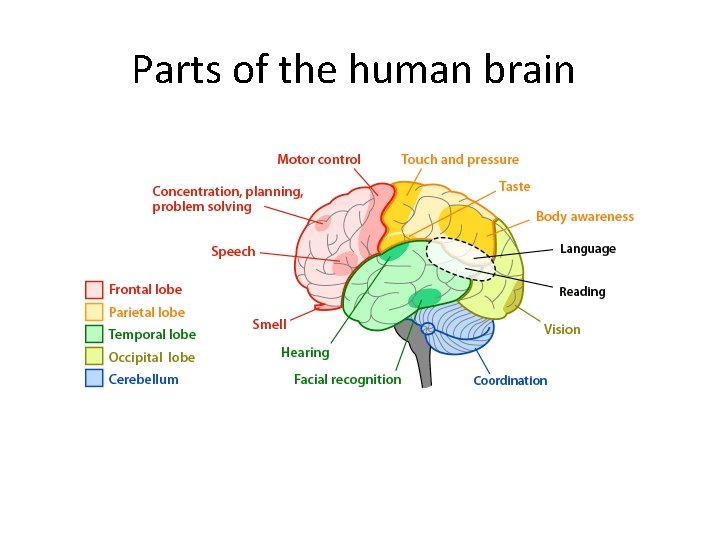
Parts of the human brain
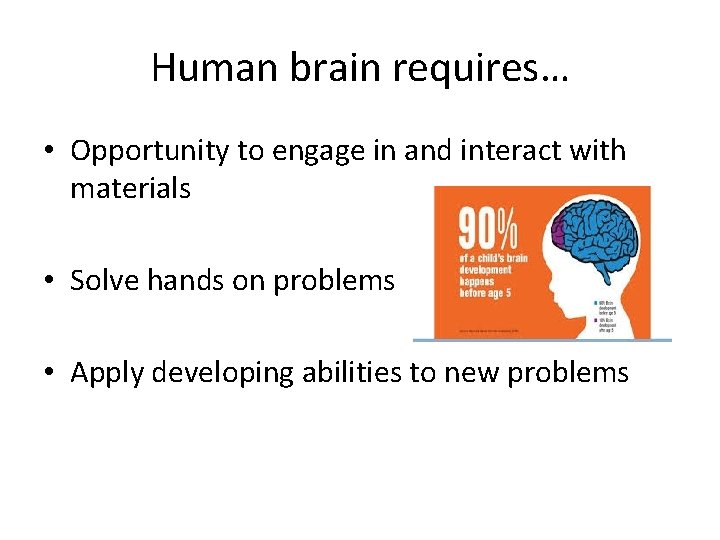
Human brain requires… • Opportunity to engage in and interact with materials • Solve hands on problems • Apply developing abilities to new problems
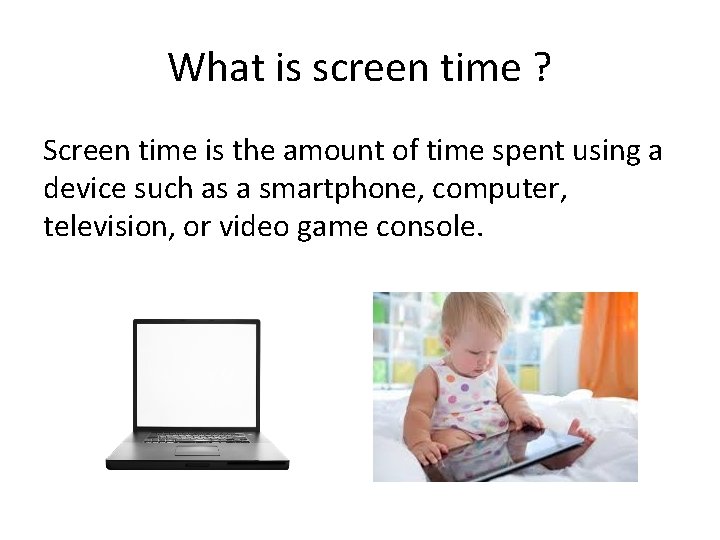
What is screen time ? Screen time is the amount of time spent using a device such as a smartphone, computer, television, or video game console.

Symptoms of “Electronic Screen Syndrome” • • • Sensory overload Lack of restorative sleep Hyper aroused nervous system Impulsive behavior Moody Unable to pay attention
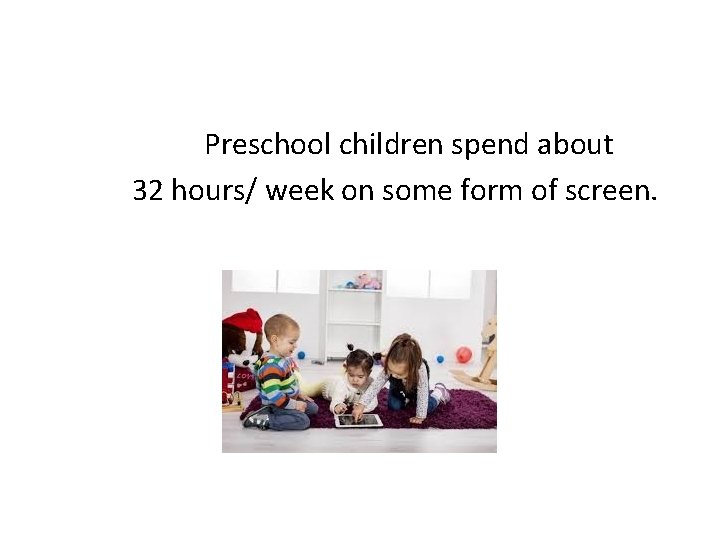
Preschool children spend about 32 hours/ week on some form of screen.
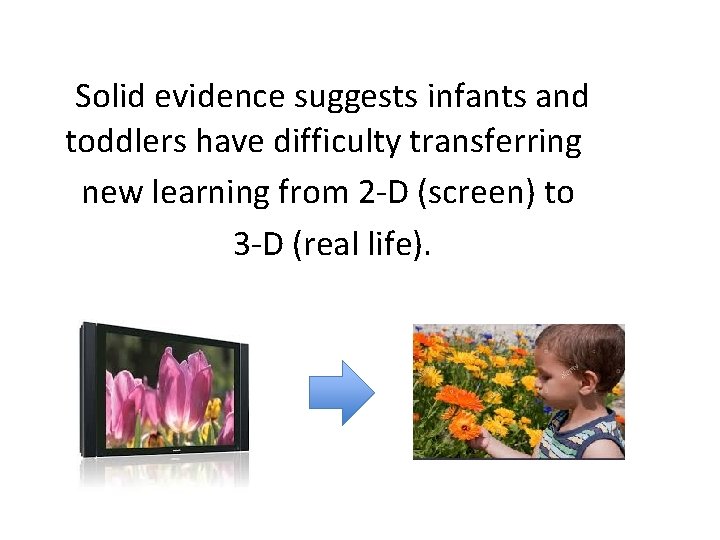
Solid evidence suggests infants and toddlers have difficulty transferring new learning from 2 -D (screen) to 3 -D (real life).
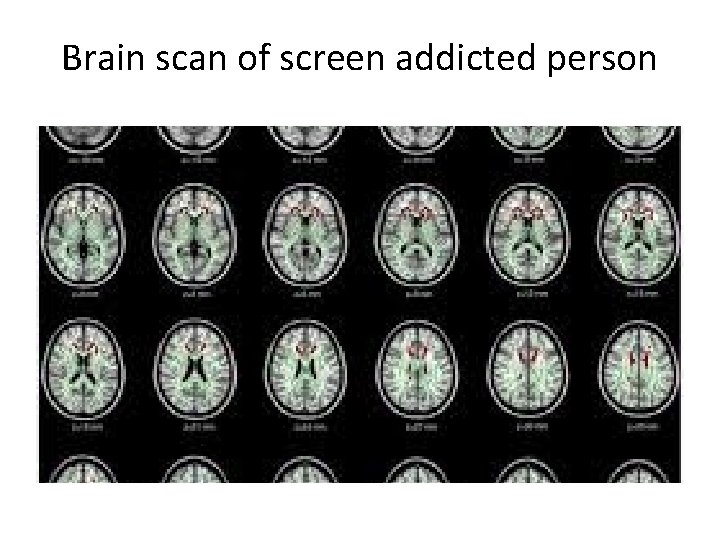
Brain scan of screen addicted person
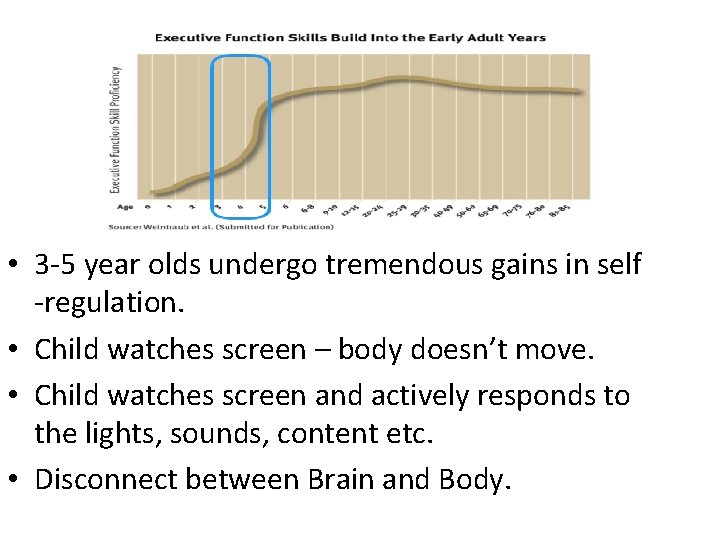
• 3 -5 year olds undergo tremendous gains in self -regulation. • Child watches screen – body doesn’t move. • Child watches screen and actively responds to the lights, sounds, content etc. • Disconnect between Brain and Body.
Sensory development • Proprioception (6 th sense) determines sense of gravity • Vestibular system (7 th sense) determines sense of balance • Both senses develop most before age 6 • Screen time impacts these 2 senses the most Poorly developed 6 th sense and 7 th sense + restricted play time = kids not listening
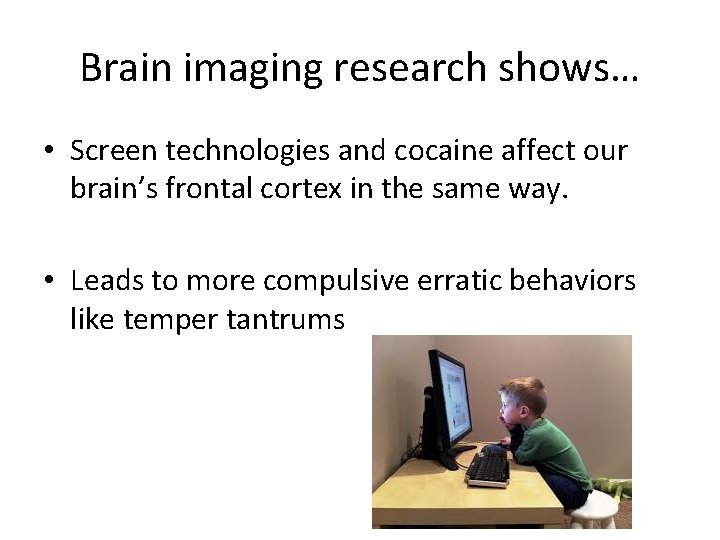
Brain imaging research shows… • Screen technologies and cocaine affect our brain’s frontal cortex in the same way. • Leads to more compulsive erratic behaviors like temper tantrums

Gray matter atrophy • Shrinkage or loss of tissue volume in gray matter areas observed • Affects “frontal lobe” • Impacts processing , planning, prioritizing , organizing and impulse control
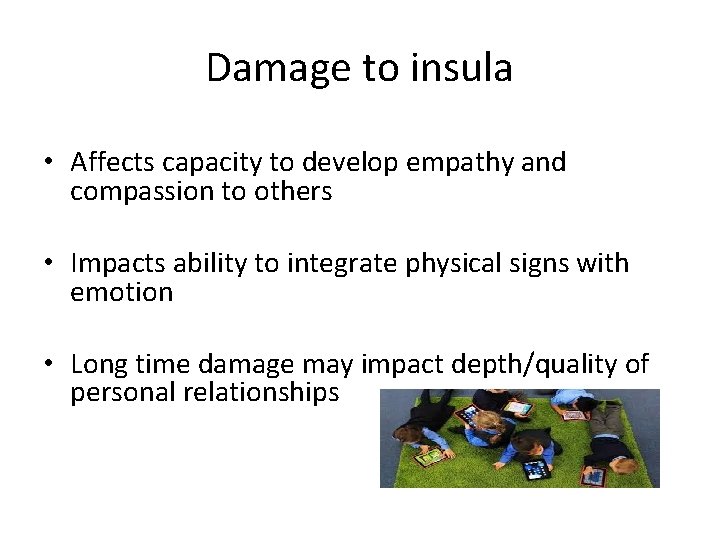
Damage to insula • Affects capacity to develop empathy and compassion to others • Impacts ability to integrate physical signs with emotion • Long time damage may impact depth/quality of personal relationships
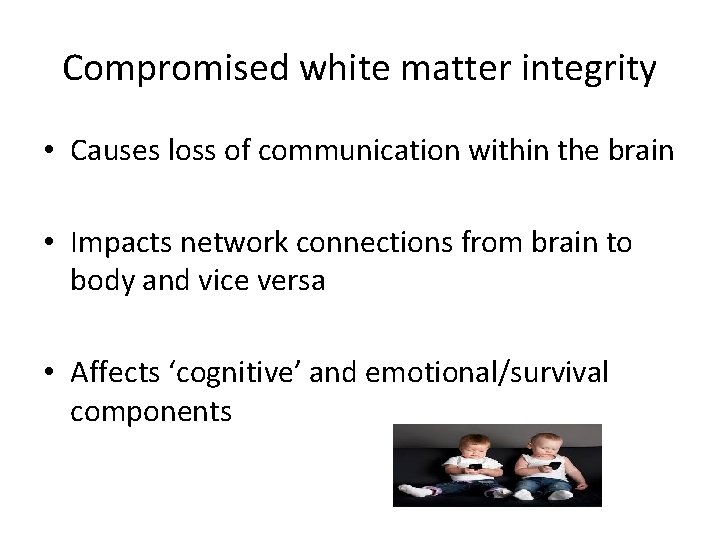
Compromised white matter integrity • Causes loss of communication within the brain • Impacts network connections from brain to body and vice versa • Affects ‘cognitive’ and emotional/survival components

Reduced cortical thickness • Observed in frontal lobe and outer part of brain • Causes impairment in cognitive task execution • Increased sensitivity to rewards • Reduced impulse inhibition • Poor task performance
Main impact of screen time • Occurs in “Frontal lobe” of brain • Frontal lobe changes rapidly from puberty until mid-20’s Major influence on: • sense of well-being • Academic/career success • Relationship skills
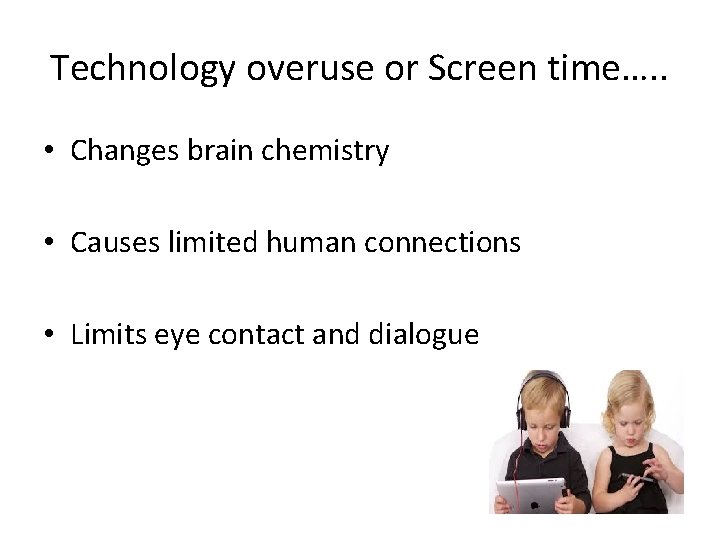
Technology overuse or Screen time…. . • Changes brain chemistry • Causes limited human connections • Limits eye contact and dialogue
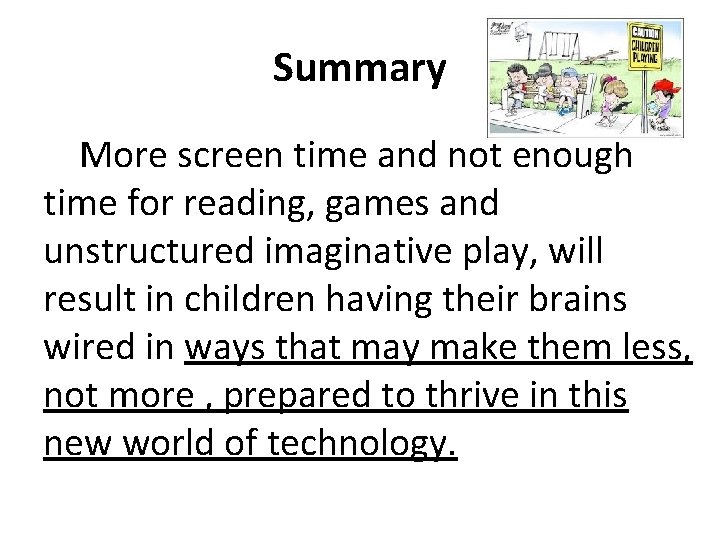
Summary More screen time and not enough time for reading, games and unstructured imaginative play, will result in children having their brains wired in ways that may make them less, not more , prepared to thrive in this new world of technology.
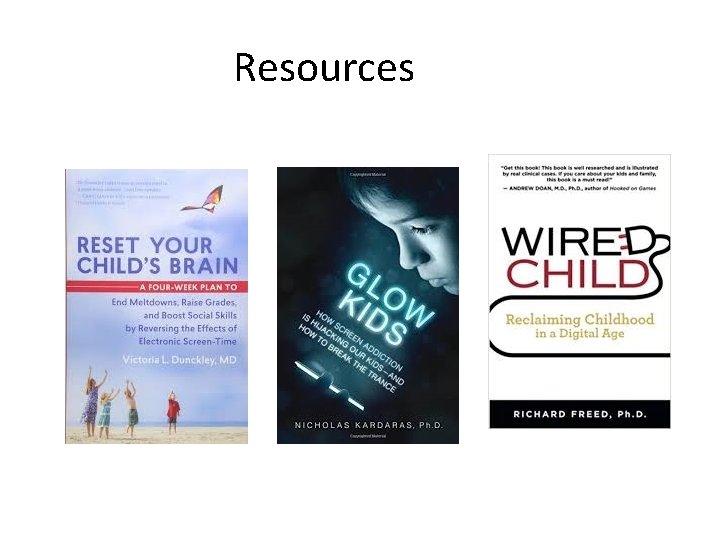
Resources
- Slides: 21