
Impact of rolling technology on microstructure mechanical properties
- Slides: 19
Impact of rolling technology on microstructure, mechanical properties and thermal stability of high purity Al sheets M. Slámová 1, P. Homola 2, M. Cieslar 3 1 VÚK Panenské Břežany, s. r. o. , 2 Czech Technical University, Prague, 3 Charles University in Prague
SCHEDULE • Introduction • ARB x conventional rolling • Thermal stability • Mechanical properties • Summary
Ultra-fine grained materials Equal Channel Angular Pressing (ECAP) High Pressure Torsion (HPT) Cryogenic Working … Accumulative Roll-Bonding (ARB)
Advantages of ARB 1. No special equipment 2. Ability to produce large bulk materials
Material Al (99. 99) Cold rolling to thickness 2 mm Recrystallization annealing 350°C/30 min
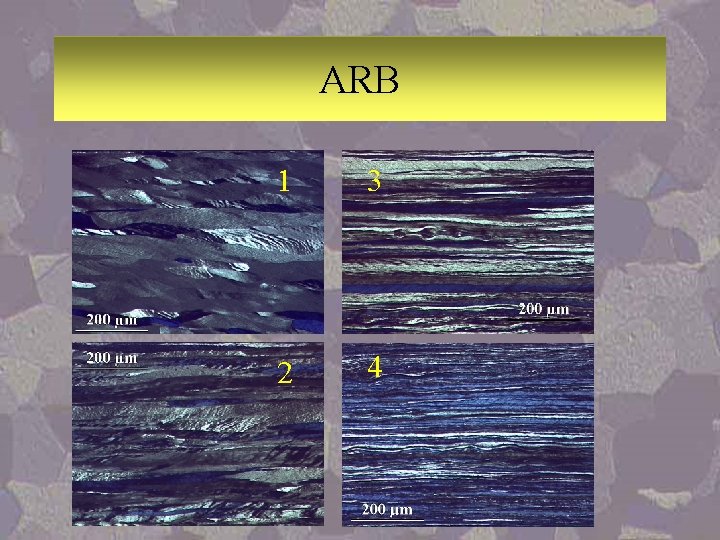
ARB processing 1) Degreasing and wire-brushing with 0. 3 mm steel wire brush 2) Stacking of two pieces of 300× 50× 2 mm 3 3) Joining by Al wires 4) Rolling without lubricant to 50% reduction in thickness
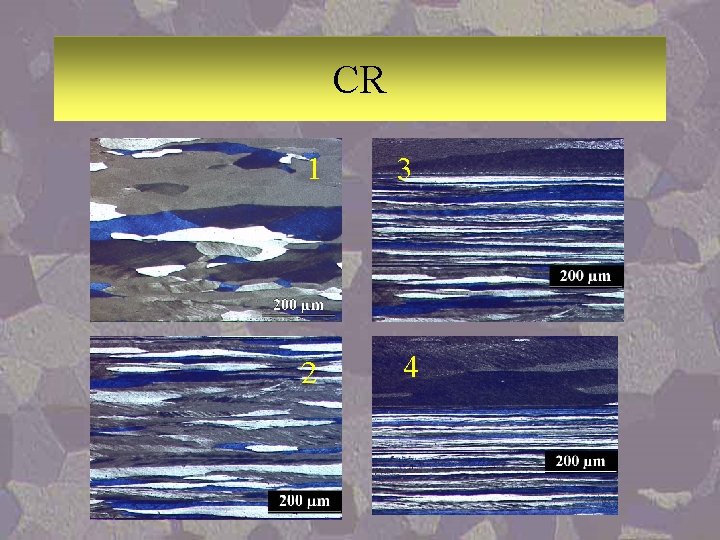
Conventional rolling Thickness of 1, 0. 5, 0. 25 and 0. 125 mm (the same equivalent strains as obtained by 1 to 4 ARB cycles)
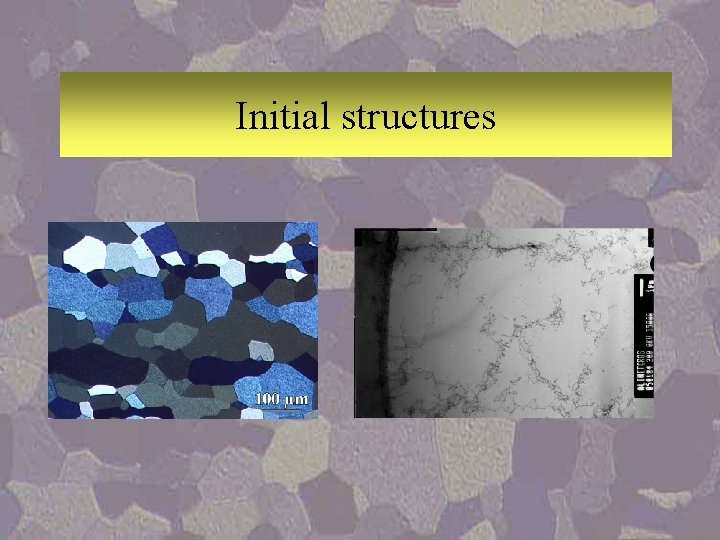
Initial structures
ARB 1 3 2 4
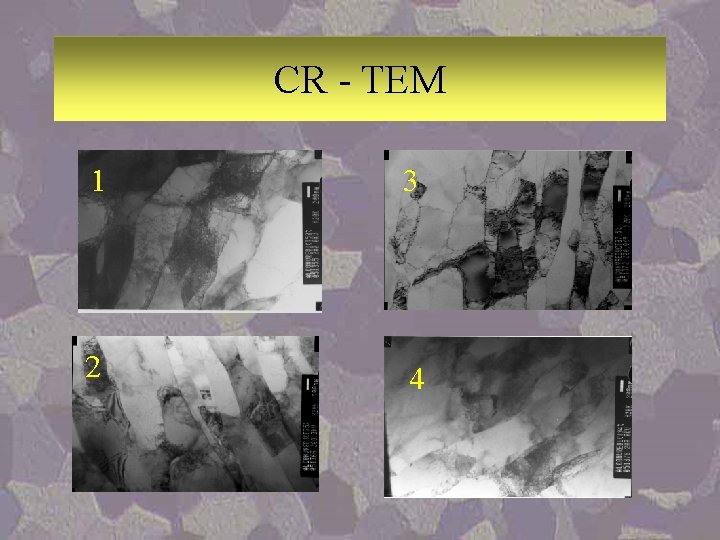
CR 1 3 2 4
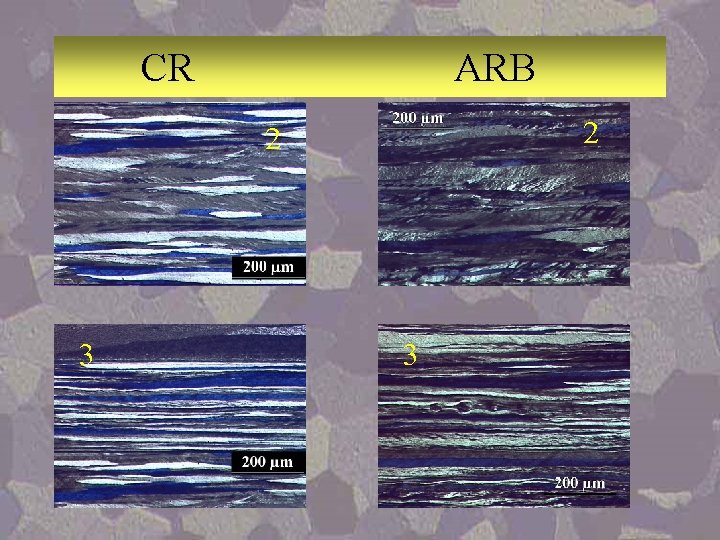
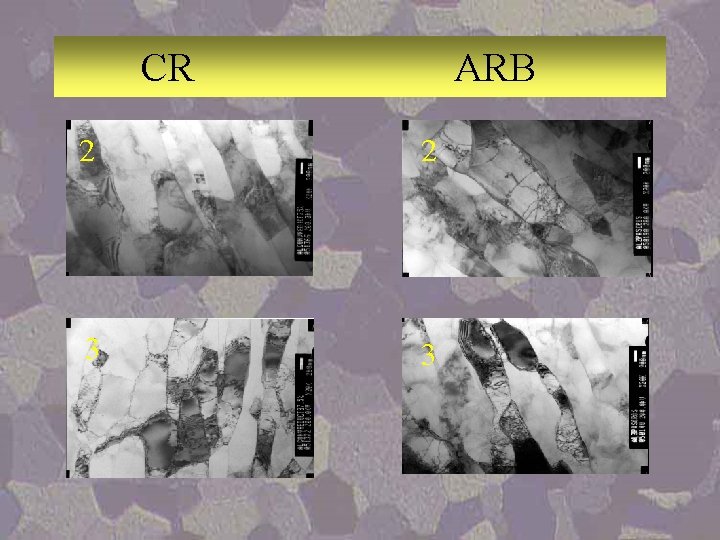
CR ARB 2 2 3 3
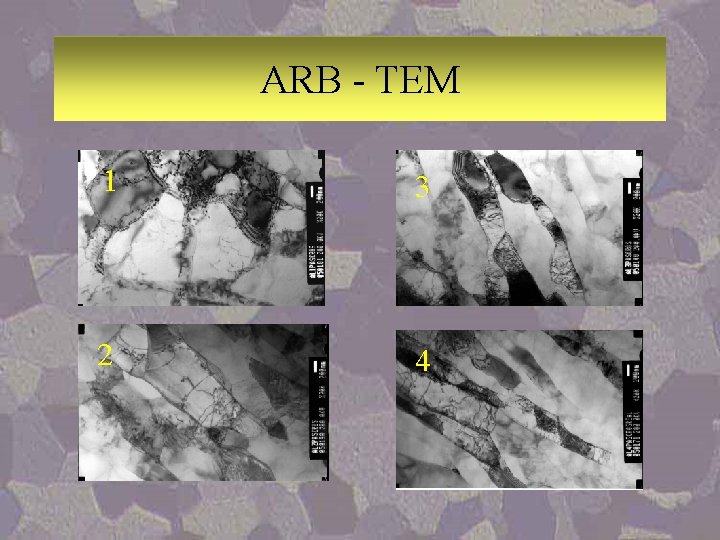
ARB - TEM 1 3 2 4
CR - TEM 1 3 2 4
CR ARB 2 2 3 3
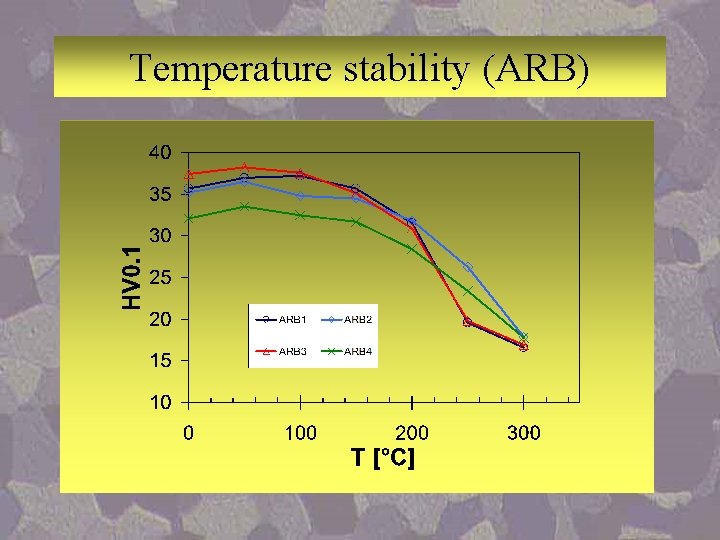
Temperature stability (ARB)
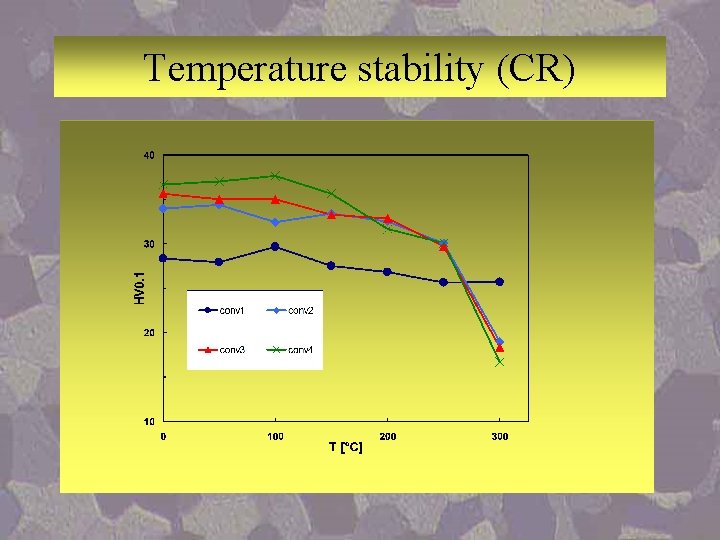
Temperature stability (CR)
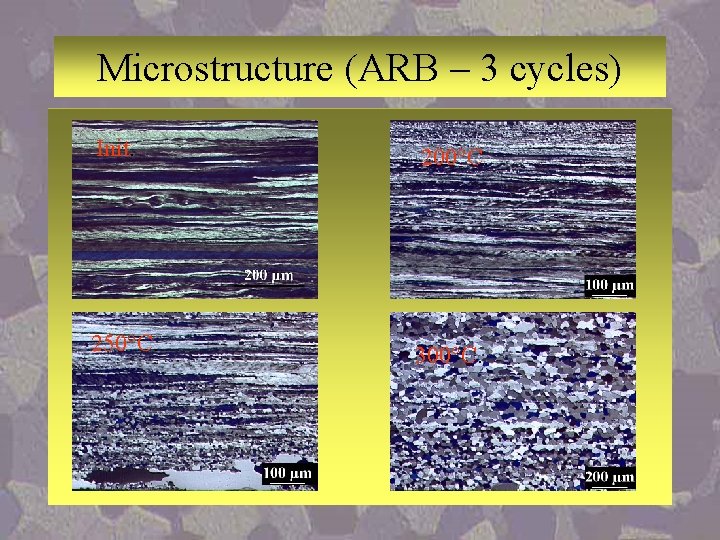
Microstructure (ARB – 3 cycles) Init. 200°C. 250°C. 300°C.
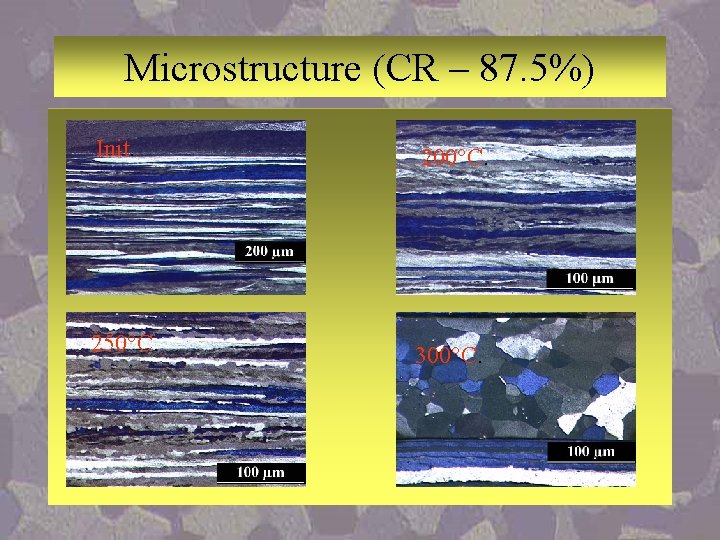
Microstructure (CR – 87. 5%) Init. 200°C. 250°C. 300°C.
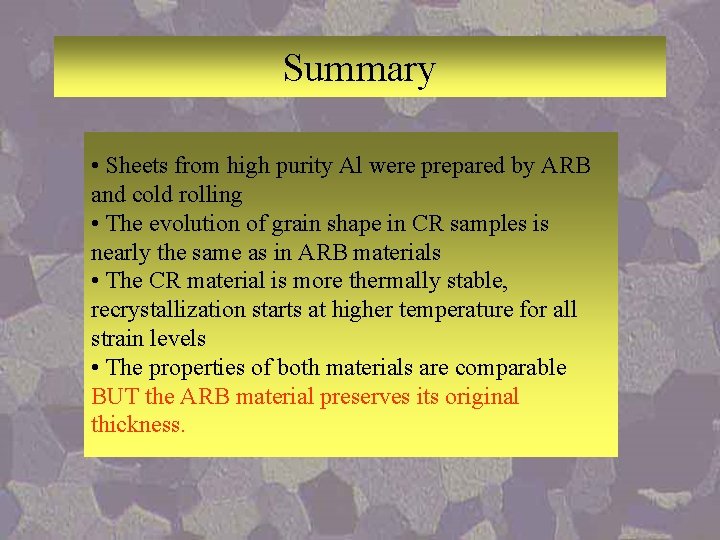
Summary • Sheets from high purity Al were prepared by ARB and cold rolling • The evolution of grain shape in CR samples is nearly the same as in ARB materials • The CR material is more thermally stable, recrystallization starts at higher temperature for all strain levels • The properties of both materials are comparable BUT the ARB material preserves its original thickness.