
Impact of Packet Sampling on Anomaly Detection Metrics

- Slides: 21
Impact of Packet Sampling on Anomaly Detection Metrics Daniela Brauckhoff*, Bernhard Tellenbach*, Arno Wagner*, Anukool Lakhina **, Martin May* *ETH Zurich, ** Boston University IMC '06 Proceedings of the 6 th ACM SIGCOMM conference on Internet measurement. New York, NY, USA 2006 Citations: 226 Grupo de Teleinformática e Automação – GTA/UFRJ Programa de Engenharia Elétrica - PEE/COPPE/UFRJ 1 do Rio de Janeiro Universidade Federal
Motivation • The general opinion about sampling – Valuable information lost – Needed anyway • Size constraints • Cannot get unsampled netflow from some routers • Interesting questions arise: – – – How much information is actually lost? Are all anomalies equally affected by sampling? Are all detection metrics equally affected by sampling? At which sampling rate is a certain anomaly still detectable? Can we estimate the original anomaly size from a sampled view? 2
Article • Goal – Study impact of packet sampling on Blaster worm • Visibility • Anomaly detection metrics − Bytes − Packets − Flows − Traffic Features − Others • Dataset – – Unsampled Netflow records One week capture Backbone router of a national ISP Known Blaster outbreak in data 3
Article • Goal – Study impact of packet sampling on Blaster worm • Visibility • Anomaly detection metrics − Bytes − Packets − Flows − Traffic Features − Others • Dataset – – Unsampled Netflow records One week capture Backbone router of a national ISP Known Blaster outbreak in data 4
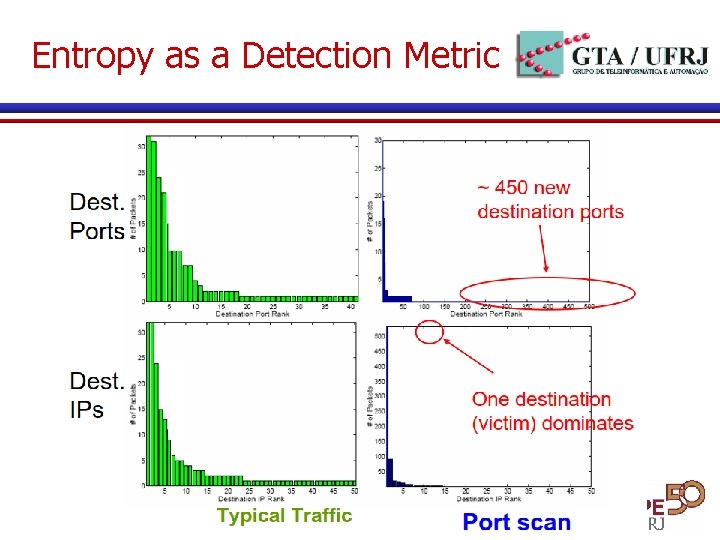
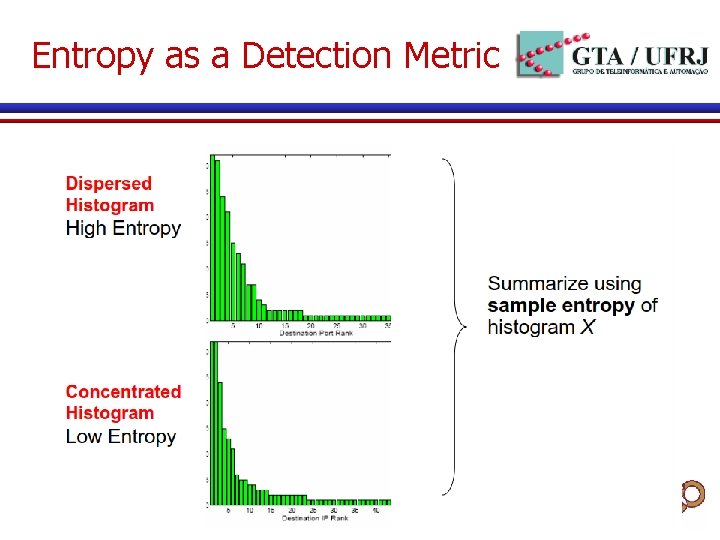
Entropy as a Detection Metric 5
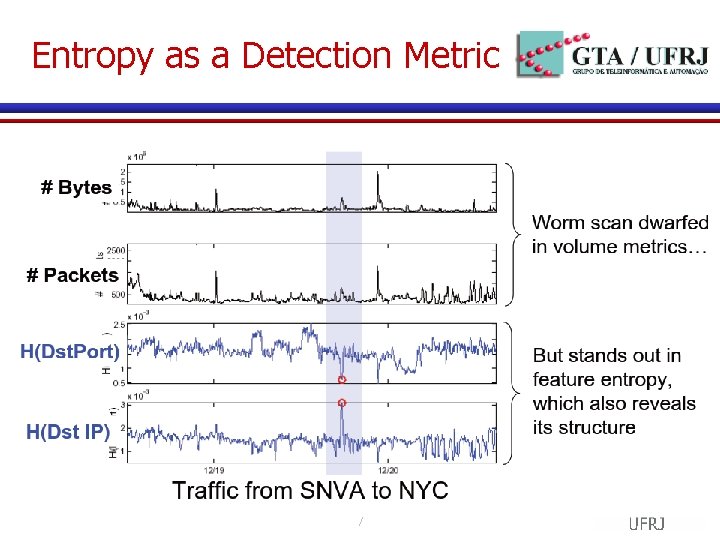
Entropy as a Detection Metric 6
Entropy as a Detection Metric 7
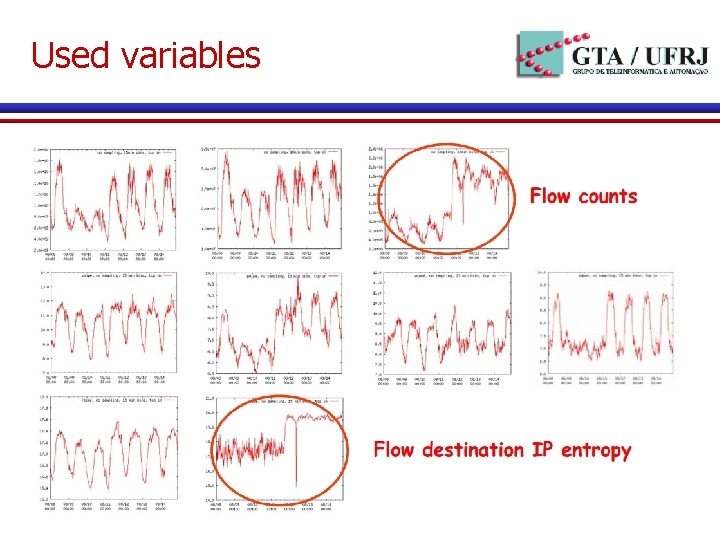
Used variables 8
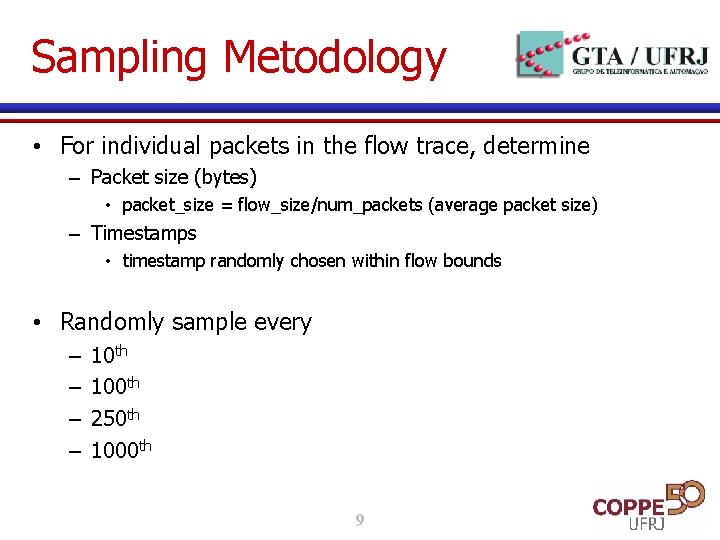
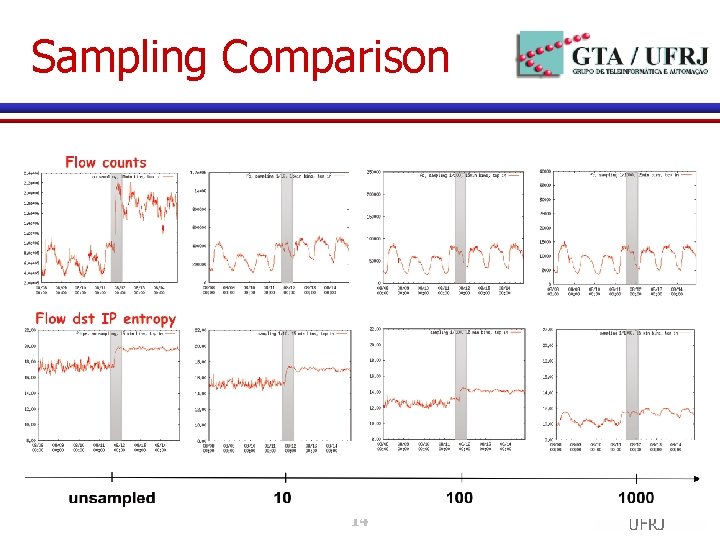
Sampling Metodology • For individual packets in the flow trace, determine – Packet size (bytes) • packet_size = flow_size/num_packets (average packet size) – Timestamps • timestamp randomly chosen within flow bounds • Randomly sample every – – 10 th 100 th 250 th 1000 th 9
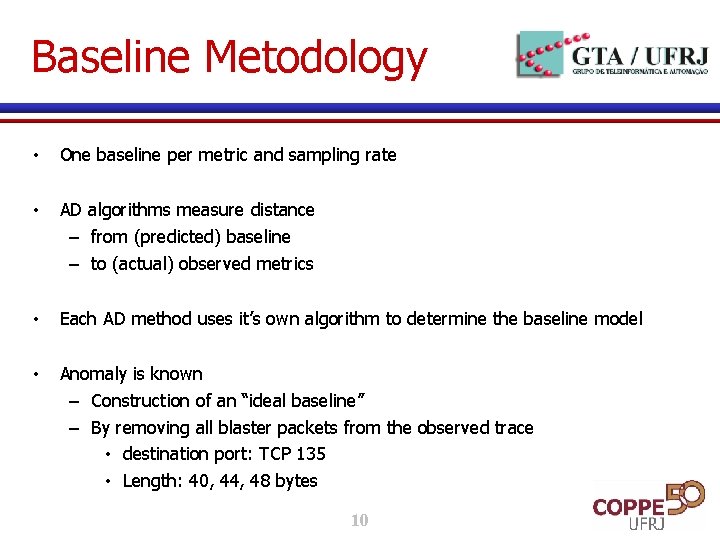
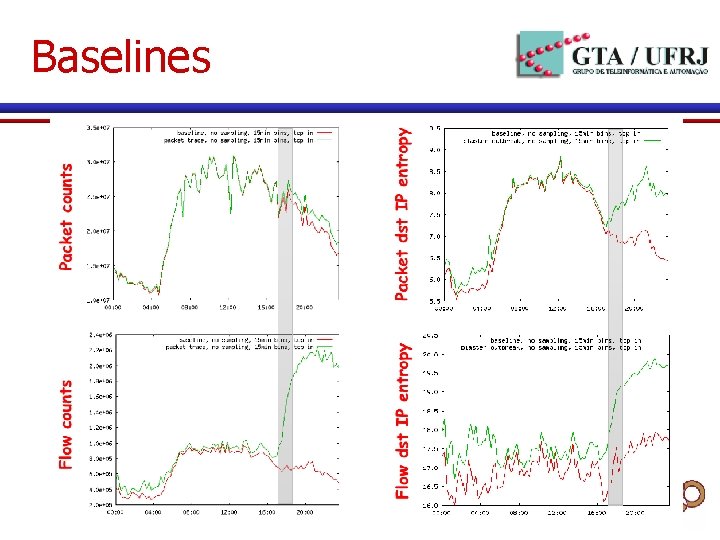
Baseline Metodology • One baseline per metric and sampling rate • AD algorithms measure distance – from (predicted) baseline – to (actual) observed metrics • Each AD method uses it’s own algorithm to determine the baseline model • Anomaly is known – Construction of an “ideal baseline” – By removing all blaster packets from the observed trace • destination port: TCP 135 • Length: 40, 44, 48 bytes 10
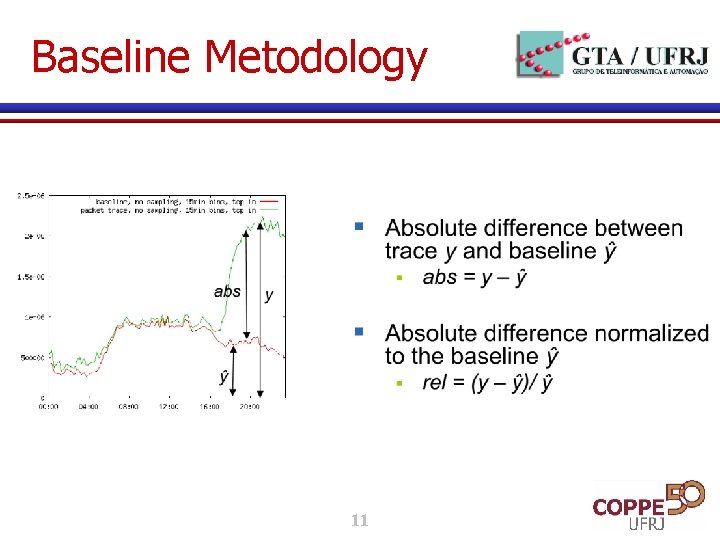
Baseline Metodology 11
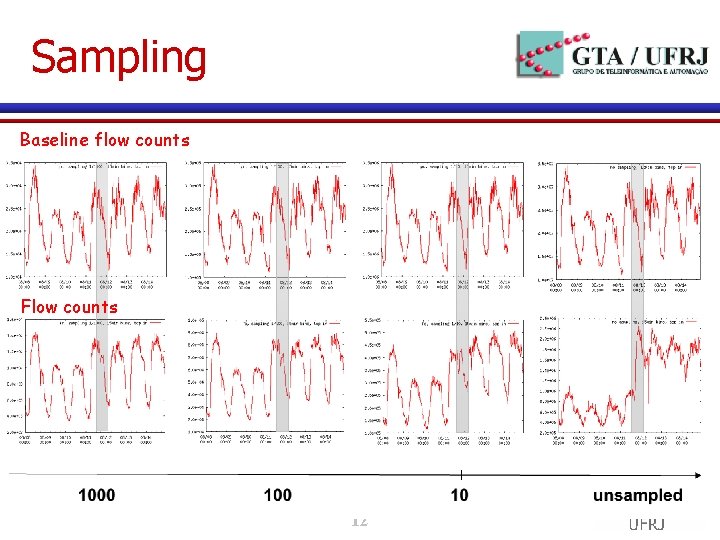
Sampling Baseline flow counts Flow counts 12
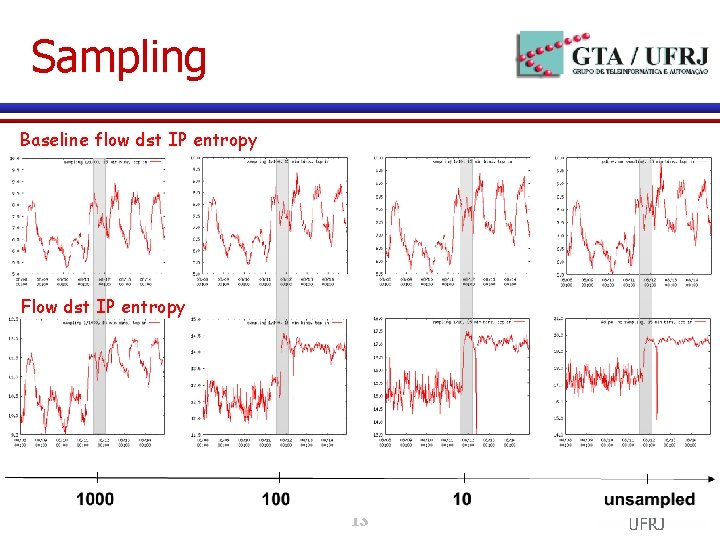
Sampling Baseline flow dst IP entropy Flow dst IP entropy 13
Sampling Comparison 14
Baselines 15
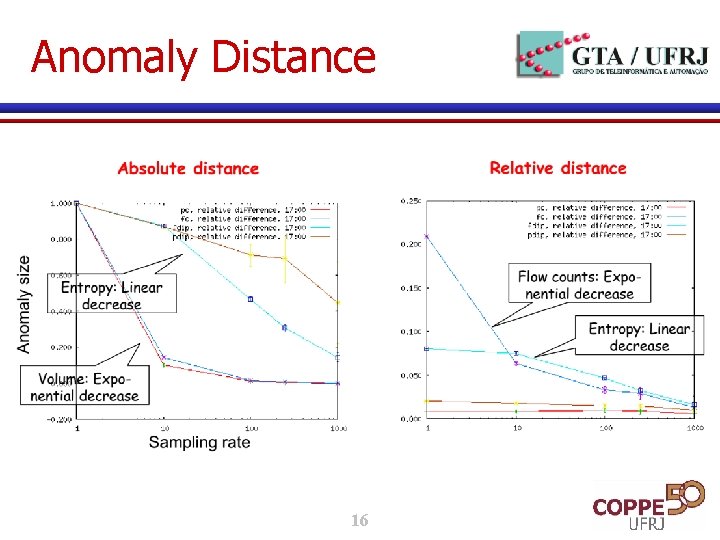
Anomaly Distance 16
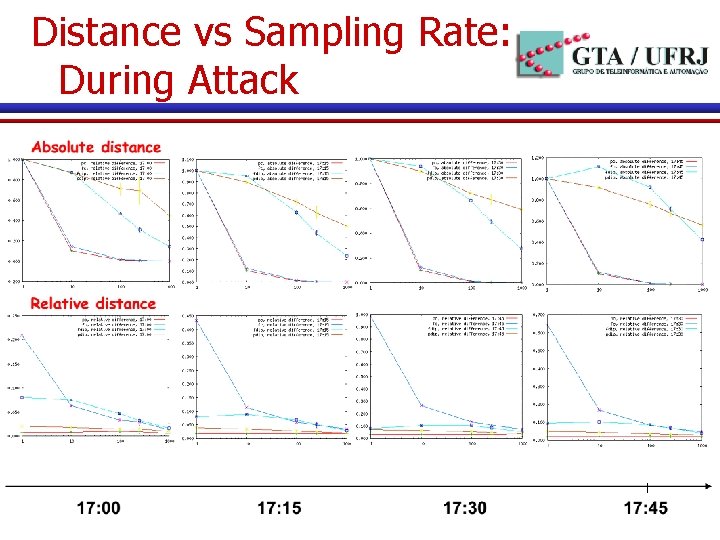
Distance vs Sampling Rate: During Attack 17
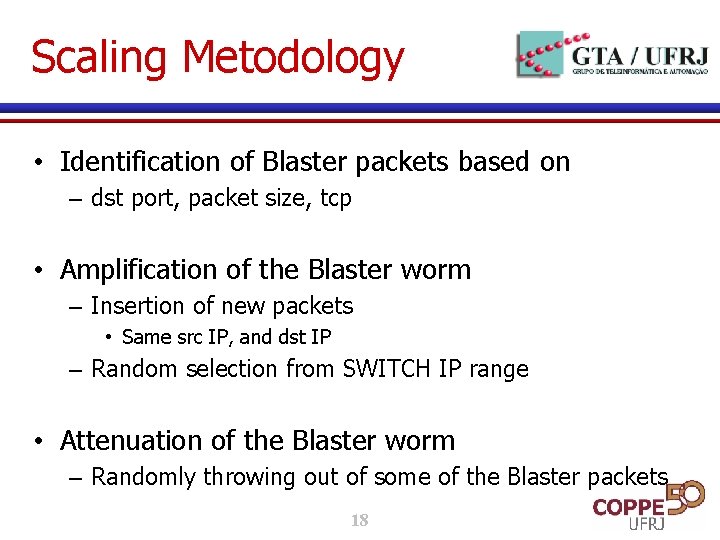
Scaling Metodology • Identification of Blaster packets based on – dst port, packet size, tcp • Amplification of the Blaster worm – Insertion of new packets • Same src IP, and dst IP – Random selection from SWITCH IP range • Attenuation of the Blaster worm – Randomly throwing out of some of the Blaster packets 18
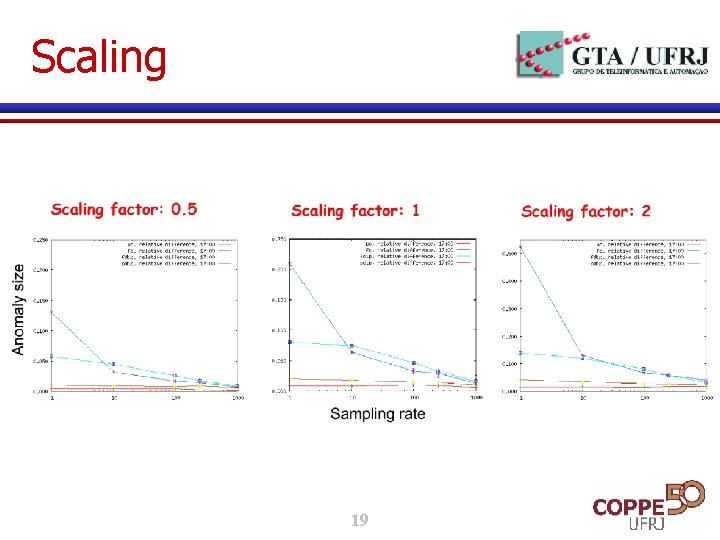
Scaling 19
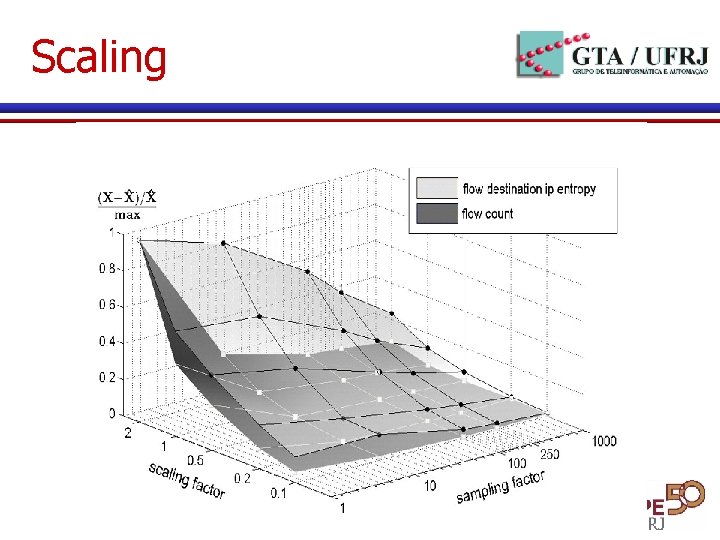
Scaling 20
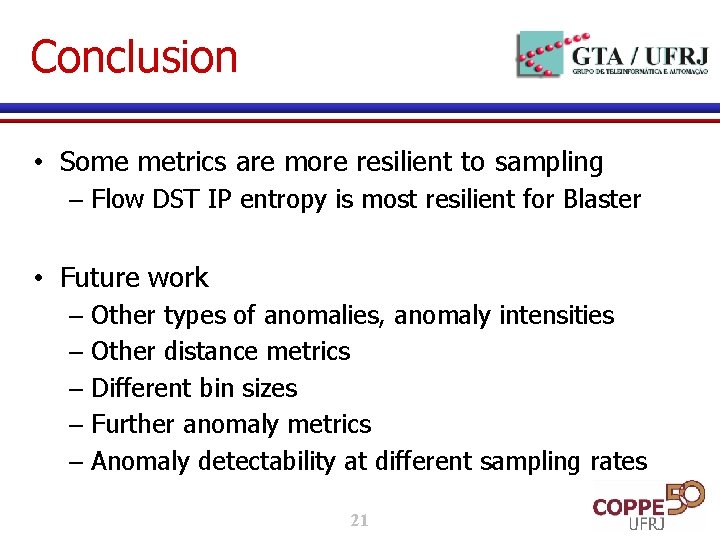
Conclusion • Some metrics are more resilient to sampling – Flow DST IP entropy is most resilient for Blaster • Future work – Other types of anomalies, anomaly intensities – Other distance metrics – Different bin sizes – Further anomaly metrics – Anomaly detectability at different sampling rates 21