
Impact of ocean observation systems on ocean analyses
Impact of ocean observation systems on ocean analyses and subseasonal forecasts Aneesh Subramanian with Frederic Vitart, Magdalena Balmaseda, Hao Zuo, Yosuke Fujii, Yuhei Takaya source: nasa. gov/ISS
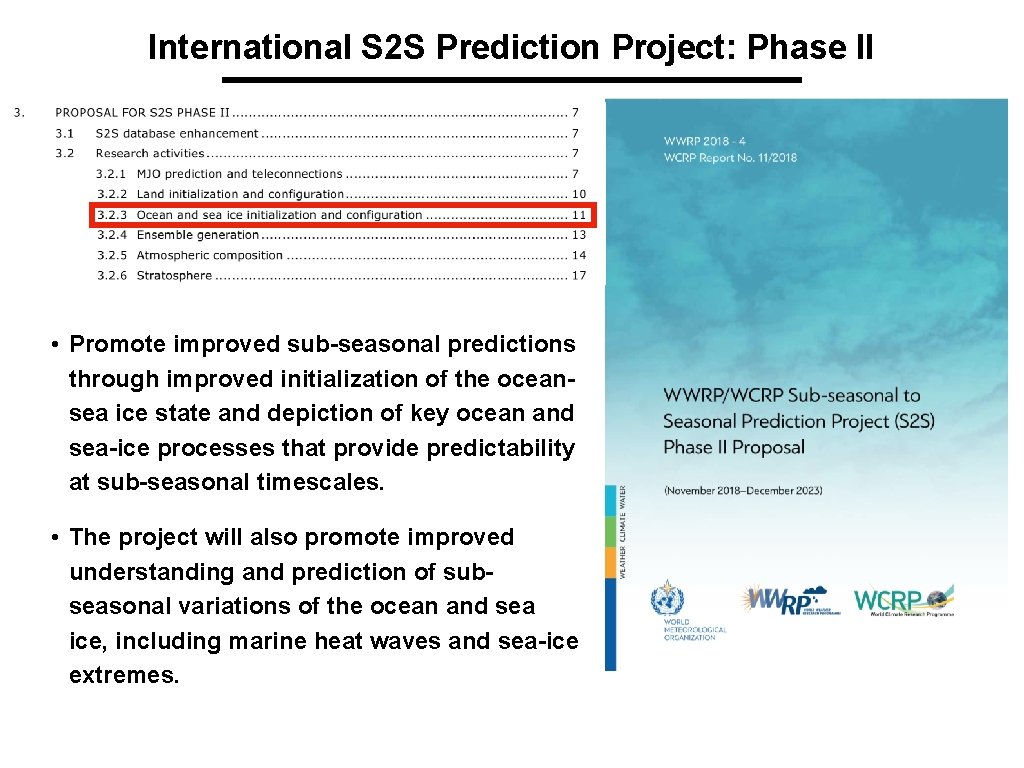
International S 2 S Prediction Project: Phase II • Promote improved sub-seasonal predictions through improved initialization of the oceansea ice state and depiction of key ocean and sea-ice processes that provide predictability at sub-seasonal timescales. • The project will also promote improved understanding and prediction of subseasonal variations of the ocean and sea ice, including marine heat waves and sea-ice extremes.
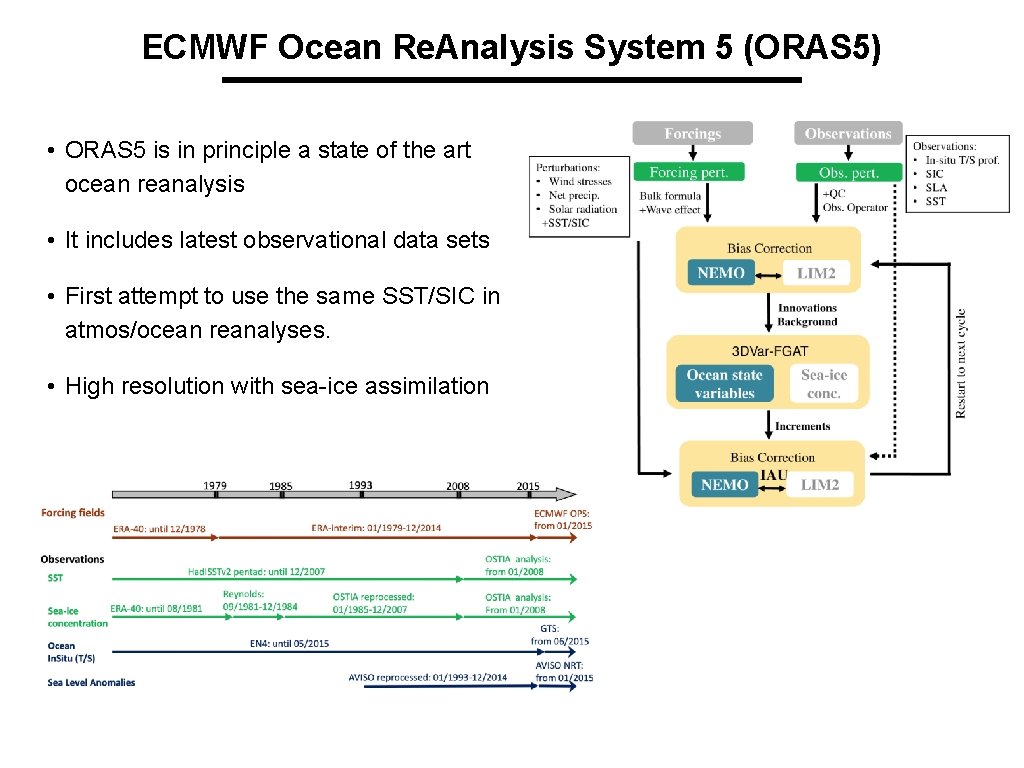
ECMWF Ocean Re. Analysis System 5 (ORAS 5) • ORAS 5 is in principle a state of the art ocean reanalysis • It includes latest observational data sets • First attempt to use the same SST/SIC in atmos/ocean reanalyses. • High resolution with sea-ice assimilation
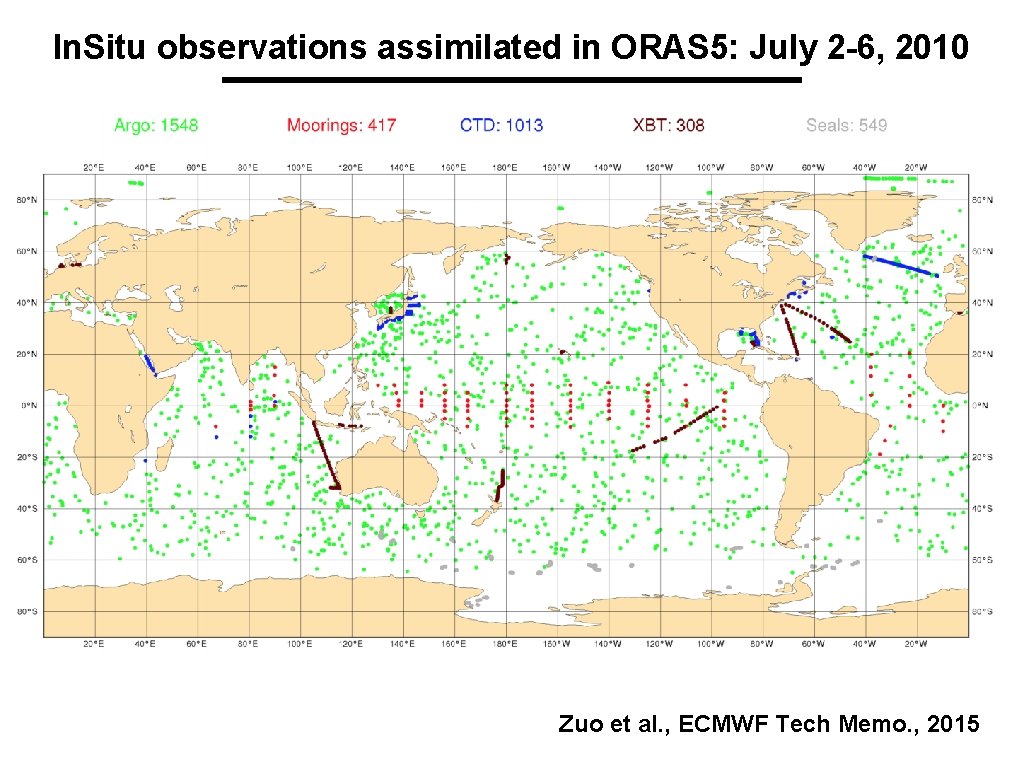
In. Situ observations assimilated in ORAS 5: July 2 -6, 2010 Zuo et al. , ECMWF Tech Memo. , 2015
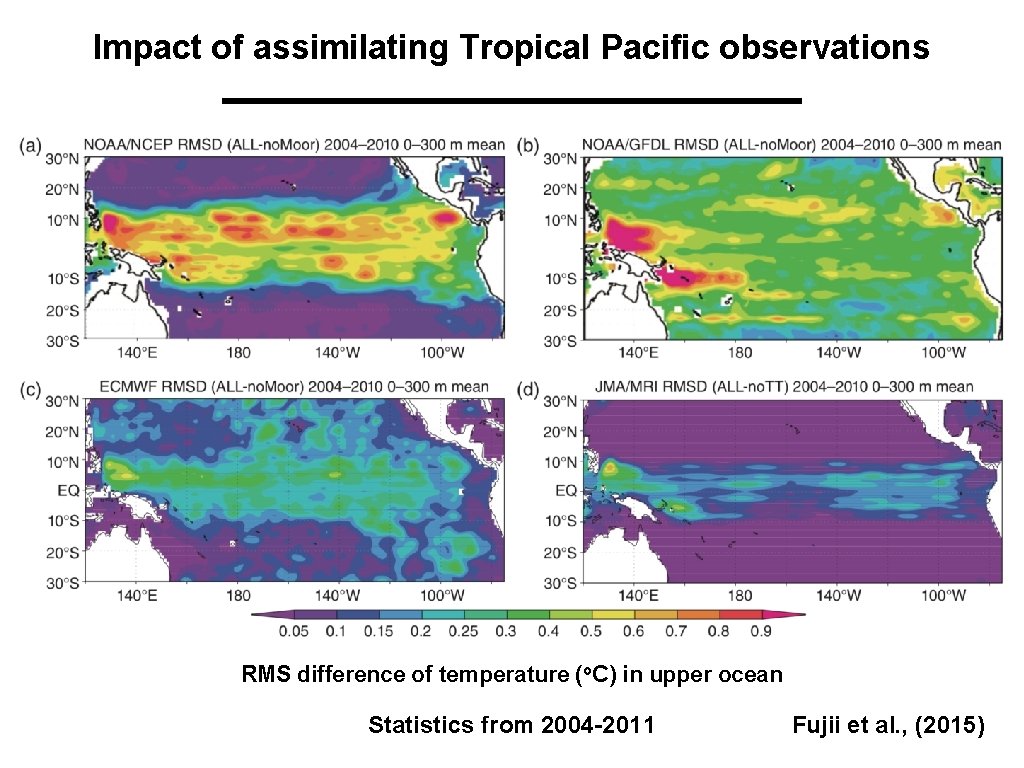
Impact of assimilating Tropical Pacific observations RMS difference of temperature (o. C) in upper ocean Statistics from 2004 -2011 Fujii et al. , (2015)
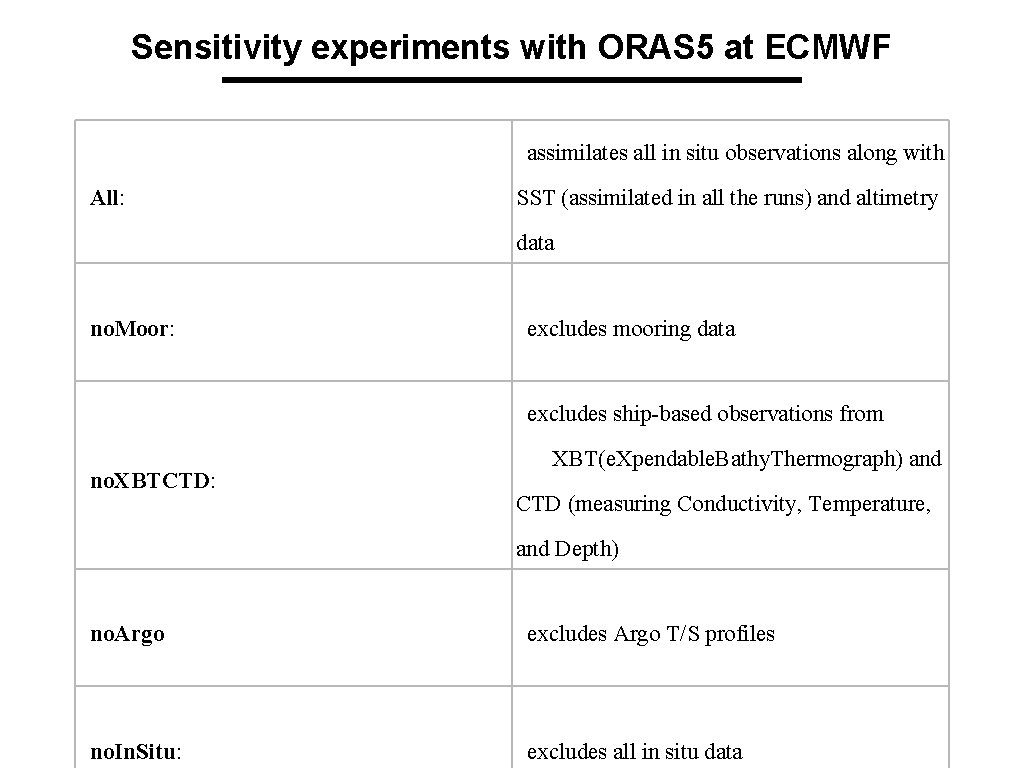
Sensitivity experiments with ORAS 5 at ECMWF assimilates all in situ observations along with All: SST (assimilated in all the runs) and altimetry data no. Moor: excludes mooring data excludes ship-based observations from no. XBTCTD: XBT(e. Xpendable. Bathy. Thermograph) and CTD (measuring Conductivity, Temperature, and Depth) no. Argo excludes Argo T/S profiles no. In. Situ: excludes all in situ data
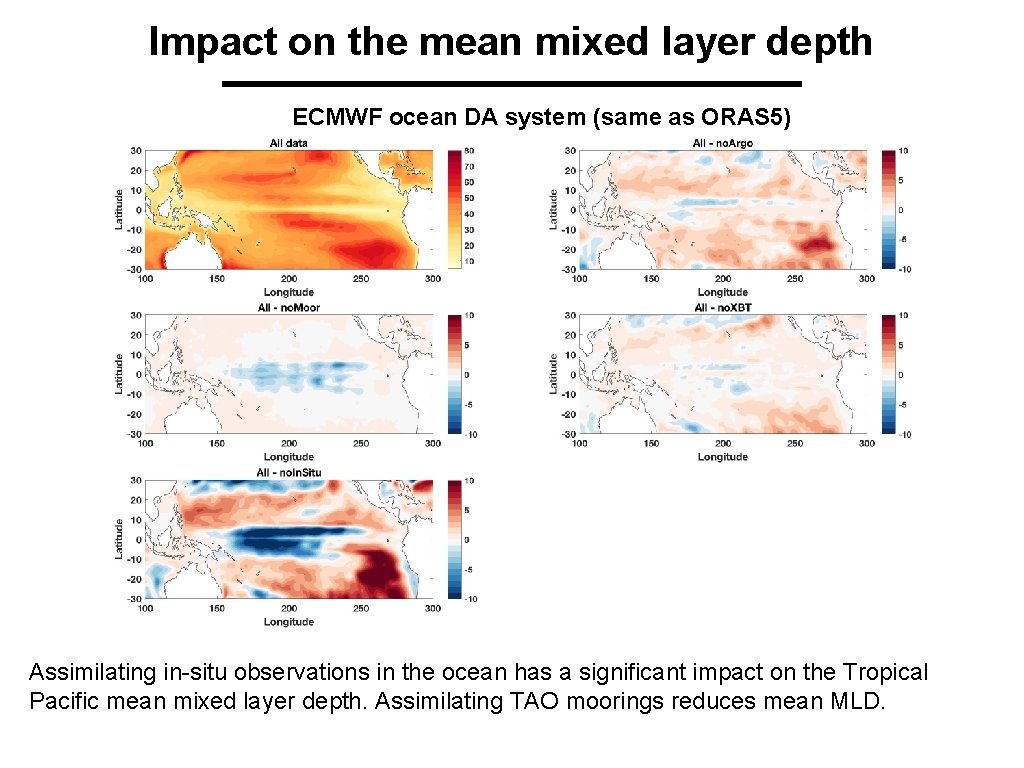
Impact on the mean mixed layer depth ECMWF ocean DA system (same as ORAS 5) Assimilating in-situ observations in the ocean has a significant impact on the Tropical Pacific mean mixed layer depth. Assimilating TAO moorings reduces mean MLD.
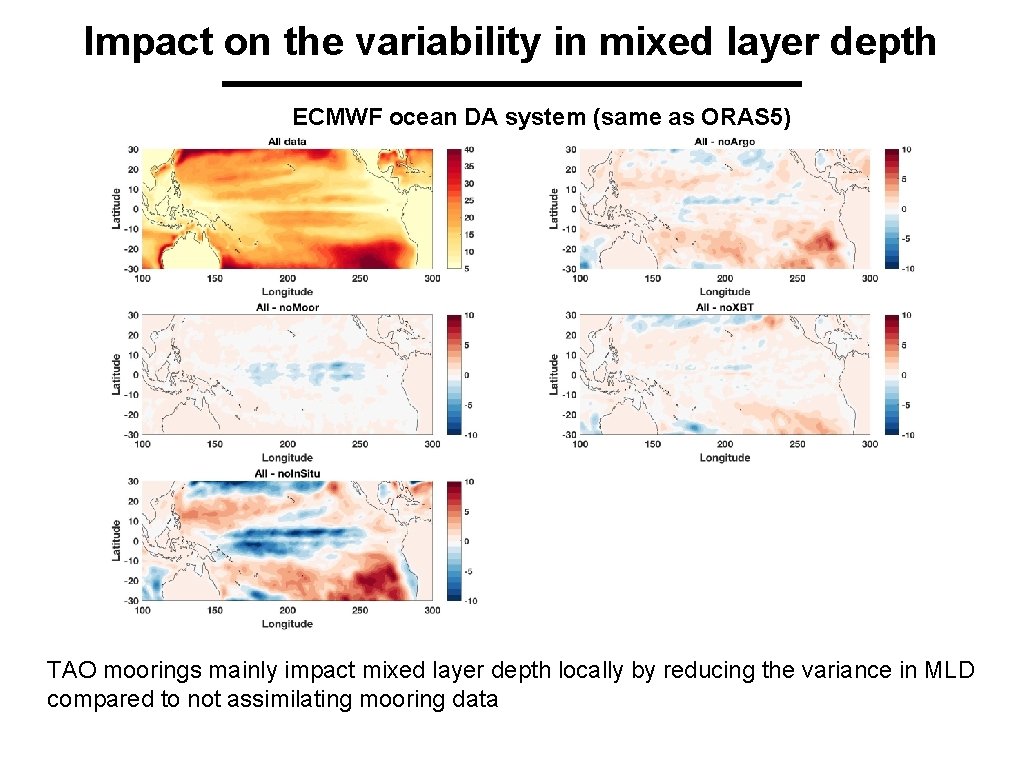
Impact on the variability in mixed layer depth ECMWF ocean DA system (same as ORAS 5) TAO moorings mainly impact mixed layer depth locally by reducing the variance in MLD compared to not assimilating mooring data
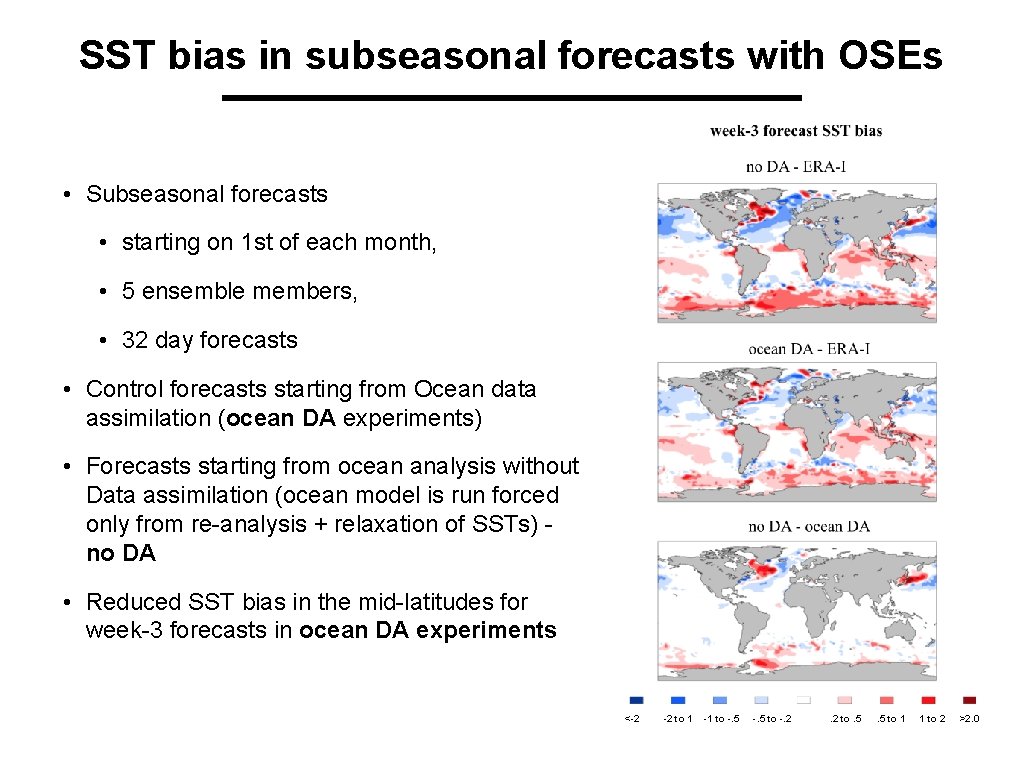
SST bias in subseasonal forecasts with OSEs • Subseasonal forecasts • starting on 1 st of each month, • 5 ensemble members, • 32 day forecasts • Control forecasts starting from Ocean data assimilation (ocean DA experiments) • Forecasts starting from ocean analysis without Data assimilation (ocean model is run forced only from re-analysis + relaxation of SSTs) no DA • Reduced SST bias in the mid-latitudes for week-3 forecasts in ocean DA experiments <-2 -2 to 1 -1 to -. 5 to -. 2 to. 5 to 1 1 to 2 >2. 0
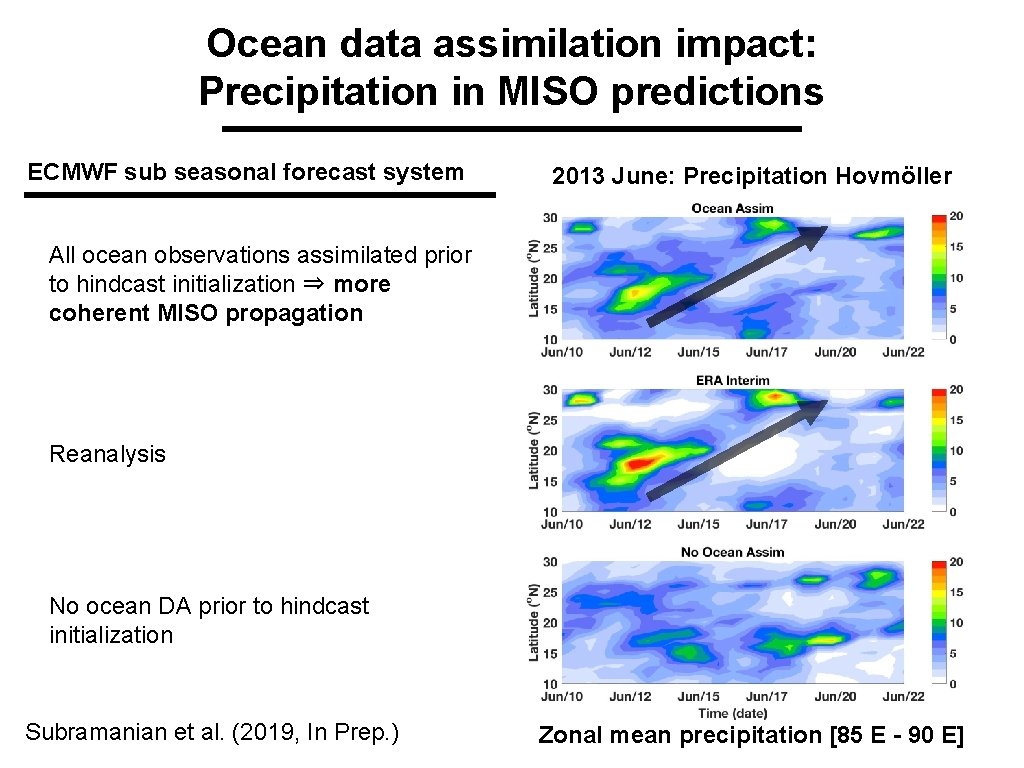
Ocean data assimilation impact: Precipitation in MISO predictions ECMWF sub seasonal forecast system 2013 June: Precipitation Hovmöller All ocean observations assimilated prior to hindcast initialization ⇒ more coherent MISO propagation Reanalysis No ocean DA prior to hindcast initialization Subramanian et al. (2019, In Prep. ) Zonal mean precipitation [85 E - 90 E]
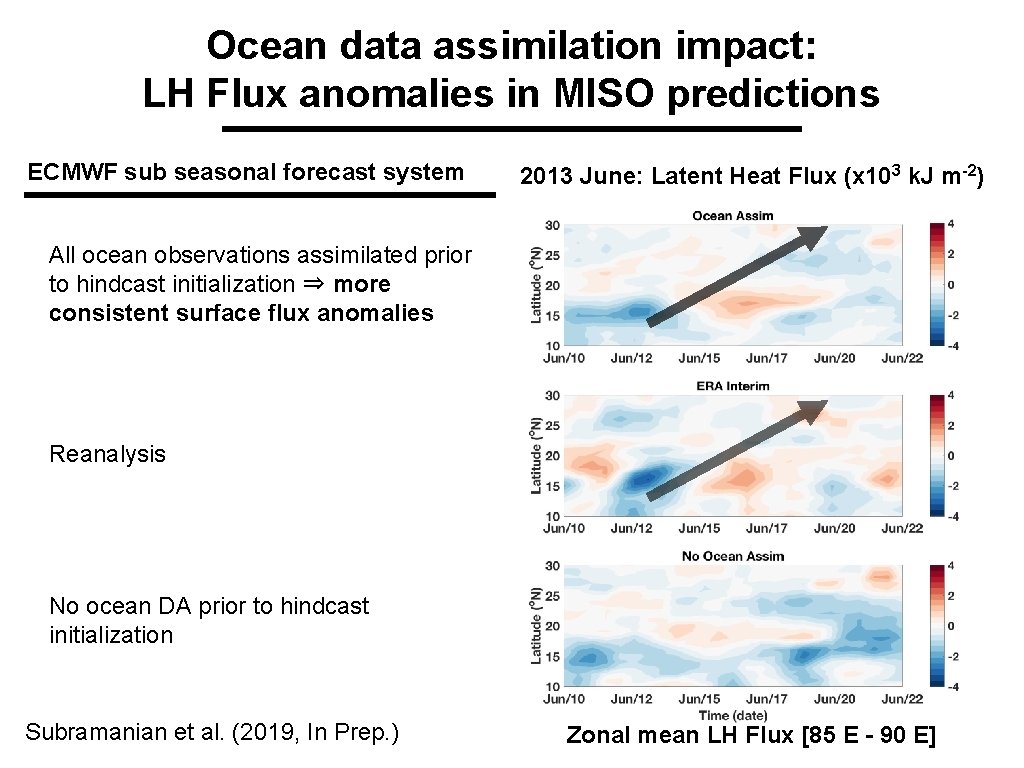
Ocean data assimilation impact: LH Flux anomalies in MISO predictions ECMWF sub seasonal forecast system 2013 June: Latent Heat Flux (x 103 k. J m-2) All ocean observations assimilated prior to hindcast initialization ⇒ more consistent surface flux anomalies Reanalysis No ocean DA prior to hindcast initialization Subramanian et al. (2019, In Prep. ) Zonal mean LH Flux [85 E - 90 E]
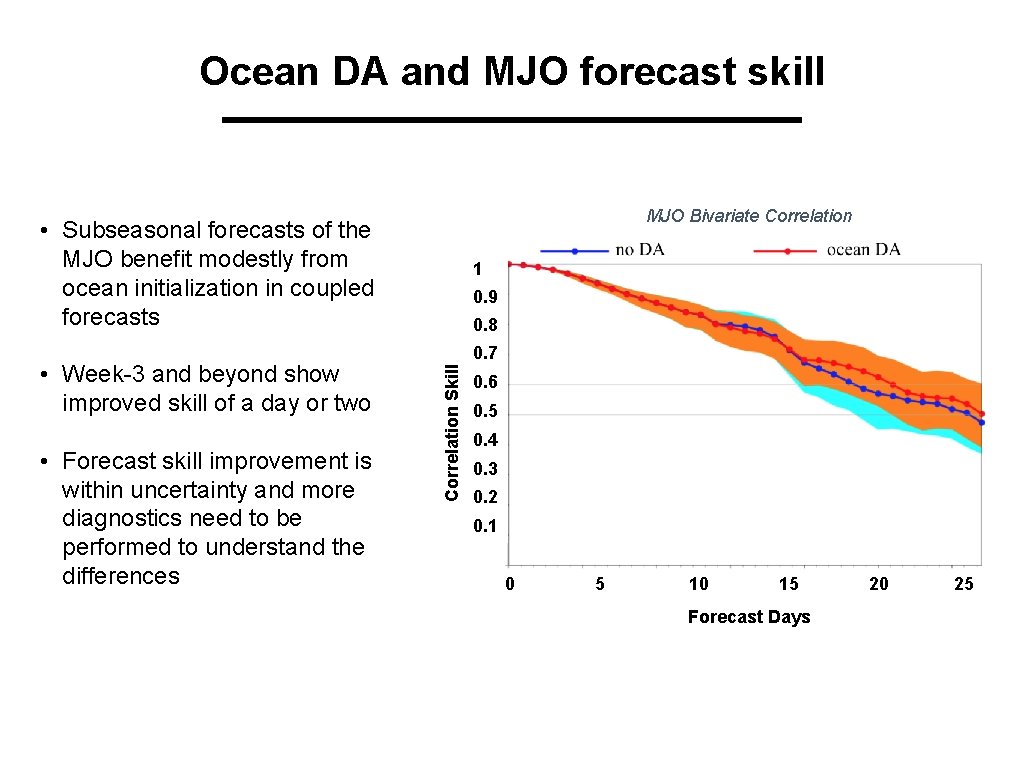
Ocean DA and MJO forecast skill MJO Bivariate Correlation • Subseasonal forecasts of the MJO benefit modestly from ocean initialization in coupled forecasts • Forecast skill improvement is within uncertainty and more diagnostics need to be performed to understand the differences 0. 9 0. 8 0. 7 Correlation Skill • Week-3 and beyond show improved skill of a day or two 1 0. 6 0. 5 0. 4 0. 3 0. 2 0. 1 0 5 10 15 Forecast Days 20 25
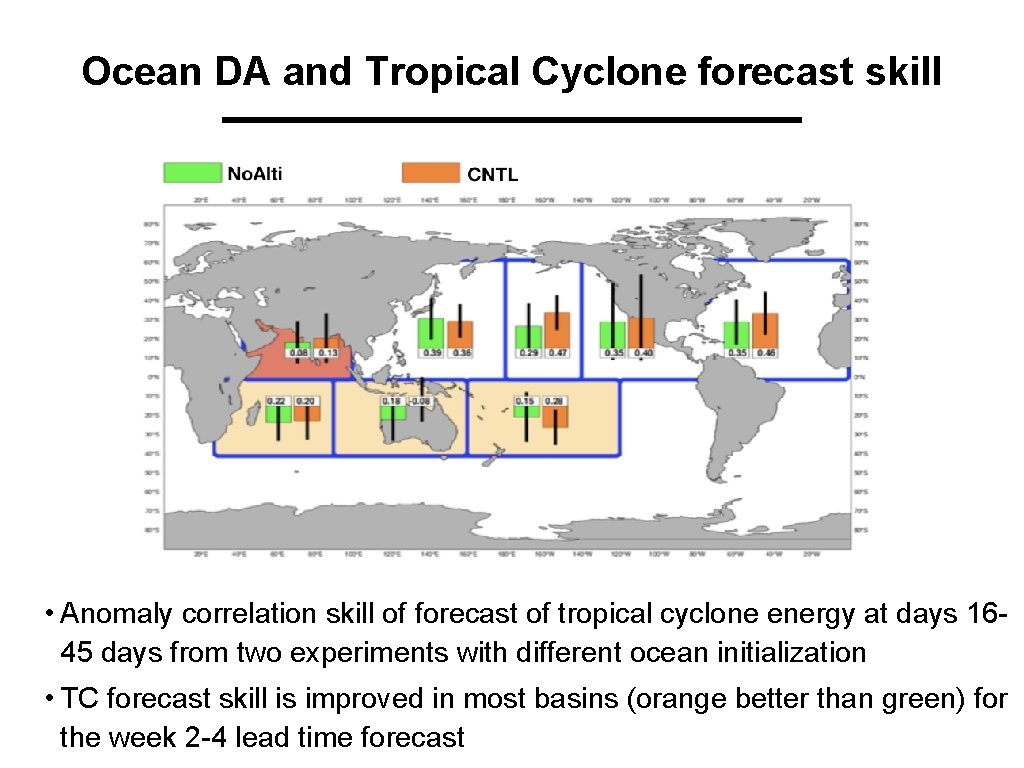
Ocean DA and Tropical Cyclone forecast skill • Anomaly correlation skill of forecast of tropical cyclone energy at days 1645 days from two experiments with different ocean initialization • TC forecast skill is improved in most basins (orange better than green) for the week 2 -4 lead time forecast
Summary of Results • Preliminary results from new ocean DA system at ECMWF shows overall positive impact from assimilation of TAO mooring and Argo (in-situ) data in ocean analyses • Ocean in-situ observations have significant impact on mean and variability representations of subsurface ocean variables • Ocean DA helps improve forecast skill of some atmospheric variables on sub seasonal timescales • JMA has completed ocean. DA vs no. DA S 2 S experiments. Analysis to begin shortly • Further analysis is required (including with other modeling systems) to understand the systematic impact of ocean observations on improved process understanding and forecast skill for S 2 S timescales

NCAR Summer School • Scientific Steering Committee is being formed. Judith Berner (NCAR) and I are coordinating. • Deadline for proposal is end of April 2019 • We will contact some of you regarding invited talks at a later stage. • What level of support from WCRP/WWRP S 2 S project is appropriate for such summer schools? Student travel support for international students?

Thank you Monsoon clouds over Bangladesh. Courtesy: NASA

Thank you Monsoon clouds over Bangladesh. Courtesy: NASA
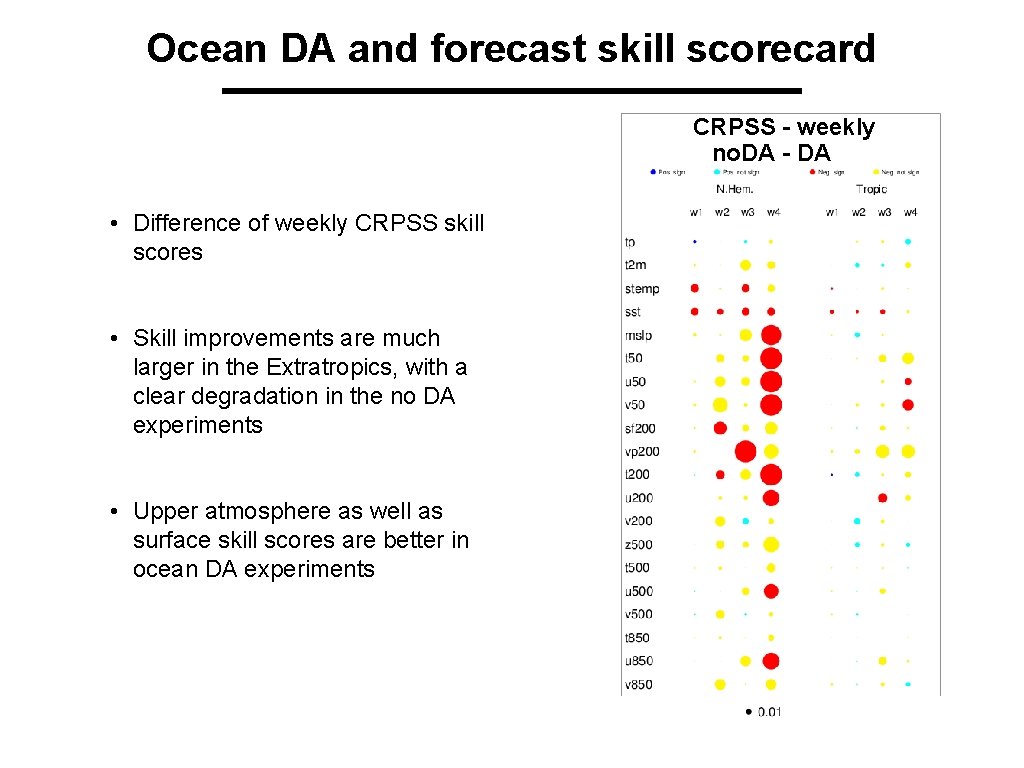
Ocean DA and forecast skill scorecard CRPSS - weekly no. DA - DA • Difference of weekly CRPSS skill scores • Skill improvements are much larger in the Extratropics, with a clear degradation in the no DA experiments • Upper atmosphere as well as surface skill scores are better in ocean DA experiments
- Slides: 18