
Impact of MildSubclinical Thyroid Disease on Cardiovascular Health
Impact of “Mild-Subclinical” Thyroid Disease on Cardiovascular Health Harry L. Uy, MD UP College of Medicine Class 1986 Private Practice, Endocrinology Clinical Associate Professor UTHSC-San Antonio
Should mild thyroid dysfunction be treated? Is there any clinical consequence if this is left untreated?
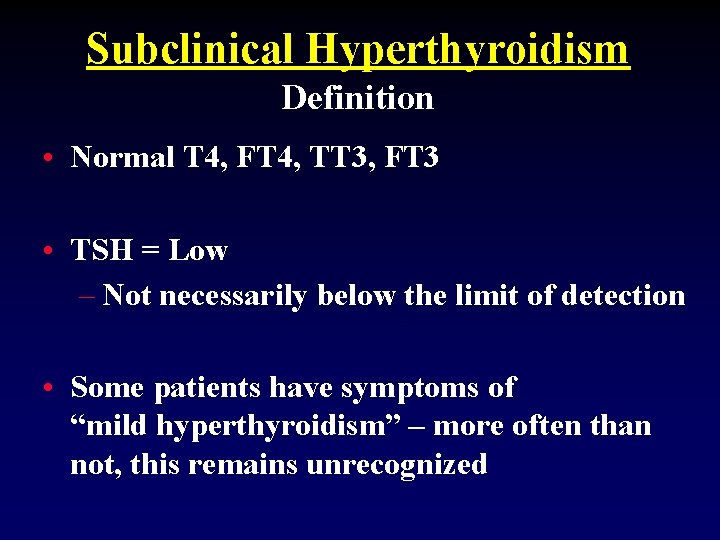
Subclinical Hyperthyroidism Definition • Normal T 4, FT 4, TT 3, FT 3 • TSH = Low – Not necessarily below the limit of detection • Some patients have symptoms of “mild hyperthyroidism” – more often than not, this remains unrecognized
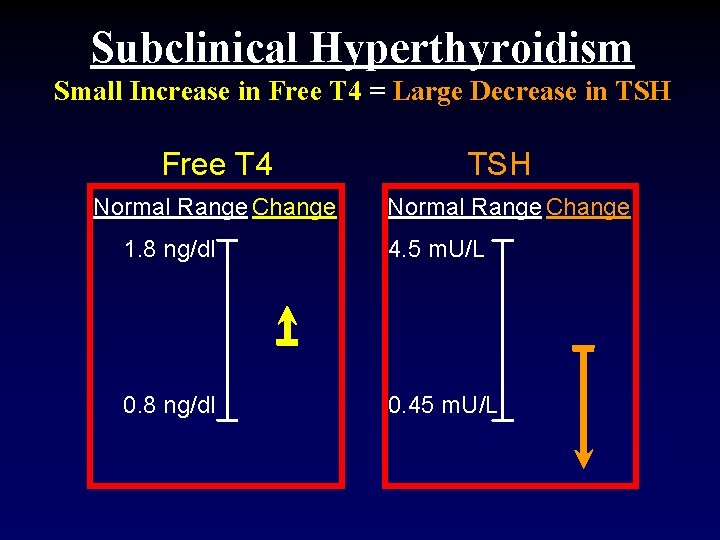
Subclinical Hyperthyroidism Small Increase in Free T 4 = Large Decrease in TSH Free T 4 Normal Range Change TSH Normal Range Change 1. 8 ng/dl 4. 5 m. U/L 0. 8 ng/dl 0. 45 m. U/L

Subclinical Hyperthyroidism: Definition and Prevalence • Usually asymptomatic 1 • Low or undetectable serum TSH 1 • Normal or borderline serum FT 4 and FT 31 • Variable prevalence (0. 7% to 6. 0%)2 • More common in women 3 • More common in older people than overt hyperthyroidism 4 • Most common cause is overtreatment with L-thyroxine 1. Ross DS. Mayo Clin Proc. 1988; 63: 1223. 2. Ross DS. In: Werner and Ingbar’s The Thyroid, 7 th ed. 1996: 1016. 3. Sawin CT. Adv Intern Med. 1991; 37: 223. 4. Sawin CT et al. N Engl J Med. 1994; 331: 1249.
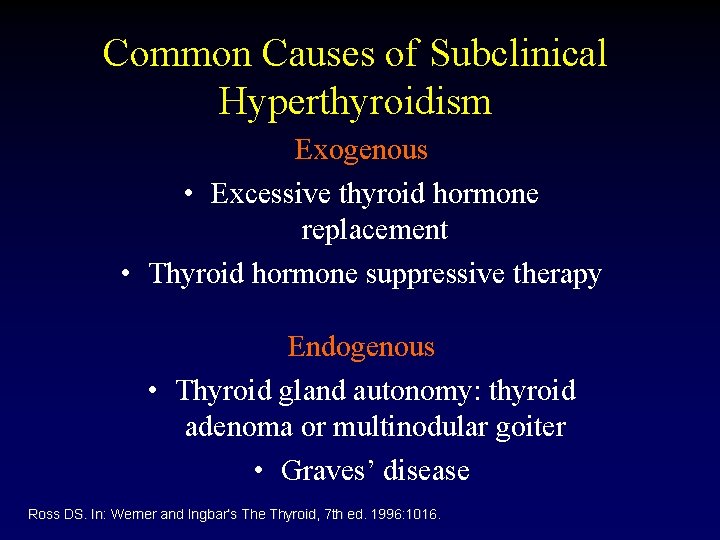
Common Causes of Subclinical Hyperthyroidism Exogenous • Excessive thyroid hormone replacement • Thyroid hormone suppressive therapy Endogenous • Thyroid gland autonomy: thyroid adenoma or multinodular goiter • Graves’ disease Ross DS. In: Werner and Ingbar’s The Thyroid, 7 th ed. 1996: 1016.
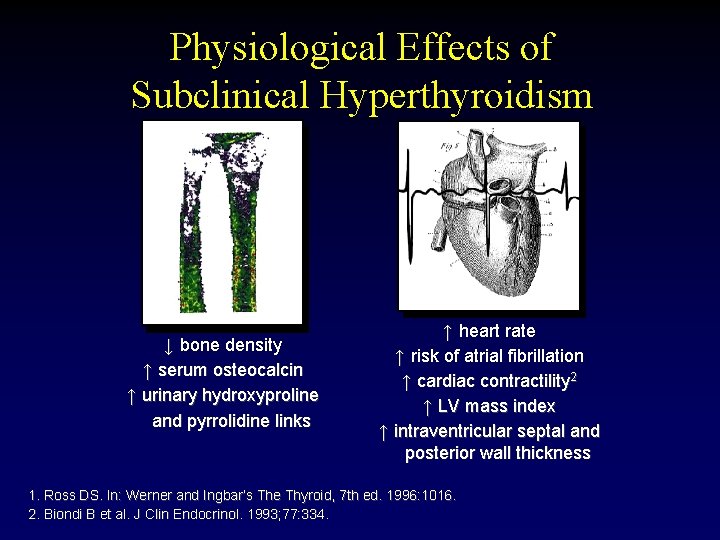
Physiological Effects of Subclinical Hyperthyroidism ↓ bone density ↑ serum osteocalcin ↑ urinary hydroxyproline and pyrrolidine links ↑ heart rate ↑ risk of atrial fibrillation ↑ cardiac contractility 2 ↑ LV mass index ↑ intraventricular septal and posterior wall thickness 1. Ross DS. In: Werner and Ingbar’s The Thyroid, 7 th ed. 1996: 1016. 2. Biondi B et al. J Clin Endocrinol. 1993; 77: 334.
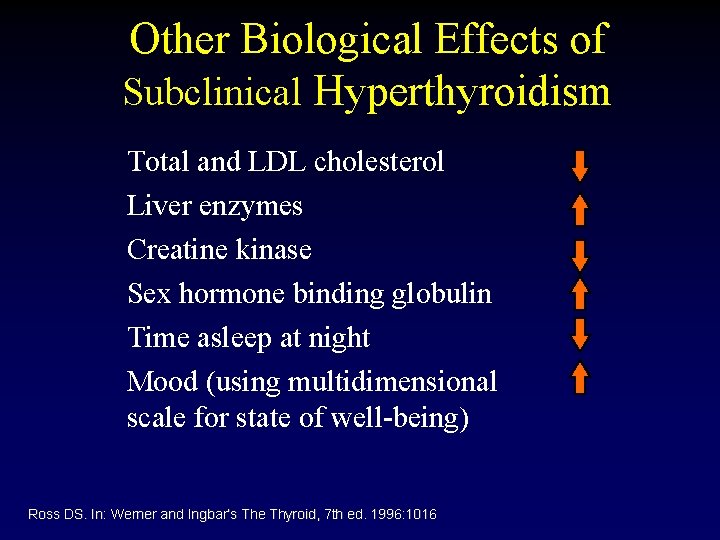
Other Biological Effects of Subclinical Hyperthyroidism Total and LDL cholesterol Liver enzymes Creatine kinase Sex hormone binding globulin Time asleep at night Mood (using multidimensional scale for state of well-being) Ross DS. In: Werner and Ingbar’s The Thyroid, 7 th ed. 1996: 1016

Hyperthyroidism Risk of Atrial Fibrillation or Flutter A Population-Based Study Frost, L. et al. Arch Intern Med 2004; 164: 1675 -1678 .
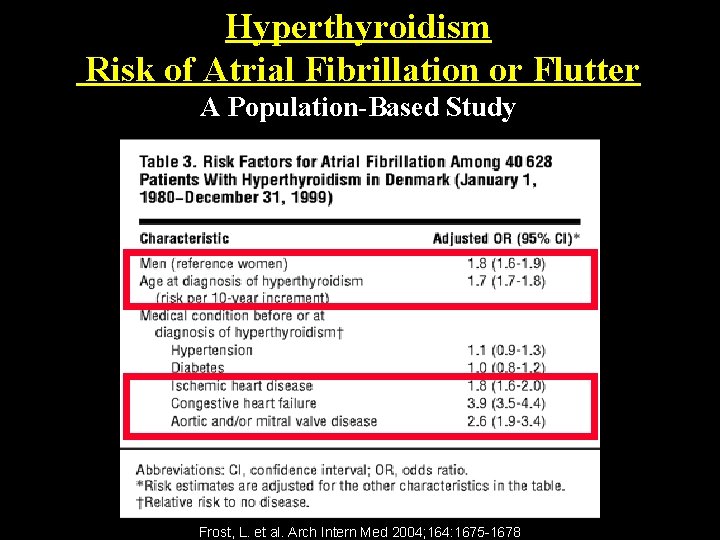
Hyperthyroidism Risk of Atrial Fibrillation or Flutter A Population-Based Study Frost, L. et al. Arch Intern Med 2004; 164: 1675 -1678 .
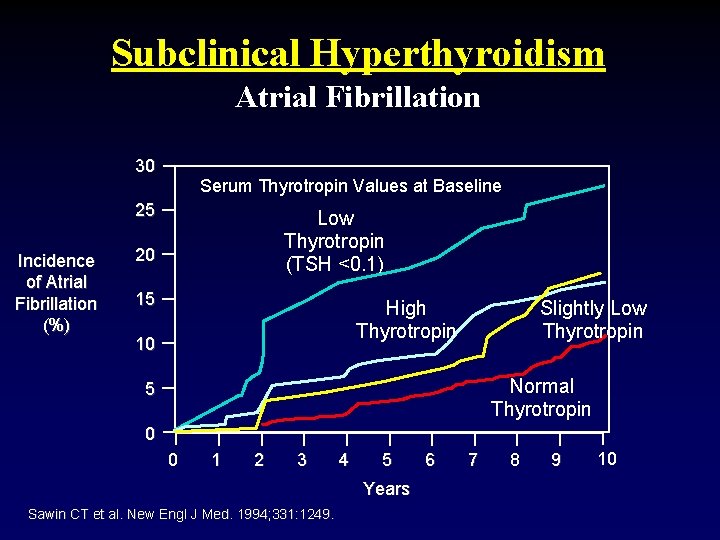
Subclinical Hyperthyroidism Atrial Fibrillation 30 Serum Thyrotropin Values at Baseline 25 Incidence of Atrial Fibrillation (%) Low Thyrotropin (TSH <0. 1) 20 15 High Thyrotropin 10 Slightly Low Thyrotropin Normal Thyrotropin 5 0 0 1 2 3 4 5 Years Sawin CT et al. New Engl J Med. 1994; 331: 1249. 6 7 8 9 10
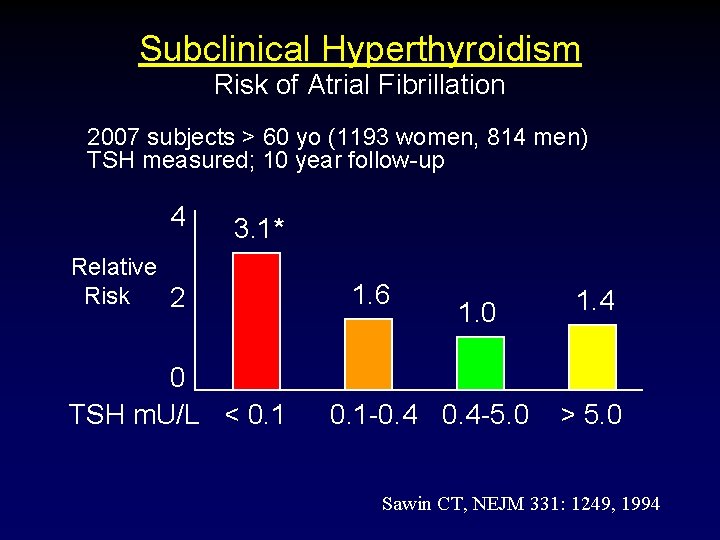
Subclinical Hyperthyroidism Risk of Atrial Fibrillation 2007 subjects > 60 yo (1193 women, 814 men) TSH measured; 10 year follow-up 4 3. 1* Relative Risk 2 0 TSH m. U/L < 0. 1 1. 6 1. 0 0. 1 -0. 4 -5. 0 1. 4 > 5. 0 Sawin CT, NEJM 331: 1249, 1994

Subclinical Hyperthyroidism Atrial Fibrillation Mean age (66 -68), prevalence of underlying CV disease (57 -65%) similar in all 3 groups *P<0. 01 16% 14% * 12% 13. 8% 10% * 12. 7% 8% 6% 4% 2% 0% 2. 3% Controls (n=22, 300) Subclinical Hyperthyroidism (n=725) (TSH<0. 03) Overt Hyperthyroidism (n=613) Auer et al. Am Heart J. 2001
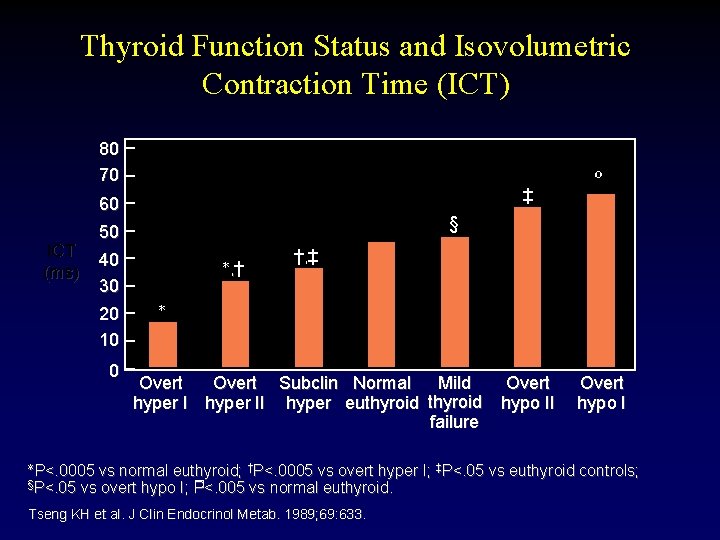
Thyroid Function Status and Isovolumetric Contraction Time (ICT) 80 70 ‡ 60 ICT (ms) 50 40 30 20 10 0 º § ∗ , † , †, ‡ ∗ Overt Subclin Normal Mild hyper II hyper euthyroid failure ∗ P<. 0005 Overt hypo II Overt hypo I vs normal euthyroid; †P<. 0005 vs overt hyper I; ‡P<. 05 vs euthyroid controls; §P<. 05 vs overt hypo I; � P<. 005 vs normal euthyroid. Tseng KH et al. J Clin Endocrinol Metab. 1989; 69: 633.
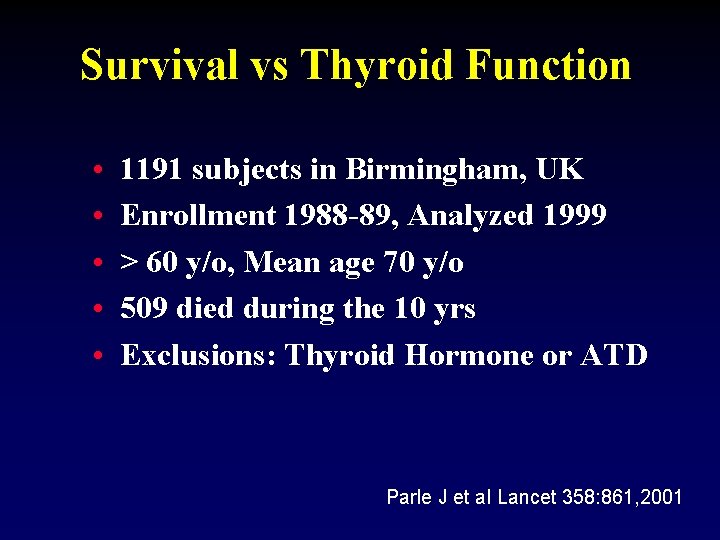
Survival vs Thyroid Function • • • 1191 subjects in Birmingham, UK Enrollment 1988 -89, Analyzed 1999 > 60 y/o, Mean age 70 y/o 509 died during the 10 yrs Exclusions: Thyroid Hormone or ATD Parle J et al Lancet 358: 861, 2001
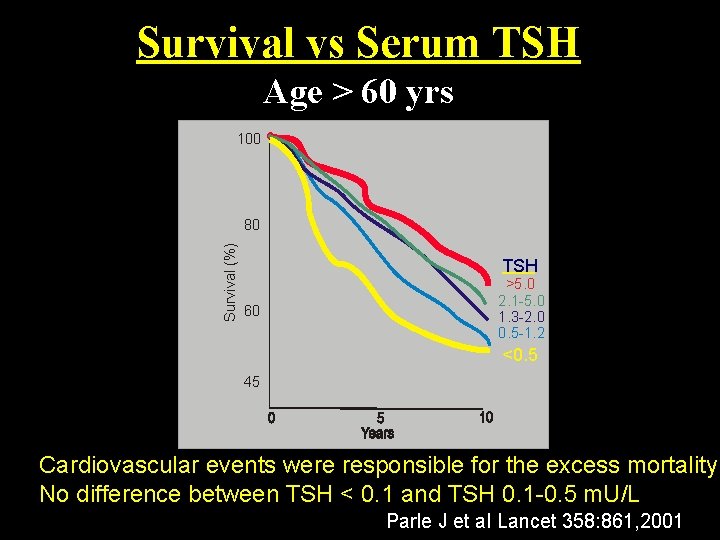
Survival vs Serum TSH Age > 60 yrs 100 Survival (%) 80 TSH 60 >5. 0 2. 1 -5. 0 1. 3 -2. 0 0. 5 -1. 2 <0. 5 45 Cardiovascular events were responsible for the excess mortality No difference between TSH < 0. 1 and TSH 0. 1 -0. 5 m. U/L Parle J et al Lancet 358: 861, 2001

Subclinical Hyperthyroidism Concerns n Osteoporosis n Atrial fibrillation n Cardiac dysfunction n Progression to overt disease
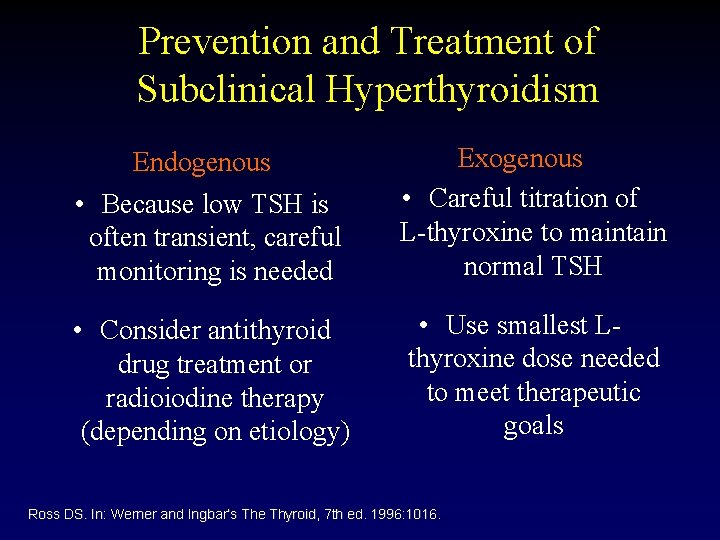
Prevention and Treatment of Subclinical Hyperthyroidism Endogenous • Because low TSH is often transient, careful monitoring is needed Exogenous • Careful titration of L-thyroxine to maintain normal TSH • Consider antithyroid drug treatment or radioiodine therapy (depending on etiology) • Use smallest Lthyroxine dose needed to meet therapeutic goals Ross DS. In: Werner and Ingbar’s The Thyroid, 7 th ed. 1996: 1016.
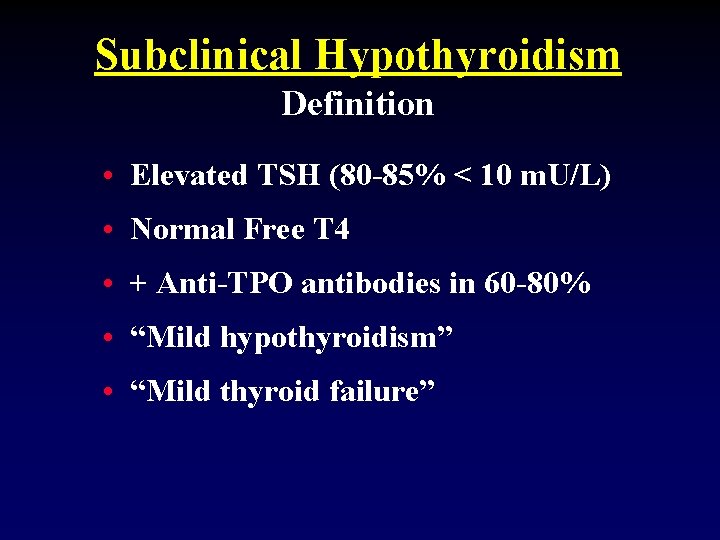
Subclinical Hypothyroidism Definition • Elevated TSH (80 -85% < 10 m. U/L) • Normal Free T 4 • + Anti-TPO antibodies in 60 -80% • “Mild hypothyroidism” • “Mild thyroid failure”
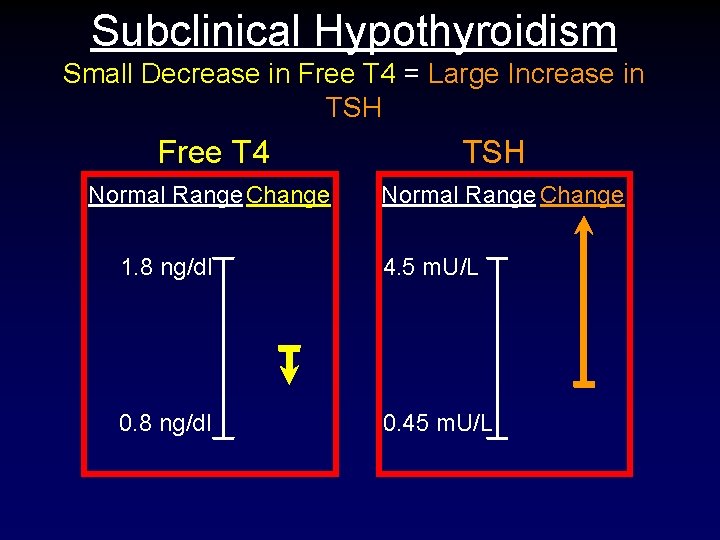
Subclinical Hypothyroidism Small Decrease in Free T 4 = Large Increase in TSH Free T 4 Normal Range Change TSH Normal Range Change 1. 8 ng/dl 4. 5 m. U/L 0. 8 ng/dl 0. 45 m. U/L
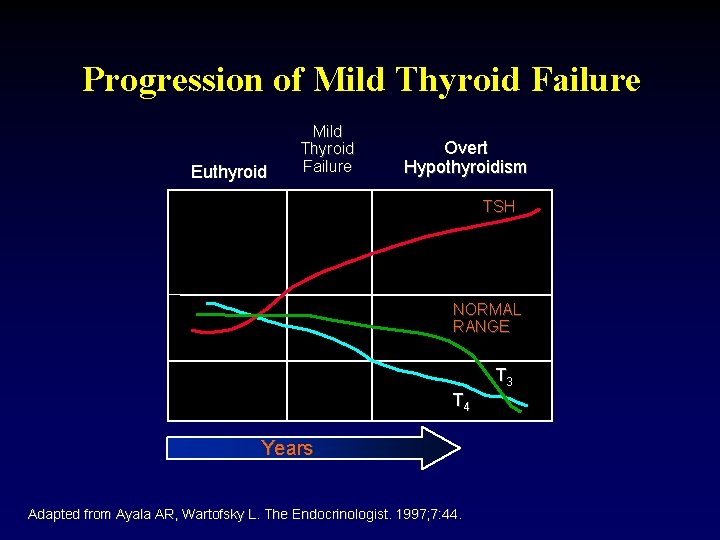
Progression of Mild Thyroid Failure Euthyroid Mild Thyroid Failure Overt Hypothyroidism TSH NORMAL RANGE T 3 T 4 Years Adapted from Ayala AR, Wartofsky L. The Endocrinologist. 1997; 7: 44.
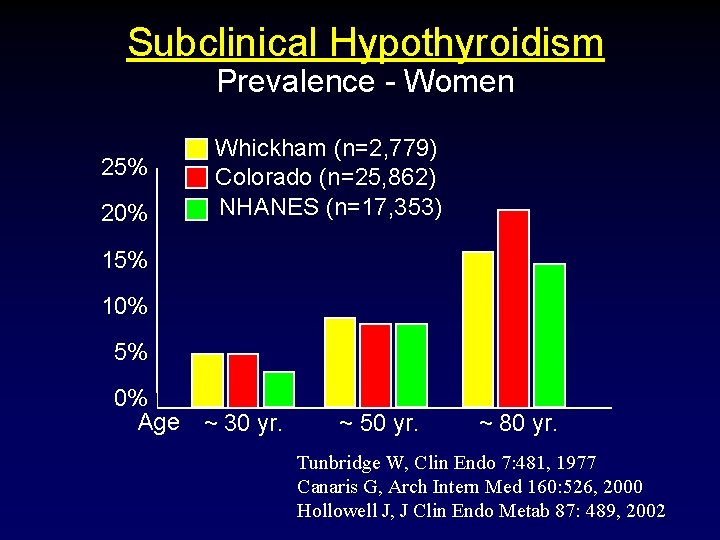
Subclinical Hypothyroidism Prevalence - Women 25% 20% Whickham (n=2, 779) Colorado (n=25, 862) NHANES (n=17, 353) 15% 10% 5% 0% Age ~ 30 yr. ~ 50 yr. ~ 80 yr. Tunbridge W, Clin Endo 7: 481, 1977 Canaris G, Arch Intern Med 160: 526, 2000 Hollowell J, J Clin Endo Metab 87: 489, 2002
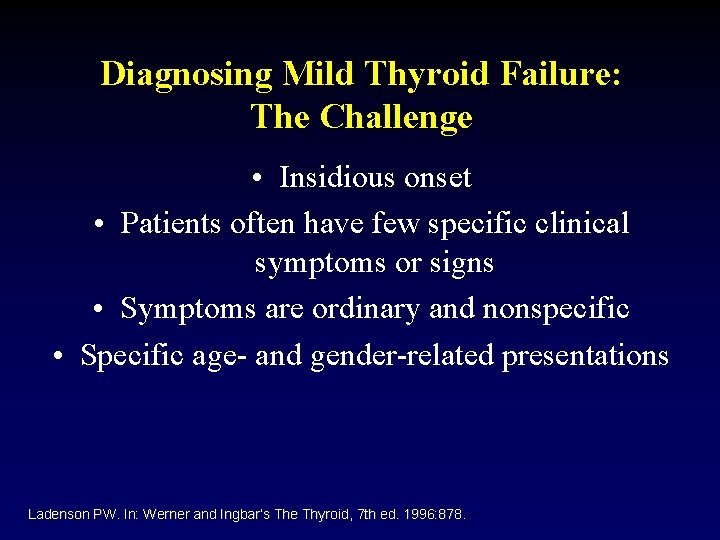
Diagnosing Mild Thyroid Failure: The Challenge • Insidious onset • Patients often have few specific clinical symptoms or signs • Symptoms are ordinary and nonspecific • Specific age- and gender-related presentations Ladenson PW. In: Werner and Ingbar’s The Thyroid, 7 th ed. 1996: 878.
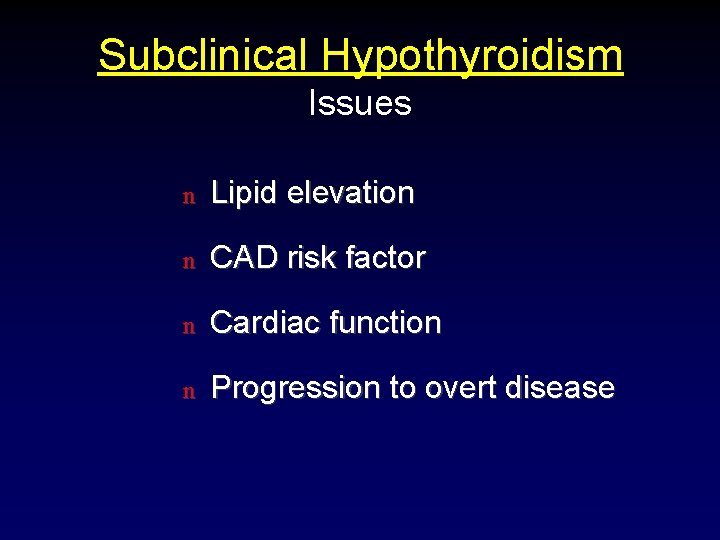
Subclinical Hypothyroidism Issues n Lipid elevation n CAD risk factor n Cardiac function n Progression to overt disease
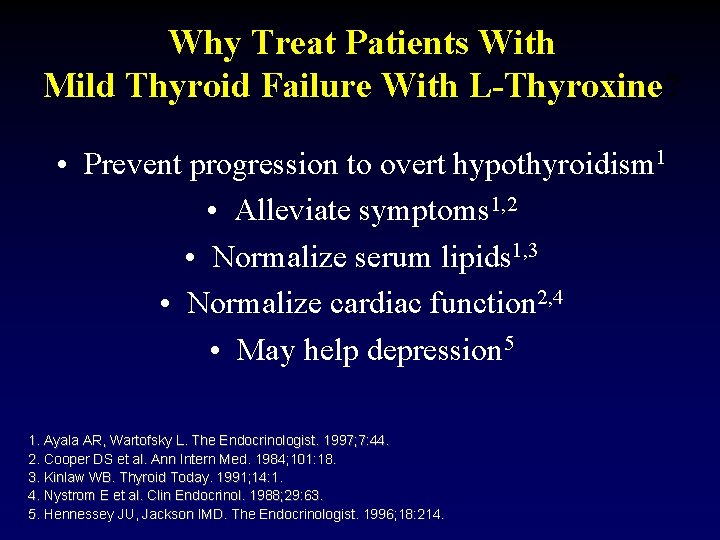
Why Treat Patients With Mild Thyroid Failure With L-Thyroxine? • Prevent progression to overt hypothyroidism 1 • Alleviate symptoms 1, 2 • Normalize serum lipids 1, 3 • Normalize cardiac function 2, 4 • May help depression 5 1. Ayala AR, Wartofsky L. The Endocrinologist. 1997; 7: 44. 2. Cooper DS et al. Ann Intern Med. 1984; 101: 18. 3. Kinlaw WB. Thyroid Today. 1991; 14: 1. 4. Nystrom E et al. Clin Endocrinol. 1988; 29: 63. 5. Hennessey JU, Jackson IMD. The Endocrinologist. 1996; 18: 214.
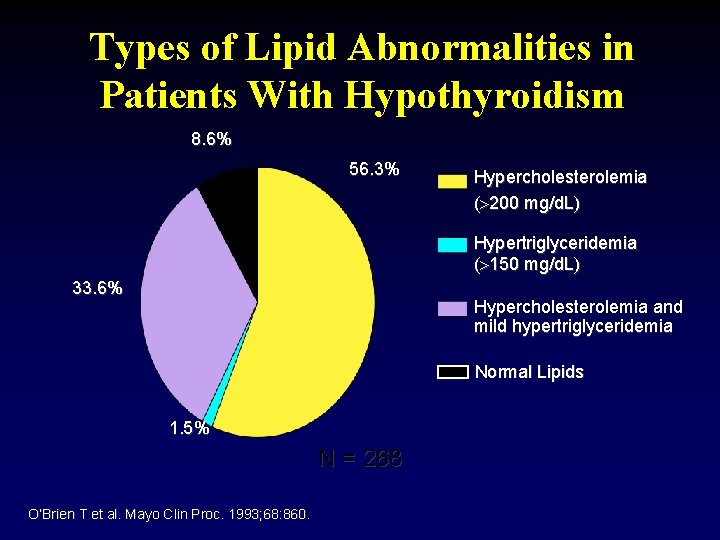
Types of Lipid Abnormalities in Patients With Hypothyroidism 8. 6% 56. 3% Hypercholesterolemia (>200 mg/d. L) Hypertriglyceridemia (>150 mg/d. L) 33. 6% Hypercholesterolemia and mild hypertriglyceridemia Normal Lipids 1. 5% N = 268 O’Brien T et al. Mayo Clin Proc. 1993; 68: 860.
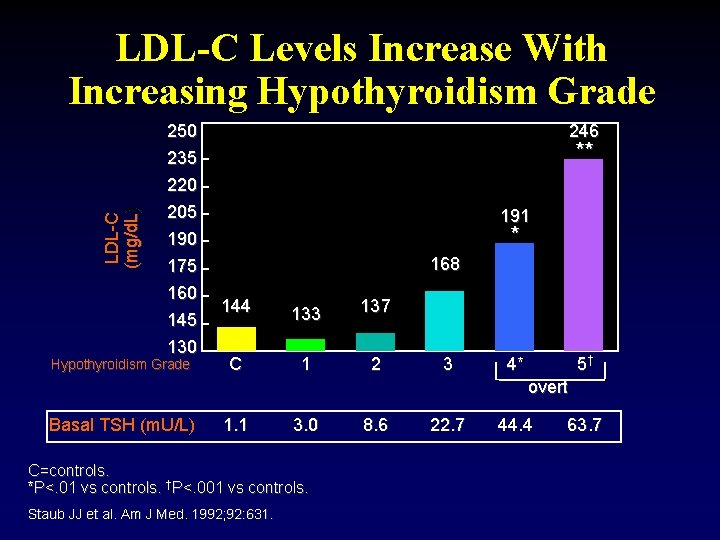
LDL-C (mg/d. L) LDL-C Levels Increase With Increasing Hypothyroidism Grade 250 235 220 205 190 175 160 145 130 Hypothyroidism Grade 246 ** 191 * 168 144 133 137 C 1 2 3 4* 5† overt Basal TSH (m. U/L) 1. 1 3. 0 C=controls. *P<. 01 vs controls. †P<. 001 vs controls. Staub JJ et al. Am J Med. 1992; 92: 631. 8. 6 22. 7 44. 4 63. 7
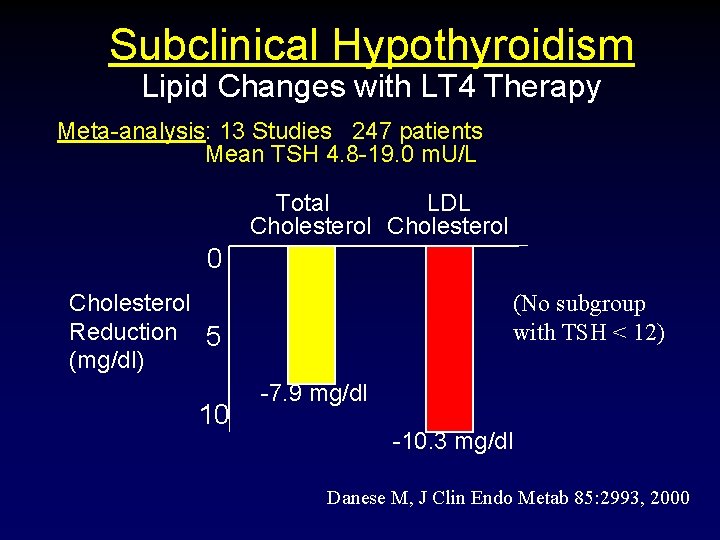
Subclinical Hypothyroidism Lipid Changes with LT 4 Therapy Meta-analysis: 13 Studies 247 patients Mean TSH 4. 8 -19. 0 m. U/L Total LDL Cholesterol 0 Cholesterol Reduction 5 (mg/dl) 10 (No subgroup with TSH < 12) -7. 9 mg/dl -10. 3 mg/dl Danese M, J Clin Endo Metab 85: 2993, 2000
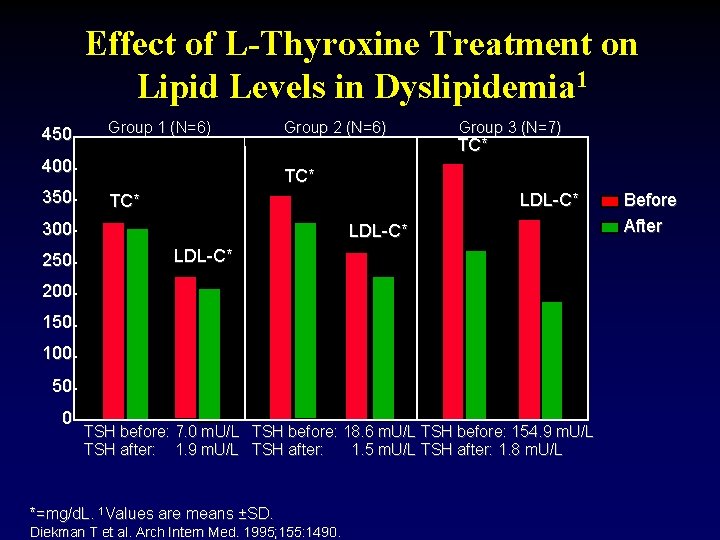
Effect of L-Thyroxine Treatment on Lipid Levels in Dyslipidemia 1 450 Group 1 (N=6) 400 350 Group 2 (N=6) TC* LDL-C* TC* 300 250 Group 3 (N=7) LDL-C* 200 150 100 50 0 TSH before: 7. 0 m. U/L TSH before: 18. 6 m. U/L TSH before: 154. 9 m. U/L TSH after: 1. 5 m. U/L TSH after: 1. 8 m. U/L *=mg/d. L. 1 Values are means ±SD. Diekman T et al. Arch Intern Med. 1995; 155: 1490. Before After
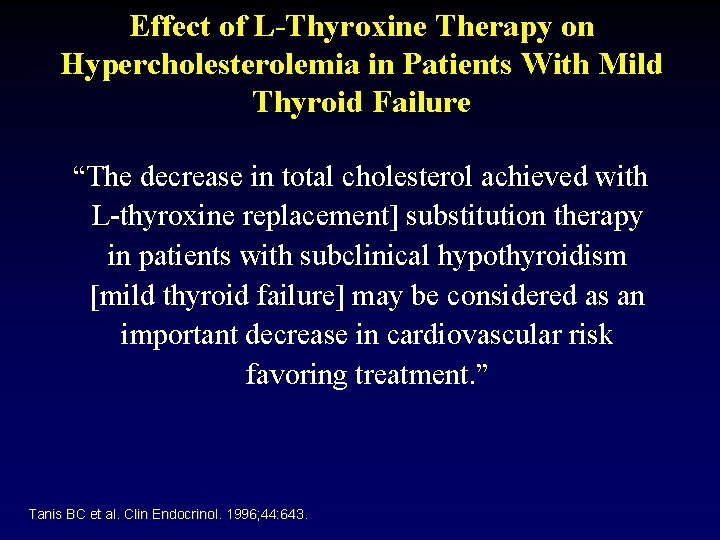
Effect of L-Thyroxine Therapy on Hypercholesterolemia in Patients With Mild Thyroid Failure “The decrease in total cholesterol achieved with L-thyroxine replacement] substitution therapy in patients with subclinical hypothyroidism [mild thyroid failure] may be considered as an important decrease in cardiovascular risk favoring treatment. ” Tanis BC et al. Clin Endocrinol. 1996; 44: 643.
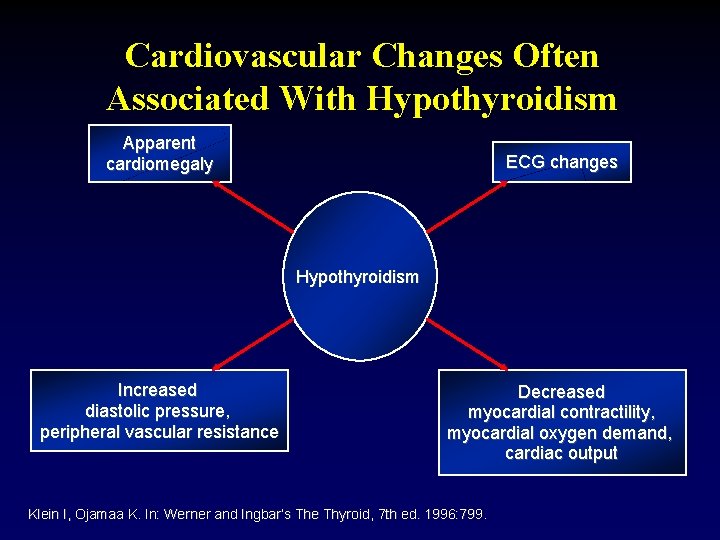
Cardiovascular Changes Often Associated With Hypothyroidism Apparent cardiomegaly ECG changes Hypothyroidism Increased diastolic pressure, peripheral vascular resistance Decreased myocardial contractility, myocardial oxygen demand, cardiac output Klein I, Ojamaa K. In: Werner and Ingbar’s The Thyroid, 7 th ed. 1996: 799.
Subclinical Hypothyroidism Issues n Lipid elevation n CAD risk factor n Cardiac function n Progression to overt disease
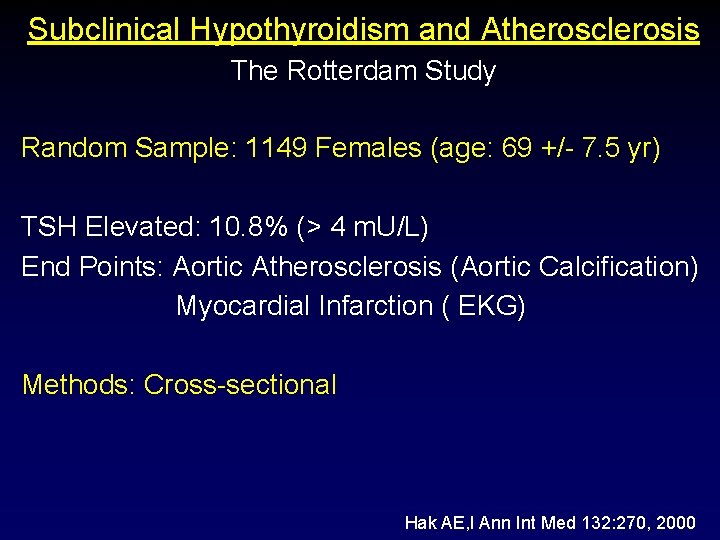
Subclinical Hypothyroidism and Atherosclerosis The Rotterdam Study Random Sample: 1149 Females (age: 69 +/- 7. 5 yr) TSH Elevated: 10. 8% (> 4 m. U/L) End Points: Aortic Atherosclerosis (Aortic Calcification) Myocardial Infarction ( EKG) Methods: Cross-sectional Hak AE, l Ann Int Med 132: 270, 2000
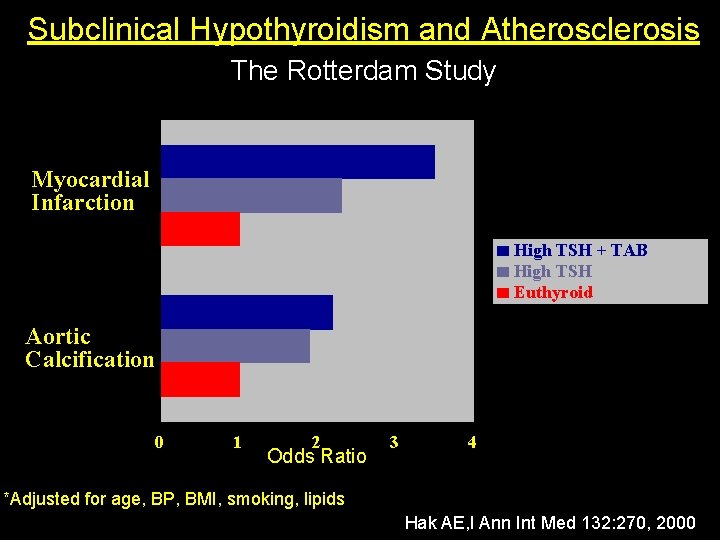
Subclinical Hypothyroidism and Atherosclerosis The Rotterdam Study Myocardial Infarction High TSH + TAB High TSH Euthyroid Aortic Calcification 0 1 2 Odds Ratio 3 4 *Adjusted for age, BP, BMI, smoking, lipids Hak AE, l Ann Int Med 132: 270, 2000
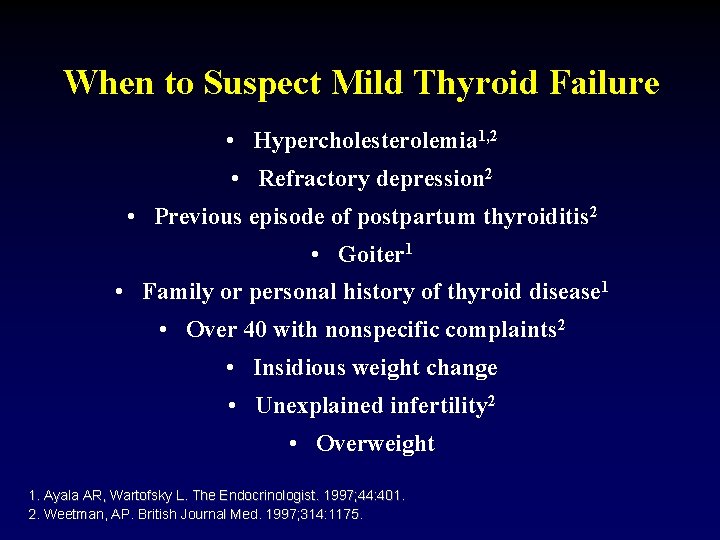
When to Suspect Mild Thyroid Failure • Hypercholesterolemia 1, 2 • Refractory depression 2 • Previous episode of postpartum thyroiditis 2 • Goiter 1 • Family or personal history of thyroid disease 1 • Over 40 with nonspecific complaints 2 • Insidious weight change • Unexplained infertility 2 • Overweight 1. Ayala AR, Wartofsky L. The Endocrinologist. 1997; 44: 401. 2. Weetman, AP. British Journal Med. 1997; 314: 1175.
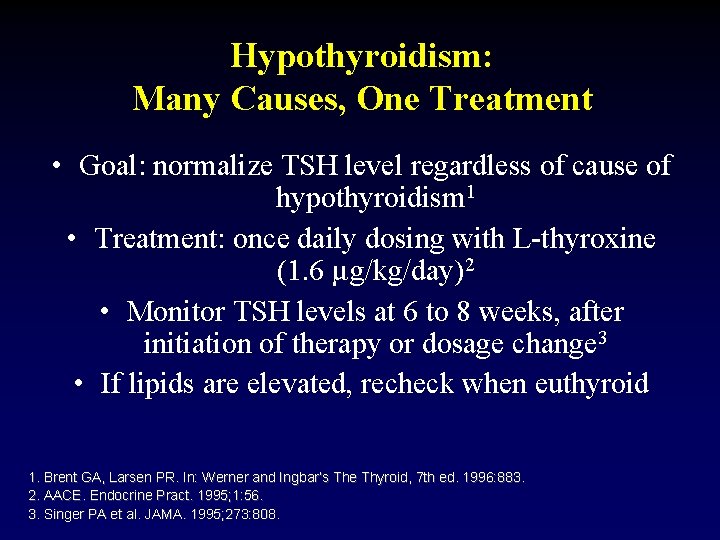
Hypothyroidism: Many Causes, One Treatment • Goal: normalize TSH level regardless of cause of hypothyroidism 1 • Treatment: once daily dosing with L-thyroxine (1. 6 μg/kg/day)2 • Monitor TSH levels at 6 to 8 weeks, after initiation of therapy or dosage change 3 • If lipids are elevated, recheck when euthyroid 1. Brent GA, Larsen PR. In: Werner and Ingbar’s The Thyroid, 7 th ed. 1996: 883. 2. AACE. Endocrine Pract. 1995; 1: 56. 3. Singer PA et al. JAMA. 1995; 273: 808.
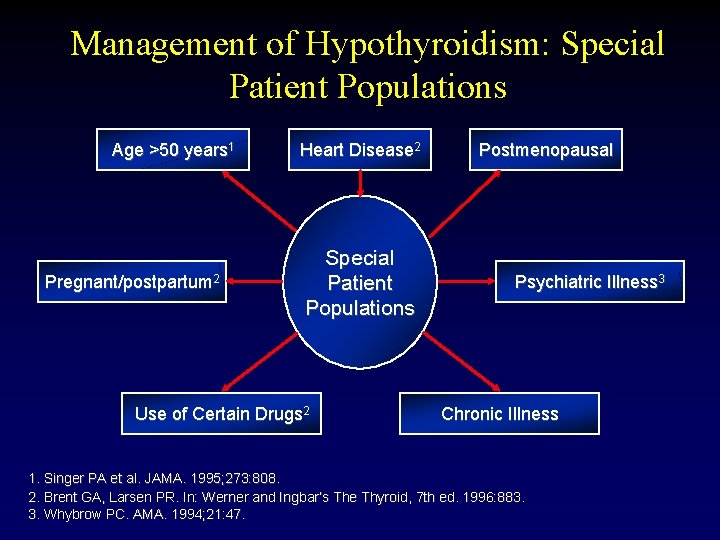
Management of Hypothyroidism: Special Patient Populations Age >50 years 1 Pregnant/postpartum 2 Heart Disease 2 Special Patient Populations Use of Certain Drugs 2 Postmenopausal Psychiatric Illness 3 Chronic Illness 1. Singer PA et al. JAMA. 1995; 273: 808. 2. Brent GA, Larsen PR. In: Werner and Ingbar’s The Thyroid, 7 th ed. 1996: 883. 3. Whybrow PC. AMA. 1994; 21: 47.
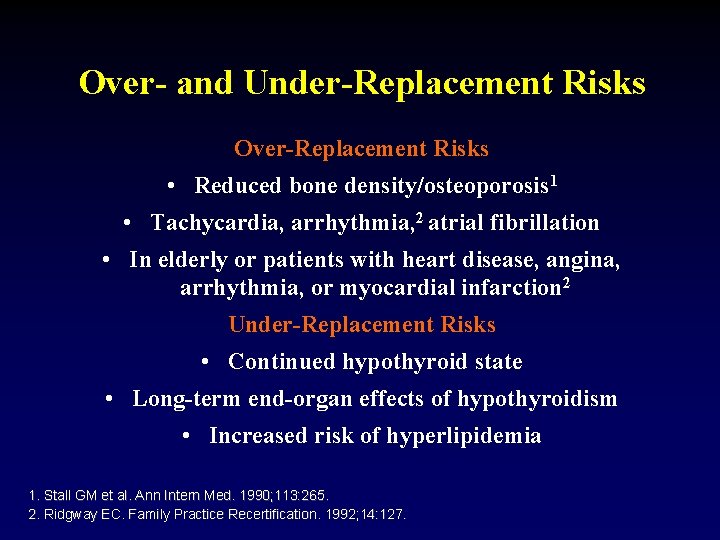
Over- and Under-Replacement Risks Over-Replacement Risks • Reduced bone density/osteoporosis 1 • Tachycardia, arrhythmia, 2 atrial fibrillation • In elderly or patients with heart disease, angina, arrhythmia, or myocardial infarction 2 Under-Replacement Risks • Continued hypothyroid state • Long-term end-organ effects of hypothyroidism • Increased risk of hyperlipidemia 1. Stall GM et al. Ann Intern Med. 1990; 113: 265. 2. Ridgway EC. Family Practice Recertification. 1992; 14: 127.
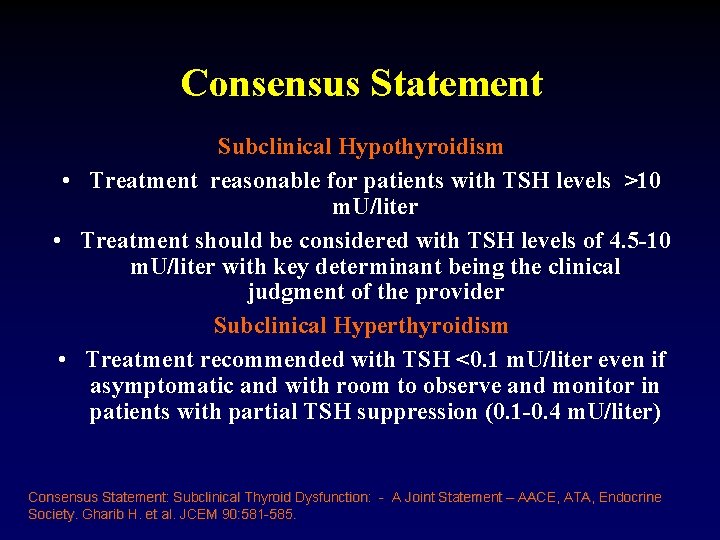
Consensus Statement Subclinical Hypothyroidism • Treatment reasonable for patients with TSH levels >10 m. U/liter • Treatment should be considered with TSH levels of 4. 5 -10 m. U/liter with key determinant being the clinical judgment of the provider Subclinical Hyperthyroidism • Treatment recommended with TSH <0. 1 m. U/liter even if asymptomatic and with room to observe and monitor in patients with partial TSH suppression (0. 1 -0. 4 m. U/liter) Consensus Statement: Subclinical Thyroid Dysfunction: - A Joint Statement – AACE, ATA, Endocrine Society. Gharib H. et al. JCEM 90: 581 -585.
Subclinical Thyroid Disease and the Heart “When the Thyroid Speaks…the Heart Listens” MA Sussman Circ. Res 2001
- Slides: 40