
Impact of Medical Devices Processing in HAI Prevention


- Slides: 56
Impact of Medical Devices Processing in HAI Prevention William A. Rutala, Ph. D, MPH Director, Hospital Epidemiology, Occupational Health and Safety, UNC Health Care; Professor of Medicine and Director, Statewide Program for Infection Control and Epidemiology, University of North Carolina at Chapel Hill, NC, USA Disclosure-3 M
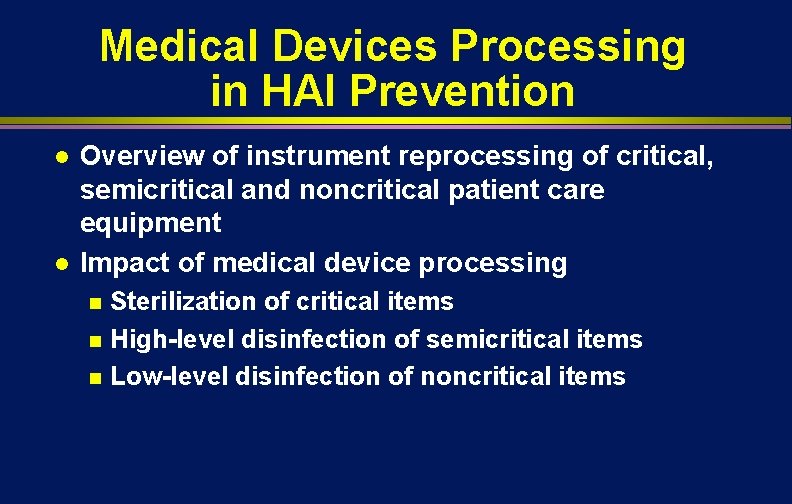
Medical Devices Processing in HAI Prevention l l Overview of instrument reprocessing of critical, semicritical and noncritical patient care equipment Impact of medical device processing Sterilization of critical items n High-level disinfection of semicritical items n Low-level disinfection of noncritical items n
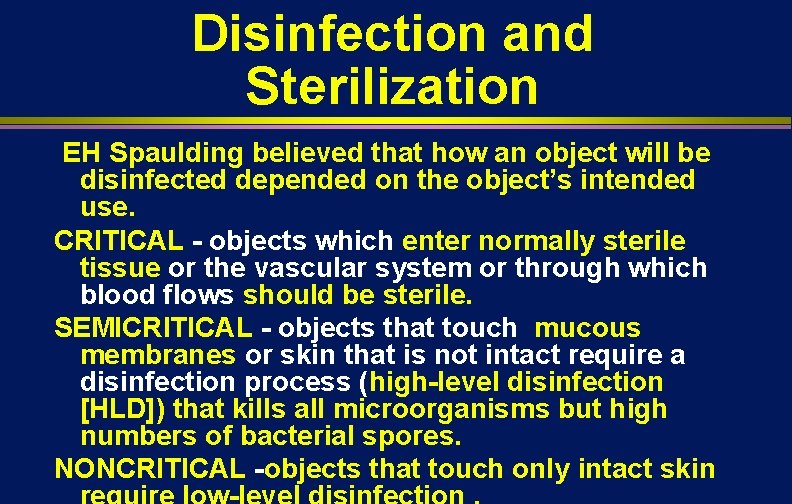
Disinfection and Sterilization EH Spaulding believed that how an object will be disinfected depended on the object’s intended use. CRITICAL - objects which enter normally sterile tissue or the vascular system or through which blood flows should be sterile. SEMICRITICAL - objects that touch mucous membranes or skin that is not intact require a disinfection process (high-level disinfection [HLD]) that kills all microorganisms but high numbers of bacterial spores. NONCRITICAL -objects that touch only intact skin
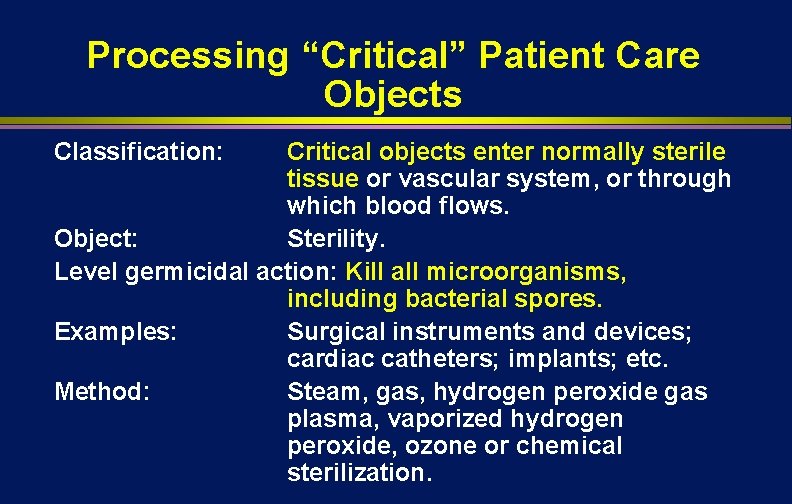
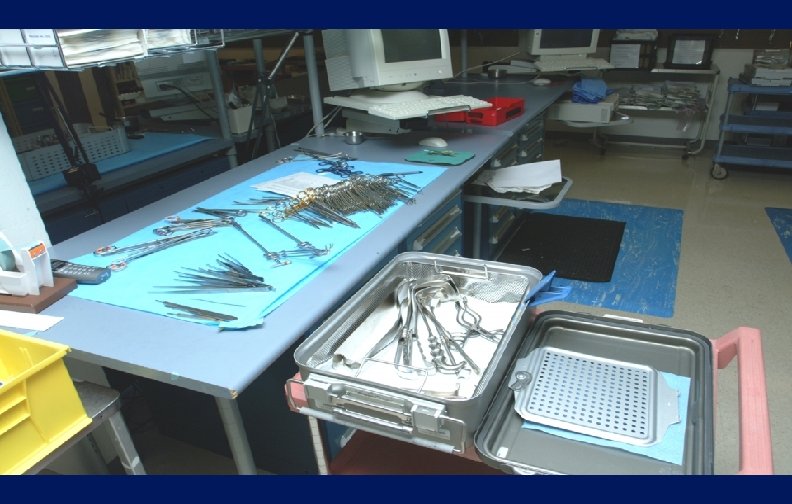
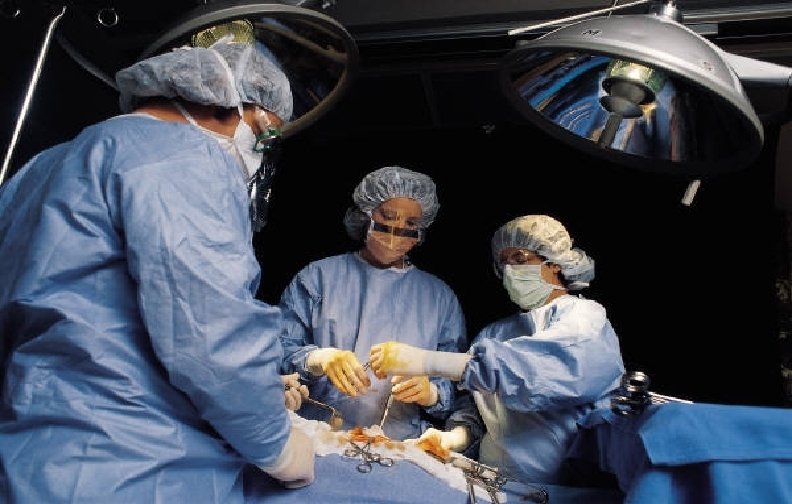
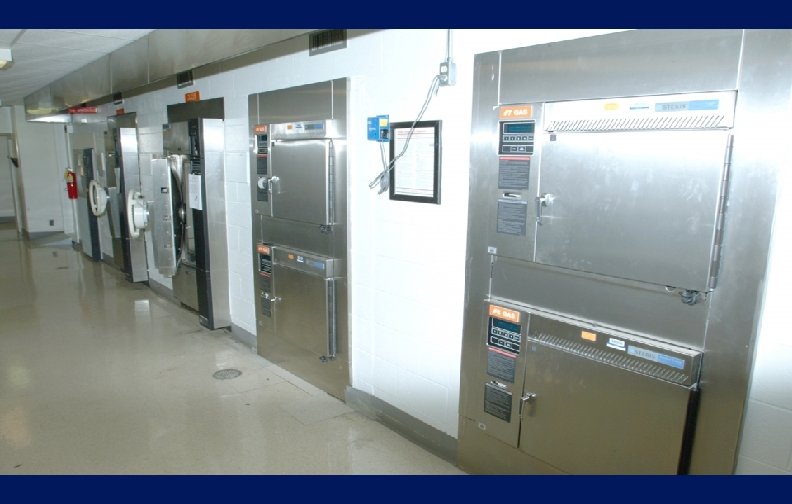
Processing “Critical” Patient Care Objects Classification: Critical objects enter normally sterile tissue or vascular system, or through which blood flows. Object: Sterility. Level germicidal action: Kill all microorganisms, including bacterial spores. Examples: Surgical instruments and devices; cardiac catheters; implants; etc. Method: Steam, gas, hydrogen peroxide gas plasma, vaporized hydrogen peroxide, ozone or chemical sterilization.
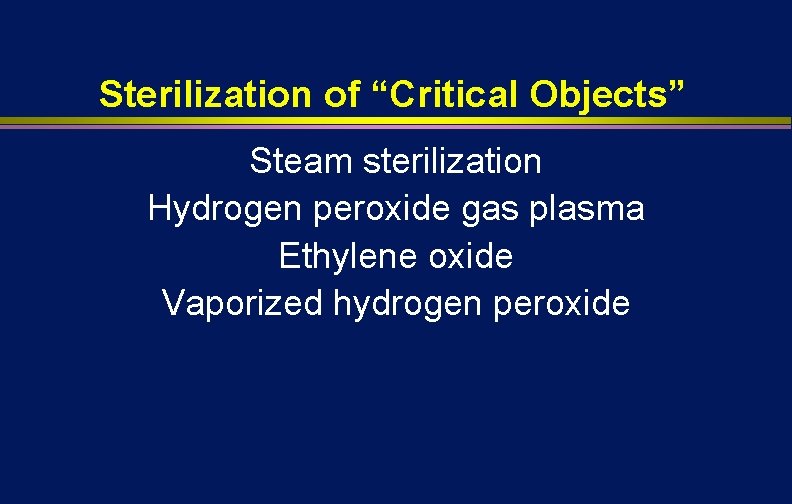
Sterilization of “Critical Objects” Steam sterilization Hydrogen peroxide gas plasma Ethylene oxide Vaporized hydrogen peroxide
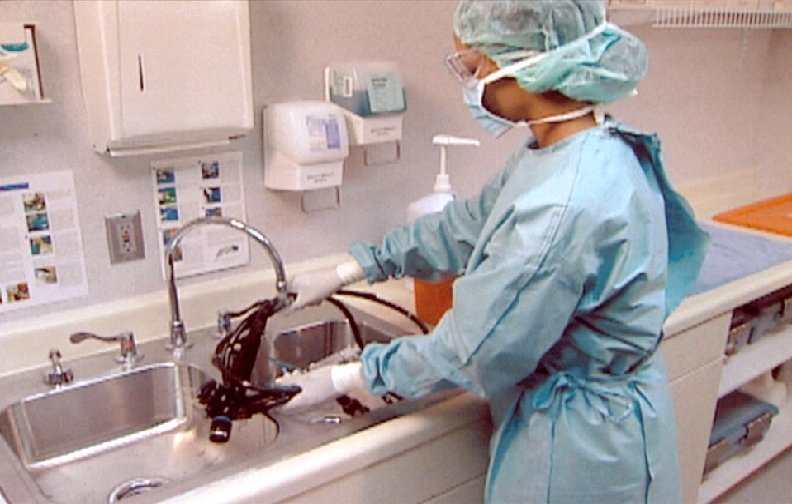
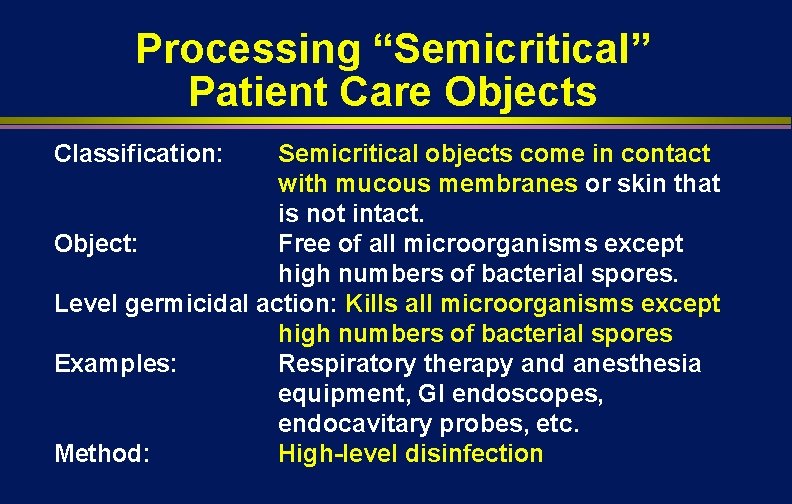
Processing “Semicritical” Patient Care Objects Classification: Semicritical objects come in contact with mucous membranes or skin that is not intact. Object: Free of all microorganisms except high numbers of bacterial spores. Level germicidal action: Kills all microorganisms except high numbers of bacterial spores Examples: Respiratory therapy and anesthesia equipment, GI endoscopes, endocavitary probes, etc. Method: High-level disinfection
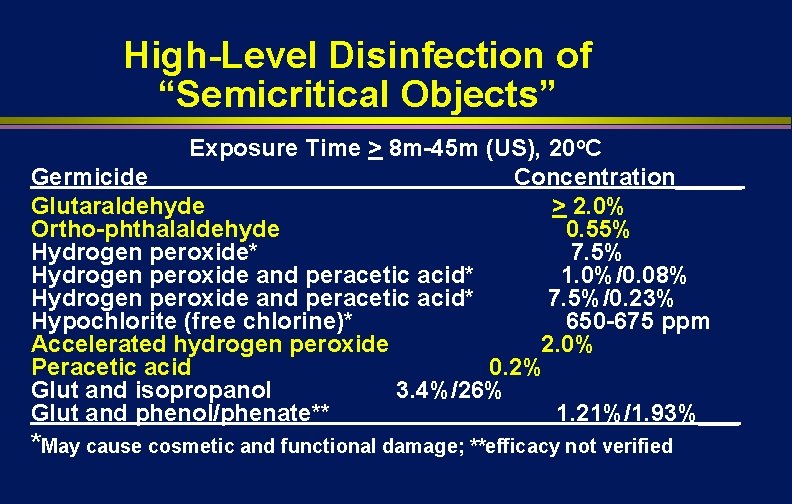
High-Level Disinfection of “Semicritical Objects” Exposure Time > 8 m-45 m (US), 20 o. C Germicide Concentration_____ Glutaraldehyde > 2. 0% Ortho-phthalaldehyde 0. 55% Hydrogen peroxide* 7. 5% Hydrogen peroxide and peracetic acid* 1. 0%/0. 08% Hydrogen peroxide and peracetic acid* 7. 5%/0. 23% Hypochlorite (free chlorine)* 650 -675 ppm Accelerated hydrogen peroxide 2. 0% Peracetic acid 0. 2% Glut and isopropanol 3. 4%/26% Glut and phenol/phenate** 1. 21%/1. 93%___ *May cause cosmetic and functional damage; **efficacy not verified
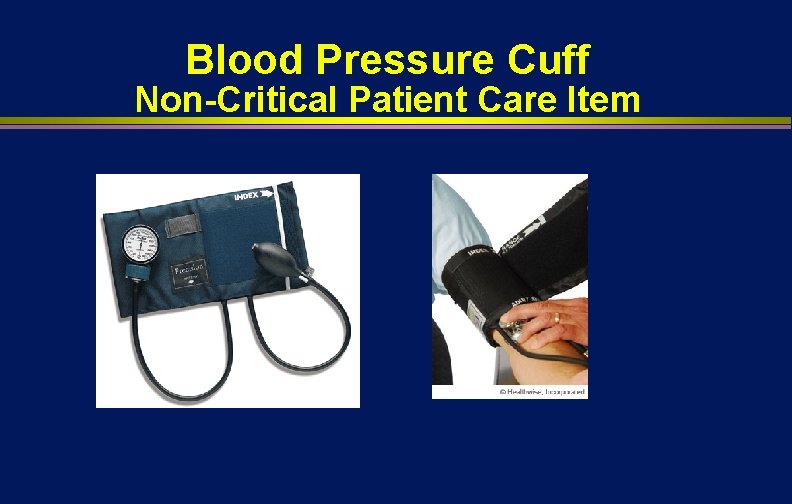
Blood Pressure Cuff Non-Critical Patient Care Item
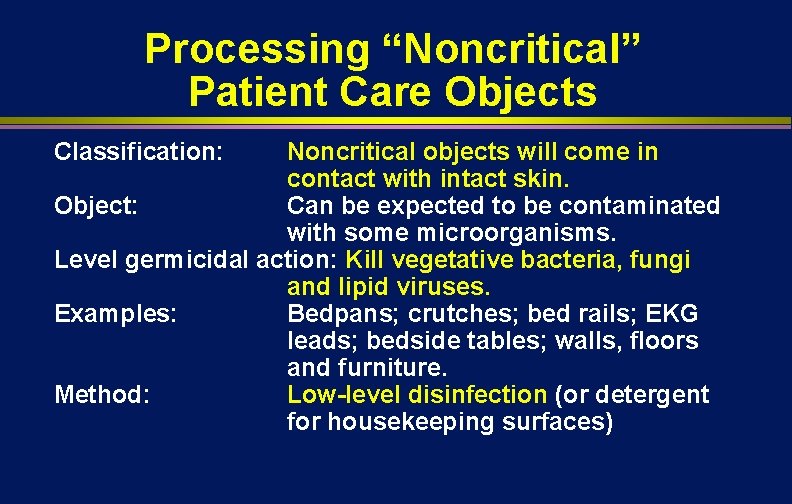
Processing “Noncritical” Patient Care Objects Classification: Noncritical objects will come in contact with intact skin. Object: Can be expected to be contaminated with some microorganisms. Level germicidal action: Kill vegetative bacteria, fungi and lipid viruses. Examples: Bedpans; crutches; bed rails; EKG leads; bedside tables; walls, floors and furniture. Method: Low-level disinfection (or detergent for housekeeping surfaces)
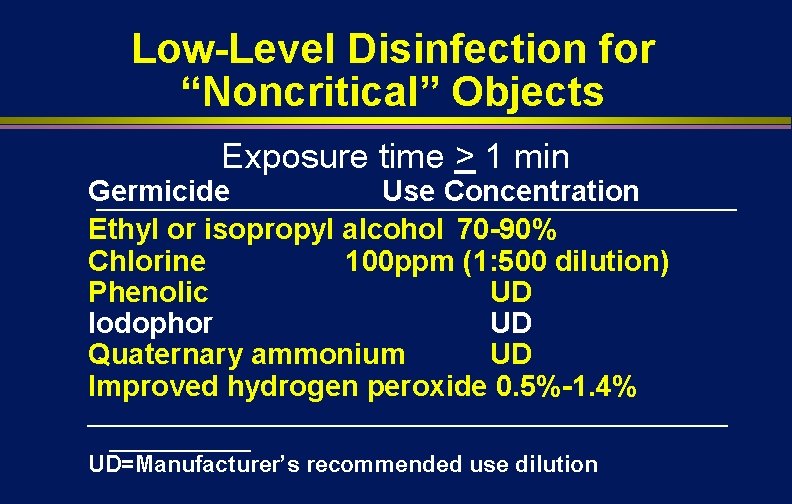
Low-Level Disinfection for “Noncritical” Objects Exposure time > 1 min Germicide Use Concentration Ethyl or isopropyl alcohol 70 -90% Chlorine 100 ppm (1: 500 dilution) Phenolic UD Iodophor UD Quaternary ammonium UD Improved hydrogen peroxide 0. 5%-1. 4% _________________________ UD=Manufacturer’s recommended use dilution
Medical Devices Processing in HAI Prevention l Impact of medical device processing Sterilization of critical items n High-level disinfection of semicritical items n Low-level disinfection of noncritical items n
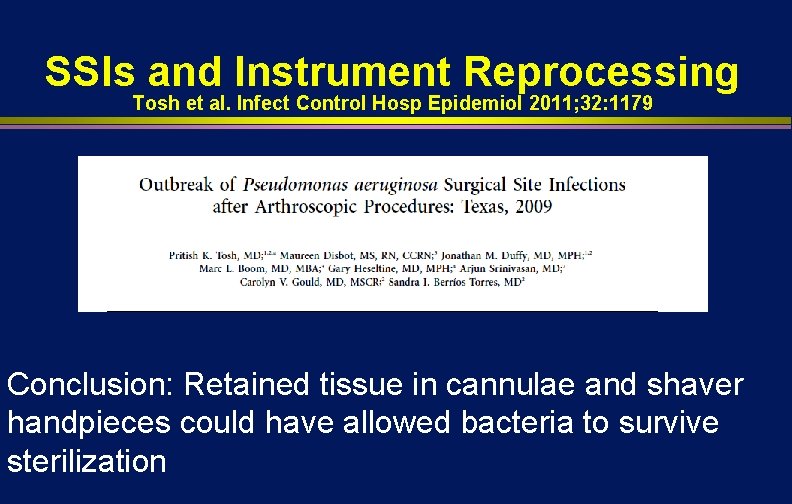
SSIs and Instrument Reprocessing Tosh et al. Infect Control Hosp Epidemiol 2011; 32: 1179 Conclusion: Retained tissue in cannulae and shaver handpieces could have allowed bacteria to survive sterilization
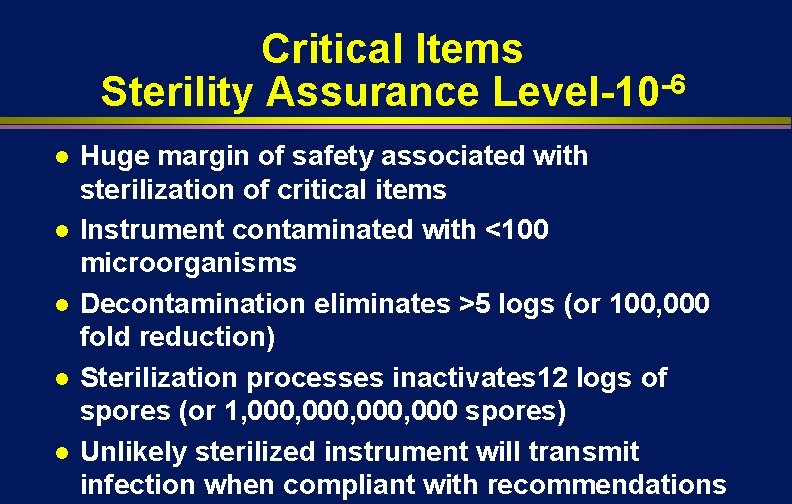
Critical Items Sterility Assurance Level-10 -6 l l l Huge margin of safety associated with sterilization of critical items Instrument contaminated with <100 microorganisms Decontamination eliminates >5 logs (or 100, 000 fold reduction) Sterilization processes inactivates 12 logs of spores (or 1, 000, 000 spores) Unlikely sterilized instrument will transmit infection when compliant with recommendations
Medical Devices Processing in HAI Prevention l Impact of medical device processing Sterilization of critical items n High-level disinfection of semicritical itemsendoscopes, laryngoscopes, endocavitary probe, prostate biopsy probes, tonometers n Low-level disinfection of noncritical items n
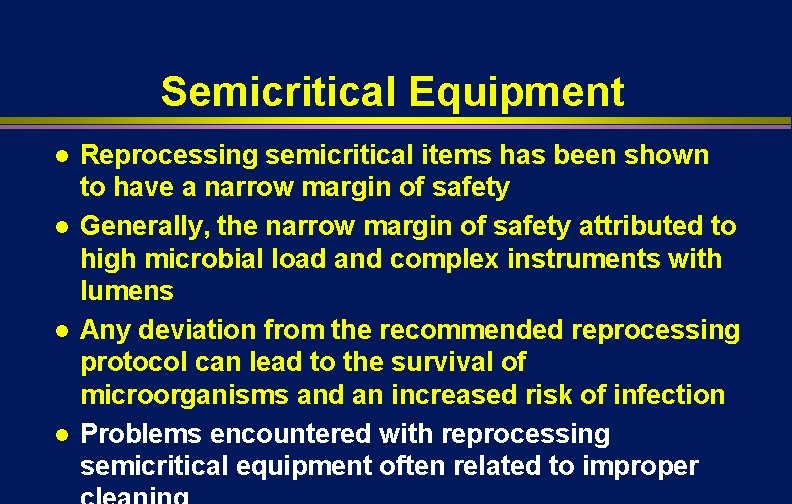
Semicritical Equipment l l Reprocessing semicritical items has been shown to have a narrow margin of safety Generally, the narrow margin of safety attributed to high microbial load and complex instruments with lumens Any deviation from the recommended reprocessing protocol can lead to the survival of microorganisms and an increased risk of infection Problems encountered with reprocessing semicritical equipment often related to improper
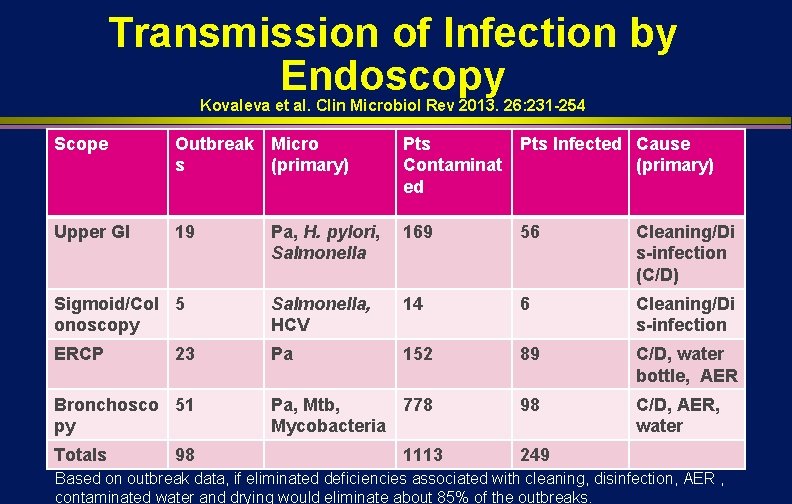
Transmission of Infection by Endoscopy Kovaleva et al. Clin Microbiol Rev 2013. 26: 231 -254 Scope Outbreak Micro s (primary) Pts Infected Cause Contaminat (primary) ed Upper GI 19 Pa, H. pylori, Salmonella 169 56 Cleaning/Di s-infection (C/D) Sigmoid/Col 5 onoscopy Salmonella, HCV 14 6 Cleaning/Di s-infection ERCP Pa 152 89 C/D, water bottle, AER Pa, Mtb, 778 Mycobacteria 98 C/D, AER, water 23 Bronchosco 51 py Totals 98 1113 249 Based on outbreak data, if eliminated deficiencies associated with cleaning, disinfection, AER , contaminated water and drying would eliminate about 85% of the outbreaks.
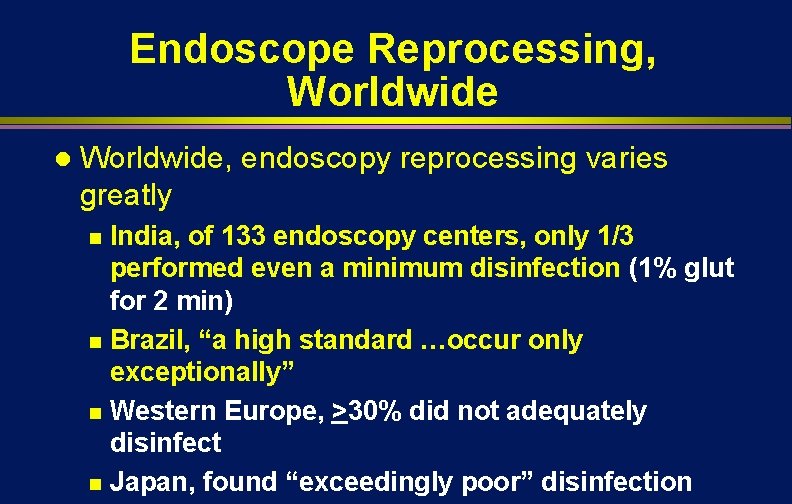
Endoscope Reprocessing, Worldwide l Worldwide, endoscopy reprocessing varies greatly India, of 133 endoscopy centers, only 1/3 performed even a minimum disinfection (1% glut for 2 min) n Brazil, “a high standard …occur only exceptionally” n Western Europe, >30% did not adequately disinfect n Japan, found “exceedingly poor” disinfection n
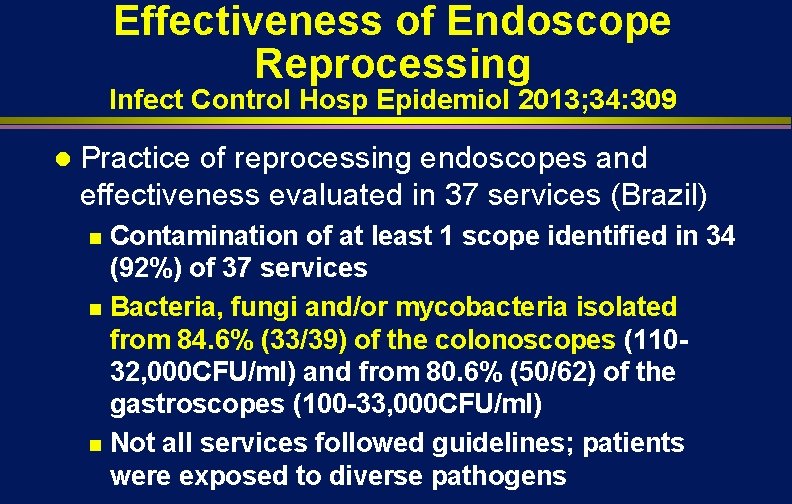
Effectiveness of Endoscope Reprocessing Infect Control Hosp Epidemiol 2013; 34: 309 l Practice of reprocessing endoscopes and effectiveness evaluated in 37 services (Brazil) Contamination of at least 1 scope identified in 34 (92%) of 37 services n Bacteria, fungi and/or mycobacteria isolated from 84. 6% (33/39) of the colonoscopes (11032, 000 CFU/ml) and from 80. 6% (50/62) of the gastroscopes (100 -33, 000 CFU/ml) n Not all services followed guidelines; patients were exposed to diverse pathogens n
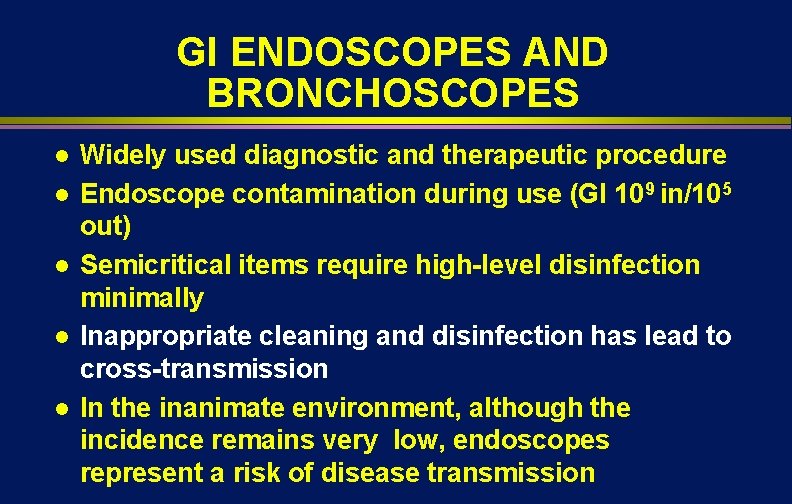
GI ENDOSCOPES AND BRONCHOSCOPES l l l Widely used diagnostic and therapeutic procedure Endoscope contamination during use (GI 109 in/105 out) Semicritical items require high-level disinfection minimally Inappropriate cleaning and disinfection has lead to cross-transmission In the inanimate environment, although the incidence remains very low, endoscopes represent a risk of disease transmission
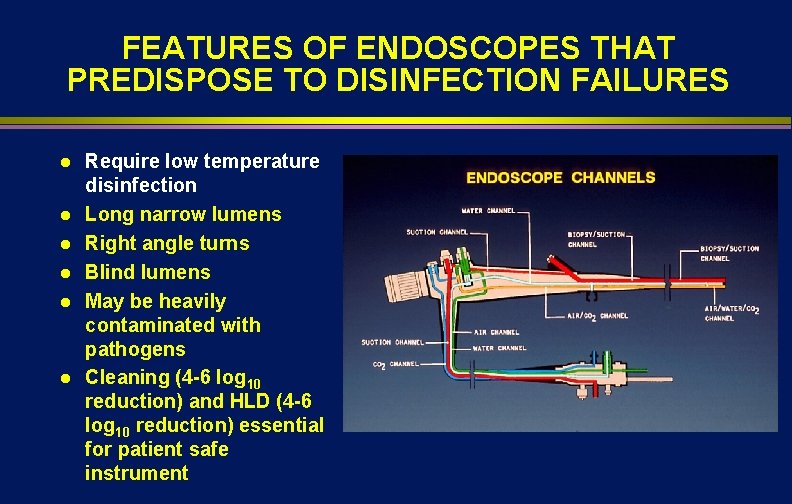
FEATURES OF ENDOSCOPES THAT PREDISPOSE TO DISINFECTION FAILURES l l l Require low temperature disinfection Long narrow lumens Right angle turns Blind lumens May be heavily contaminated with pathogens Cleaning (4 -6 log 10 reduction) and HLD (4 -6 log 10 reduction) essential for patient safe instrument
TRANSMISSION OF INFECTION l Gastrointestinal endoscopy n n n l Bronchoscopy n n l >150 infections transmitted Salmonella sp. and P. aeruginosa Clinical spectrum ranged from colonization to death ~100 infections transmitted M. tuberculosis, atypical Mycobacteria, P. aeruginosa Endemic transmission may go unrecognized (e. g. , inadequate surveillance, low frequency, asymptomatic infections) Kovaleva et al. Clin Microbiol Rev 2013. 26: 231 -254
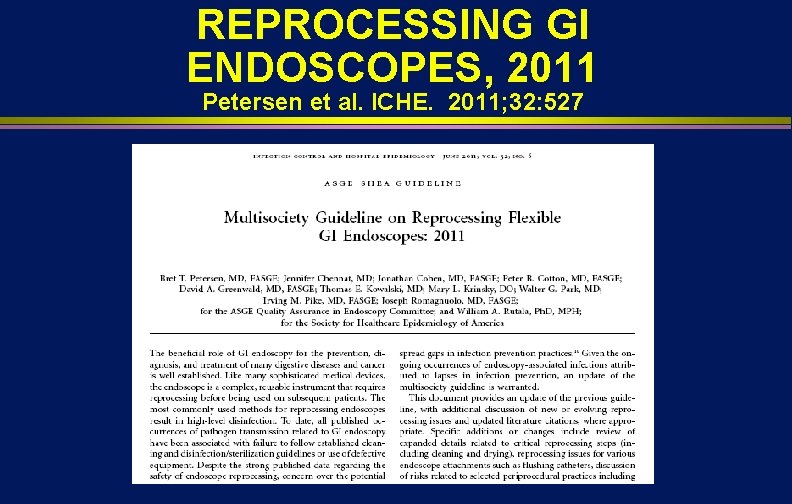
REPROCESSING GI ENDOSCOPES, 2011 Petersen et al. ICHE. 2011; 32: 527
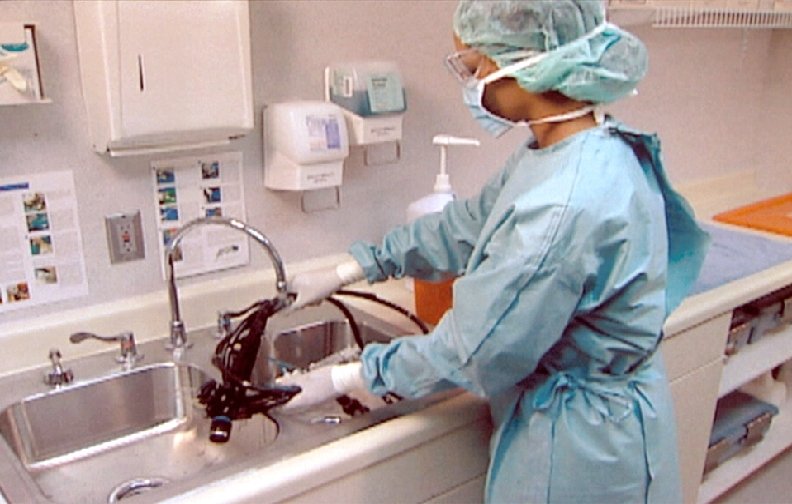
ENDOSCOPE REPROCESSING Multi-Society Guideline on Endoscope Reprocessing, 2011 l l l PRECLEAN-point-of-use (bedside) remove debris by wiping exterior and aspiration of detergent through air/water and biopsy channels CLEAN-mechanically cleaned with water and enzymatic cleaner HLD/STERILIZE-immerse scope and perfuse HLD/sterilant through all channels for exposure time (>2% glut at 20 m at 20 o. C). If AER used, review model-specific reprocessing protocols from both the endoscope and AER manufacturer RINSE-scope and channels rinsed with sterile water, filtered water, or tap water. Flush channels with alcohol and dry DRY-use forced air to dry insertion tube and channels
Multi-Society Guideline for Reprocessing Flexible Gastrointestinal Endoscopes, 2011 l Transmission categorized as: n Non-endoscopic and related to care of intravenous lines and administration of anesthesia or other medications u. Multidose vials u. Reuse of needles and syringes u. Intravenous sedation tubing n Endoscopic and related to endoscope and accessories u. Failure to sterilize biopsy forceps between patients u. Lapses in reprocessing tubing used in channel irrigation
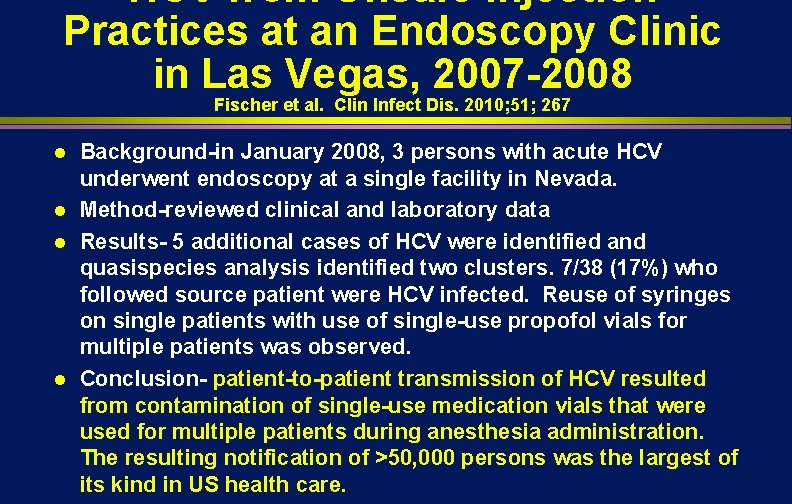
HCV from Unsafe Injection Practices at an Endoscopy Clinic in Las Vegas, 2007 -2008 Fischer et al. Clin Infect Dis. 2010; 51; 267 l l Background-in January 2008, 3 persons with acute HCV underwent endoscopy at a single facility in Nevada. Method-reviewed clinical and laboratory data Results- 5 additional cases of HCV were identified and quasispecies analysis identified two clusters. 7/38 (17%) who followed source patient were HCV infected. Reuse of syringes on single patients with use of single-use propofol vials for multiple patients was observed. Conclusion- patient-to-patient transmission of HCV resulted from contamination of single-use medication vials that were used for multiple patients during anesthesia administration. The resulting notification of >50, 000 persons was the largest of its kind in US health care.
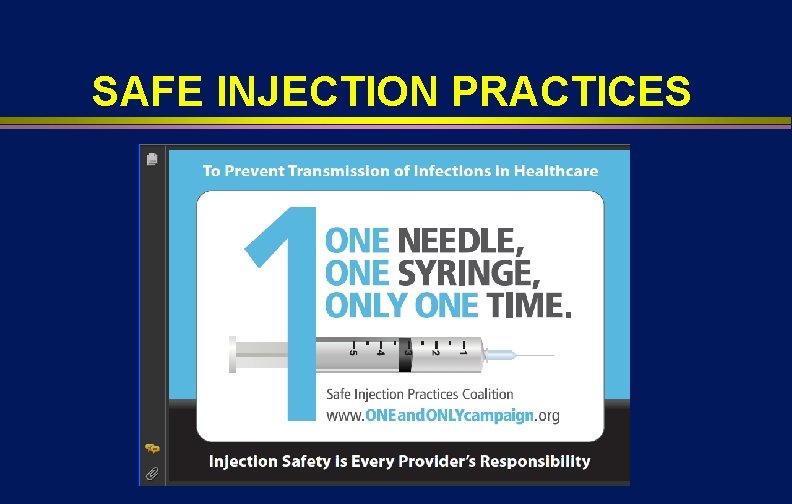
SAFE INJECTION PRACTICES
Medical Devices Processing in HAI Prevention l Impact of medical device processing Sterilization of critical items n High-level disinfection of semicritical itemsendoscopes, laryngoscopes, endocavitary probe, prostate biopsy probes, tonometers n Low-level disinfection of noncritical items n
Endocavitary Probes Issue Clean and high-level disinfect even if sheath, cover or condom used
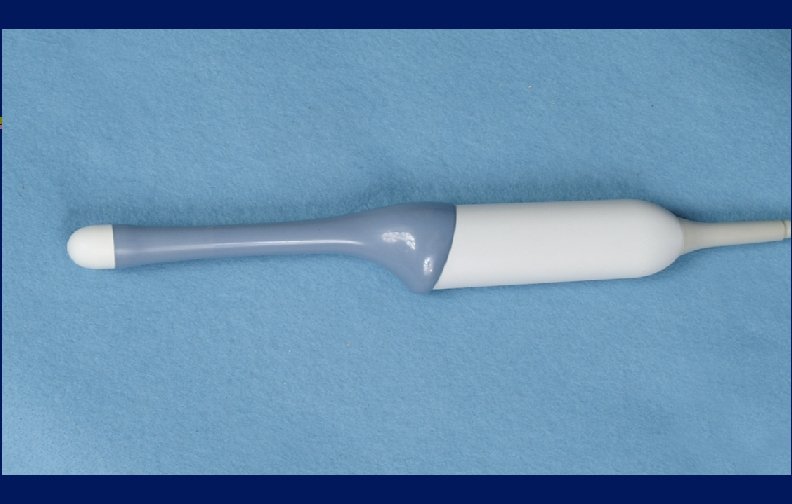
Endocavitary Probes-Transesophageal echocardiography probes, vaginal/rectal probes used in sonographic scanning l Probes with contact with mucous membranes are semicritical l Guideline recommends that a new condom/probe cover should be used to cover the probe for each patient and since covers may fail (1 -80%), HLD (semicritical probes) l
Endocavitary Probe Covers Sterile transvaginal probe covers had a very high rate of perforations before use (0%, 25%, 65% perforations from three suppliers) l A very high rate of perforations in used endovaginal probe covers was found after oocyte retrieval use (75% and 81% from two suppliers) but other investigators found a lower rate of perforations after use of condoms (0. 92. 0%) l Condoms superior to probe covers for l
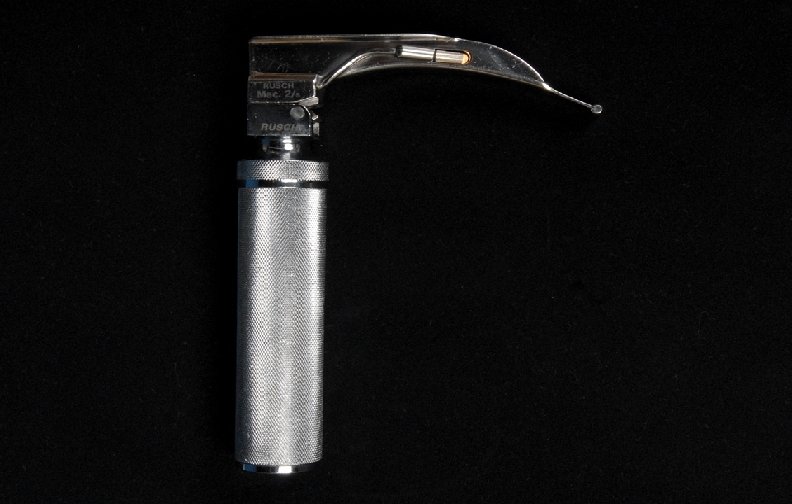
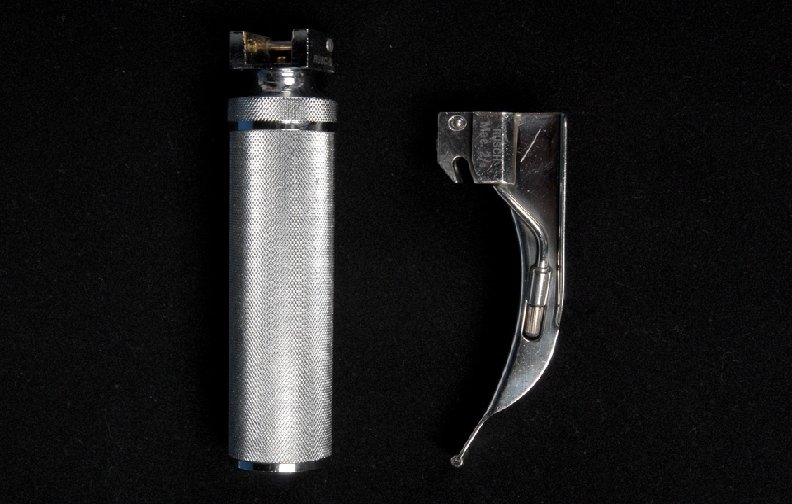
Laryngoscope Issue High-level disinfect blades and handles
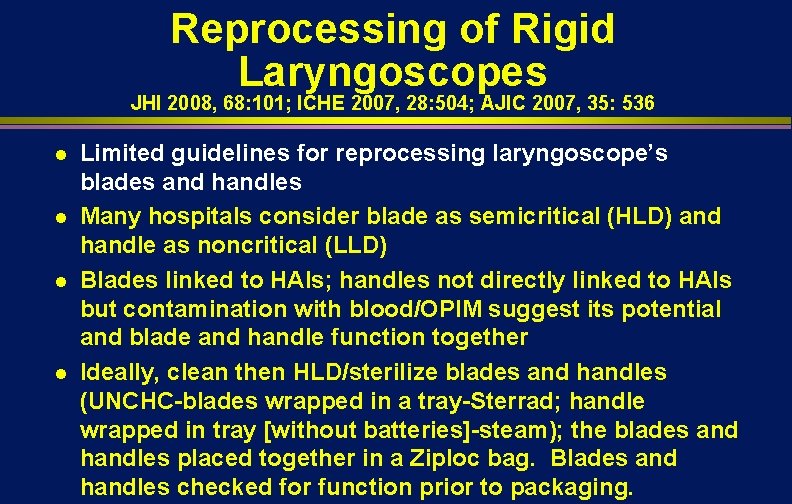
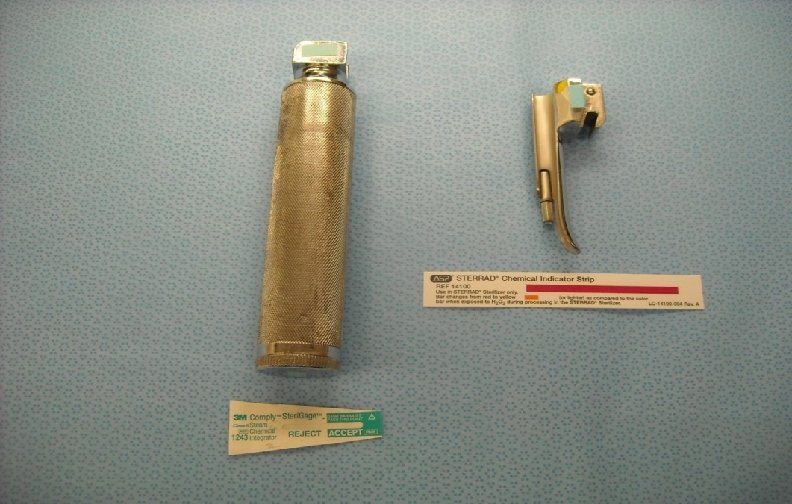
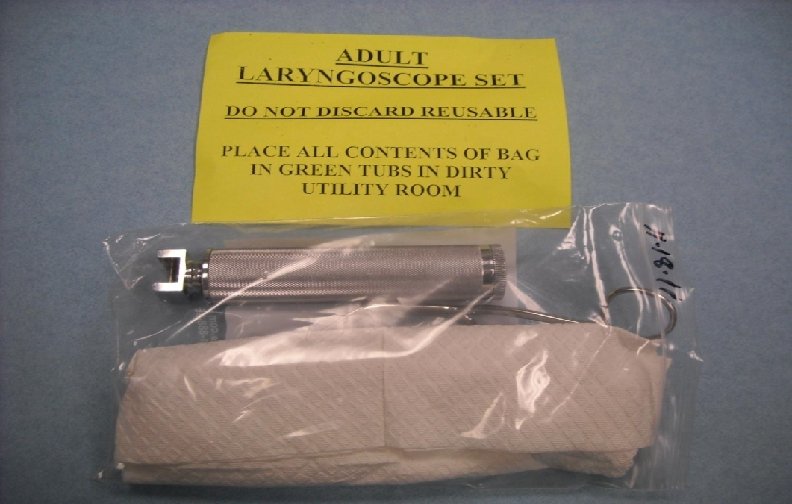
Reprocessing of Rigid Laryngoscopes JHI 2008, 68: 101; ICHE 2007, 28: 504; AJIC 2007, 35: 536 l l Limited guidelines for reprocessing laryngoscope’s blades and handles Many hospitals consider blade as semicritical (HLD) and handle as noncritical (LLD) Blades linked to HAIs; handles not directly linked to HAIs but contamination with blood/OPIM suggest its potential and blade and handle function together Ideally, clean then HLD/sterilize blades and handles (UNCHC-blades wrapped in a tray-Sterrad; handle wrapped in tray [without batteries]-steam); the blades and handles placed together in a Ziploc bag. Blades and handles checked for function prior to packaging.
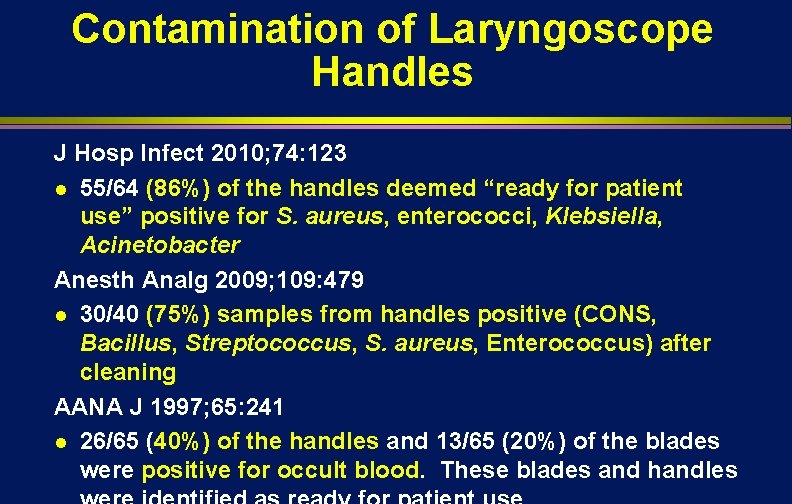
Contamination of Laryngoscope Handles J Hosp Infect 2010; 74: 123 l 55/64 (86%) of the handles deemed “ready for patient use” positive for S. aureus, enterococci, Klebsiella, Acinetobacter Anesth Analg 2009; 109: 479 l 30/40 (75%) samples from handles positive (CONS, Bacillus, Streptococcus, S. aureus, Enterococcus) after cleaning AANA J 1997; 65: 241 l 26/65 (40%) of the handles and 13/65 (20%) of the blades were positive for occult blood. These blades and handles
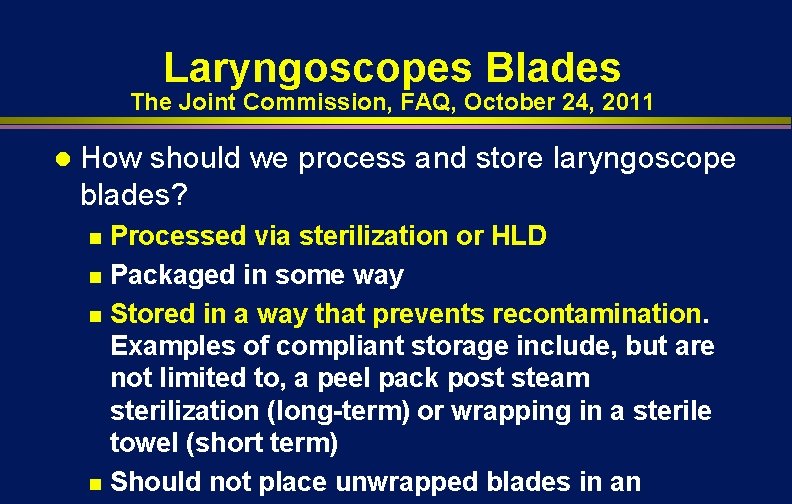
Laryngoscopes Blades The Joint Commission, FAQ, October 24, 2011 l How should we process and store laryngoscope blades? Processed via sterilization or HLD n Packaged in some way n Stored in a way that prevents recontamination. Examples of compliant storage include, but are not limited to, a peel pack post steam sterilization (long-term) or wrapping in a sterile towel (short term) n Should not place unwrapped blades in an n
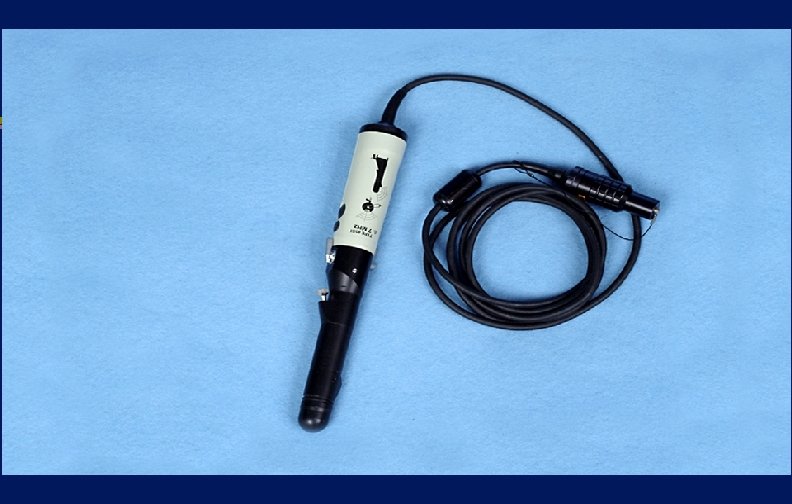
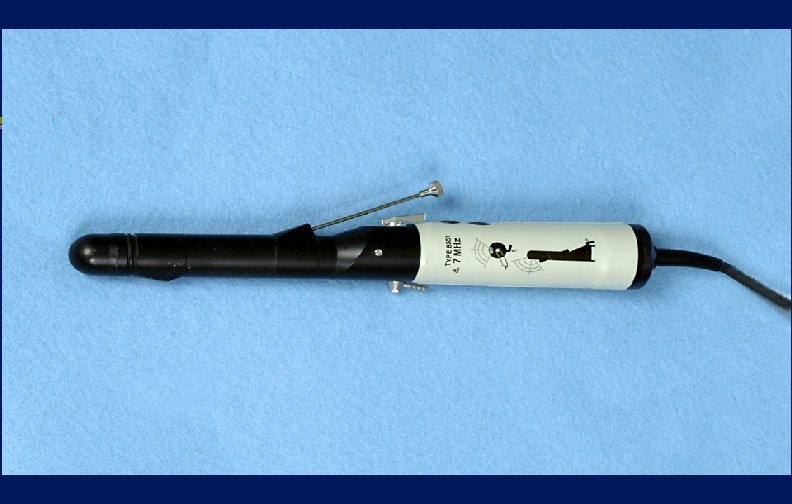
Prostate Biopsy Probes Issue Clean and high-level disinfect ; needleguide disassembled from the transducer assembly
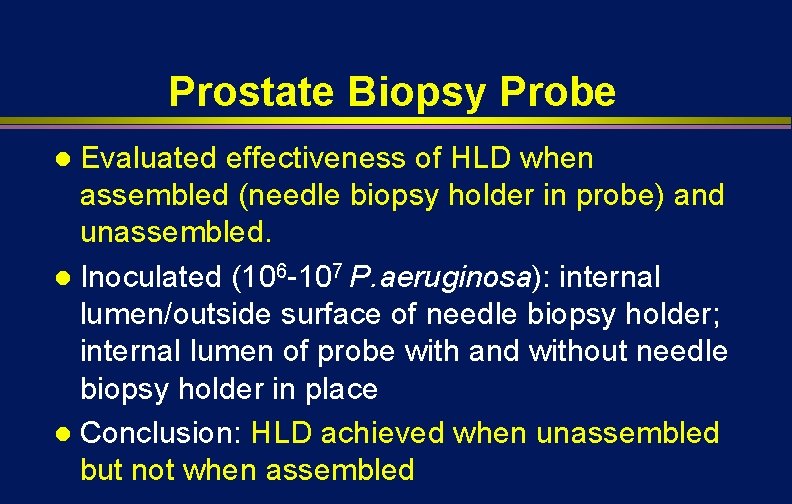
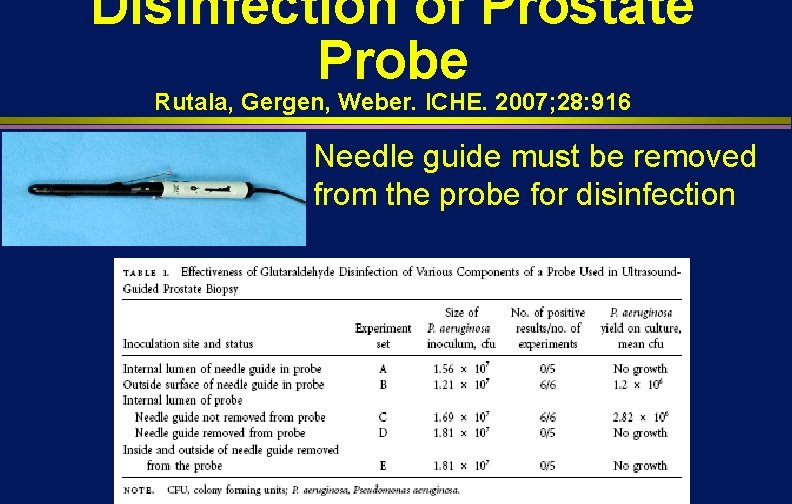
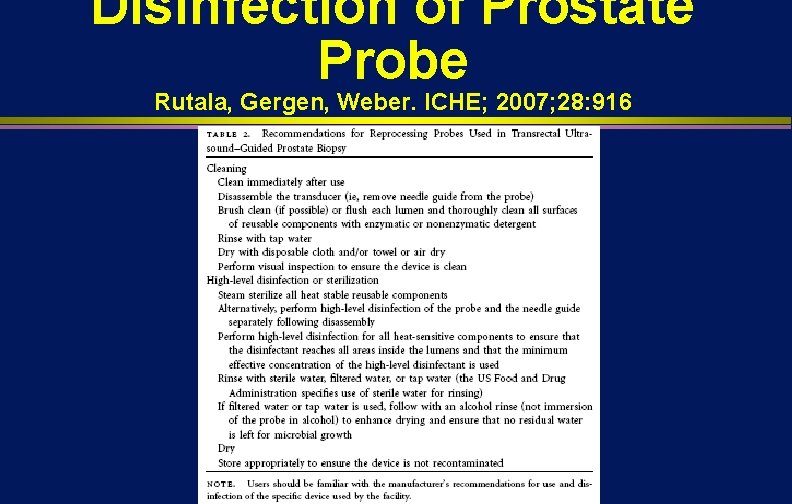
Prostate Biopsy Probe Evaluated effectiveness of HLD when assembled (needle biopsy holder in probe) and unassembled. l Inoculated (106 -107 P. aeruginosa): internal lumen/outside surface of needle biopsy holder; internal lumen of probe with and without needle biopsy holder in place l Conclusion: HLD achieved when unassembled but not when assembled l
Disinfection of Prostate Probe Rutala, Gergen, Weber. ICHE. 2007; 28: 916 Needle guide must be removed from the probe for disinfection
Disinfection of Prostate Probe Rutala, Gergen, Weber. ICHE; 2007; 28: 916
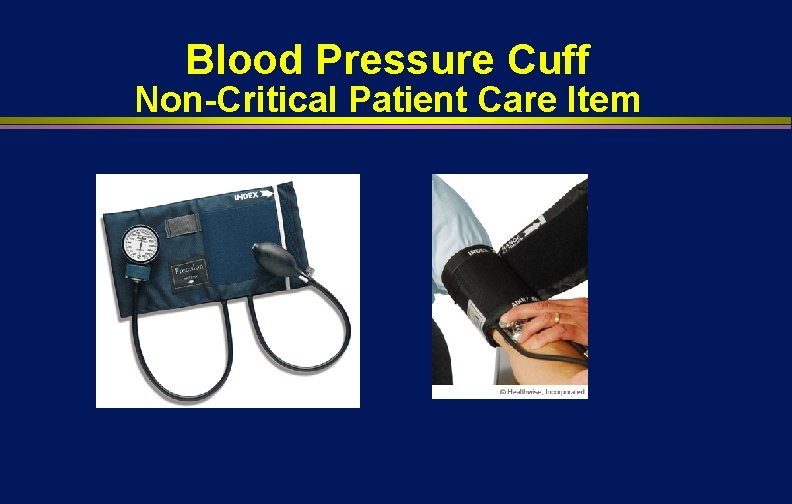
Medical Devices Processing in HAI Prevention l Impact of medical device processing Sterilization of critical items n High-level disinfection of semicritical items n Low-level disinfection of noncritical items-unlikely involved in disease transmission unless facilitated by hands or inappropriately placed in mucous membrane n
Blood Pressure Cuff Non-Critical Patient Care Item
Medical Devices Processing in HAI Prevention l Impact of medical device processing Sterilization of critical items- low risk of infection due to robustness of decontamination and sterilization practices n High-level disinfection of semicritical items- high risk of infection due to high microbial load, complex instruments and small margin of safety associated with high-level disinfection n Low-level disinfection of noncritical items- low risk of infection due to skin barrier n
Summary Disinfection and sterilization guidelines must be followed to prevent exposure to pathogens that may lead to infection
THANK YOU!
www. disinfectionandsterilizatio n. org