
IMPACT CRATERS MRS BROCK 6 TH GRADE SCIENCE

IMPACT CRATERS MRS. BROCK 6 TH GRADE SCIENCE MILLBROOK MIDDLE SCHOOL
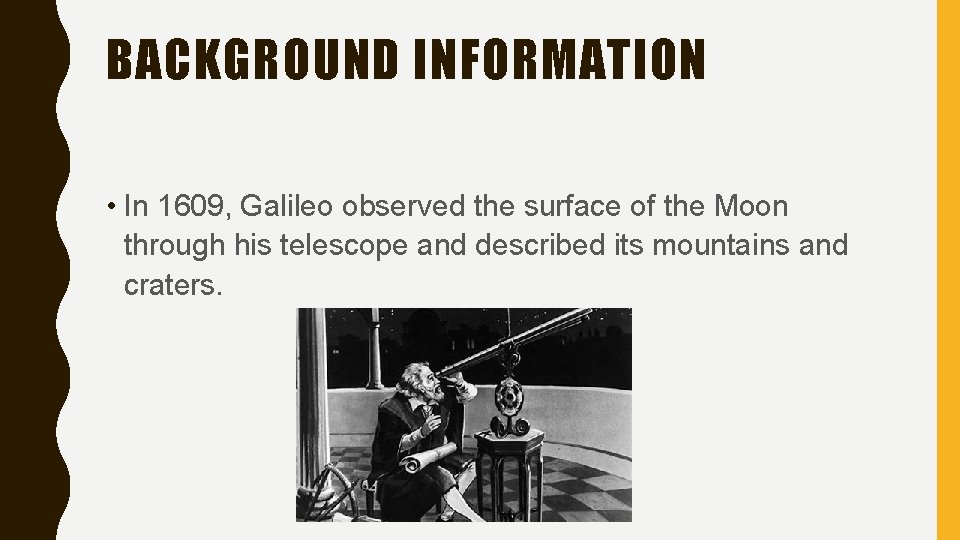
BACKGROUND INFORMATION • In 1609, Galileo observed the surface of the Moon through his telescope and described its mountains and craters.
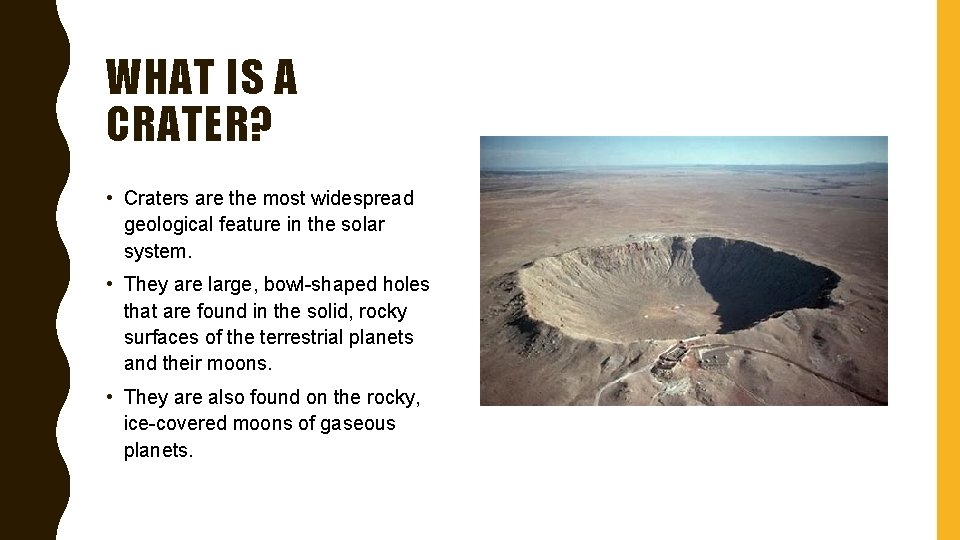
WHAT IS A CRATER? • Craters are the most widespread geological feature in the solar system. • They are large, bowl-shaped holes that are found in the solid, rocky surfaces of the terrestrial planets and their moons. • They are also found on the rocky, ice-covered moons of gaseous planets.
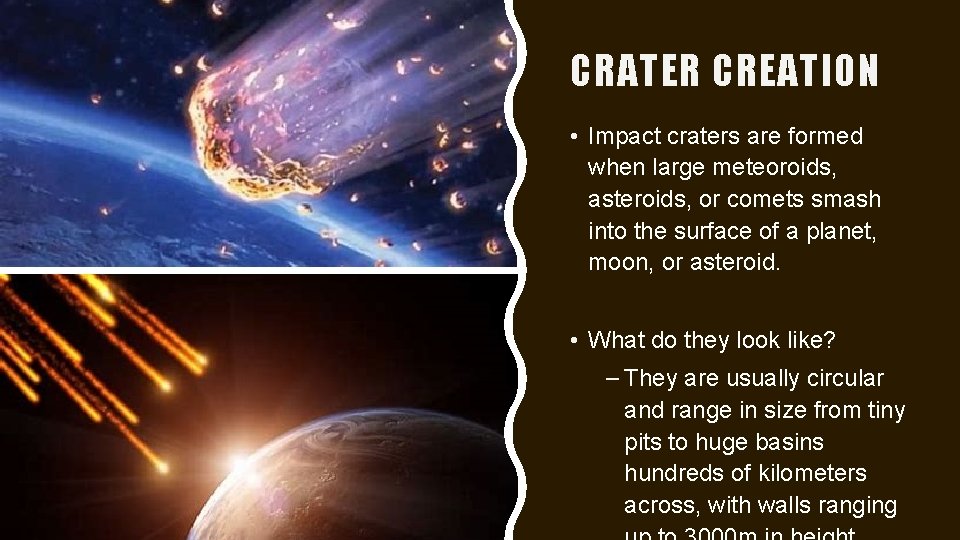
CRATER CREATION • Impact craters are formed when large meteoroids, asteroids, or comets smash into the surface of a planet, moon, or asteroid. • What do they look like? – They are usually circular and range in size from tiny pits to huge basins hundreds of kilometers across, with walls ranging
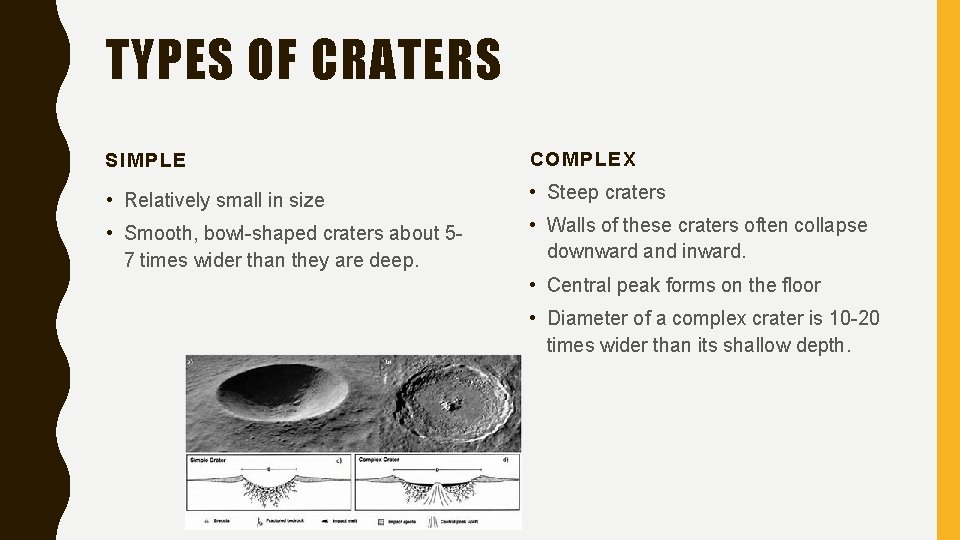
TYPES OF CRATERS SIMPLE COMPLEX • Relatively small in size • Steep craters • Smooth, bowl-shaped craters about 57 times wider than they are deep. • Walls of these craters often collapse downward and inward. • Central peak forms on the floor • Diameter of a complex crater is 10 -20 times wider than its shallow depth.
EARTH’S CRATERS • There about 120 identified Impact Craters on Earth. – These have been identified and confirmed using orbital imagery from spacecraft. • One of the younger craters is only 50, 000 years old – Barringer (Meteor) Crater in Arizona. • Other craters are much older – Manicouagan Crater in Quebec, Canada is estimated to be about 214 million years old. • Many of Earth’s craters have been erased by plate tectonics (process that causes volcanism and earthquakes)
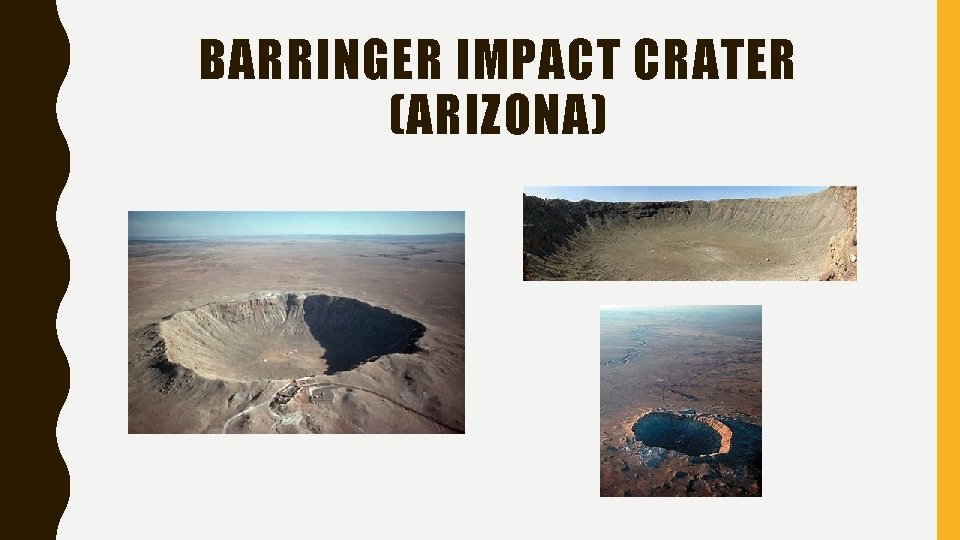
BARRINGER IMPACT CRATER (ARIZONA)

WETUMPKA IMPACT CRATER History: https: //vimeo. com/269221081 Drone View: https: //www. youtube. com/watch? v=by. Gt. Q 5 UImkg
- Slides: 8