
ImmunologyPharmacy Antibody Structure and Function Dr Mohammad Odibate
Immunology/Pharmacy Antibody Structure and Function Dr. Mohammad Odibate Department of Microbiology and immunology Faculty of Medicine, Mu’tah University Lecture 7
Our targets Students should understand the followings • The meaning of an antibody • The structure of an antibody • The function of each particular part • The different types of antibodies • The mechanisms behind the production of antibodies with different antigen binding site • The mechanism of class switching
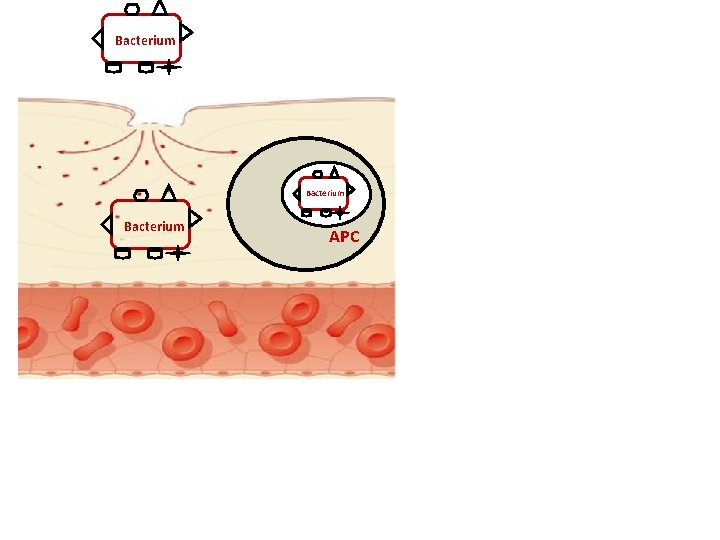
Bacterium APC
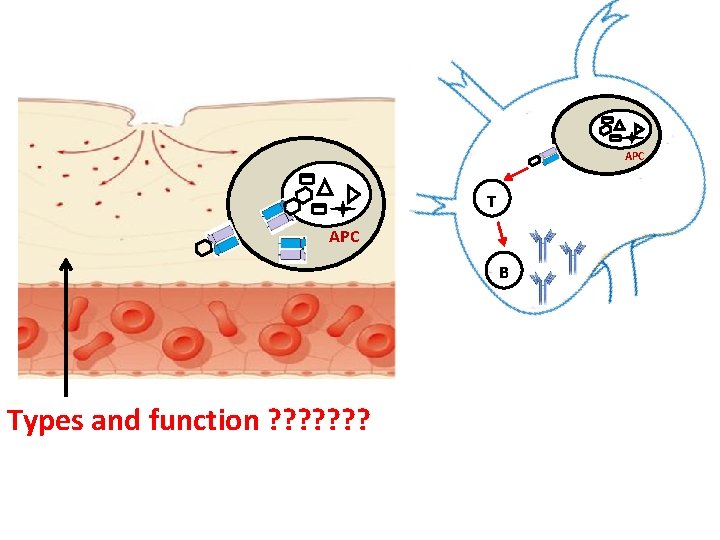
APC T APC B Types and function ? ? ? ?
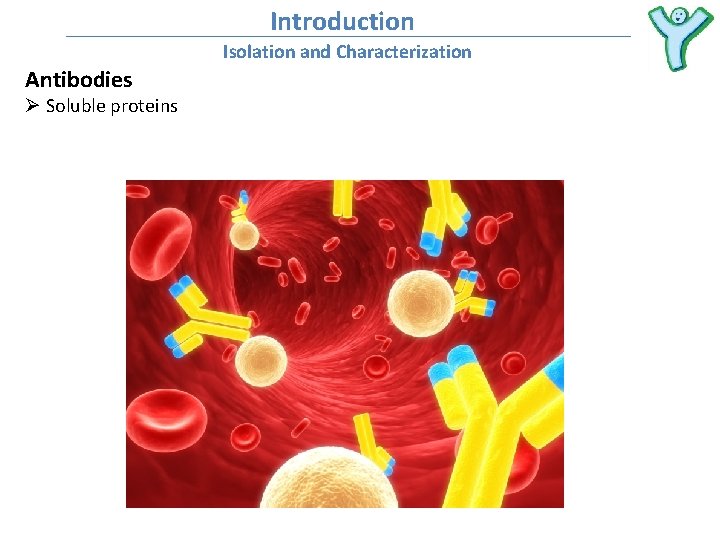
Introduction Isolation and Characterization Antibodies Ø Soluble proteins
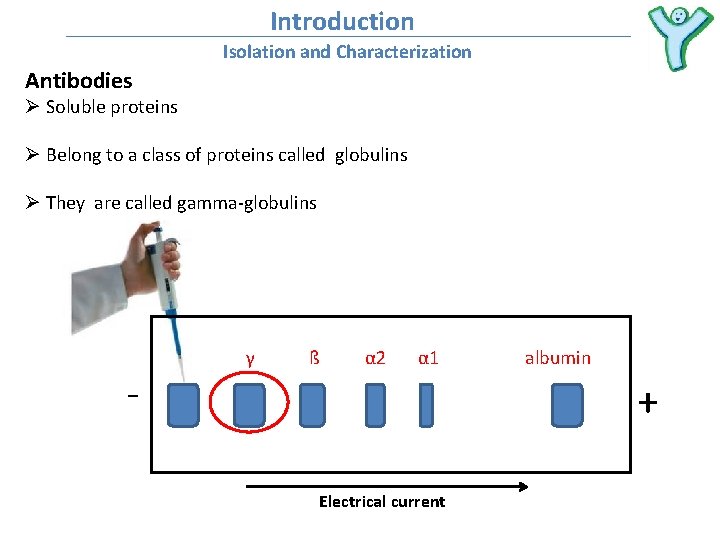
Introduction Isolation and Characterization Antibodies Ø Soluble proteins Ø Belong to a class of proteins called globulins Ø They are called gamma-globulins - γ ß α 2 α 1 albumin + Electrical current
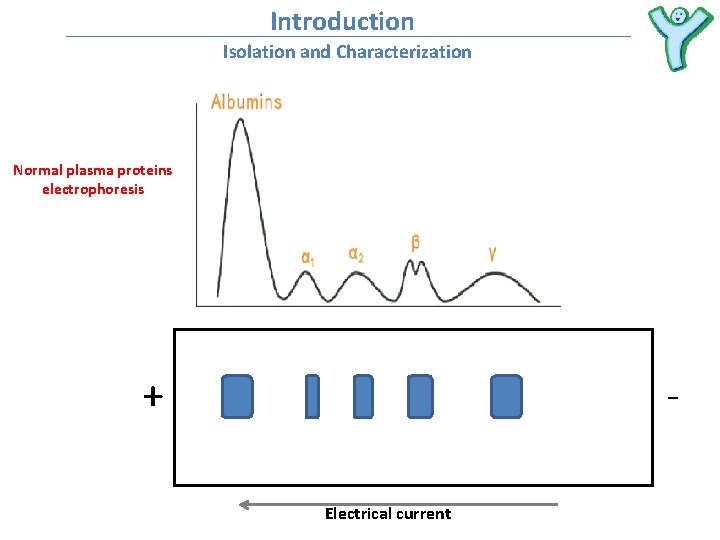
Introduction Isolation and Characterization Normal plasma proteins electrophoresis + Electrical current

Antibody Structure Antigen binding site Variable regions 2 Light chains Fragment antigen binding (Fab) Constant regions Of light and heavy chains Hinge region 2 Heavy chains Fragment crystallizable (Fc)
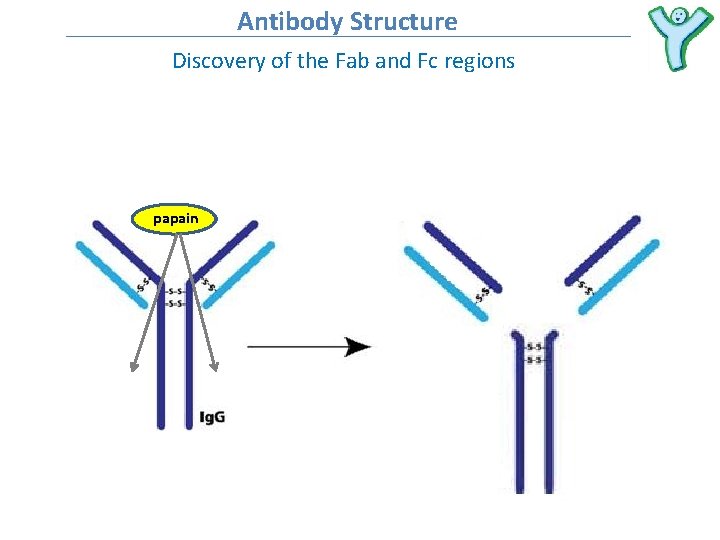
Antibody Structure Discovery of the Fab and Fc regions papain

Antibody Structure Discovery of the Fab and Fc regions papain Fab Fc
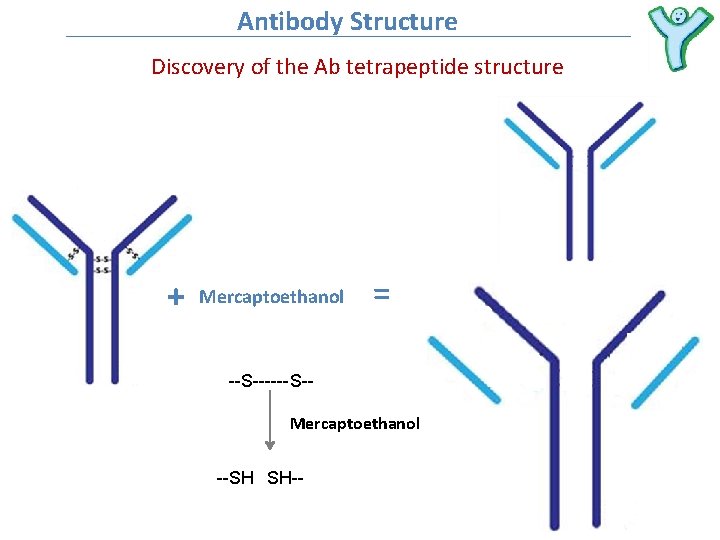
Antibody Structure Discovery of the Ab tetrapeptide structure + Mercaptoethanol = --S------ S-Mercaptoethanol --SH SH--
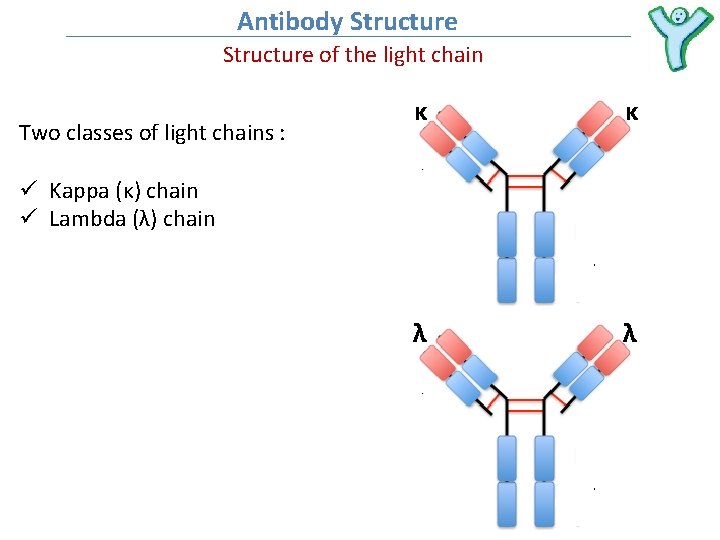
Antibody Structure of the light chain Two classes of light chains : κ κ λ λ ü Kappa (κ) chain ü Lambda (λ) chain

Antibody Structure From the highest to the lowest concentration κ Structure of the heavy chains G κκ γ γ λ A M E κκ κκ λ λ κκ ε ε μ μ α α λ λ D λ λ κ λ λ λ ` γ γ Ig. G α α Ig. A μ μ Ig. M ε ε Ig. E λ λ Ig. D γ 2 κ 2 γ 2 λ 2 α 2 κ 2 α 2 λ 2 (μ 2 κ 2)5 (μ 2 λ 2)5 ε 2 κ 2 ε 2 λ 2 κ 2 λ 2
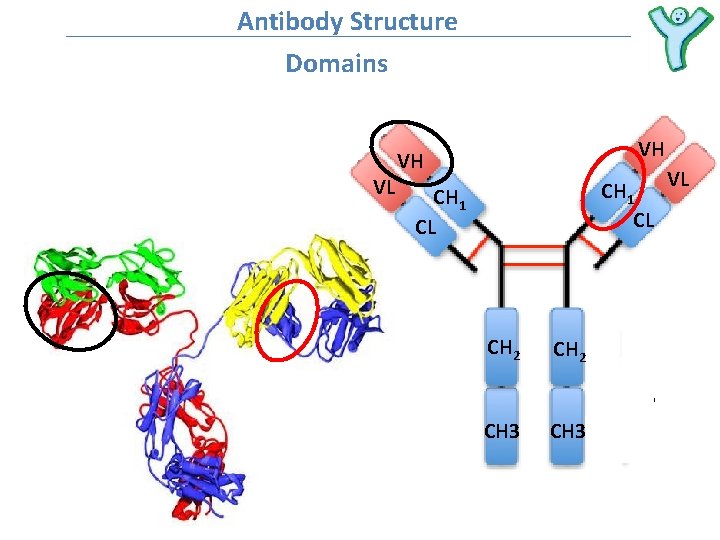
Antibody Structure Domains VL VH VH CH 1 CL CH 2 CH 3 VL

Antibody Structure Hinge region CH 1 CH 2

Antibody Structure Variable region Antigen binding site
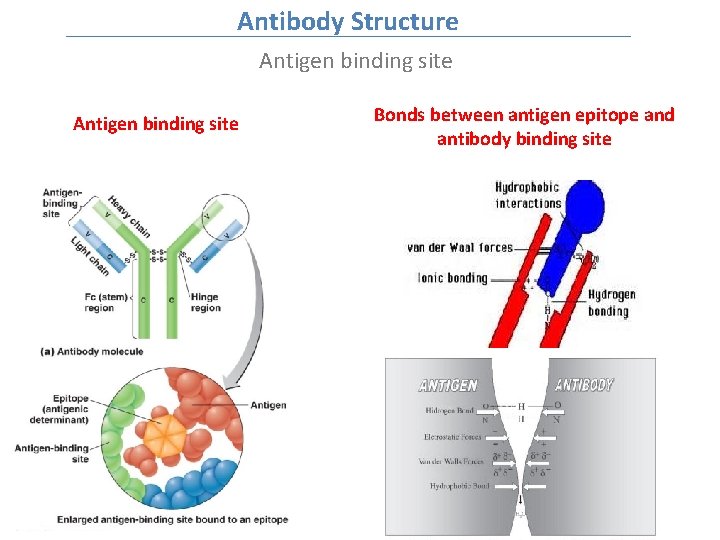
Antibody Structure Antigen binding site Bonds between antigen epitope and antibody binding site

Antibody Structure Antigen binding site Affinity measures the strength of interaction between an epitope and an antibody’s antigen binding site. + + + Antigen + + + + + Antibody 1 Antibody 2 Good fit= Many interactive forces= Strong binding= High affinity Poor fit= Few interactive forces= Weak binding= Low affinity
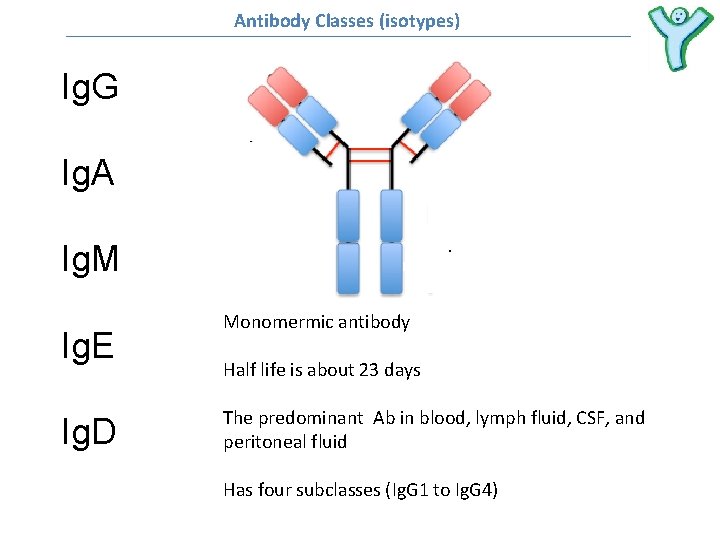
Antibody Classes (isotypes) Ig. G Ig. A Ig. M Ig. E Ig. D Monomermic antibody Half life is about 23 days The predominant Ab in blood, lymph fluid, CSF, and peritoneal fluid Has four subclasses (Ig. G 1 to Ig. G 4)
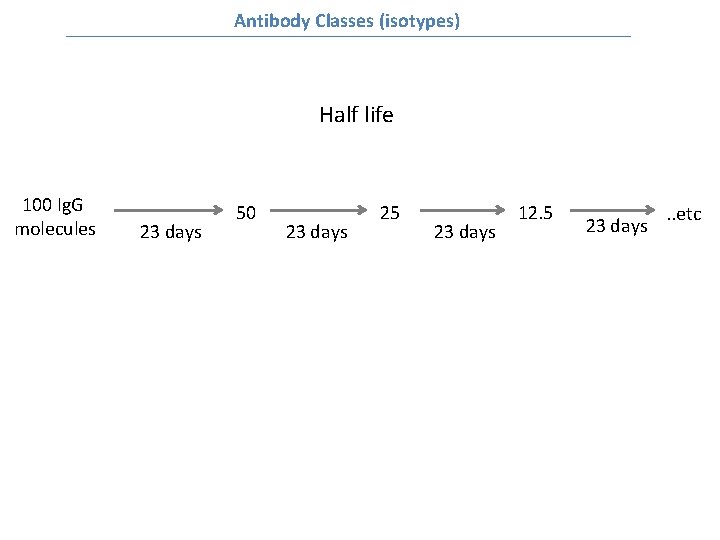
Antibody Classes (isotypes) Half life 100 Ig. G molecules 23 days 50 23 days 25 23 days 12. 5 23 days . . etc
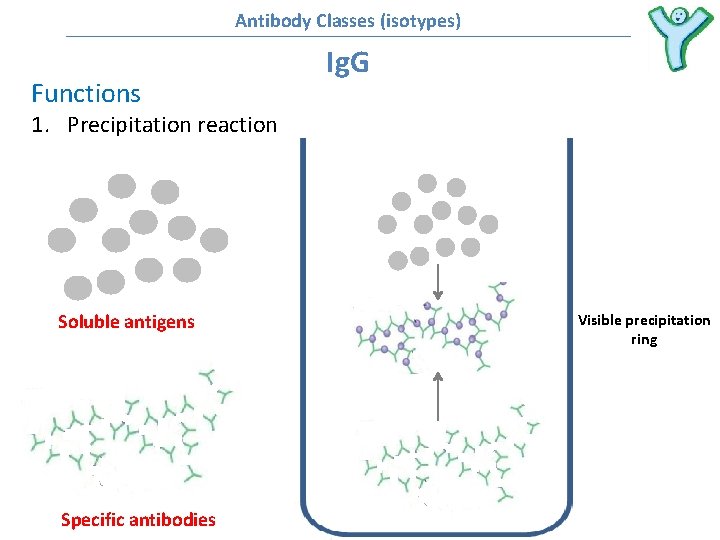
Antibody Classes (isotypes) Functions Ig. G 1. Precipitation reaction Soluble antigens Specific antibodies Visible precipitation ring
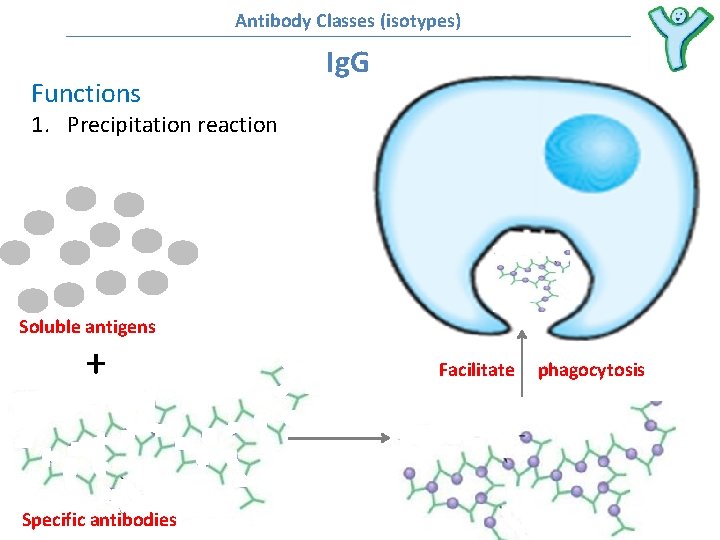
Antibody Classes (isotypes) Functions Ig. G 1. Precipitation reaction Soluble antigens + Specific antibodies Facilitate phagocytosis
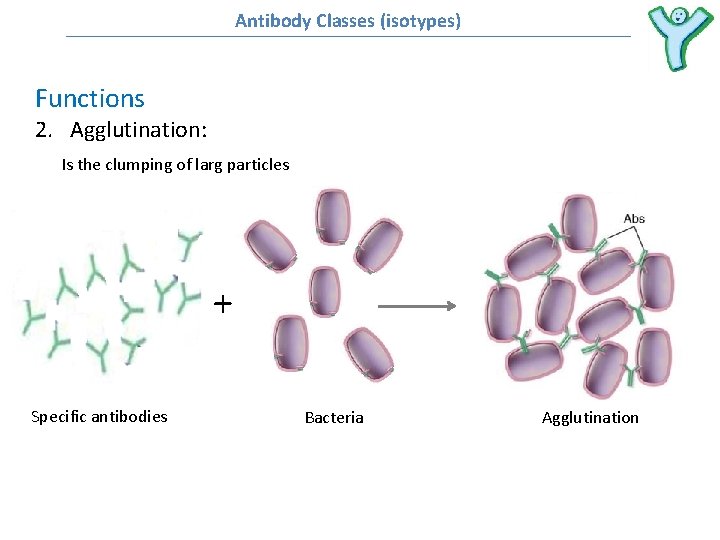
Antibody Classes (isotypes) Functions 2. Agglutination: Is the clumping of larg particles + Specific antibodies Bacteria Agglutination
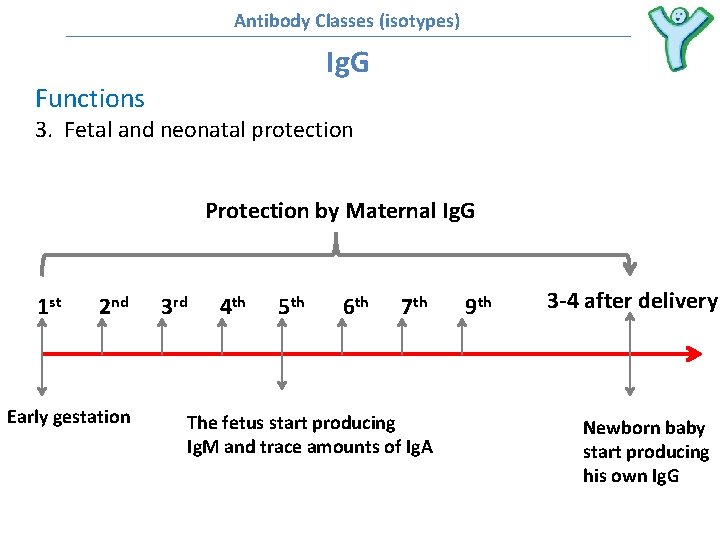
Antibody Classes (isotypes) Ig. G Functions 3. Fetal and neonatal protection Protection by Maternal Ig. G 1 st 2 nd Early gestation 3 rd 4 th 5 th 6 th 7 th The fetus start producing Ig. M and trace amounts of Ig. A 9 th 3 -4 after delivery Newborn baby start producing his own Ig. G
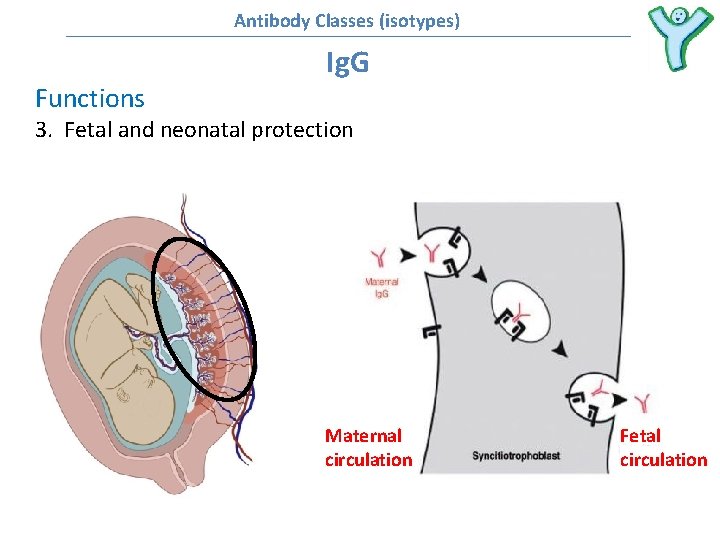
Antibody Classes (isotypes) Ig. G Functions 3. Fetal and neonatal protection Maternal circulation Fetal circulation

Antibody Classes (isotypes) Ig. G Functions 4. Opsonization: from Greek to prepare for eating Complement Antibody Macrophage Bacteria
- Slides: 26