
Immunology Public Health Immune System Learning Intentions Identify
Immunology & Public Health Immune System
Learning Intentions • • • Identify the role of the immune system Describe non-specific immune defences (“ 3 lines of defence”): - physical and chemical defences - inflammatory response - cellular response
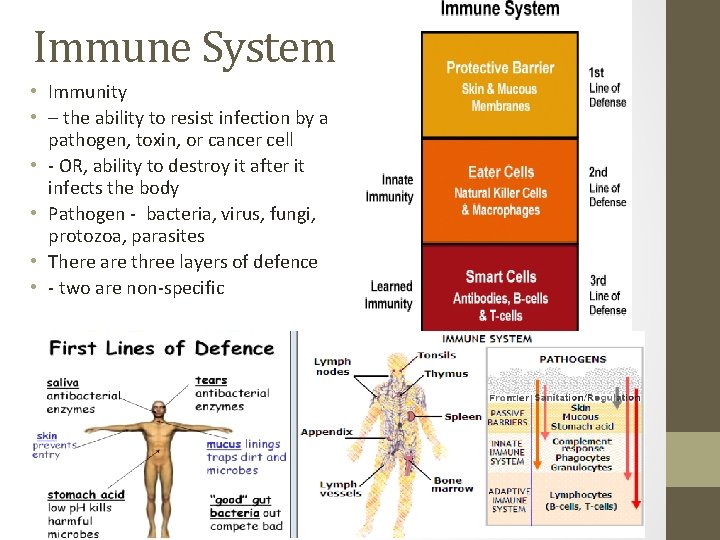
Immune System • Immunity • – the ability to resist infection by a pathogen, toxin, or cancer cell • - OR, ability to destroy it after it infects the body • Pathogen - bacteria, virus, fungi, protozoa, parasites • There are three layers of defence • - two are non-specific

Immune System – non-specific Work against ANY kind of disease causing agent • PHYSICAL & CHEMICAL • - the skin’s epithelial cells provide a physical protection • - some membranes are covered in mucus to trap micro-organisms • E. g. digestive and respiratory tracts • - sweat gland sebaceous gland secretions lower skin p. H • - and provide a layer of protection • - tears and saliva contain lysozyme • – digests bacterial cell walls • - stomach acid destroys many swallowed pathogens

Immune System – non-specific • INFLAMMATORY RESPONSE • - in response to a physical injury • - e. g. a cut • - mast cells are activated • - they release histamine • - cause blood vessels to vasodilate • - increased blood flow • - mast cells also release cytokines (complement) • - these attract: • - phagocytes to engulf pathogens • - blood-clotting chemicals • - antimicrobial proteins

Summary • http: //www. sumanasinc. com/webcontent/animations/conten t/inflammatory. html

Immune System – non-specific • CELLULAR RESPONSES • Phagocytosis: • - specialised white blood cells (leukocytes) detect pathogens • - they engulf the pathogen • - form a vacuole (phagocytic vesicle) • - lysosomes fuse with the vesicle • - digestive enzymes released • - pathogen is digested • Natural killer cells (NK cells): • - attack cancer cells OR cells affected by viruses • - NK cells release proteins to form a pore in target cell membrane • - a signal molecule gets through the pore • - “self destructive” enzymes produced by target cell • - triggers apoptosis • Cytokines: • - help to stimulate the “specific” immune response
Re-Cap questions • 1) What are mast cells responsible for? • 2) Why does injured tissue at a cut quickly become red and swollen? • 3) Briefly explain what is meant by the term phagocytosis • 4) Describe the process of apoptosis
- Slides: 8