
Immunology of parasite infection Dr Eman Albataineh Associate
Immunology of parasite infection Dr. Eman Albataineh, Associate Prof. Immunology College of Medicine, Mutah university Immunology,
Immunity to Parasites • Stimulate a number of immunological defense mechanisms • Innate, humoral and cellular responses • Immune response depends on the stage and the type of infection • Most parasites pass through a complicated life cycle

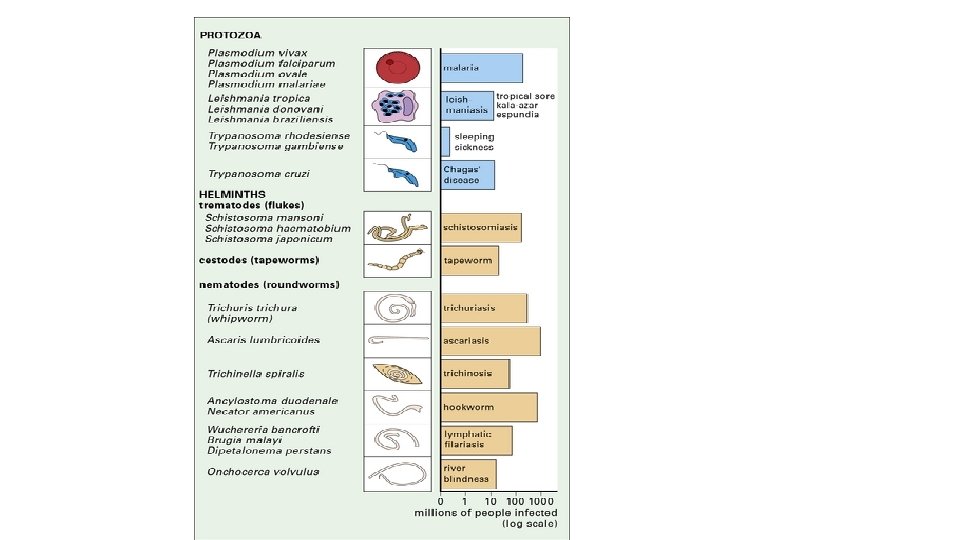
Features of Parasitic infection: 1 - Infect large number of people 2 - Parasitic infection have common features Varity and large quantity of Ag Ability to change their surface Ag Complicate life cycle Different mode of entry 3 - Many parasitic infections are chronic and live in immune cells and organs • in the blood (e. g. African trypanosomes); • within erythrocytes (e. g. Plasmodium spp. ); • in macrophages (e. g. Leishmania spp. , ); • in liver and spleen (e. g. Leishmania spp. );
Effector mechanisms by Immune cells MACROPHAGES in plasmodium • Provide strong defense against small parasites • Secrete factors that kill large parasites without ingestion • Secrete cytokines that activate other immune cells • Synthesize nitric oxide that act as parasite toxin • Activation of macrophages is a general feature of early stage of infection
NEUTROPHILS • Can kill large and small parasites • Phagocytic activation • Have granules that contain cytotoxic proteins PLATELETS • Cytotoxic activities against larval stages • Activation are enhanced by cytokines
EOSINOPHILS • Characterize parasitic infection (worms) • major basic protein from eosinophils damages the tegument of schistosomes • Have Fc and complement receptors >> ADCC
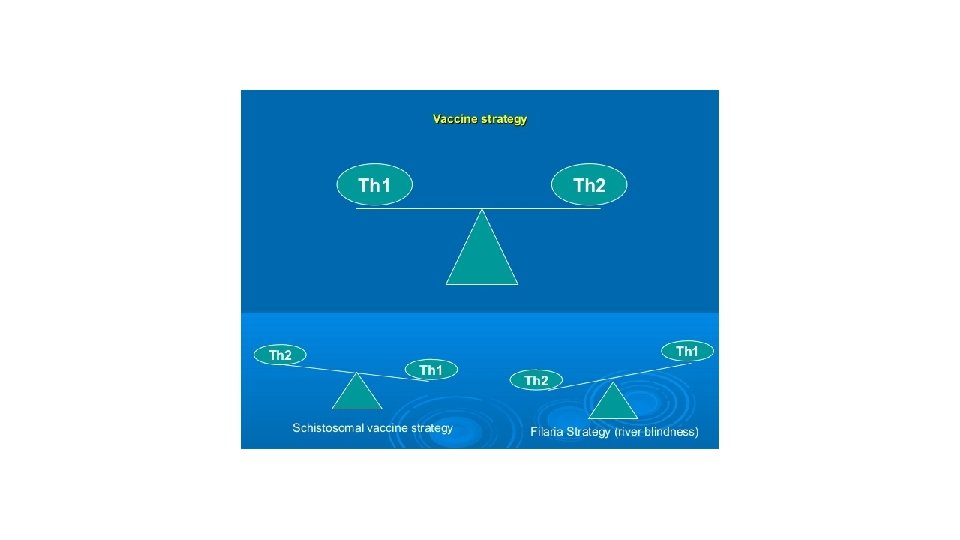
Role of T cells • The type of CD 8, Th 1 or Th 2 cells involved is determined by the type and the stage of the infection • CD 4+ T cells mediate immunity against blood-stage Plasmodium • the high incidence of toxoplasmosis in patients with AIDS, who are deficient in CD 4+ T cells. • CD 8+ T cells protect against the liver stage of Plasmodium • Th 1 for protozoa infection • Cytokines enhance protective immunity against intracellular parasites • T helper 2 cells are essential for the elimination of intestinal worms
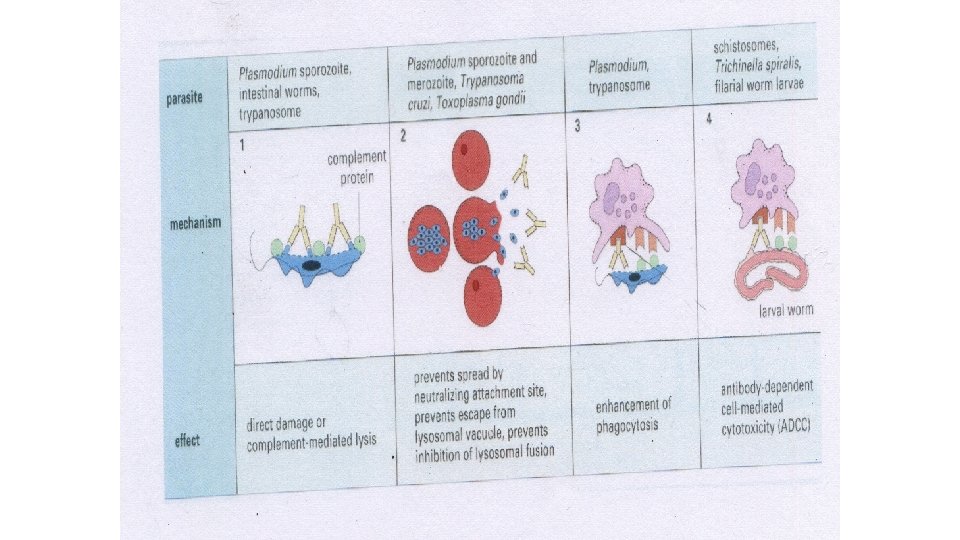
Role of Antibodies • Infection by protozoan parasites is associated with the production of Ig. G and Ig. M. • With helminths there is, in addition, the synthesis of substantial amounts of Ig. E. • Ig. A is produced in response to intestinal protozoa, such as Entamoeba histolytica and Giardia lamblia. • Antibody-dependent cell-mediated cytotoxicity has been shown to play a part in infections caused by a number of parasites, plasmodium and filarial worms • Antibodies have several functions on parasites -Act directly on protozoa -Block attachment to host cells -Important for Phagocytosis
Hypersensitivity reaction • Type 1 mediated by IGE in worm and schistosomes • Type 4 mediated by macrophage and IFN gamma as in intracellular leishmania infection
• Inflammatory responses can be a consequence of eliminating parasitic infections. • • Parasitic infections have immunopathological consequences. Parasitic infections are associated with pathology, which can include autoimmunity, splenomegaly, and hepatomegaly. Much immunopathology may be mediated by the adaptive immune response.
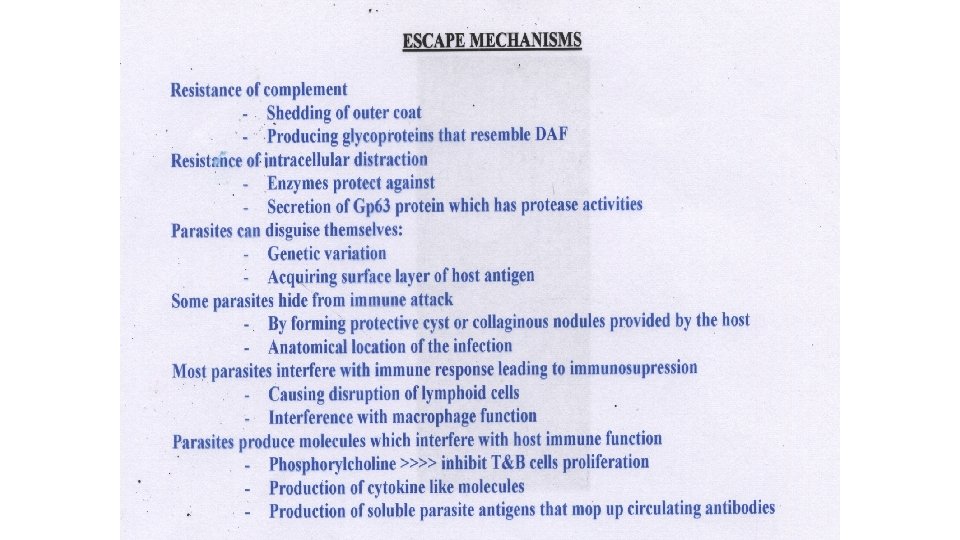
Parasite Immune Evasion strategies. Parasites need time in host to complete complex development, to reproduce (sexually or asexually) & to ensure transmission. Chronic infections (from a few months to many years) are normal, therefore parasite needs to avoid immune elimination. Parasites have evolved immune evasion strategies.
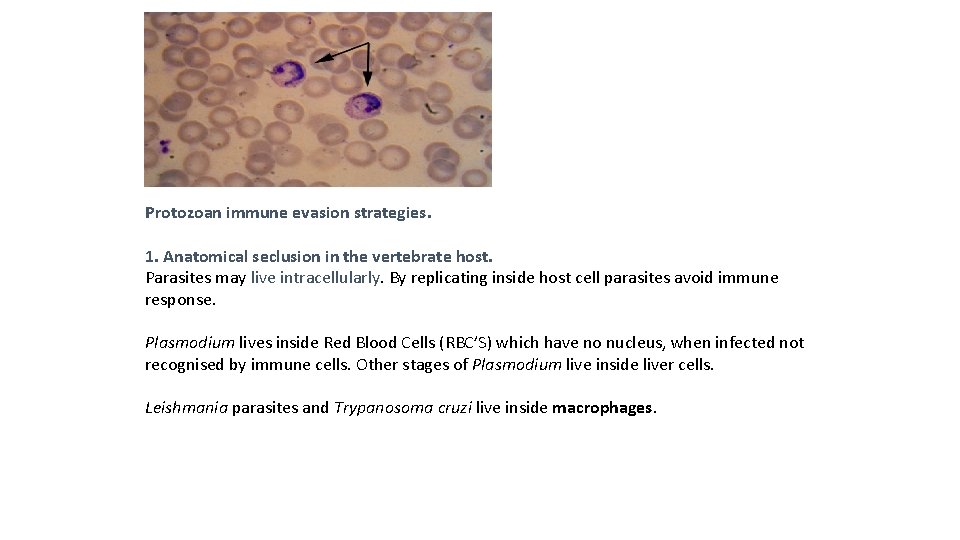
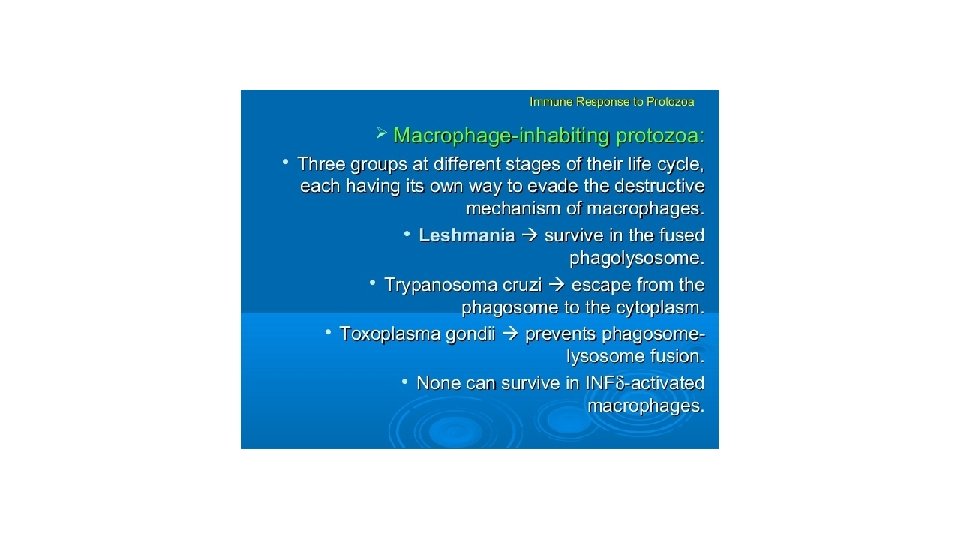
Protozoan immune evasion strategies. 1. Anatomical seclusion in the vertebrate host. Parasites may live intracellularly. By replicating inside host cell parasites avoid immune response. Plasmodium lives inside Red Blood Cells (RBC’S) which have no nucleus, when infected not recognised by immune cells. Other stages of Plasmodium live inside liver cells. Leishmania parasites and Trypanosoma cruzi live inside macrophages.
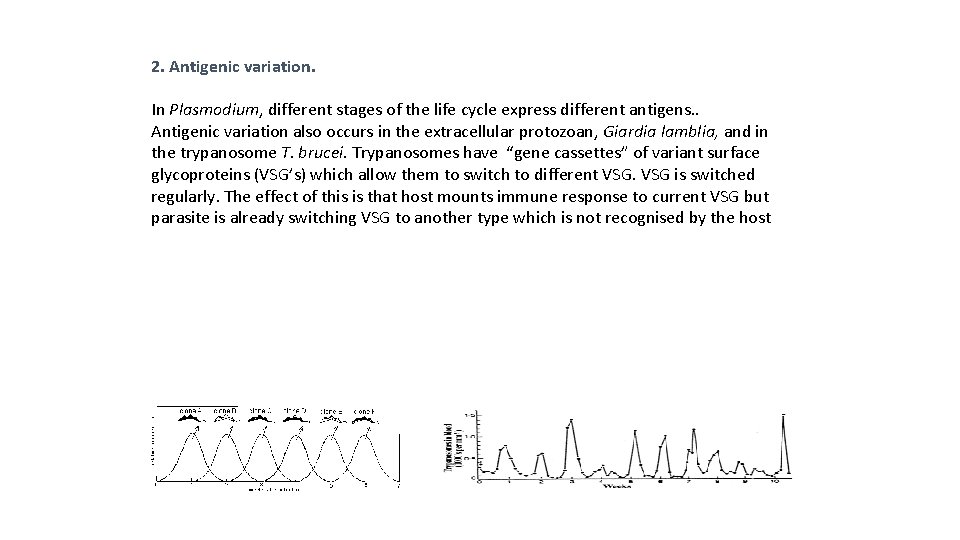
2. Antigenic variation. In Plasmodium, different stages of the life cycle express different antigens. . Antigenic variation also occurs in the extracellular protozoan, Giardia lamblia, and in the trypanosome T. brucei. Trypanosomes have “gene cassettes” of variant surface glycoproteins (VSG’s) which allow them to switch to different VSG is switched regularly. The effect of this is that host mounts immune response to current VSG but parasite is already switching VSG to another type which is not recognised by the host
3. Shedding or replacement of surface e. g. Entamoeba histolytica. 4. Immunosupression – manipulation of the immune response e. g. Plasmodium. 5. Anti-immune mechanisms - Leishmania produce anti-oxidases to counter products of macrophage oxidative burst.
Helminth immune evasion mechanisms in the vertebrate host. 1) Large size. Difficult for immune system to eliminate large parasites. Primary response is inflammation to initiate expulsion, often worms are not eliminated. 2) Coating with host proteins. Tegument of cestode & trematode worms, is able to adsorb host components, e. g. RBC Ags, thus giving the worm the immunological appearance of host tissue. Schistosomes take up host blood proteins, e. g. blood group antigens & MHC class I & II molecules, therefore, the worms are seen as “self”. 3) Molecular mimicry. The parasite is able to mimic a host structure or function. The discovery in schistosomes of antigens common to both vertebrate and invertebrate hosts, followed by the extension of these observations to numerous parasites has led to the concept of molecular mimicry.
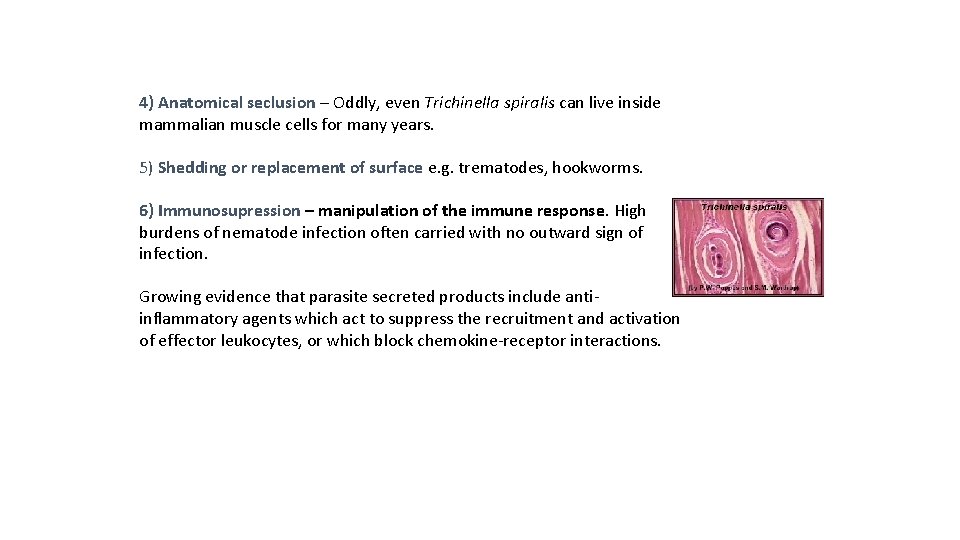
4) Anatomical seclusion – Oddly, even Trichinella spiralis can live inside mammalian muscle cells for many years. 5) Shedding or replacement of surface e. g. trematodes, hookworms. 6) Immunosupression – manipulation of the immune response. High burdens of nematode infection often carried with no outward sign of infection. Growing evidence that parasite secreted products include antiinflammatory agents which act to suppress the recruitment and activation of effector leukocytes, or which block chemokine-receptor interactions.
- Slides: 26