
Immunology Ch 11 7 12 Microbiology 11 7
Immunology Ch. 11. 7 -12 Microbiology

11. 7 Primary & Secondary Response Primary Response ▪ Barriers ▪ Innate Immunity Secondary Response ▪ Adaptive Immunity ▪ B & T cells
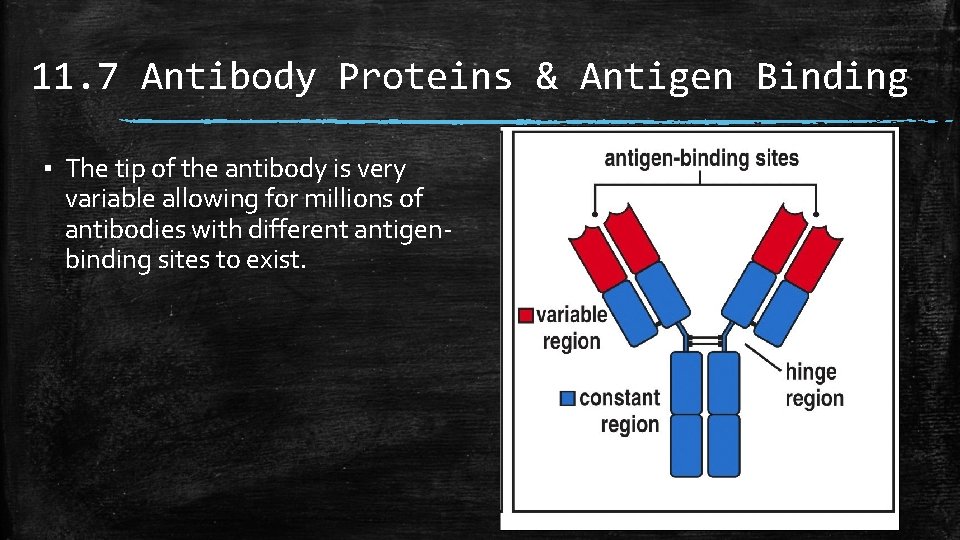
11. 7 Antibody Proteins & Antigen Binding ▪ The tip of the antibody is very variable allowing for millions of antibodies with different antigenbinding sites to exist.
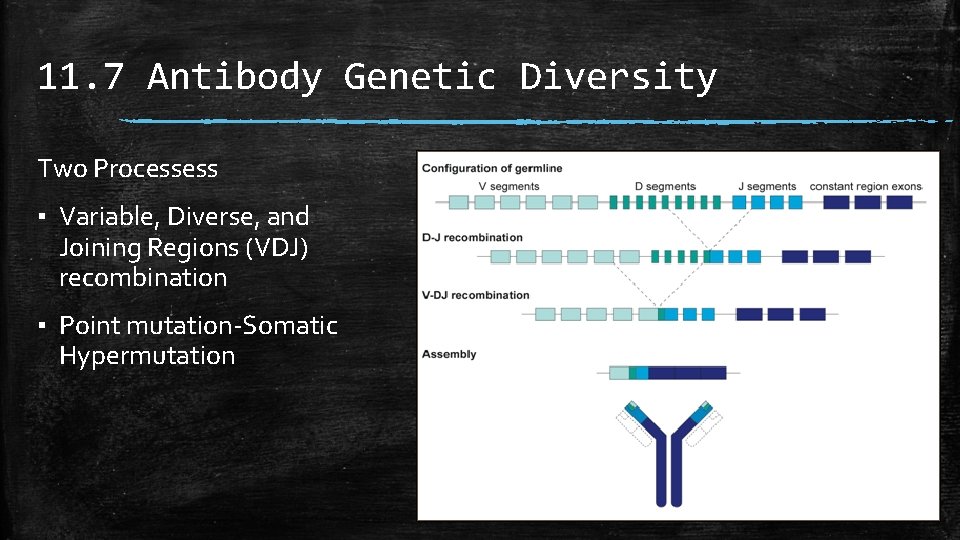
11. 7 Antibody Genetic Diversity Two Processess ▪ Variable, Diverse, and Joining Regions (VDJ) recombination ▪ Point mutation-Somatic Hypermutation

11. 7 Clonal Selection Hypothesis 1954 Niels Jerne ▪ Individual B cell expresses receptors specific to the distinct antigens are determined before the antibody ever encounters the antigen. ▪ Binding to a cell activates the cell causing proliferation of clone daughter cells.

11. 7 Isotype Class Switching ▪ The antibody isotype of a B cell changes during development and activation.
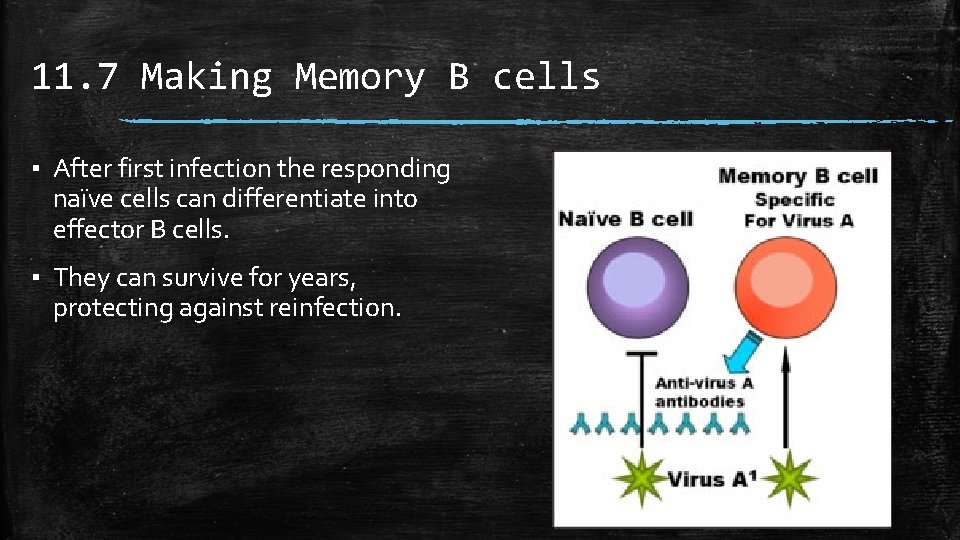
11. 7 Making Memory B cells ▪ After first infection the responding naïve cells can differentiate into effector B cells. ▪ They can survive for years, protecting against reinfection.
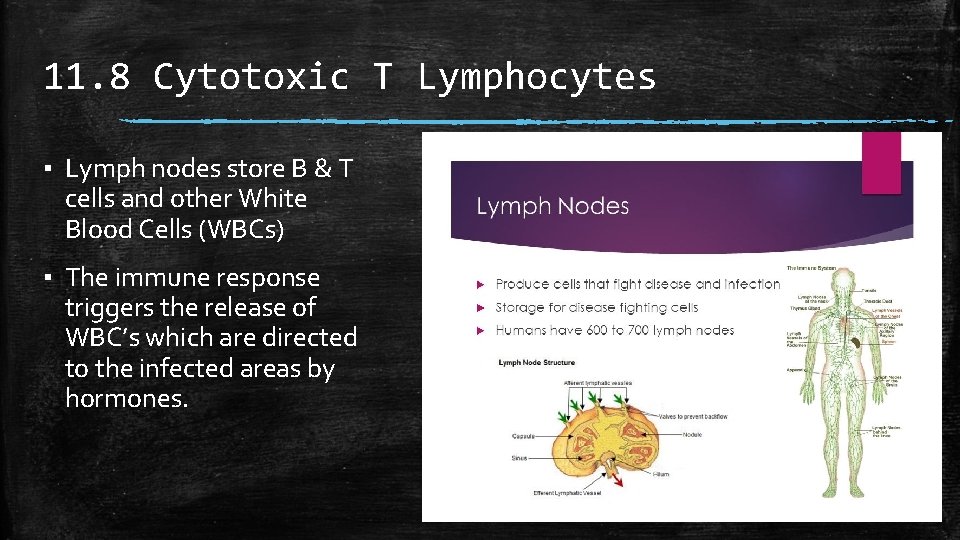
11. 8 Cytotoxic T Lymphocytes ▪ Lymph nodes store B & T cells and other White Blood Cells (WBCs) ▪ The immune response triggers the release of WBC’s which are directed to the infected areas by hormones.
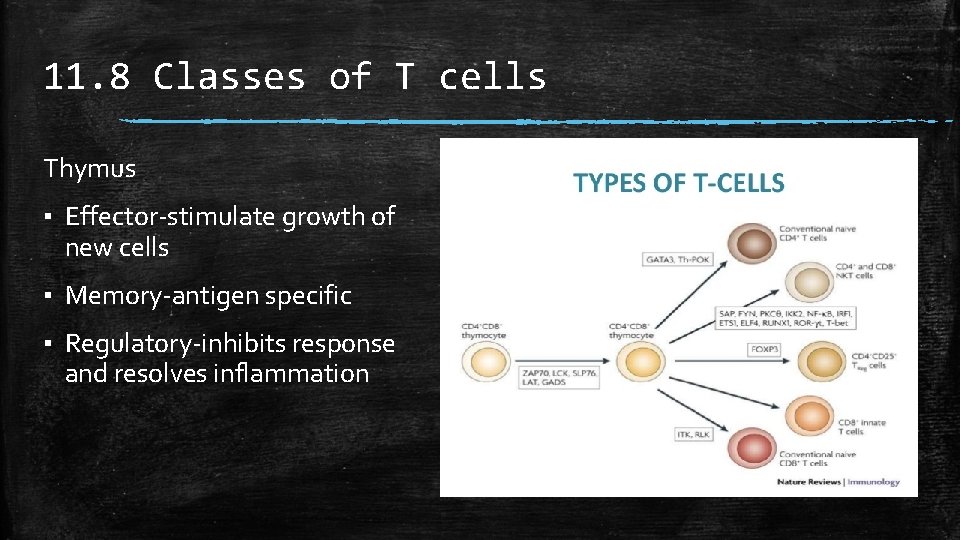
11. 8 Classes of T cells Thymus ▪ Effector-stimulate growth of new cells ▪ Memory-antigen specific ▪ Regulatory-inhibits response and resolves inflammation
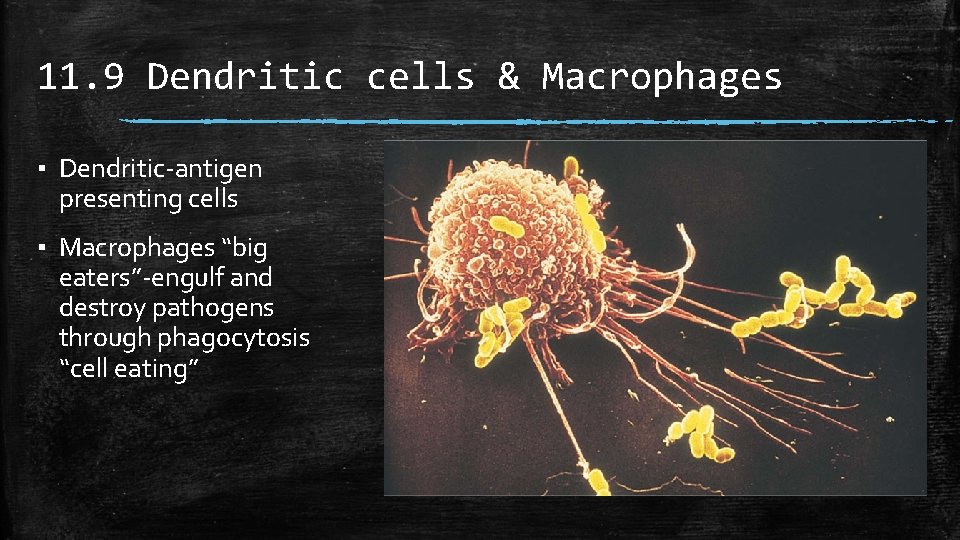
11. 9 Dendritic cells & Macrophages ▪ Dendritic-antigen presenting cells ▪ Macrophages “big eaters”-engulf and destroy pathogens through phagocytosis “cell eating”
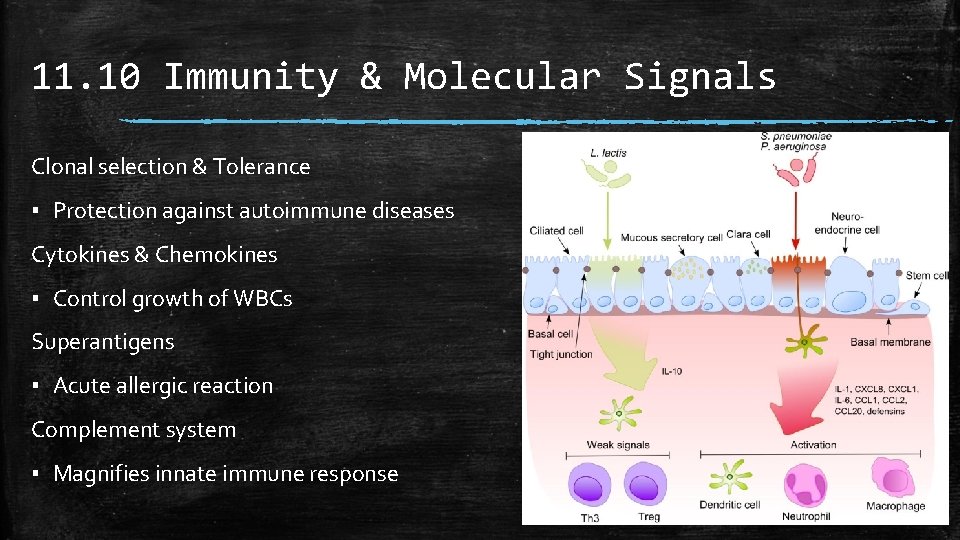
11. 10 Immunity & Molecular Signals Clonal selection & Tolerance ▪ Protection against autoimmune diseases Cytokines & Chemokines ▪ Control growth of WBCs Superantigens ▪ Acute allergic reaction Complement system ▪ Magnifies innate immune response

11. 11 The Major Histocompatibility Complex (MHC) ▪ MHC is a cell surface molecule that displays an epitope to mediate interactions of leukocytes with other leukocytes or body cells. ▪ Three subgroups: 1. Polygenic 2. Polymorphic 3. Many Variants

11. 12 Classifying Immunities ▪ Natural Active Immunity – Exposure to disease – Development of Antibodies ▪ Natural Passive Immunity – Transferred from mother to baby through placenta or breast milk – Not long lasting ▪ Artificial Immunity – Intentional exposure – Vaccinations – Antibody Transfer
- Slides: 13