
Immunological Memory Primary immune response Occurs on the



- Slides: 83
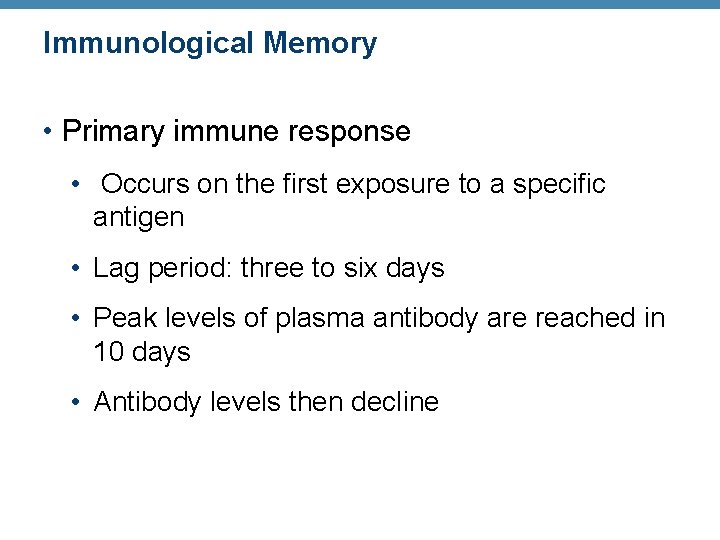
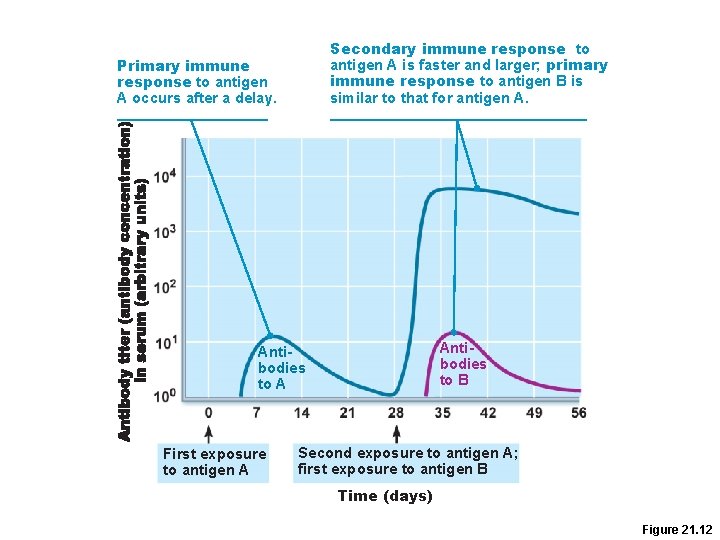
Immunological Memory • Primary immune response • Occurs on the first exposure to a specific antigen • Lag period: three to six days • Peak levels of plasma antibody are reached in 10 days • Antibody levels then decline
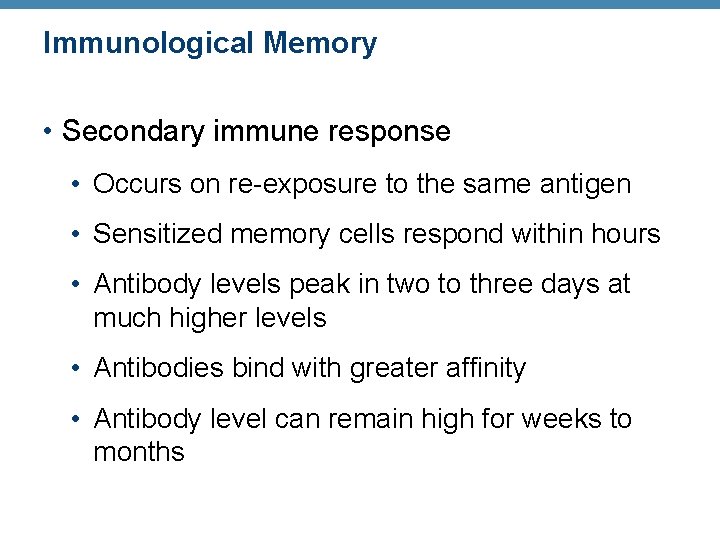
Immunological Memory • Secondary immune response • Occurs on re-exposure to the same antigen • Sensitized memory cells respond within hours • Antibody levels peak in two to three days at much higher levels • Antibodies bind with greater affinity • Antibody level can remain high for weeks to months
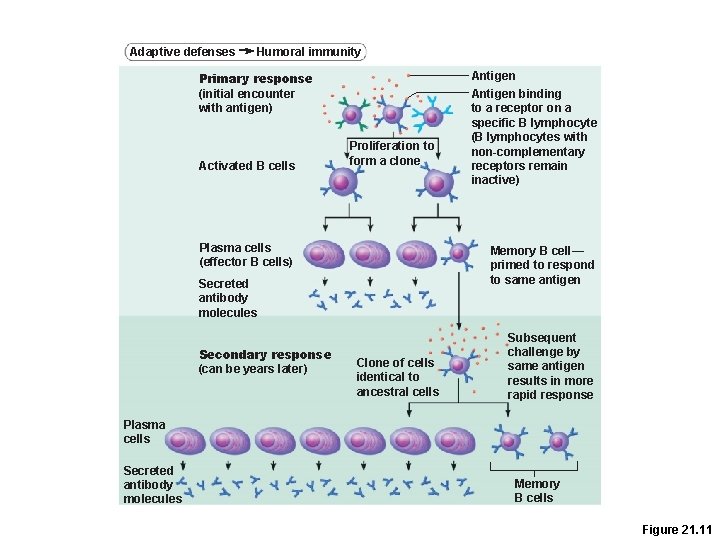
Adaptive defenses Humoral immunity Primary response (initial encounter with antigen) Activated B cells Proliferation to form a clone Plasma cells (effector B cells) Memory B cell— primed to respond to same antigen Secreted antibody molecules Secondary response (can be years later) Antigen binding to a receptor on a specific B lymphocyte (B lymphocytes with non-complementary receptors remain inactive) Clone of cells identical to ancestral cells Subsequent challenge by same antigen results in more rapid response Plasma cells Secreted antibody molecules Memory B cells Figure 21. 11
Secondary immune response to antigen A is faster and larger; primary immune response to antigen B is similar to that for antigen A. Primary immune response to antigen A occurs after a delay. Antibodies to B Antibodies to A First exposure to antigen A Second exposure to antigen A; first exposure to antigen B Time (days) Figure 21. 12
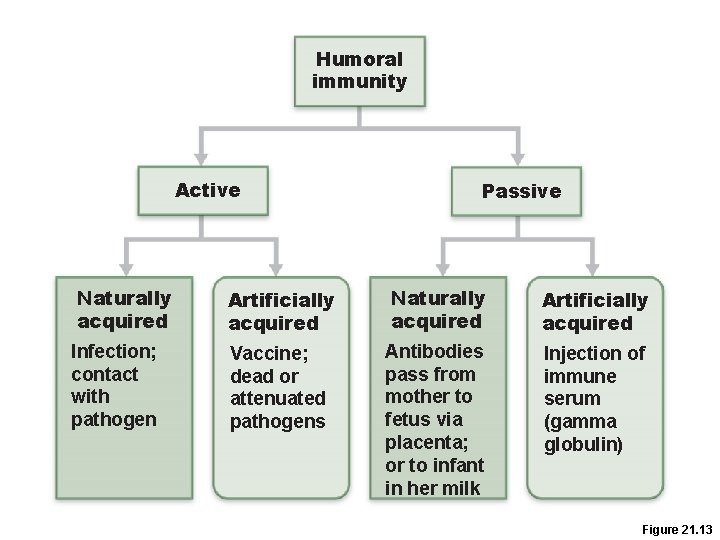
Active Humoral Immunity • Occurs when B cells encounter antigens and produce specific antibodies against them • Two types • Naturally acquired—response to a bacterial or viral infection • Artificially acquired—response to a vaccine of dead or attenuated pathogens
Active Humoral Immunity • Vaccines • Spare us the symptoms of the primary response • Provide antigenic determinants that are immunogenic and reactive • Target only one type of helper T cell, so fail to fully establish cellular immunological memory
Passive Humoral Immunity • B cells are not challenged by antigens • Immunological memory does not occur
Passive Humoral Immunity • Two types 1. Naturally acquired—antibodies delivered to a fetus via the placenta or to infant through milk 2. Artificially acquired—injection of serum, such as gamma globulin • Protection is immediate but ends when antibodies naturally degrade in the body
Humoral immunity Active Passive Naturally acquired Artificially acquired Infection; contact with pathogen Vaccine; dead or attenuated pathogens Antibodies pass from mother to fetus via placenta; or to infant in her milk Injection of immune serum (gamma globulin) Figure 21. 13
Antibodies • Immunoglobulins—gamma globulin portion of blood • Proteins secreted by plasma cells • Capable of binding specifically with antigen detected by B cells
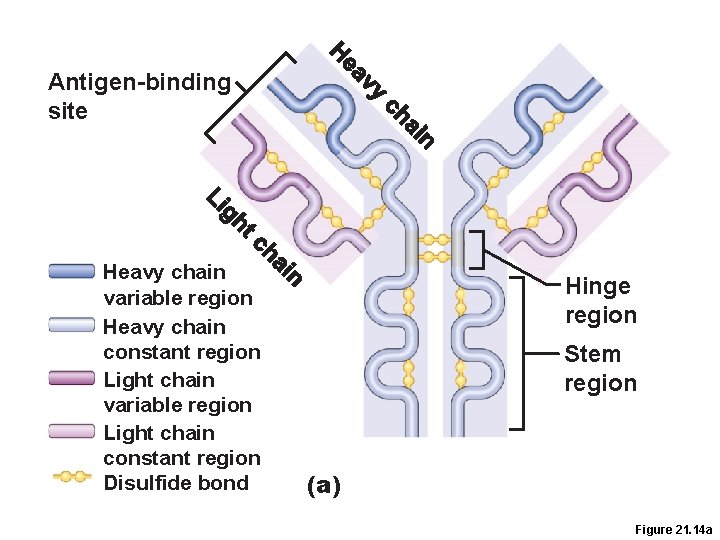
Basic Antibody Structure • T-or Y-shaped monomer of four looping linked polypeptide chains • Two identical heavy (H) chains and two identical light (L) chains • Variable (V) regions of each arm combine to form two identical antigen-binding sites
Basic Antibody Structure • Constant (C) region of stem determines • The antibody class (Ig. M, Ig. A, Ig. D, Ig. G, or Ig. E) • The cells and chemicals that the antibody can bind to • How the antibody class functions in antigen elimination
Antigen-binding site Heavy chain variable region Heavy chain constant region Light chain variable region Light chain constant region Disulfide bond Hinge region Stem region (a) Figure 21. 14 a
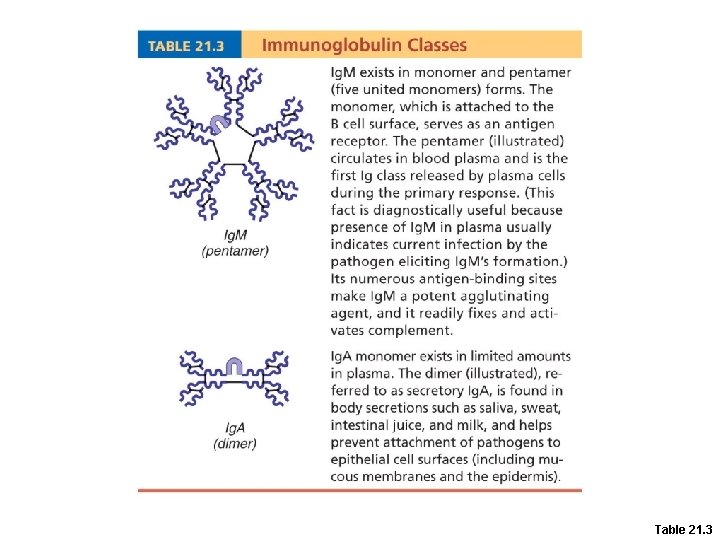
Classes of Antibodies • Ig. M • A pentamer; first antibody released • Potent agglutinating agent • Readily fixes and activates complement • Ig. A (secretory Ig. A) • Monomer or dimer; in mucus and other secretions • Helps prevent entry of pathogens
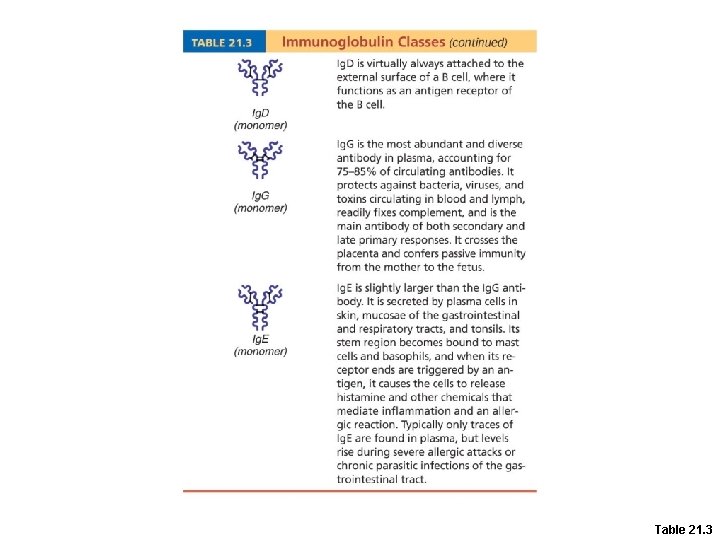
Table 21. 3
Classes of Antibodies • Ig. D • Monomer attached to the surface of B cells • Functions as a B cell receptor • Ig. G • Monomer; 75– 85% of antibodies in plasma • From secondary and late primary responses • Crosses the placental barrier
Classes of Antibodies • Ig. E • Monomer active in some allergies and parasitic infections • Causes mast cells and basophils to release histamine
Table 21. 3
Generating Antibody Diversity • Billions of antibodies result from somatic recombination of gene segments • Hypervariable regions of some genes increase antibody variation through somatic mutations • Each plasma cell can switch the type of H chain produced, making an antibody of a different class
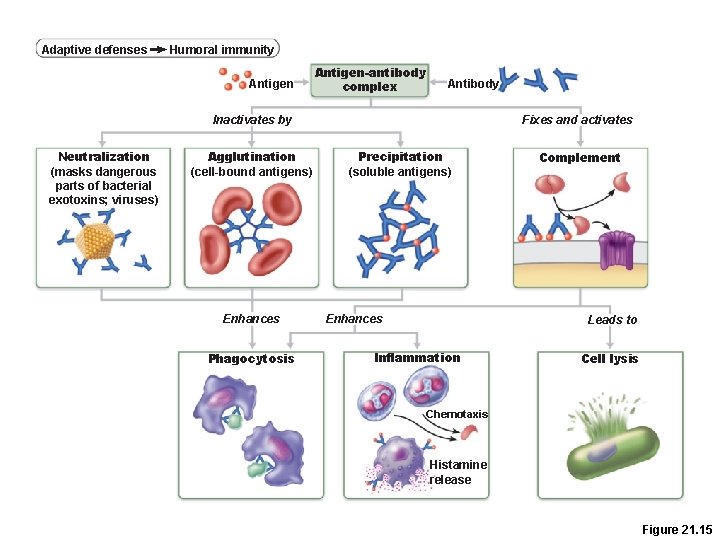
Antibody Targets • Antibodies inactivate and tag antigens • Form antigen-antibody (immune) complexes • Defensive mechanisms used by antibodies • Neutralization and agglutination (the two most important) • Precipitation and complement fixation
Neutralization • Simplest mechanism • Antibodies block specific sites on viruses or bacterial exotoxins • Prevent these antigens from binding to receptors on tissue cells • Antigen-antibody complexes undergo phagocytosis
Agglutination • Antibodies bind the same determinant on more than one cell-bound antigen • Cross-linked antigen-antibody complexes agglutinate • Example: clumping of mismatched blood cells
Precipitation • Soluble molecules are cross-linked • Complexes precipitate and are subject to phagocytosis
Complement Fixation and Activation • Main antibody defense against cellular antigens • Several antibodies bind close together on a cellular antigen • Their complement-binding sites trigger complement fixation into the cell’s surface • Complement triggers cell lysis
Complement Fixation and Activation • Activated complement functions • Amplifies the inflammatory response • Opsonization • Enlists more and more defensive elements
Adaptive defenses Humoral immunity Antigen-antibody complex Antibody Inactivates by Neutralization (masks dangerous parts of bacterial exotoxins; viruses) Agglutination (cell-bound antigens) Enhances Phagocytosis Fixes and activates Precipitation (soluble antigens) Enhances Complement Leads to Inflammation Cell lysis Chemotaxis Histamine release Figure 21. 15
Monoclonal Antibodies • Commercially prepared pure antibody • Produced by hybridomas • Cell hybrids: fusion of a tumor cell and a B cell • Proliferate indefinitely and have the ability to produce a single type of antibody • Used in research, clinical testing, and cancer treatment
Cell-Mediated Immune Response • T cells provide defense against intracellular antigens • Two types of surface receptors of T cells • T cell antigen receptors • Cell differentiation glycoproteins • CD 4 or CD 8 • Play a role in T cell interactions with other cells
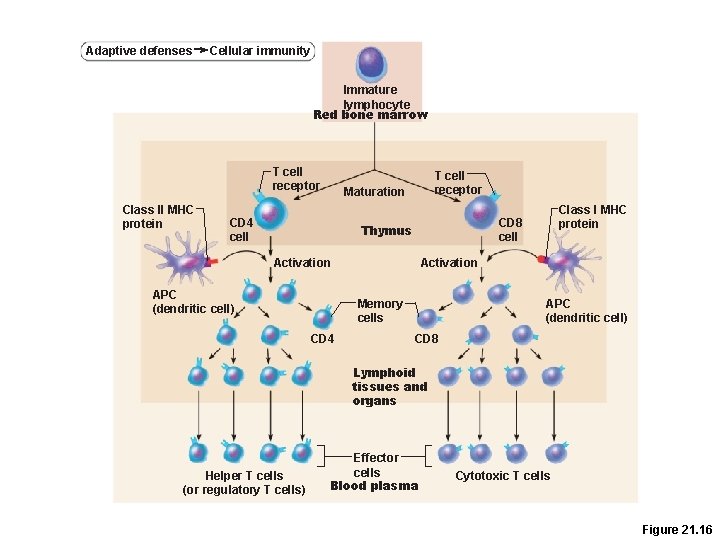
Cell-Mediated Immune Response • Major types of T cells • CD 4 cells become helper T cells (TH) when activated • CD 8 cells become cytotoxic T cells (TC) that destroy cells harboring foreign antigens • Other types of T cells • Regulatory T cells (TREG) • Memory T cells
Adaptive defenses Cellular immunity Immature lymphocyte Red bone marrow T cell receptor Class II MHC protein T cell receptor Maturation CD 4 cell Thymus Activation APC (dendritic cell) Activation Memory cells CD 4 Class I MHC protein CD 8 cell APC (dendritic cell) CD 8 Lymphoid tissues and organs Helper T cells (or regulatory T cells) Effector cells Blood plasma Cytotoxic T cells Figure 21. 16
Comparison of Humoral and Cell-Mediated Response • Antibodies of the humoral response • The simplest ammunition of the immune response • Targets • Bacteria and molecules in extracellular environments (body secretions, tissue fluid, blood, and lymph)
Comparison of Humoral and Cell-Mediated Response • T cells of the cell-mediated response • Recognize and respond only to processed fragments of antigen displayed on the surface of body cells • Targets • Body cells infected by viruses or bacteria • Abnormal or cancerous cells • Cells of infused or transplanted foreign tissue
Antigen Recognition • Immunocompetent T cells are activated when their surface receptors bind to a recognized antigen (nonself) • T cells must simultaneously recognize • Nonself (the antigen) • Self (an MHC protein of a body cell)
MHC Proteins • Two types of MHC proteins are important to T cell activation • Class I MHC proteins - displayed by all cells except RBCs • Class II MHC proteins – displayed by APCs (dendritic cells, macrophages and B cells) • Both types are synthesized at the ER and bind to peptide fragments
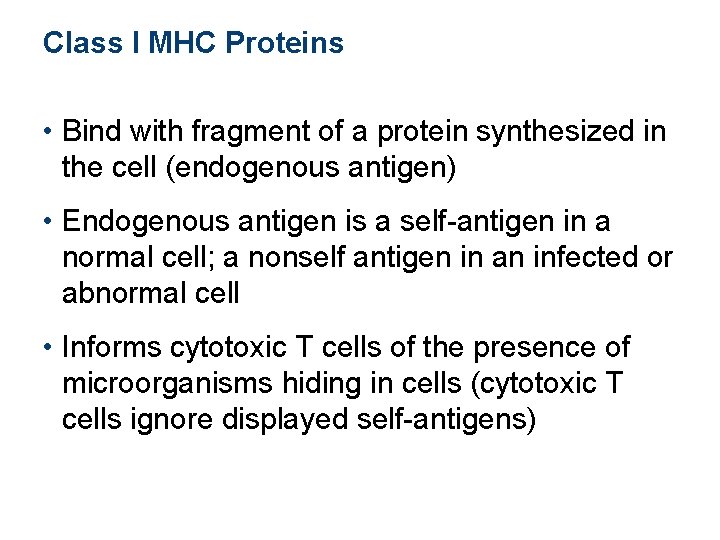
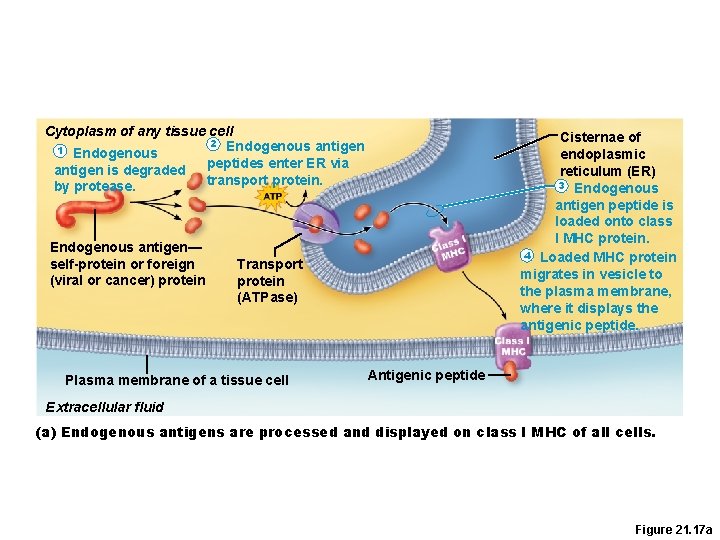
Class I MHC Proteins • Bind with fragment of a protein synthesized in the cell (endogenous antigen) • Endogenous antigen is a self-antigen in a normal cell; a nonself antigen in an infected or abnormal cell • Informs cytotoxic T cells of the presence of microorganisms hiding in cells (cytotoxic T cells ignore displayed self-antigens)
Cytoplasm of any tissue cell 2 Endogenous antigen 1 Endogenous peptides enter ER via antigen is degraded transport protein. by protease. Endogenous antigen— self-protein or foreign (viral or cancer) protein Cisternae of endoplasmic reticulum (ER) 3 Endogenous antigen peptide is loaded onto class I MHC protein. 4 Loaded MHC protein migrates in vesicle to the plasma membrane, where it displays the antigenic peptide. Transport protein (ATPase) Plasma membrane of a tissue cell Antigenic peptide Extracellular fluid (a) Endogenous antigens are processed and displayed on class I MHC of all cells. Figure 21. 17 a
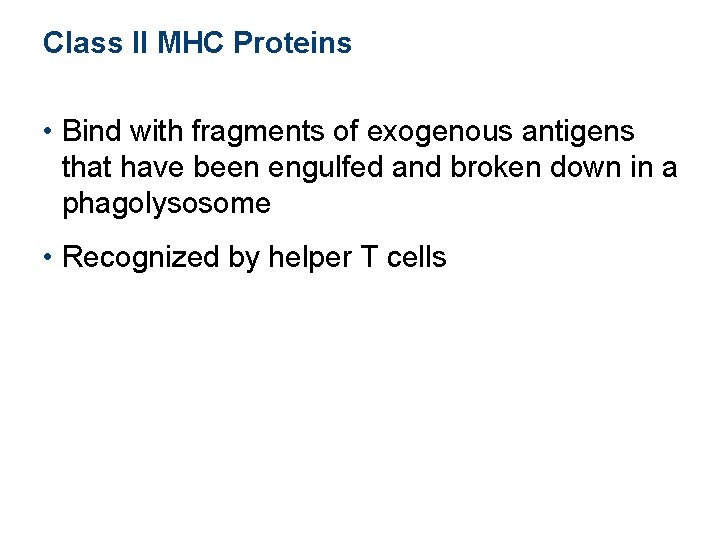
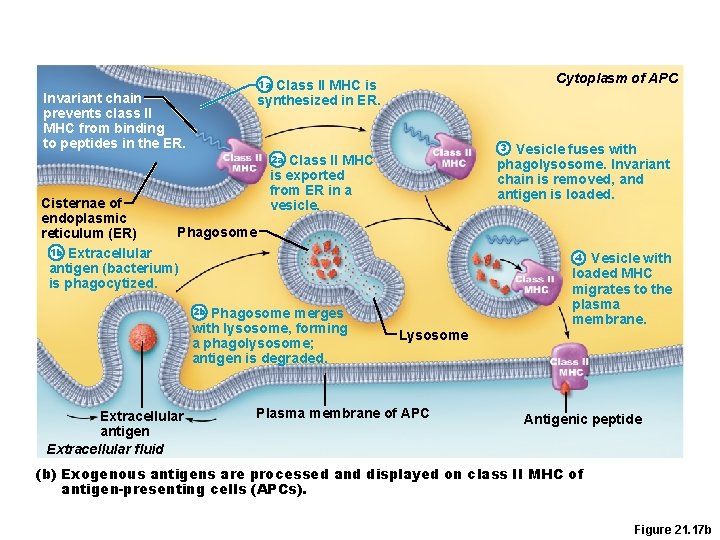
Class II MHC Proteins • Bind with fragments of exogenous antigens that have been engulfed and broken down in a phagolysosome • Recognized by helper T cells
Cytoplasm of APC 1 a Class II MHC is synthesized in ER. Invariant chain prevents class II MHC from binding to peptides in the ER. 3 Vesicle fuses with phagolysosome. Invariant chain is removed, and antigen is loaded. 2 a Cisternae of endoplasmic Phagosome reticulum (ER) 1 b Extracellular antigen (bacterium) is phagocytized. Class II MHC is exported from ER in a vesicle. 4 Vesicle with loaded MHC migrates to the plasma membrane. 2 b Phagosome merges with lysosome, forming a phagolysosome; antigen is degraded. Extracellular antigen Extracellular fluid Lysosome Plasma membrane of APC Antigenic peptide (b) Exogenous antigens are processed and displayed on class II MHC of antigen-presenting cells (APCs). Figure 21. 17 b
T Cell Activation • APCs (most often a dendritic cell) migrate to lymph nodes and other lymphoid tissues to present their antigens to T cells • T cell activation is a two-step process 1. Antigen binding 2. Co-stimulation
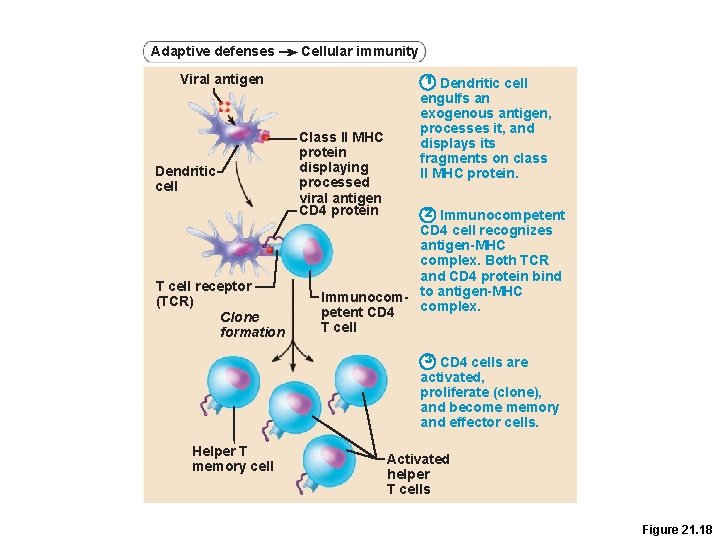
T Cell Activation: Antigen Binding • CD 4 and CD 8 cells bind to different classes of MHC proteins (MHC restriction) • CD 4 cells bind to antigen linked to class II MHC proteins of APCs • CD 8 cells are activated by antigen fragments linked to class I MHC of APCs
T Cell Activation: Antigen Binding • Dendritic cells are able to obtain other cells’ endogenous antigens by • Engulfing dying virus-infected or tumor cells • Importing antigens through temporary gap junctions with infected cells • Dendritic cells then display the endogenous antigens on both class I and class II MHCs
T Cell Activation: Antigen Binding • TCR that recognizes the nonself-self complex is linked to multiple intracellular signaling pathways • Other T cell surface proteins are involved in antigen binding (e. g. , CD 4 and CD 8 help maintain coupling during antigen recognition) • Antigen binding stimulates the T cell, but costimulation is required before proliferation can occur
Adaptive defenses Cellular immunity 1 Dendritic cell Viral antigen Dendritic cell T cell receptor (TCR) Clone formation Class l. I MHC protein displaying processed viral antigen CD 4 protein engulfs an exogenous antigen, processes it, and displays its fragments on class II MHC protein. 2 Immunocompetent CD 4 cell recognizes antigen-MHC complex. Both TCR and CD 4 protein bind Immunocom- to antigen-MHC complex. petent CD 4 T cell 3 CD 4 cells are activated, proliferate (clone), and become memory and effector cells. Helper T memory cell Activated helper T cells Figure 21. 18
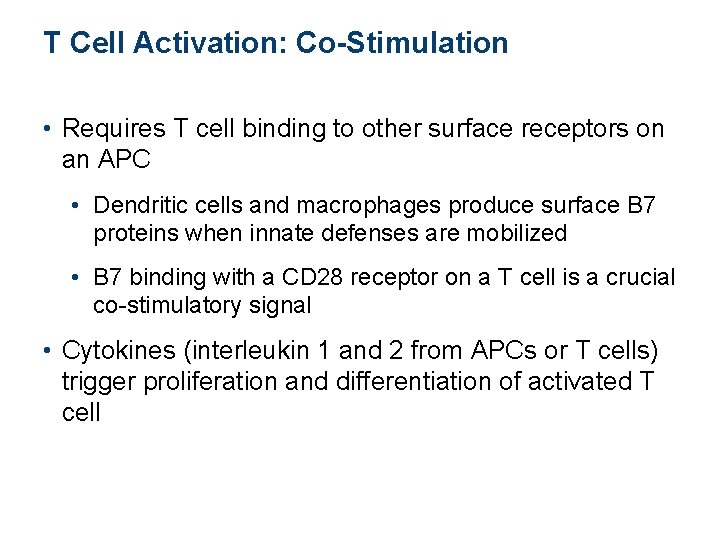
T Cell Activation: Co-Stimulation • Requires T cell binding to other surface receptors on an APC • Dendritic cells and macrophages produce surface B 7 proteins when innate defenses are mobilized • B 7 binding with a CD 28 receptor on a T cell is a crucial co-stimulatory signal • Cytokines (interleukin 1 and 2 from APCs or T cells) trigger proliferation and differentiation of activated T cell
T Cell Activation: Co-Stimulation • Without co-stimulation, anergy occurs • T cells • Become tolerant to that antigen • Are unable to divide • Do not secrete cytokines
T Cell Activation: Co-Stimulation • T cells that are activated • Enlarge, proliferate, and form clones • Differentiate and perform functions according to their T cell class
T Cell Activation: Co-Stimulation • Primary T cell response peaks within a week • T cell apoptosis occurs between days 7 and 30 • Effector activity wanes as the amount of antigen declines • Benefit of apoptosis: activated T cells are a hazard • Memory T cells remain and mediate secondary responses
Cytokines • Mediate cell development, differentiation, and responses in the immune system • Include interleukins and interferons • Interleukin 1 (IL-1) released by macrophages co-stimulates bound T cells to • Release interleukin 2 (IL-2) • Synthesize more IL-2 receptors
Cytokines • IL-2 is a key growth factor, acting on cells that release it and other T cells • Encourages activated T cells to divide rapidly • Used therapeutically to treat melanoma and kidney cancers • Other cytokines amplify and regulate innate and adaptive responses
Roles of Helper T(TH) Cells • Play a central role in the adaptive immune response • Once primed by APC presentation of antigen, they • Help activate T and B cells • Induce T and B cell proliferation • Activate macrophages and recruit other immune cells • Without TH, there is no immune response
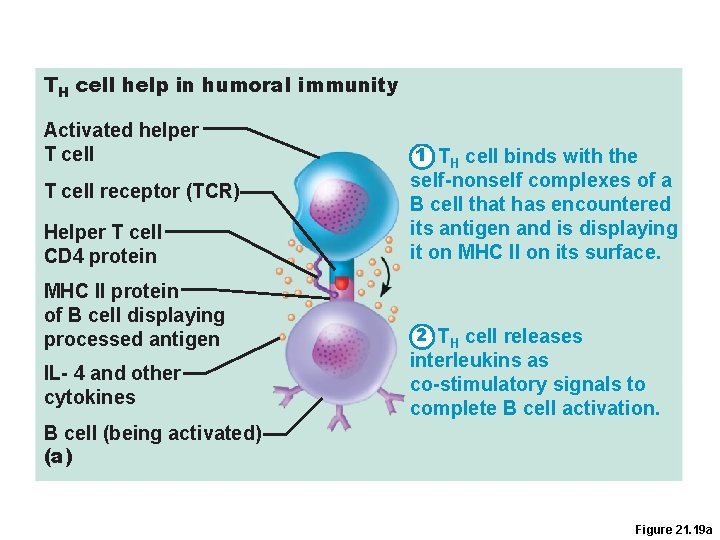
Helper T Cells • Interact directly with B cells displaying antigen fragments bound to MHC II receptors • Stimulate B cells to divide more rapidly and begin antibody formation • B cells may be activated without TH cells by binding to T cell–independent antigens • Most antigens require TH co-stimulation to activate B cells
TH cell help in humoral immunity Activated helper T cell 1 TH cell binds with the Helper T cell CD 4 protein self-nonself complexes of a B cell that has encountered its antigen and is displaying it on MHC II on its surface. MHC II protein of B cell displaying processed antigen 2 TH cell releases T cell receptor (TCR) IL- 4 and other cytokines interleukins as co-stimulatory signals to complete B cell activation. B cell (being activated) (a) Figure 21. 19 a
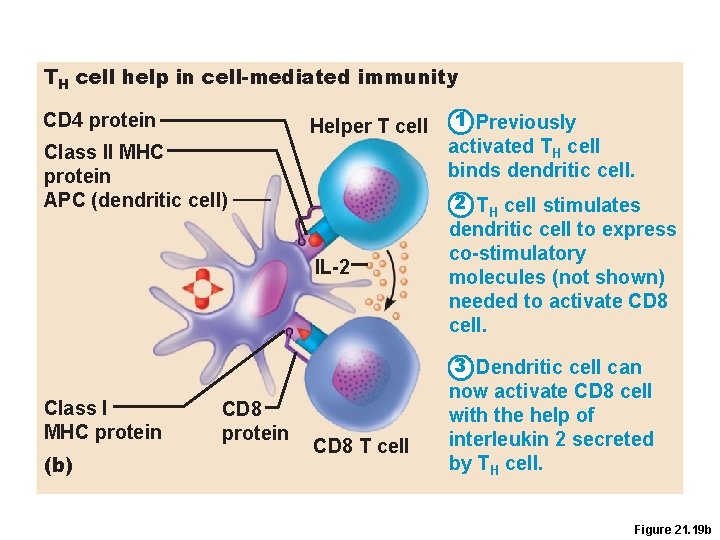
Helper T Cells • Cause dendritic cells to express costimulatory molecules required for CD 8 cell activation
TH cell help in cell-mediated immunity CD 4 protein Helper T cell Class II MHC protein APC (dendritic cell) 1 Previously activated TH cell binds dendritic cell. 2 TH cell stimulates IL-2 dendritic cell to express co-stimulatory molecules (not shown) needed to activate CD 8 cell. 3 Dendritic cell can Class I MHC protein (b) CD 8 protein CD 8 T cell now activate CD 8 cell with the help of interleukin 2 secreted by TH cell. Figure 21. 19 b
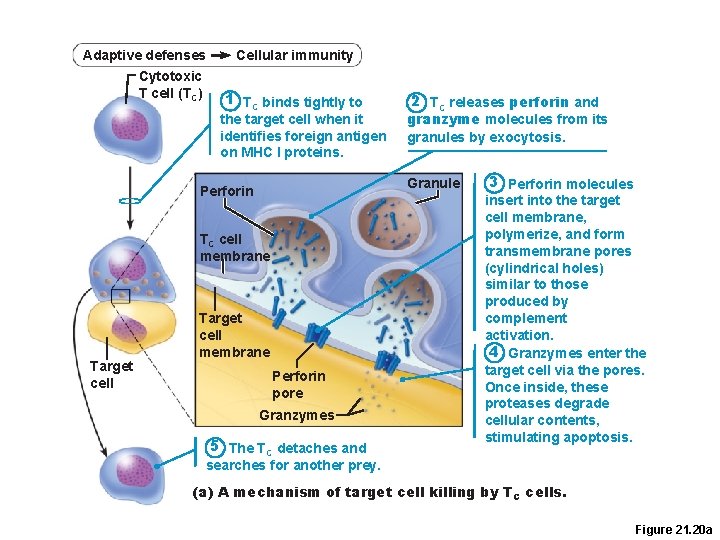
Roles of Cytotoxic T(TC) Cells • Directly attack and kill other cells • Activated TC cells circulate in blood and lymphoid organs in search of body cells displaying antigen they recognize
Roles of Cytotoxic T(TC) Cells • Targets • Virus-infected cells • Cells with intracellular bacteria or parasites • Cancer cells • Foreign cells (transfusions or transplants)
Cytotoxic T Cells • Bind to a self-nonself complex • Can destroy all infected or abnormal cells
Cytotoxic T Cells • Lethal hit • Tc cell releases perforins and granzymes by exocytosis • Perforins create pores through which granzymes enter the target cell • Granzymes stimulate apoptosis • In some cases, TC cell binds with a Fas receptor on the target cell, and stimulates apoptosis
Adaptive defenses Cytotoxic T cell (TC) Cellular immunity 1 TC binds tightly to the target cell when it identifies foreign antigen on MHC I proteins. granzyme molecules from its granules by exocytosis. Granule Perforin TC cell membrane Target cell 2 TC releases perforin and Target cell membrane Perforin pore Granzymes 5 The TC detaches and 3 Perforin molecules insert into the target cell membrane, polymerize, and form transmembrane pores (cylindrical holes) similar to those produced by complement activation. 4 Granzymes enter the target cell via the pores. Once inside, these proteases degrade cellular contents, stimulating apoptosis. searches for another prey. (a) A mechanism of target cell killing by TC cells. Figure 21. 20 a
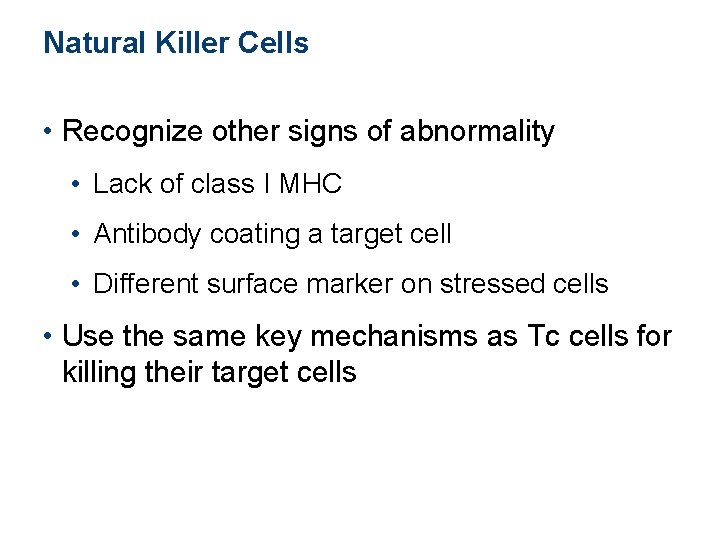
Natural Killer Cells • Recognize other signs of abnormality • Lack of class I MHC • Antibody coating a target cell • Different surface marker on stressed cells • Use the same key mechanisms as Tc cells for killing their target cells
Regulatory T (TReg) Cells • Dampen the immune response by direct contact or by inhibitory cytokines • Important in preventing autoimmune reactions
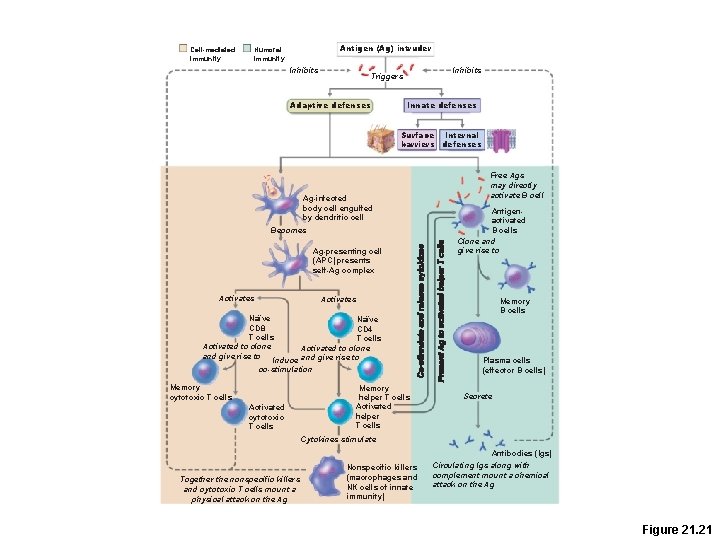
Cell-mediated immunity Antigen (Ag) intruder Humoral immunity Inhibits Triggers Adaptive defenses Innate defenses Surface Internal barriers defenses Ag-infected body cell engulfed by dendritic cell Becomes Ag-presenting cell (APC) presents self-Ag complex Activates Activated cytotoxic T cells Antigenactivated B cells Clone and give rise to Activates Naïve CD 8 CD 4 T cells Activated to clone and give rise to Induce and give rise to co-stimulation Memory cytotoxic T cells Free Ags may directly activate B cell Memory helper T cells Activated helper T cells Memory B cells Plasma cells (effector B cells) Secrete Cytokines stimulate Together the nonspecific killers and cytotoxic T cells mount a physical attack on the Ag Nonspecific killers (macrophages and NK cells of innate immunity) Antibodies (Igs) Circulating lgs along with complement mount a chemical attack on the Ag Figure 21. 21
Organ Transplants • Four varieties • Autografts: from one body site to another in the same person • Isografts: between identical twins • Allografts: between individuals who are not identical twins • Xenografts: from another animal species
Prevention of Rejection • Depends on the similarity of the tissues • Patient is treated with immunosuppressive therapy • Corticosteroid drugs to suppress inflammation • Antiproliferative drugs • Immunosuppressant drugs • Many of these have severe side effects
Immunodeficiencies • Congenital and acquired conditions that cause immune cells, phagocytes, or complement to behave abnormally
Severe Combined Immunodeficiency (SCID) Syndrome • Genetic defect • Marked deficit in B and T cells • Abnormalities in interleukin receptors • Defective adenosine deaminase (ADA) enzyme • Metabolites lethal to T cells accumulate • SCID is fatal if untreated; treatment is with bone marrow transplants
Hodgkin’s Disease • An acquired immunodeficiency • Cancer of the B cells • Leads to immunodeficiency by depressing lymph node cells
Acquired Immune Deficiency Syndrome (AIDS) • Cripples the immune system by interfering with the activity of helper T cells • Characterized by severe weight loss, night sweats, and swollen lymph nodes • Opportunistic infections occur, including pneumocystis pneumonia and Kaposi’s sarcoma
Acquired Immune Deficiency Syndrome (AIDS) • Caused by human immunodeficiency virus (HIV) transmitted via body fluids—blood, semen, and vaginal secretions • HIV enters the body via • Blood transfusions • Blood-contaminated needles • Sexual intercourse and oral sex • HIV • Destroys TH cells • Depresses cell-mediated immunity
Acquired Immune Deficiency Syndrome (AIDS) • HIV multiplies in lymph nodes throughout the asymptomatic period • Symptoms appear in a few months to 10 years • HIV-coated glycoprotein complex attaches to the CD 4 receptor • HIV enters the cell and uses reverse transcriptase to produce DNA from viral RNA • The DNA copy (a provirus) directs the host cell to make viral RNA and proteins, enabling the virus to reproduce
Acquired Immune Deficiency Syndrome (AIDS) • HIV reverse transcriptase produces frequent transcription errors; high mutation rate and resistance to drugs • Treatment with antiviral drugs • Reverse transcriptase inhibitors (AZT) • Protease inhibitors (saquinavir and ritonavir) • New Fusion inhibitors that block HIV’s entry to helper T cells
Autoimmune Diseases • Immune system loses the ability to distinguish self from foreign • Production of autoantibodies and sensitized TC cells that destroy body tissues • Examples include multiple sclerosis, myasthenia gravis, Graves’ disease, type I diabetes mellitus, systemic lupus erythematosus (SLE), glomerulonephritis, and rheumatoid arthritis
Mechanisms of Autoimmune Diseases 1. Foreign antigens may resemble self-antigens • Antibodies against the foreign antigen may crossreact with self-antigen 2. New self-antigens may appear, generated by • Gene mutations • Changes in self-antigens by hapten attachment or as a result of infectious damage
Mechanisms of Autoimmune Diseases 3. Release of novel self-antigens by trauma of a barrier (e. g. , the blood-brain barrier)
Hypersensitivities • Immune responses to a perceived (otherwise harmless) threat • Causes tissue damage • Different types are distinguished by • Their time course • Whether antibodies or T cells are involved • Antibodies cause immediate and subacute hypersensitivities • T cells cause delayed hypersensitivity
Immediate Hypersensitivity • Acute (type I) hypersensitivities (allergies) begin in seconds after contact with allergen • Initial contact is asymptomatic but sensitizes the person • Reaction may be local or systemic
Immediate Hypersensitivity • The mechanism involves IL-4 secreted by T cells • IL-4 stimulates B cells to produce Ig. E • Ig. E binds to mast cells and basophils, resulting in a flood of histamine release and inducing the inflammatory response
Anaphylactic Shock • Systemic response to allergen that directly enters the blood • Basophils and mast cells are enlisted throughout the body • Systemic histamine releases may cause • Constriction of bronchioles • Sudden vasodilation and fluid loss from the bloodstream • Hypotensive shock and death • Treatment: epinephrine
Subacute Hypersensitivities • Caused by Ig. M and Ig. G transferred via blood plasma or serum • Slow onset (1– 3 hours) and long duration (10– 15 hours) • Cytotoxic (type II) reactions • Antibodies bind to antigens on specific body cells, stimulating phagocytosis and complement-mediated lysis of the cellular antigens • Example: mismatched blood transfusion reaction
Subacute Hypersensitivities • Immune complex (type III) hypersensitivity • Antigens are widely distributed through the body or blood • Insoluble antigen-antibody complexes form • Complexes cannot be cleared from a particular area of the body • Intense inflammation, local cell lysis, and death may result • Example: systemic lupus erythematosus (SLE)
Delayed Hypersensitivities (Type IV) • Slow onset (one to three days) • Mechanism depends on helper T cells • Cytokine-activated macrophages and cytotoxic T cells cause damage • Example: allergic contact dermatitis (e. g. , poison ivy)
Developmental Aspects • Immune system cells develop in the liver and spleen by the ninth week • Bone marrow becomes the primary source of stem cells • Lymphocyte development continues in the bone marrow and thymus
Developmental Aspects • TH 2 lymphocytes predominate in the newborn, and the TH 1 system is educated as the person encounters antigens • The immune system is impaired by stress and depression • With age, the immune system begins to wane, and incidence of cancer increases