
Immunohaematology is a branch of hematology which studies
Immunohaematology • is a branch of hematology which studies the antigen-antibody reactions and their relate disorders. • more commonly known as blood banking
Antigen • A substance that stimulates the production of an antibody when introduced into The body. • Antigens include toxins, bacteria, viruses, and other foreign substances
Antibody • A blood protein produced in response to and counteracting a specific antigen • also known as an immunoglobulin
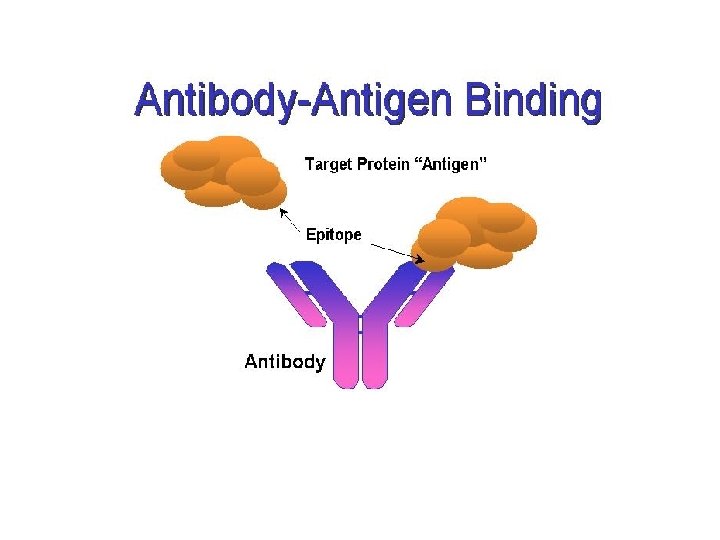
Antibody • Acting as the body's army is a large Yshaped protein produced in the blood or tissues in response to a specific antigen, by B-cells • identify and neutralize foreign objects such as bacteria and viruses. • The antibody recognizes a unique part of the foreign target, called an antigen.
Structure • Antibodies are heavy (~150 k. Da) globular plasma proteins. • They have sugar chains added to some of their amino acid residues. • In other words, antibodies are glycoproteins.
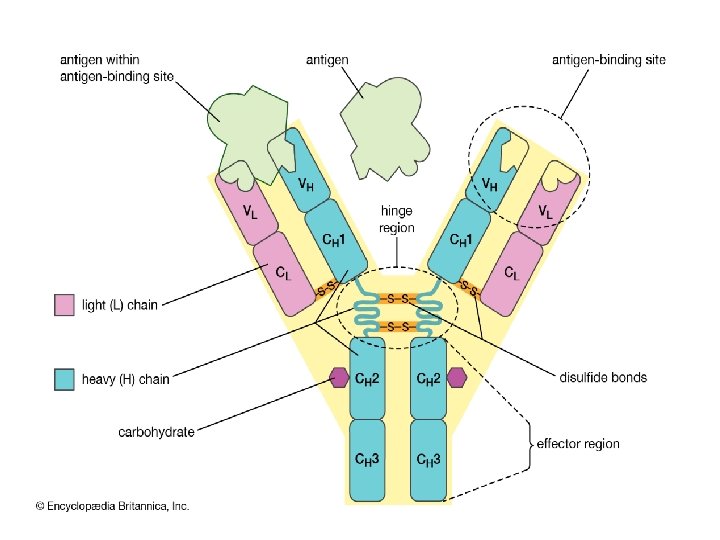
Light chain A light chain has two successive domains: one constant domain and one variable domain. The approximate length of a light chain is 211 to 217 amino acids. Each antibody contains two light chains that are always identical; only one type of light chain, kappa κ or lambda λ, is present per antibody in mammals.

Heavy chain • There are five types of mammalian Ig heavy chain denoted by the Greek letters: α, δ, ε, γ, and μ. The type of heavy chain present defines the class of antibody. these chains are found in Ig. A, Ig. D, Ig. E, Ig. G, and Ig. M antibodies, respectively.
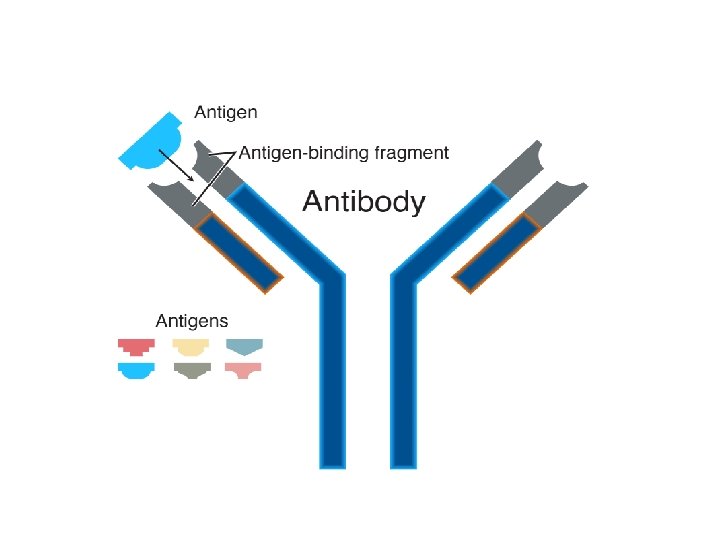
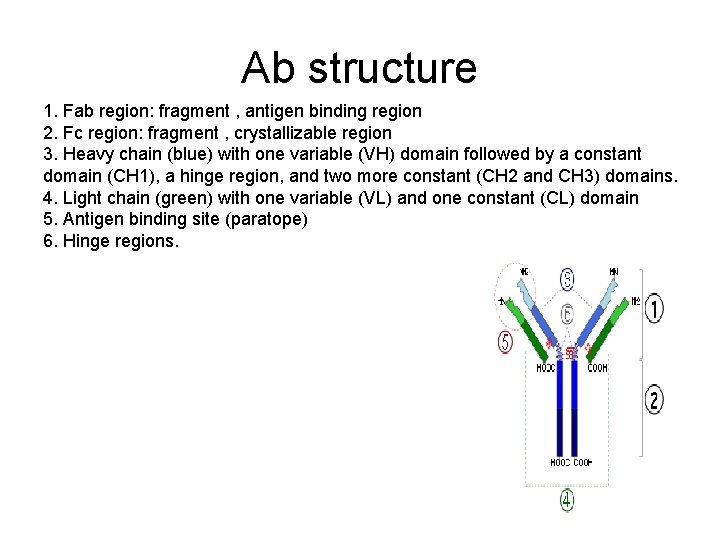
Ab structure 1. Fab region: fragment , antigen binding region 2. Fc region: fragment , crystallizable region 3. Heavy chain (blue) with one variable (VH) domain followed by a constant domain (CH 1), a hinge region, and two more constant (CH 2 and CH 3) domains. 4. Light chain (green) with one variable (VL) and one constant (CL) domain 5. Antigen binding site (paratope) 6. Hinge regions.
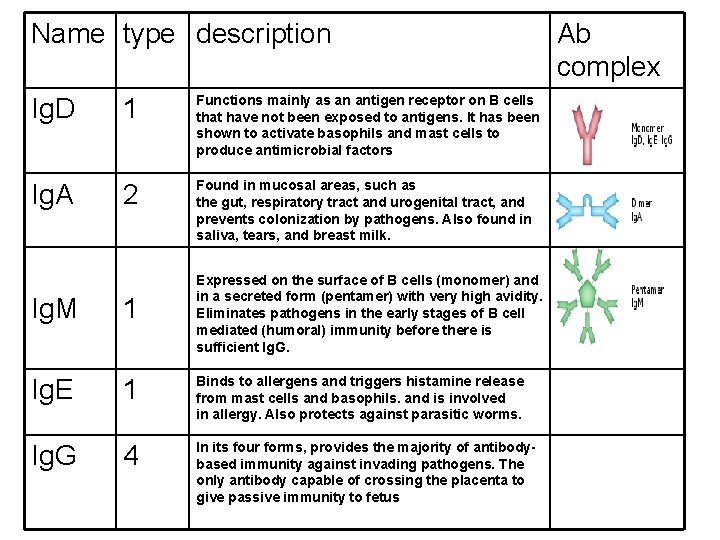
Name type description Ig. D 1 Functions mainly as an antigen receptor on B cells that have not been exposed to antigens. It has been shown to activate basophils and mast cells to produce antimicrobial factors Ig. A 2 Found in mucosal areas, such as the gut, respiratory tract and urogenital tract, and prevents colonization by pathogens. Also found in saliva, tears, and breast milk. Expressed on the surface of B cells (monomer) and in a secreted form (pentamer) with very high avidity. Eliminates pathogens in the early stages of B cell mediated (humoral) immunity before there is sufficient Ig. G. Ig. M 1 Ig. E 1 Binds to allergens and triggers histamine release from mast cells and basophils. and is involved in allergy. Also protects against parasitic worms. 4 In its four forms, provides the majority of antibodybased immunity against invading pathogens. The only antibody capable of crossing the placenta to give passive immunity to fetus Ig. G Ab complex
Function • Activated B cells • differentiate into either antibody-producing cells called plasma cells that secrete soluble antibody or memory cells that survive in the body for years afterward in order to allow the immune system to remember an antigen and respond faster upon future exposures
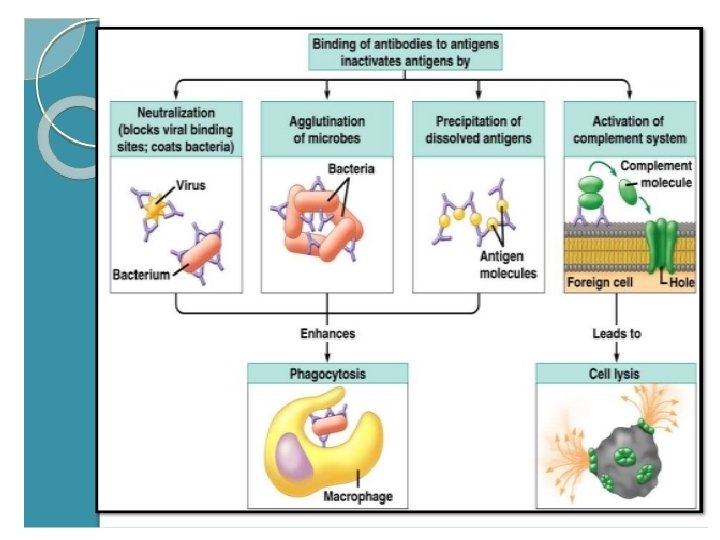
function • They prevent pathogens from entering the body • Damaging cells by binding to them • They stimulate removal of pathogens by macrophages and other cells by coating the pathogen • They trigger destruction of pathogens by stimulating other immune responses such as the complement pathway
Medical applications • Transfusion of blood & its component • Diagnosis , prevention & management of immunization disorder • Leukocyte tasting for organ transplantation • Laboratory resolution of parentage problems • Research applications
Type of Ag – Ab reaction • Sensitization • Agglutenation • Neutrelization • Precipitation • Hemolysis
Sensitization the coating of erythrocytes with antibody so that they are subject to lysis by complement in the presence of homologous antigen, the first stage of a complement fixation test.
Agglutination • is the clumping of particles. • The word agglutination comes from the Latin agglutinare, meaning "to glue. " • The clumping of cells such as bacteria or red blood cells in the presence of an antibody. The antibody or other molecule binds multiple particles and joins them, creating a large complex.
Neutralisation • or neutralization in the immunological sense refers to the ability of antibodies to block the site (s) on bacteria or viruses that they use to enter their target cell. • One example of this within biology is a neutralizing antibody.
Hemolysis • or haemolysis • is the rupturing of erythrocytes and release their contents (hemoglobin) into surrounding fluid (e. g. , blood plasma). Hemolysis may occur in vivo or in vitro (inside or outside the body).

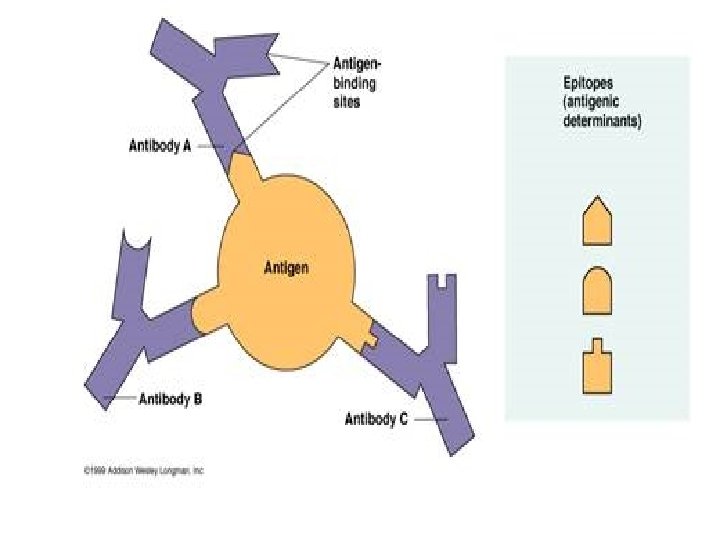
I. NATURE OF ANTIGEN-ANTIBODY REACTIONS • A. Lock and Key Concept The combining site of an antibody is located in the Fab portion of the molecule and is constructed from the hyper-variable regions of the heavy and light chains. • Thus, our concept of antigen-antibody reactions is one of a key (i. e. the antigen) which fits into a lock (i. e. the antibody).
B. Non-covalent Bonds • The bonds that hold the antigen to the antibody combining site are all noncovalent in nature. • These include hydrogen bonds, electrostatic bonds, Van der Waals forces
C. Reversibility • Since antigen-antibody reactions occur via non-covalent bonds, they are by their nature reversible.
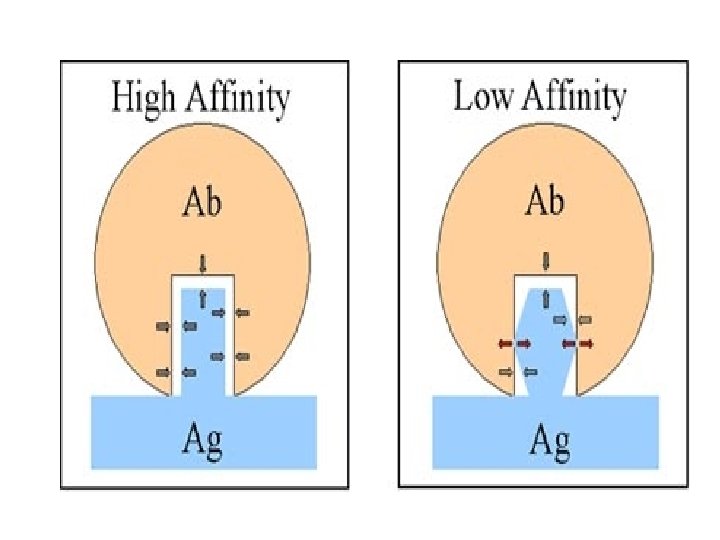
D. Affinity Antibody affinity is the strength of the reaction between a single antigenic determinant and a single combining site on the antibody. It is the sum of the attractive and repulsive forces operating between the antigenic determinant and the combining site of the antibody
E. Avidity • Avidity is a measure of the overall strength of binding of an antigen with many antigenic determinants and multivalent antibodies. • Avidity is influenced by both the valence of the antibody and the valence of the antigen. • Avidity is more than the sum of the individual affinities.
F. Specificity refers to the ability of an individual antibody combining site to react with only one antigenic determinant or the ability of a population of antibody molecules to react with only one antigen. In general, there is a high degree of specificity in antigen-antibody reactions.
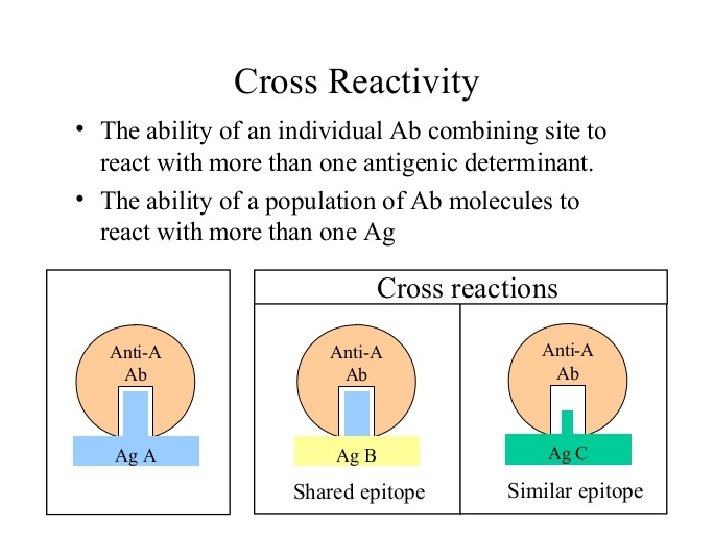
G. Cross reactivity • Cross reactivity refers to the ability of an individual antibody combining site to react with more than one antigenic determinant or the ability of a population of antibody molecules to react with more than one antigen.

G. Cross reactivity • Cross reactions arise because the cross reacting antigen shares an epitope in common with the immunizing antigen or because it has an epitope which is structurally similar to one on the immunizing antigen (multispecificity).
Factors affecting measurement of antigenantibody reactions • Antigen to antibody ratio • Physical form of the antigen • p H • Duration of incubation • Temperature
- Slides: 33