
Immunofluorescence Microscopy cell Biology Ptactical 3 Immunofluorescence Microscopy
Immunofluorescence Microscopy cell Biology Ptactical 3
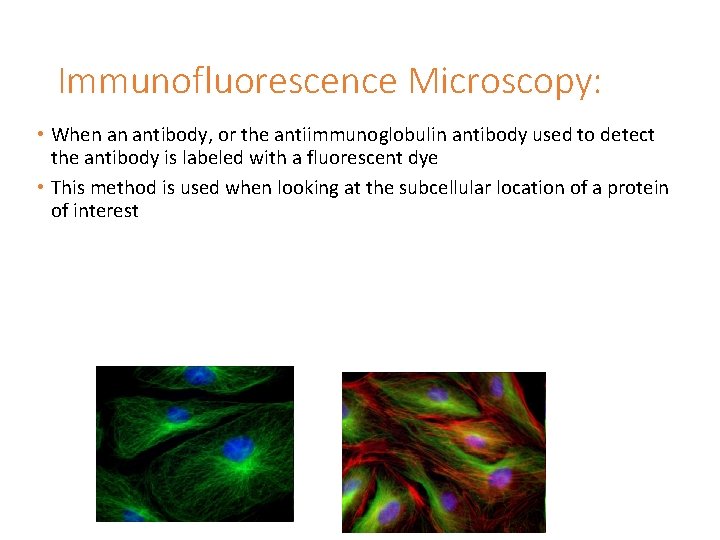
Immunofluorescence Microscopy: • When an antibody, or the antiimmunoglobulin antibody used to detect the antibody is labeled with a fluorescent dye • This method is used when looking at the subcellular location of a protein of interest
Immunofluorescence Microscopy:
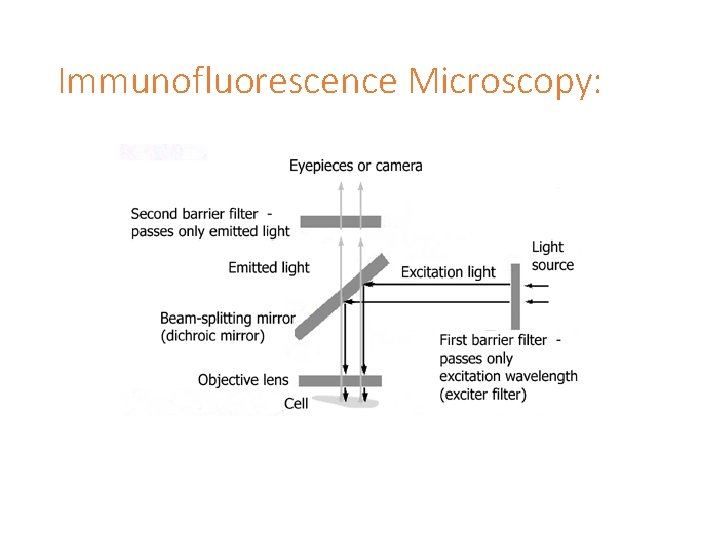
Technique: • Common dyes: fluorescein, rhodamine • Dyes chosen are excited by a certain light wavelength, usually blue or green, and emit light of a different wavelength in the visible spectrum • Eg. Fluorescein emits green light • Eg. Rhodamine emits orange/red light • By using selective filters in a fluorescence microscope only the light from the dye is detected • Available fluorescent labels now include red, blue, cyan or yellow fluorescent proteins
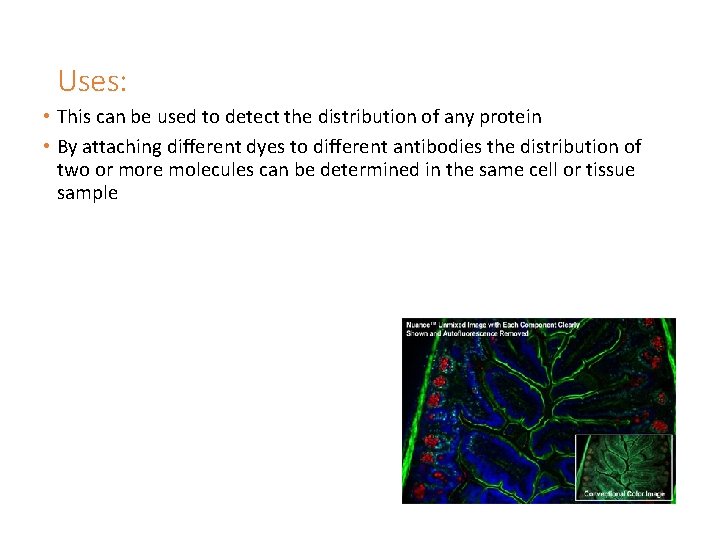
Uses: • This can be used to detect the distribution of any protein • By attaching different dyes to different antibodies the distribution of two or more molecules can be determined in the same cell or tissue sample
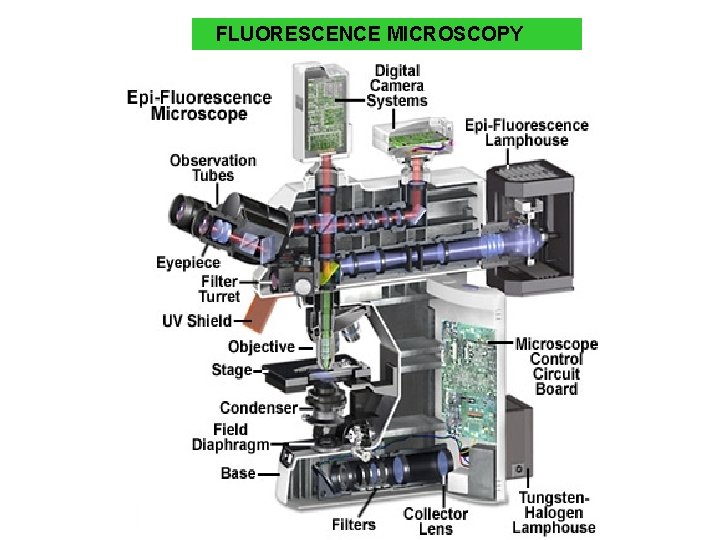
FLUORESCENCE MICROSCOPY
Types of immunofluorescence 1 -Primary (or direct) 2 -secondary (or indirect)
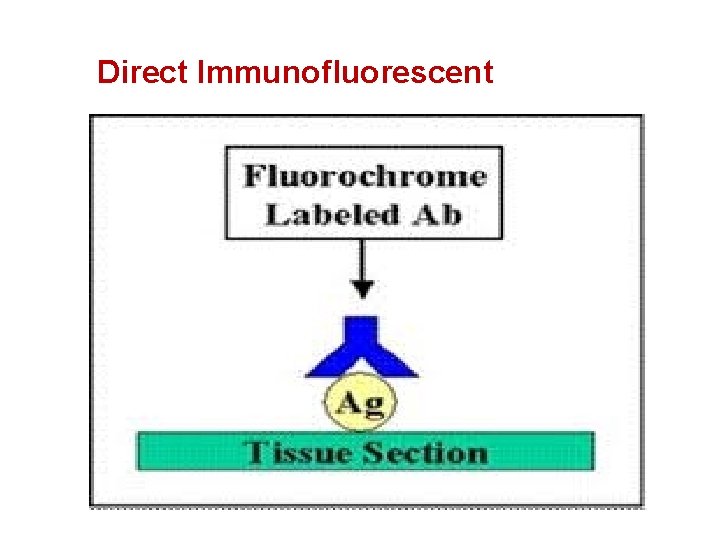
Direct Immunofluorescent
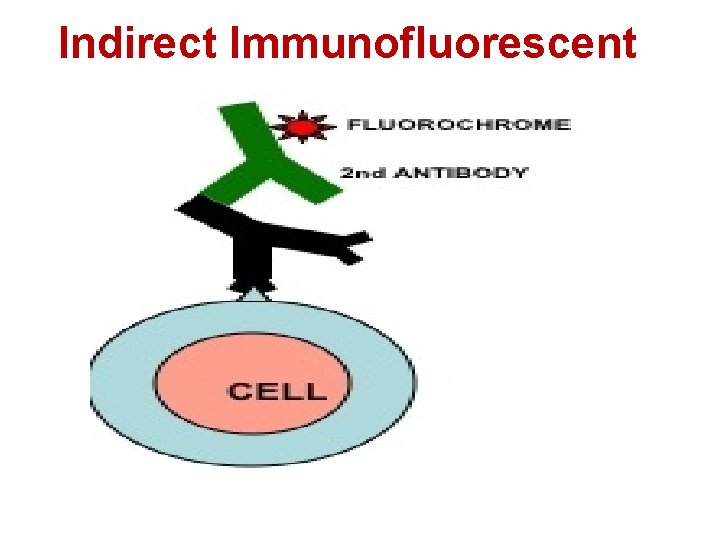
Indirect Immunofluorescent
Worksheet Practical 3 immunofluorescence Q 1. What is the Principle of Fluorescence? Q 2 What are the: Advantages of direct immunofluorescence ? Disadvantages of direct immunofluorescence ? Advantages of indirect immunofluorescence? Disadvantages of indirect immunofluorescence ? Q 2. what are the Limitations of IF Techniques?
- Slides: 10