
Immunodeficiency Syndromes General classification Primary Genetically determined Acquired
- Slides: 28
Immunodeficiency Syndromes
General classification • Primary • Genetically determined • Acquired • As complication of infections, other diseases • Clinical symptoms • Main: infections
Primary immunodeficiencies • Thought to be rare, indeed mild forms of genetic immune deficiency may be more frequent than expected • Generally they manifest themselves in infancy • Susceptibility to infections • They may affect • Innate immunity • B/T cells • May be associated with systemic diseases
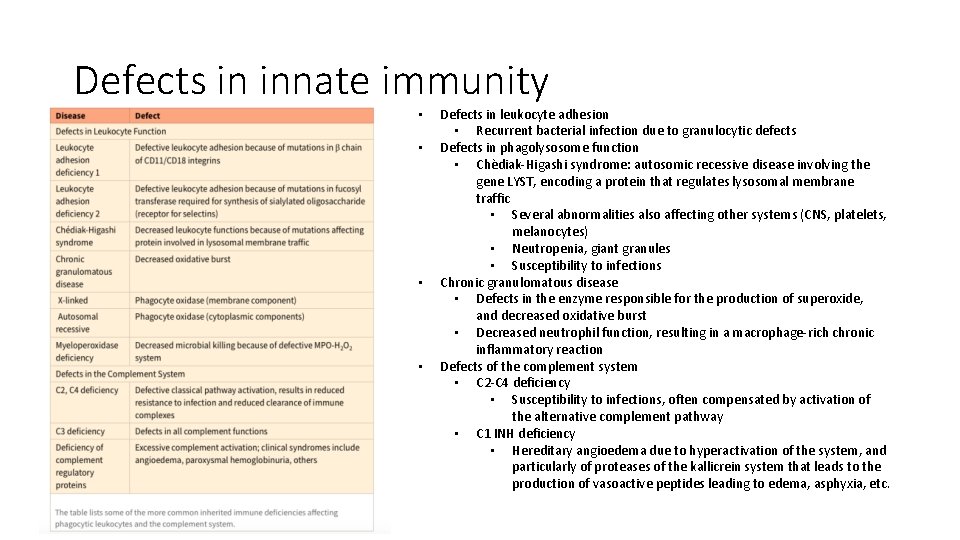
Defects in innate immunity • • Defects in leukocyte adhesion • Recurrent bacterial infection due to granulocytic defects Defects in phagolysosome function • Chèdiak-Higashi syndrome: autosomic recessive disease involving the gene LYST, encoding a protein that regulates lysosomal membrane traffic • Several abnormalities also affecting other systems (CNS, platelets, melanocytes) • Neutropenia, giant granules • Susceptibility to infections Chronic granulomatous disease • Defects in the enzyme responsible for the production of superoxide, and decreased oxidative burst • Decreased neutrophil function, resulting in a macrophage-rich chronic inflammatory reaction Defects of the complement system • C 2 -C 4 deficiency • Susceptibility to infections, often compensated by activation of the alternative complement pathway • C 1 INH deficiency • Hereditary angioedema due to hyperactivation of the system, and particularly of proteases of the kallicrein system that leads to the production of vasoactive peptides leading to edema, asphyxia, etc.
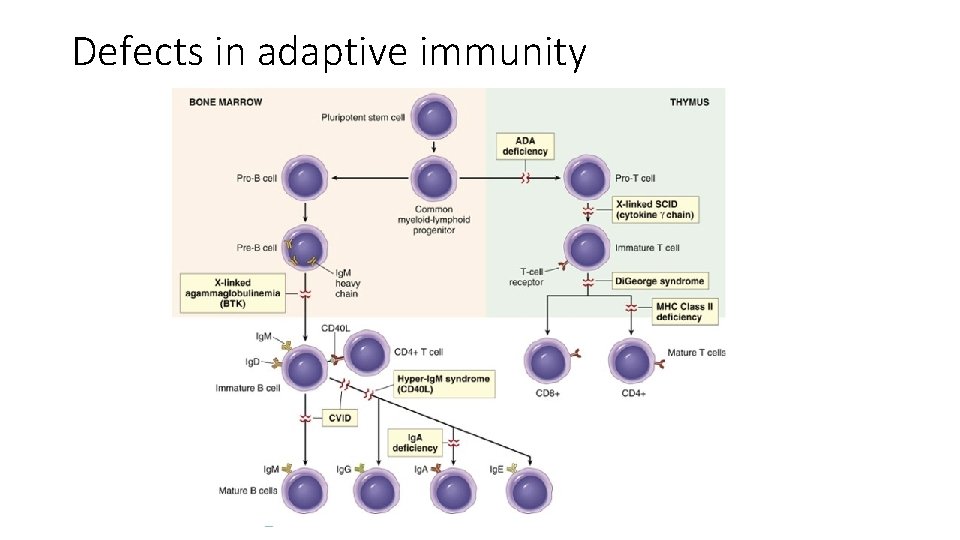
Defects in adaptive immunity
Severe Combined Immunodeficiency • Severe combined immunodeficiency (SCID) represents a constellation of genetically distinct syndromes, all having in common defects in both humoral and cell-mediated immune responses • Persons with SCID are extremely susceptible to recurrent, severe infections by a wide range of pathogens, including Candida albicans, Pneumocystis jiroveci, Pseudomonas, cytomegalovirus, varicella, and a whole host of bacteria. • Without HSC transplantation, death occurs within the first year of life.
X-linked SCID • Most common form (50% cases) • mutation in the common γ-chain (γc) subunit of cytokine receptors • This transmembrane protein is a signal-transducing component of the receptors for IL-2, IL-4, IL-7, IL-9, IL-11, IL-15, and IL-21 • IL-7: defect in T-cell development • Dramatic decrease in T cells • B cells may develop normally but they do not synthesize properly Ab, since there is a lack of T helper cell function • IL-15 is important for the maturation and proliferation of NK cells, and because the common γ chain is a component of the receptor for IL 15, these individuals often have a deficiency of NK cells as well.
ADA deficiency • Autosomal recessive SCID • it has been proposed that deficiency of ADA leads to accumulation of deoxyadenosine and its derivatives (e. g. , deoxy-ATP), which are toxic to rapidly dividing immature lymphocytes, especially those of the Tcell lineage. • Hence there may be a greater reduction in the number of T lymphocytes than of B lymphocytes. • (As in X-linked SCID) thymus is small and devoid of lymphoid cells • Other lymphoid tissues are hypoplastic as well
Gene therapy of X-linked SCID • Hematopoietic stem cell (HSC) transplantation is the mainstay of treatment • X-linked SCID is the first human disease in which gene therapy has been successful • A normal γc gene is expressed using a viral vector in HSCs taken from patients, and the cells are then transplanted back into the patients • The clinical experience is small, but some patients have shown reconstitution of their immune systems for over a year after therapy • Unfortunately, however, about 20% of these patients have developed Tcell lymphoblastic leukemia, highlighting the dangers of this particular approach to gene therapy.
X-Linked Agammaglobulinemia (Bruton Agammaglobulinemia) • characterized by the failure of B-cell precursors (pro-B cells and pre-B cells) to develop into mature B cells • caused by mutations in a cytoplasmic tyrosine kinase, called Bruton tyrosine kinase (Btk • Btk is a protein tyrosine kinase that is associated with the Ig receptor complex of pre-B and mature B cells and is needed to transduce signals from the receptor. When it is mutated, the pre-B cell receptor cannot deliver signals, and maturation stops at this stage • Because light chains are not produced, the complete antigen receptor molecule (which contains Ig heavy and light chains) cannot be assembled and transported to the cell membrane • The disease usually does not become apparent until about 6 months of age, as maternal immunoglobulins are depleted • Several infections occur due to the lack of antibodies • Therapy: in the past, most patients succumbed to infection in infancy or early childhood. Prophylactic intravenous Ig therapy allows most individuals to reach adulthood.
Acquired Immunodeficiency Syndrome (AIDS) • AIDS is a disease caused by the retrovirus human immunodeficiency virus (HIV) and characterized by profound immunosuppression that leads to opportunistic infections, secondary neoplasms, and neurologic manifestations • AIDS is a global problem. • the pool of HIV-infected persons in Africa and Asia is large and expanding • the prevalence rate of infection in adults in sub-Saharan Africa is more than 8% • By the year 2011, HIV had infected 60 million people worldwide, and nearly 30 million adults and children have died of the disease.
Good news about AIDS • the infection rate seems to be decreasing, and some authorities believe it may have peaked in the late 1990 s • Furthermore, improved antiviral therapies have resulted in fewer people dying of the disease.
Epidemiology of AIDS • transmission of HIV occurs under conditions that facilitate exchange of blood or body fluids containing the virus or virus-infected cells • The three major routes of transmission are sexual contact, parenteral inoculation, and passage of the virus from infected mothers to their newborns.
Epidemiology of AIDS • Extensive studies indicate that HIV infection cannot be transmitted by casual personal contact in the household, workplace, or school. • Spread by insect bites is virtually impossible. • Regarding transmission of HIV infection to health care workers, an extremely small but definite risk seems to be present. • Seroconversion has been documented after accidental needle-stick injury or exposure of nonintact skin to infected blood in laboratory accidents. • After needle-stick accidents, the risk of seroconversion is believed to be about 0. 3%, and antiretroviral therapy given within 24 to 48 hours of a needle stick can reduce the risk of infection eightfold. • By comparison, approximately 30% of those accidentally exposed to hepatitis B–infected blood become seropositive.
Etiology: HIV • HIV is a nontransforming human retrovirus belonging to the lentivirus family. Included in this group are feline immunodeficiency virus, simian immunodeficiency virus, visna virus of sheep, bovine immunodeficiency virus, and the equine infectious anemia virus. • Two genetically different but related forms of HIV, called HIV-1 and HIV-2, have been isolated from patients with AIDS. • HIV-1 is the most common type associated with AIDS in the United States, Europe, and Central Africa • HIV-2 causes a similar disease principally in West Africa and India. .
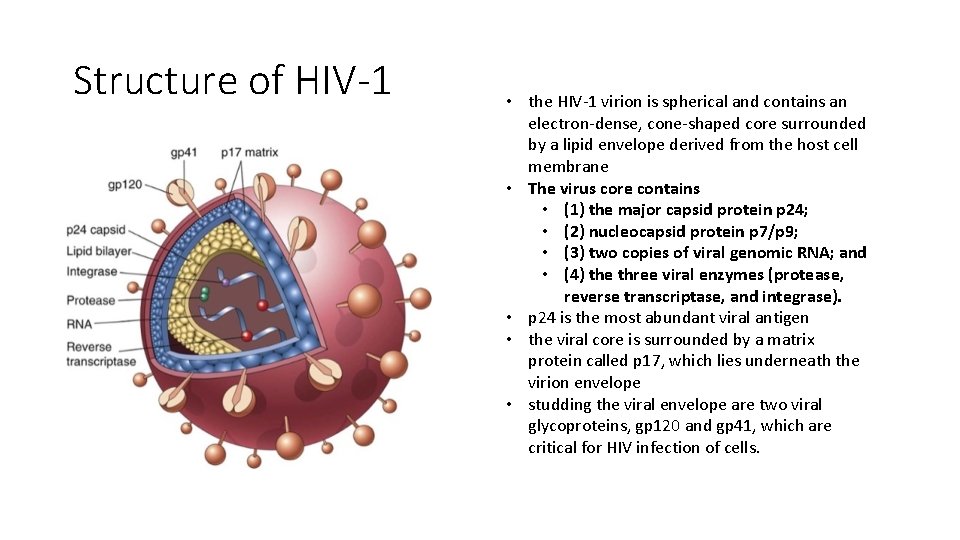
Structure of HIV-1 • the HIV-1 virion is spherical and contains an electron-dense, cone-shaped core surrounded by a lipid envelope derived from the host cell membrane • The virus core contains • (1) the major capsid protein p 24; • (2) nucleocapsid protein p 7/p 9; • (3) two copies of viral genomic RNA; and • (4) the three viral enzymes (protease, reverse transcriptase, and integrase). • p 24 is the most abundant viral antigen • the viral core is surrounded by a matrix protein called p 17, which lies underneath the virion envelope • studding the viral envelope are two viral glycoproteins, gp 120 and gp 41, which are critical for HIV infection of cells.
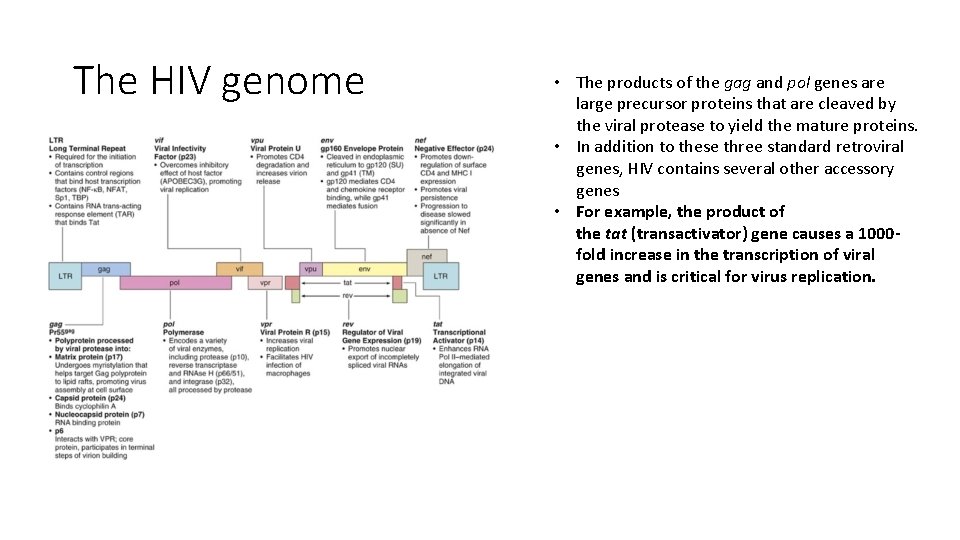
The HIV genome • The products of the gag and pol genes are large precursor proteins that are cleaved by the viral protease to yield the mature proteins. • In addition to these three standard retroviral genes, HIV contains several other accessory genes • For example, the product of the tat (transactivator) gene causes a 1000 fold increase in the transcription of viral genes and is critical for virus replication.
Pathogenesis of HIV Infection and AIDS • the two major targets of HIV infection are the immune system and the central nervous system. • Profound immune deficiency, primarily affecting cell-mediated immunity, is the hallmark of AIDS. • This results chiefly from infection and subsequent loss of CD 4+ T cells as well as impairment in the function of surviving helper T cells. • macrophages and dendritic cells are also targets of HIV infection. • HIV enters the body through mucosal tissues and blood and first infects T cells as well as dendritic cells and macrophages. The infection becomes established in lymphoid tissues, where the virus may remain latent for long periods. Active viral replication is associated with more infection of cells and progression to AIDS.
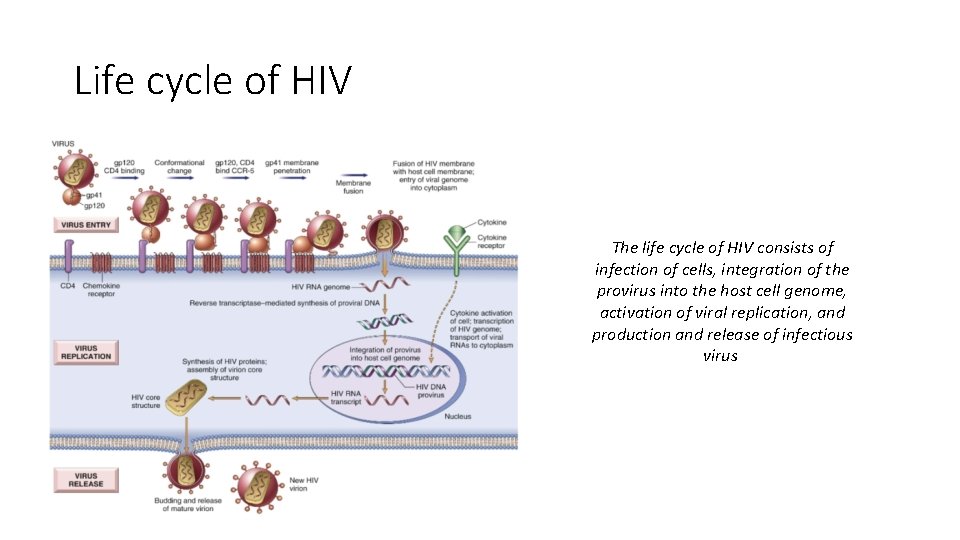
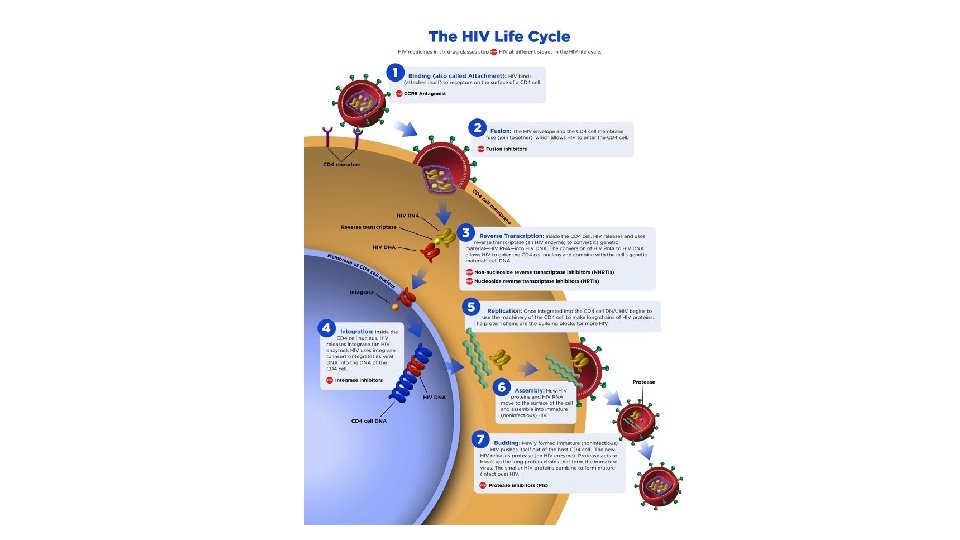
Life cycle of HIV The life cycle of HIV consists of infection of cells, integration of the provirus into the host cell genome, activation of viral replication, and production and release of infectious virus
Infection of cells • HIV infects cells by using the CD 4 molecule as receptor and various chemokine receptors as coreceptors. The requirement for CD 4 binding explains the selective tropism of the virus for CD 4+ T cells and other CD 4+ cells, particularly monocytes/macrophages and dendritic cells. • Binding to CD 4 is not sufficient for infection, however. HIV gp 120 must also bind to other cell surface molecules (coreceptors) for entry into the cell. Chemokine receptors, particularly CCR 5 and CXCR 4, serve this role. HIV isolates can be distinguished by their use of these receptors: R 5 strains use CCR 5, X 4 strains use CXCR 4, and some strains (R 5 X 4) are dual-tropic • The HIV envelope contains two glycoproteins, surface gp 120 noncovalently attached to a transmembrane protein, gp 41. The initial step in infection is the binding of the gp 120 envelope glycoprotein to CD 4 molecules, which leads to a conformational change that results in the formation of a new recognition site on gp 120 for the coreceptors CCR 5 or CXCR 4. • Binding to the coreceptors induces conformational changes in gp 41 that result in the exposure of a hydrophobic region called the fusion peptide at the tip of gp 41. This peptide inserts into the cell membrane of the target cells (e. g. , T cells or macrophages), leading to fusion of the virus with the host cell. • After fusion the virus core containing the HIV genome enters the cytoplasm of the cell.
Virus replication • Once internalized, the RNA genome of the virus undergoes reverse transcription, leading to the synthesis of double-stranded complementary DNA (c. DNA; proviral DNA) • In quiescent T cells, HIV c. DNA may remain in the cytoplasm in a linear episomal form. In dividing T cells, the c. DNA circularizes, enters the nucleus, and is then integrated into the host genome. After this integration, the provirus may be silent for months or years, a form of latent infection. Alternatively, proviral DNA may be transcribed, with the formation of complete viral particles that bud from the cell membrane. Such productive infection, when associated with extensive viral budding, leads to death of infected cells. • Completion of the viral life cycle in latently infected cells occurs only after cell activation, and in the case of most CD 4+ T cells virus activation results in cell lysis. • Activation of T cells by antigens or cytokines upregulates several transcription factors, including NF-κB, which stimulate transcription of genes encoding cytokines such as IL-2 and its receptor. The long-terminal-repeat sequences that flank the HIV genome also contain NF-κB–binding sites that can be triggered by the same transcription factors. • Imagine now a latently infected CD 4+ cell that encounters an environmental antigen. Induction of NF-κB in such a cell (a physiologic response) activates the transcription of HIV proviral DNA (a pathologic outcome) and leads ultimately to the production of virions and to cell lysis. Furthermore, TNF and other cytokines produced by activated macrophages also stimulate NF-κB activity and thus lead to production of HIV RNA. • HIV-infected people are at increased risk for recurrent exposure to other infections, which lead to increased lymphocyte activation and production of proinflammatory cytokines. These, in turn, stimulate more HIV production, loss of additional CD 4+ T cells, and more infection. Thus, it is easy to visualize how in individuals with AIDS a vicious cycle may be set up that culminates in inexorable destruction of the immune system.
Mechanism of T-Cell Depletion in HIV Infection • Loss of CD 4+ T cells is mainly because of infection of the cells and the direct cytopathic effects of the replicating virus. • In infected individuals, approximately 100 billion new viral particles are produced every day, and 1 to 2 billion CD 4+ T cells die each day. • Because the frequency of infected cells in the circulation is very low, for many years it was suspected that the immunodeficiency is out of proportion to the level of infection and cannot be attributed to death of infected cells. • In fact, many infected cells may be in mucosal and other peripheral lymphoid organs, and death of these cells is a major cause of the relentless, and eventually profound, cell loss. • Also, up to a point the immune system can replace the dying T cells, and hence the rate of T cell loss may appear deceptively low, but as the disease progresses, renewal of CD 4+ T cells cannot keep up with their loss. • Possible mechanisms by which the virus directly kills infected cells include increased plasma membrane permeability associated with budding of virus particles from the infected cells, and virus replication interfering with protein synthesis • Other mechanisms may contribute to T cell loss (inflammation and apoptosis of noninfected cells, etc. )
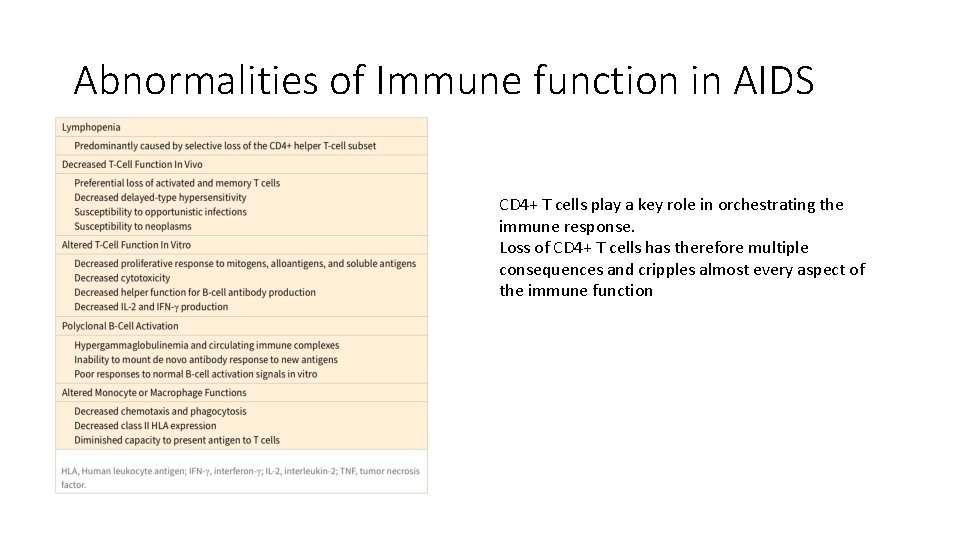
Abnormalities of Immune function in AIDS CD 4+ T cells play a key role in orchestrating the immune response. Loss of CD 4+ T cells has therefore multiple consequences and cripples almost every aspect of the immune function
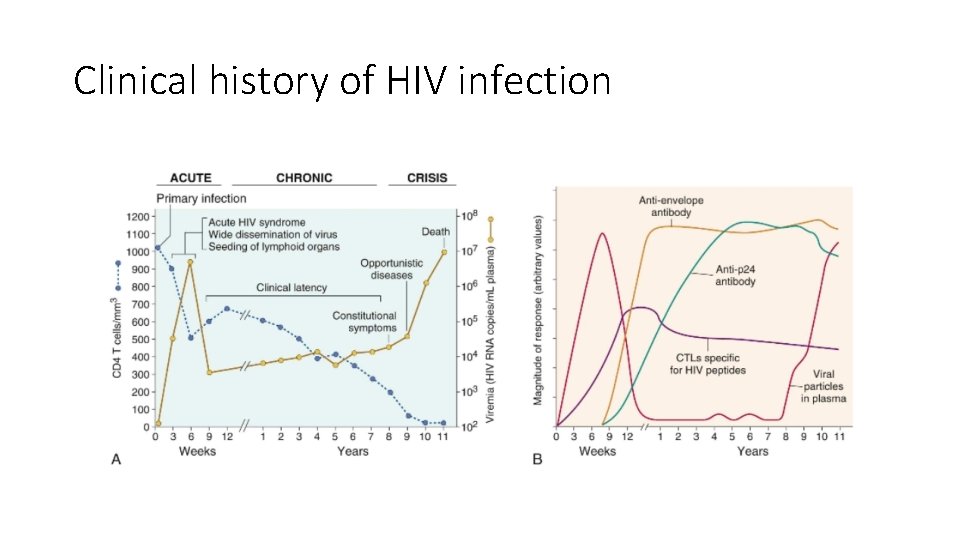
Clinical history of HIV infection
AIDS • The final phase is progression to AIDS, characterized by a breakdown of host defense, a dramatic increase in plasma virus, and severe, life-threatening clinical disease. Typically the patient presents with long-lasting fever (>1 month), fatigue, weight loss, and diarrhea. After a variable period, serious opportunistic infections, secondary neoplasms, or clinical neurologic disease (grouped under the rubric AIDS indicator diseases, discussed later) emerge, and the patient is said to have developed AIDS. • In the absence of treatment, most patients with HIV infection progress to AIDS after a chronic phase lasting from 7 to 10 years. Exceptions to this typical course are exemplified by rapid progressors and long-term nonprogressors. • In rapid progressors the middle, chronic phase is telescoped to 2 to 3 years after primary infection. • About 5% to 15% of infected individuals are long-term nonprogressors, defined as untreated HIV-1–infected individuals who remain asymptomatic for 10 years or more, with stable CD 4+ T-cell counts and low levels of plasma viremia (usually less than 500 viral RNA copies per milliliter). • Remarkably, about 1% of infected individuals have undetectable plasma virus (<50 -75 RNA copies/m. L); these have been called elite controllers. Individuals with such an uncommon clinical course have attracted great attention in the hope that studying them may shed light on host and viral factors that influence disease progression. Studies thus far indicate that this group is heterogeneous with respect to the variables that influence the course of the disease. In most cases, the viral isolates do not show qualitative abnormalities, suggesting that the course of the disease cannot be attributed to a “wimpy” virus. In all cases there is evidence of a vigorous anti-HIV immune response, but the immune correlates of protection are still unknown. Some of these individuals have high levels of HIV-specific CD 4+ and CD 8+ T-cell responses, and these levels are maintained over the course of infection. The inheritance of particular HLA alleles seems to correlate with resistance to disease progression, perhaps reflecting the ability to mount antiviral T cell responses. Further studies, it is hoped, will provide the answers to this and other questions critical to understanding disease progression.
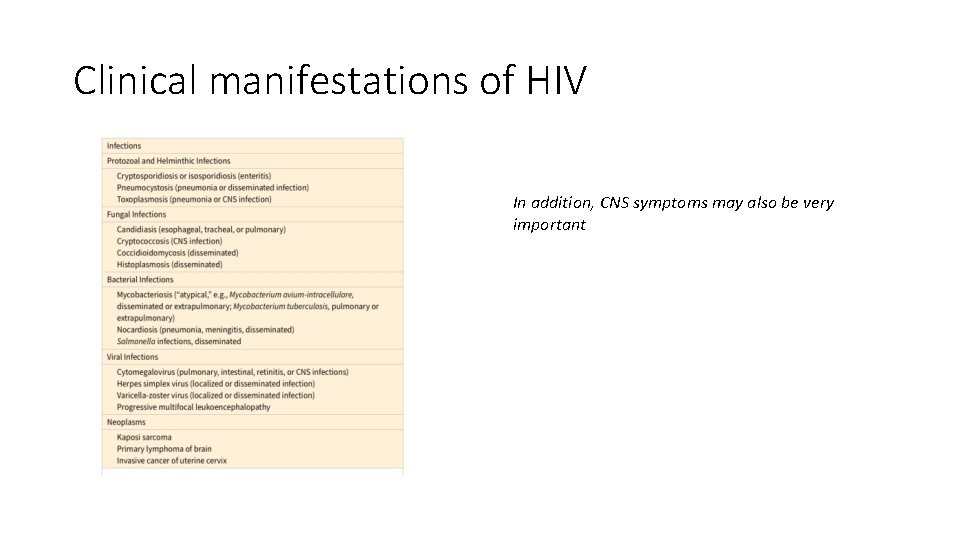
Clinical manifestations of HIV In addition, CNS symptoms may also be very important
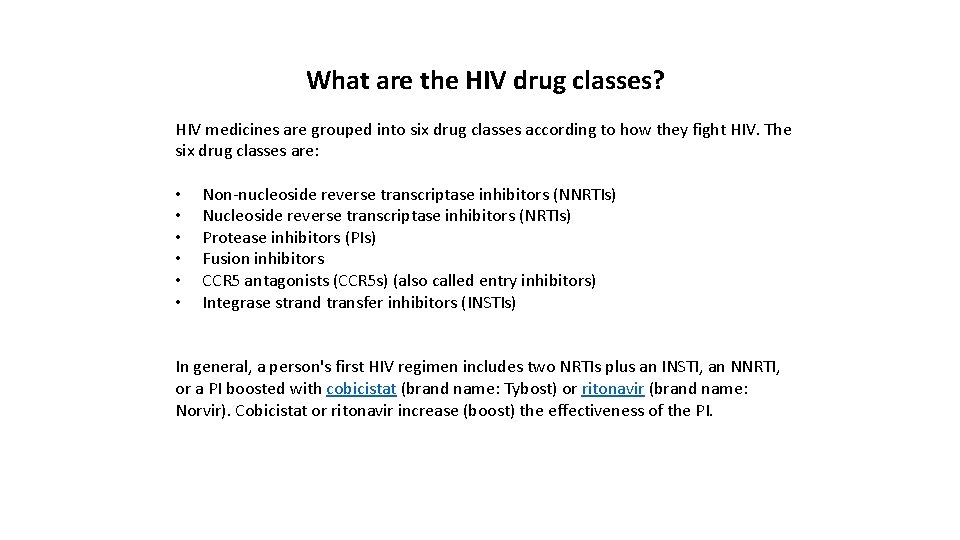
What are the HIV drug classes? HIV medicines are grouped into six drug classes according to how they fight HIV. The six drug classes are: • • • Non-nucleoside reverse transcriptase inhibitors (NNRTIs) Nucleoside reverse transcriptase inhibitors (NRTIs) Protease inhibitors (PIs) Fusion inhibitors CCR 5 antagonists (CCR 5 s) (also called entry inhibitors) Integrase strand transfer inhibitors (INSTIs) In general, a person's first HIV regimen includes two NRTIs plus an INSTI, an NNRTI, or a PI boosted with cobicistat (brand name: Tybost) or ritonavir (brand name: Norvir). Cobicistat or ritonavir increase (boost) the effectiveness of the PI.