
IMMUNIZATION EDWARD JENNER HISTORY 14 May 1796 Jenner







- Slides: 39
IMMUNIZATION
EDWARD JENNER
HISTORY • 14 May 1796 - Jenner inoculated James Phipps, an 8 yr old boy with cowpox lymph taken from Sara Nelms, a milkmaid. • Boy recovered after a brief illness
• Jenner inoculated pus taken from a small pox patient. • Boy showed no reaction. • Jenner recommended vaccination for prevention of smallpox
• Smallpox vaccination being a safe, simple, effective and inexpensive procedure, gained universal acceptance. • Main instrument for eradication for smallpox at global level. • Small pox has since been eradicated but Jenner lives for ever.
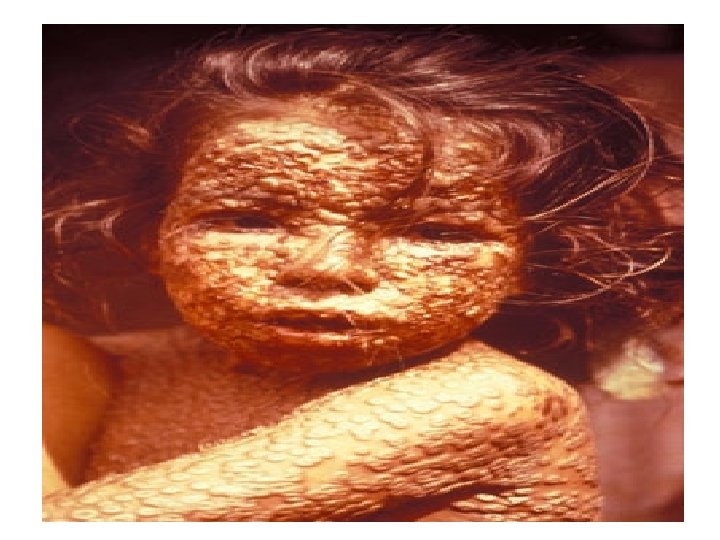
SMALL POX
• Small pox eradicated in 1977. • IMMUNIZATION MOST POWERFUL & COST EFFECTIVE TOOL.
• The first vaccine having been sent by jenner himself and used in bombay in 1802. • The pilot projects began during 1960. • WHO certified India to be free of smallpox in march 1977. • The global eradication of smallpox is arguably the greatest achievement of twentieth century medicine
VACCINE PREVENTABLE DISEASES
VPD • An infectious disease for which an effective preventive vaccine exists. • If a person dies from it, the death is considered a vaccine-preventable death.
TARGETED VPDS Diphtheria Hepatitis B Measles Pertusis Poliomyelitis Tetanus Tuberculosis
• DIPHTHERIA • PERTUSSIS • TETANUS • POLIO • TUBERCULOSIS • MEASLES
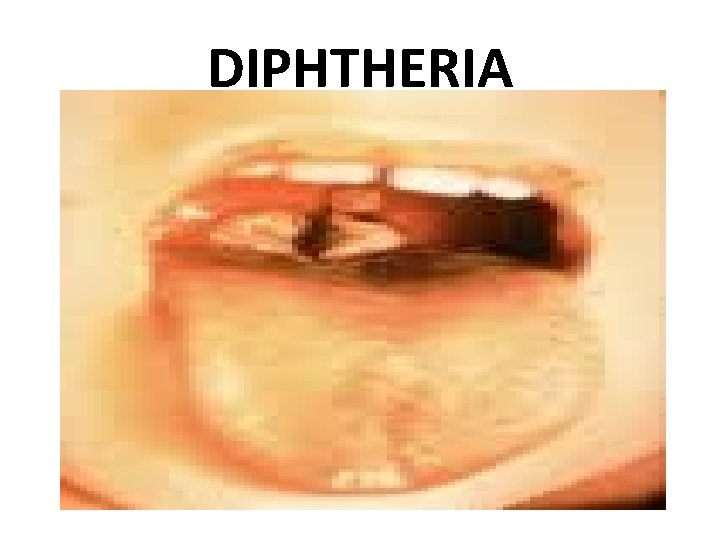
DIPHTHERIA
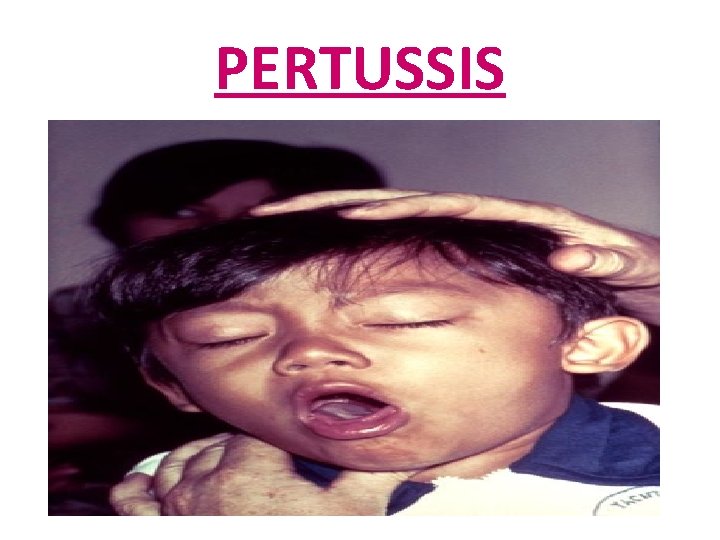
PERTUSSIS
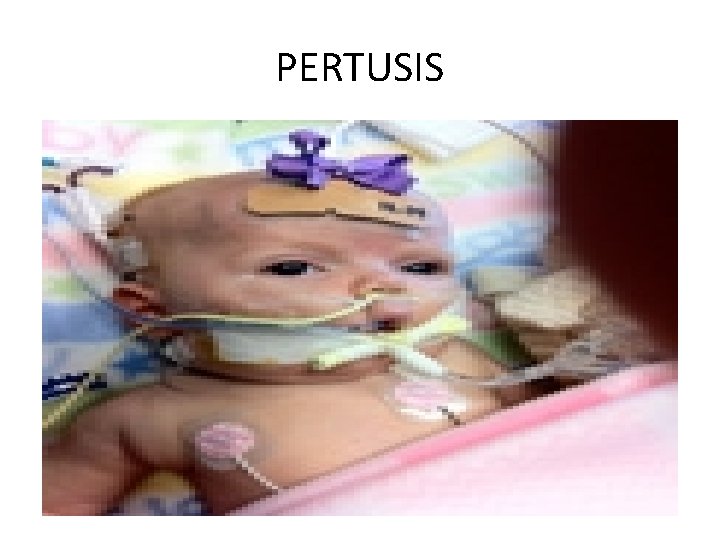
PERTUSIS
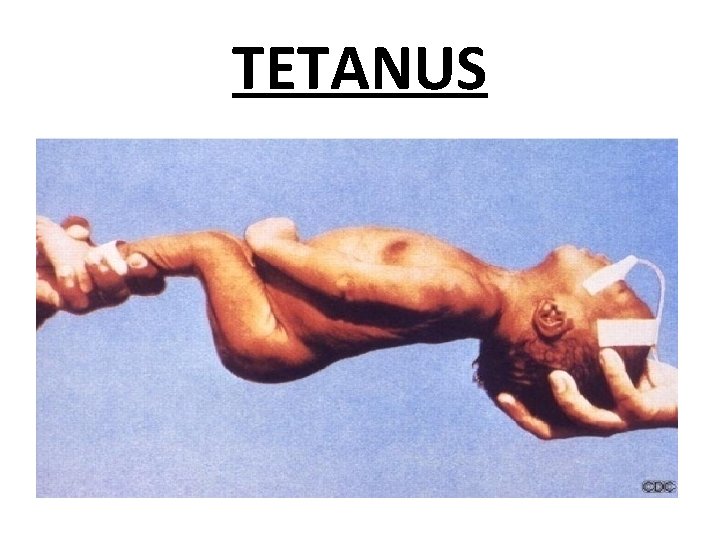
TETANUS
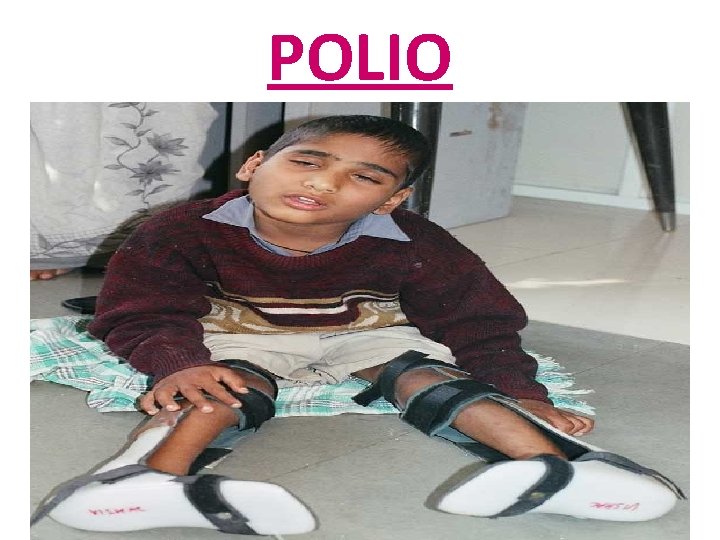
POLIO
TUBERCULOSIS
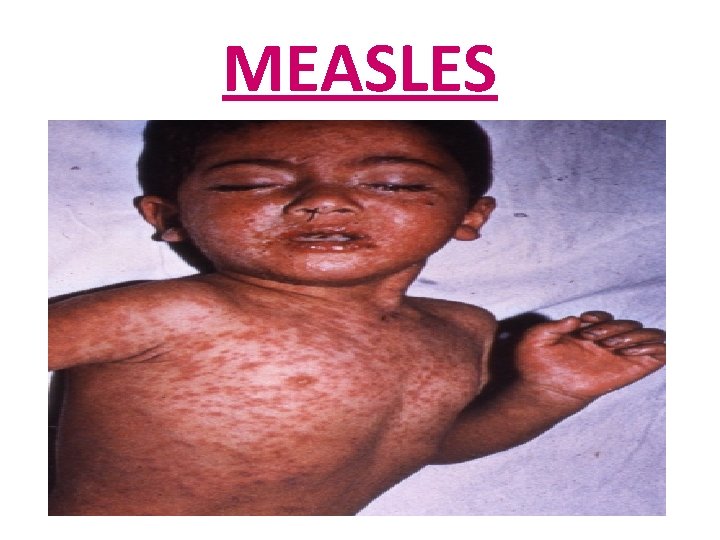
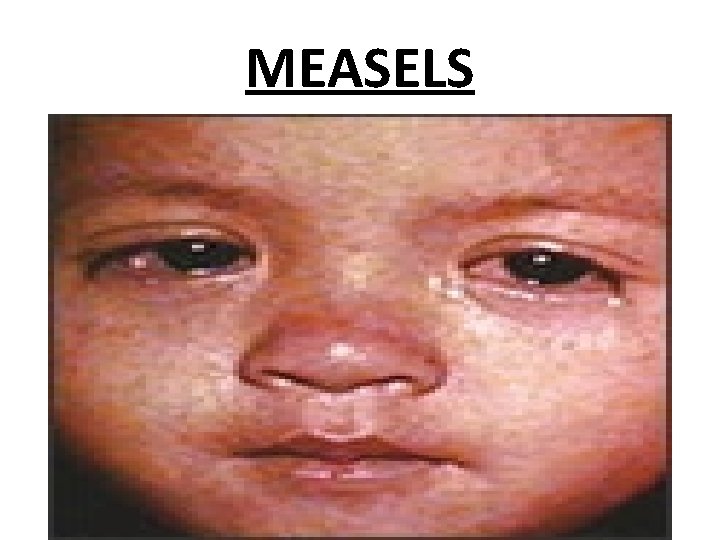
MEASLES
MEASELS
MUMPS
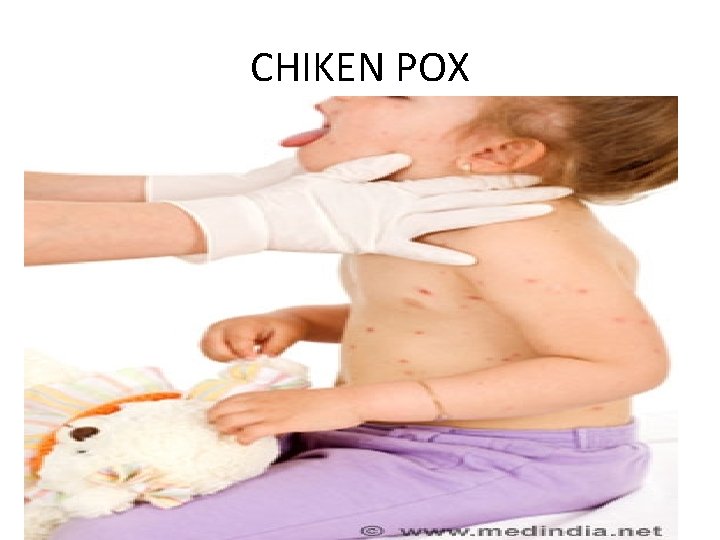
CHIKEN POX
FULLY IMMUNIZED CHILD • A child who received One dose of BCG, Three doses of DPT and OPV One dose of measles before one year of age. • This gives a child the best chance for survival
• 1985 : Universal Immunization Program (UIP) introduced; Expanded to entire country; Measles added. • 1990 : Vitamin-A supplementation. • 1992: Child Survival and Safe Motherhood Program.
• 1995: Polio National Immunization Days. • 1997: Reproductive and Child Health Program (RCH I). • 2005 : RCH-II and the National Rural Health Mission (NRHM).
EXPANDED PROGRAMME ON IMMUNIZATION 1974 • 1974 -
EXPANDED… • Adding more disease controlling antigens to vaccination schedules. • Extending coverage to all corners of a country. • Spreading services to reach the less privileged sectors of the society
1978 – PRIMARY HEALTH CONCEPT • ALMA – ATA declaration included immunization as one of the strategies for achieving HFA by 2000 AD. • WHO named this immunization programme as EXPANDED PROGRAMME ON IMMUNIZATION.
• 1985 – UNICEF re named it as “UNIVERSAL IMMUNIZATION PROGRAMME”. • There is no difference between both the prog.
• The goal was to achieve universal immunization by 1990.
• 3. The aim was to achieve 100 % coverage of pregnant women with 2 doses of TT. • & at least 85% coverage of children under one year (with 3 doses of DPT, OPV & one dose of BCG, One dose of MMR) by 1990
OBJECTIVES • To increase immunization coverage. • To improve quality of service. • To achieve self sufficiency in vaccine production
• To train health personnel. • To supply cold chain equipment and establish a good surveillance network. • To ensure district wise monitoring
CHANNEL OF SERVICE PROVISION • Immunization services are provided through the existing HCDS. (MCH centers, PHC, HSc, Hospitals, Dispensaries).
Though the target was 100% coverage no country in the world has reached the coverage figure. Therefore it can be interpreted as “NO CHILD SHOULD BE DENIED OF IMMUNIZATION. ”
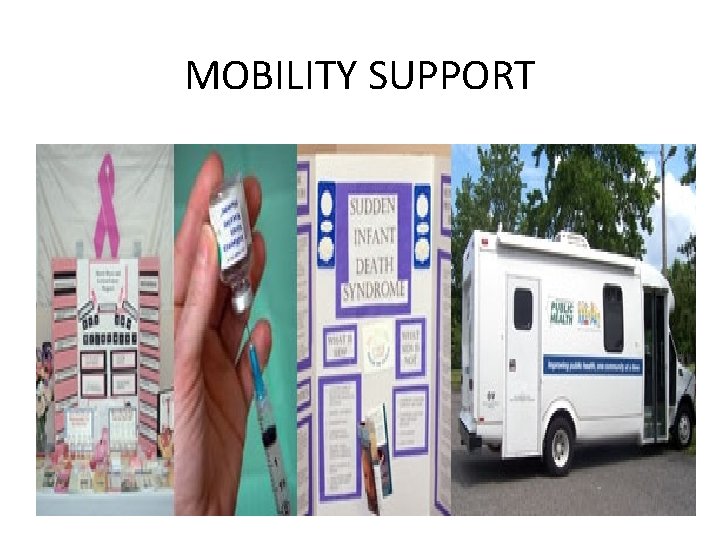
MOBILITY SUPPORT
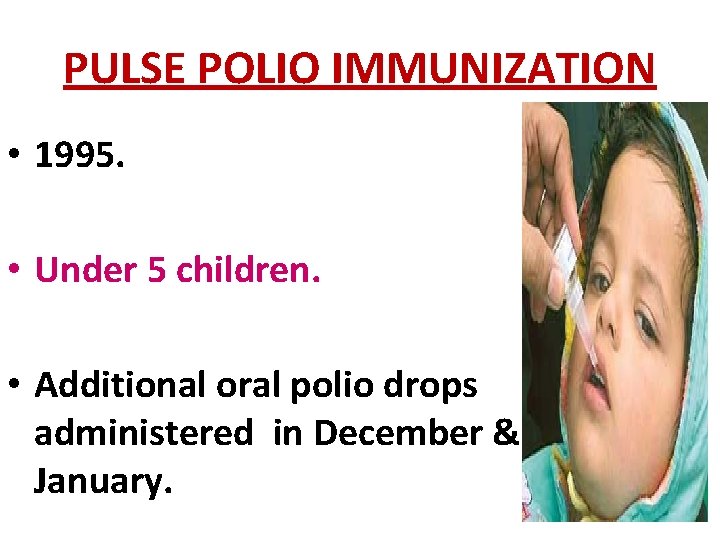
PULSE POLIO IMMUNIZATION • 1995. • Under 5 children. • Additional oral polio drops administered in December & January.