
Immunization and vaccination Prof Awatif Alam KSU Department

- Slides: 37
Immunization and vaccination Prof Awatif Alam KSU Department of Family & Community Medicine (October, 2013) Immunization & vaccination
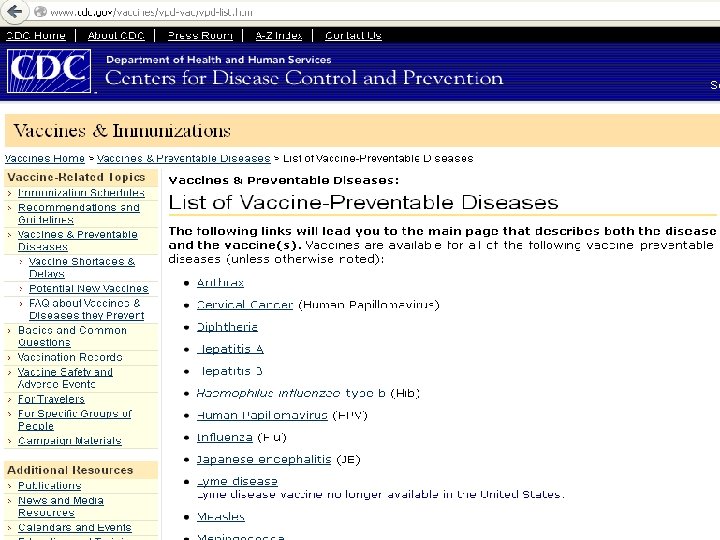
Objectives of the session By the end of the session the students should be able to; • Mention types of immunity • List important immunizable diseases • Describe the compulsory childhood vaccination schedule practiced in KSA • Understand the importance of maintenance of the Cold Chain Immunization 2
CONCEPTS • • Why immunize ? Types of immunity Classes of vaccines KSA Compulsory immunization schedule Female adult immunization Immunization for special occupations The Cold Chain Immunization 3
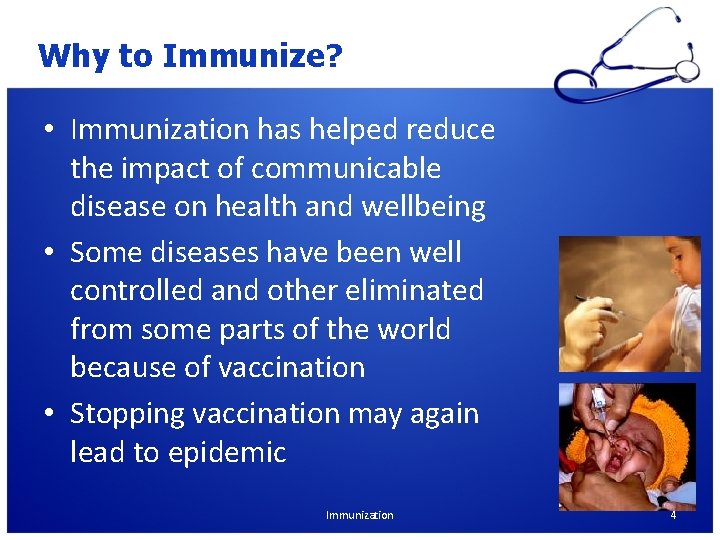
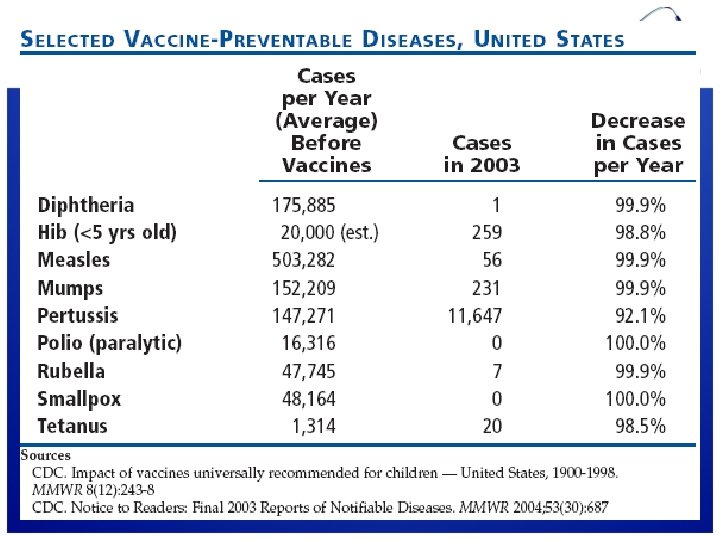
Why to Immunize? • Immunization has helped reduce the impact of communicable disease on health and wellbeing • Some diseases have been well controlled and other eliminated from some parts of the world because of vaccination • Stopping vaccination may again lead to epidemic Immunization 4
Immunization 5
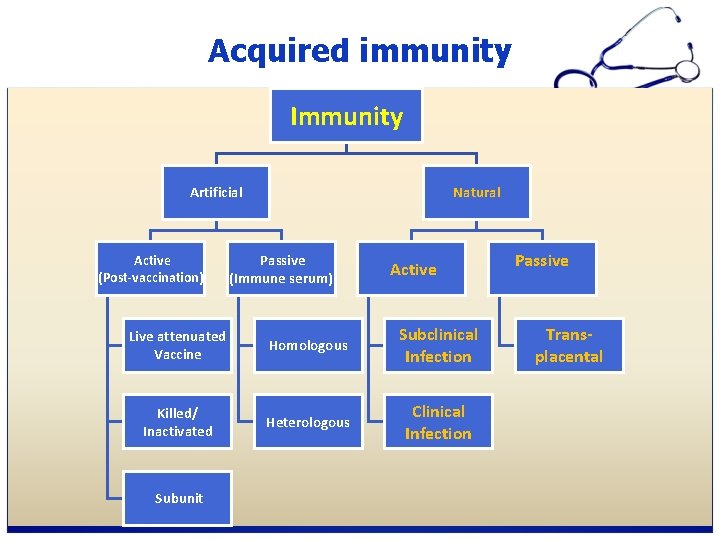
Acquired immunity Immunity Artificial Active (Post-vaccination) Natural Passive (Immune serum) Active Live attenuated Vaccine Homologous Subclinical Infection Killed/ Inactivated Heterologous Clinical Infection Subunit Passive Transplacental
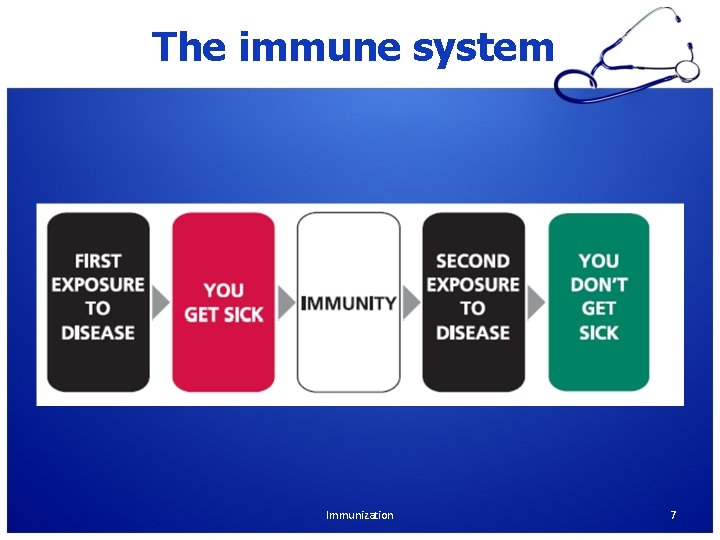
The immune system Immunization 7
Types of Immunity 2 Immunity The ability of the human body to tolerate the presence of material indigenous to the body (“self”), and to eliminate foreign (“non self”) material. Active Immunity • Protection of persons by their immune system • Usually life-long Passive immunity • Immuno globulins and immune sera • Temporary protection, • Wanes with time Immunization 8
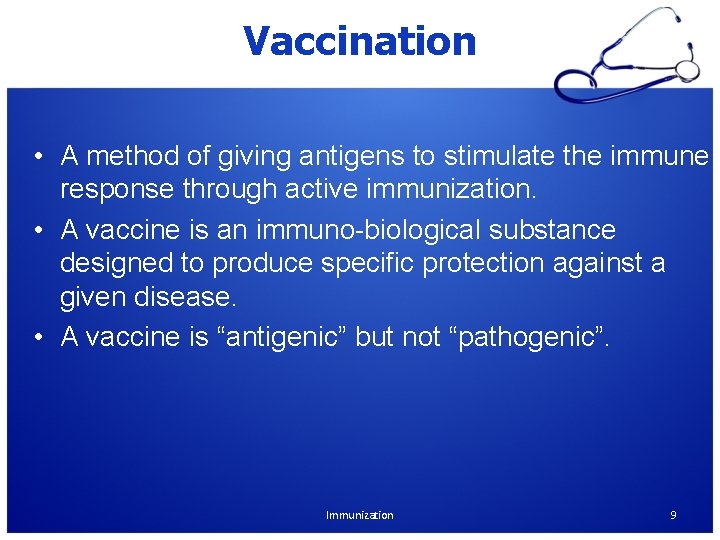
Vaccination • A method of giving antigens to stimulate the immune response through active immunization. • A vaccine is an immuno-biological substance designed to produce specific protection against a given disease. • A vaccine is “antigenic” but not “pathogenic”. Immunization 9
Antigens & Antibodies Antigen • A live or inactivated substance (e. g. , protein, polysaccharide) capable of producing an immune response Antibody • Protein molecules (immunoglobulins) produced by B lymphocytes to help eliminate an antigen Immunization 10
Immunotherapy – preformed Ab Immune serum globulin – (gamma-globulin) contains immunoglobulin extracted from the pooled blood of human donors. • Treatment of choice for preventing measles, hepatitis A and replacing Ab in the immune deficient. • Lasts 2 -3 months.
Immunotherapy – preformed Ab Specific immune globulin- prepared from convalescent patients in a hyperimmune state • Contains high titer of specific Ab. • Pertussis, Tetanus, Chickenpox, Hepatitis B. • Sera produced in horses are available for Diphtheria, Botulism, Spider and Snake bites. • Act immediately and can protect patients for whom no other useful medication exists.
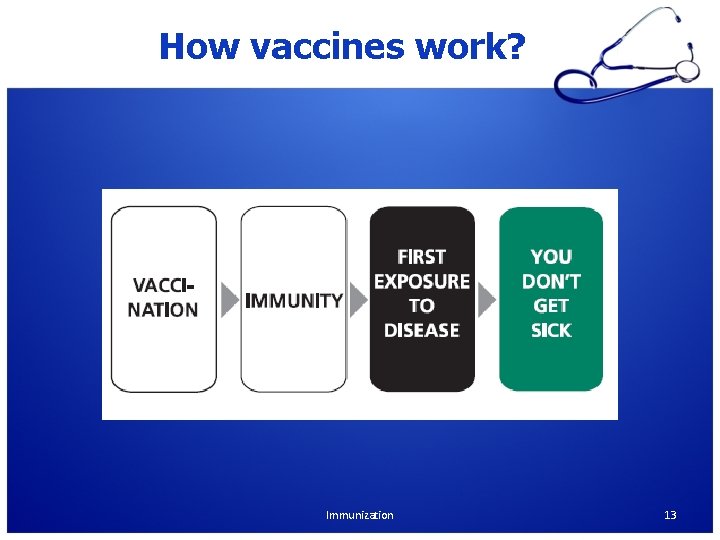
How vaccines work? Immunization 13
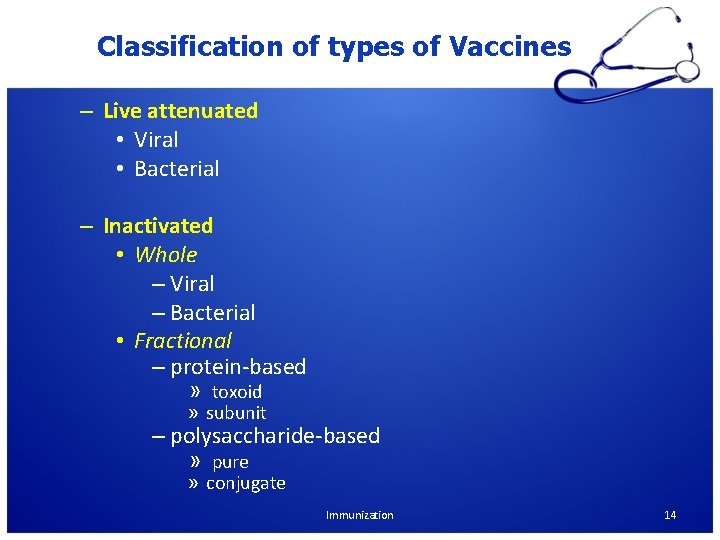
Classification of types of Vaccines – Live attenuated • Viral • Bacterial – Inactivated • Whole – Viral – Bacterial • Fractional – protein-based » toxoid » subunit – polysaccharide-based » pure » conjugate Immunization 14
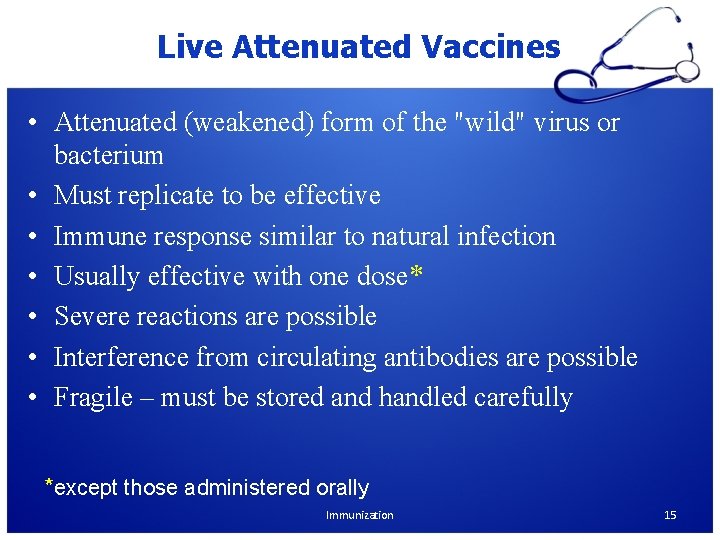
Live Attenuated Vaccines • Attenuated (weakened) form of the "wild" virus or bacterium • Must replicate to be effective • Immune response similar to natural infection • Usually effective with one dose* • Severe reactions are possible • Interference from circulating antibodies are possible • Fragile – must be stored and handled carefully *except those administered orally Immunization 15
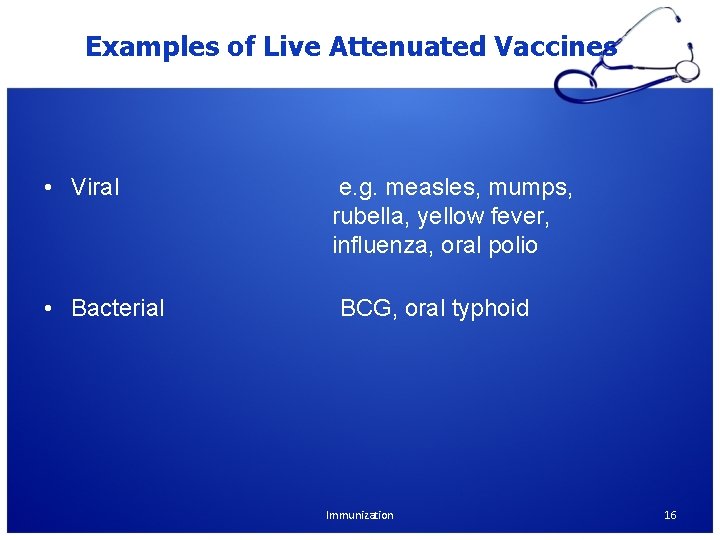
Examples of Live Attenuated Vaccines • Viral • Bacterial e. g. measles, mumps, rubella, yellow fever, influenza, oral polio BCG, oral typhoid Immunization 16
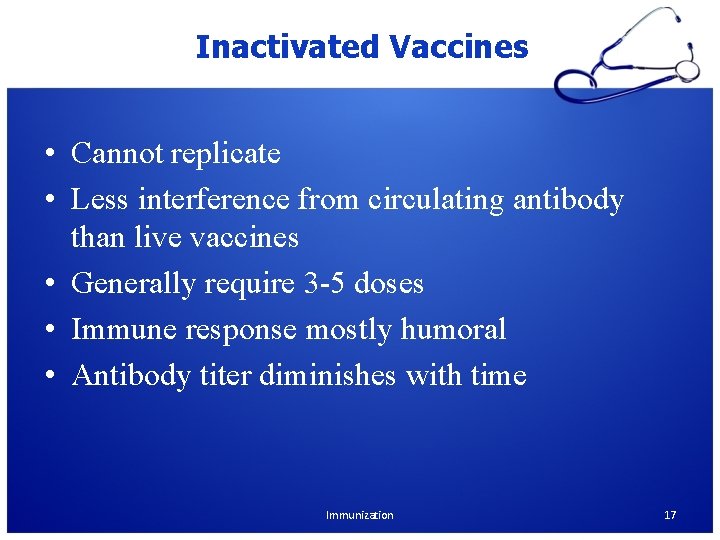
Inactivated Vaccines • Cannot replicate • Less interference from circulating antibody than live vaccines • Generally require 3 -5 doses • Immune response mostly humoral • Antibody titer diminishes with time Immunization 17
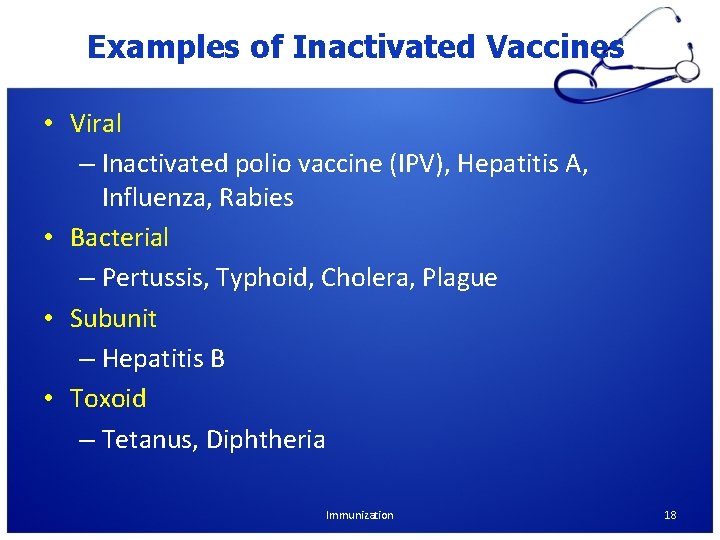
Examples of Inactivated Vaccines • Viral – Inactivated polio vaccine (IPV), Hepatitis A, Influenza, Rabies • Bacterial – Pertussis, Typhoid, Cholera, Plague • Subunit – Hepatitis B • Toxoid – Tetanus, Diphtheria Immunization 18
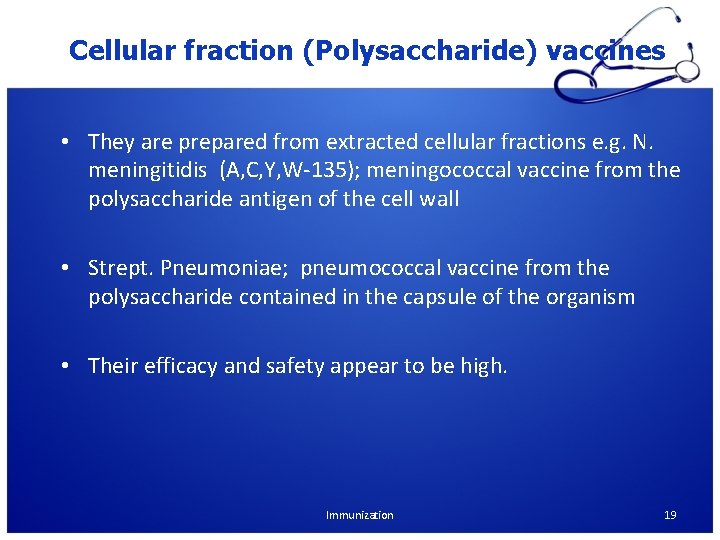
Cellular fraction (Polysaccharide) vaccines • They are prepared from extracted cellular fractions e. g. N. meningitidis (A, C, Y, W-135); meningococcal vaccine from the polysaccharide antigen of the cell wall • Strept. Pneumoniae; pneumococcal vaccine from the polysaccharide contained in the capsule of the organism • Their efficacy and safety appear to be high. Immunization 19
Conjugate vaccine • Haemophilus influenza B (Hib) vaccine; gives longterm protection from Haemophilus influenza type B the leading cause of meningitis in children under 5 years. Immunization 20
Surface antigen (recombinant) vaccines • It is prepared by cloning HBs. Ag gene in yeast cells where it is expressed. HBs. Ag produced is then used for vaccine preparations. • Their efficacy and safety also appear to be high. Immunization 21
Toxoids • Prepared by detoxifying the exotoxins of some bacteria rendering them antigenic but not pathogenic. • Adjuvant (e. g. alum precipitation) is used to increase the potency of vaccine. • The antibodies produced in the body neutralize the toxic part produced during infection rather than act upon the organism itself. • In general toxoids are highly efficacious and safe immunizing agents.
Immunization 23
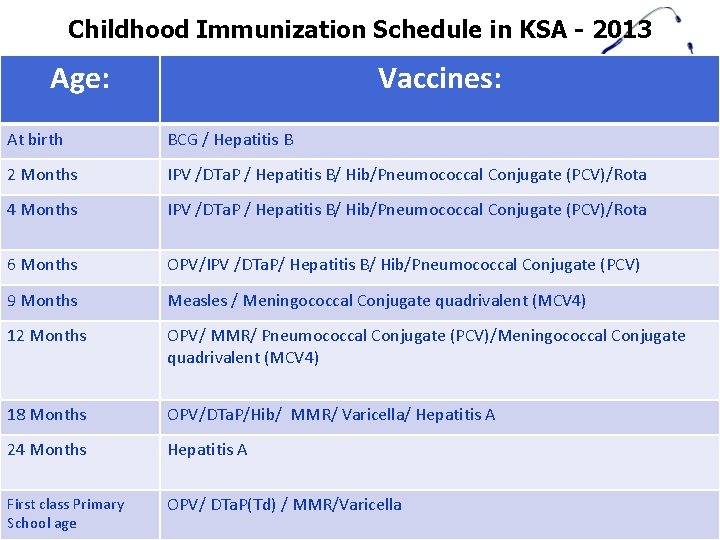
Childhood Immunization Schedule in KSA - 2013 Age: Vaccines: At birth BCG / Hepatitis B 2 Months IPV /DTa. P / Hepatitis B/ Hib/Pneumococcal Conjugate (PCV)/Rota 4 Months IPV /DTa. P / Hepatitis B/ Hib/Pneumococcal Conjugate (PCV)/Rota 6 Months OPV/IPV /DTa. P/ Hepatitis B/ Hib/Pneumococcal Conjugate (PCV) 9 Months Measles / Meningococcal Conjugate quadrivalent (MCV 4) 12 Months OPV/ MMR/ Pneumococcal Conjugate (PCV)/Meningococcal Conjugate quadrivalent (MCV 4) 18 Months OPV/DTa. P/Hib/ MMR/ Varicella/ Hepatitis A 24 Months Hepatitis A First class Primary School age OPV/ DTa. P(Td) / MMR/Varicella
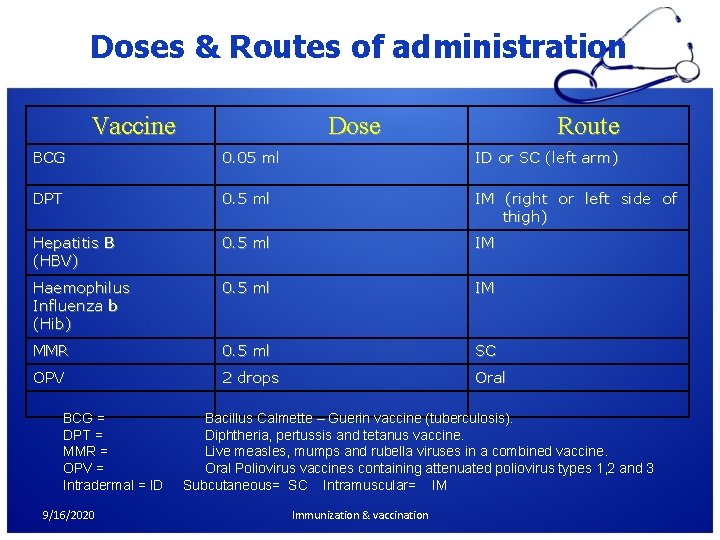
Doses & Routes of administration Vaccine Dose Route BCG 0. 05 ml ID or SC (left arm) DPT 0. 5 ml IM (right or left side of thigh) Hepatitis B (HBV) 0. 5 ml IM Haemophilus Influenza b (Hib) 0. 5 ml IM MMR 0. 5 ml SC OPV 2 drops Oral BCG = DPT = MMR = OPV = Intradermal = ID 9/16/2020 Bacillus Calmette – Guerin vaccine (tuberculosis). Diphtheria, pertussis and tetanus vaccine. Live measles, mumps and rubella viruses in a combined vaccine. Oral Poliovirus vaccines containing attenuated poliovirus types 1, 2 and 3 Subcutaneous= SC Intramuscular= IM Immunization & vaccination
Factors influencing recommendations concerning the age of vaccination • Age-specific risks of diseases • Age-specific risks of complications • Ability of persons of a given age to respond to the vaccine(s) • Potential interference with the immune response by passively transferred maternal antibody (e. g. , measles vaccine) Immunization 26
Active immunization for adult females • MMR vaccine is given in adolescence before or after marriage, but not during pregnancy and has to be at least 3 months before conception, • Tetanus toxoid in indicated during pregnancy to prevent tetanus neonatorum in the newborn, or puerperal sepsis of the mother. • The first dose is given on the third month and after 1 month. The third dose in the second pregnancy, and the fourth on the third pregnancy with a maximum of 5 doses. • If 10 years elapse, and then pregnancy occurs, the doses are given from the start. • Live attenuated vaccines are contraindicated during pregnancy. Immunization 27
Vaccination for special occupations • Health care workers: hepatitis B, influenza, MMR, polio • Public safety personnel (police, fire fighters) and staff of institutions for the developmentally disabled: hepatitis B, influenza • Vetenerarians and animal handlers: rabies, plague and anthrax • Sewage workers: DT, hepatitis A, polio, TAB (Typhoid vaccine) • Food handlers: TAB • Military troops and camp dwellers: pneumococcal, meningococcal, influenza, BCG (for non reactors), tetanus Immunization 28
Invalid Contraindications to Vaccination • Mild illness • Mild/moderate local reaction or fever following prior dose • Antibiotic therapy • Disease exposure or convalescence • Pregnancy in the household • Premature birth • Breast feeding • Allergies to products not in vaccine • Family history not related to immuno-suppression Immunization 29
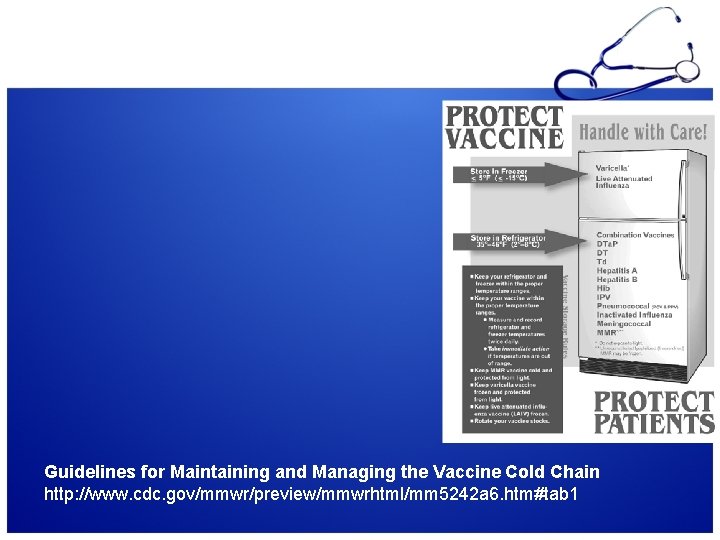
Vaccine potency All vaccines are thermo-sensitive and need to be properly stored and distributed within an efficient cold chain system Immunization 30
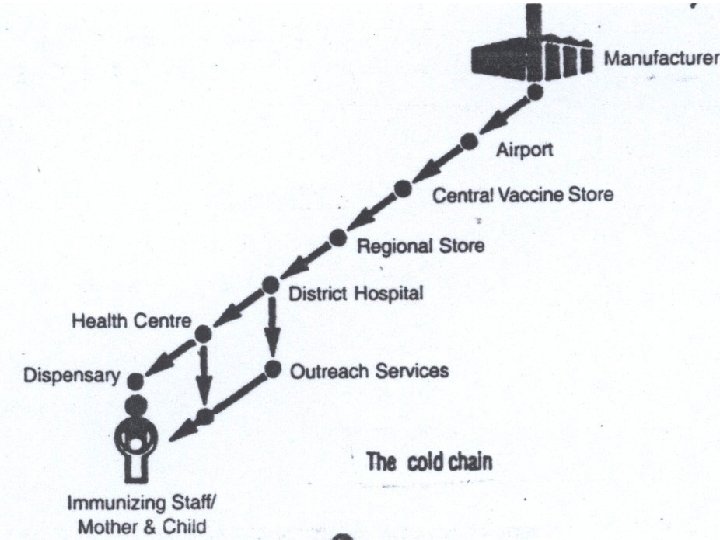
The cold chain system • Refers to the system (personnel, equipment & procedure) used for keeping and distributing vaccines in good condition. • When implemented properly, can help overcome the challenge of the delivery of quality vaccines. • Can enhance the on-going quality, safety and efficacy of an immunization programme. Immunization 31
Immunization 32
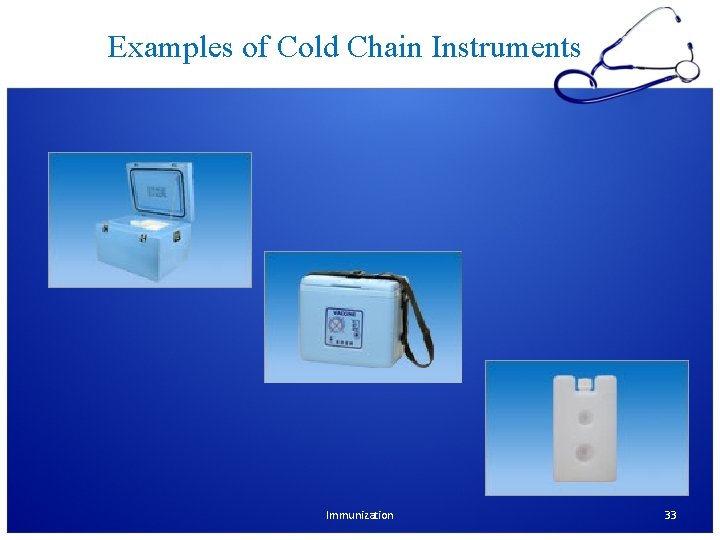
Examples of Cold Chain Instruments Immunization 33
Guidelines for Maintaining and Managing the Vaccine Cold Chain http: //www. cdc. gov/mmwr/preview/mmwrhtml/mm 5242 a 6. htm#tab 1
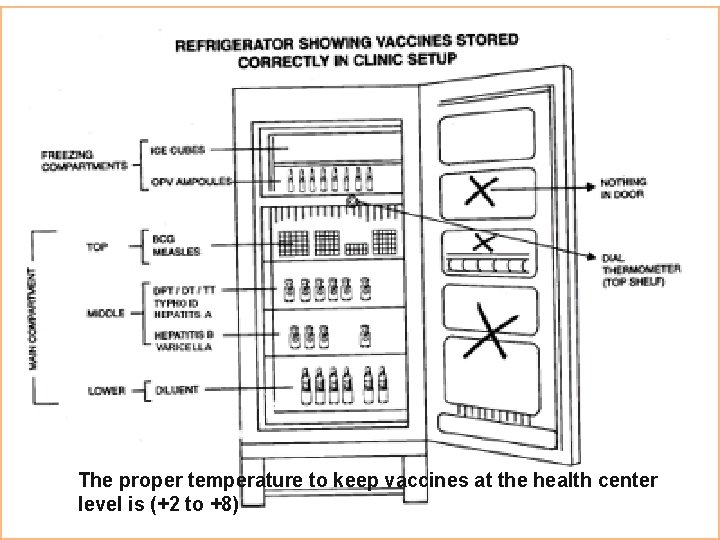
The proper temperature to keep vaccines at the health center level is (+2 to +8) Immunization 35
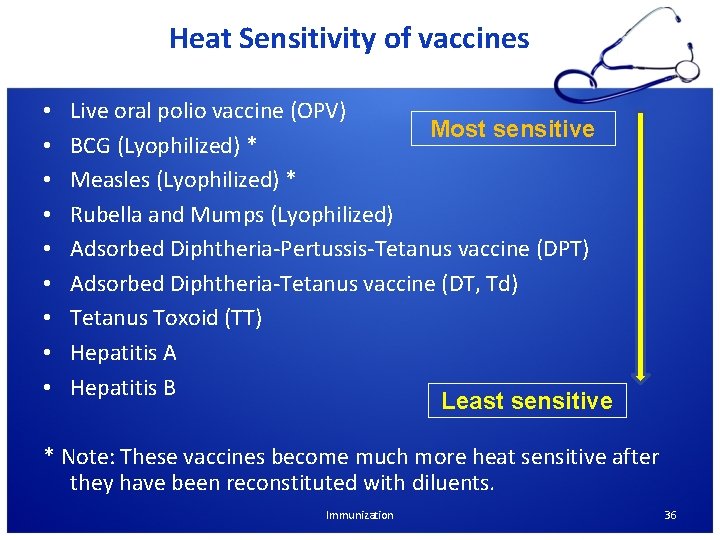
Heat Sensitivity of vaccines • • • Live oral polio vaccine (OPV) Most sensitive BCG (Lyophilized) * Measles (Lyophilized) * Rubella and Mumps (Lyophilized) Adsorbed Diphtheria-Pertussis-Tetanus vaccine (DPT) Adsorbed Diphtheria-Tetanus vaccine (DT, Td) Tetanus Toxoid (TT) Hepatitis A Hepatitis B Least sensitive * Note: These vaccines become much more heat sensitive after they have been reconstituted with diluents. Immunization 36
Conclusions about Immunizations 1. 2. 3. 4. 5. 6. 7. 8. Why to immunize Diseases that childhood vaccines prevent Number of immunization doses /schedule in the country Like any medicine, there may be minor side effects It's extremely rare, but vaccines can cause serious reactions -- weigh the risks! What to do in case of a serious reaction Why you should not wait to vaccinate Be sure to track the shots via a health record