
IMMUNITY IMMUNITY The bodys ability to resist bacterial
IMMUNITY
IMMUNITY ® The body’s ability to resist bacterial invasion and disease. ® Two general types: 1. Natural 2. Acquired

NATURAL IMMUNITY Have this at birth – is inherited and permanent Includes: Unbroken skin Mucus and tears Blood phagocytes Local inflammation
NATURAL OR INBORN IMMUNITY Species immuninity – certain diseases that affect animals do not affect humans and certain diseases that affect humand do not affect animal. ® Animals do not get measles, scarlet fever, or influenza. We do not get distemper or hog cholera ®

NATURAL OR INBORN IMMUNITY ® Population or Racial immunity – some groups of people have greater inborn immunity to certain diseases than others. ® American blacks were more resistant to polio than whites. ® Measles is a mild disease in Europe but can become fatal among people of the Pacific Islands.
ACQUIRED IMMUNITY ® Body’s reaction to invaders ® Develops ® May after birth. be active or passive.
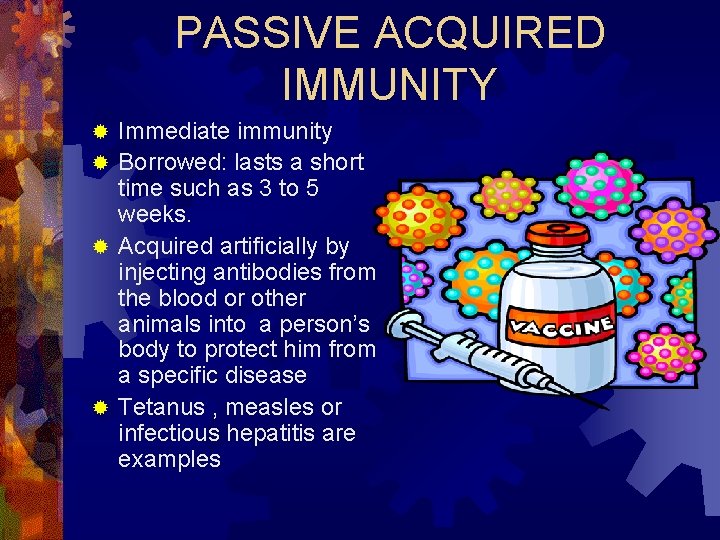
PASSIVE ACQUIRED IMMUNITY Immediate immunity ® Borrowed: lasts a short time such as 3 to 5 weeks. ® Acquired artificially by injecting antibodies from the blood or other animals into a person’s body to protect him from a specific disease ® Tetanus , measles or infectious hepatitis are examples ®
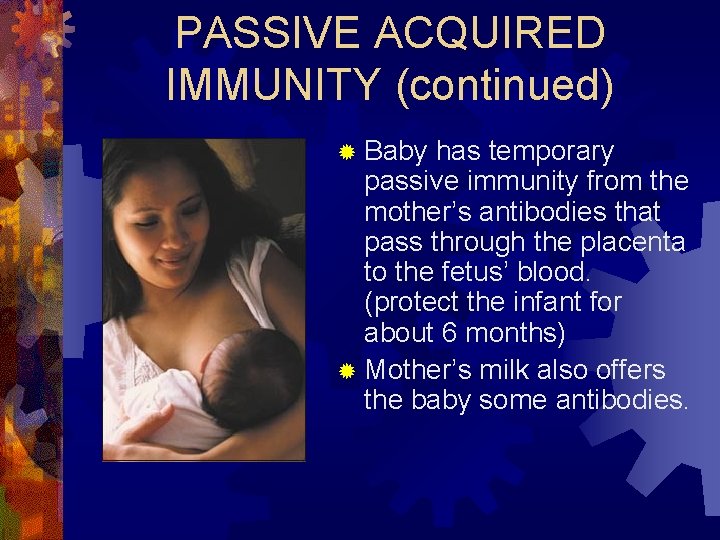
PASSIVE ACQUIRED IMMUNITY (continued) ® Baby has temporary passive immunity from the mother’s antibodies that pass through the placenta to the fetus’ blood. (protect the infant for about 6 months) ® Mother’s milk also offers the baby some antibodies.
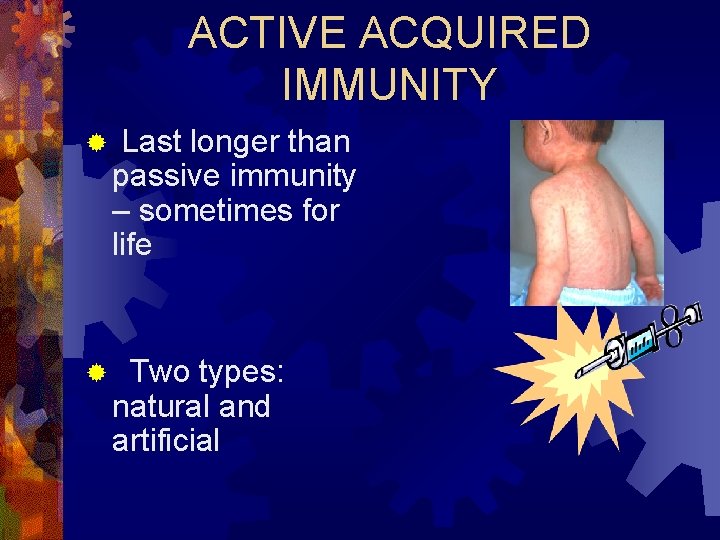
ACTIVE ACQUIRED IMMUNITY ® Last longer than passive immunity – sometimes for life ® Two types: natural and artificial
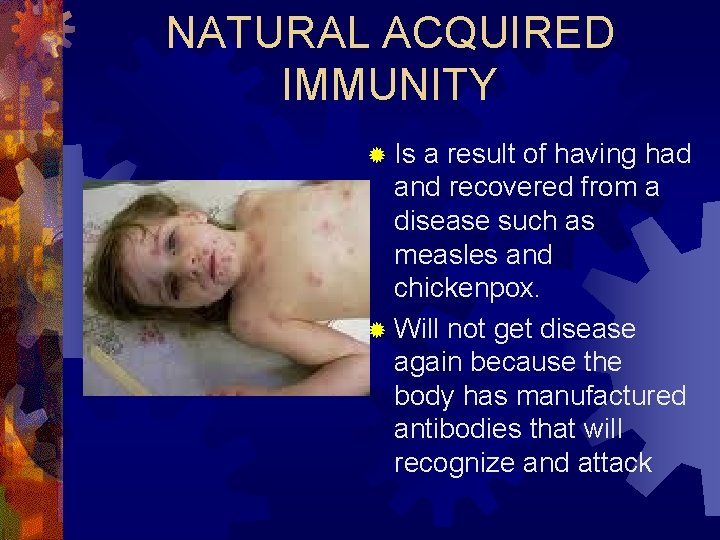
NATURAL ACQUIRED IMMUNITY ® Is a result of having had and recovered from a disease such as measles and chickenpox. ® Will not get disease again because the body has manufactured antibodies that will recognize and attack
ARTIFICAL ACQUIRED IMMUNITY ® Exposure to the causative agent is deliberate ® Comes from getting a vaccination or immunization. ® Artificial measures are taken to cause a person’s tissues to manufacture antibodies
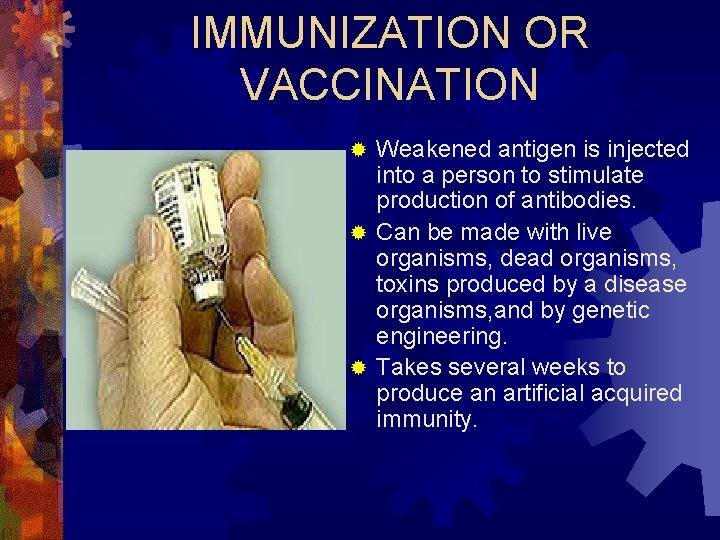
IMMUNIZATION OR VACCINATION Weakened antigen is injected into a person to stimulate production of antibodies. ® Can be made with live organisms, dead organisms, toxins produced by a disease organisms, and by genetic engineering. ® Takes several weeks to produce an artificial acquired immunity. ®
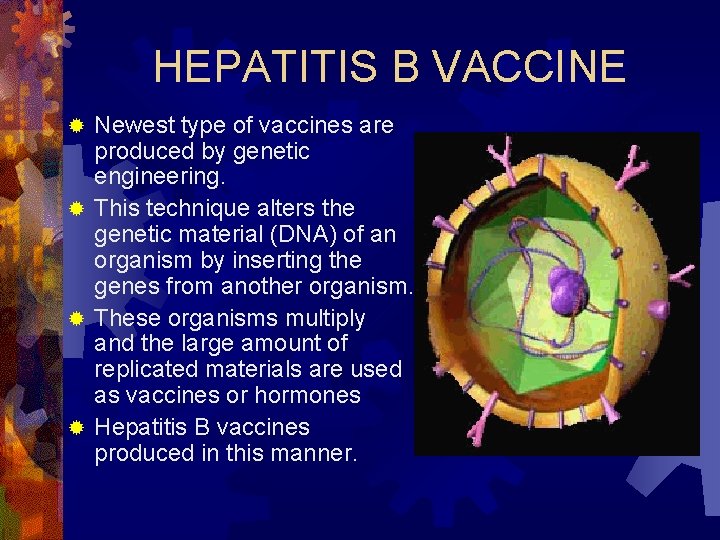
HEPATITIS B VACCINE Newest type of vaccines are produced by genetic engineering. ® This technique alters the genetic material (DNA) of an organism by inserting the genes from another organism. ® These organisms multiply and the large amount of replicated materials are used as vaccines or hormones ® Hepatitis B vaccines produced in this manner. ®
VACCINES IN THE NEWS New form of whooping cough or pertussis vaccine is from pertussis toxoid and causes fewer side effects than the old vaccine that contained heat-killed organisms. ® Vaccine against chicken pox (varicella) has been available since 1995. ® Rabies vaccine is the exception to the rule that vaccines should be taken before the invasion of the disease because the disease develops so slowly! ® A new vaccine is produced each year for the strains of influenza expected to hit the populations that year. ®

THE END!!!
- Slides: 15