
Immunity I I Introduction Microorganisms like viruses and


- Slides: 16
Immunity I I. Introduction – Microorganisms like viruses and bacteria are present everywhere in the environment (food, air, and water). Those microorganisms that cause disease are called pathogens. Your body has three lines of defenses against pathogens.
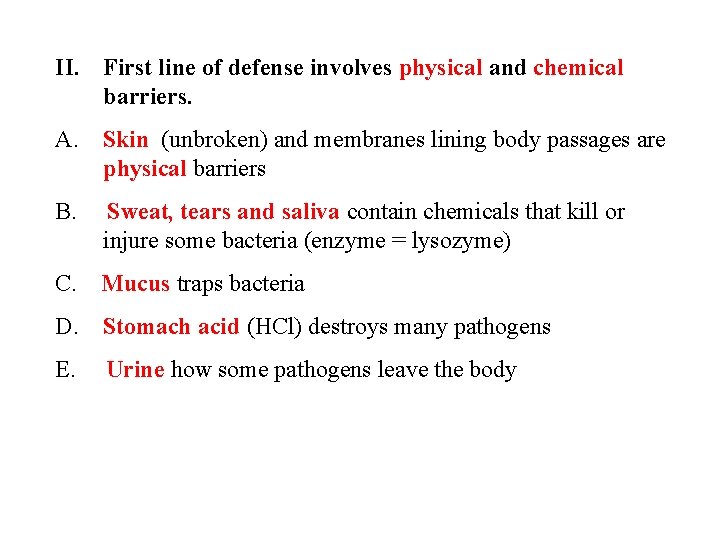
II. First line of defense involves physical and chemical barriers. A. Skin (unbroken) and membranes lining body passages are physical barriers B. Sweat, tears and saliva contain chemicals that kill or injure some bacteria (enzyme = lysozyme) C. Mucus traps bacteria D. Stomach acid (HCl) destroys many pathogens E. Urine how some pathogens leave the body
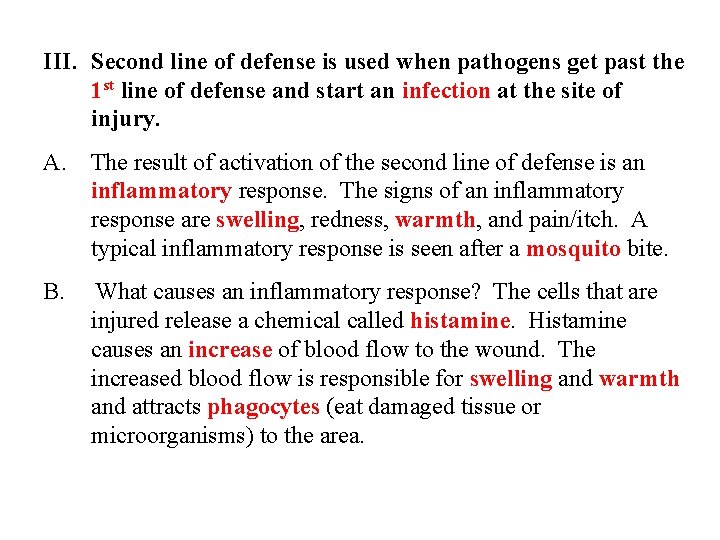
III. Second line of defense is used when pathogens get past the 1 st line of defense and start an infection at the site of injury. A. The result of activation of the second line of defense is an inflammatory response. The signs of an inflammatory response are swelling, redness, warmth, and pain/itch. A typical inflammatory response is seen after a mosquito bite. B. What causes an inflammatory response? The cells that are injured release a chemical called histamine. Histamine causes an increase of blood flow to the wound. The increased blood flow is responsible for swelling and warmth and attracts phagocytes (eat damaged tissue or microorganisms) to the area.
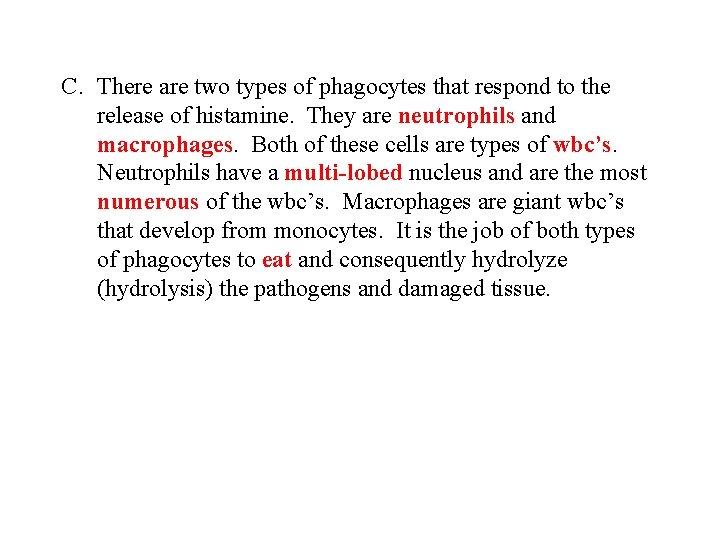
C. There are two types of phagocytes that respond to the release of histamine. They are neutrophils and macrophages. Both of these cells are types of wbc’s. Neutrophils have a multi-lobed nucleus and are the most numerous of the wbc’s. Macrophages are giant wbc’s that develop from monocytes. It is the job of both types of phagocytes to eat and consequently hydrolyze (hydrolysis) the pathogens and damaged tissue.
IV. Third line of defense is used when an inflammatory response doesn’t succeed. The immune system is the third and final defense against foreign material. A. The immune system uses antibodies and special cells that bind and inactivate pathogens. Unlike the first and second line of defense, the immune system produces antibodies or cells that are specific to that pathogen. Antibody production allows the immune system to “remember” each pathogen that ever entered the body.
The Immune System I. The immune system includes many organs as well as tissue and cell types. Organs include: lymph nodes, tonsils, thymus, and spleen. Tissue and cell types include the bone marrow and wbc’s, phagocytes and lymphocytes. A. The immune system’s job is to provide immunity. Immunity is the ability of a body to fight infection through the production of antibodies or cells that inactivate foreign substances or cells. 1. An immune response is the production of antibodies and specialized cells that bind to and inactivate foreign substances. 2. An antigen is any substance that causes an immune response.
II. Lymphocytes A. Lymphocytes are the cells of the immune system that recognize specific antigens and either produce antibodies or kill foreign cells. B. There are 2 types of lymphocytes. 1. B lymphocytes or B-cells - These cells are produced in the bone marrow and remain there until mature. 2. T lymphocytes or T-cells - These cells are produced in the bone marrow and mature in the thymus. C. Both B-cells and T-cells are capable of recognizing different antigens.
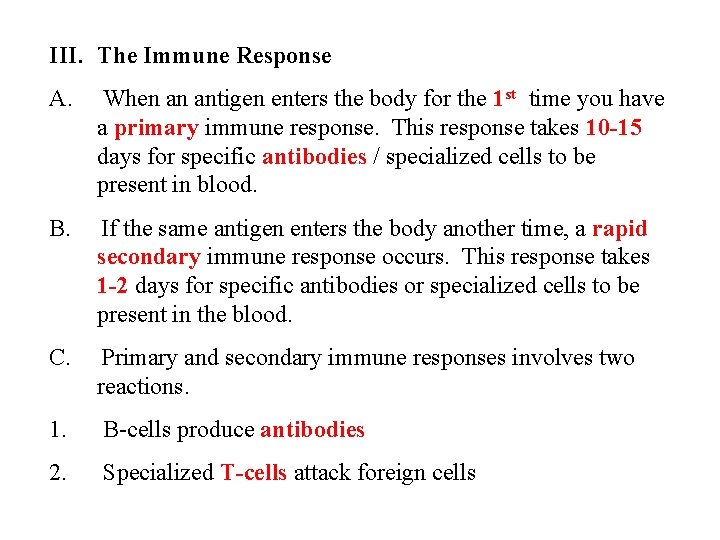
III. The Immune Response A. When an antigen enters the body for the 1 st time you have a primary immune response. This response takes 10 -15 days for specific antibodies / specialized cells to be present in blood. B. If the same antigen enters the body another time, a rapid secondary immune response occurs. This response takes 1 -2 days for specific antibodies or specialized cells to be present in the blood. C. Primary and secondary immune responses involves two reactions. 1. B-cells produce antibodies 2. Specialized T-cells attack foreign cells
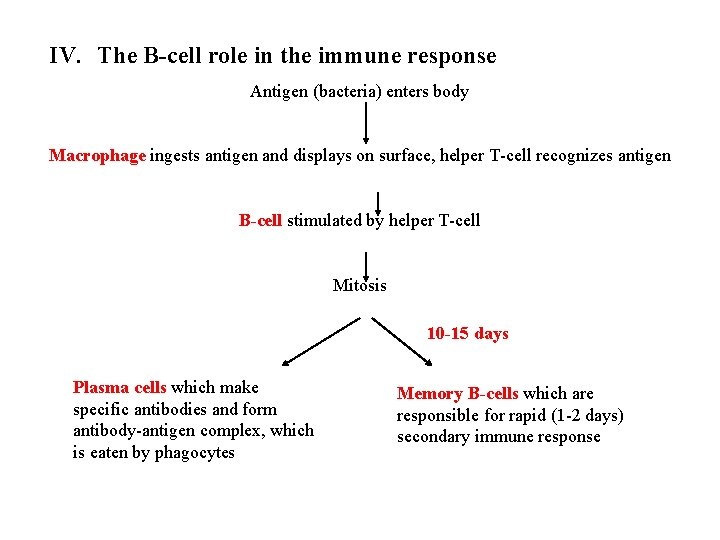
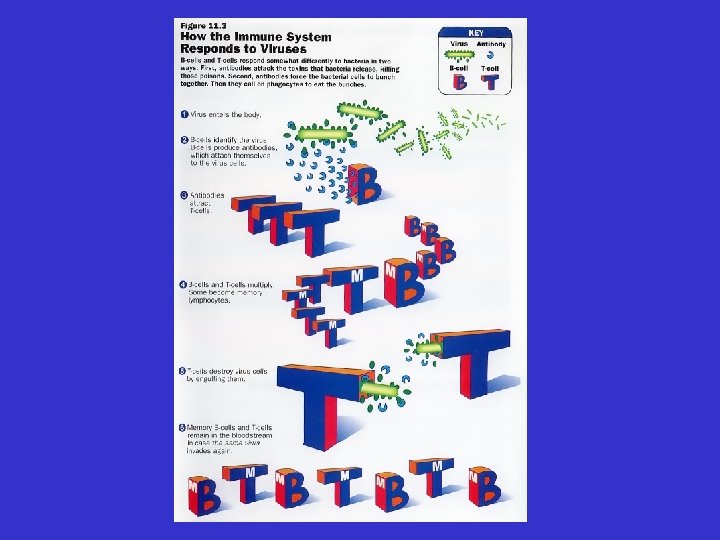
IV. The B-cell role in the immune response Antigen (bacteria) enters body Macrophage ingests antigen and displays on surface, helper T-cell recognizes antigen B-cell stimulated by helper T-cell Mitosis 10 -15 days Plasma cells which make specific antibodies and form antibody-antigen complex, which is eaten by phagocytes Memory B-cells which are responsible for rapid (1 -2 days) secondary immune response
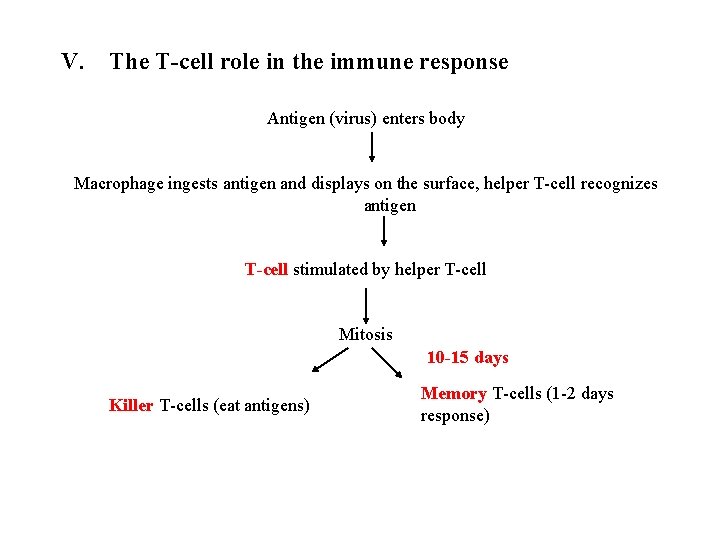
V. The T-cell role in the immune response Antigen (virus) enters body Macrophage ingests antigen and displays on the surface, helper T-cell recognizes antigen T-cell stimulated by helper T-cell Mitosis 10 -15 days Killer T-cells (eat antigens) Memory T-cells (1 -2 days response)
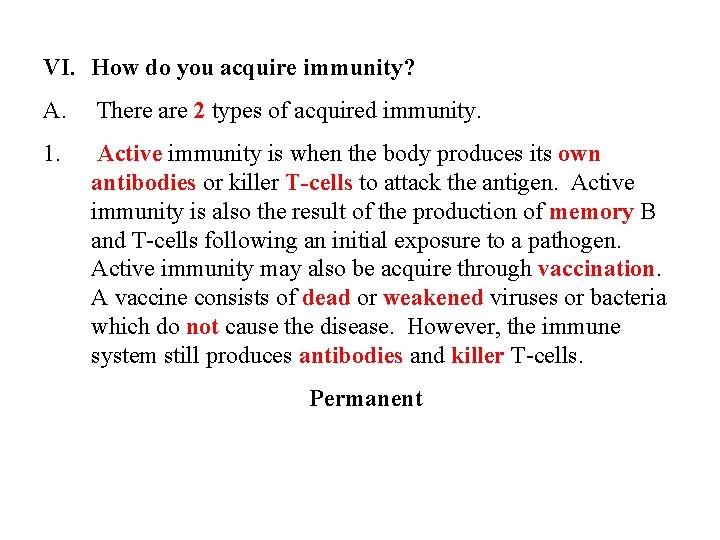
VI. How do you acquire immunity? A. There are 2 types of acquired immunity. 1. Active immunity is when the body produces its own antibodies or killer T-cells to attack the antigen. Active immunity is also the result of the production of memory B and T-cells following an initial exposure to a pathogen. Active immunity may also be acquire through vaccination. A vaccine consists of dead or weakened viruses or bacteria which do not cause the disease. However, the immune system still produces antibodies and killer T-cells. Permanent
2. Passive immunity is a temporary form of immunity produced by the introduction of antibodies into the body. An example is maternal immunity which is the introduction of antibodies via breast milk. Temporary VII. “Inborn immunity” – born with, do not acquire.
https: //www. youtube. com/watch? v =Kj 2 MBa. KKd. Pw