
Immunity Chapter 38 Part 1 Impacts Issues Frankies


- Slides: 105
Immunity Chapter 38 Part 1
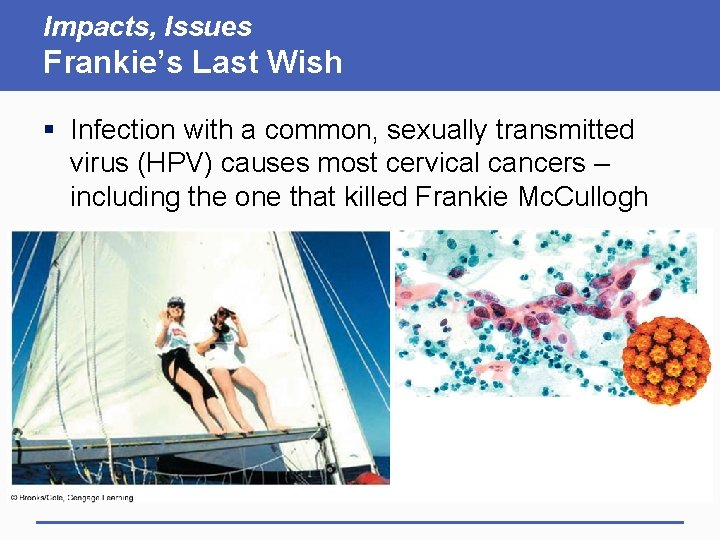
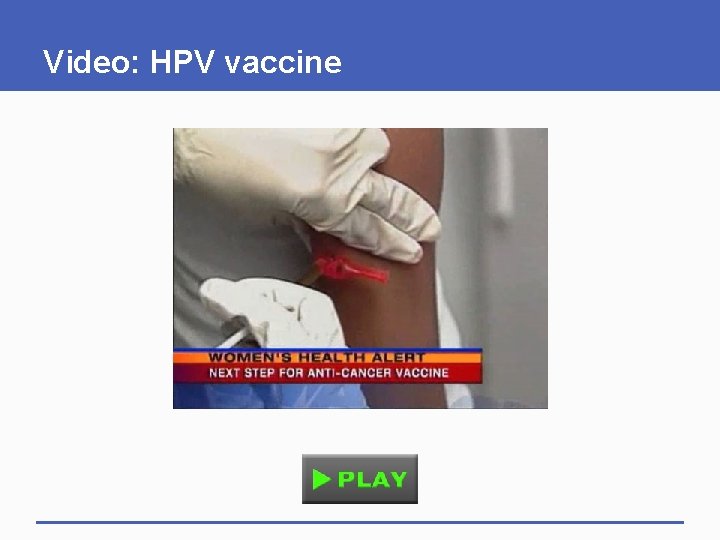
Impacts, Issues Frankie’s Last Wish § Infection with a common, sexually transmitted virus (HPV) causes most cervical cancers – including the one that killed Frankie Mc. Cullogh
38. 1 Integrated Responses to Threats § Immunity • The capacity to resist and combat infection by pathogens such as viruses, bacteria, and fungi § In vertebrates, innate and adaptive immune systems work together to combat infection and injury
Evolution of the Body’s Defenses § Proteins in eukaryotic cell membranes have unique patterns that the body recognizes as self § Cells of multicelled eukaryotes have receptors that recognize nonself cues (PAMPs) on or in pathogens, and trigger defense responses
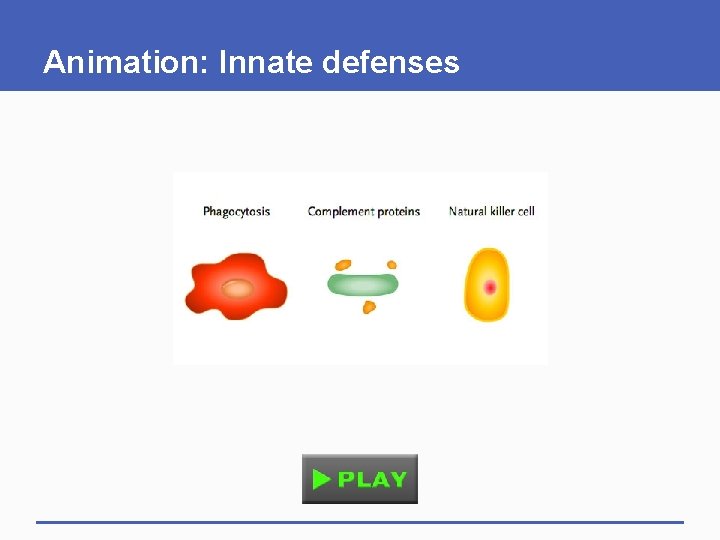
Innate Immunity § Binding of a receptor with a PAMP triggers immediate, general defense responses that are part of inborn innate immunity § Complement • Proteins that destroy microorganisms or flag them for phagocytosis • An innate immune response
Adaptive Immunity § Adaptive immunity is a system of defenses that specifically targets billions of different antigens an individual may encounter during its lifetime § Antigen • PAMP or other molecule the body recognizes as nonself that triggers an active immune response
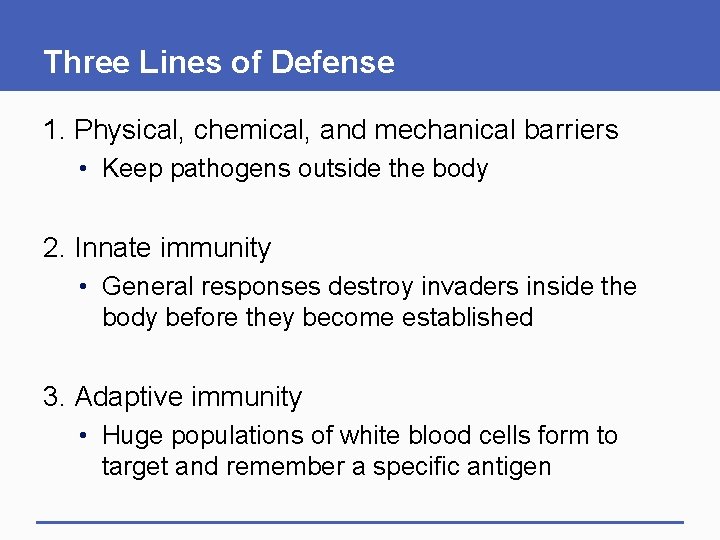
Three Lines of Defense 1. Physical, chemical, and mechanical barriers • Keep pathogens outside the body 2. Innate immunity • General responses destroy invaders inside the body before they become established 3. Adaptive immunity • Huge populations of white blood cells form to target and remember a specific antigen
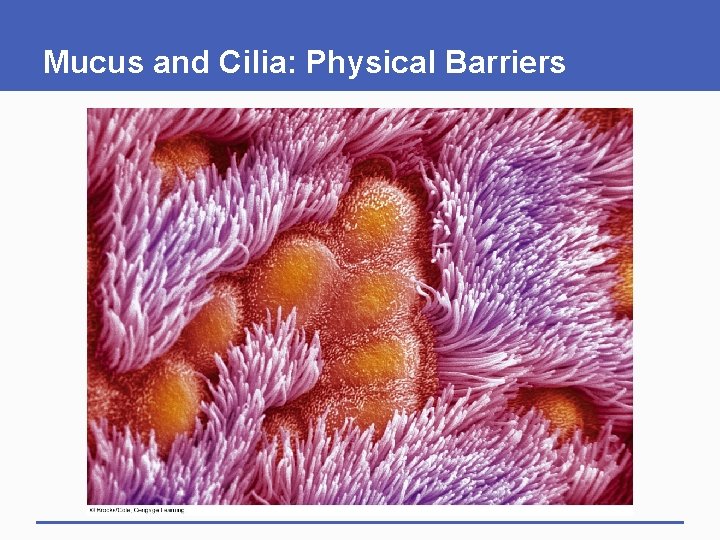
Mucus and Cilia: Physical Barriers
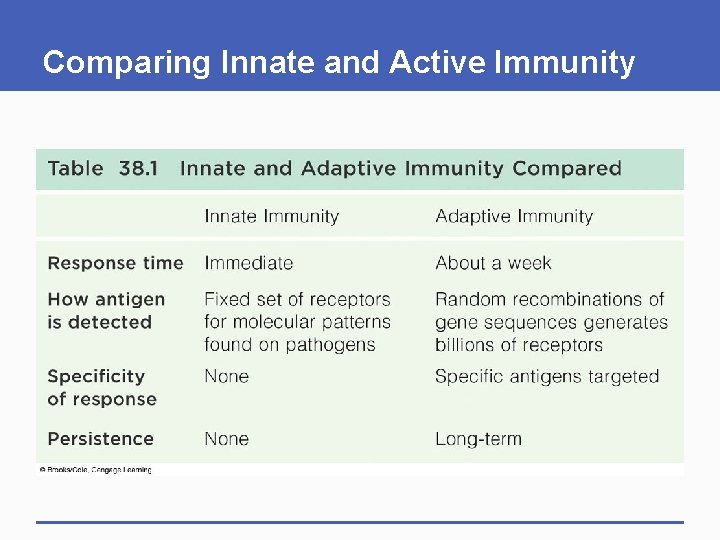
Comparing Innate and Active Immunity
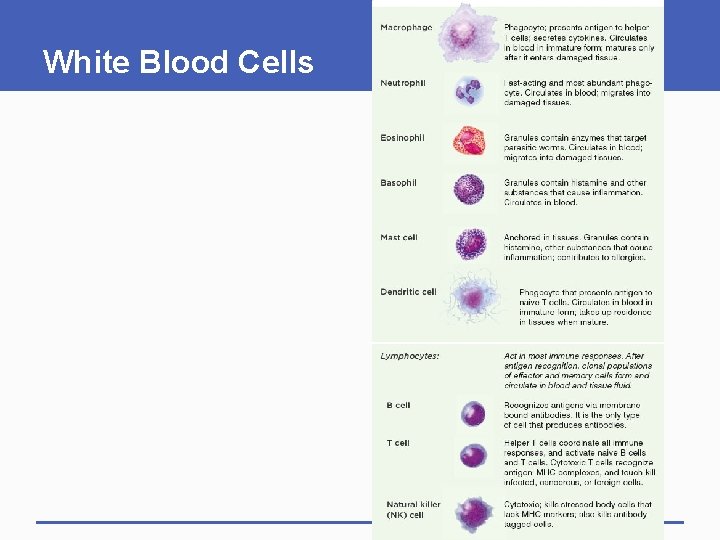
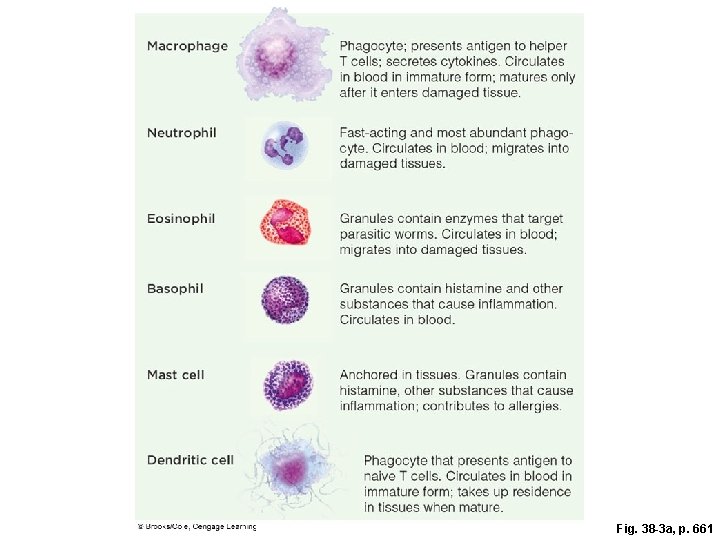
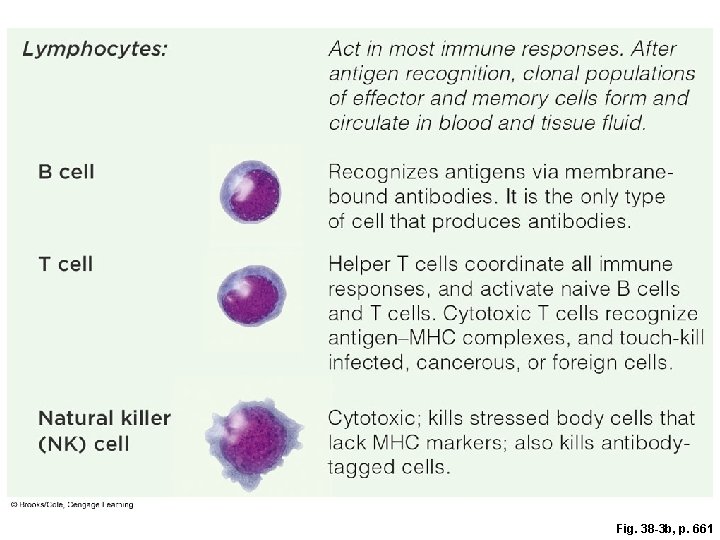
The Defenders § White blood cells (leukocytes) specialized for different tasks carry out all immune responses • Phagocytes (neutrophils, macrophages, dendritic cells) • Secretory cells (eosinophils, basophils, mast cells • Lymphocytes (B and T lymphocytes, natural killer cells)
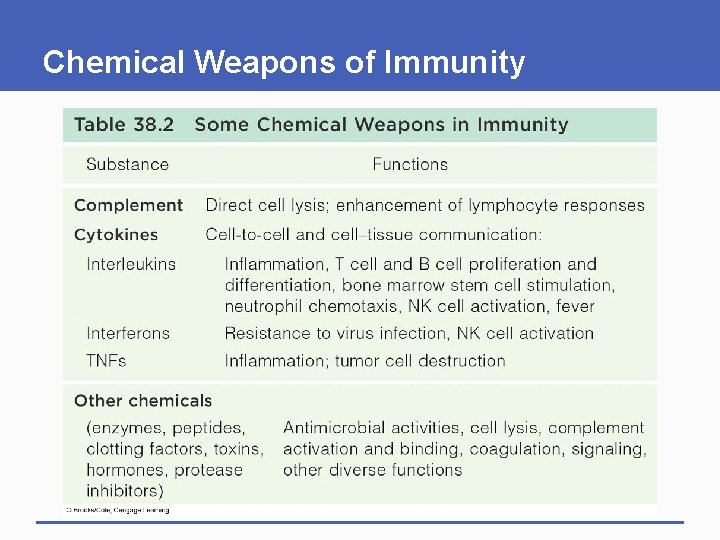
The Defenders § All white blood cells secrete chemicals, including cell-to-cell signaling molecules (cytokines) that coordinate all aspects of immunity • Interleukins • Interferons • Tumor necrosis factors
White Blood Cells
Fig. 38 -3 a, p. 661
Fig. 38 -3 b, p. 661
Chemical Weapons of Immunity
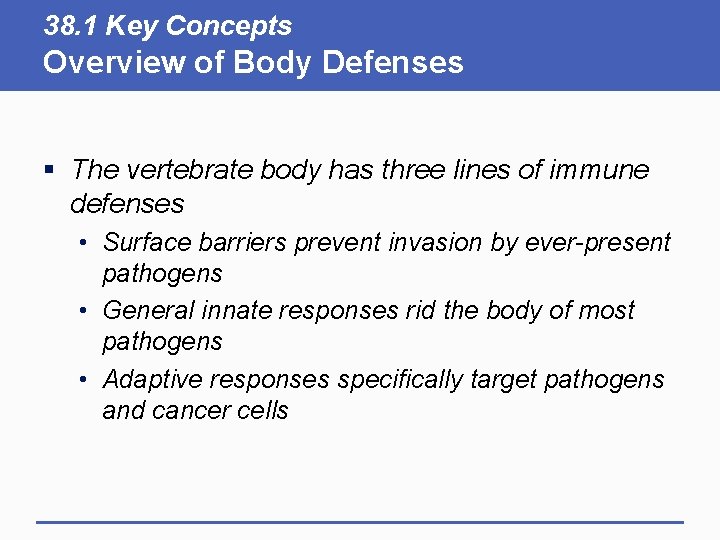
38. 1 Key Concepts Overview of Body Defenses § The vertebrate body has three lines of immune defenses • Surface barriers prevent invasion by ever-present pathogens • General innate responses rid the body of most pathogens • Adaptive responses specifically target pathogens and cancer cells
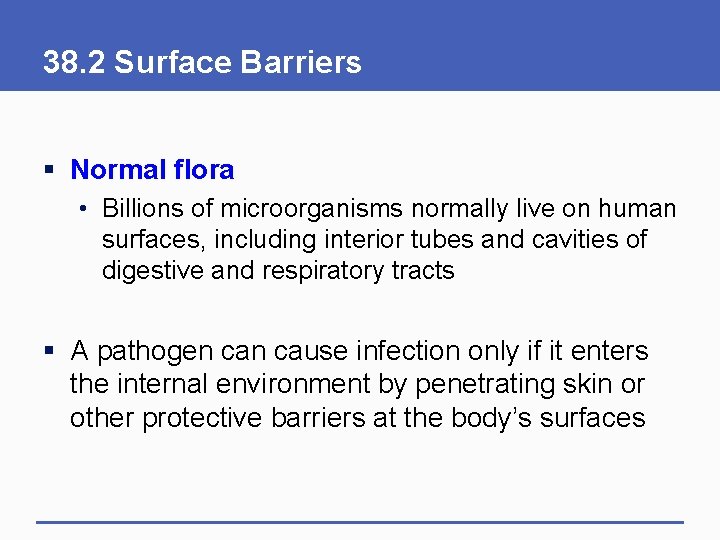
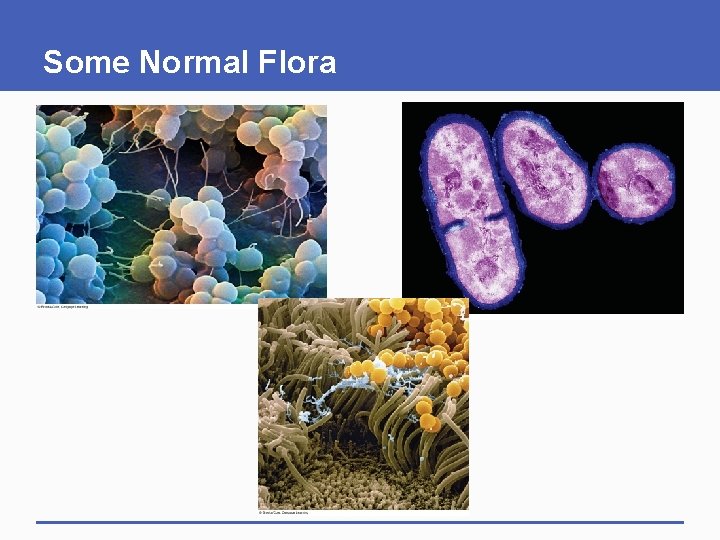
38. 2 Surface Barriers § Normal flora • Billions of microorganisms normally live on human surfaces, including interior tubes and cavities of digestive and respiratory tracts § A pathogen cause infection only if it enters the internal environment by penetrating skin or other protective barriers at the body’s surfaces
Some Normal Flora
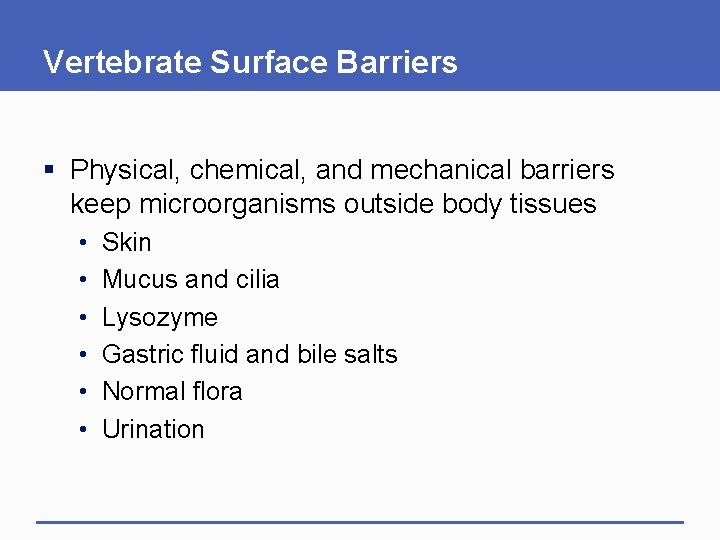
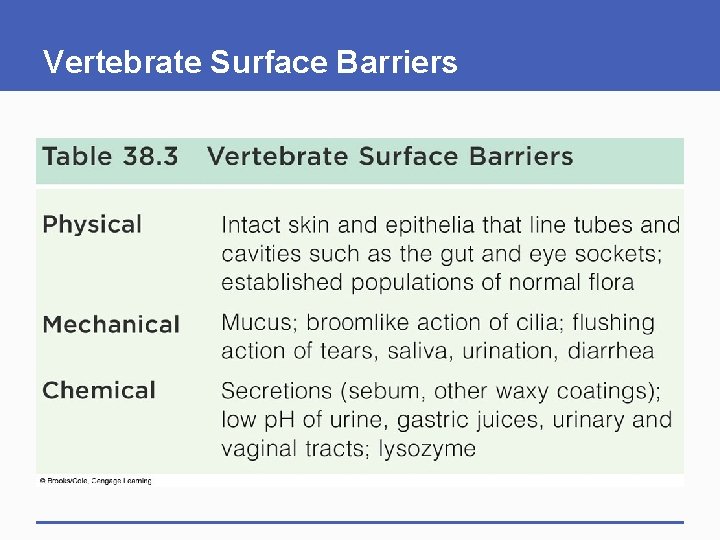
Vertebrate Surface Barriers § Physical, chemical, and mechanical barriers keep microorganisms outside body tissues • • • Skin Mucus and cilia Lysozyme Gastric fluid and bile salts Normal flora Urination
Vertebrate Surface Barriers
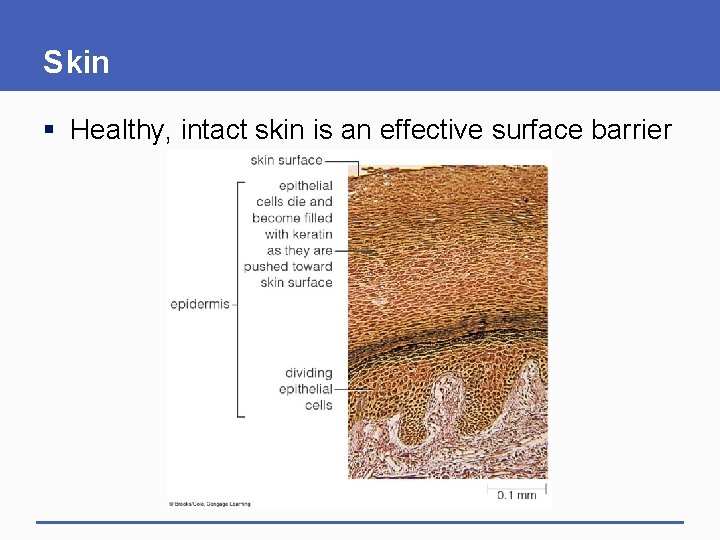
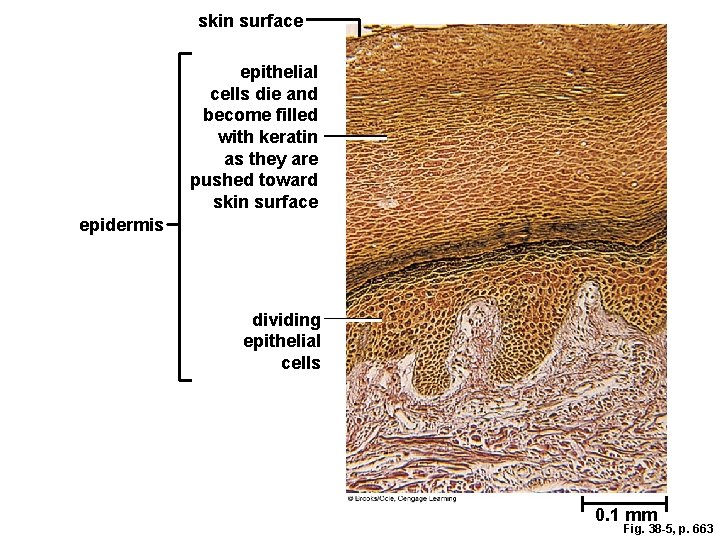
Skin § Healthy, intact skin is an effective surface barrier
skin surface epithelial cells die and become filled with keratin as they are pushed toward skin surface epidermis dividing epithelial cells 0. 1 mm Fig. 38 -5, p. 663
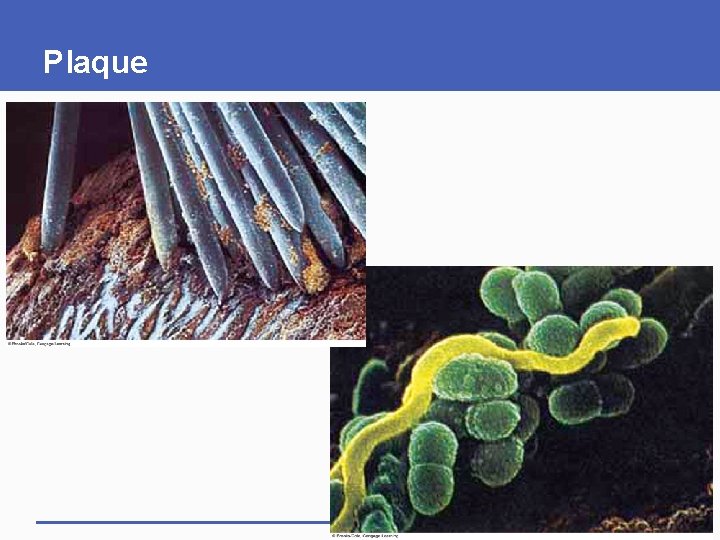
38. 3 Remember to Floss § Dental plaque • A thick, sticky biofilm of glycoproteins, bacteria, and their products that contribute to tooth decay and gum disease (periodontitis) § Nine of every ten cardiovascular disease patients have serious periodontal disease § Oral bacteria associated with periodontitis are also found in atherosclerotic plaque
Plaque
38. 2 -38. 3 Key Concepts Surface Barriers § Skin, mucous membranes, and secretions at the body’s surfaces function as barriers that exclude most microbes
38. 4 Innate Immune Responses § Innate immune mechanisms nonspecifically eliminate pathogens that invade internal tissues before they become established • • Phagocytes Complement Inflammation Fever
Phagocytes § Macrophages • Large phagocytes that patrol interstitial fluid and engulf and digest pathogens • Secrete cytokines when receptors bind to antigen • Cytokines attract more macrophages, neutrophils, and dendritic cells to infection site
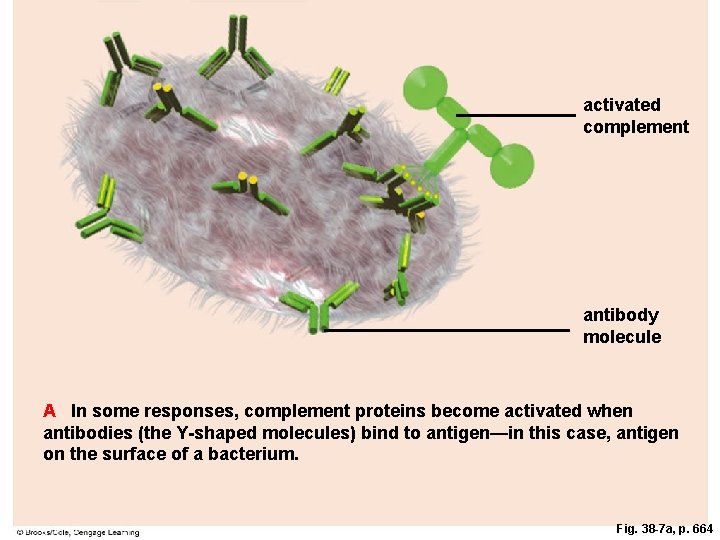
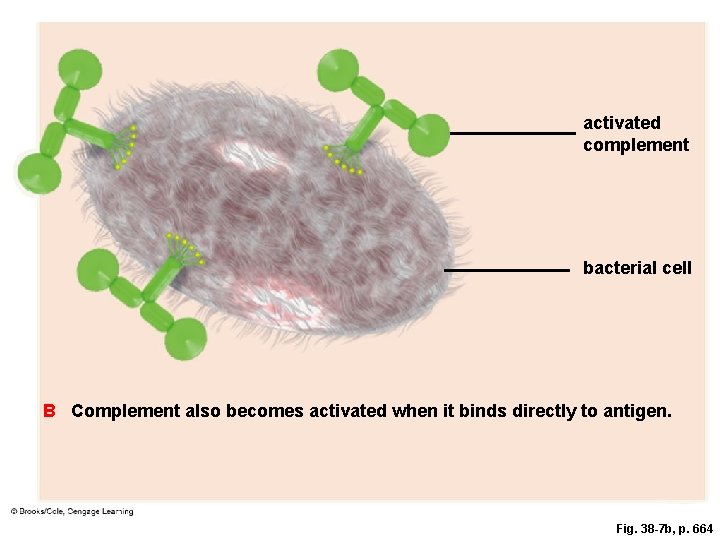
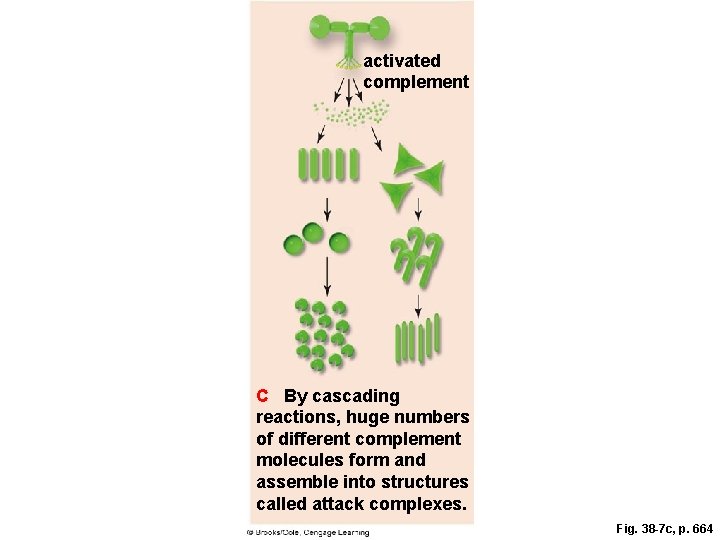
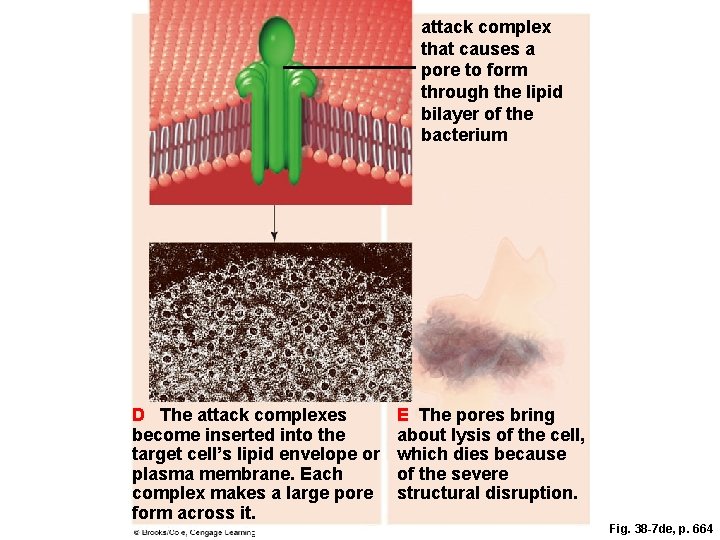
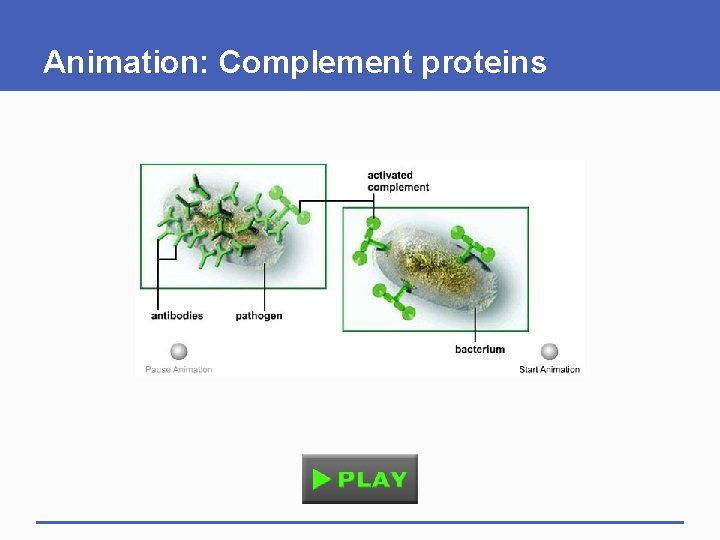
Complement § Complement proteins become activated when they encounter antigen • Cascading enzyme reactions concentrate activated complement at infection site • Complement attracts phagocytes to infection site and tags pathogens for destruction • Forms attack complexes that puncture bacteria • Helps mediate active immunity
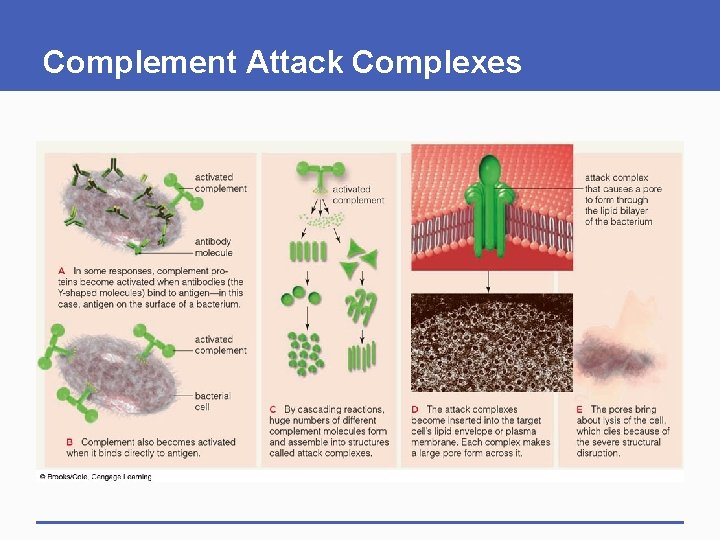
Complement Attack Complexes
activated complement antibody molecule A In some responses, complement proteins become activated when antibodies (the Y-shaped molecules) bind to antigen—in this case, antigen on the surface of a bacterium. Fig. 38 -7 a, p. 664
activated complement bacterial cell B Complement also becomes activated when it binds directly to antigen. Fig. 38 -7 b, p. 664
activated complement C By cascading reactions, huge numbers of different complement molecules form and assemble into structures called attack complexes. Fig. 38 -7 c, p. 664
attack complex that causes a pore to form through the lipid bilayer of the bacterium D The attack complexes become inserted into the target cell’s lipid envelope or plasma membrane. Each complex makes a large pore form across it. E The pores bring about lysis of the cell, which dies because of the severe structural disruption. Fig. 38 -7 de, p. 664
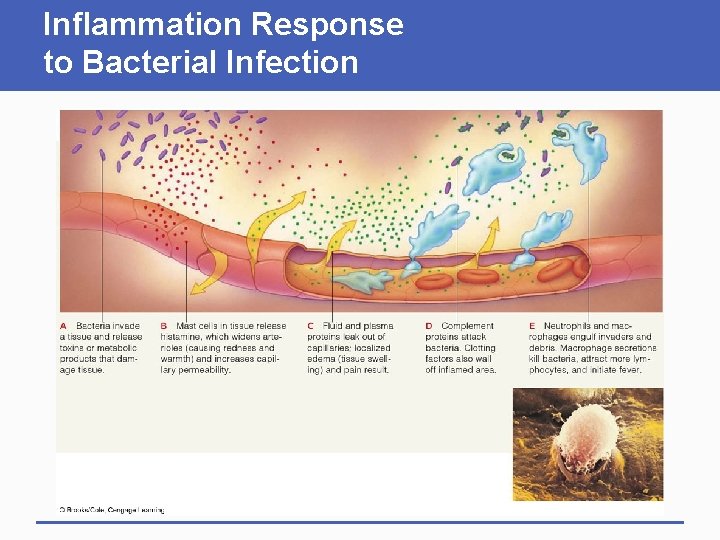
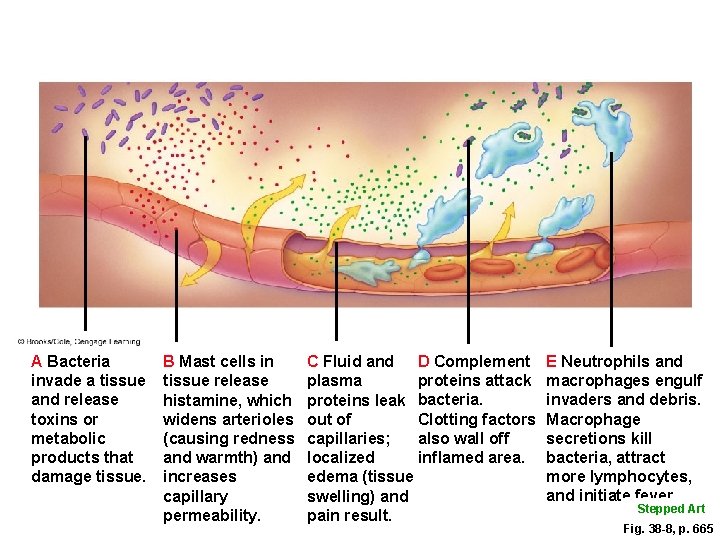
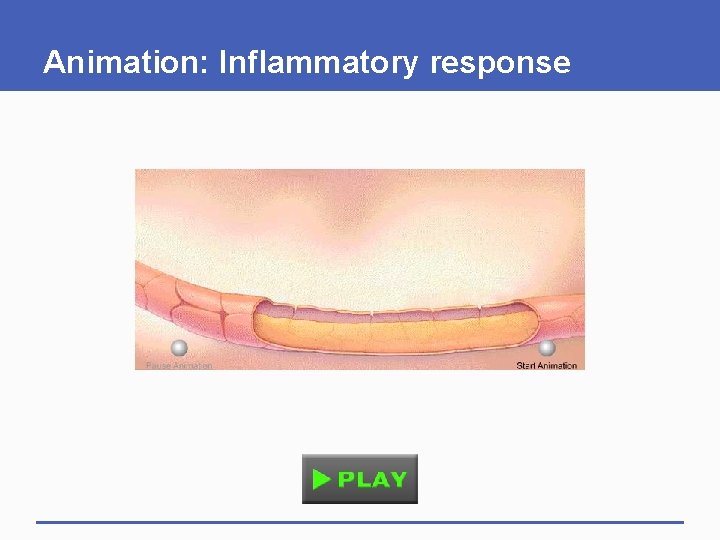
Inflammation § Inflammation • A local response to tissue damage characterized by redness, warmth, swelling and pain, triggered by activated complement and cytokines • Mast cells release histamine, increasing capillary permeability • Phagocytes and plasma proteins leak out, attack invaders, form clots, and clean up debris
Inflammation Response to Bacterial Infection
A Bacteria invade a tissue and release toxins or metabolic products that damage tissue. B Mast cells in tissue release histamine, which widens arterioles (causing redness and warmth) and increases capillary permeability. C Fluid and D Complement proteins attack plasma proteins leak bacteria. Clotting factors out of also wall off capillaries; inflamed area. localized edema (tissue swelling) and pain result. E Neutrophils and macrophages engulf invaders and debris. Macrophage secretions kill bacteria, attract more lymphocytes, and initiate fever. Stepped Art Fig. 38 -8, p. 665
Fever § Fever • A temporary rise in body temperature – above the normal 37°C (98. 6°F) – that often occurs in response to infection • Cytokines stimulate brain cells to release prostaglandins, which act on the hypothalamus • Fever enhances the immune response by speeding up metabolism and phagocyte activity • Fever over 40. 6°C (105°F) can be dangerous
38. 4 Key Concepts Innate Immunity § Innate immune responses involve a set of general, immediate defenses against invading pathogens § Innate immunity includes phagocytic white blood cells, plasma proteins, inflammation, and fever
38. 5 Overview of Adaptive Immunity § Vertebrate adaptive immunity adapts to different antigens it encounters during its lifetime § Lymphocytes and phagocytes interact to effect four defining characteristics: Self/nonself recognition, specificity, diversity, and memory
Self/Nonself Recognition § Self versus nonself recognition • Each kind of cell or virus has a unique identity § MHC markers • Plasma membrane self-recognition proteins § T cell receptors (TCRs) • Antigen receptors that recognize MHC markers as self, antigens as nonself
Specificity and Diversity § Specificity • Defenses are tailored to target specific antigens § Diversity • There are potentially billions of different antigen receptors on T and B cells
Memory § Memory • The capacity of the adaptive immune system to remember an antigen • If the same antigen appears again, B and T cells make a faster, stronger response
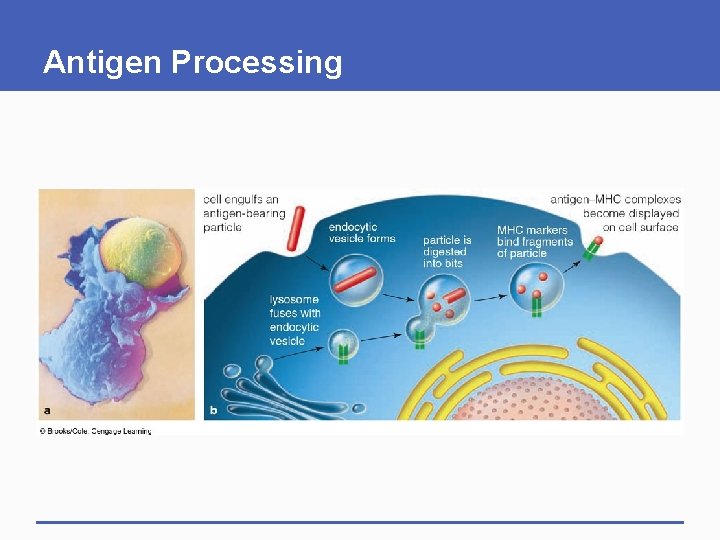
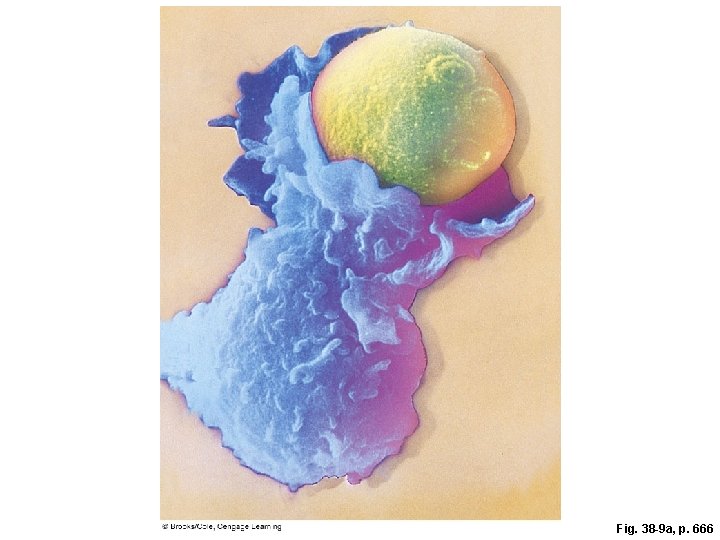
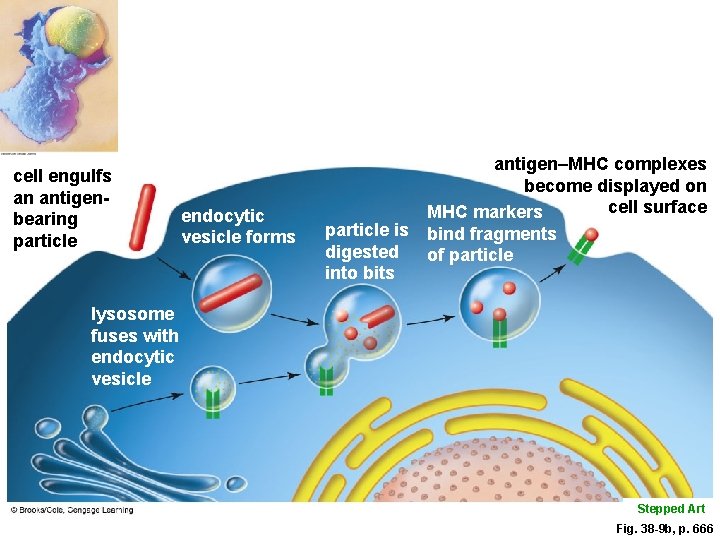
First Step – The Antigen Alert § Once a B or T cell recognizes and binds to a specific antigen, it begins to divide by mitosis • All descendent cells recognize the same antigen § T cells do not recognize an antigen unless it is presented by an antigen-presenting cell • Macrophages, B cells, and dendritic cells digest particles and display antigen-MHC complexes
Cell Types § Effector cells • Differentiated lymphocytes (B and T cells) that act at once to fight infection § Memory cells • Long-lived B and T cells reserved for future encounters with the same antigen
Antigen Processing
Fig. 38 -9 a, p. 666
cell engulfs an antigenbearing particle endocytic vesicle forms antigen–MHC complexes become displayed on cell surface MHC markers particle is bind fragments digested of particle into bits lysosome fuses with endocytic vesicle Stepped Art Fig. 38 -9 b, p. 666
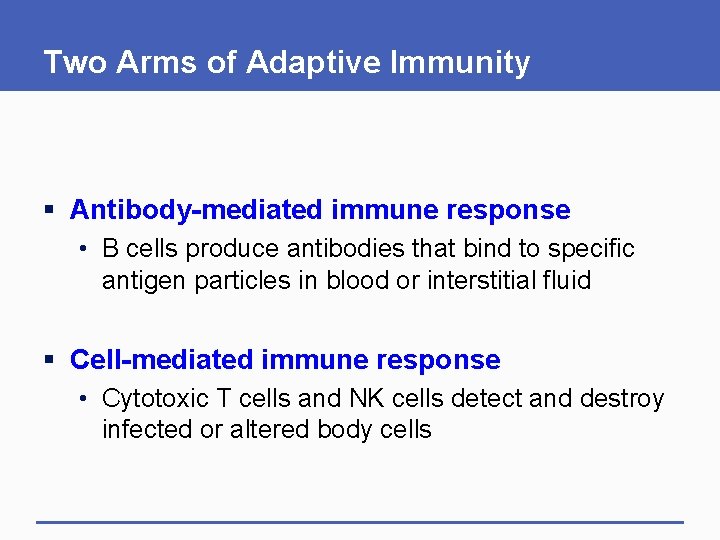
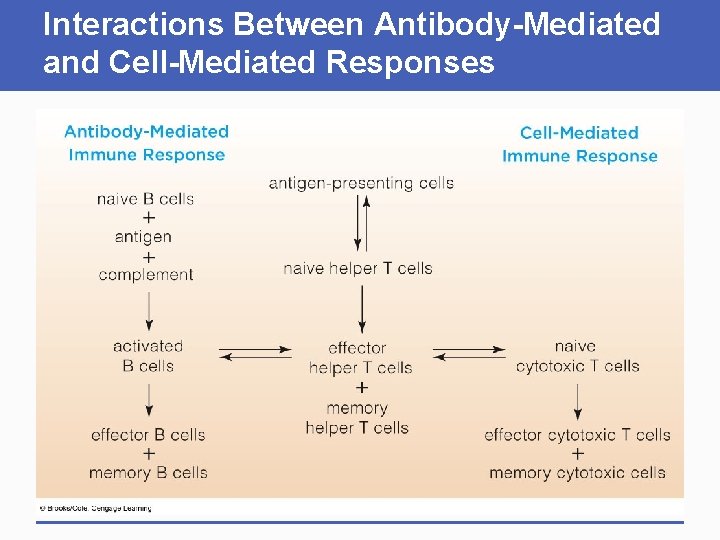
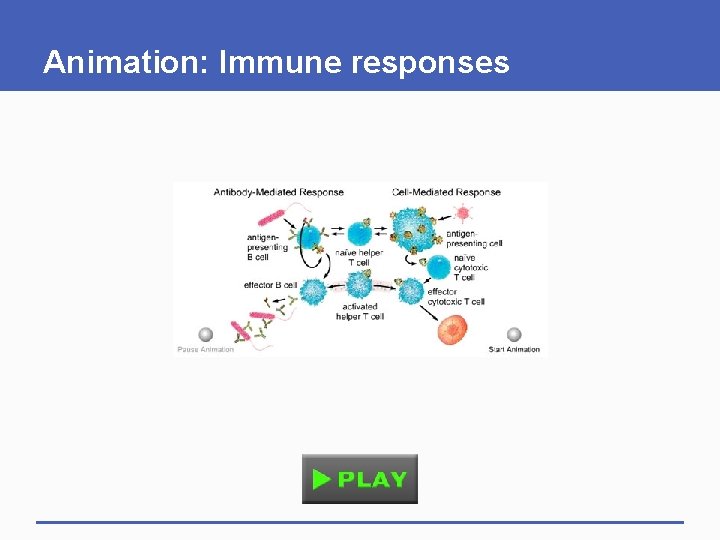
Two Arms of Adaptive Immunity § Antibody-mediated immune response • B cells produce antibodies that bind to specific antigen particles in blood or interstitial fluid § Cell-mediated immune response • Cytotoxic T cells and NK cells detect and destroy infected or altered body cells
Interactions Between Antibody-Mediated and Cell-Mediated Responses
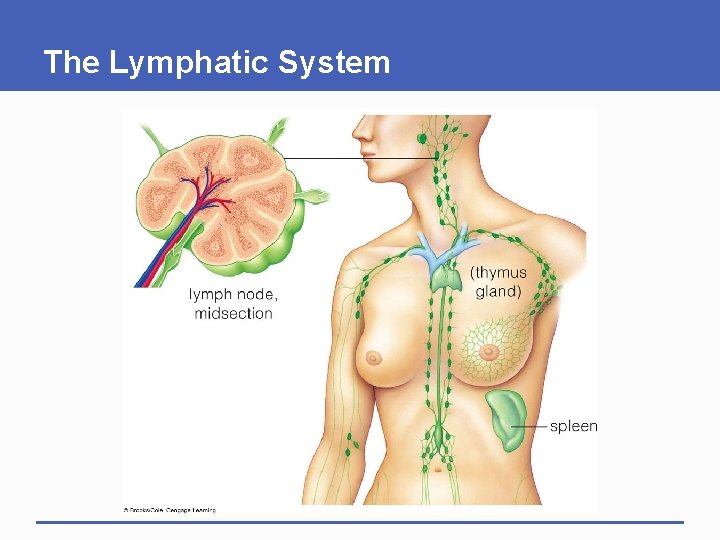
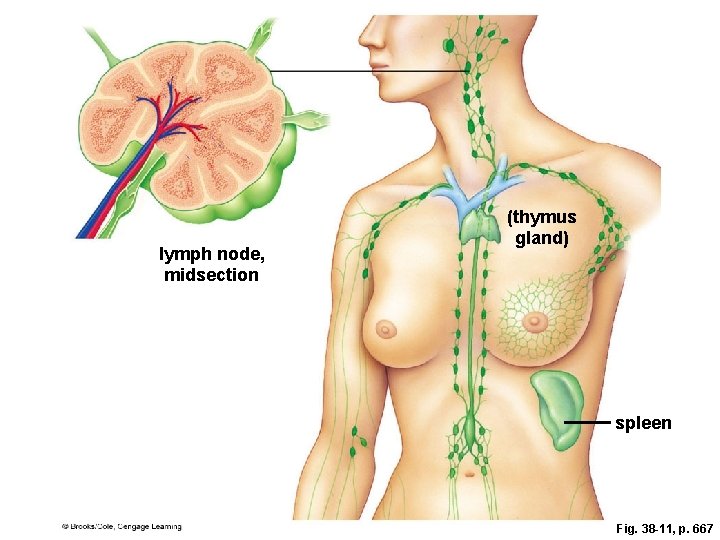
Intercepting and Clearing Out Antigen § After engulfing antigen-bearing particles, dendritic cells or macrophages migrate to lymph nodes, where T cells bind and initiate responses § During an infection, lymph nodes swell due to accumulation of T cells § Antibody-antigen complexes bound by complement are cleared by the liver and spleen
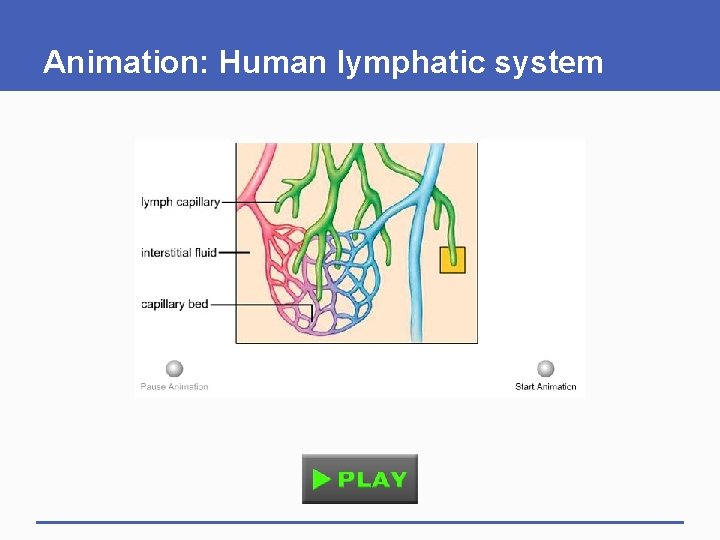
The Lymphatic System
lymph node, midsection (thymus gland) spleen Fig. 38 -11, p. 667
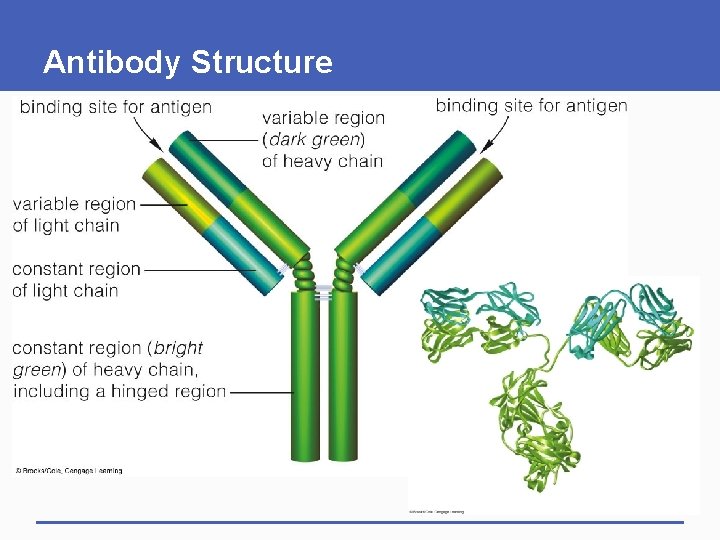
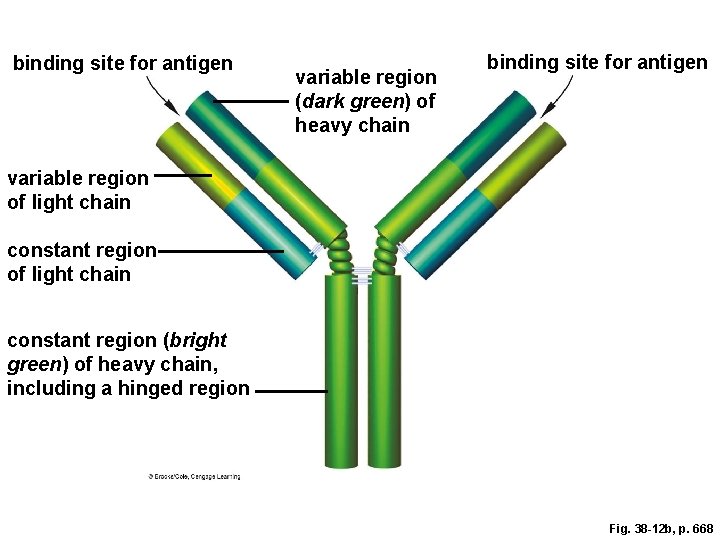
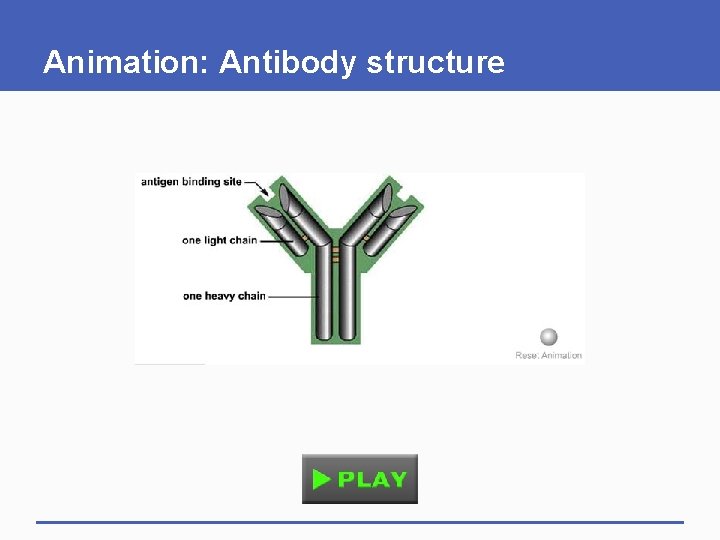
38. 6 Antibodies and Other Antigen Receptors § Antigen receptors on B and T cells have the potential to recognize billions of different antigens § Antibody • Y-shaped antigen receptor (protein), made only by B cells, that binds only to the antigen that prompted its synthesis • Activates complement, facilitates phagocytosis, or neutralizes pathogens or toxins
Antibody Structure
binding site for antigen variable region (dark green) of heavy chain binding site for antigen variable region of light chain constant region (bright green) of heavy chain, including a hinged region Fig. 38 -12 b, p. 668
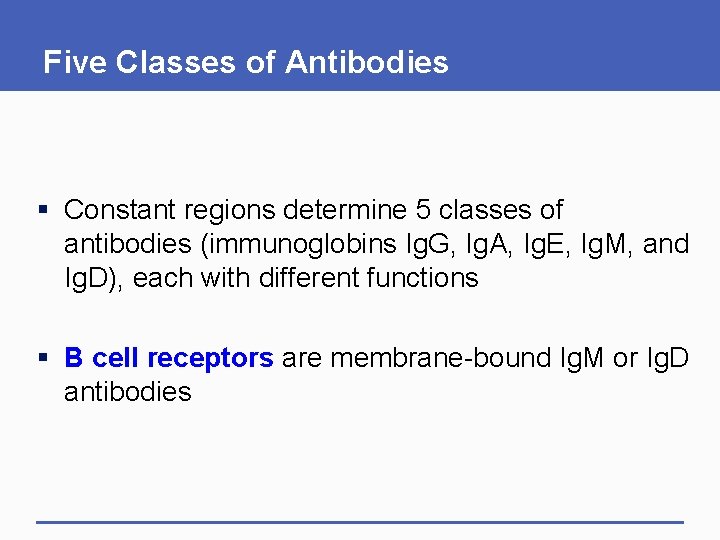
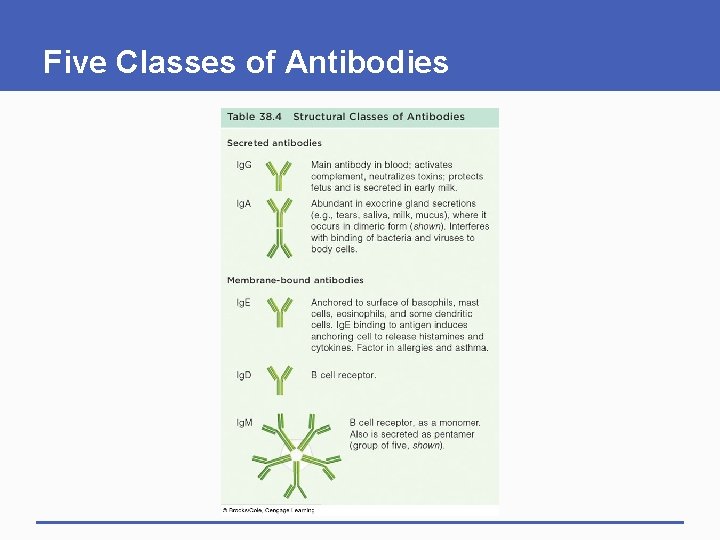
Five Classes of Antibodies § Constant regions determine 5 classes of antibodies (immunoglobins Ig. G, Ig. A, Ig. E, Ig. M, and Ig. D), each with different functions § B cell receptors are membrane-bound Ig. M or Ig. D antibodies
Five Classes of Antibodies
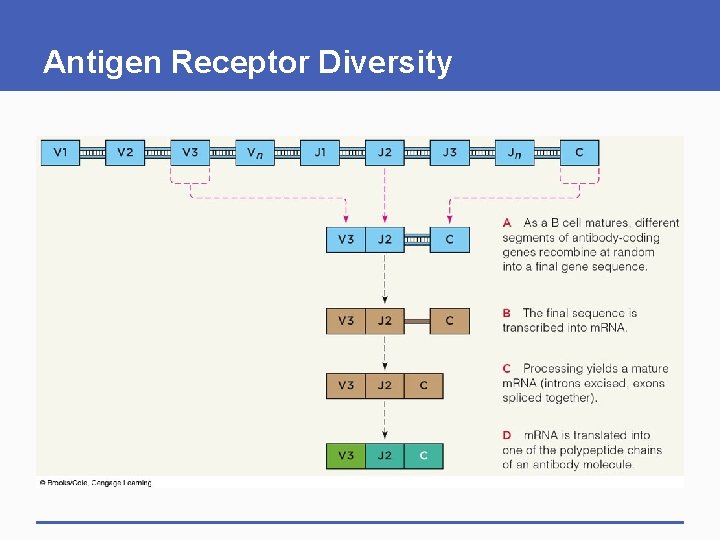
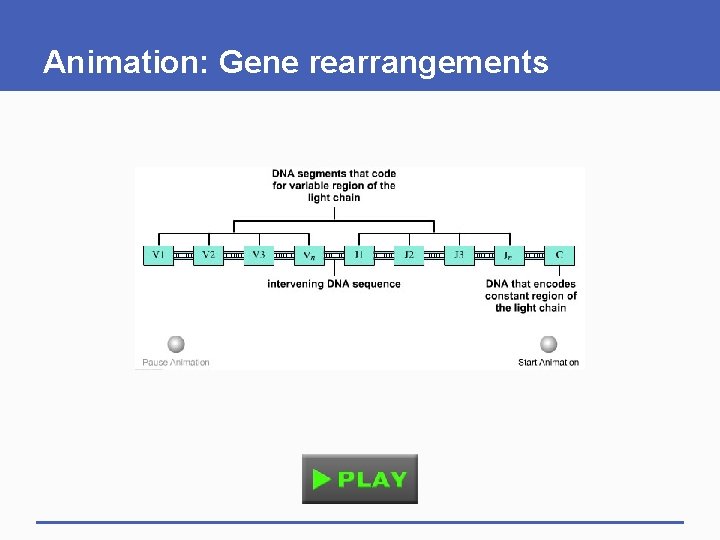
Making Antigen Receptors § Genes that encode antigen receptors occur in several segments on different chromosomes § Different versions are randomly spliced together during B or T cell differentiation, producing about 2. 5 billion different combinations § T cells mature in the thymus, which stimulates production of MHC and T cell receptors
Antigen Receptor Diversity
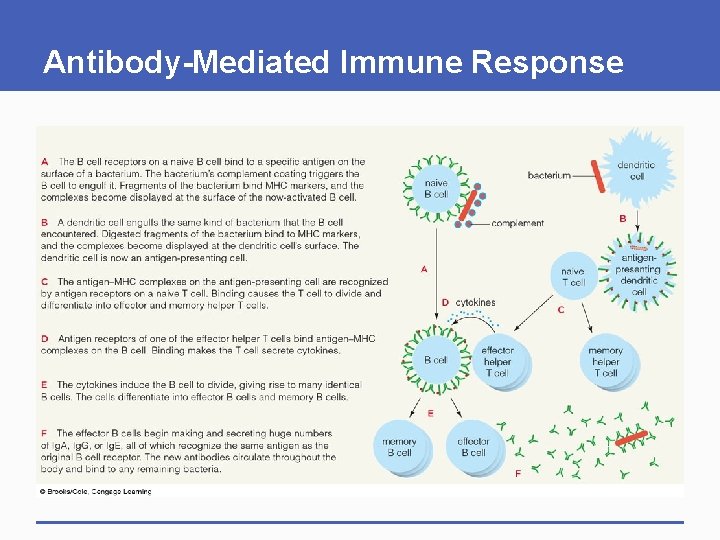
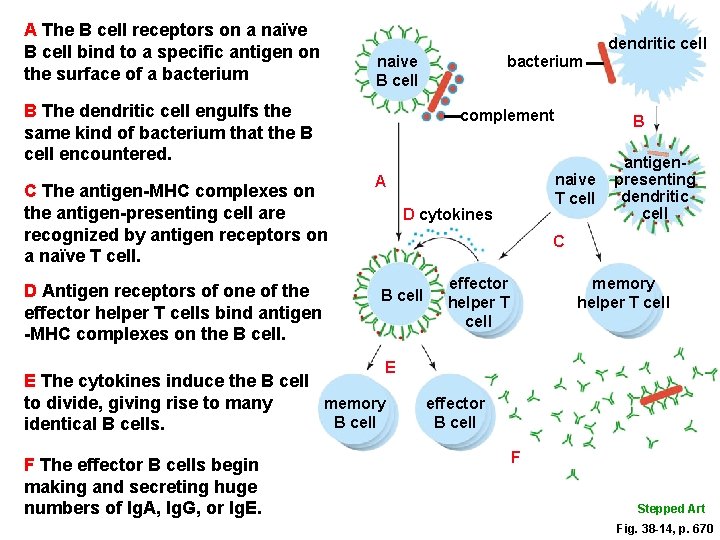
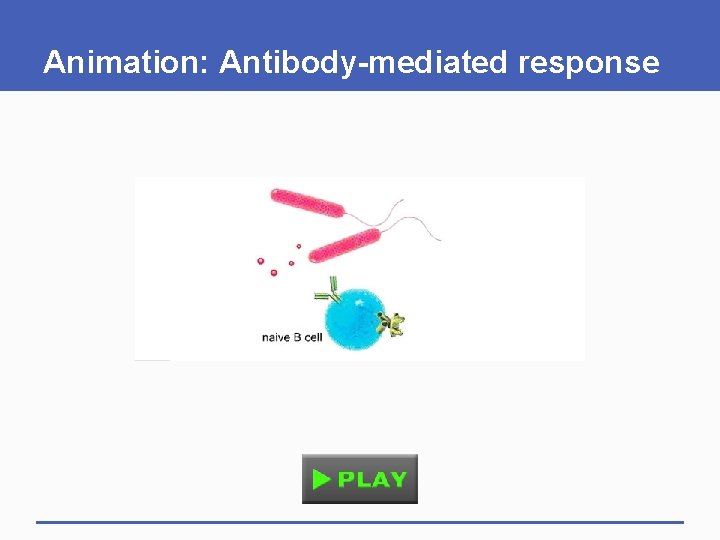
38. 7 The Antibody-Mediated Immune Response § Antibody-mediated immune response • Antigen activates naïve B cells and dendritic cells • Naïve T cell binds to APC and differentiates into effector and memory helper T cells • Helper T cells bind antigen-MHC complexes on activated B cell and secrete cytokines • B cell differentiates into effector B cells, which produce antibodies targeting a specific antigen, and memory B cells
Antibody-Mediated Immune Response
A The B cell receptors on a naïve B cell bind to a specific antigen on the surface of a bacterium naive B cell B The dendritic cell engulfs the same kind of bacterium that the B cell encountered. C The antigen-MHC complexes on the antigen-presenting cell are recognized by antigen receptors on a naïve T cell. D Antigen receptors of one of the effector helper T cells bind antigen -MHC complexes on the B cell. dendritic cell bacterium complement B naive T cell A D cytokines antigenpresenting dendritic cell C B cell effector helper T cell memory helper T cell E E The cytokines induce the B cell to divide, giving rise to many memory B cell identical B cells. F The effector B cells begin making and secreting huge numbers of Ig. A, Ig. G, or Ig. E. effector B cell F Stepped Art Fig. 38 -14, p. 670
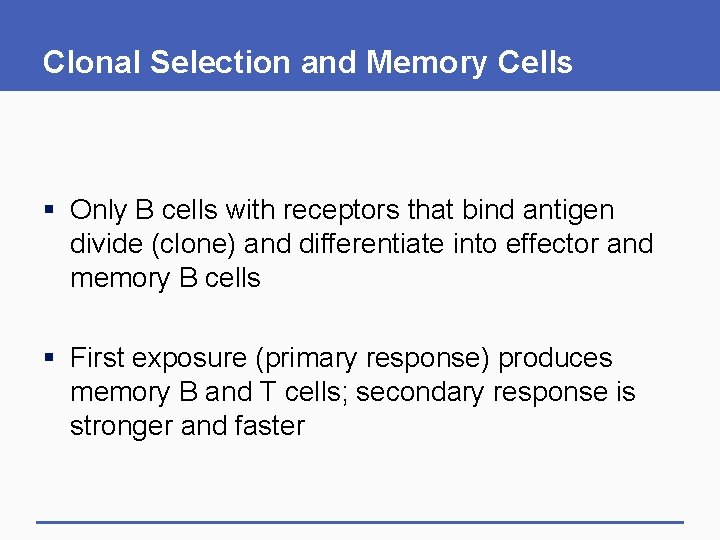
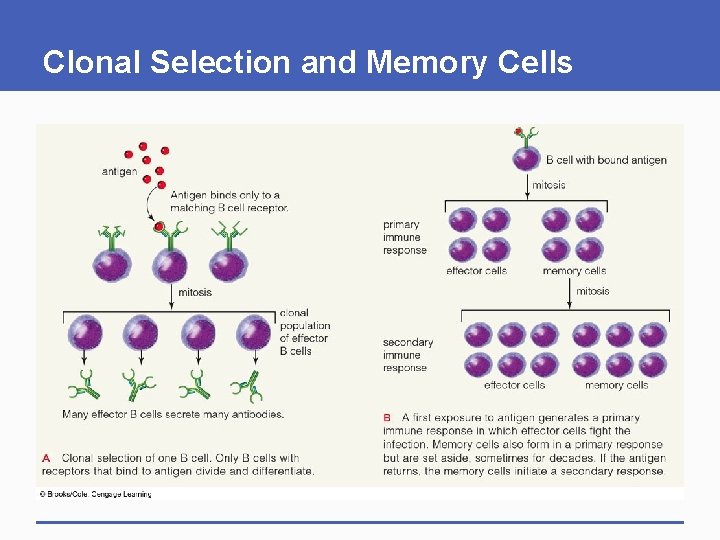
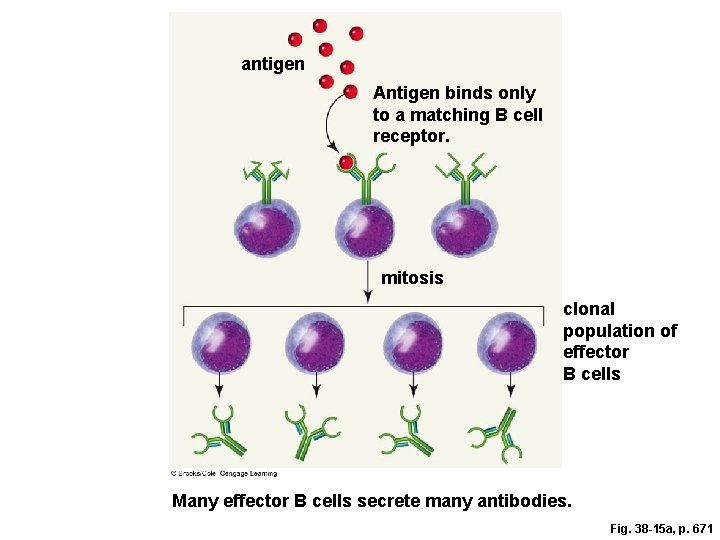
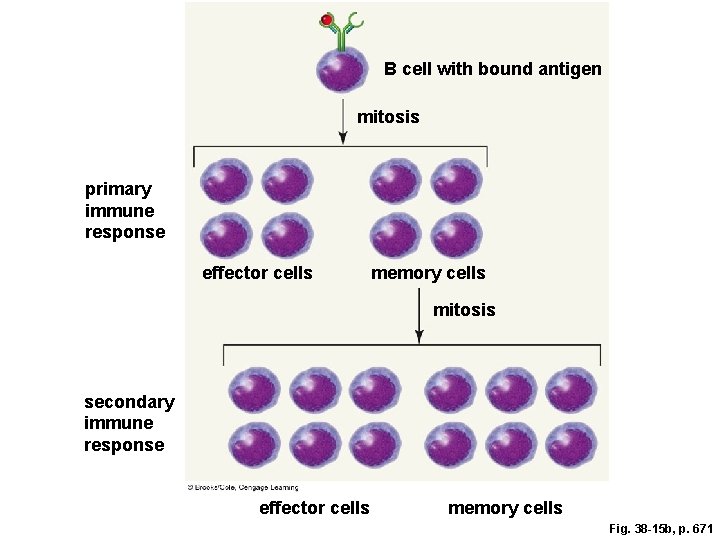
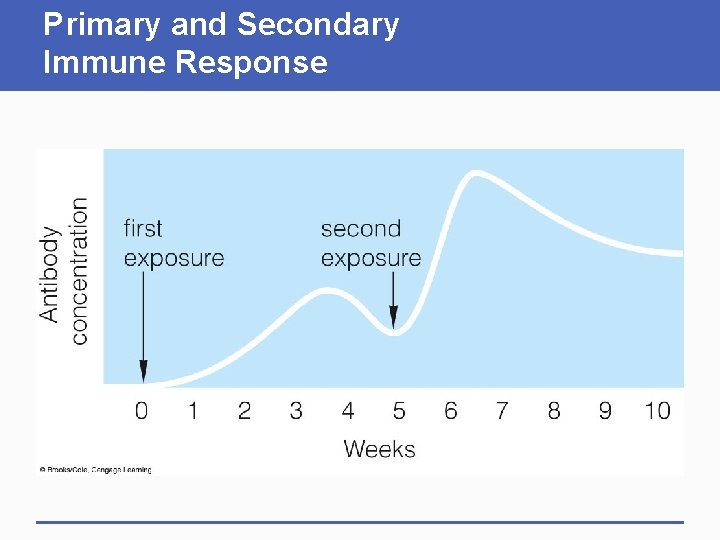
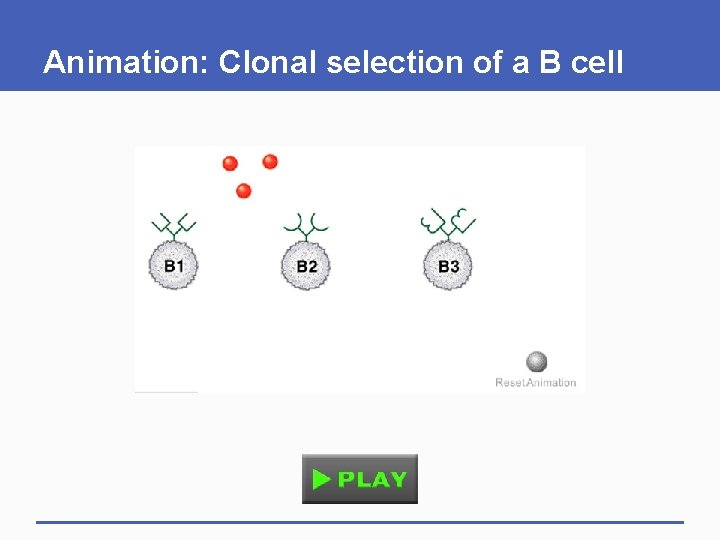
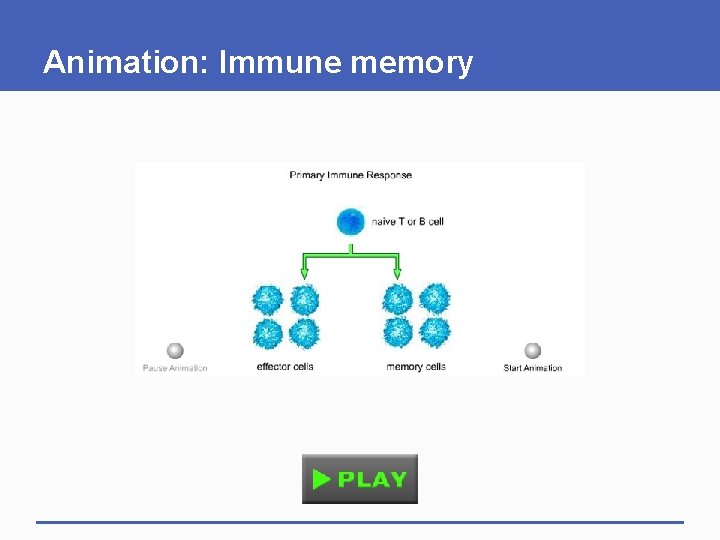
Clonal Selection and Memory Cells § Only B cells with receptors that bind antigen divide (clone) and differentiate into effector and memory B cells § First exposure (primary response) produces memory B and T cells; secondary response is stronger and faster
Clonal Selection and Memory Cells
antigen Antigen binds only to a matching B cell receptor. mitosis clonal population of effector B cells Many effector B cells secrete many antibodies. Fig. 38 -15 a, p. 671
B cell with bound antigen mitosis primary immune response effector cells memory cells mitosis secondary immune response effector cells memory cells Fig. 38 -15 b, p. 671
Primary and Secondary Immune Response
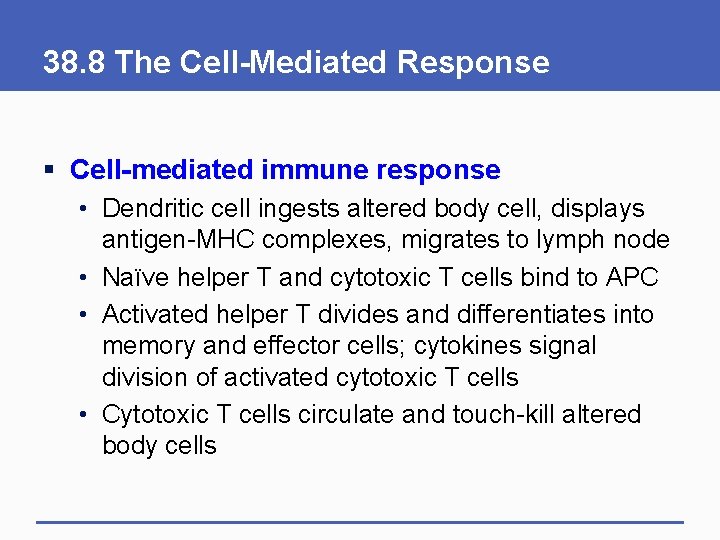
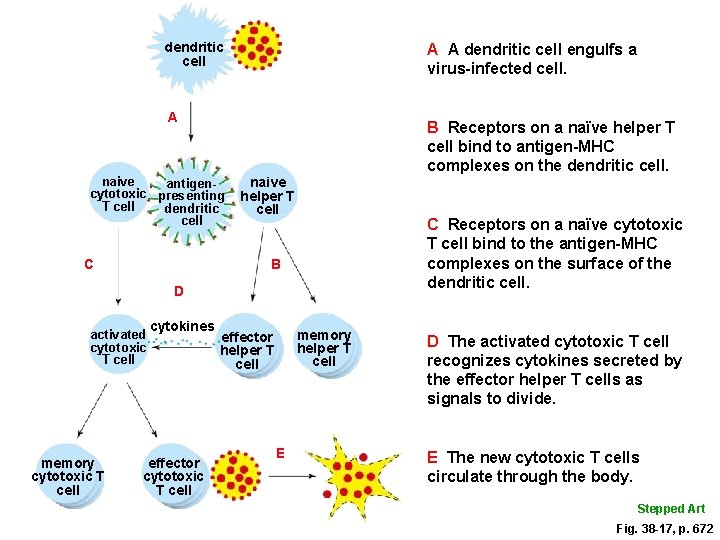
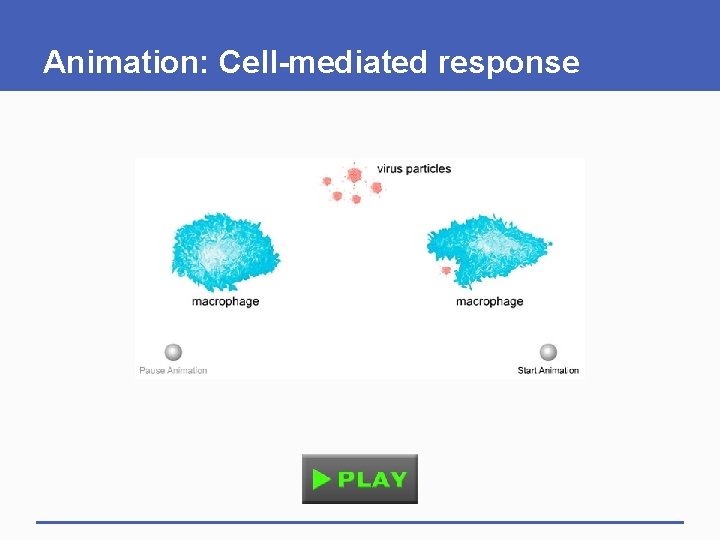
38. 8 The Cell-Mediated Response § Cell-mediated immune response • Dendritic cell ingests altered body cell, displays antigen-MHC complexes, migrates to lymph node • Naïve helper T and cytotoxic T cells bind to APC • Activated helper T divides and differentiates into memory and effector cells; cytokines signal division of activated cytotoxic T cells • Cytotoxic T cells circulate and touch-kill altered body cells
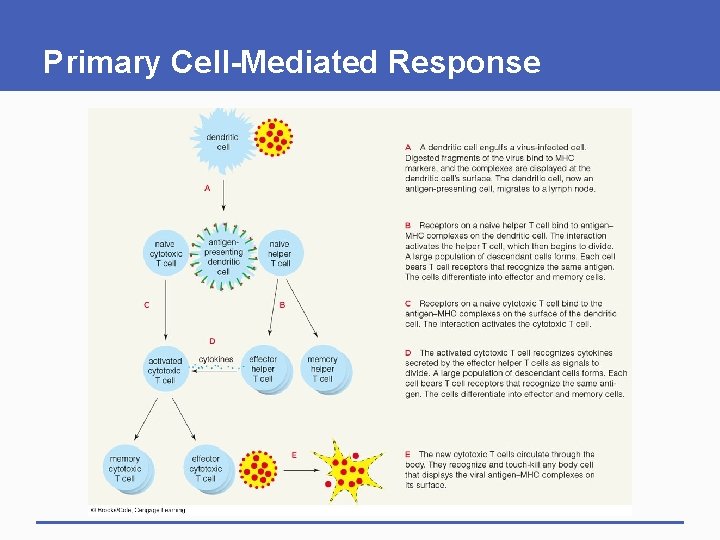
Primary Cell-Mediated Response
dendritic cell A A dendritic cell engulfs a virus-infected cell. A naive antigencytotoxic presenting T cell dendritic cell C B Receptors on a naïve helper T cell bind to antigen-MHC complexes on the dendritic cell. naive helper T cell C Receptors on a naïve cytotoxic T cell bind to the antigen-MHC complexes on the surface of the dendritic cell. B D activated cytotoxic T cell memory cytotoxic T cell cytokines effector cytotoxic T cell memory helper T cell effector helper T cell E D The activated cytotoxic T cell recognizes cytokines secreted by the effector helper T cells as signals to divide. E The new cytotoxic T cells circulate through the body. Stepped Art Fig. 38 -17, p. 672
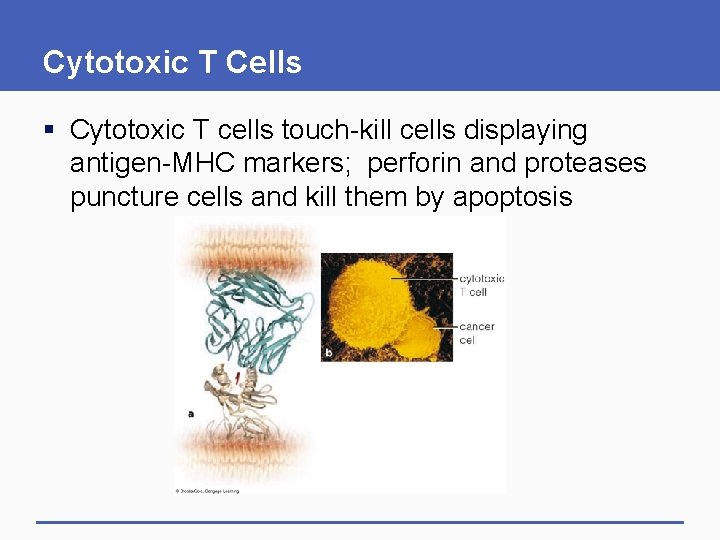
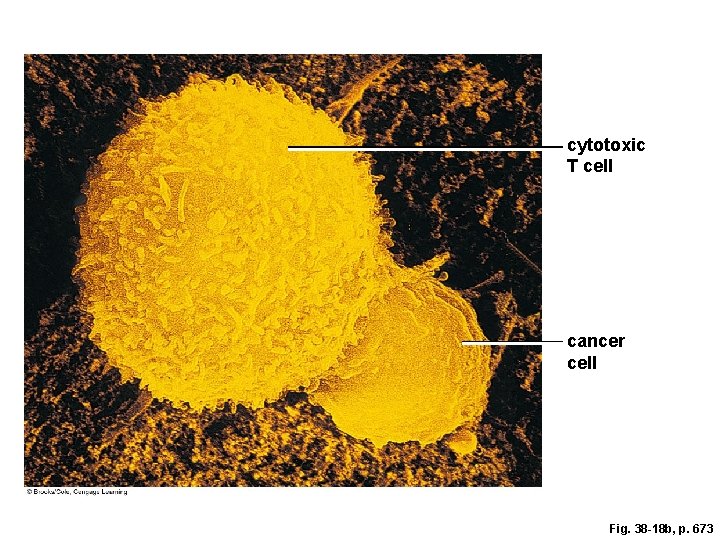
Cytotoxic T Cells § Cytotoxic T cells touch-kill cells displaying antigen-MHC markers; perforin and proteases puncture cells and kill them by apoptosis
cytotoxic T cell cancer cell Fig. 38 -18 b, p. 673
Natural Killer Cells § Cytokines secreted by helper T cells also stimulate natural killer (NK) cell division § Unlike cytotoxic T cells, NK cells can kill infected cells that are missing all or part of their MHC markers
38. 5 -38. 8 Key Concepts Adaptive Immunity § In an adaptive immune response, white blood cells destroy specific pathogens or altered cells § Some make antibodies in an antibody-mediated immune response; others destroy ailing body cells in a cell-mediated response
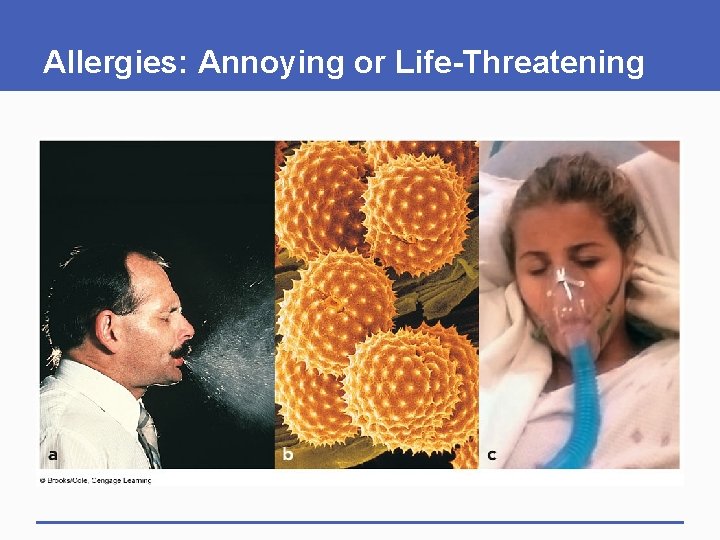
38. 9 Allergies § Allergy • An immune response to a typically harmless substance (allergen) • First exposure stimulates production of Ig. E, which becomes anchored to mast cells and basophils • Later exposure stimulates secretion of histamine and cytokines that initiate inflammation • Anaphylactic shock is a severe and potentially fatal allergic reaction
Allergies: Annoying or Life-Threatening
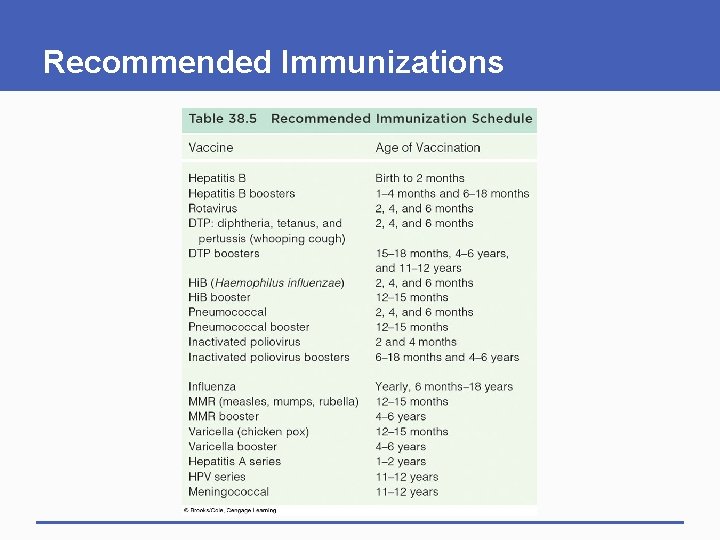
38. 10 Vaccines § Immunization • The administration of an antigen-bearing vaccine designed to elicit immunity to a specific disease § Vaccine (active immunization) • A preparation containing an antigen that elicits a primary immune response § Passive immunization • Administration of antibodies; no immune response
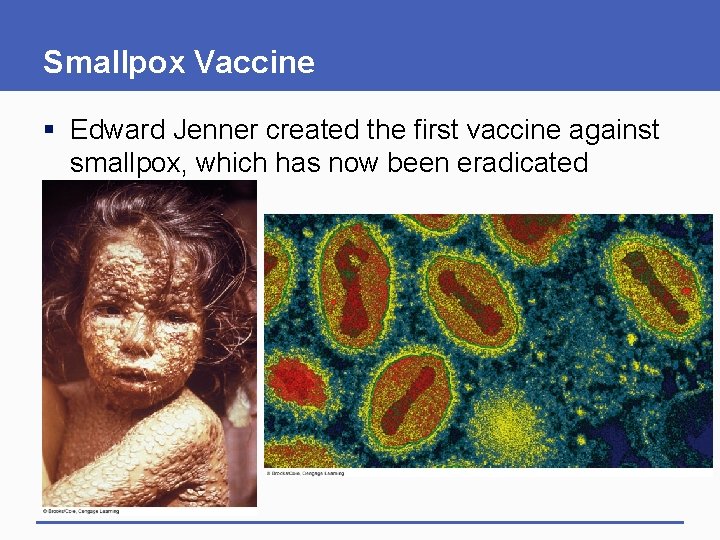
Smallpox Vaccine § Edward Jenner created the first vaccine against smallpox, which has now been eradicated
Recommended Immunizations
38. 11 Immunity Gone Wrong § Misdirected or compromised immunity is sometimes the result of mutation or environmental factors § The outcome is often severe or lethal
Autoimmune Disorders § Sometimes lymphocytes and antibodies fail to discriminate between self and nonself § Autoimmune response • An immune response that is misdirected against the person’s own tissues • Rheumatoid arthritis, Graves’ disease, multiple sclerosis
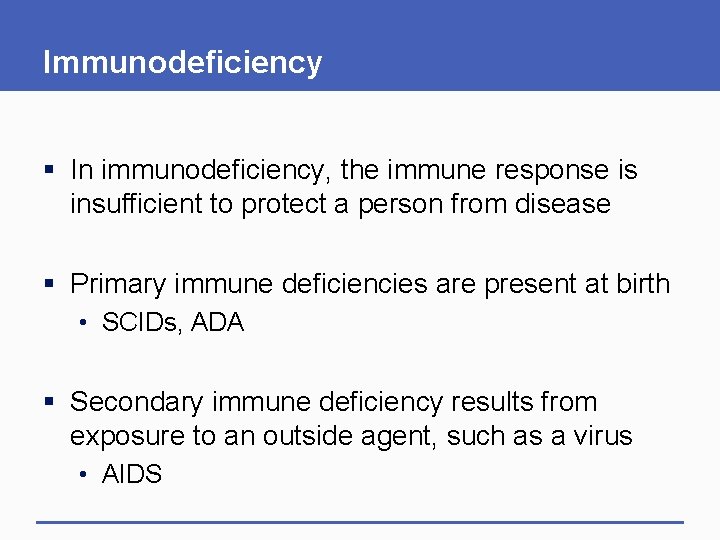
Immunodeficiency § In immunodeficiency, the immune response is insufficient to protect a person from disease § Primary immune deficiencies are present at birth • SCIDs, ADA § Secondary immune deficiency results from exposure to an outside agent, such as a virus • AIDS
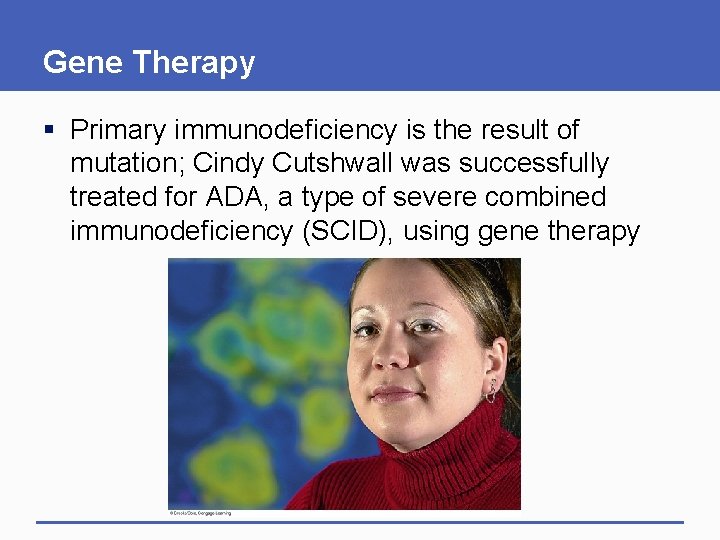
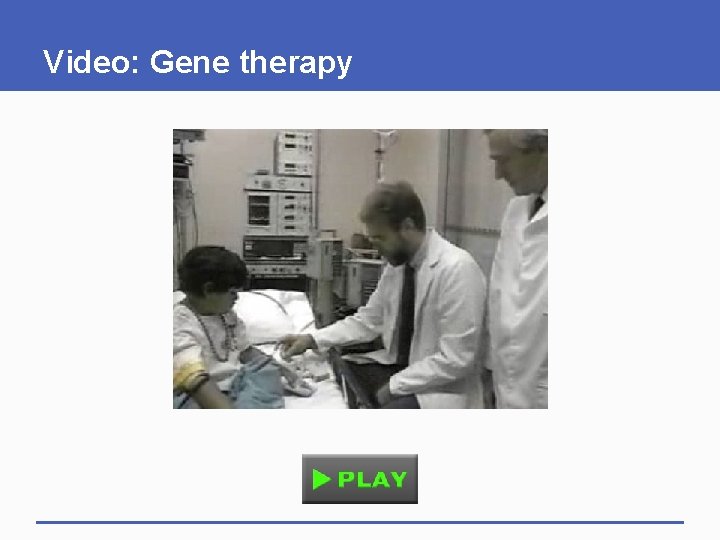
Gene Therapy § Primary immunodeficiency is the result of mutation; Cindy Cutshwall was successfully treated for ADA, a type of severe combined immunodeficiency (SCID), using gene therapy
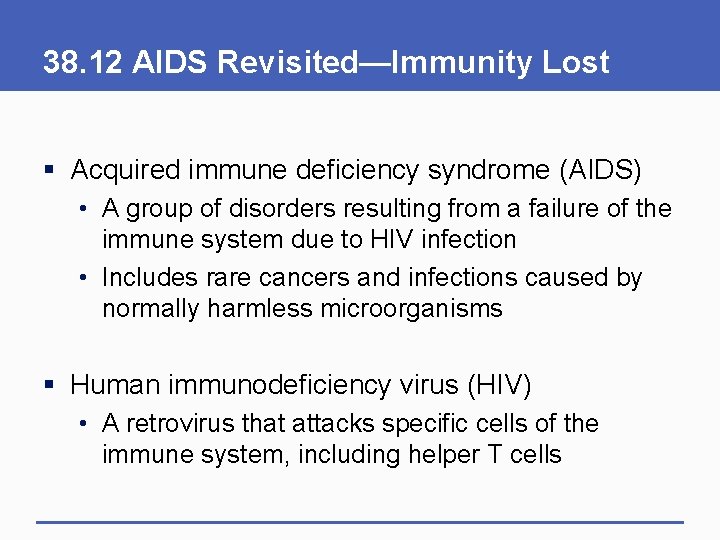
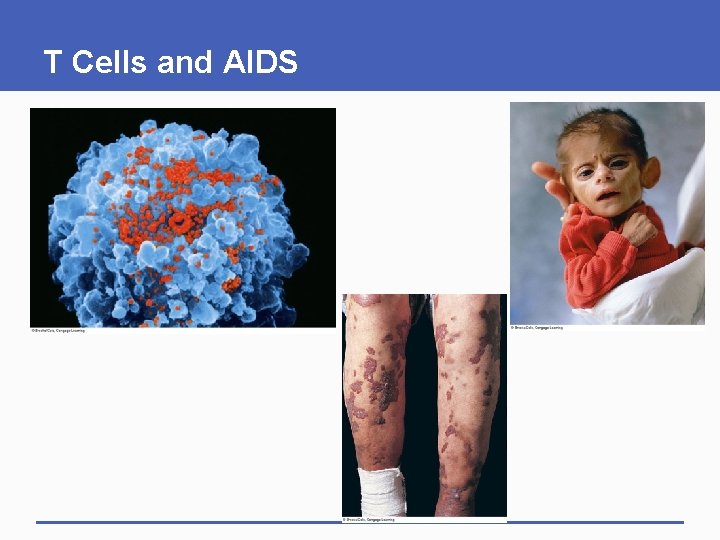
38. 12 AIDS Revisited—Immunity Lost § Acquired immune deficiency syndrome (AIDS) • A group of disorders resulting from a failure of the immune system due to HIV infection • Includes rare cancers and infections caused by normally harmless microorganisms § Human immunodeficiency virus (HIV) • A retrovirus that attacks specific cells of the immune system, including helper T cells
T Cells and AIDS
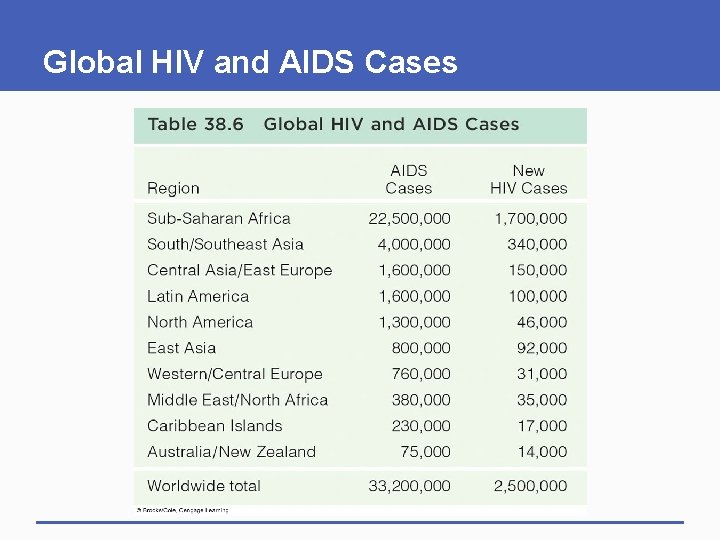
Global HIV and AIDS Cases
Transmission and Treatment § Common modes of HIV transmission • Unprotected sex, mother to child, shared syringes § HIV testing • Antibodies are found in blood, saliva or urine § Drugs • There is no cure; protease inhibitors and reverse transcriptase inhibitors can slow its progress
Prevention § Vaccines • Experimental vaccines are mostly ineffective or risky; the virus’ high mutation rate is an obstacle § Education • The best option for preventing the spread of HIV is teaching people how to avoid being infected
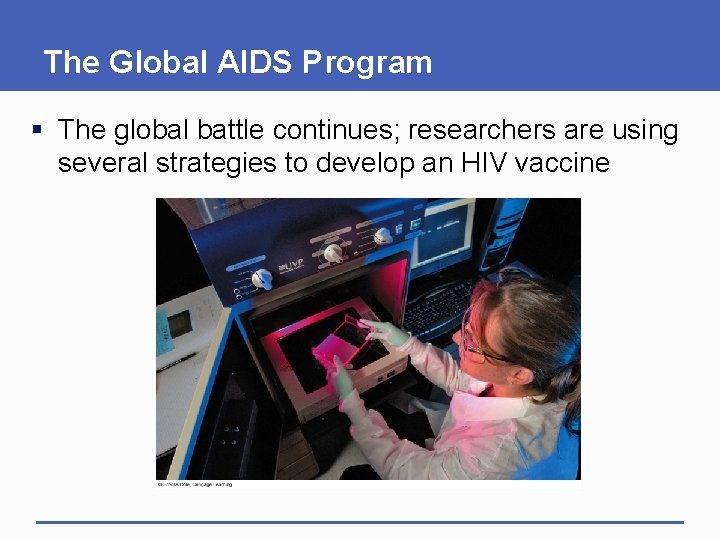
The Global AIDS Program § The global battle continues; researchers are using several strategies to develop an HIV vaccine
38. 9 -38. 12 Key Concepts Immunity In Our Lives § Vaccines are an important part of any health program § Failed or faulty immune mechanisms can result in allergies, immune deficiencies, or autoimmune disorders § The immune system itself is a target of human immunodeficiency virus (HIV)
Animation: Inflammatory response
Animation: Complement proteins
Animation: Antibody-mediated response
Animation: Clonal selection of a B cell
Animation: Immune memory
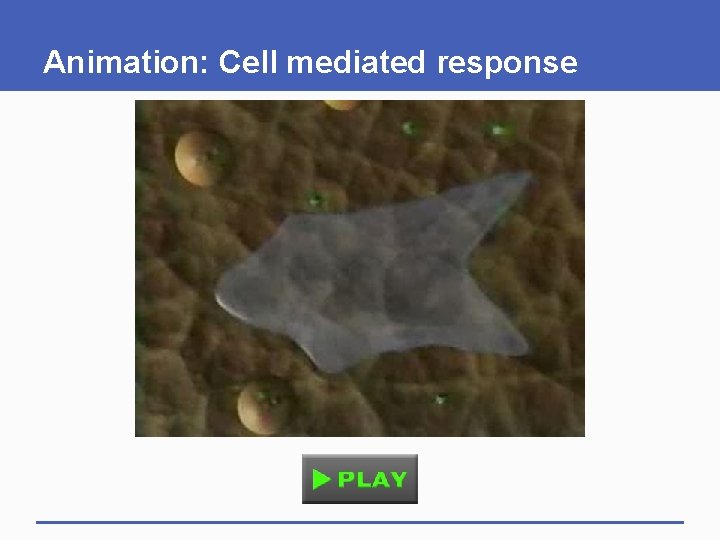
Animation: Cell-mediated response
Animation: Antibody structure
Animation: Cell mediated response
Animation: Gene rearrangements
Animation: Human lymphatic system
Animation: Immune responses
Animation: Innate defenses
ABC video: Food Allergy Increase
Video: HPV vaccine
Video: Gene therapy