
Immune systemAcquiredAdaptive immunity By Dr Sunita Mittal Learning
Immune system-Acquired/Adaptive immunity By Dr Sunita Mittal
Learning Objectives • • • To understand about acquired or adaptive immunity Steps of humoral immune response Steps of cellular immune response Cytokines Unwanted effects of immune system AIDS

Acquired Immune system Bone Marrow
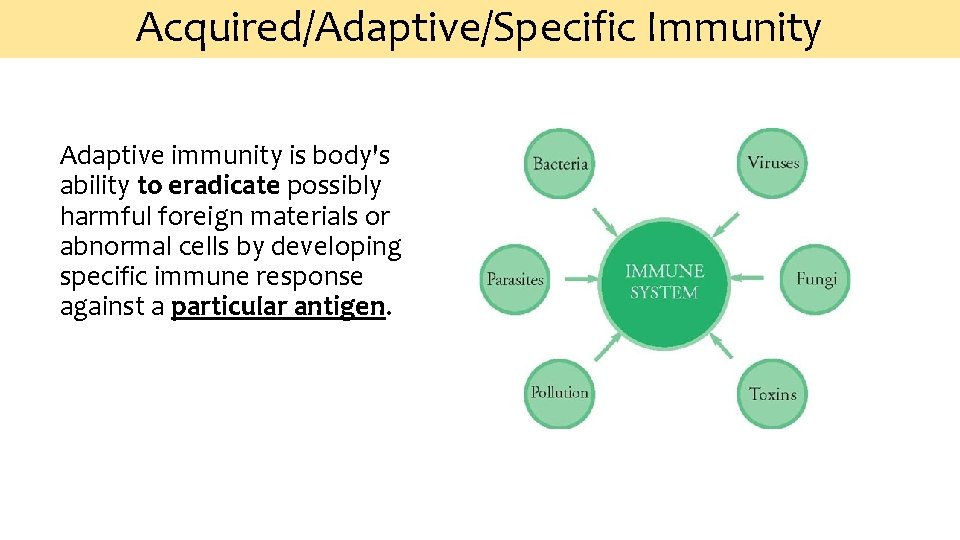
Acquired/Adaptive/Specific Immunity Adaptive immunity is body's ability to eradicate possibly harmful foreign materials or abnormal cells by developing specific immune response against a particular antigen.
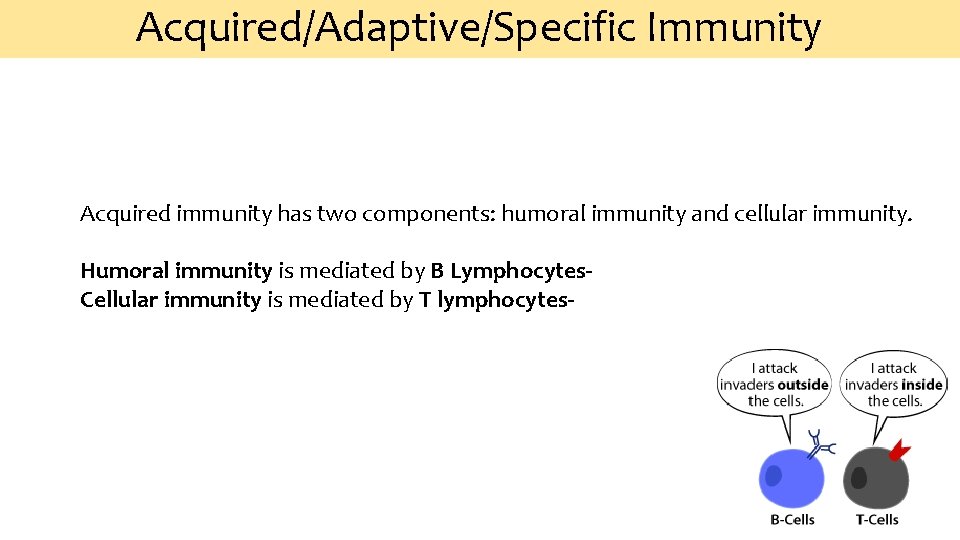
Acquired/Adaptive/Specific Immunity Acquired immunity has two components: humoral immunity and cellular immunity. Humoral immunity is mediated by B Lymphocytes. Cellular immunity is mediated by T lymphocytes-
MHC Antigens: Major Histocompatibility Complex / HLA Ag (Human Leukocytes Associated Ag) ▪These were first identified on the membrane of human leukocytes for the first time. ▪These glycoproteins are encoded by Histocompatibility Gene on short arm of chromosome 6 ▪These are the self antigens, which are very specific to a person and present on the surface membrane of all the nucleated cells of body EXCEPT RBCs.
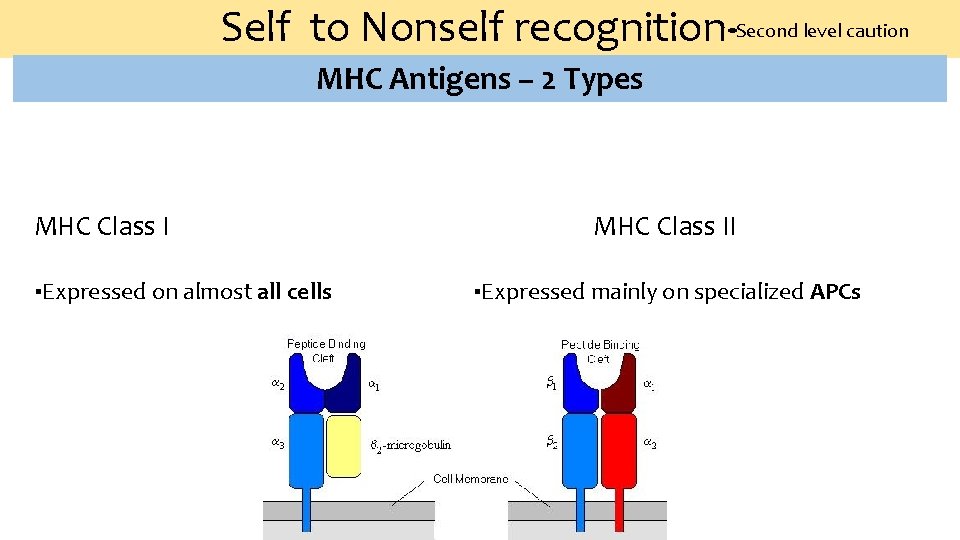
Self to Nonself recognition-▪Second level caution MHC Antigens – 2 Types MHC Class I ▪Expressed on almost all cells MHC Class II ▪Expressed mainly on specialized APCs
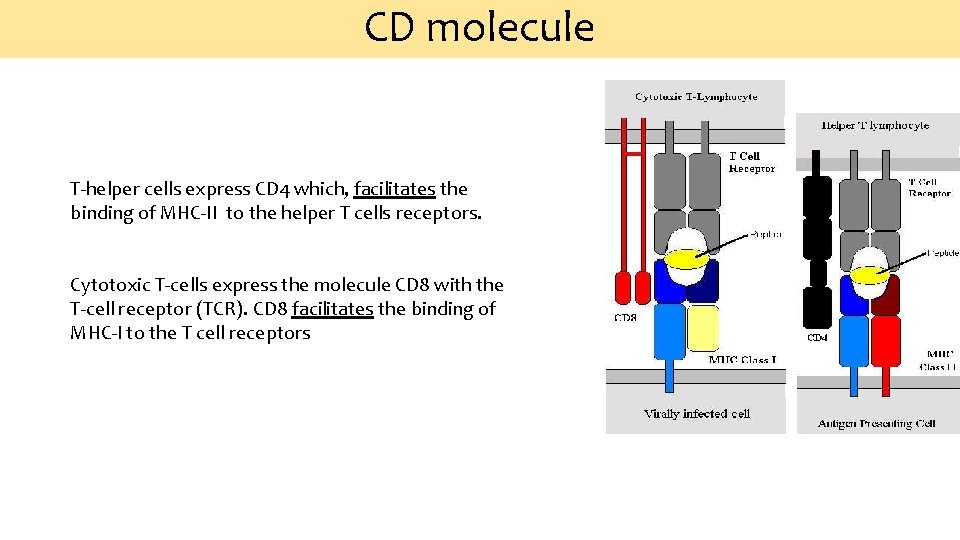
CD molecule T-helper cells express CD 4 which, facilitates the binding of MHC-II to the helper T cells receptors. Cytotoxic T-cells express the molecule CD 8 with the T-cell receptor (TCR). CD 8 facilitates the binding of MHC-I to the T cell receptors
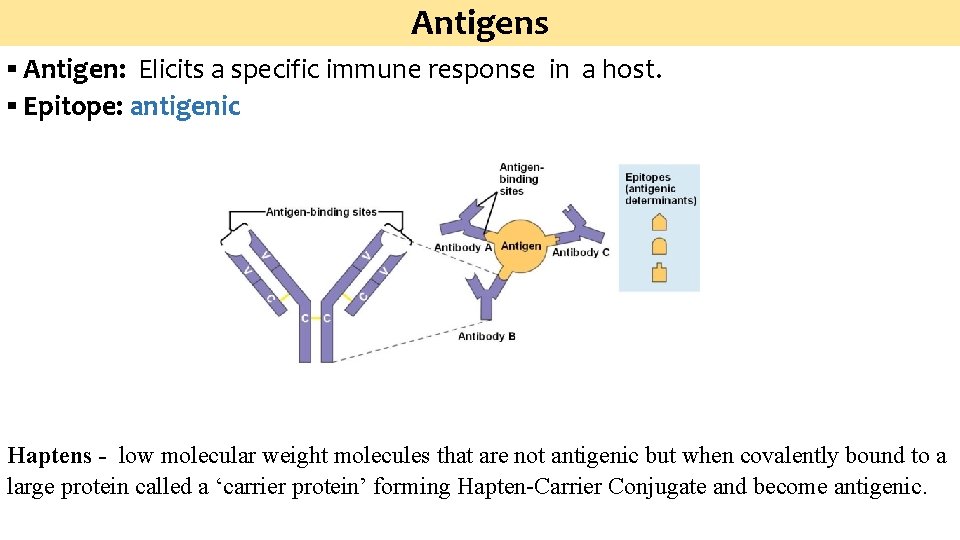
Antigens ▪ Antigen: Elicits a specific immune response in a host. ▪ Epitope: antigenic Haptens - low molecular weight molecules that are not antigenic but when covalently bound to a large protein called a ‘carrier protein’ forming Hapten-Carrier Conjugate and become antigenic.
Humoral & Cellular Immunity Humoral Immunity It is a ‘B cells’ generated - antibody mediated immune response especially effective against bacterial antigens. Cellular Immunity It is a ‘T cells’ mediated immune response especially effective against intracellular organisms like viruses, parasites, fungi and others like cancer cells and transplant cells (few bacterial infection like tubercular bacilli).
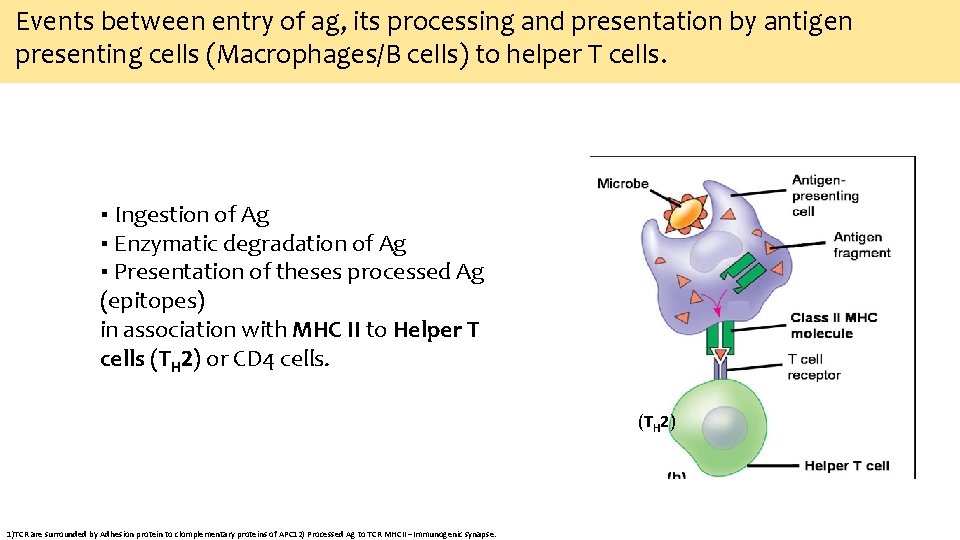
Events between entry of ag, its processing and presentation by antigen presenting cells (Macrophages/B cells) to helper T cells. ▪ Ingestion of Ag ▪ Enzymatic degradation of Ag ▪ Presentation of theses processed Ag (epitopes) in association with MHC II to Helper T cells (TH 2) or CD 4 cells. (TH 2) 1)TCR are surrounded by Adhesion protein to clomplementary proteins of APC 12) Processed Ag to TCR MHCII –Immunogenic synapse.
Humoral Immunity Clones of B cells recognize antigens (Clonal Selection) through the TH 2, Gets activated by the released cytokines Differentiate into plasma cells and memory cells→The immunoglobulins are secreted

Humoral Immunity – Antibody- Basic Structure Constant region Variable region • 2 identical heavy chains • 2 identical light chains L L H H • Each heavy chain – has a constant and a variable region and each light chain has a constant and a variable region. • Fab – fragment antigen binding site, • Fc- Fragment complement and some immune cell binding site.
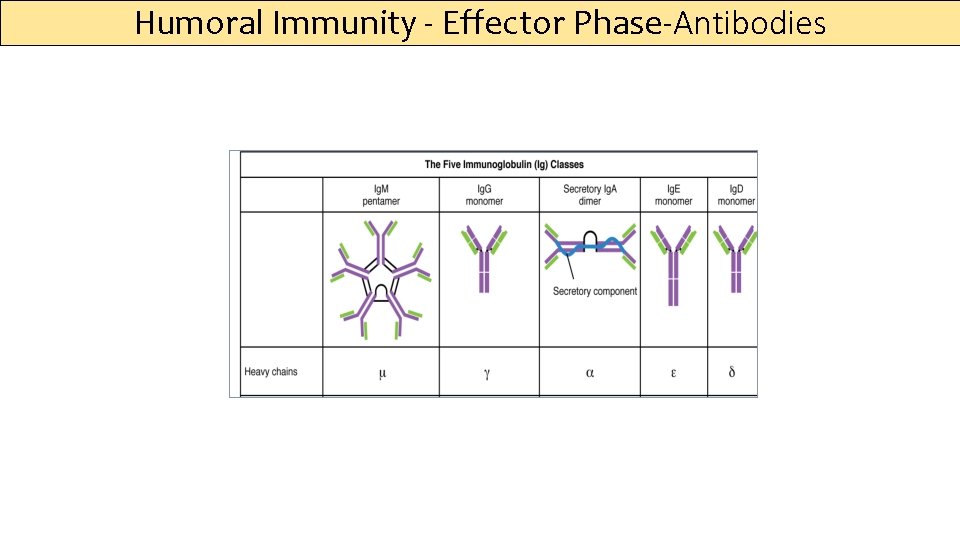
Humoral Immunity - Effector Phase-Antibodies
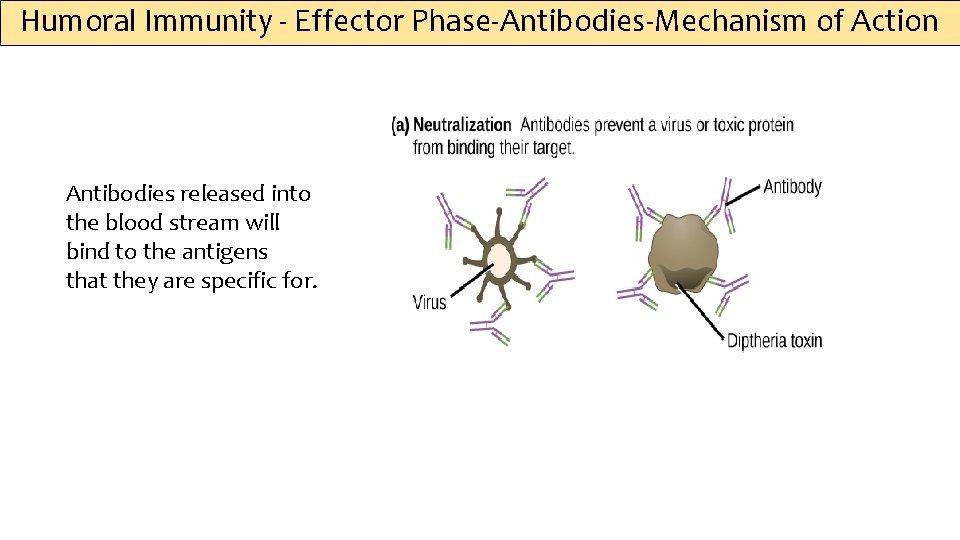
Humoral Immunity - Effector Phase-Antibodies-Mechanism of Action Antibodies released into the blood stream will bind to the antigens that they are specific for.
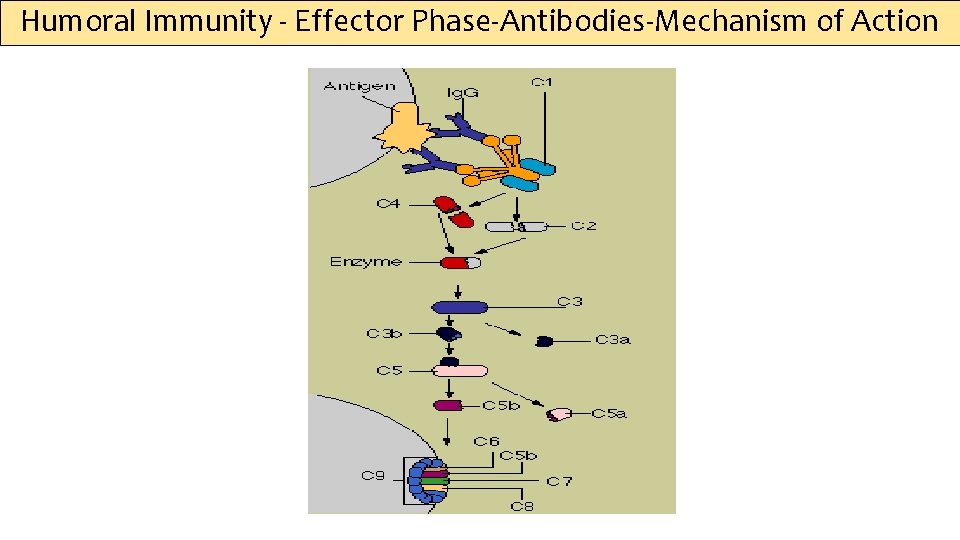
Humoral Immunity - Effector Phase-Antibodies-Mechanism of Action
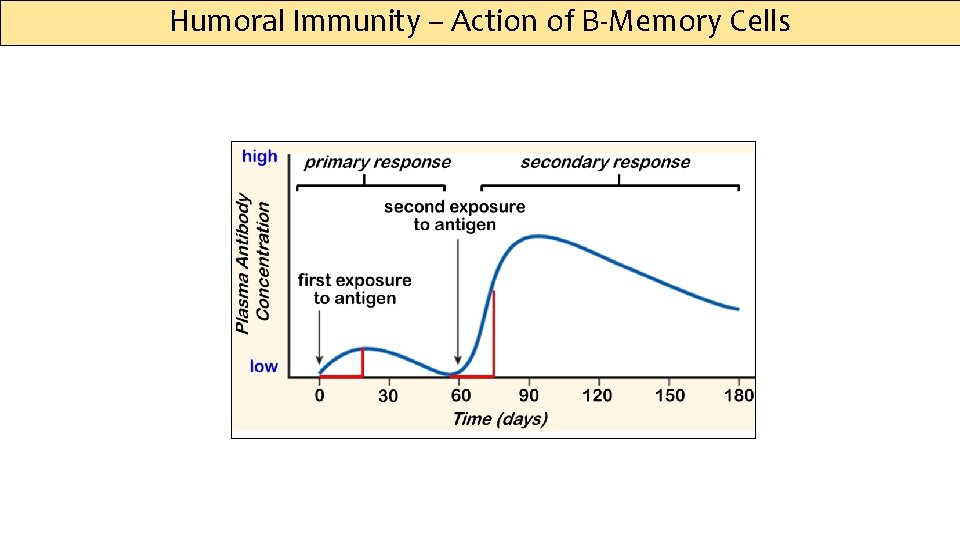
Humoral Immunity – Action of B-Memory Cells
Self Assessment Humoral immunity is mediated by ……………… lymphocytes. Cellular immunity is mediated by …………. . …. lymphocytes. ………………… fragment of antibody is antigen binding site. …………fragment of antibody is complement and some immune cell binding site. Presentation of theses processed Ag occurs in association with ……………. to Helper T cells.

Thank you
- Slides: 19