
Immune System Review and Disease Outbreak Immune System
Immune System Review and Disease Outbreak
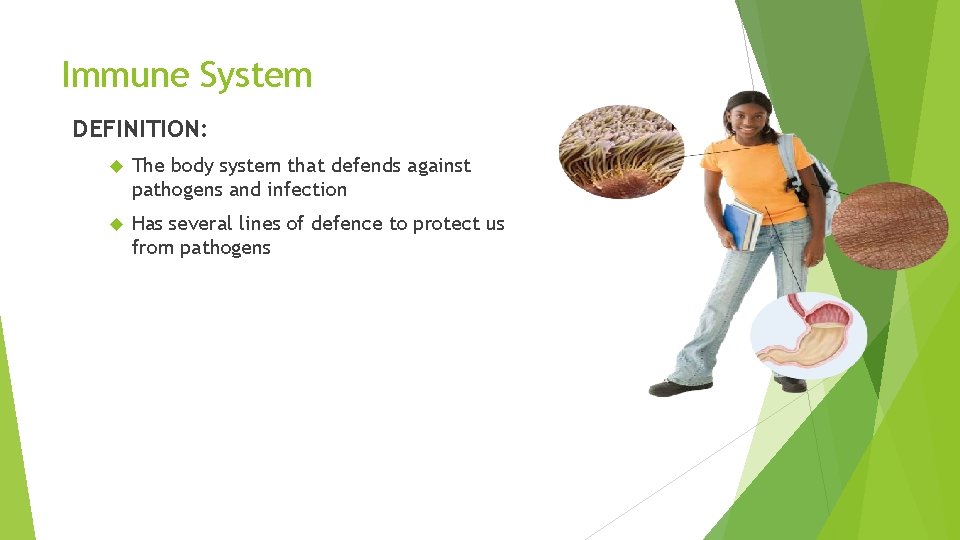
Immune System DEFINITION: The body system that defends against pathogens and infection Has several lines of defence to protect us from pathogens
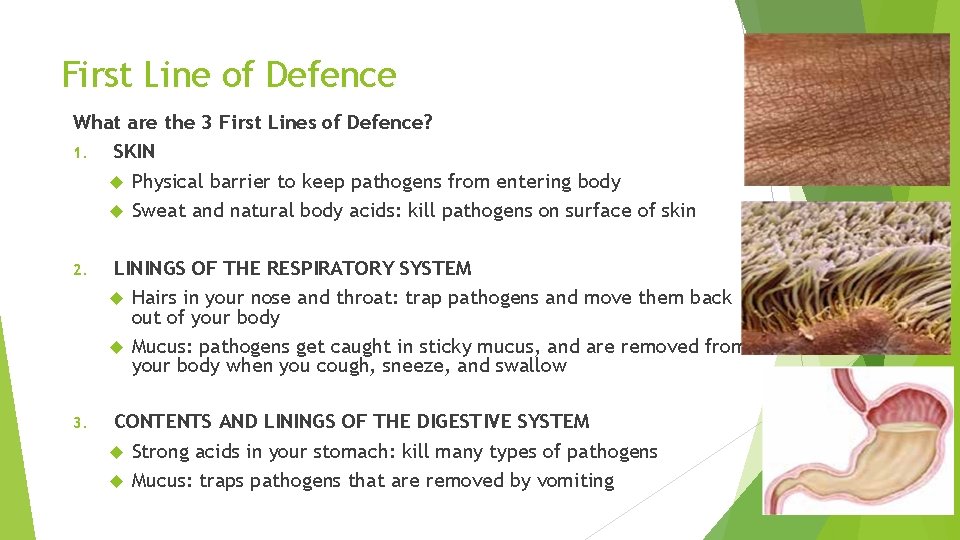
First Line of Defence What are the 3 First Lines of Defence? 1. SKIN Physical barrier to keep pathogens from entering body Sweat and natural body acids: kill pathogens on surface of skin 2. LININGS OF THE RESPIRATORY SYSTEM Hairs in your nose and throat: trap pathogens and move them back out of your body Mucus: pathogens get caught in sticky mucus, and are removed from your body when you cough, sneeze, and swallow 3. CONTENTS AND LININGS OF THE DIGESTIVE SYSTEM Strong acids in your stomach: kill many types of pathogens Mucus: traps pathogens that are removed by vomiting
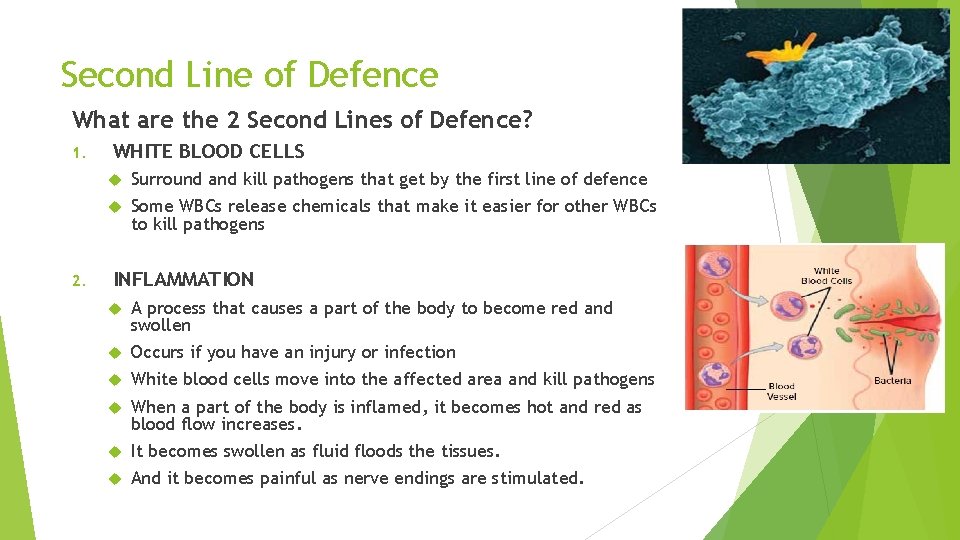
Second Line of Defence What are the 2 Second Lines of Defence? 1. 2. WHITE BLOOD CELLS Surround and kill pathogens that get by the first line of defence Some WBCs release chemicals that make it easier for other WBCs to kill pathogens INFLAMMATION A process that causes a part of the body to become red and swollen Occurs if you have an injury or infection White blood cells move into the affected area and kill pathogens When a part of the body is inflamed, it becomes hot and red as blood flow increases. It becomes swollen as fluid floods the tissues. And it becomes painful as nerve endings are stimulated.
The Third Line of Defence Specialized white blood cells (WBCs) These WBCs can recognize pathogens that they have previously fought If the same pathogen enters the body in the future, the WBCs respond quickly so you don’t get sick again These are called T-Cells
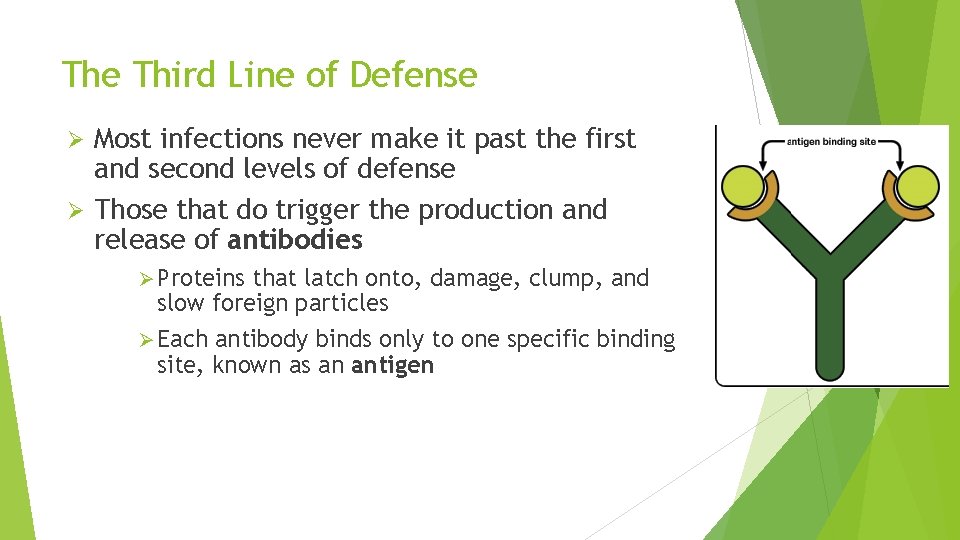
The Third Line of Defense Most infections never make it past the first and second levels of defense Ø Those that do trigger the production and release of antibodies Ø Ø Proteins that latch onto, damage, clump, and slow foreign particles Ø Each antibody binds only to one specific binding site, known as an antigen
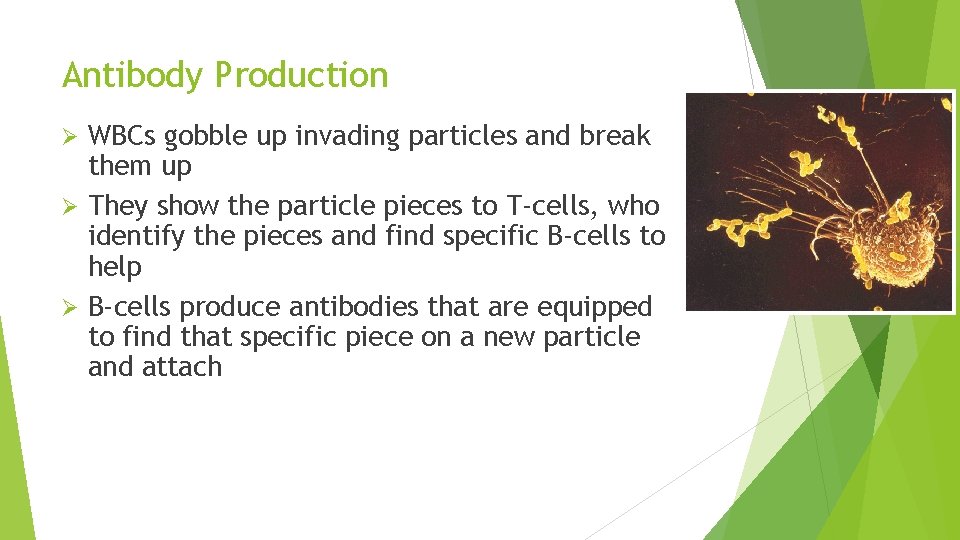
Antibody Production WBCs gobble up invading particles and break them up Ø They show the particle pieces to T-cells, who identify the pieces and find specific B-cells to help Ø B-cells produce antibodies that are equipped to find that specific piece on a new particle and attach Ø
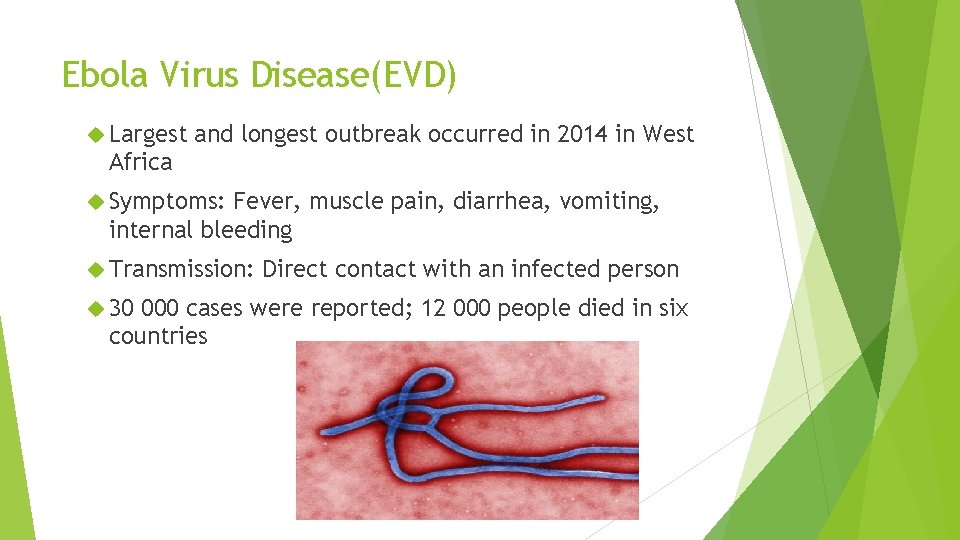
Ebola Virus Disease(EVD) Largest and longest outbreak occurred in 2014 in West Africa Symptoms: Fever, muscle pain, diarrhea, vomiting, internal bleeding Transmission: 30 Direct contact with an infected person 000 cases were reported; 12 000 people died in six countries
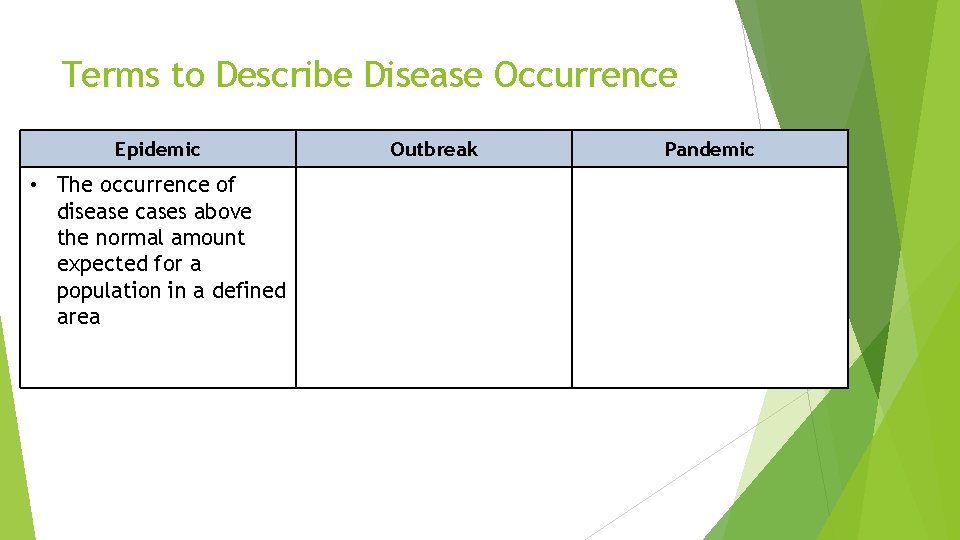
Terms to Describe Disease Occurrence Epidemic • The occurrence of disease cases above the normal amount expected for a population in a defined area Outbreak Pandemic
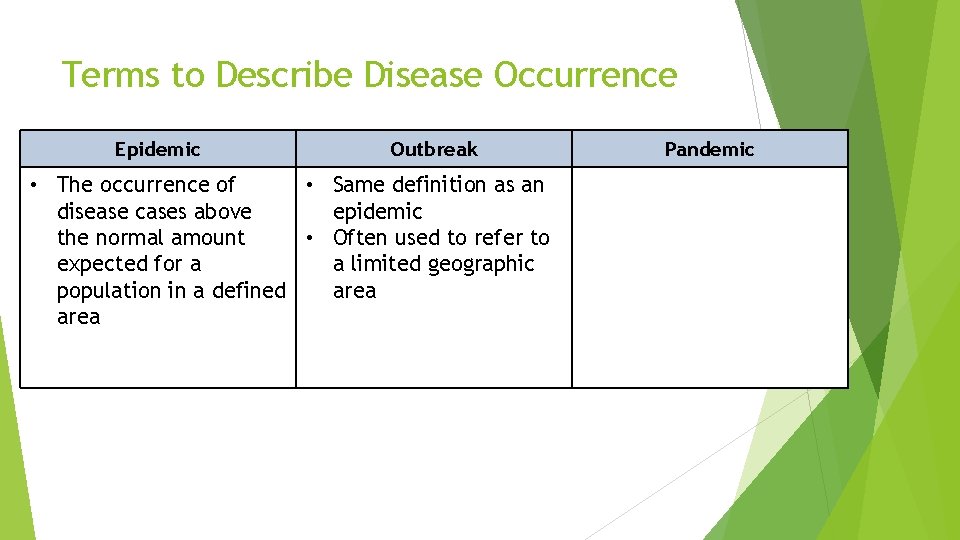
Terms to Describe Disease Occurrence Epidemic Outbreak • The occurrence of • Same definition as an disease cases above epidemic the normal amount • Often used to refer to expected for a a limited geographic population in a defined area Pandemic
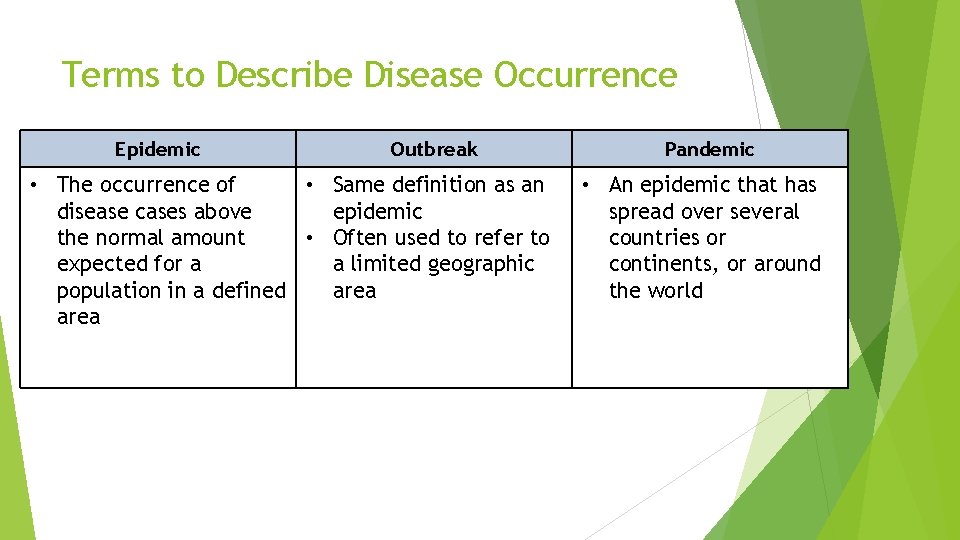
Terms to Describe Disease Occurrence Epidemic Outbreak • The occurrence of • Same definition as an disease cases above epidemic the normal amount • Often used to refer to expected for a a limited geographic population in a defined area Pandemic • An epidemic that has spread over several countries or continents, or around the world
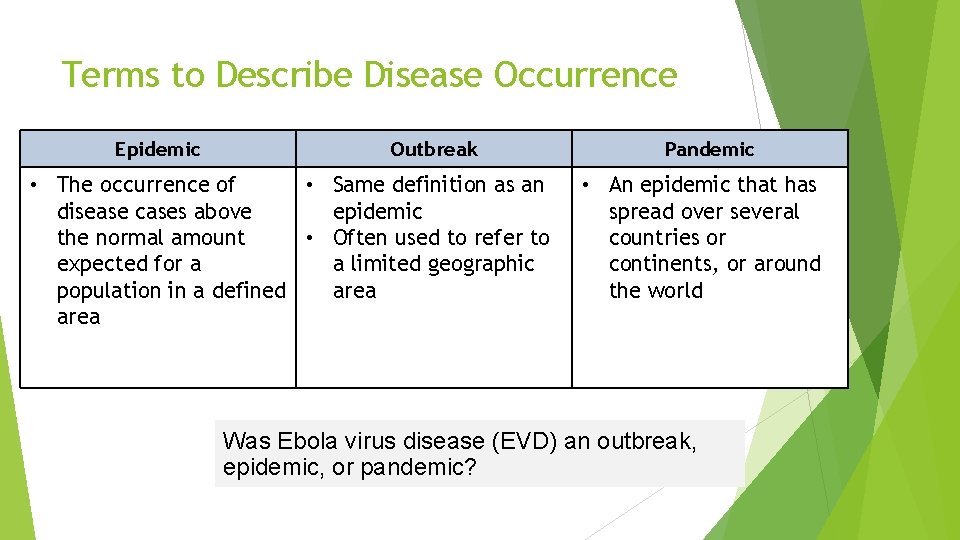
Terms to Describe Disease Occurrence Epidemic Outbreak • The occurrence of • Same definition as an disease cases above epidemic the normal amount • Often used to refer to expected for a a limited geographic population in a defined area Pandemic • An epidemic that has spread over several countries or continents, or around the world Was Ebola virus disease (EVD) an outbreak, epidemic, or pandemic?
Endemic A disease that exists permanently in a particular region or population Examples: Malaria is a constant worry in parts of Africa Chicken Pox in children in North America Epidemic: An outbreak of disease that attacks many peoples at about the same time and may spread through one or several communities
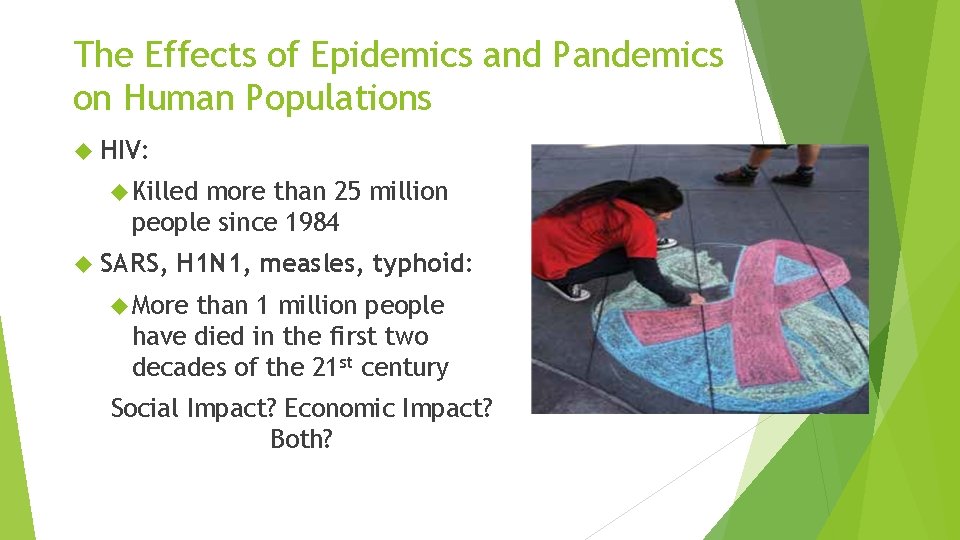
The Effects of Epidemics and Pandemics on Human Populations HIV: Killed more than 25 million people since 1984 SARS, H 1 N 1, measles, typhoid: More than 1 million people have died in the first two decades of the 21 st century Social Impact? Economic Impact? Both?
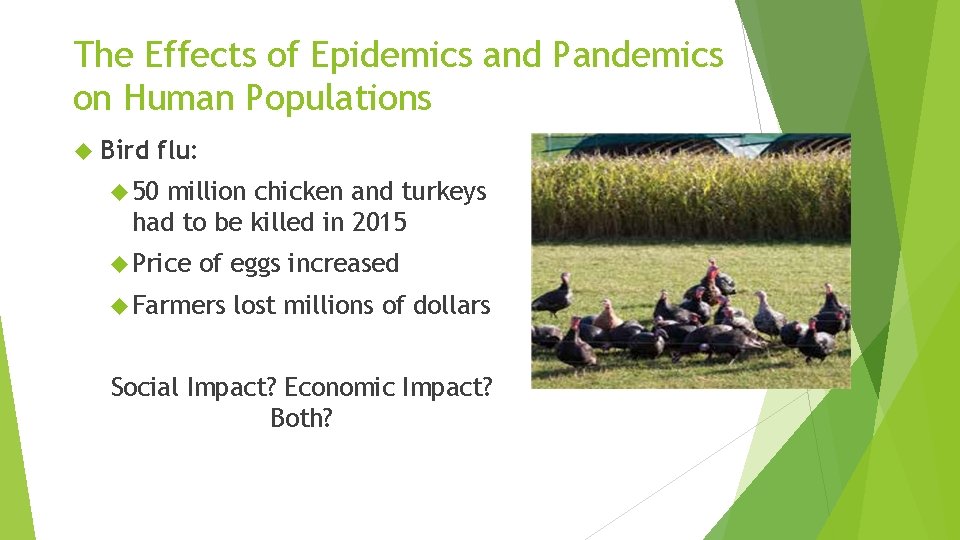
The Effects of Epidemics and Pandemics on Human Populations Bird flu: 50 million chicken and turkeys had to be killed in 2015 Price of eggs increased Farmers lost millions of dollars Social Impact? Economic Impact? Both?
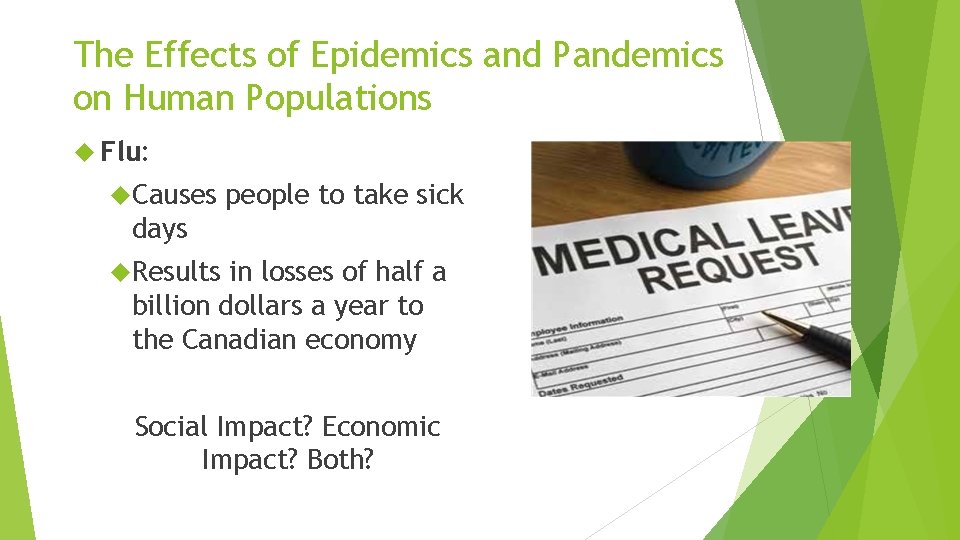
The Effects of Epidemics and Pandemics on Human Populations Flu: Causes people to take sick days Results in losses of half a billion dollars a year to the Canadian economy Social Impact? Economic Impact? Both?
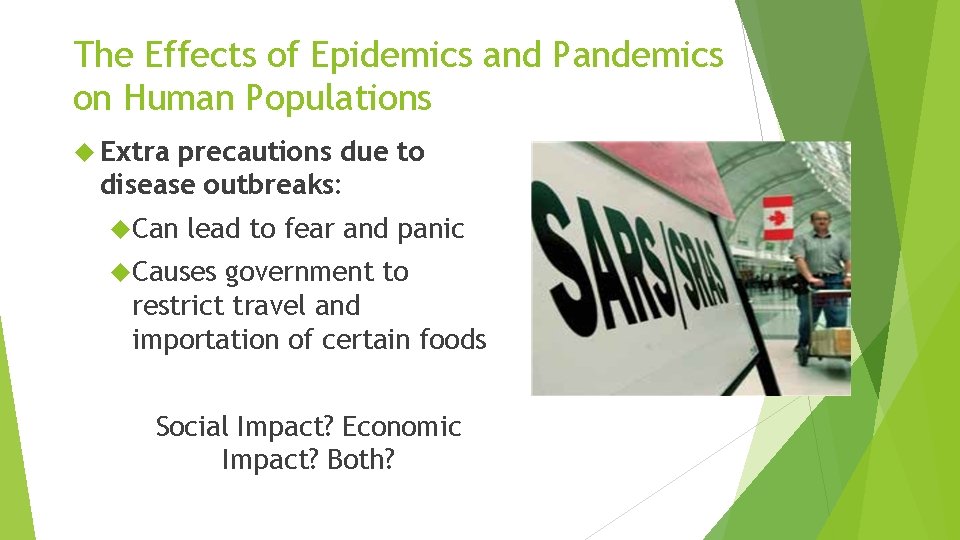
The Effects of Epidemics and Pandemics on Human Populations Extra precautions due to disease outbreaks: Can lead to fear and panic Causes government to restrict travel and importation of certain foods Social Impact? Economic Impact? Both?
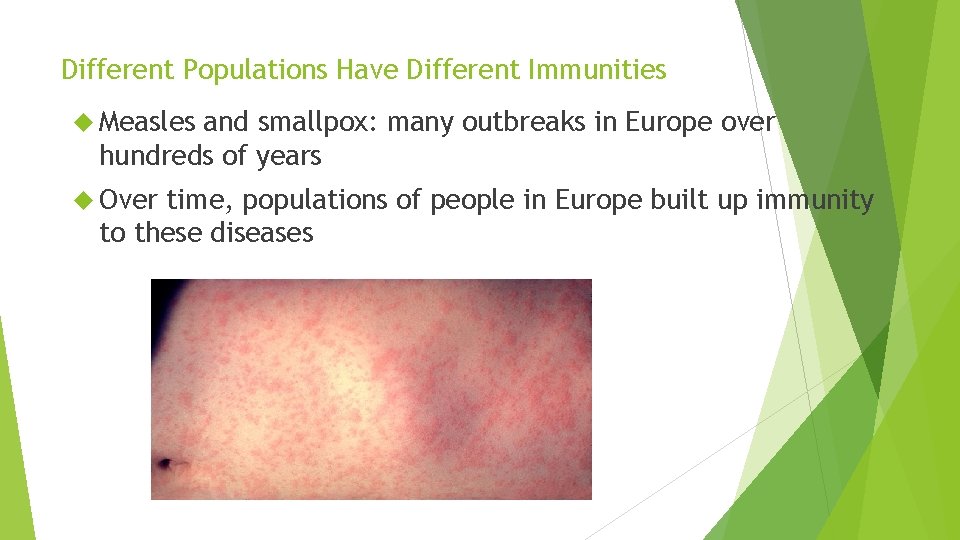
Different Populations Have Different Immunities Measles and smallpox: many outbreaks in Europe over hundreds of years Over time, populations of people in Europe built up immunity to these diseases
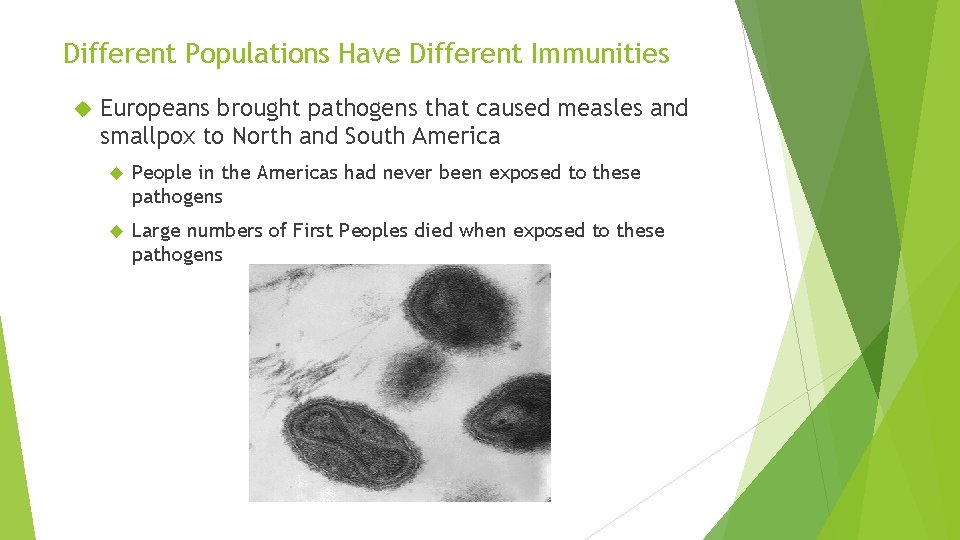
Different Populations Have Different Immunities Europeans brought pathogens that caused measles and smallpox to North and South America People in the Americas had never been exposed to these pathogens Large numbers of First Peoples died when exposed to these pathogens
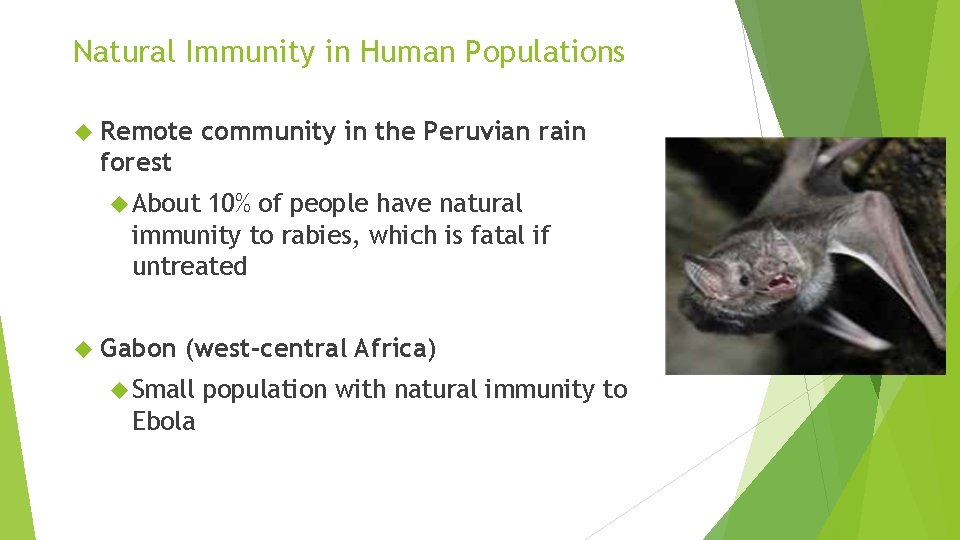
Natural Immunity in Human Populations Remote community in the Peruvian rain forest About 10% of people have natural immunity to rabies, which is fatal if untreated Gabon (west-central Africa) Small Ebola population with natural immunity to
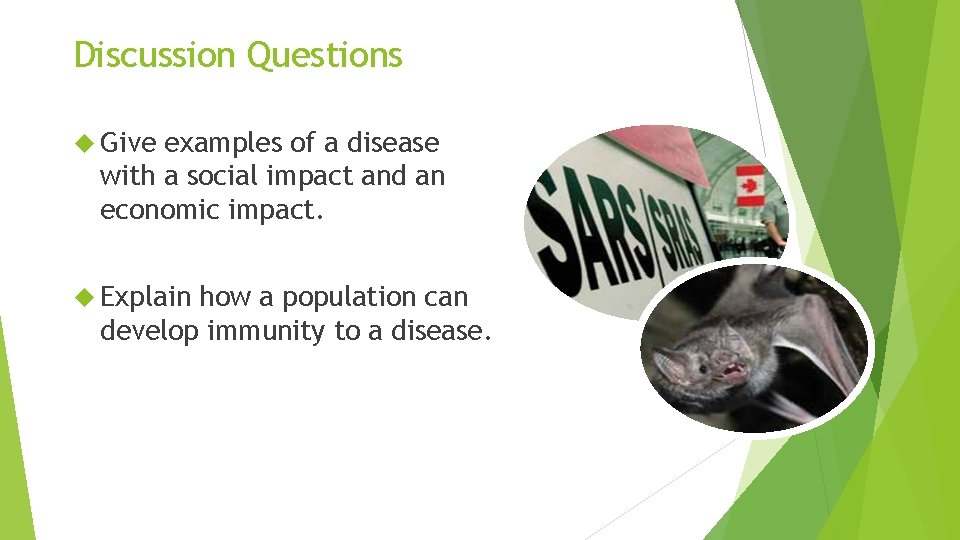
Discussion Questions Give examples of a disease with a social impact and an economic impact. Explain how a population can develop immunity to a disease.
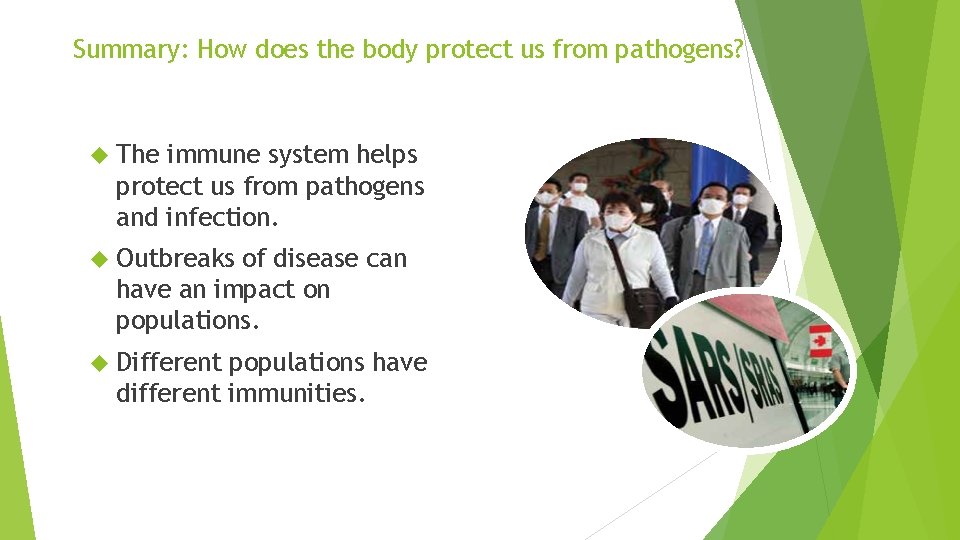
Summary: How does the body protect us from pathogens? The immune system helps protect us from pathogens and infection. Outbreaks of disease can have an impact on populations. Different populations have different immunities.
- Slides: 22