
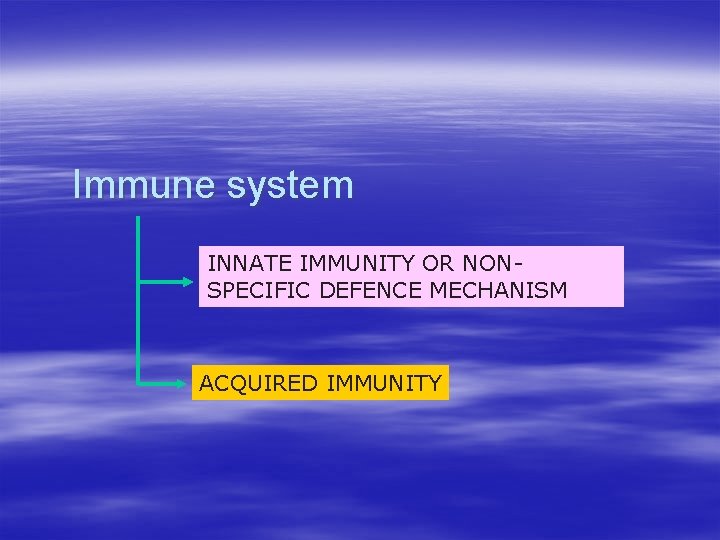
Immune system INNATE IMMUNITY OR NONSPECIFIC DEFENCE MECHANISM
- Slides: 9
Immune system INNATE IMMUNITY OR NONSPECIFIC DEFENCE MECHANISM ACQUIRED IMMUNITY
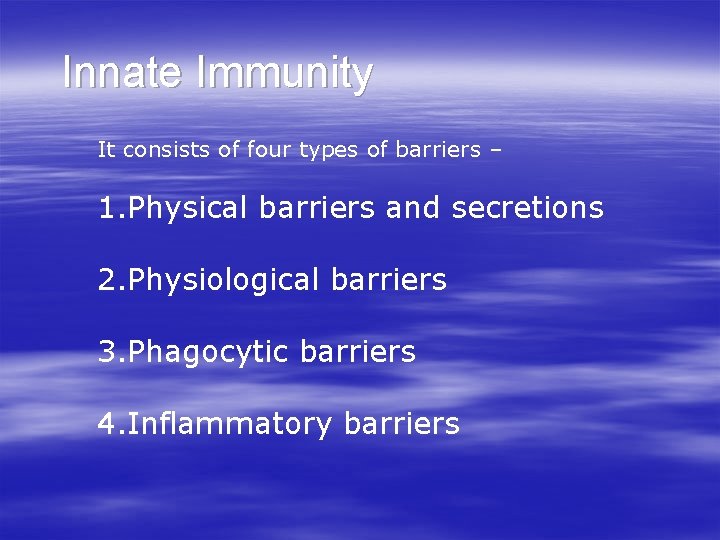
Innate Immunity It consists of four types of barriers – 1. Physical barriers and secretions 2. Physiological barriers 3. Phagocytic barriers 4. Inflammatory barriers
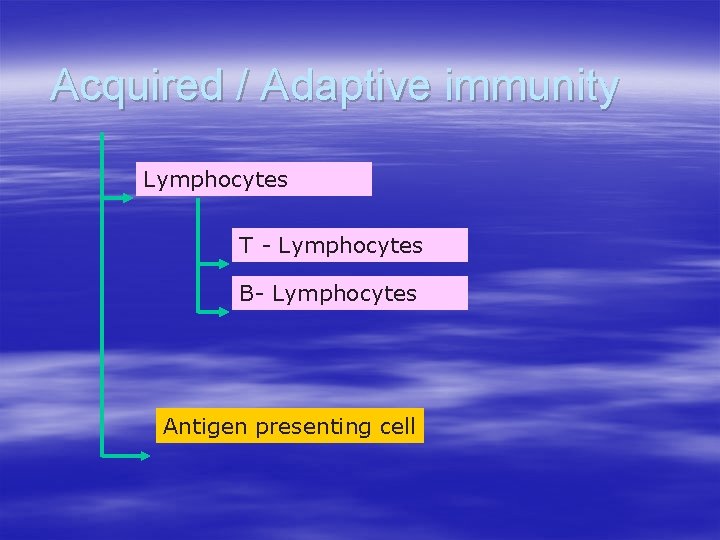
Acquired / Adaptive immunity Lymphocytes T - Lymphocytes B- Lymphocytes Antigen presenting cell
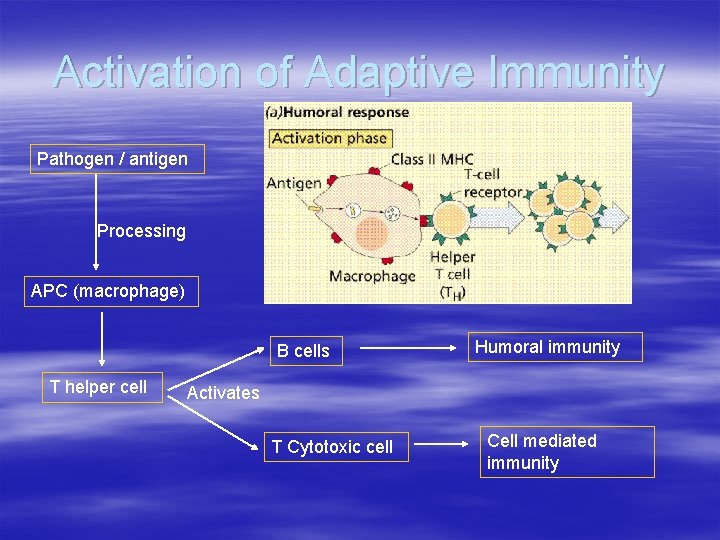
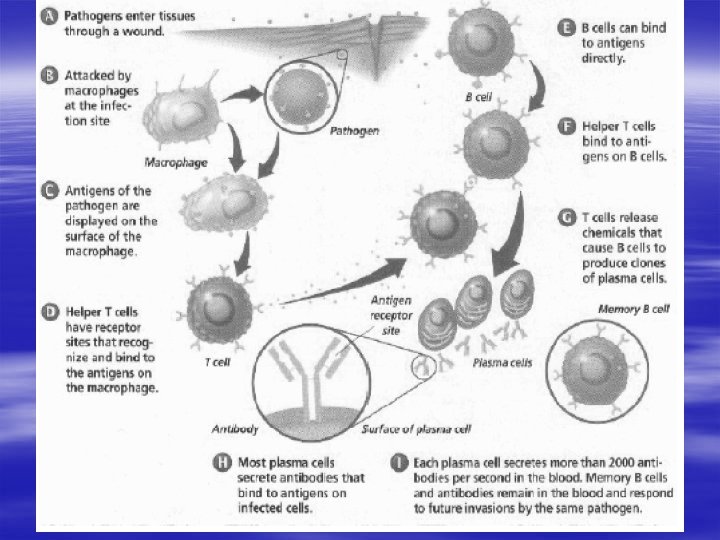
Activation of Adaptive Immunity Pathogen / antigen Processing APC (macrophage) B cells T helper cell Humoral immunity Activates T Cytotoxic cell Cell mediated immunity
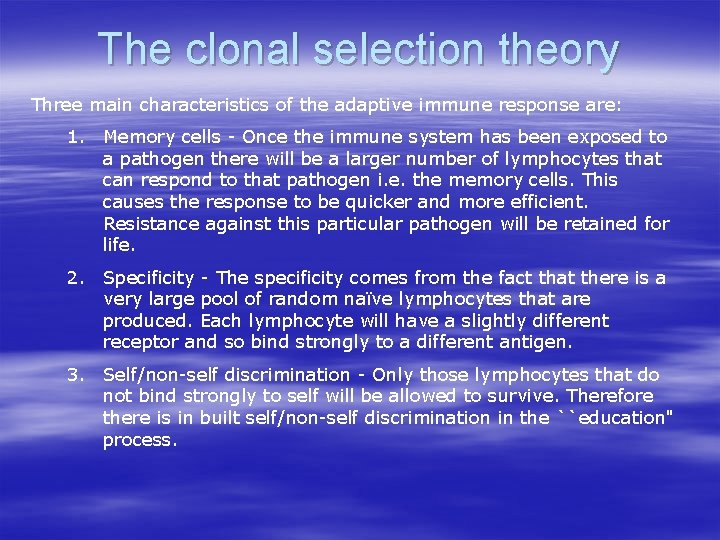
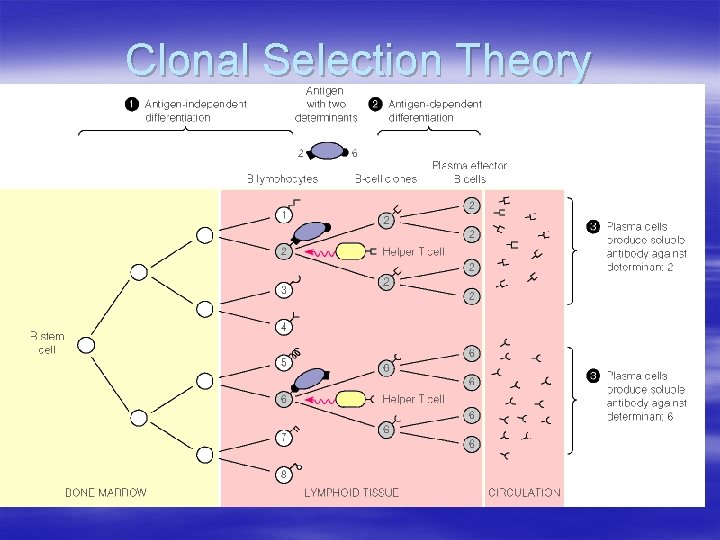
The clonal selection theory Three main characteristics of the adaptive immune response are: 1. Memory cells - Once the immune system has been exposed to a pathogen there will be a larger number of lymphocytes that can respond to that pathogen i. e. the memory cells. This causes the response to be quicker and more efficient. Resistance against this particular pathogen will be retained for life. 2. Specificity - The specificity comes from the fact that there is a very large pool of random naïve lymphocytes that are produced. Each lymphocyte will have a slightly different receptor and so bind strongly to a different antigen. 3. Self/non-self discrimination - Only those lymphocytes that do not bind strongly to self will be allowed to survive. Therefore there is in built self/non-self discrimination in the ``education" process.
Clonal Selection Theory
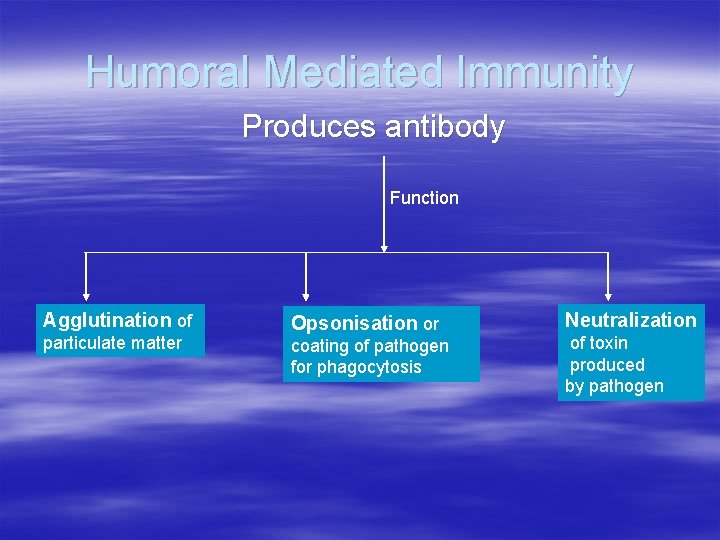
Humoral Mediated Immunity Produces antibody Function Agglutination of particulate matter Opsonisation or coating of pathogen for phagocytosis Neutralization of toxin produced by pathogen
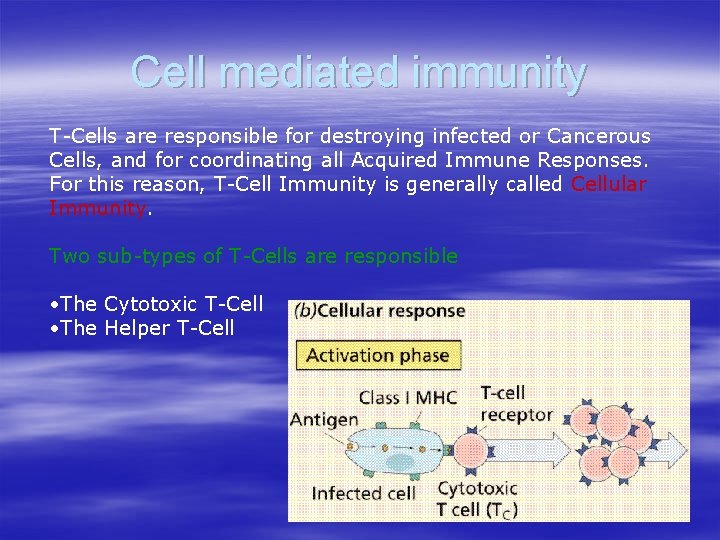
Cell mediated immunity T-Cells are responsible for destroying infected or Cancerous Cells, and for coordinating all Acquired Immune Responses. For this reason, T-Cell Immunity is generally called Cellular Immunity. Two sub-types of T-Cells are responsible • The Cytotoxic T-Cell • The Helper T-Cell