
Immune System Immune System A body system to
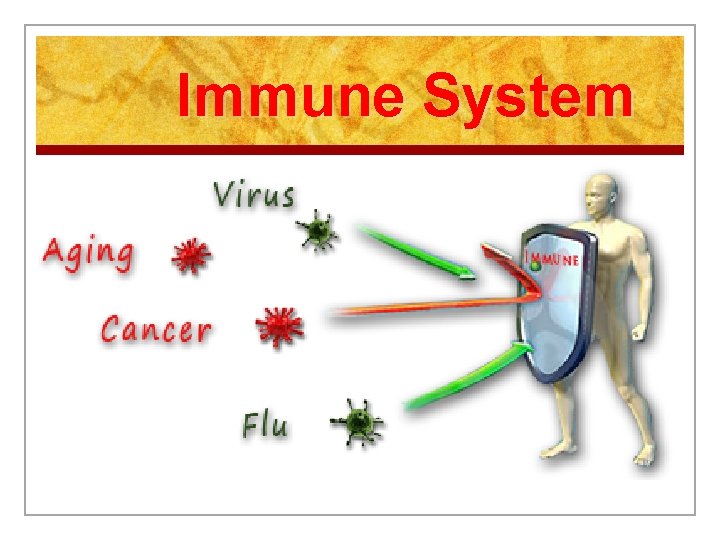
Immune System
Immune System A body system to fight off foreign invaders….
Immune System Star Wars- Immune System
Immune System Disease - A failure of homeostasis
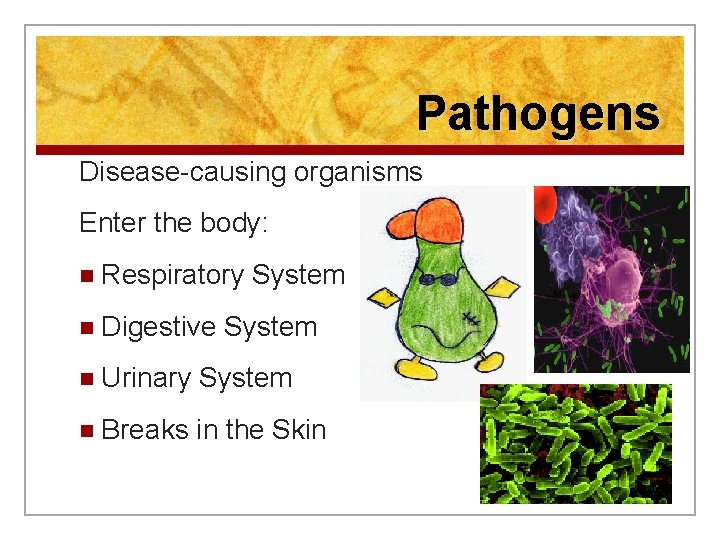
Pathogens Disease-causing organisms Enter the body: n Respiratory n Digestive System n Urinary System n Breaks in the Skin

First Line of Defense Physical Barriers n skin, membranes Chemical Barriers n sweat, tears, saliva, mucus, stomach acid, urine
Second Line of Defense Inflammatory Response: Histamine Reaction that causes swelling, redness, warmth and pain in an area of infection Chemicals are released which increase body temperature (fever)
Second Line of Defense n Phagocytes are attracted to the area and engulf bacteria phagocytosis animation
Increased Temperature n Slows growth of pathogen n increases rate of chemical reactions n increases heart rate so WBCs get to site of infection faster inflammatory response animation
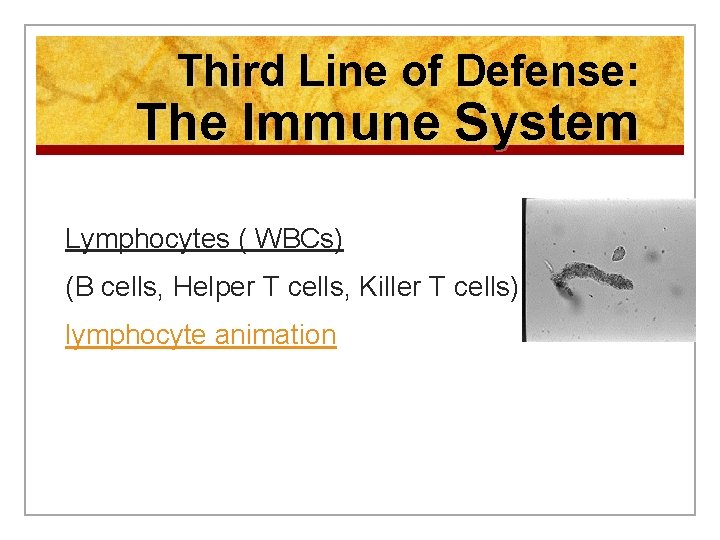
Third Line of Defense: The Immune System Lymphocytes ( WBCs) (B cells, Helper T cells, Killer T cells) lymphocyte animation
IMMUNITY The ability of the body to fight infection through the protection of antibodies and cells that inactivate foreign substances.
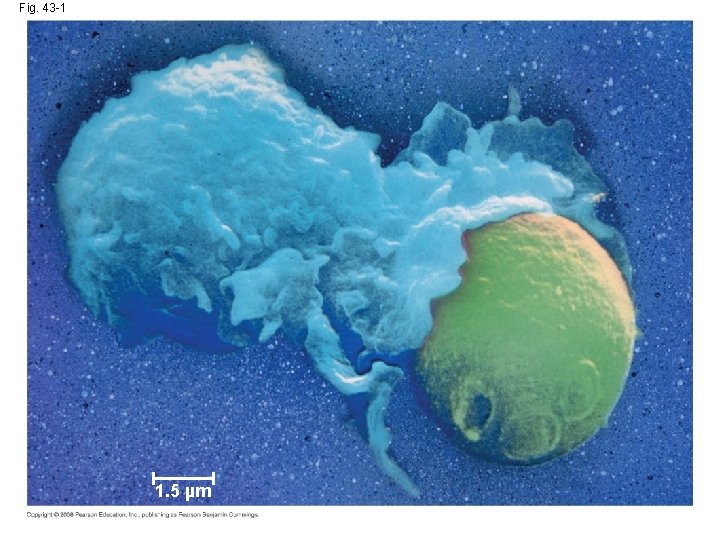
Fig. 43 -1 1. 5 µm
BASIS OF IMMUNITY The ability of the body to distinguish between its own substances “SELF” and foreign substances “NON-SELF”
BASIS OF IMMUNITY n Barriers help an animal to defend itself from the many dangerous pathogens it may encounter n The immune system recognizes foreign bodies and responds with the production of immune cells and proteins n Two major kinds of defenses are involved: Innate immunity and Acquired immunity
BASIS OF IMMUNITY Innate immunity n is present before any exposure to pathogens and is effective from the time of birth n It involves Nonspecific responses to pathogens ex: Phagocytes ( WBC’s) first attacking a pathogen
BASIS OF IMMUNITY Acquired immunity n develops after exposure to agents such as microbes or other foreign substances n It involves a very Specific response to pathogens Ex: T-Cells, B-Cells, Memory B-Cells and Antibodies
Important Terms to Know
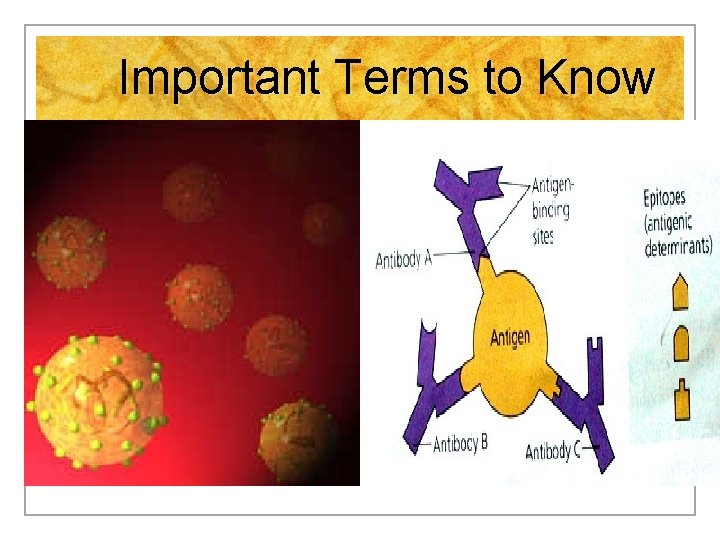
Important Terms to Know ANTIGEN A substance that causes an immune response. n made of proteins. (Very Specific) n EVERY organism have specific antigens that line the Surface of their Cells. n Every Organism has unique antigens
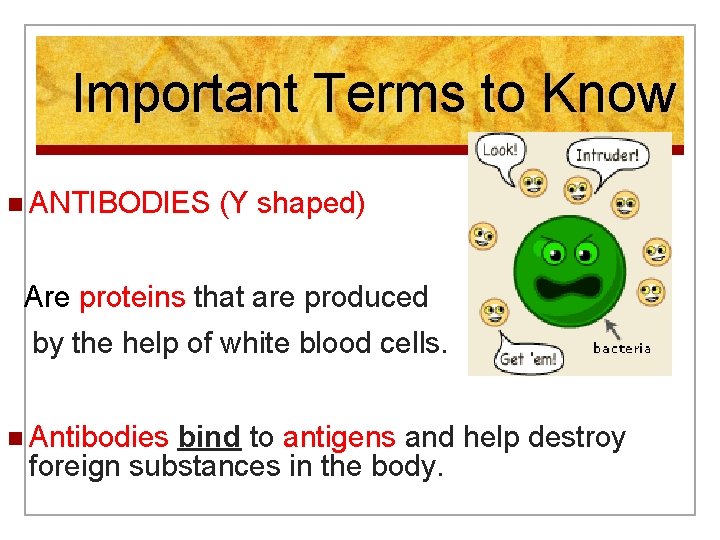
Important Terms to Know n ANTIBODIES (Y shaped) Are proteins that are produced by the help of white blood cells. n Antibodies bind to antigens and help destroy foreign substances in the body.
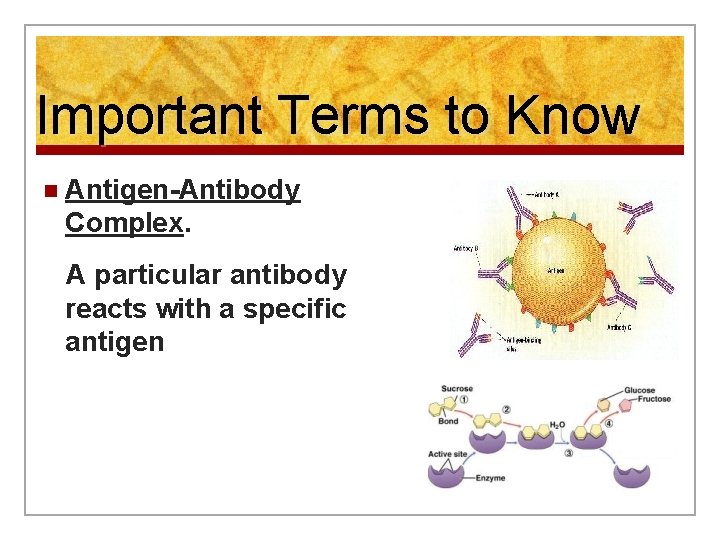
Important Terms to Know n Antigen-Antibody Complex. A particular antibody reacts with a specific antigen
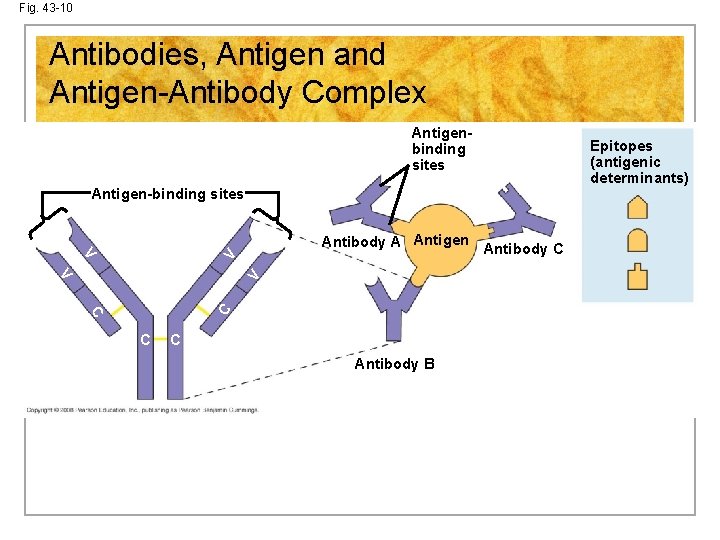
Fig. 43 -10 Antibodies, Antigen and Antigen-Antibody Complex Antigenbinding sites Antigen-binding sites V V Antibody A Antigen Antibody C C C V V C C Antibody B Epitopes (antigenic determinants)
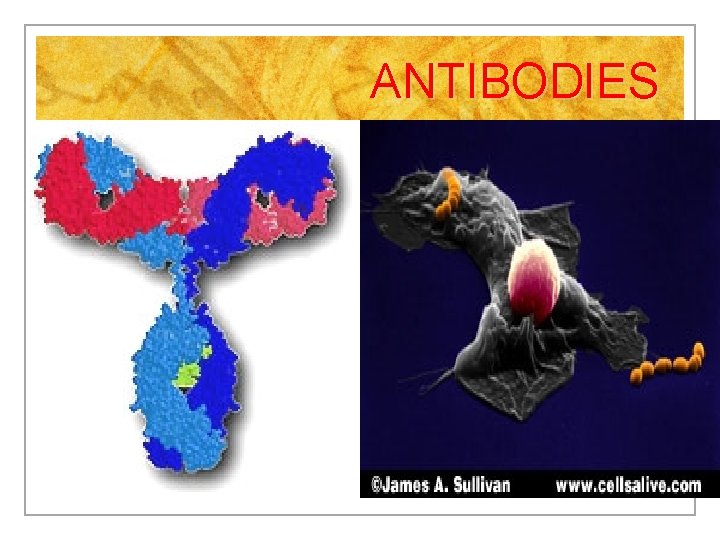
ANTIBODIES
Important Terms to Know n Lymphocytes – White blood cells - found most often in the lymphatic system – Originate from stem cells in the bone marrow
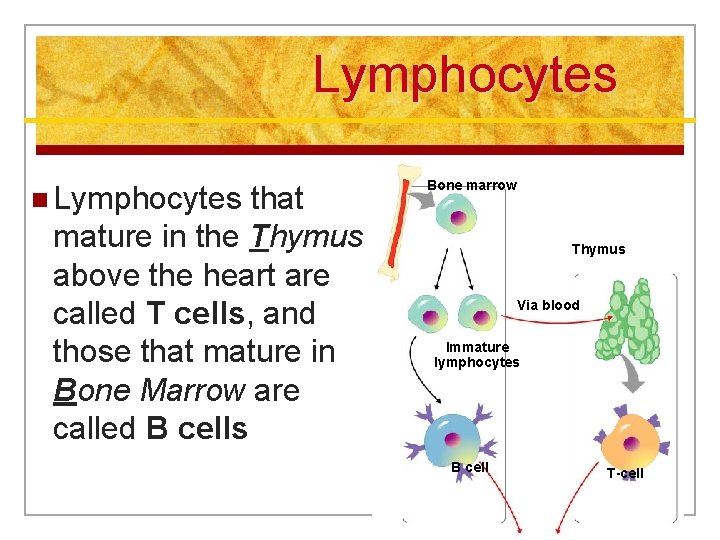
Lymphocytes n Lymphocytes that mature in the Thymus above the heart are called T cells, and those that mature in Bone Marrow are called B cells Bone marrow Thymus Via blood Immature lymphocytes B cell T-cell
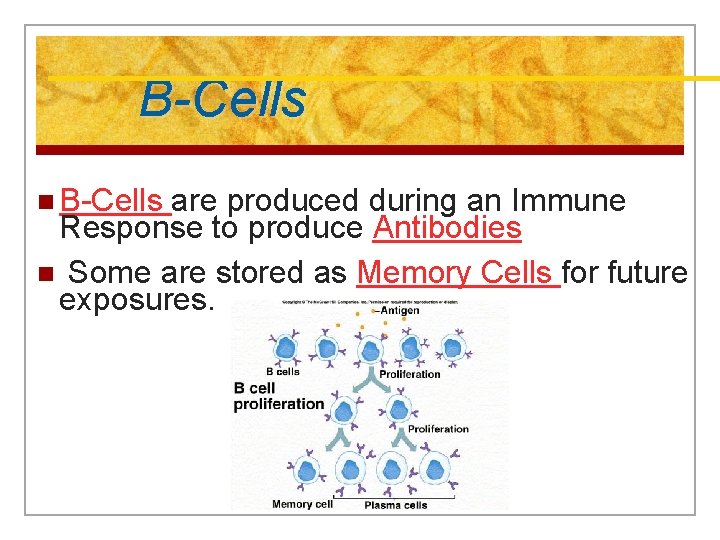
B-Cells n B-Cells are produced during an Immune Response to produce Antibodies n Some are stored as Memory Cells for future exposures.
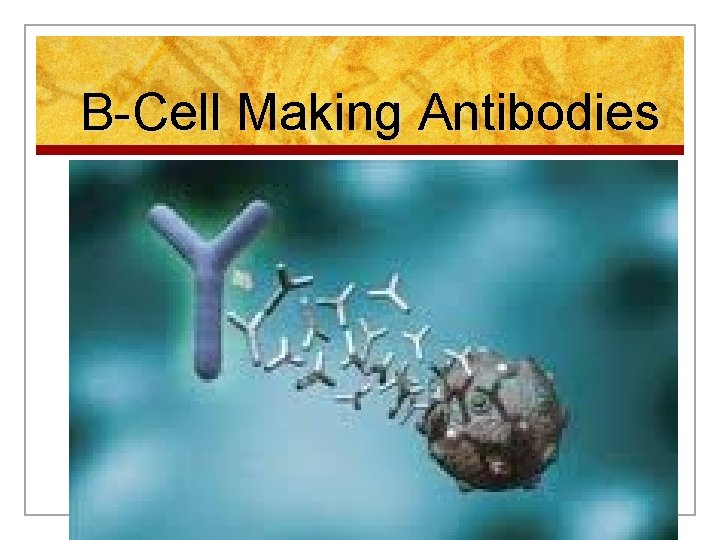
B-Cell Making Antibodies
T-Cells T-Helper Cells help activate the B-cell by producing special proteins n T-Cytotoxic ( Killer ) Cell attack the invading pathogen or “nonself” Antigen n
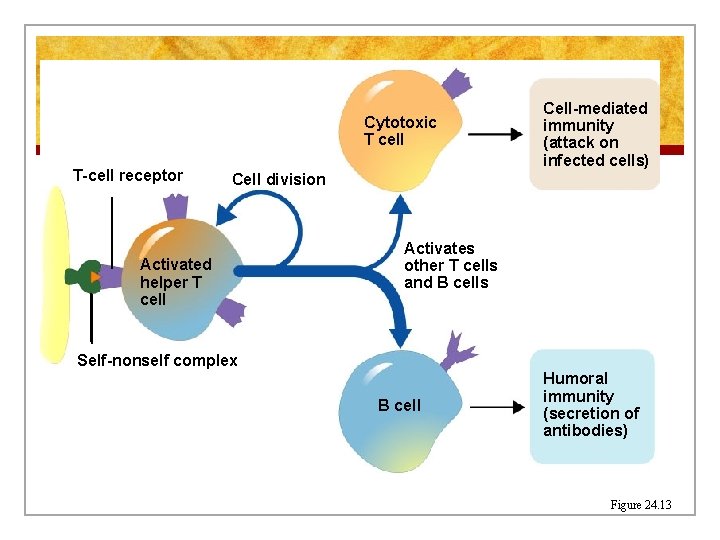
Cytotoxic T cell T-cell receptor Cell-mediated immunity (attack on infected cells) Cell division Activated helper T cell Activates other T cells and B cells Self-nonself complex B cell Humoral immunity (secretion of antibodies) Figure 24. 13
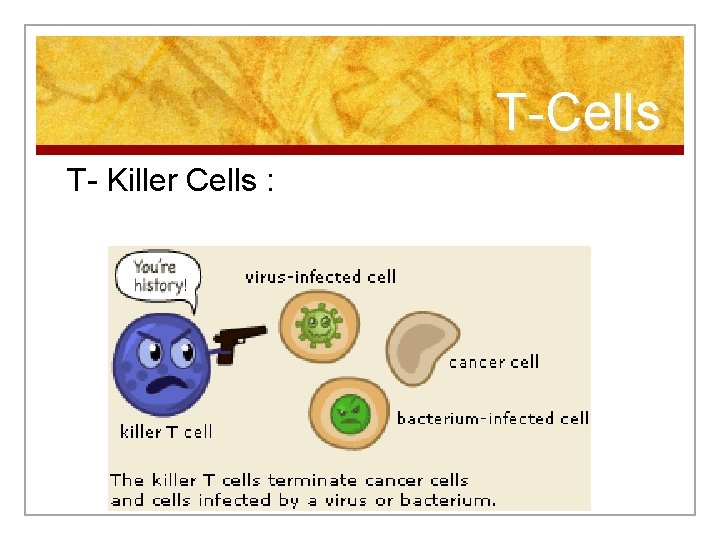
T-Cells T- Killer Cells :
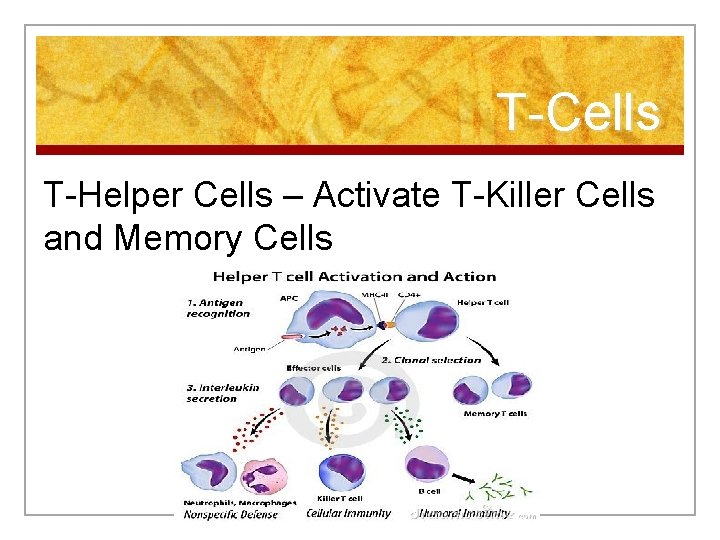
T-Cells T-Helper Cells – Activate T-Killer Cells and Memory Cells
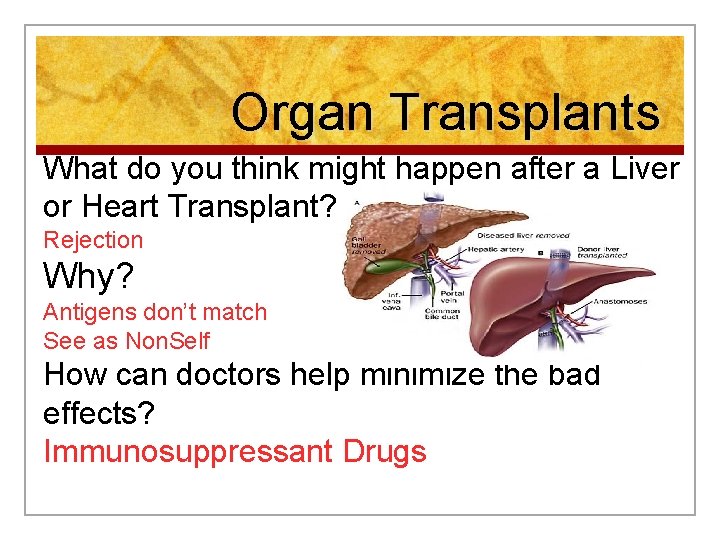
Organ Transplants What do you think might happen after a Liver or Heart Transplant? Rejection Why? Antigens don’t match See as Non. Self How can doctors help minimize the bad effects? Immunosuppressant Drugs
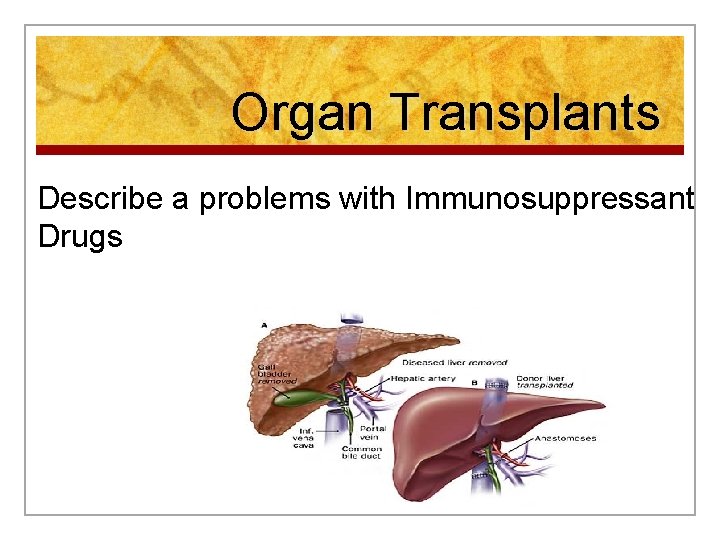
Organ Transplants Describe a problems with Immunosuppressant Drugs
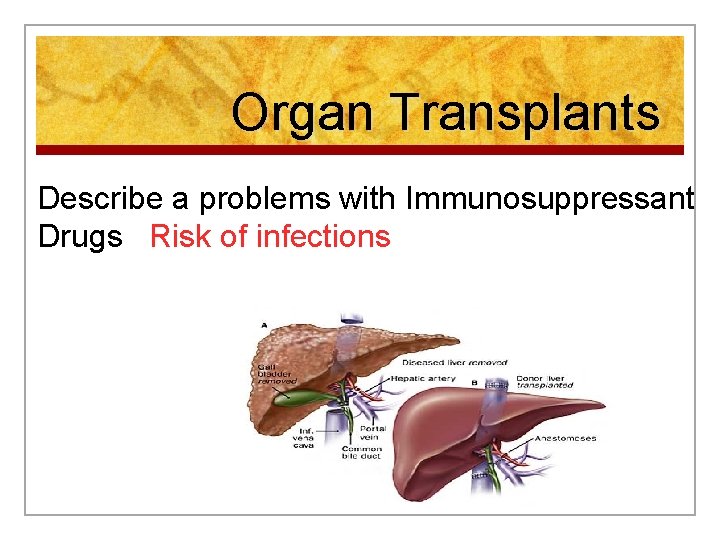
Organ Transplants Describe a problems with Immunosuppressant Drugs Risk of infections
TWO WAYS IMMUNITY CAN BE ACQUIRED : § ACTIVE IMMUNITY: Antibodies are made by one’s own body and are long lasting. A Persons Body actively makes the antibodies
TWO WAYS IMMUNITY CAN BE ACQUIRED : PASSIVE IMMUNITY: Antibodies are obtained from the blood of another person or animal, but only provides temporary immunity. ( 1 Month ) §
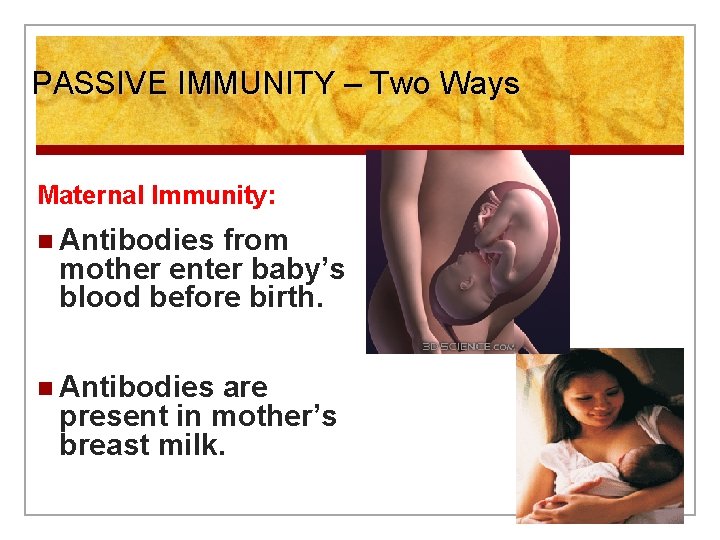
PASSIVE IMMUNITY – Two Ways Maternal Immunity: n Antibodies from mother enter baby’s blood before birth. n Antibodies are present in mother’s breast milk.
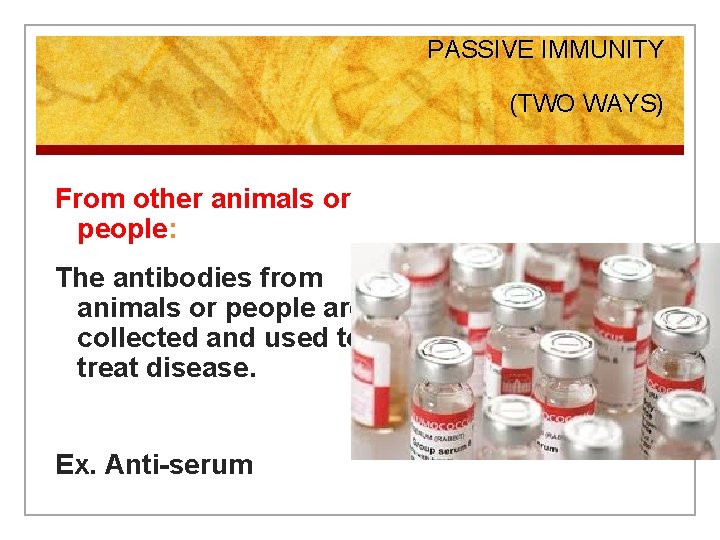
PASSIVE IMMUNITY (TWO WAYS) From other animals or people: The antibodies from animals or people are collected and used to treat disease. Ex. Anti-serum
ACTIVE IMMUNITY - Two Ways n Can develop as a result of having a disease. Memory cells remain in the body ready to produce antibodies if the pathogen invades the body again.
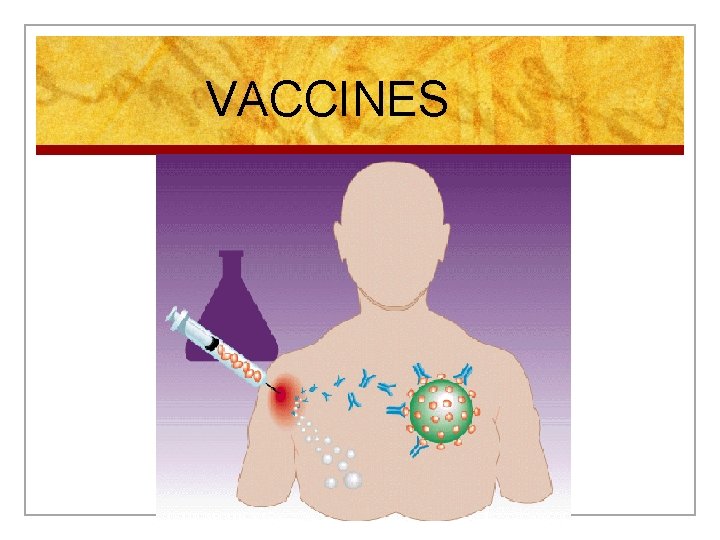
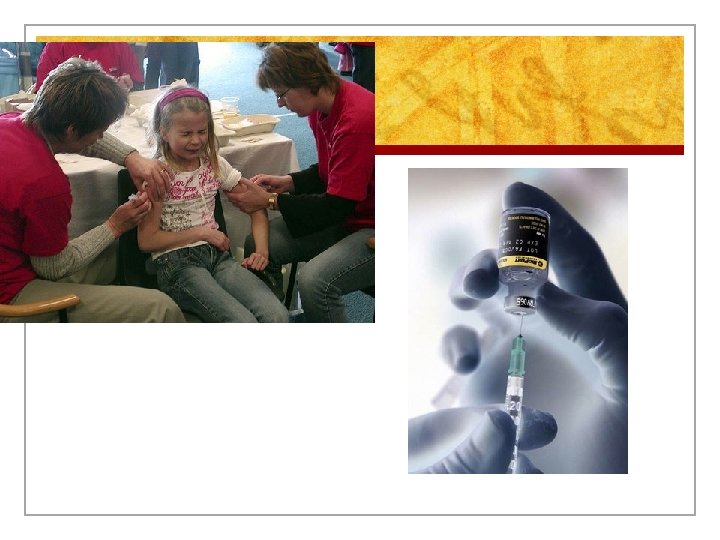
ACTIVE IMMUNITY - Two Ways n Develops as a result of getting a Vaccine. A vaccine is made up of weakened or killed micro-organisms to stimulate the body to make antibodies used to fight future invasions by the same microorganism.
VACCINES
Edward Jenner (1796) n noticed that people who worked with cows rarely contracted smallpox n infected an 8 year old boy with cowpox, a mild disease related to smallpox
Edward Jenner (1796) n when the boy recovered, Jenner infected him with smallpox, but he did not get sick n first vaccine (“vacca” is Latin for cow)
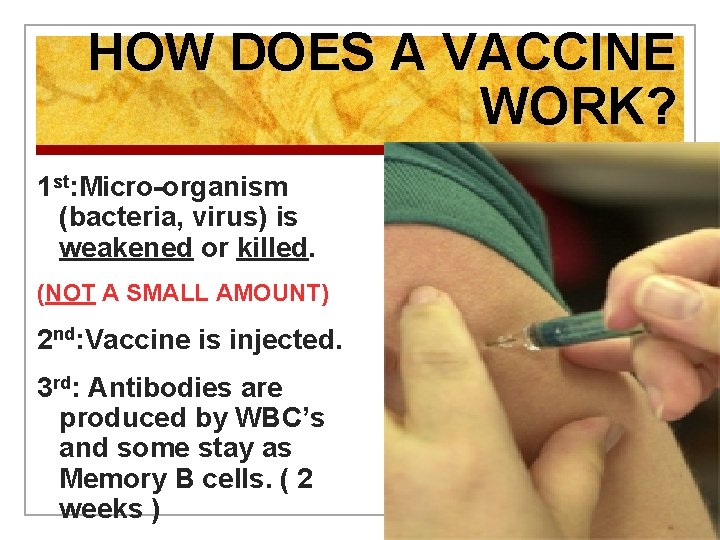
HOW DOES A VACCINE WORK? 1 st: Micro-organism (bacteria, virus) is weakened or killed. (NOT A SMALL AMOUNT) 2 nd: Vaccine is injected. 3 rd: Antibodies are produced by WBC’s and some stay as Memory B cells. ( 2 weeks )
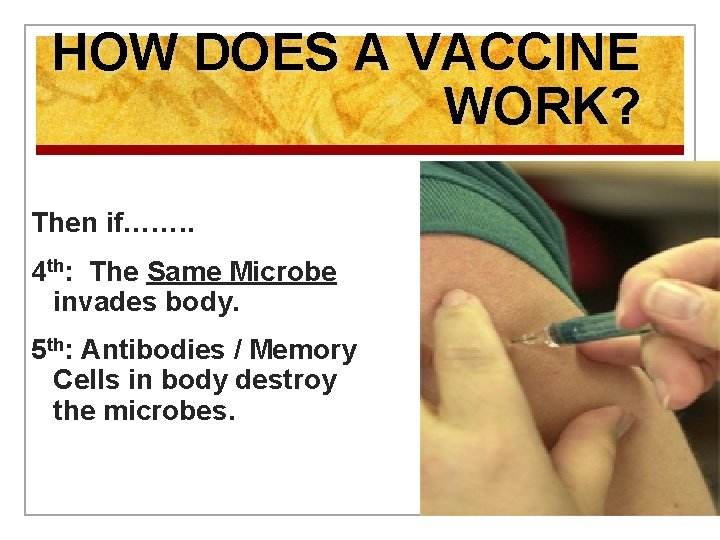
HOW DOES A VACCINE WORK? Then if……. . 4 th: The Same Microbe invades body. 5 th: Antibodies / Memory Cells in body destroy the microbes.
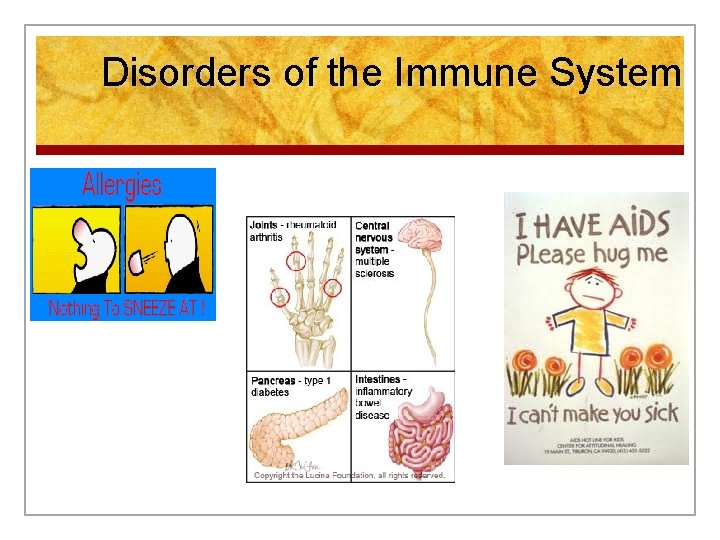
Disorders of the Immune System
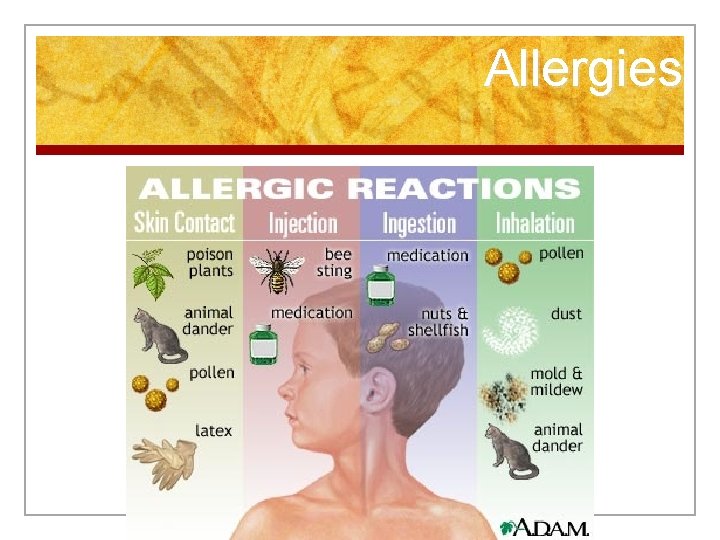
Allergies
ALLERGIES n Occur when the body responds to everyday substances as antigens & produce antibodies. Ex. dust, pollen, mold, peanuts, animal hair n This causes inflammation and the release of a chemical called histamine. n Histamine causes - red, itchy, watery eyes/nose, itchy throat, rash, and headaches n Anti-Histamines- are drugs that counter act the effects of the histamines. ( ex. Benadryl)
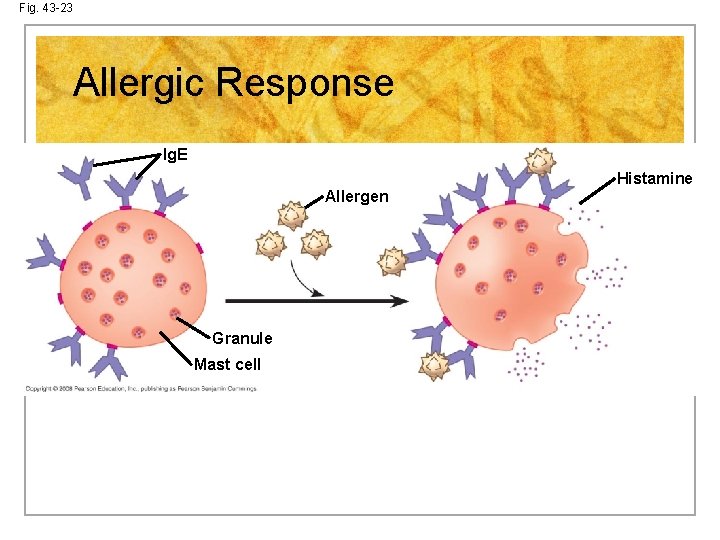
Fig. 43 -23 Allergic Response Ig. E Allergen Granule Mast cell Histamine
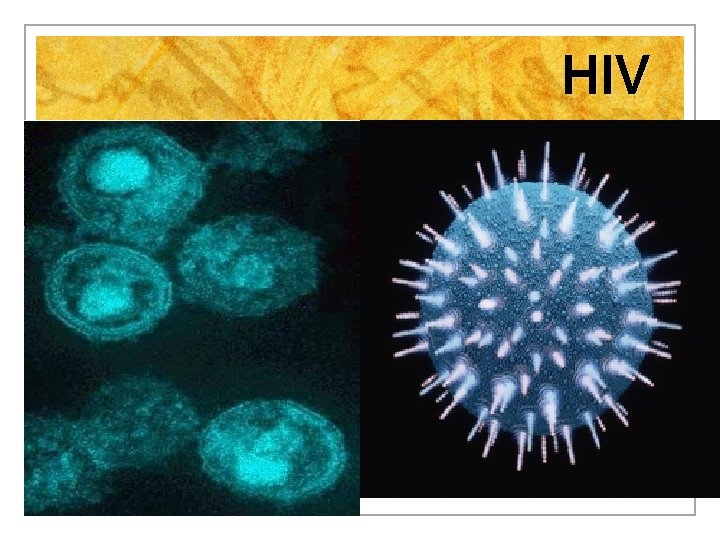
HIV
AIDS Acquired Immune Deficiency Syndrome n AIDS is caused by the HIV virus (Human Immunodeficiency Virus) n HIV invades white blood cells (T-Cells) and transforms the T-Cell DNA with its RNA n Gradually HIV kills T-Cells and weakens a persons immune response. n People die of illnesses brought on by a weak immune system.
n The spread of HIV is a worldwide problem n The best approach for slowing this spread is education about practices that transmit the virus n There are Anti-Viral Medications that now help slow the advancement of the disease
Autoimmune Diseases n In individuals with autoimmune diseases, the immune system loses tolerance for self and turns against certain molecules or parts of the body
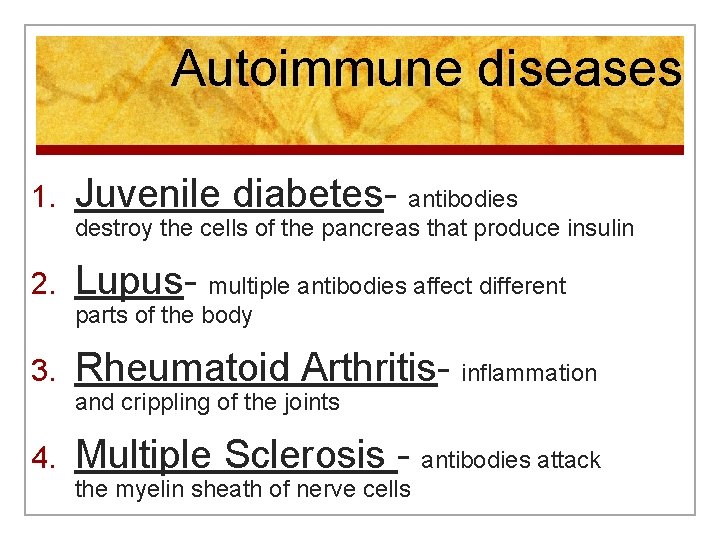
Autoimmune diseases 1. Juvenile diabetes- antibodies destroy the cells of the pancreas that produce insulin 2. Lupus- multiple antibodies affect different parts of the body 3. Rheumatoid Arthritis- inflammation and crippling of the joints 4. Multiple Sclerosis - antibodies attack the myelin sheath of nerve cells
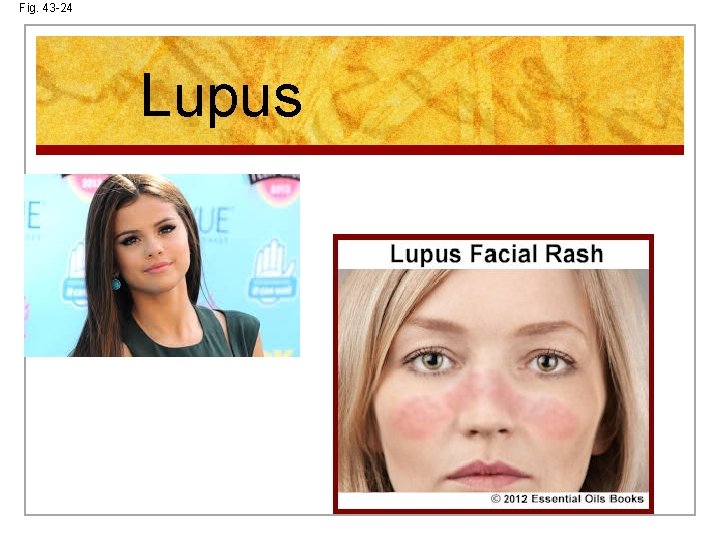
Fig. 43 -24 Lupus
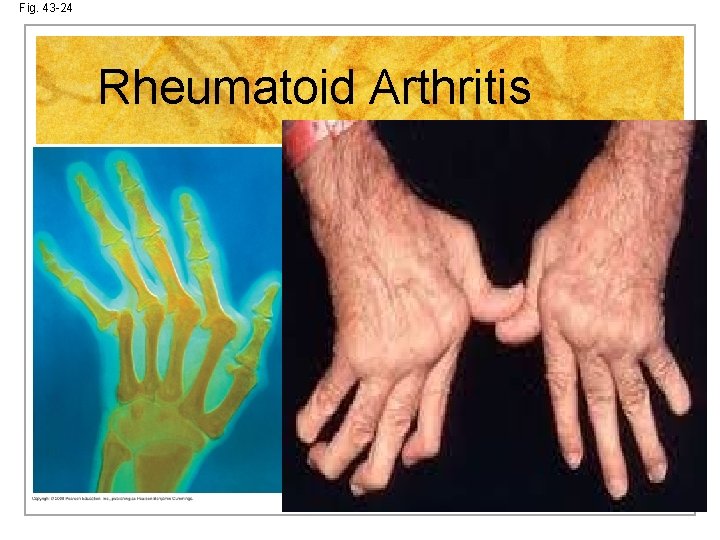
Fig. 43 -24 Rheumatoid Arthritis
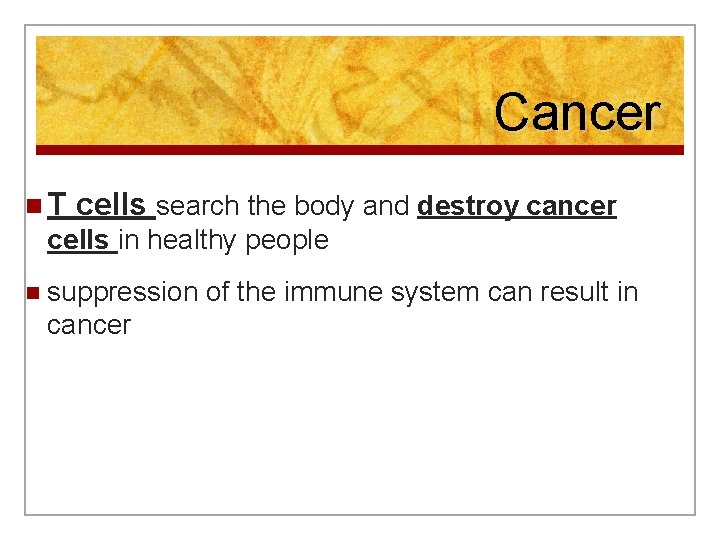
Cancer n. T cells search the body and destroy cancer cells in healthy people n suppression cancer of the immune system can result in
Human Blood Groups Four types of human blood: 1. Blood type O – no antigens present on RBC 2. Blood type A – Type A antigens present on RBC 3. Blood type B – Type B antigens present on RBC 4. Blood type AB – Type A & B antigens present on RBC When wrong blood types are mixed in a
Rh Factor n Another subgroup of blood types is the Rh group n 85% population Rh Positive n Can cause problems with childbirth
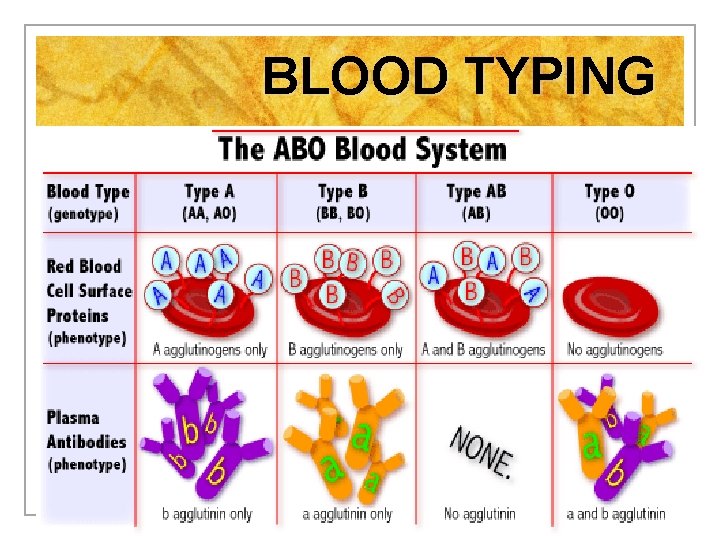
BLOOD TYPING n
Blood Typing Game n Get Ready to Play - Who Wants to be The Doctor? ? ? ?
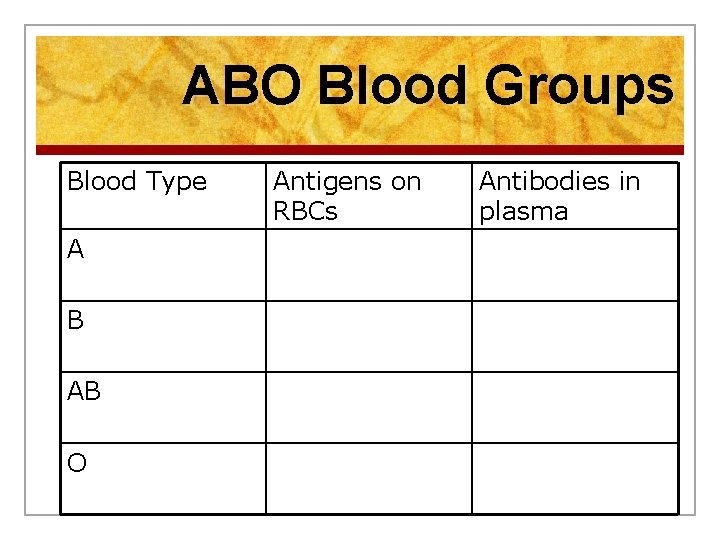
ABO Blood Groups Blood Type A B AB O Antigens on RBCs Antibodies in plasma
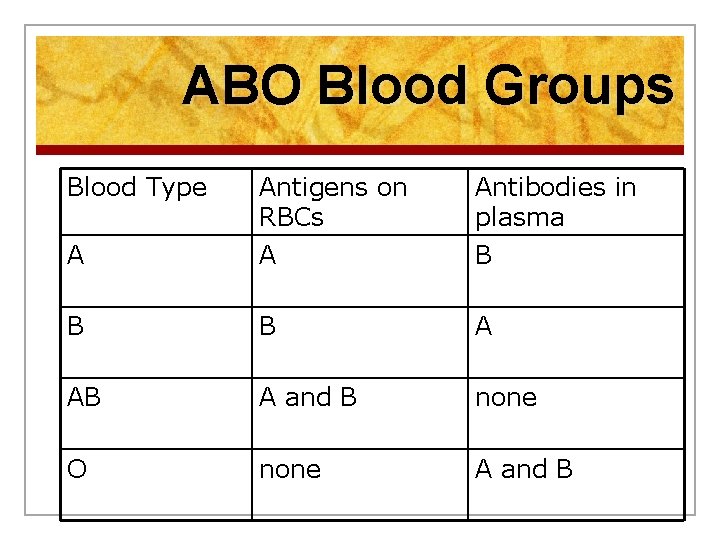
ABO Blood Groups Blood Type A Antigens on RBCs A Antibodies in plasma B B B A AB A and B none O none A and B
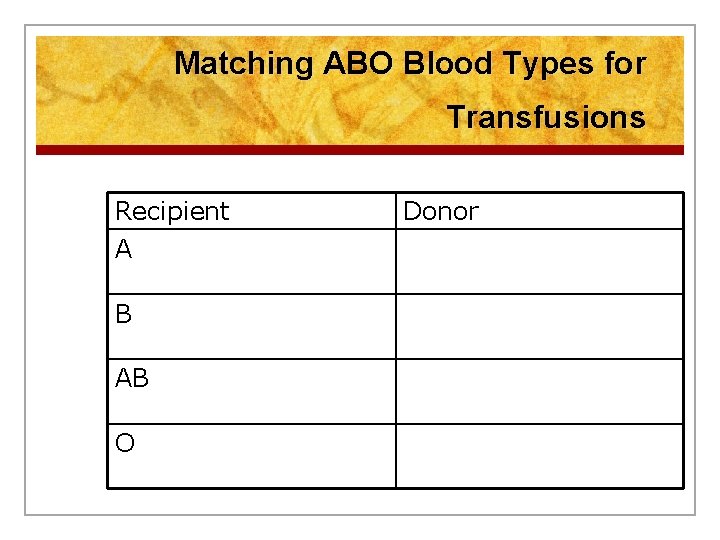
Matching ABO Blood Types for Transfusions Recipient A B AB O Donor
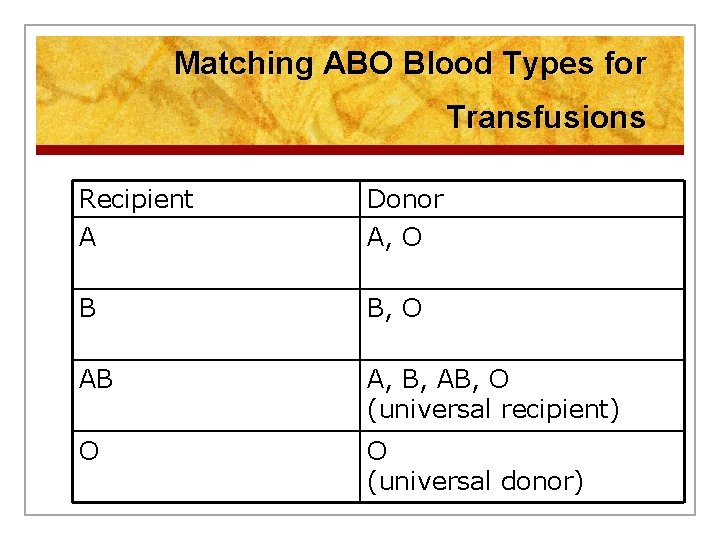
Matching ABO Blood Types for Transfusions Recipient A Donor A, O B B, O AB A, B, AB, O (universal recipient) O O (universal donor)
For A Safe Blood Transfusion… n. Recipient’s blood can NOT contain antibodies for donor’s blood. n. Universal Recipients = Blood type AB n. Universal Donors = Blood type O
GIVE BLOOD
- Slides: 67