
Immune System EQ HOW DO THE COMPONENTS OF
- Slides: 23
Immune System EQ: HOW DO THE COMPONENTS OF THE IMMUNE SYSTEM WORK TOGETHER TO KEEP US FREE FROM DISEASE?
Watch the following video and answer the questions on the back of your worksheet: 1. how does a vaccine work 2. why are people not vaccinating their children 3. why is it best to vaccinate at a younger age 4. would you vaccinate your children https: //www. youtube. com/watch? v=rb 7 TVW 77 ZCs
Germ Theory • proposes that: small particles, called pathogens or pathogen agents, cause disease – Previously thought it was evil spirts • examples: A. Viruses B. Bacteria C. Parasites D. Fungi
Pathogens are spread by: 1. Direct Contact –Examples: kissing, shaking hands 2. Indirect Contact –Examples: touching a door handle or inhaling a pathogen
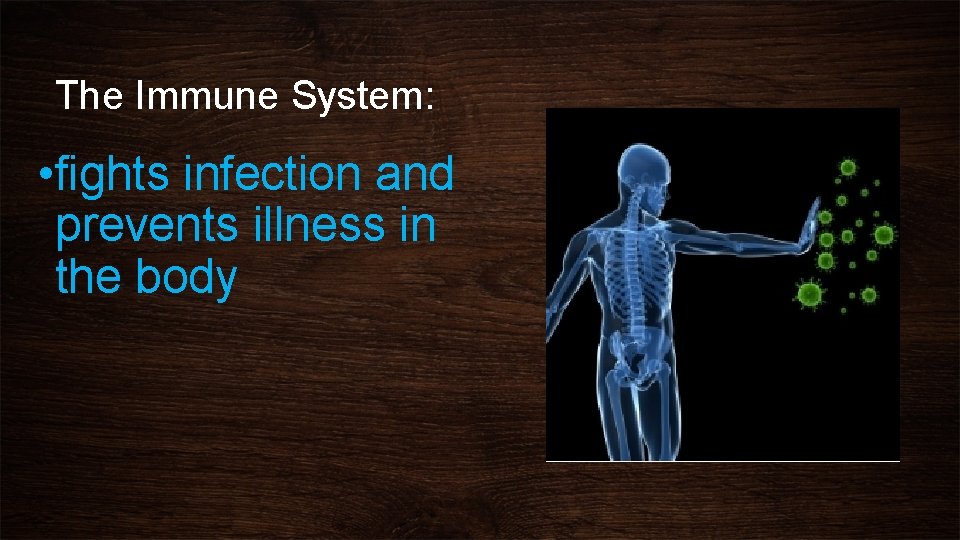
The Immune System: • fights infection and prevents illness in the body
Parts of the Immune System • skin: physically blocks pathogens from entering the body, first line of defense • Mucous membrane: in nose and throat; traps particles before they enter • Circulatory system: transports cells of the immune system
Part of the Immune System • Phagocyte: white blood cell that engulf (eats) and destroys pathogens aka macrophage • T cell: destroys infected body cells –Inside the cell • B cell: produces antibodies –Outside the cell
Parts of the Immune System • Antibody: protein that causes pathogens (antigen) become ineffective –Immunoglobin- antibody found in the blood • Interferon: protein that stops all viruses from reproducing
Nonspecific Immune responses are: • Those that are the same every time –Not specific to the pathogen, uses macrophages –Example: Fever, Inflammation, cough , sneeze
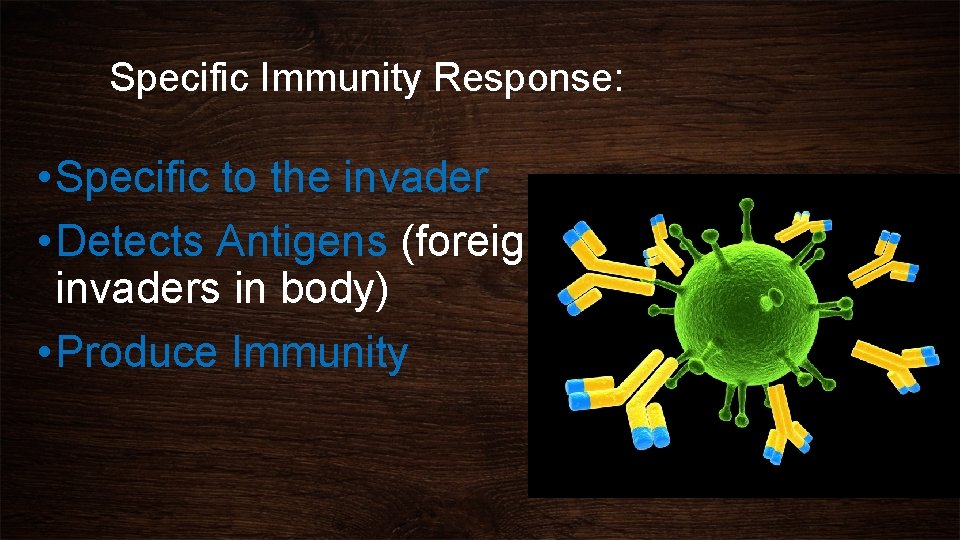
Specific Immunity Response: • Specific to the invader • Detects Antigens (foreign invaders in body) • Produce Immunity
Includes 1. Cellular immunity –Uses: T cells –To destroy: infected body cells 2. Humoral Immunity; –Uses: B cells; –To Produce: antibodies –Give: Immunity
The body has Specific and Nonspecific Immune Responses (mark an N or S in the flow chart) • Skin: Nonspecific • Mucous Membrane: Nonspecific • Circulatory System: Nonspecific • Phagocyte: Specific • T-cell: Specific • B-cell: Specific • Anibody: Specific • Interferon: Nonspecific
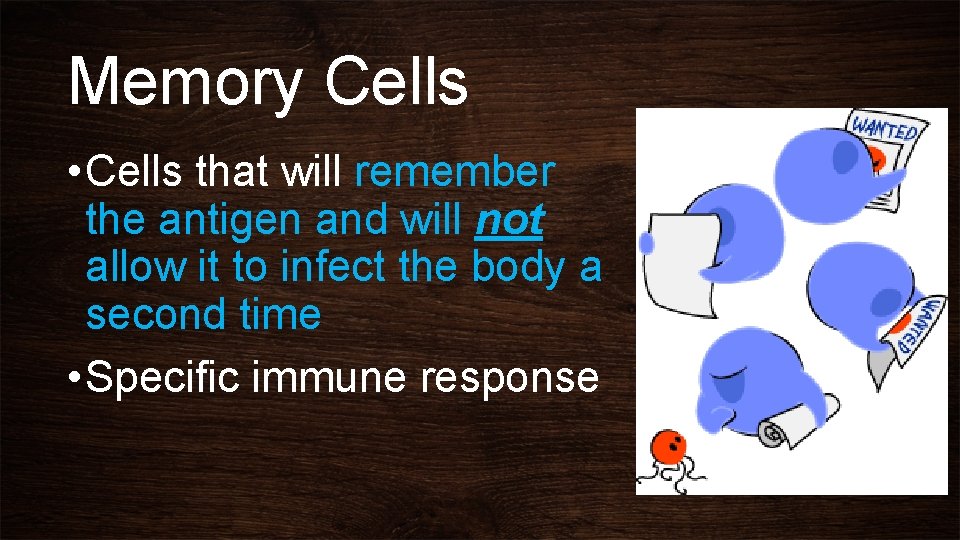
Memory Cells • Cells that will remember the antigen and will not allow it to infect the body a second time • Specific immune response
Immunity – the ability of an organism to resist a particular infection by the action of specific antibodies or sensitized white blood cells – To be resistant to something due to the body’s response
Active Immunity • Gained after the body comes in contact with a sickness • Your body works for this
Passive Immunity • Passed through genetics or by injection of antibodies • This is given to your body
Both immunities… prevent future illness if the body becomes infected
Methods to control spread: Antibiotics: • are medications used to fight infections caused by bacteria pathogens • Work by killing bacteria or slowing and suspending its growth • Many forms: – Tablets, capsules, liquids, creams, ointments – Most require prescription from a doctor
Antibiotic Resistance is: • when a population of bacteria or fungi are no longer affected by an antibiotic b/c they have a genetic mutation from the rest of the population
Methods Used to Control Pathogens: Antiseptic: destroys pathogens outside of the body (soap, hand sanitizer)
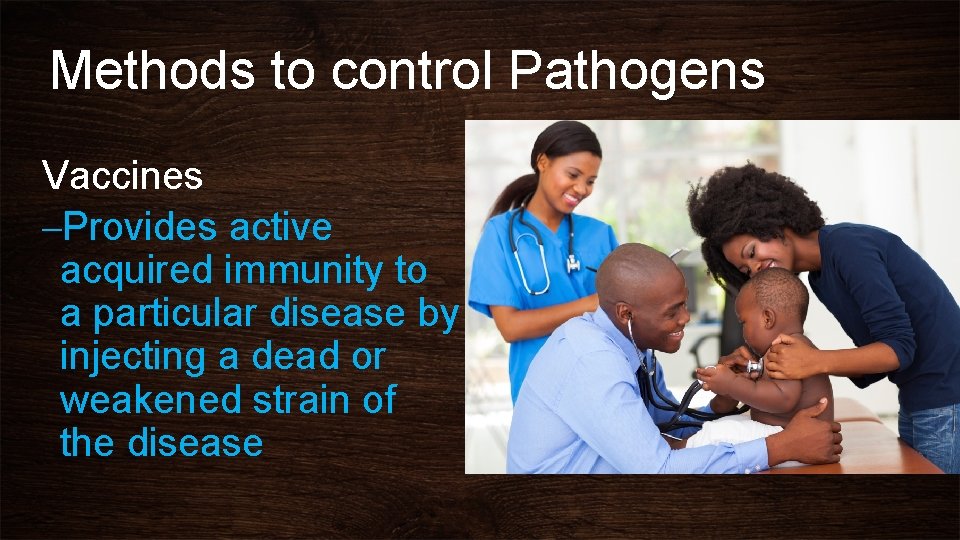
Methods to control Pathogens Vaccines –Provides active acquired immunity to a particular disease by injecting a dead or weakened strain of the disease
Vaccination Process 1. Stimulates a specific immune response 2. Causes memory cells to be produced 3. Allows immune system to respond to an infection without getting sick 4. Allows for quick response to infection
Word Bank • vaccine • T - cells • nonspecific immune • Fever • T - cells • immune • inflammation • active • specific immune • B - cells • antibodies • Phagocytes • antibiotic • antigens • mucous membranes