
IMMUNE SYSTEM CHAPTER 48 I Immune System Components

- Slides: 13
IMMUNE SYSTEM CHAPTER 48
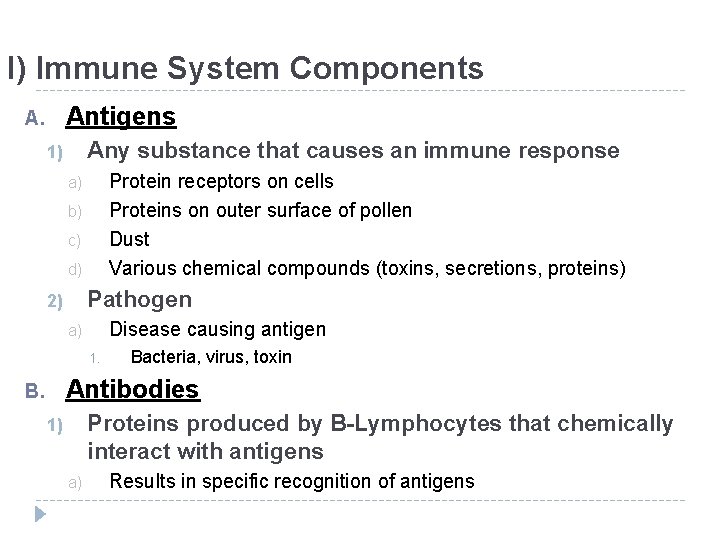
I) Immune System Components Antigens A. Any substance that causes an immune response 1) Protein receptors on cells Proteins on outer surface of pollen Dust Various chemical compounds (toxins, secretions, proteins) a) b) c) d) Pathogen 2) Disease causing antigen a) 1. Bacteria, virus, toxin Antibodies B. Proteins produced by B-Lymphocytes that chemically interact with antigens 1) a) Results in specific recognition of antigens
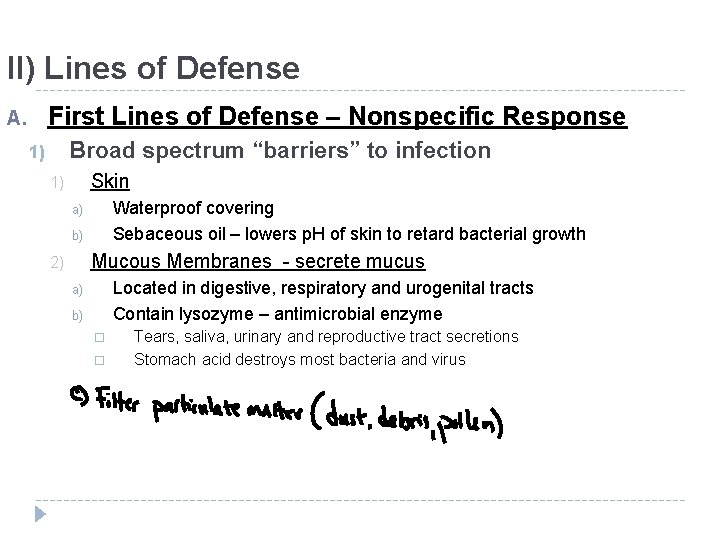
II) Lines of Defense First Lines of Defense – Nonspecific Response A. Broad spectrum “barriers” to infection 1) Skin 1) Waterproof covering Sebaceous oil – lowers p. H of skin to retard bacterial growth a) b) Mucous Membranes - secrete mucus 2) Located in digestive, respiratory and urogenital tracts Contain lysozyme – antimicrobial enzyme a) b) Tears, saliva, urinary and reproductive tract secretions Stomach acid destroys most bacteria and virus
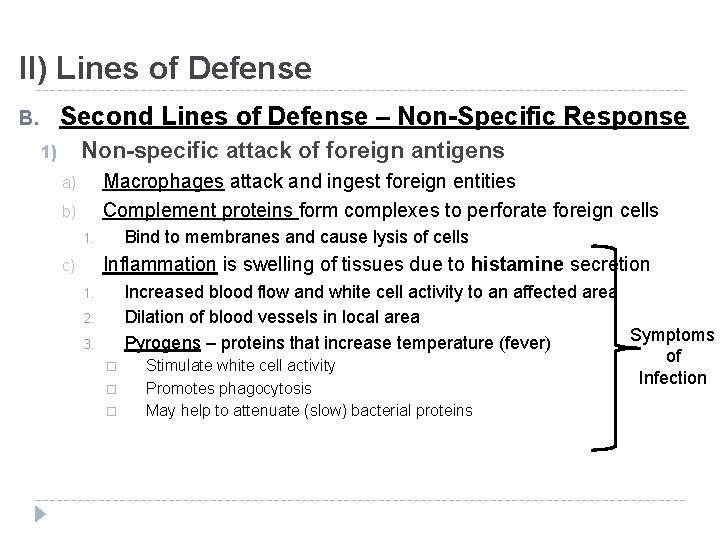
II) Lines of Defense Second Lines of Defense – Non-Specific Response B. Non-specific attack of foreign antigens 1) Macrophages attack and ingest foreign entities Complement proteins form complexes to perforate foreign cells a) b) Bind to membranes and cause lysis of cells 1. Inflammation is swelling of tissues due to histamine secretion c) 1. 2. 3. Increased blood flow and white cell activity to an affected area Dilation of blood vessels in local area Symptoms Pyrogens – proteins that increase temperature (fever) of Stimulate white cell activity Infection Promotes phagocytosis May help to attenuate (slow) bacterial proteins
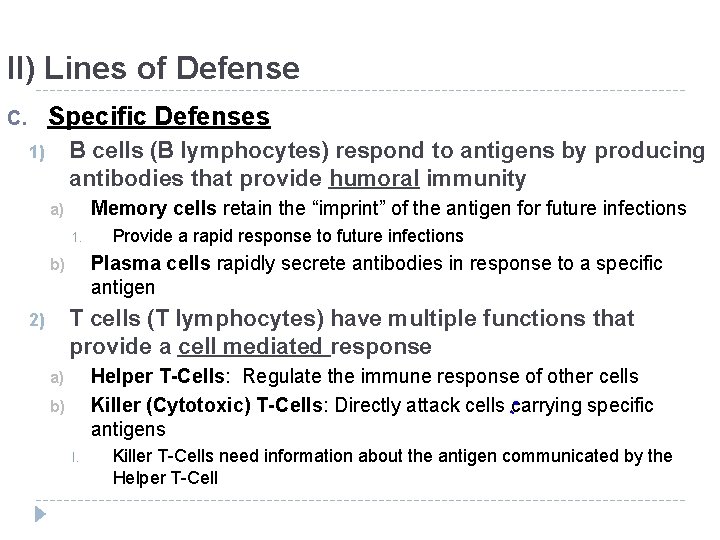
II) Lines of Defense Specific Defenses C. B cells (B lymphocytes) respond to antigens by producing antibodies that provide humoral immunity 1) Memory cells retain the “imprint” of the antigen for future infections a) 1. Provide a rapid response to future infections Plasma cells rapidly secrete antibodies in response to a specific antigen b) T cells (T lymphocytes) have multiple functions that provide a cell mediated response 2) Helper T-Cells: Regulate the immune response of other cells Killer (Cytotoxic) T-Cells: Directly attack cells carrying specific antigens a) b) I. Killer T-Cells need information about the antigen communicated by the Helper T-Cell
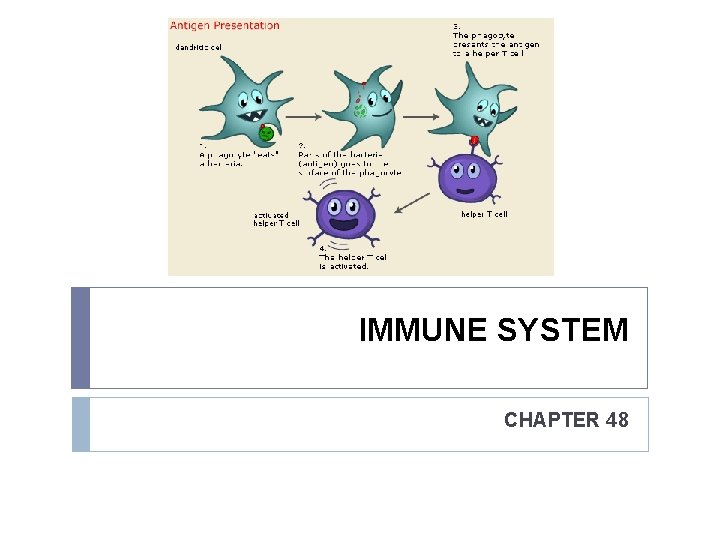
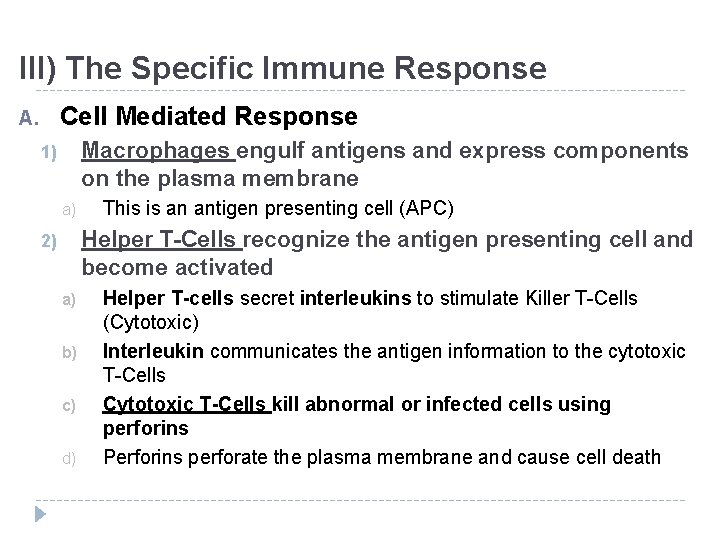
III) The Specific Immune Response Cell Mediated Response A. Macrophages engulf antigens and express components on the plasma membrane 1) a) This is an antigen presenting cell (APC) Helper T-Cells recognize the antigen presenting cell and become activated 2) a) b) c) d) Helper T-cells secret interleukins to stimulate Killer T-Cells (Cytotoxic) Interleukin communicates the antigen information to the cytotoxic T-Cells Cytotoxic T-Cells kill abnormal or infected cells using perforins Perforins perforate the plasma membrane and cause cell death
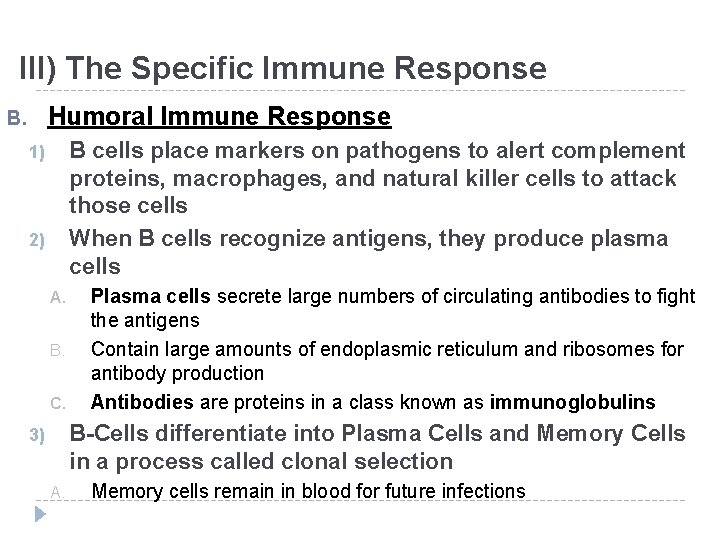
III) The Specific Immune Response Humoral Immune Response B. B cells place markers on pathogens to alert complement proteins, macrophages, and natural killer cells to attack those cells When B cells recognize antigens, they produce plasma cells 1) 2) A. B. C. Plasma cells secrete large numbers of circulating antibodies to fight the antigens Contain large amounts of endoplasmic reticulum and ribosomes for antibody production Antibodies are proteins in a class known as immunoglobulins B-Cells differentiate into Plasma Cells and Memory Cells in a process called clonal selection 3) A. Memory cells remain in blood for future infections
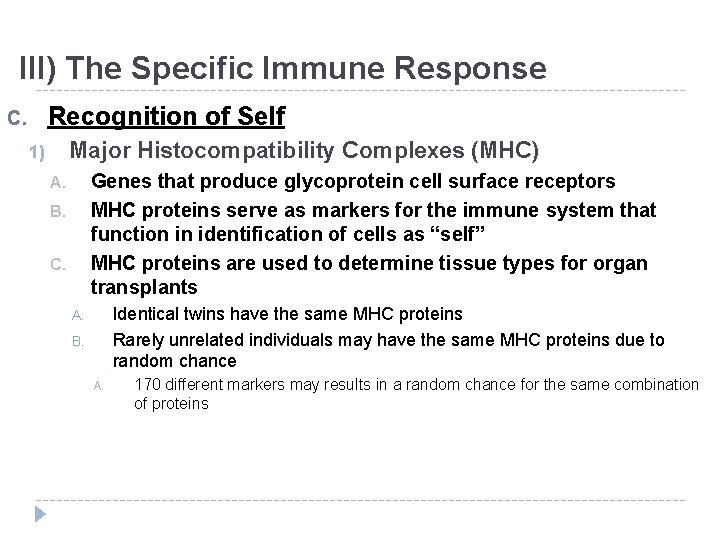
III) The Specific Immune Response Recognition of Self C. Major Histocompatibility Complexes (MHC) 1) Genes that produce glycoprotein cell surface receptors MHC proteins serve as markers for the immune system that function in identification of cells as “self” MHC proteins are used to determine tissue types for organ transplants A. B. C. Identical twins have the same MHC proteins Rarely unrelated individuals may have the same MHC proteins due to random chance A. B. A. 170 different markers may results in a random chance for the same combination of proteins
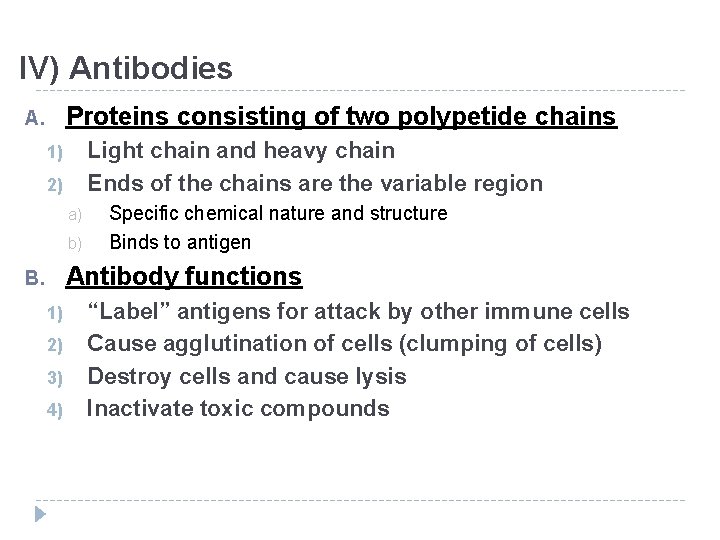
IV) Antibodies Proteins consisting of two polypetide chains A. Light chain and heavy chain Ends of the chains are the variable region 1) 2) a) b) Specific chemical nature and structure Binds to antigen Antibody functions B. 1) 2) 3) 4) “Label” antigens for attack by other immune cells Cause agglutination of cells (clumping of cells) Destroy cells and cause lysis Inactivate toxic compounds
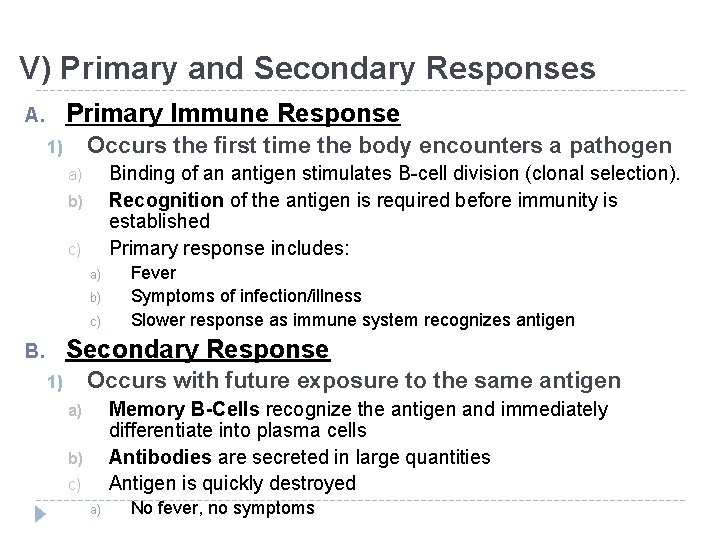
V) Primary and Secondary Responses Primary Immune Response A. Occurs the first time the body encounters a pathogen 1) Binding of an antigen stimulates B-cell division (clonal selection). Recognition of the antigen is required before immunity is established Primary response includes: a) b) c) Fever Symptoms of infection/illness Slower response as immune system recognizes antigen Secondary Response B. Occurs with future exposure to the same antigen 1) Memory B-Cells recognize the antigen and immediately differentiate into plasma cells Antibodies are secreted in large quantities Antigen is quickly destroyed a) b) c) a) No fever, no symptoms
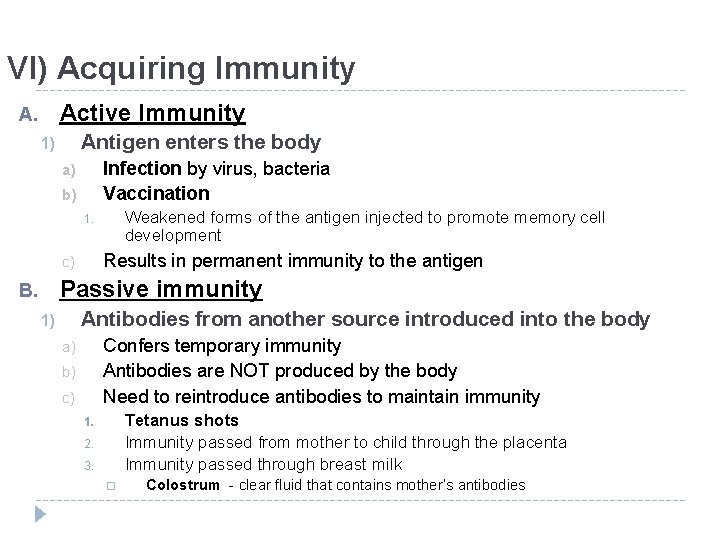
VI) Acquiring Immunity Active Immunity A. Antigen enters the body 1) Infection by virus, bacteria Vaccination a) b) Weakened forms of the antigen injected to promote memory cell development 1. Results in permanent immunity to the antigen c) Passive immunity B. Antibodies from another source introduced into the body 1) Confers temporary immunity Antibodies are NOT produced by the body Need to reintroduce antibodies to maintain immunity a) b) c) Tetanus shots Immunity passed from mother to child through the placenta Immunity passed through breast milk 1. 2. 3. Colostrum - clear fluid that contains mother’s antibodies
VII) Immune Disorders Autoimmunity A. Immune cells attack healthy body cells 1) Results in damage and organ failure Common autoimmune diseases a) b) Juvenile Diabetes 1. Pancreatic islets cells destroyed – no insulin production Multiple Sclerosis 2. Schwann cells destroyed causing a loss of myelin and loss of nerve function Rheumatoid Arthritis 3. cartilage is destroyed causing pain and swelling in all joints Lupus Erythematus 4. skin, connective tissue, muscles, kidneys, eyes are attacked
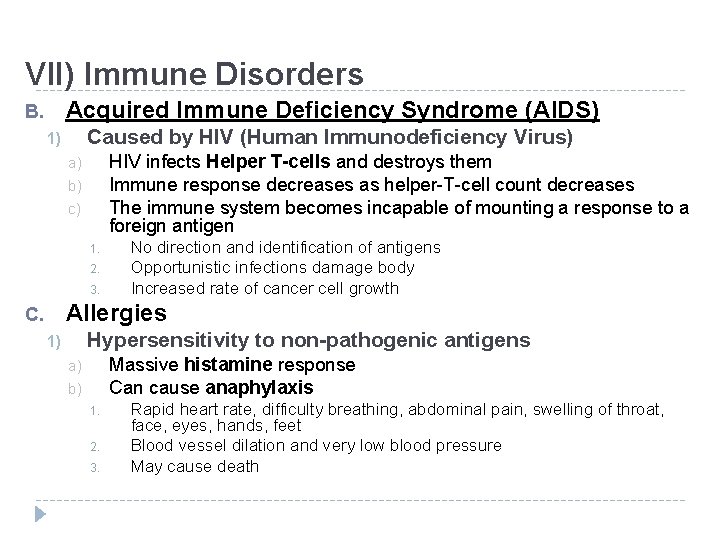
VII) Immune Disorders Acquired Immune Deficiency Syndrome (AIDS) B. Caused by HIV (Human Immunodeficiency Virus) 1) HIV infects Helper T-cells and destroys them Immune response decreases as helper-T-cell count decreases The immune system becomes incapable of mounting a response to a foreign antigen a) b) c) 1. 2. 3. No direction and identification of antigens Opportunistic infections damage body Increased rate of cancer cell growth Allergies C. Hypersensitivity to non-pathogenic antigens 1) Massive histamine response Can cause anaphylaxis a) b) 1. 2. 3. Rapid heart rate, difficulty breathing, abdominal pain, swelling of throat, face, eyes, hands, feet Blood vessel dilation and very low blood pressure May cause death