
Immune System An Overview Department of Microbiology Immunity
Immune System: An Overview Department of Microbiology
Immunity • The word “immunity” derived from latin word “immunis” meaning “to exempt”. • In legal terms “immunity” means: special privilege in the form of freedom from obligation or duty, prosecution, exemption from tax, duty, legal liability etc. Definition: • Immunity is the state of not being susceptible i. e. , immunity is the ability of an organism (host) to resist infection.
Immunology • The branch of biomedicine concerned with the structure and functioning of immune system is called Immunology. • It broadly involves: - innate and acquired immunity, - the bodily distinction of self from non-self, - the responses which are harmful to the host and -laboratory techniques involving the interaction of antigens with specific antibodies. • Immunology is the branch of science which deals with the study of all aspects of the immune system including its structure and function, disorders of the immune system, immunization and organ transplantation.
Immune system • Immune system is not simply a system to have around but it is essential to life itself. (Tizard, 2003) • Immune system contributes for two major physiological activities: a) In body defense against threat encountered in the form of invading pathogens, and b) In maintaining homeostasis by removing dead and decaying cells.
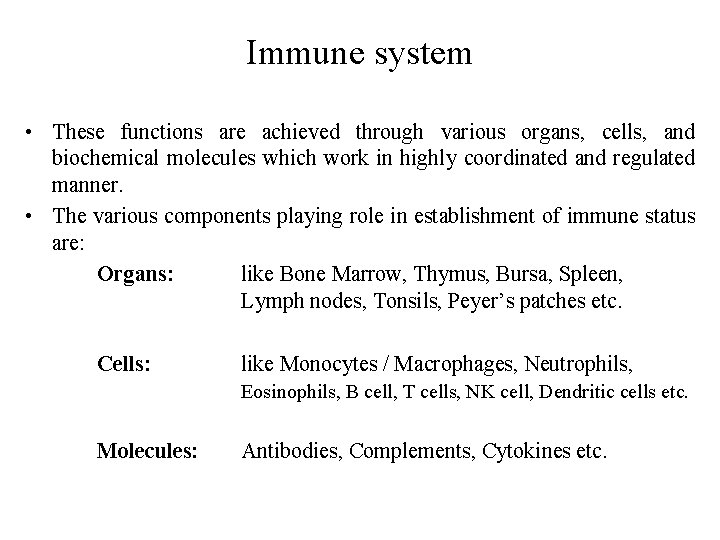
Immune system • These functions are achieved through various organs, cells, and biochemical molecules which work in highly coordinated and regulated manner. • The various components playing role in establishment of immune status are: Organs: like Bone Marrow, Thymus, Bursa, Spleen, Lymph nodes, Tonsils, Peyer’s patches etc. Cells: like Monocytes / Macrophages, Neutrophils, Eosinophils, B cell, T cells, NK cell, Dendritic cells etc. Molecules: Antibodies, Complements, Cytokines etc.
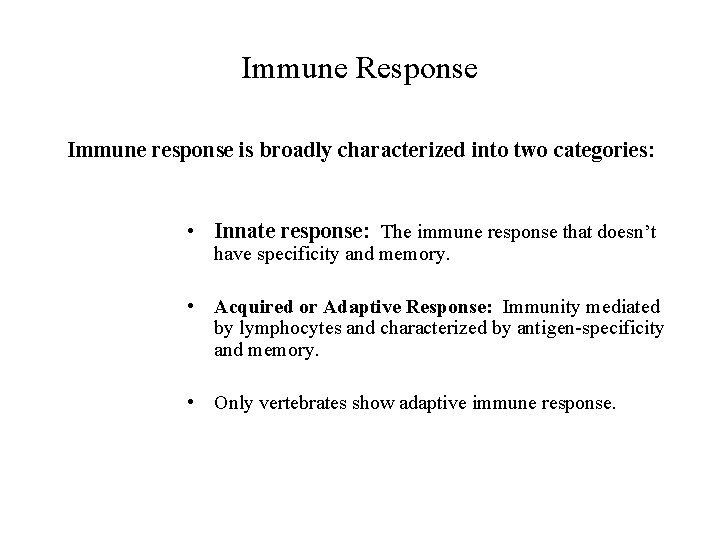
Immune Response Immune response is broadly characterized into two categories: • Innate response: The immune response that doesn’t have specificity and memory. • Acquired or Adaptive Response: Immunity mediated by lymphocytes and characterized by antigen-specificity and memory. • Only vertebrates show adaptive immune response.
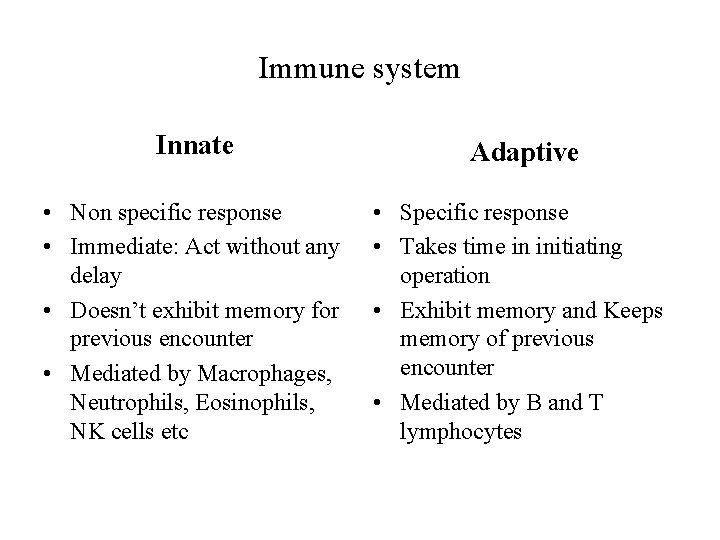
Immune system Innate Adaptive • Non specific response • Immediate: Act without any delay • Doesn’t exhibit memory for previous encounter • Mediated by Macrophages, Neutrophils, Eosinophils, NK cells etc • Specific response • Takes time in initiating operation • Exhibit memory and Keeps memory of previous encounter • Mediated by B and T lymphocytes
INNATE IMMUNITY
Innate Immunity • Innate arm of the immune system is present in both vertebrates and Invertebrates however adaptive arm in present only in Vertebrates. • Thus, innate arm is evolutionarily primitive in nature. • It doesn’t show specificity and memory as of adaptive arm. • Innate arm forms the first line of defense and fights invading pathogens before adaptive arm starts operating.
Recognition mechanisms of innate immunity • The innate arm utilizes an altogether different approach than the adaptive arm for the recognition of invading pathogens. • It doesn't rely on recognition of every possible antigen, rather focuses on a few, highly conserved structures present in a group of micro-organisms. • These highly conserved structures are known as pathogen associated molecular patterns (PAMPs).

Pathogen Associated Molecular Pattern (PAMPs) The best known examples of PAMPs are LPS, lipo-proteins, LTA, lipoarabino-mannans, flagellin, ds RNA, bacterial DNA, zymosan etc. The receptors used by innate immune system to sense these PAMPs are germ-line encoded receptors known as pattern recognition receptors (PRRs). Most important example of PPRs is Toll Like Receptors (TLRs).
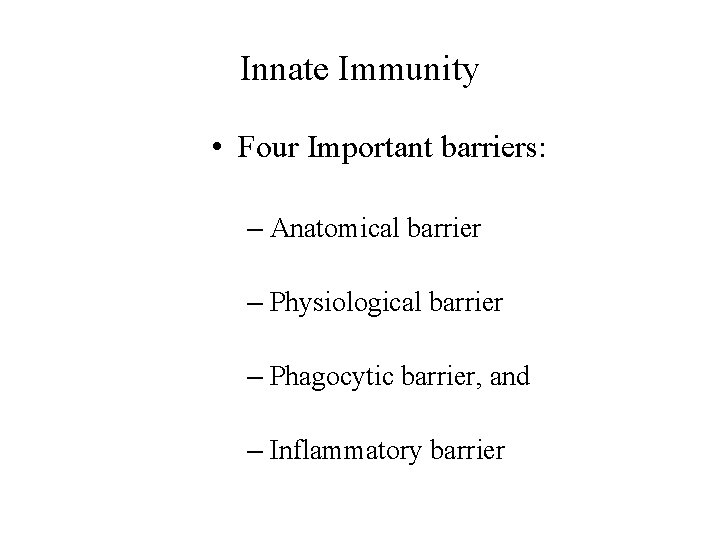
Innate Immunity • Four Important barriers: – Anatomical barrier – Physiological barrier – Phagocytic barrier, and – Inflammatory barrier

Anatomical barrier • The intact keratinized epithelial layer of skin does not allow invading pathogens to enter in the body. • The various portal of entry of pathogens are: – Gastro-intestinal tract – Respiratory tract and – Uro-genital tract These tracts are lined with mucous membranes. The mucous secretions covering this layer traps incoming pathogen. The mucus layer is expelled out by the cilliary action.
Physiological barrier • Body secretions contains “Lysozyme” which is bactericidal. • The p. H of skin is acidic. This low p. H is inhibitory to pathogenic micro-organisms. • Antimicrobial peptides are also secreted by some skin epithelial cells. • Similarly, p. H of urine is around 6. 0 and thus inhibitory in nature. • Flow of urine also doesn’t allow microbes to colonize in urinary tract.
Physiological barrier • Acidic secretions in stomach kills most of the microbes entering through mouth. • Commensal microorganisms also competes with invading pathogens for space and nutrition and thus prevent their colonization (Phenomenon is called “Competitive exclusion” ). • Fever response in response to infection is also protective in nature. It raises the body temperature which is not conducive for microbial growth and also increase phagocytic activity of immune cells. • Similarly, diarrhoea induced is also considered protective mechanism as it facilitates body to get rid off toxic substances.
Anti-Microbial Peptides • Made by neutrophils and some epithelial cells (small intestines, small airways) • Short, cationic peptides (most 29 -35 amino acids long) • Interact strongly with acidic phospholipids and thought to form pores in membrane (eucaryotic membranes often have negative charge on carbohydrate rather than on phospholipid of outside of bilayer; may account for greater effect of peptides on microbes ) • Differentially active against different micro-organisms.
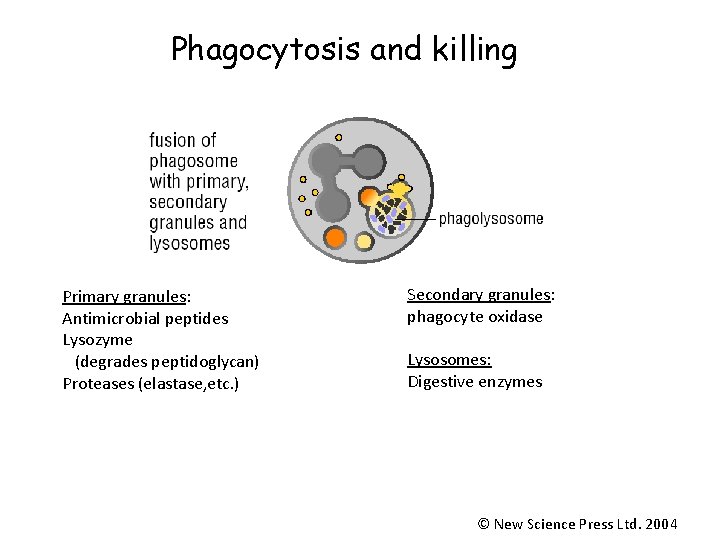
Phagocytosis and killing Primary granules: Antimicrobial peptides Lysozyme (degrades peptidoglycan) Proteases (elastase, etc. ) Secondary granules: phagocyte oxidase Lysosomes: Digestive enzymes © New Science Press Ltd. 2004
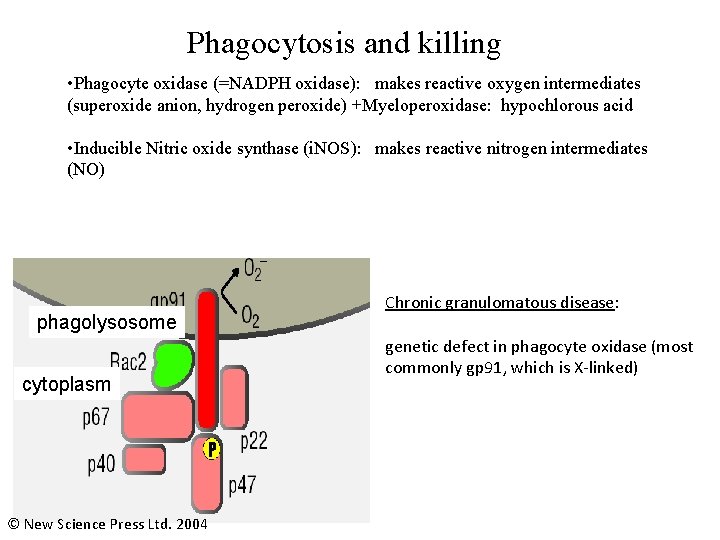
Phagocytosis and killing • Phagocyte oxidase (=NADPH oxidase): makes reactive oxygen intermediates (superoxide anion, hydrogen peroxide) +Myeloperoxidase: hypochlorous acid • Inducible Nitric oxide synthase (i. NOS): makes reactive nitrogen intermediates (NO) phagolysosome cytoplasm © New Science Press Ltd. 2004 Chronic granulomatous disease: genetic defect in phagocyte oxidase (most commonly gp 91, which is X-linked)
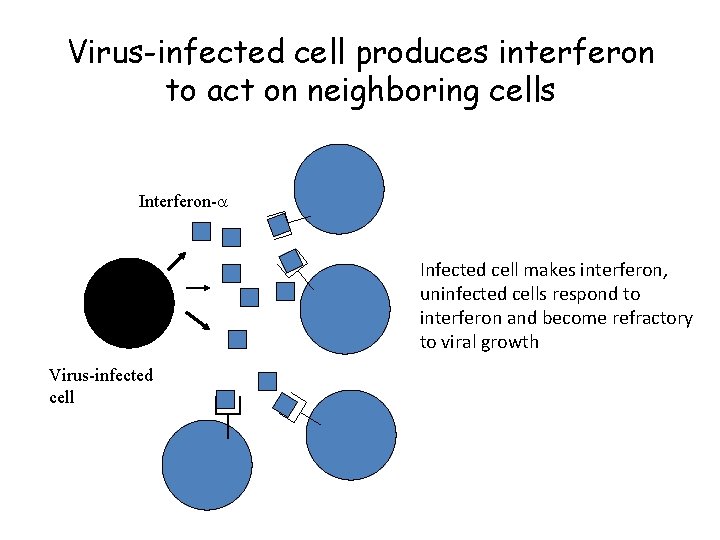
Virus-infected cell produces interferon to act on neighboring cells Interferon-a Infected cell makes interferon, uninfected cells respond to interferon and become refractory to viral growth Virus-infected cell
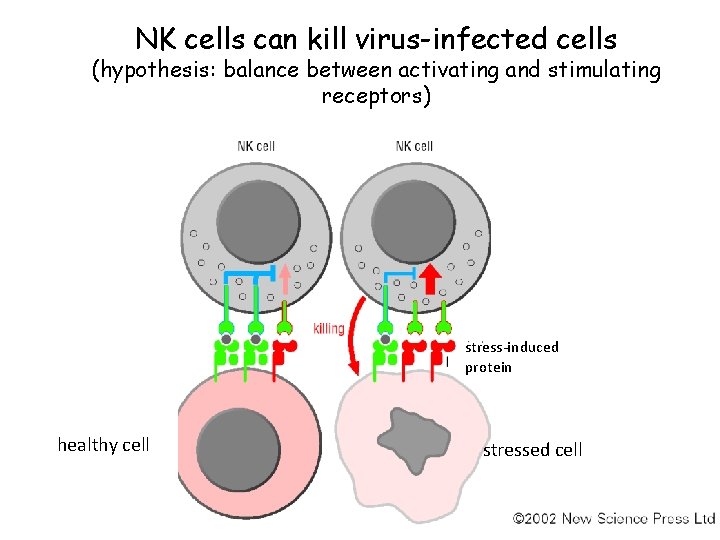
NK cells can kill virus-infected cells (hypothesis: balance between activating and stimulating receptors) stress-induced protein healthy cell stressed cell
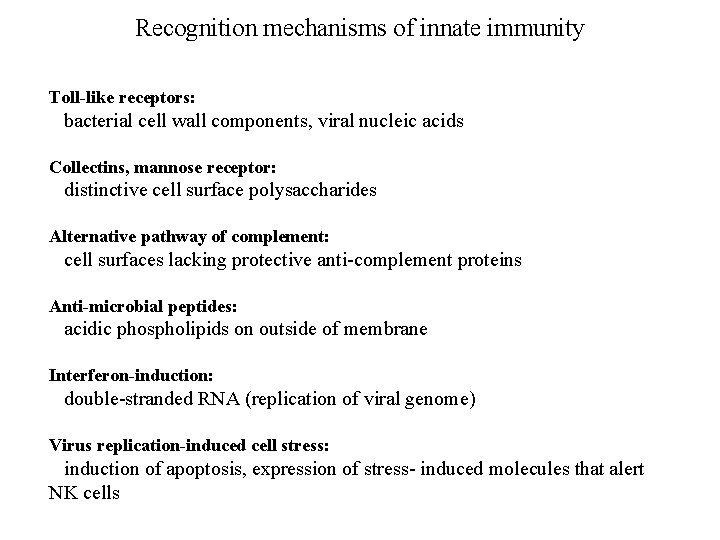
Recognition mechanisms of innate immunity Toll-like receptors: bacterial cell wall components, viral nucleic acids Collectins, mannose receptor: distinctive cell surface polysaccharides Alternative pathway of complement: cell surfaces lacking protective anti-complement proteins Anti-microbial peptides: acidic phospholipids on outside of membrane Interferon-induction: double-stranded RNA (replication of viral genome) Virus replication-induced cell stress: induction of apoptosis, expression of stress- induced molecules that alert NK cells
Adaptive Immune system
Cardinal attributes of Adaptive Immunity • The four cardinal attributes of adaptive immune arm are: a) Self- nonself Recognition b) Specificity c) Memory and d) Diversity • These attributes makes adaptive arm highly efficient in fighting against pathogens.
Cells of Adaptive arm • The lymphocytes are the main cells that mediate adaptive immune response. • Two important populations of lymphocytes are B and T cells. • B-cells get activated upon antigenic stimulation and start proliferating and differentiates into two populations i. e. , Plasma cells and memory B cells. Plasma cells: Produce antibodies Memory B cells: Participates in secondary immune response. • Three populations of T cells participate in adaptive response: T cytotoxic cells: Kills pathogen infected cells T helper cells: Helps both B and T cells T suppressor cells: Helps in maintenance of “immune tolerance”.
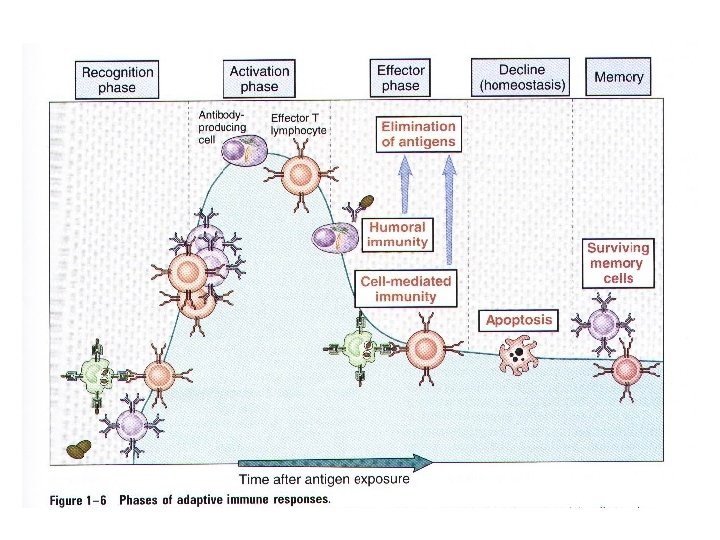
Types of Adaptive Immune response • On the basis of factors involved in immune response: Humoral response: Immune response mediated by antibodies. The antibody mediated respond can be transferred to non immune host by transferring serum from immune individual (humour). Cell Mediated Immunity: Immune response in which immunity is mediated by Cells not by antibodies. The cell mediated respond can be only be transferred to non immune host by transferring blood cells (Lymphocytes) from immune individuals.
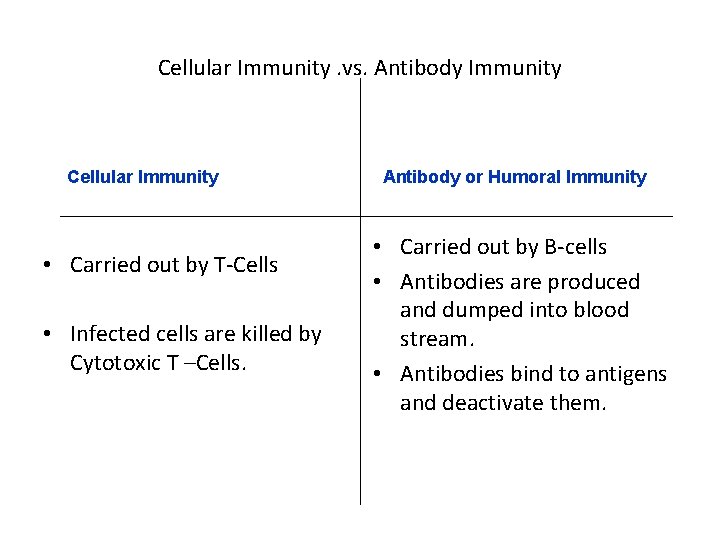
Cellular Immunity. vs. Antibody Immunity Cellular Immunity • Carried out by T-Cells • Infected cells are killed by Cytotoxic T –Cells. Antibody or Humoral Immunity • Carried out by B-cells • Antibodies are produced and dumped into blood stream. • Antibodies bind to antigens and deactivate them.
Important terms • Active immunity: When immune response in an individual is generated by interaction of components of one’s own immune system with antigens. Thus, in active immunity, immune effectors molecules and cells are produced by the individual himself. • Active immune response is usually long-lasting immunity and generates memory cells which induce memory response on re-exposure to same antigen. • Passive immunity: When immune response in a non immune individual is mediated by pre-synthesized effector molecules and cells from any other immune individual. •
Passive Vs Active Immunity 1. Active Immunity This is immunity where the body is “actively” producing antibodies to fight infection. Ex: You have a throat infection and you are actively creating antibodies to fight it. Vaccination: An injection of a weakened strain of an infectious microbe (pathogen) that causes the body to undergo active immunity (produce antibodies). 2. Passive Immunity This is immunity where antibodies are given to a person from the blood of another person or animal. This immunity only lasts for a short period of time. ex: Breastfeeding mothers pass antibodies to their children through the milk.
Important terms • Primary Immune response: A delayed, low and short lasting humoral immune response induced after host is exposed to antigen for the first time. The predominant antibodies in primary immune response are of Ig. M type. • Secondary or Booster or Anamnestic response: A rapid, robust and long lasting immune response induced after re-exposure to the same antigen is known as “Anamnestic response” or “memory response”. The predominant antibodies in secondary immune response are of Ig. G type.
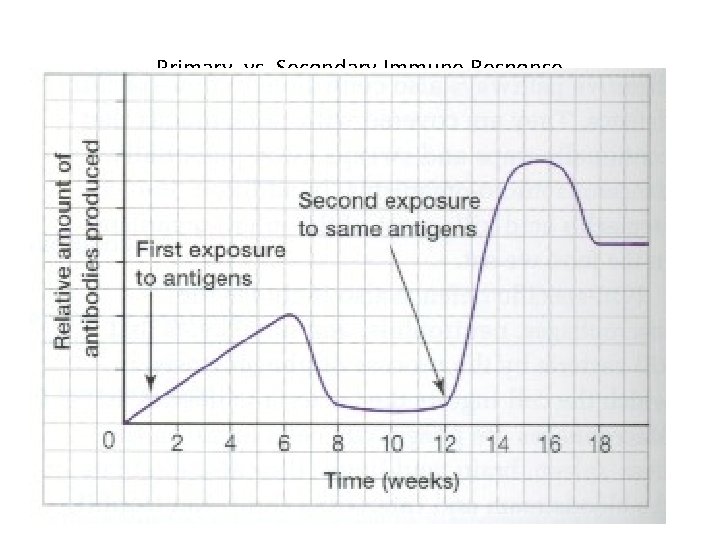
Primary. vs. Secondary Immune Response
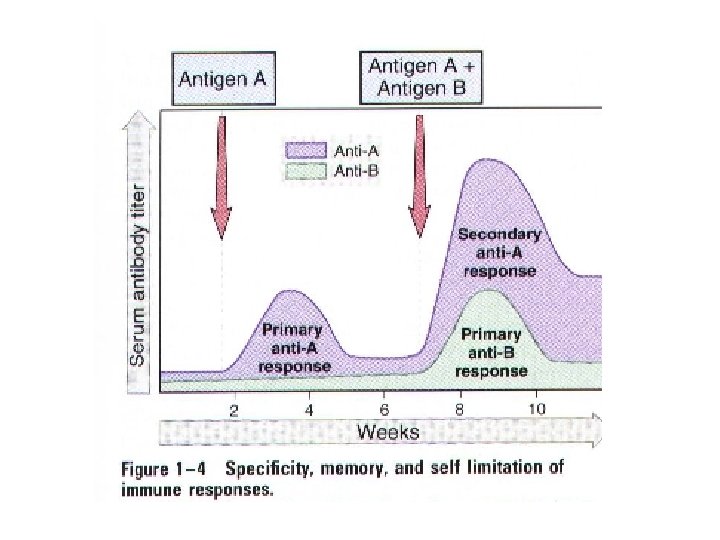
Important terms • Auto-immunity: Immune system usually induces response against foreign antigens but sometimes immune response is generated against some of the self antigens. These responses damage to self tissues and causes “Auto-immune diseases”. • Hypersensitivity: An exaggerated immune response which is damaging to the host itself. Hypersensitivity reactions are classified into four types (type I, type III and type IV). • Allergic response: Allergic reactions are actually exaggerated immune response mediated by production of Ig. E type of antibodies to otherwise harmless foreign substances like pollen, mould etc. Ig. E remain bound on the surface of mast cells. Binding of Ig. E antibodies with antigens (allergen) cause degranulation of mast cells and release of vasoactive amines inducing inflammatory response.

THANKS
- Slides: 34