
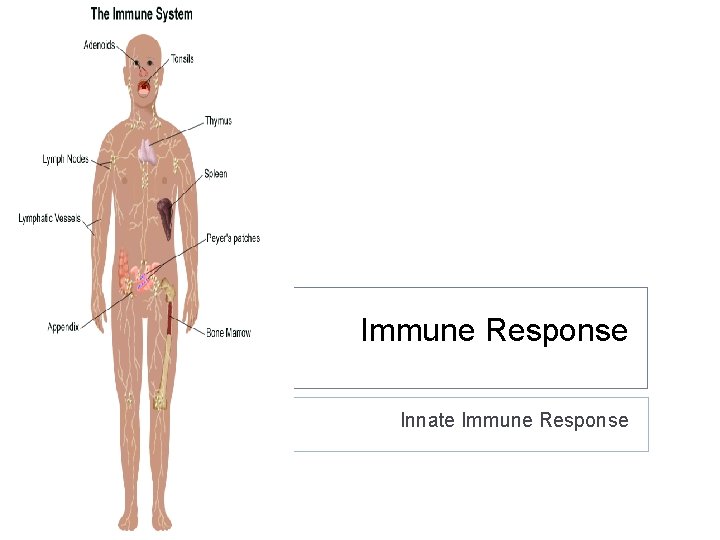
Immune Response Innate Immune Response The Immune System
- Slides: 14
Immune Response Innate Immune Response
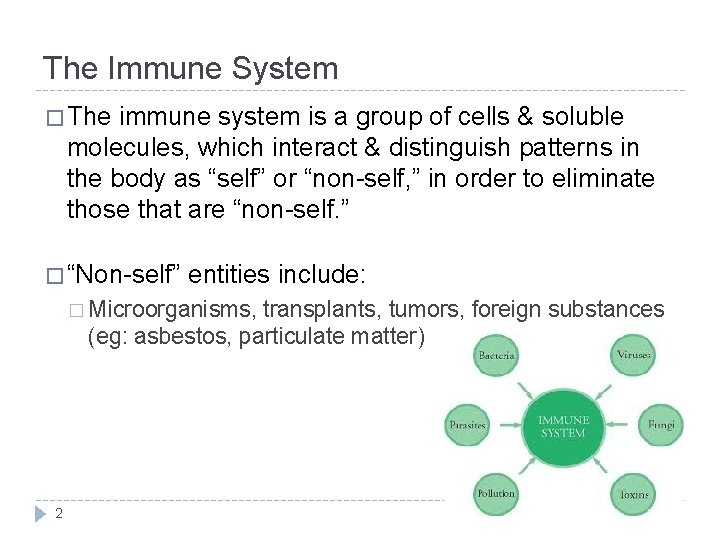
The Immune System � The immune system is a group of cells & soluble molecules, which interact & distinguish patterns in the body as “self” or “non-self, ” in order to eliminate those that are “non-self. ” � “Non-self” entities include: � Microorganisms, transplants, tumors, foreign substances (eg: asbestos, particulate matter) 2
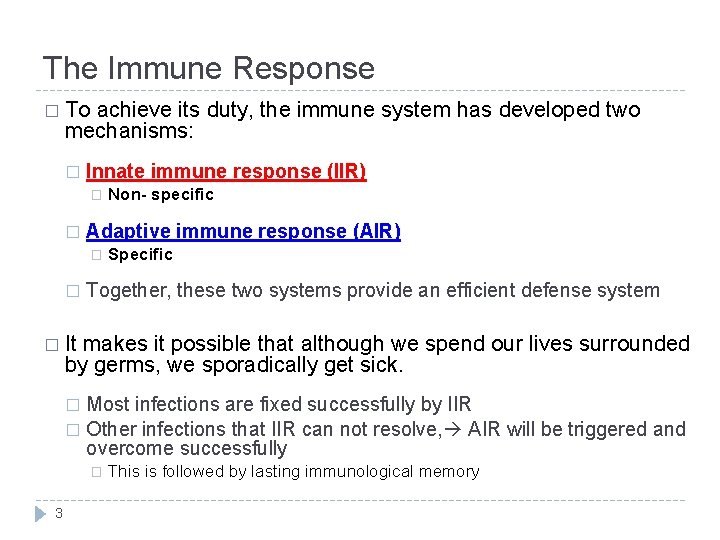
The Immune Response � To achieve its duty, the immune system has developed two mechanisms: � Innate immune response (IIR) � � Adaptive immune response (AIR) � � Non- specific Specific Together, these two systems provide an efficient defense system � It makes it possible that although we spend our lives surrounded by germs, we sporadically get sick. Most infections are fixed successfully by IIR � Other infections that IIR can not resolve, AIR will be triggered and overcome successfully � � 3 This is followed by lasting immunological memory
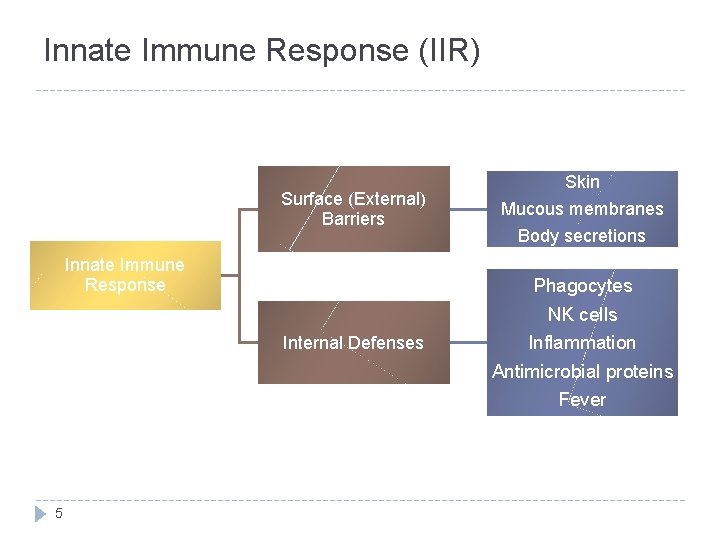
Innate Immune Response (IIR) � Is the first line of defense in the Immune response � Crucial to control of microorganisms growing freely during early stage of IR � Lacks memory � It is NOT antigen (Ag) specific � There a limited recognition molecules � Leads to the AIR 4
Innate Immune Response (IIR) Surface (External) Barriers Innate Immune Response Skin Mucous membranes Body secretions Phagocytes NK cells Internal Defenses 5 Inflammation Antimicrobial proteins Fever
First line of defense 6
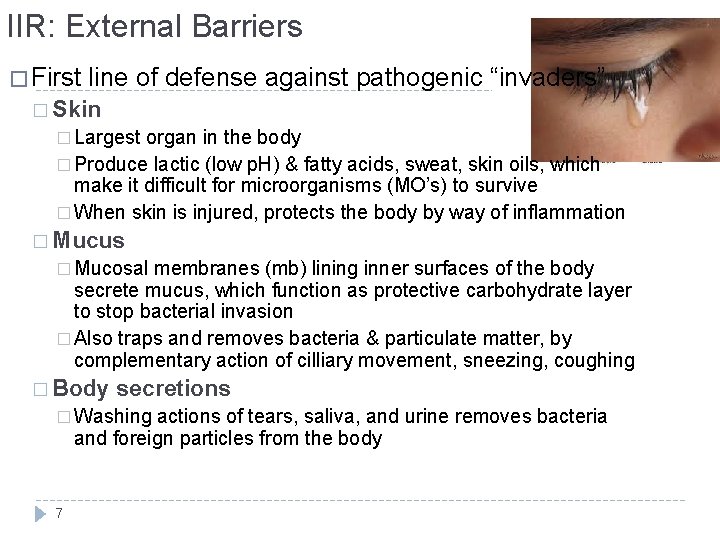
IIR: External Barriers � First line of defense against pathogenic “invaders” � Skin � Largest organ in the body � Produce lactic (low p. H) & fatty acids, sweat, skin oils, which make it difficult for microorganisms (MO’s) to survive � When skin is injured, protects the body by way of inflammation � Mucus � Mucosal membranes (mb) lining inner surfaces of the body secrete mucus, which function as protective carbohydrate layer to stop bacterial invasion � Also traps and removes bacteria & particulate matter, by complementary action of cilliary movement, sneezing, coughing � Body secretions � Washing actions of tears, saliva, and urine removes bacteria and foreign particles from the body 7
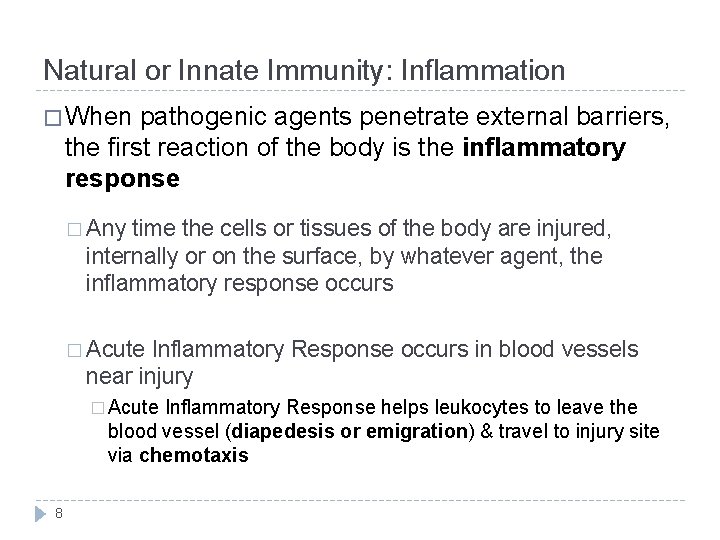
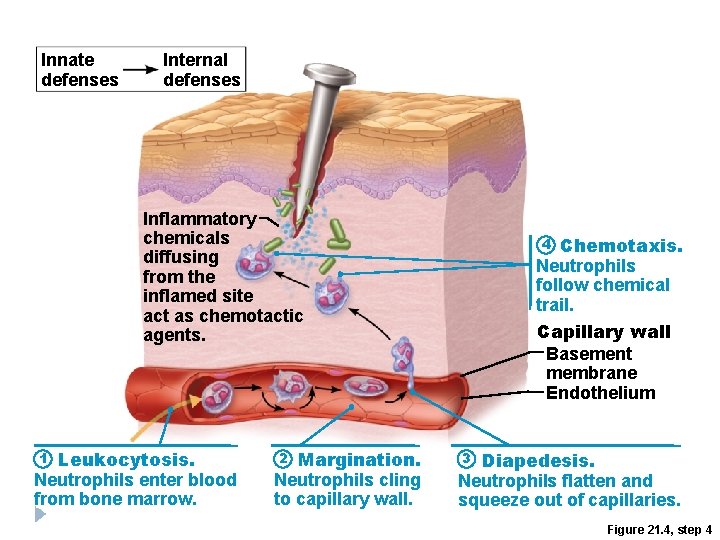
Natural or Innate Immunity: Inflammation � When pathogenic agents penetrate external barriers, the first reaction of the body is the inflammatory response � Any time the cells or tissues of the body are injured, internally or on the surface, by whatever agent, the inflammatory response occurs � Acute Inflammatory Response occurs in blood vessels near injury � Acute Inflammatory Response helps leukocytes to leave the blood vessel (diapedesis or emigration) & travel to injury site via chemotaxis 8
Acute Inflammatory Response � Chemotaxis- is the movement of cells in response to a chemical attractant � Interferon- if the cell injury is due to viral infections, interferon, a protein that protects the body against viral infections is released 9
Inflammation � Cardinal signs of acute inflammation � Redness � Heat � Swelling � Pain � Impairment of function (sometimes) � Inflammatory mediators � Histamine � Blood proteins � Kinins, prostaglandins, leukotrienes, and complement � Released by injured tissue, phagocytes, lymphocytes, basophils, and mast cells 10
Acute Inflammatory Response � Complement- a complex of interrelated and interacting proteins manufactured in the liver � It is the major mechanism for destroying foreign substances � Active in inflammation and phagocytosis and also assists the action of antibodies in the specific response if the infecting agent is not destroyed by the nonspecific defenses 11
Innate defenses Internal defenses Inflammatory chemicals diffusing from the inflamed site act as chemotactic agents. Leukocytosis. Neutrophils enter blood from bone marrow. 1 Margination. Neutrophils cling to capillary wall. 2 Chemotaxis. Neutrophils follow chemical trail. 4 Capillary wall Basement membrane Endothelium Diapedesis. Neutrophils flatten and squeeze out of capillaries. 3 Figure 21. 4, step 4
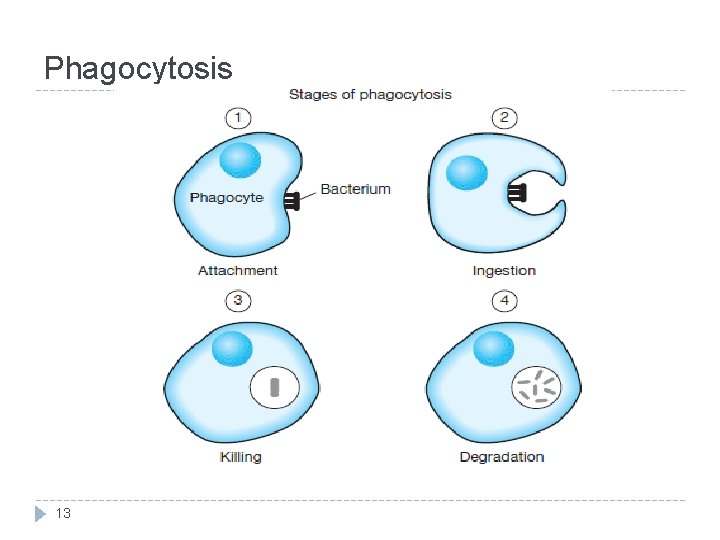
Phagocytosis 13
IIR: Fever � Systemic response to invading microorganisms � Leukocytes and macrophages exposed to foreign substances secrete pyrogens � Pyrogens reset the body’s thermostat upward � High fevers are dangerous because heat denatures enzymes � Benefits � Causes of moderate fever the liver and spleen to hold iron and zinc (needed by microorganisms) � Increases metabolic rate, which speeds up repair 14