
Immune Evasion by Parasites Dr AJIT KUMAR Department
Immune Evasion by Parasites Dr. AJIT KUMAR Department of Veterinary Parasitology Bihar Veterinary College Bihar Animal Sciences University Patna-800014 Image source: Google image
Immune Evasion by Parasites have various mechanism of immune evasion, so that they can survive and proliferate in the host. The following evasion mechanism uses by the parasites: 1. Antigenic variation 2. Antigenic disguise 3. Antigenic mimicry 4. Antigenic shedding 5. Immune suppression 6. Immune complex formation 7. Inert cuticular surface 8. Location in protective site 9. Preventing phagolysosome fusion 10. Modified leucocytic function 11. Neonatal immunological unresponsiveness
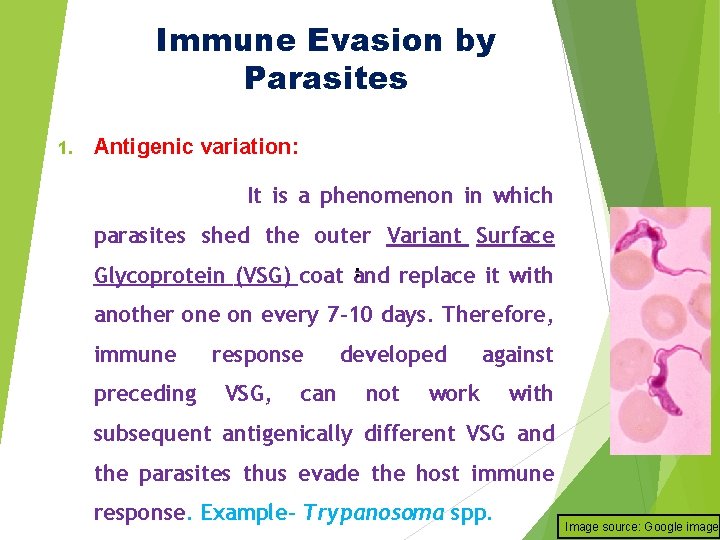
Immune Evasion by Parasites 1. Antigenic variation: It is a phenomenon in which parasites shed the outer Variant Surface : Glycoprotein (VSG) coat and replace it with another one on every 7 -10 days. Therefore, immune preceding response VSG, can developed not against work with subsequent antigenically different VSG and the parasites thus evade the host immune response. Example- Trypanosoma spp. Image source: Google image
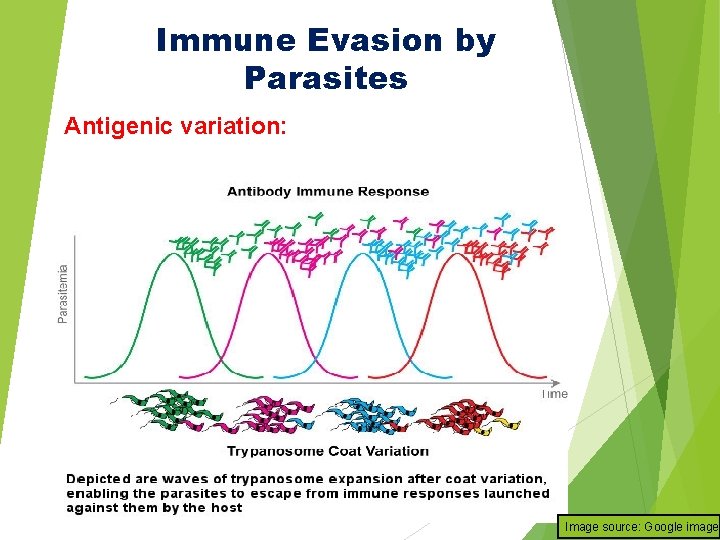
Immune Evasion by Parasites Antigenic variation: Image source: Google image
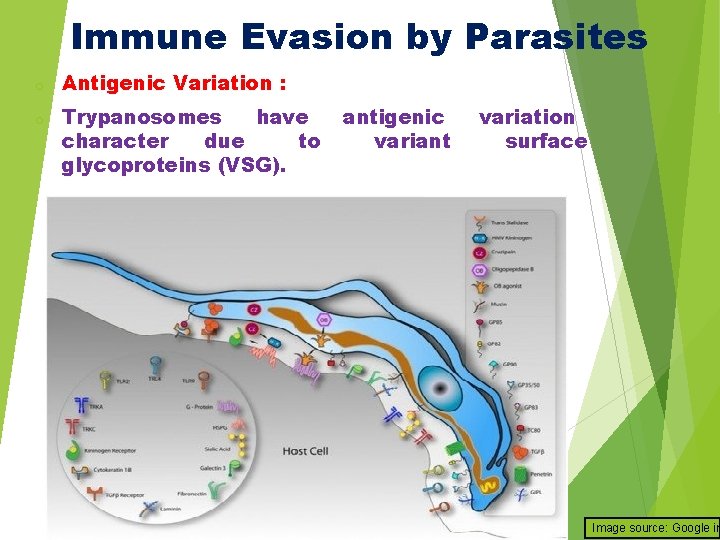
Immune Evasion by Parasites o o Antigenic Variation : Trypanosomes have character due to glycoproteins (VSG). antigenic variant variation surface Image source: Google im
Immune Evasion by Parasites o Antigenic Variation: o The surface coat of trypanosomes is a 1215 mm thick layer made up of about 107 identical molecules of approximately 60 k. Da which are closely packed to cover the entire surface. These molecules are variant surface glycoproteins (VSGs). Image source: Google image
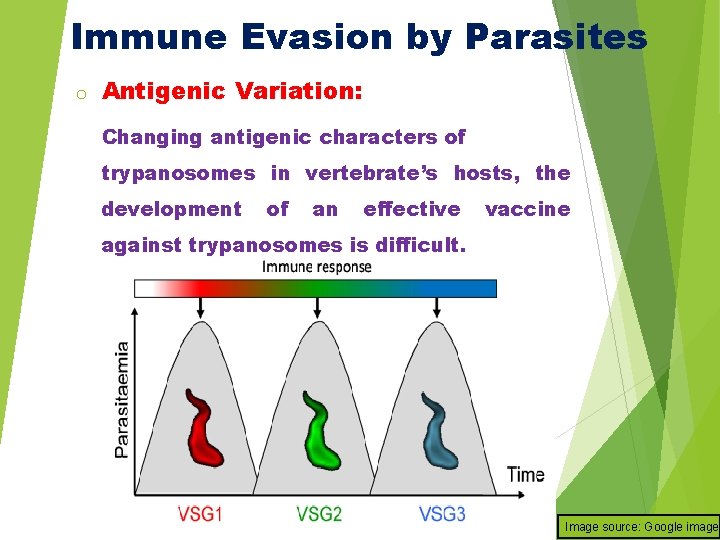
Immune Evasion by Parasites o Antigenic Variation: Changing antigenic characters of trypanosomes in vertebrate’s hosts, the development of an effective vaccine against trypanosomes is difficult. Image source: Google image
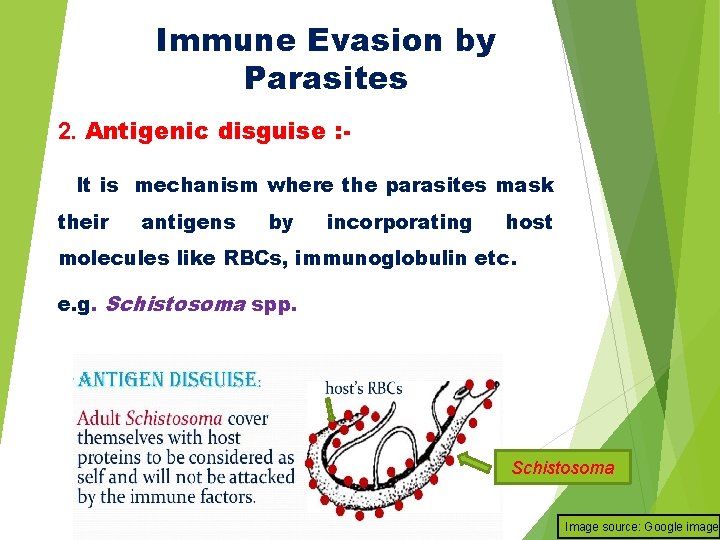
Immune Evasion by Parasites 2. Antigenic disguise : It is mechanism where the parasites mask their antigens by incorporating host molecules like RBCs, immunoglobulin etc. e. g. Schistosoma spp. Schistosoma Image source: Google image
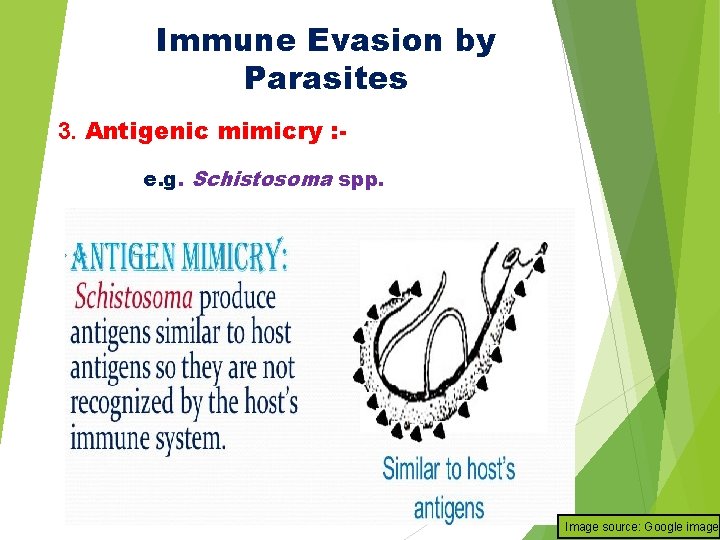
Immune Evasion by Parasites 3. Antigenic mimicry : e. g. Schistosoma spp. Image source: Google image
Immune Evasion by Parasites 4. Antigenic shedding: Nematodes and some other parasites shed their whole cuticular sheath and also antigenic molecules during molting. e. g. Schistosoma mansoni, Plasmodium falcifarum , Entamoeba, Ancylostoma, etc.
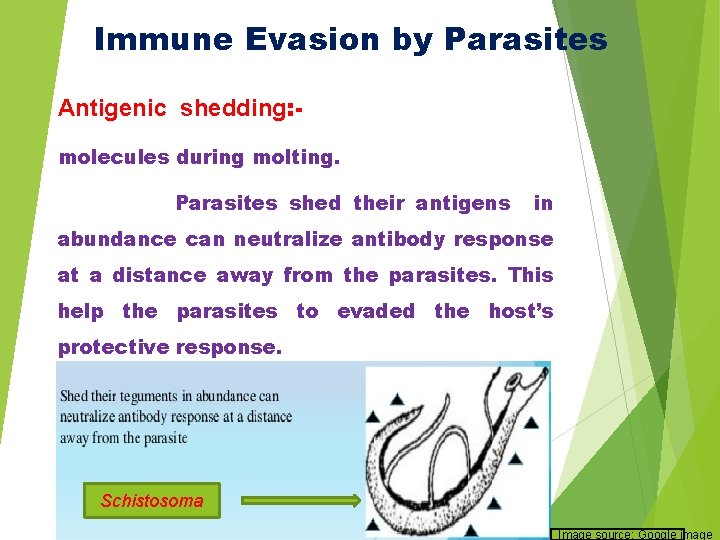
Immune Evasion by Parasites Antigenic shedding: molecules during molting. Parasites shed their antigens in abundance can neutralize antibody response at a distance away from the parasites. This help the parasites to evaded the host’s protective response. Schistosoma Image source: Google image
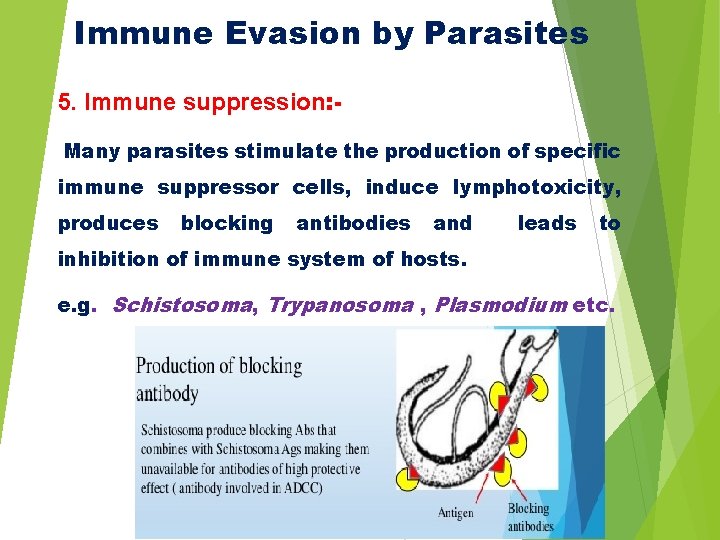
Immune Evasion by Parasites 5. Immune suppression: Many parasites stimulate the production of specific immune suppressor cells, induce lymphotoxicity, produces blocking antibodies and leads to inhibition of immune system of hosts. e. g. Schistosoma, Trypanosoma , Plasmodium etc.
Immune Evasion by Parasites 6. Immune Complex formation: Parasite like Toxoplasma gondii and Plasmodium spp. evade the hosts immune system by immune complex formation. e. g. Toxoplasma gondii, Plasmodium etc.
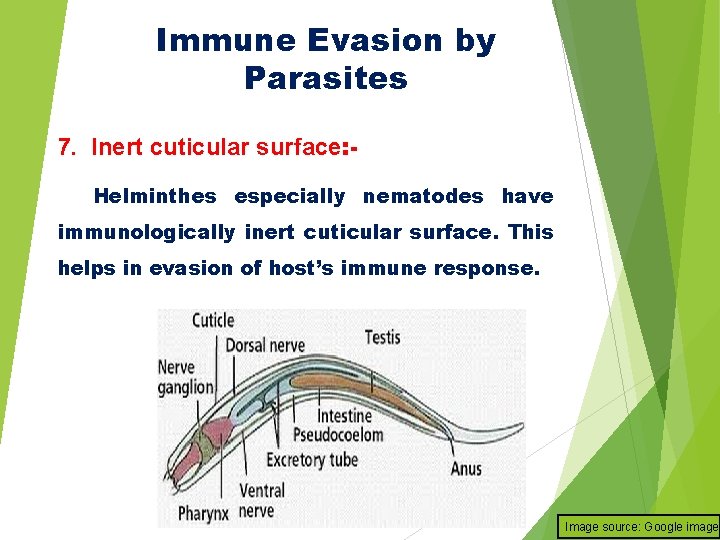
Immune Evasion by Parasites 7. Inert cuticular surface: Helminthes especially nematodes have immunologically inert cuticular surface. This helps in evasion of host’s immune response. Image source: Google image

Immune Evasion by Parasites 8. Sequestration of parasites ( Location of parasites in a protective site) Image source: Google image
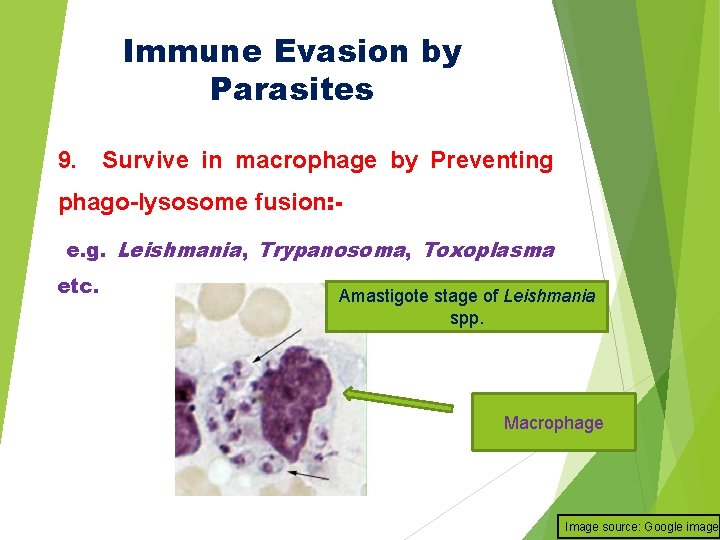
Immune Evasion by Parasites 9. Survive in macrophage by Preventing phago-lysosome fusion: e. g. Leishmania, Trypanosoma, Toxoplasma etc. Amastigote stage of Leishmania spp. Macrophage Image source: Google image
Immune Evasion by Parasites 10. Modified leucocytic function: Parasites like Schistosoma mansoni and Fasciola hepatica release some inhibitory factors which functions and system. can alter the leucocytic evade the host’s immune
Immune Evasion by Parasites 11. Neonatal immunological responsiveness: Young animals are unable to develop a proper immune response infections. to some parasitic
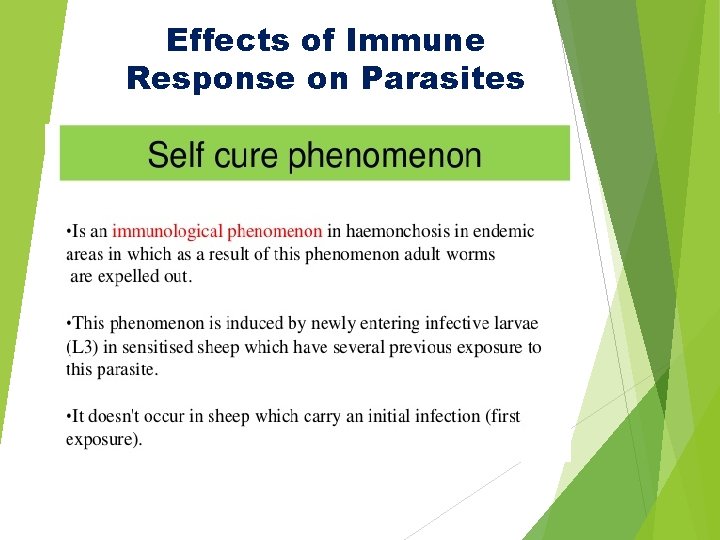
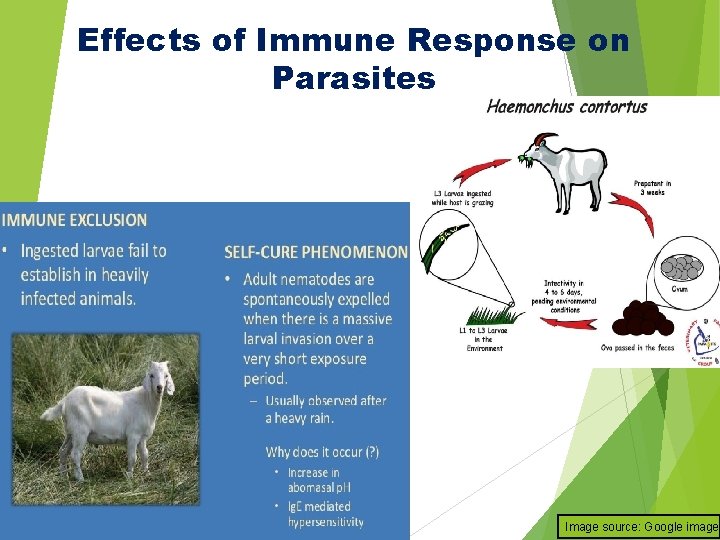
Effects of Immune Response on Parasites o. Usually expel the adults and larvae of parasites after development of immunity. e. g. Self-cure Phenomenon Concomitant Immunity o. Preventing the migration and establishment of larvae or sometimes, by arresting the development of larvae in re-infection. o. Stunting of growth and reduction of fecundity of parasites.
Effects of Immune Response on Parasites
Effects of Immune Response on Parasites Image source: Google image
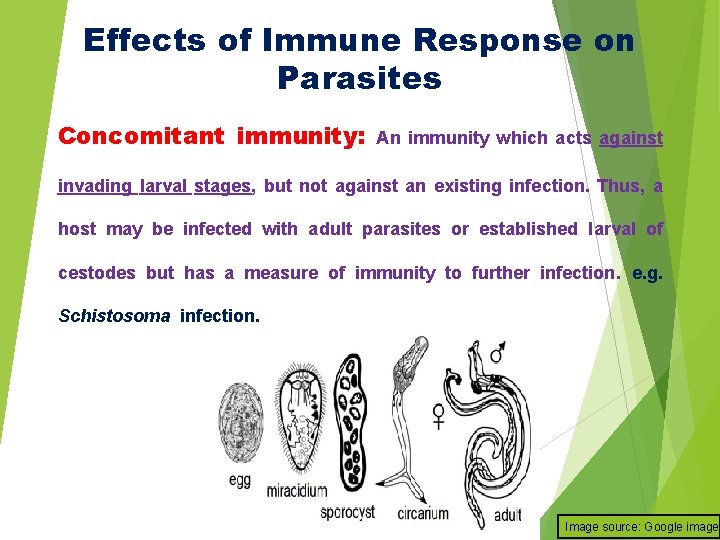
Effects of Immune Response on Parasites Concomitant immunity: An immunity which acts against invading larval stages, but not against an existing infection. Thus, a host may be infected with adult parasites or established larval of cestodes but has a measure of immunity to further infection. e. g. Schistosoma infection. Image source: Google image

THANK U
- Slides: 23