
IMMS 1 Revision part 2 Nick Richards Byron
IMMS 1 Revision (part 2) Nick Richards & Byron Haywood-Alexander
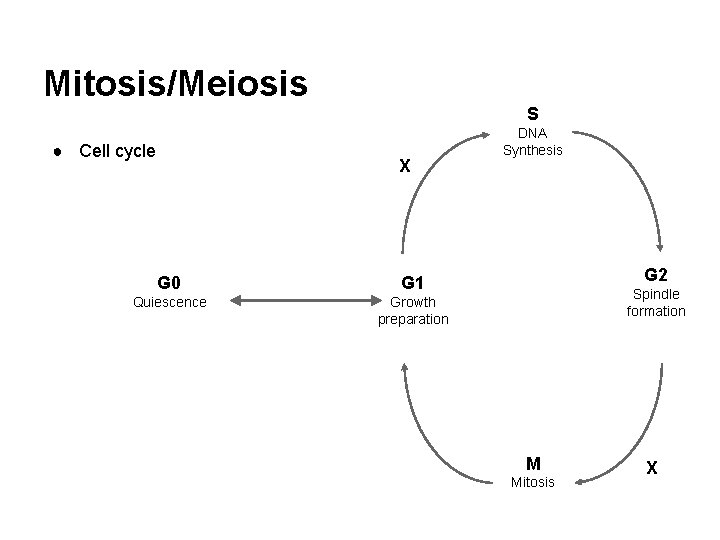
Mitosis/Meiosis S ● Cell cycle X G 0 G 1 Quiescence Growth preparation DNA Synthesis G 2 Spindle formation M Mitosis X
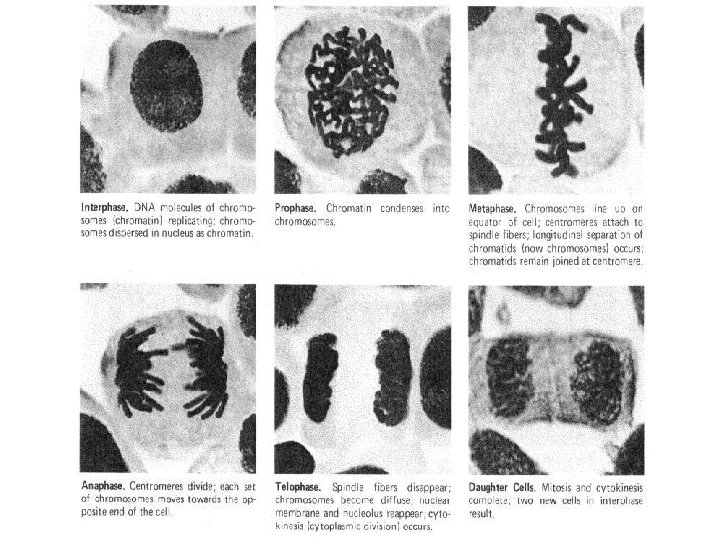
Mitosis ● Cellular division ● Two genetically identical daughter cells ● 6 phases o Interphase o Prometaphase o Metaphase o Anaphase o Telophase
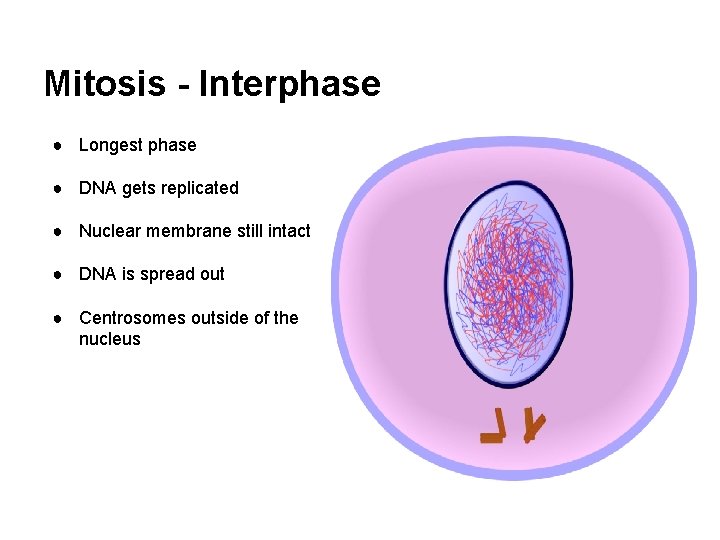
Mitosis - Interphase ● Longest phase ● DNA gets replicated ● Nuclear membrane still intact ● DNA is spread out ● Centrosomes outside of the nucleus
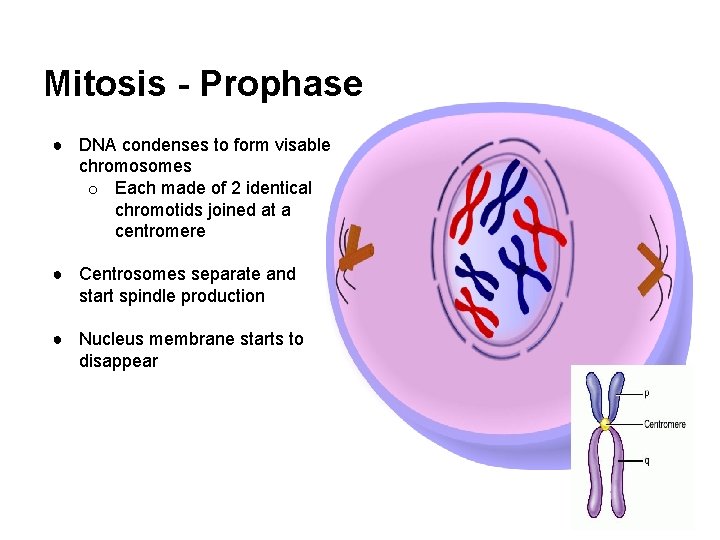
Mitosis - Prophase ● DNA condenses to form visable chromosomes o Each made of 2 identical chromotids joined at a centromere ● Centrosomes separate and start spindle production ● Nucleus membrane starts to disappear
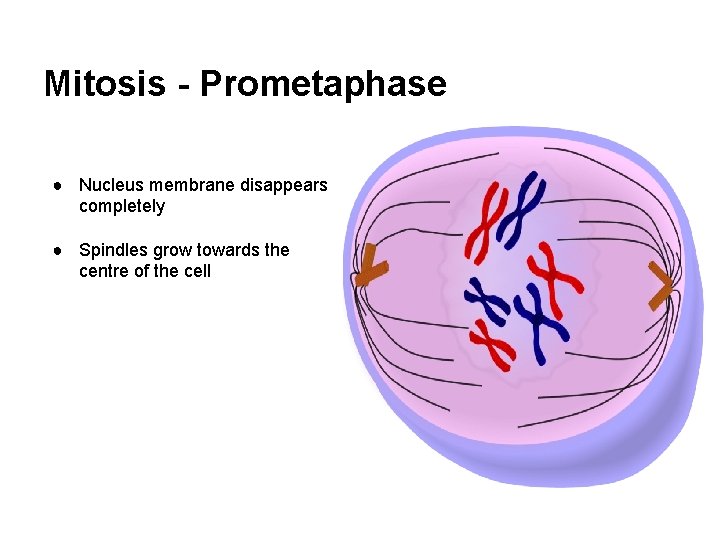
Mitosis - Prometaphase ● Nucleus membrane disappears completely ● Spindles grow towards the centre of the cell
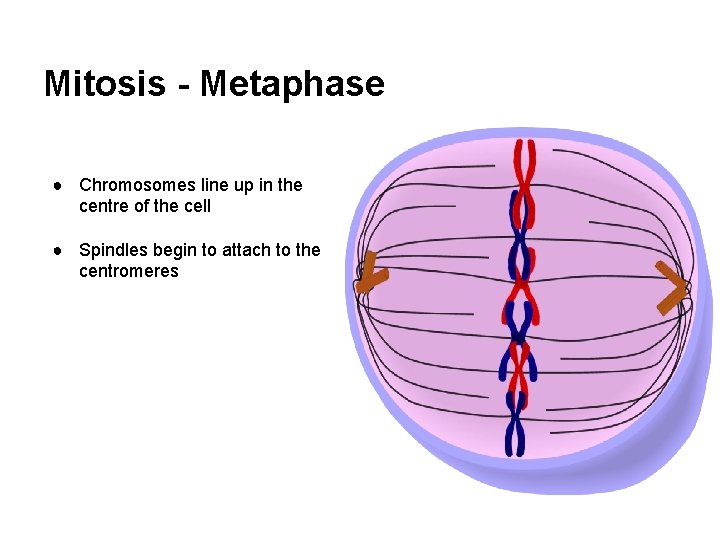
Mitosis - Metaphase ● Chromosomes line up in the centre of the cell ● Spindles begin to attach to the centromeres
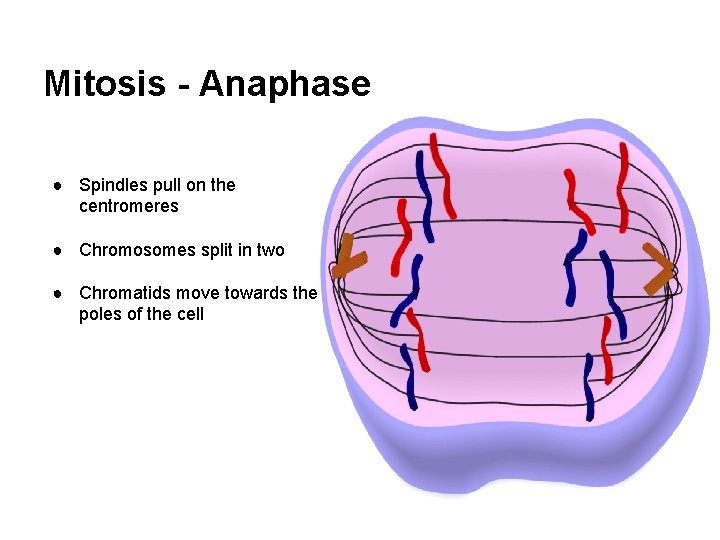
Mitosis - Anaphase ● Spindles pull on the centromeres ● Chromosomes split in two ● Chromatids move towards the poles of the cell
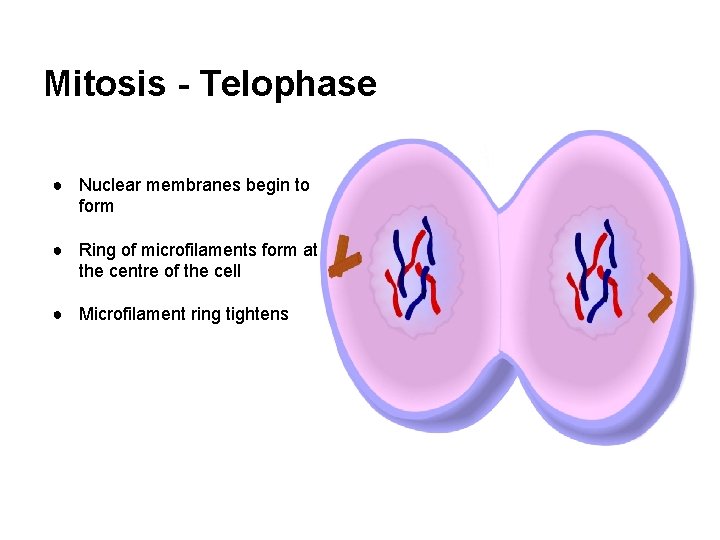
Mitosis - Telophase ● Nuclear membranes begin to form ● Ring of microfilaments form at the centre of the cell ● Microfilament ring tightens
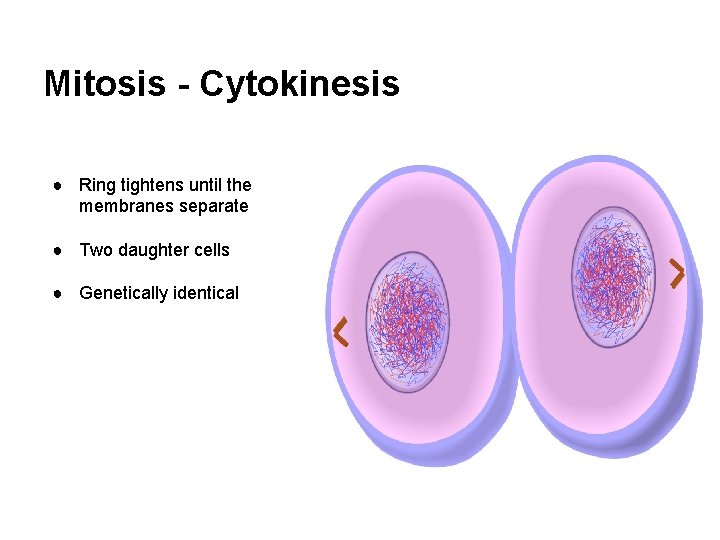
Mitosis - Cytokinesis ● Ring tightens until the membranes separate ● Two daughter cells ● Genetically identical
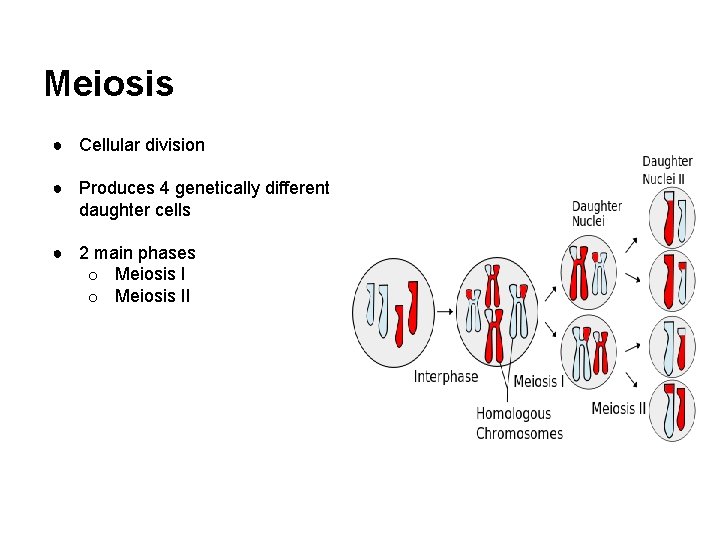
Meiosis ● Cellular division ● Produces 4 genetically different daughter cells ● 2 main phases o Meiosis II
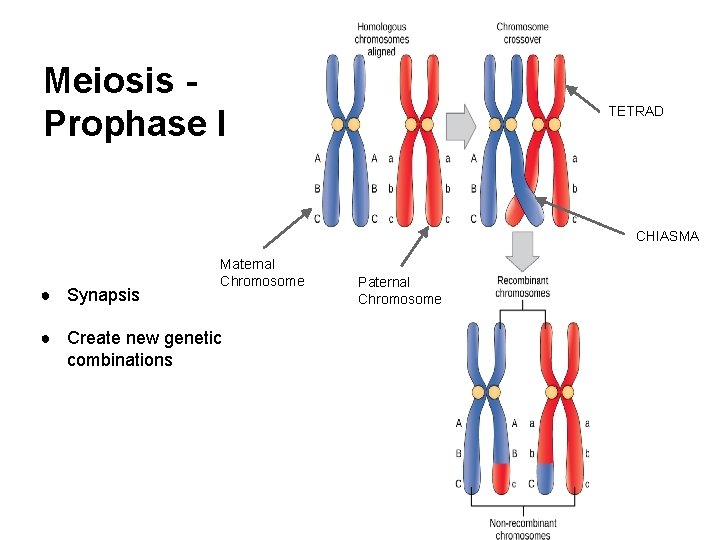
Meiosis Prophase I TETRAD CHIASMA ● Synapsis Maternal Chromosome ● Create new genetic combinations Paternal Chromosome
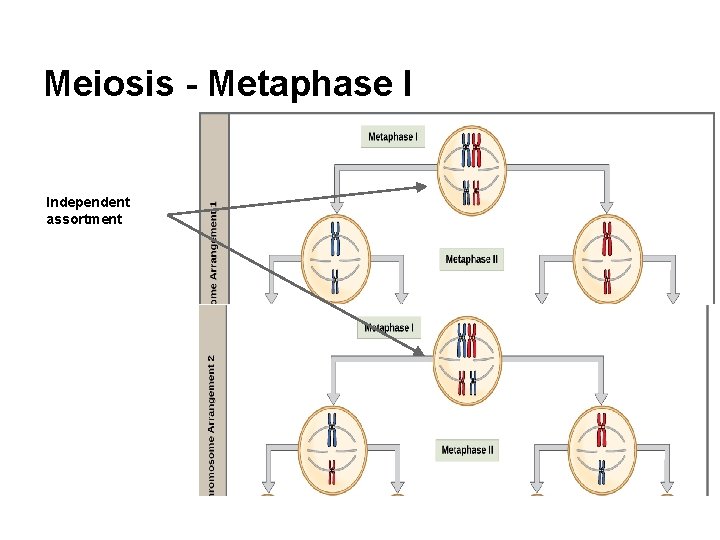
Meiosis - Metaphase I Independent assortment
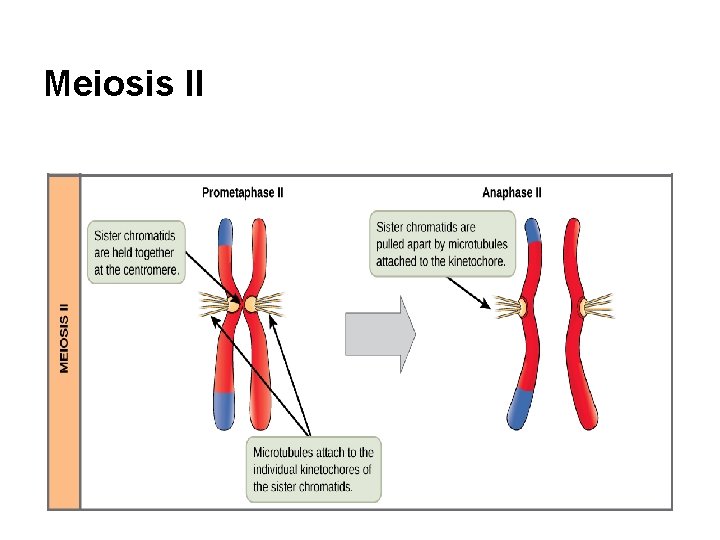
Meiosis II
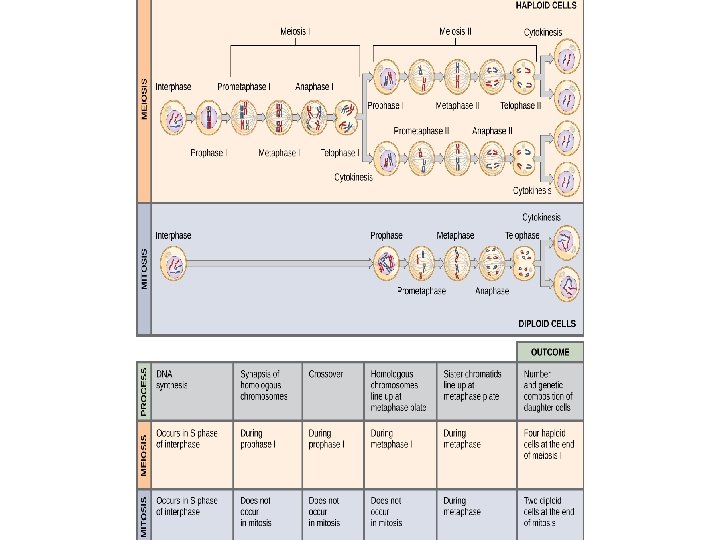
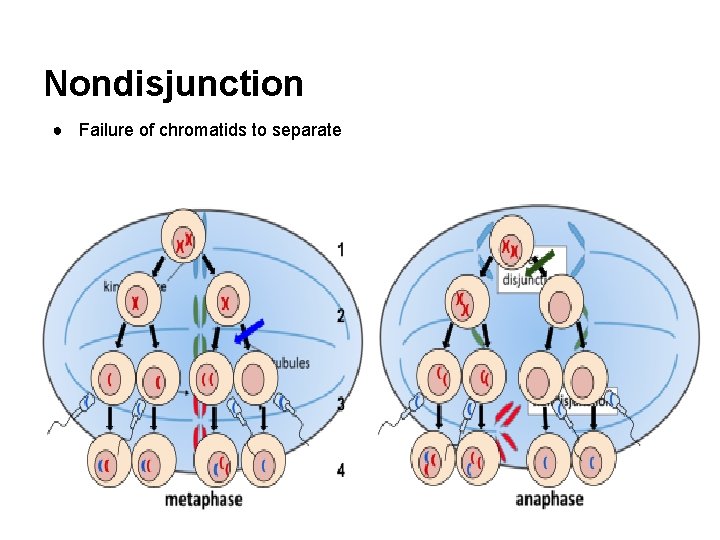
Nondisjunction ● Failure of chromatids to separate
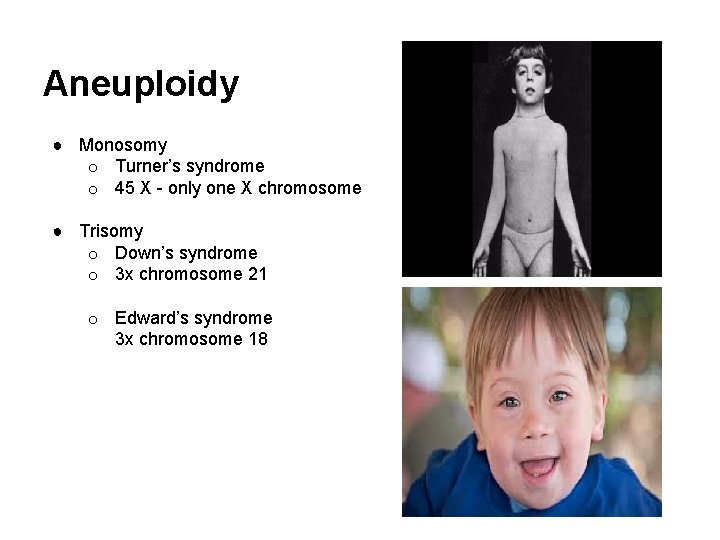
Aneuploidy ● Monosomy o Turner’s syndrome o 45 X - only one X chromosome ● Trisomy o Down’s syndrome o 3 x chromosome 21 o Edward’s syndrome 3 x chromosome 18
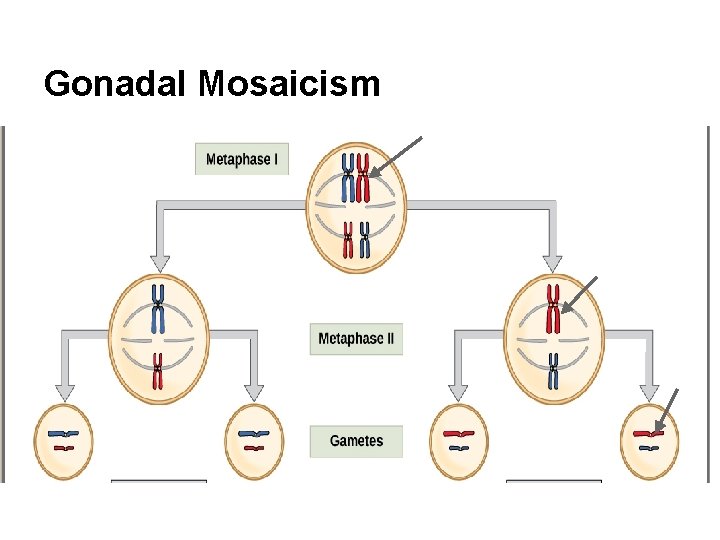
Gonadal Mosaicism
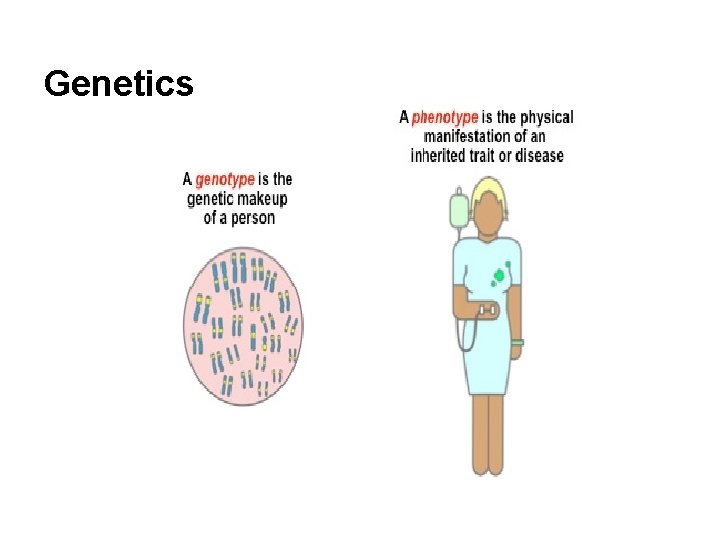
Genetics
Definitions: ● Penetrance ● Variable expression ● Sex limitation
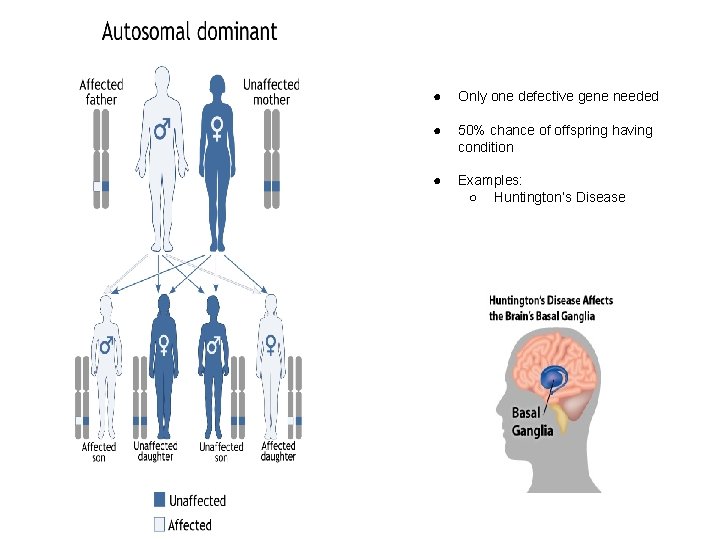
● Only one defective gene needed ● 50% chance of offspring having condition ● Examples: ○ Huntington’s Disease
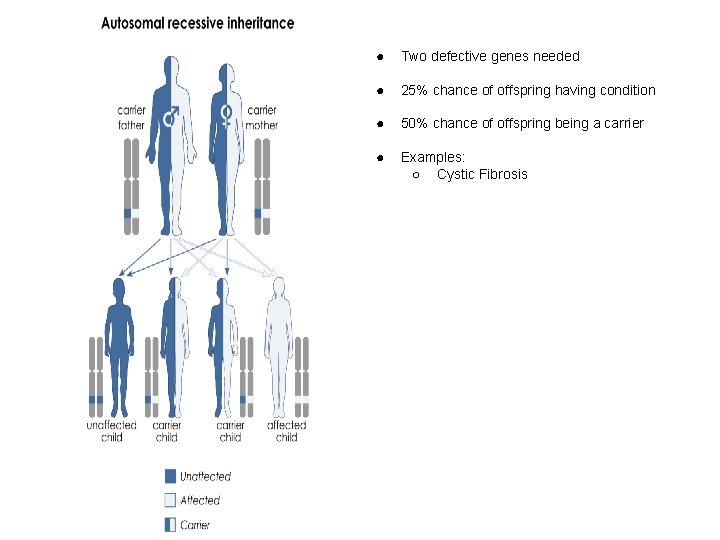
● Two defective genes needed ● 25% chance of offspring having condition ● 50% chance of offspring being a carrier ● Examples: ○ Cystic Fibrosis
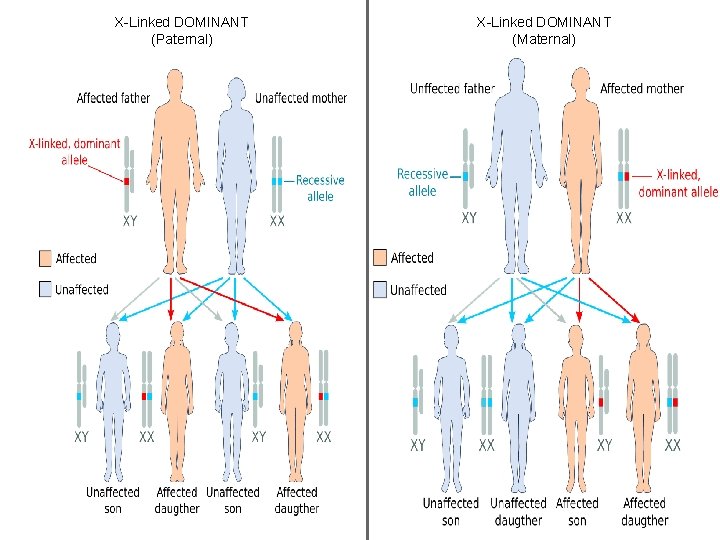
X-Linked DOMINANT (Paternal) X-Linked DOMINANT (Maternal)
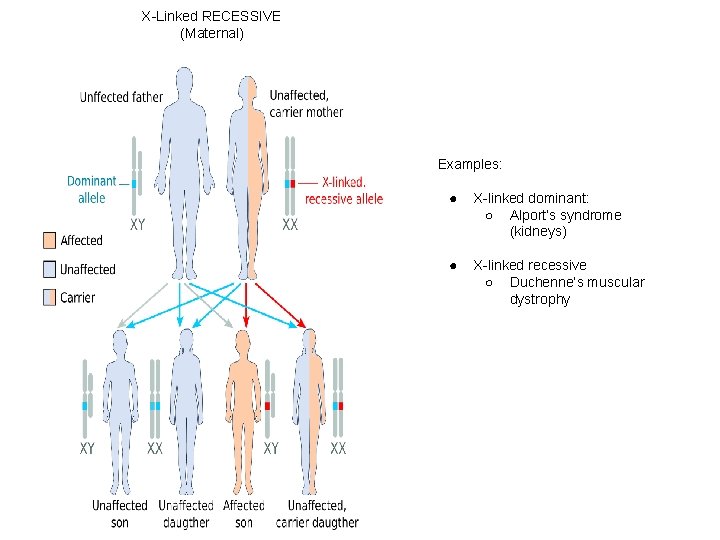
X-Linked RECESSIVE (Maternal) Examples: ● X-linked dominant: ○ Alport’s syndrome (kidneys) ● X-linked recessive ○ Duchenne’s muscular dystrophy
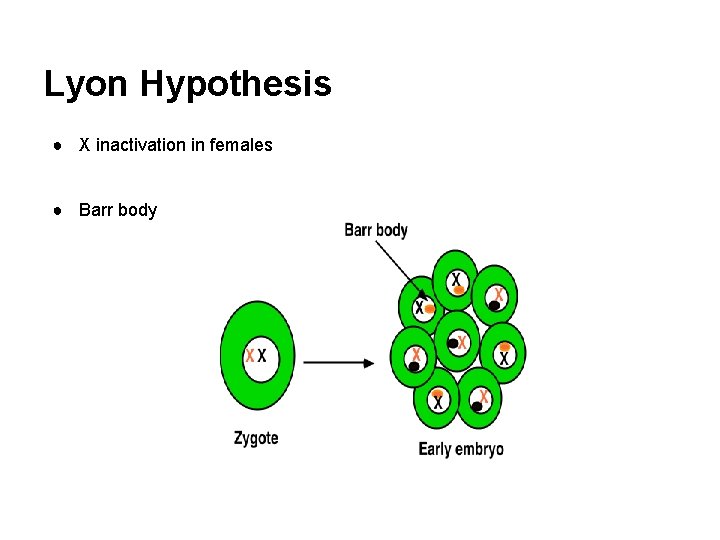
Lyon Hypothesis ● X inactivation in females ● Barr body
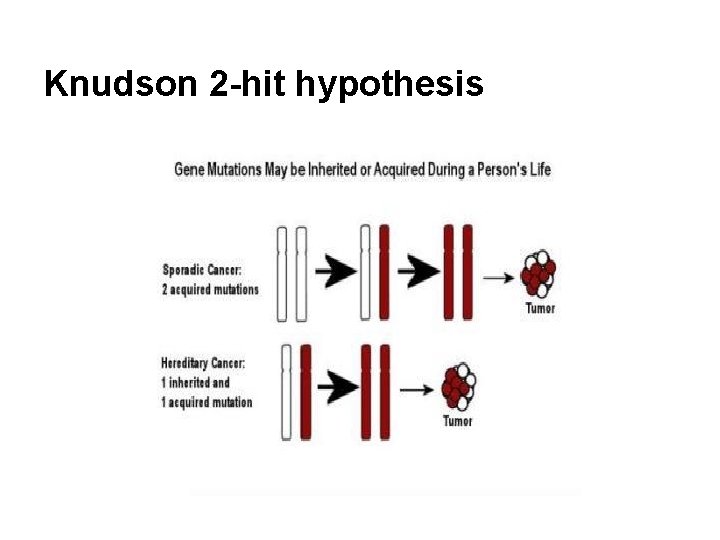
Knudson 2 -hit hypothesis
- Slides: 27