
Immobility Degrees of mobility Complete immobility e g

Immobility
Degrees of mobility • Complete immobility e. g. unconscious patient • Partial mobility e. g. patient with fracture
Physiological responses of immobility • Musculoskeletal system • Cardiovascular system • Respiratory system • Metabolic and nutrition • Urinary system • Fecal elimination • Neurosensory system • Integumentry system

Musculoskeletal system • Decrease in muscle strength • Decrease in physical stability • Muscle atrophy • Osteoporosis • Stiff painful joints • Muscle contracture
Interventions • Body repositioning • Weight beering activities • Independence in activities of daily living • Active and passive range of motion
Cardiovascular system • Weakness of cardiovascular system • Postural hypotension • Thromophlebitis e. g, DVT
Interventions • Movement and exercise • Use vertical positions • Encourage normal breathing pattern • Elastic stocking
Respiratory system • Reduced gaseous exchange • Respiratory acidosis • Accumulation of secretion • Atelectasis • Upper respiratory tract infections • Pneumonia
Interventions • Deep breathing and coughing exercise • Diaphragmatic abdominal exercise • Changing position and exercise
Metabolic and nutrition • Decreased basal metabolic rate • Reduced gastrointestinal motility • Imbalance in protein synthesis • Anorexia • Hypoproteinemia • Negative calcium balance
Interventions • High protein, calories and fibre diet • Vitamin and minerals supplements • Weight bearing exercises • Enteral and Parenteral supplements
Urinary system • Urinary stasis • Renal calculi formation • Urinary incontinence • Urinary retention • Urinary tract infection
Interventions • Turning, positioning and exercise • Improving hydration • Perianal hygiene • Position and relaxation of urination
Fecal elimination • Constipation • Fecal impaction
Interventions • Well hydration • Ambulate as much as possible • High fibre diet
Neurosensory system • Decreased motor activity • Hyperactive sympathetic stimulation – Increased heart rate – Restlessness – Drowsiness – Irritability – Confusion – Unrealistic perception

Integumentry system • Loss of skin turger and elasticity • Decubitus ulcer formation

Psychological responses of immobility • Social, emotional and intellectual changes • Self concept changes • Feeling of worthlessness and hopelessness • Impaired decision making and problem solving abilities
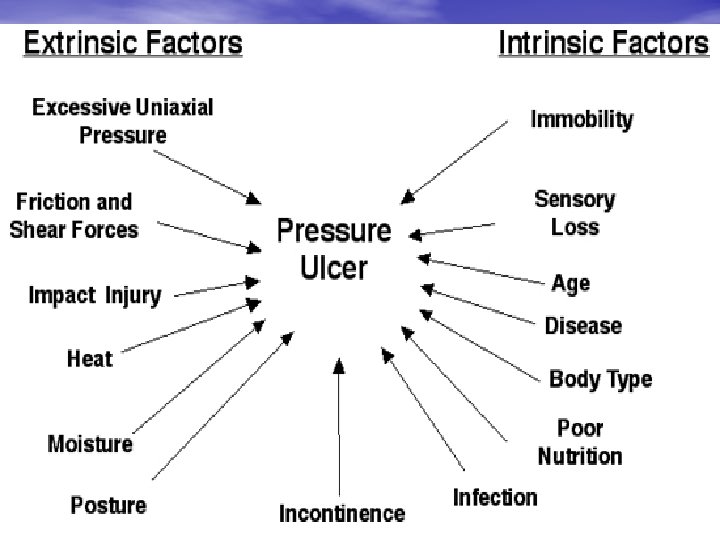
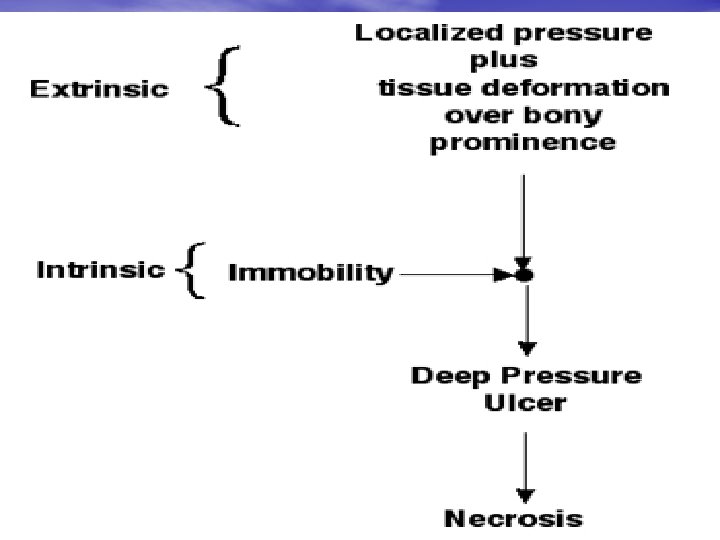
Pressure Ulcer • Is impaired in skin integrity resulting from decrease • • • mobility and direct pressure occurring most frequently over bony prominence It is a wound with a localized area if tissue necrosis Other names: Docubitus ulcer, bed sores Pressure is the most prominent cause
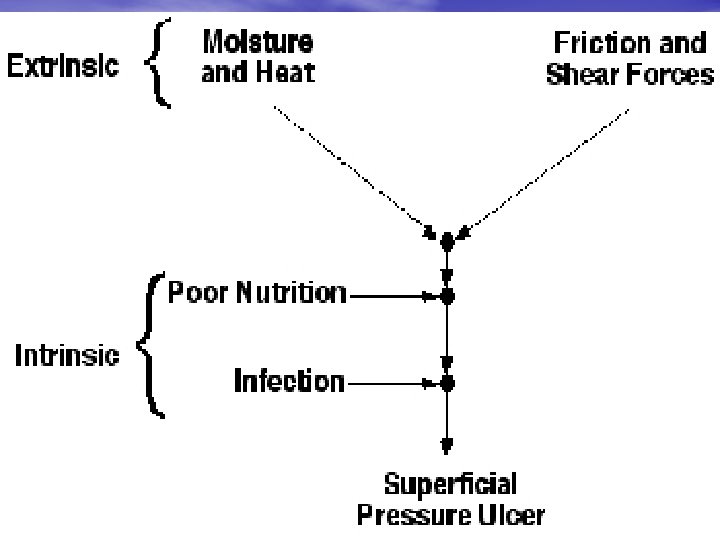
Predisposing factors increase the possibility of pressure sores: • Immobility and lack of normal movement • Friction and moisture • Poor personal hygiene • Decrease level of consciousness • Advance Age • Malnutrition • Immunosuppression • Edema
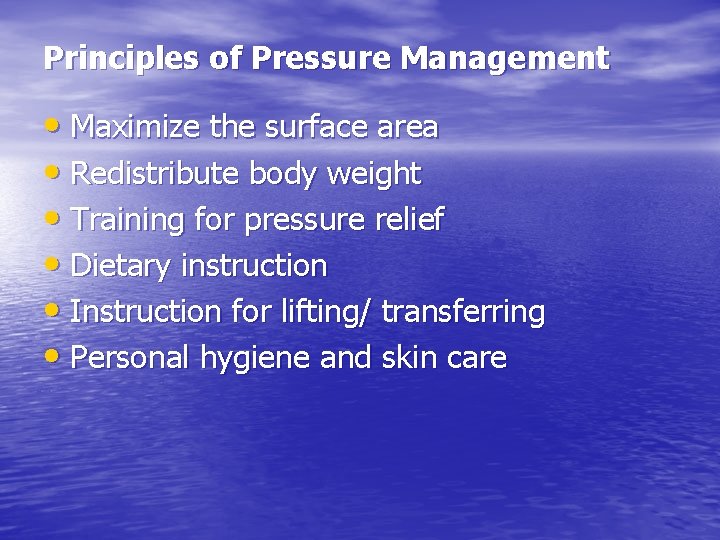
Principles of Pressure Management • Maximize the surface area • Redistribute body weight • Training for pressure relief • Dietary instruction • Instruction for lifting/ transferring • Personal hygiene and skin care
- Slides: 24