
Immigration Immigration Movie Far and Away Web Page
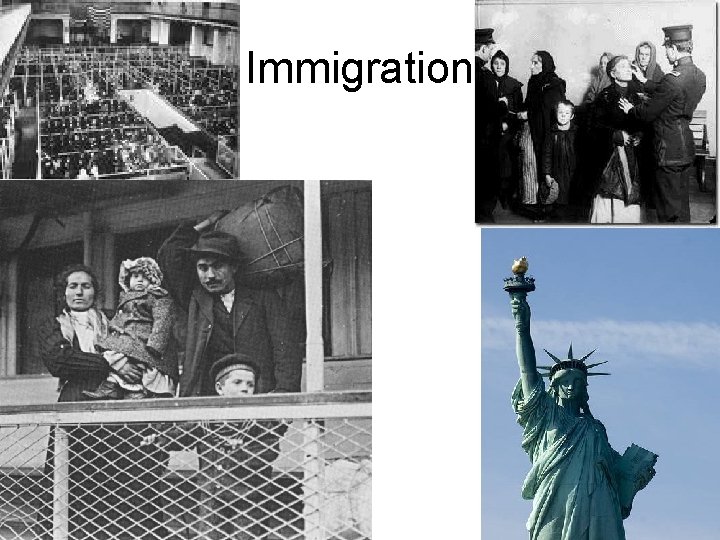
Immigration
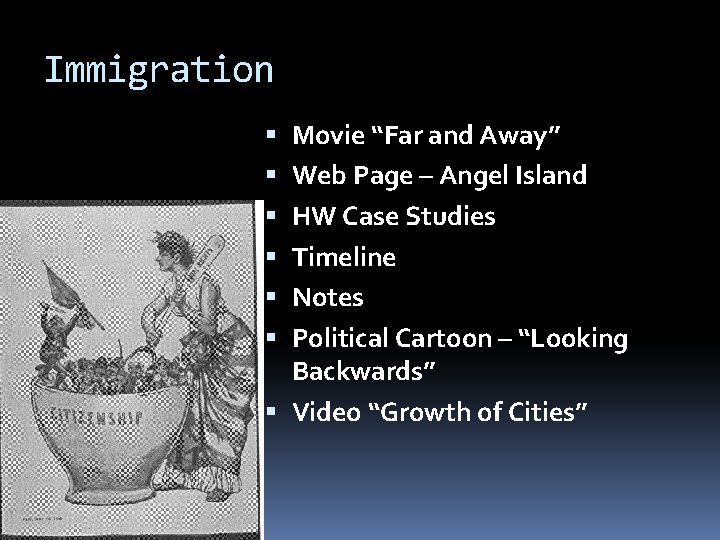
Immigration Movie “Far and Away” Web Page – Angel Island HW Case Studies Timeline Notes Political Cartoon – “Looking Backwards” Video “Growth of Cities”
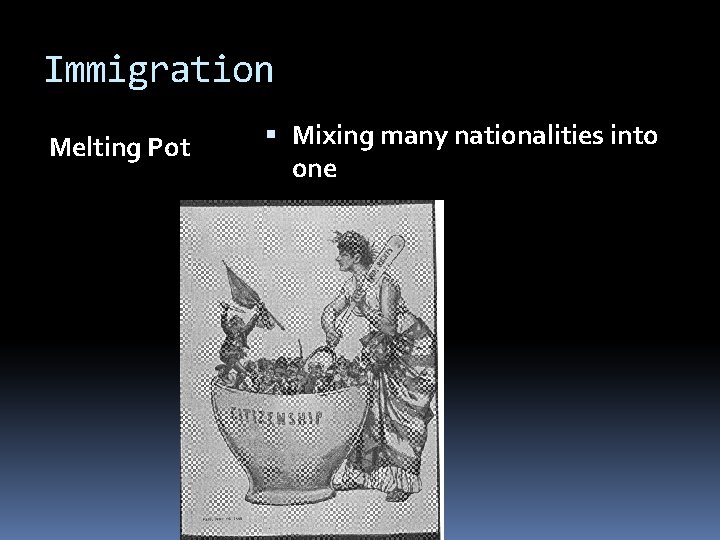
Immigration Melting Pot Mixing many nationalities into one
Immigration Migrate Emigrate Immigrate Move your home (birds leaving, people head to FL in winter) To leave your country permanently To enter into a new country with intention to settle in this new country Rebecca and Sam immigrated to the U. S. from Russia
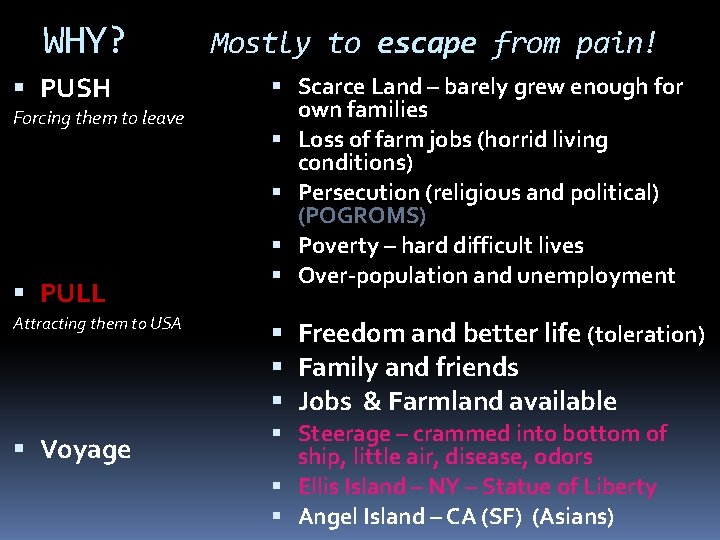
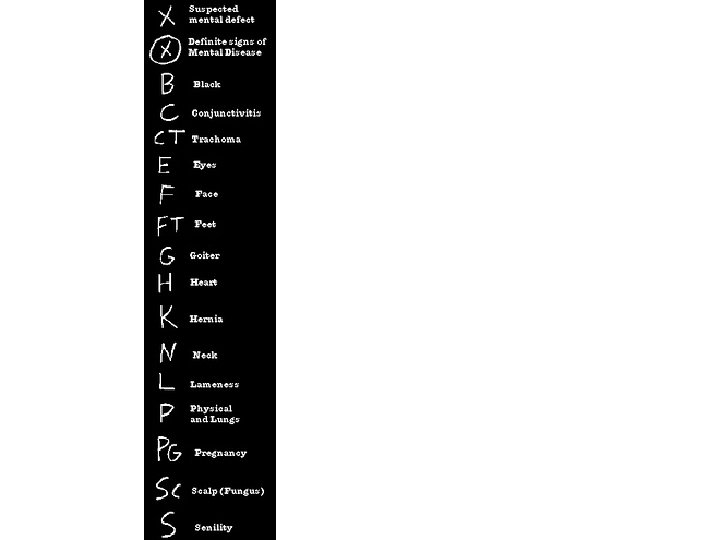
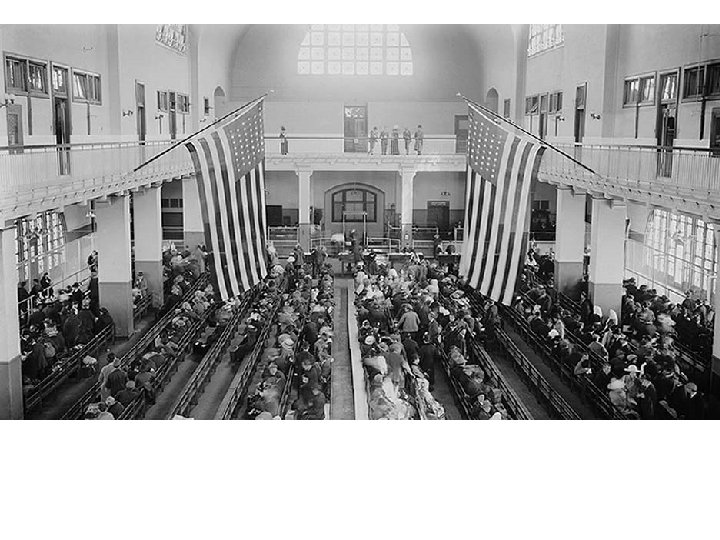
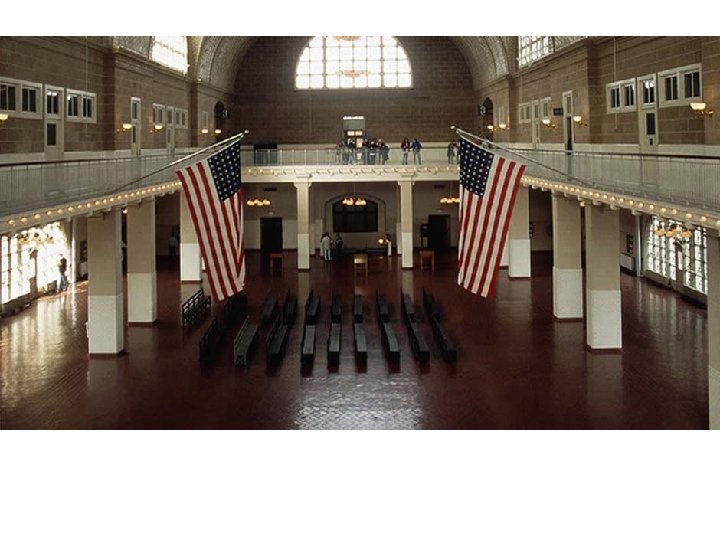
WHY? PUSH Forcing them to leave PULL Attracting them to USA Voyage Mostly to escape from pain! Scarce Land – barely grew enough for own families Loss of farm jobs (horrid living conditions) Persecution (religious and political) (POGROMS) Poverty – hard difficult lives Over-population and unemployment Freedom and better life (toleration) Family and friends Jobs & Farmland available Steerage – crammed into bottom of ship, little air, disease, odors Ellis Island – NY – Statue of Liberty Angel Island – CA (SF) (Asians)
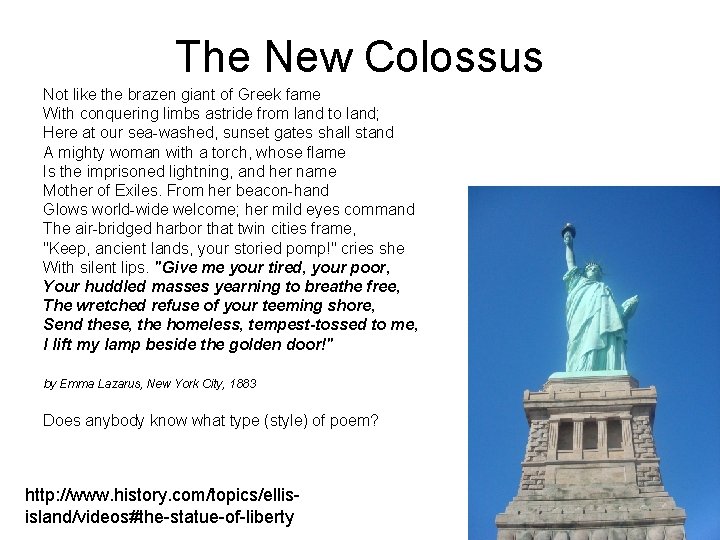
The New Colossus Not like the brazen giant of Greek fame With conquering limbs astride from land to land; Here at our sea-washed, sunset gates shall stand A mighty woman with a torch, whose flame Is the imprisoned lightning, and her name Mother of Exiles. From her beacon-hand Glows world-wide welcome; her mild eyes command The air-bridged harbor that twin cities frame, "Keep, ancient lands, your storied pomp!" cries she With silent lips. "Give me your tired, your poor, Your huddled masses yearning to breathe free, The wretched refuse of your teeming shore, Send these, the homeless, tempest-tossed to me, I lift my lamp beside the golden door!" by Emma Lazarus, New York City, 1883 Does anybody know what type (style) of poem? http: //www. history. com/topics/ellisisland/videos#the-statue-of-liberty
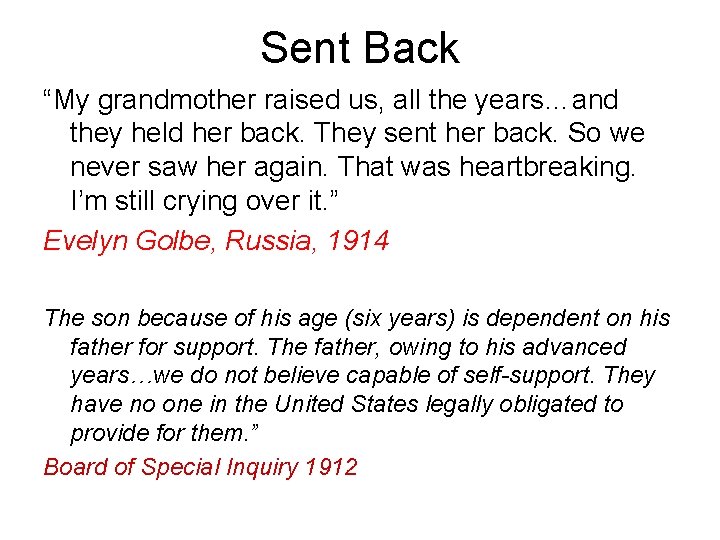
Sent Back “My grandmother raised us, all the years…and they held her back. They sent her back. So we never saw her again. That was heartbreaking. I’m still crying over it. ” Evelyn Golbe, Russia, 1914 The son because of his age (six years) is dependent on his father for support. The father, owing to his advanced years…we do not believe capable of self-support. They have no one in the United States legally obligated to provide for them. ” Board of Special Inquiry 1912
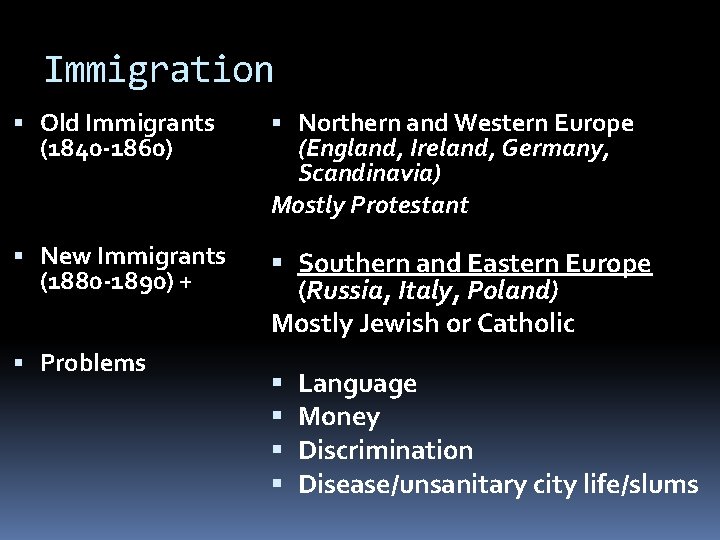
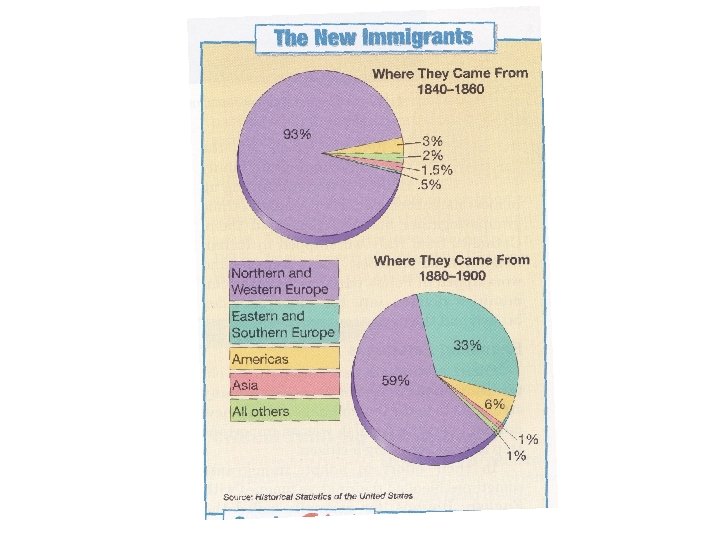
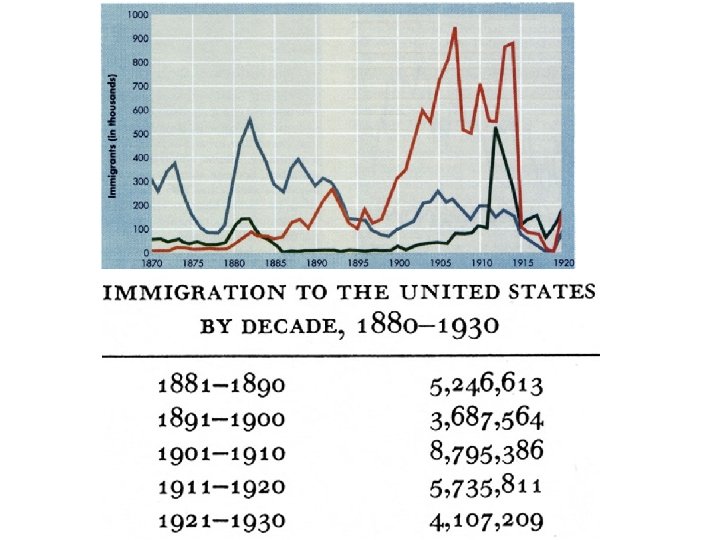
Immigration Old Immigrants (1840 -1860) Northern and Western Europe (England, Ireland, Germany, Scandinavia) Mostly Protestant New Immigrants (1880 -1890) + Southern and Eastern Europe (Russia, Italy, Poland) Mostly Jewish or Catholic Problems Language Money Discrimination Disease/unsanitary city life/slums
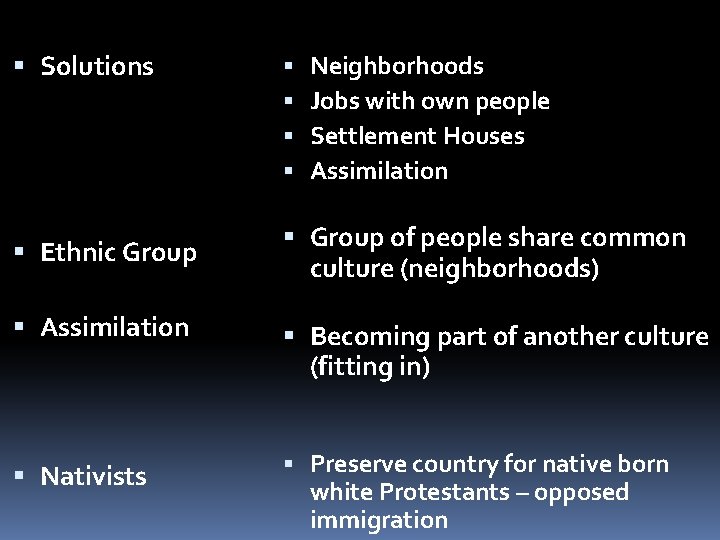
Solutions Ethnic Group Neighborhoods Jobs with own people Settlement Houses Assimilation Group of people share common culture (neighborhoods) Assimilation Becoming part of another culture (fitting in) Nativists Preserve country for native born white Protestants – opposed immigration
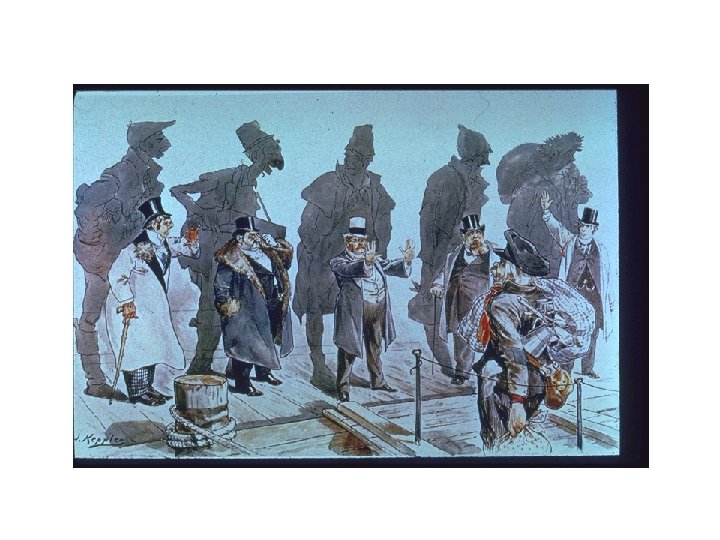
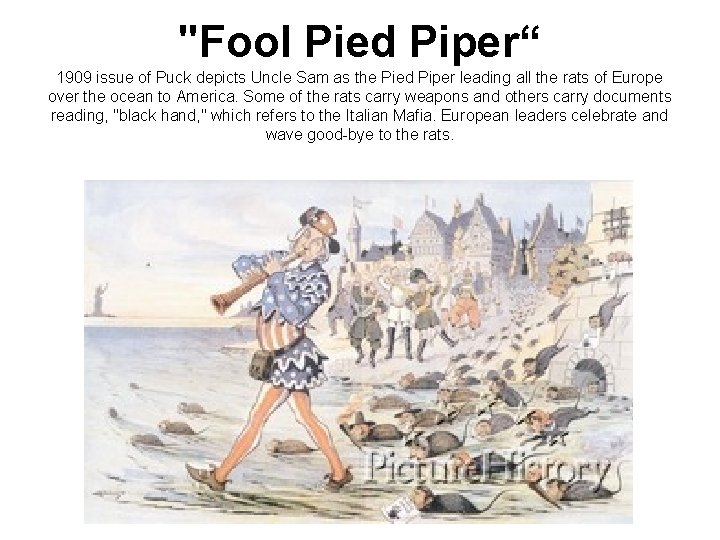
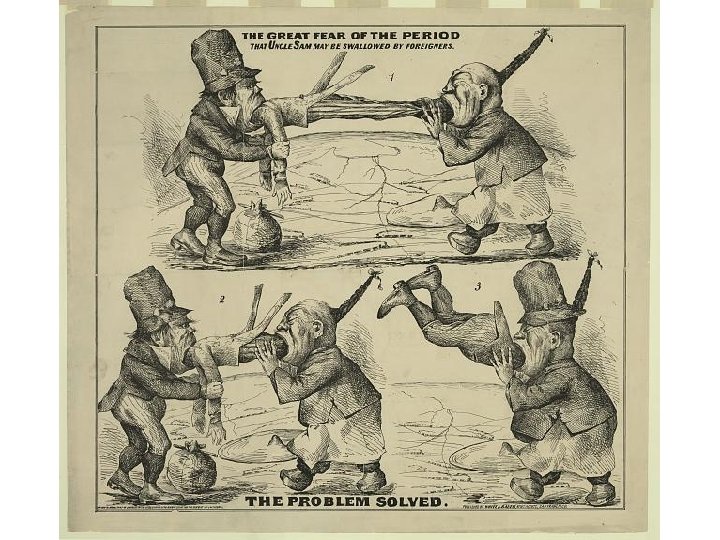
"Fool Pied Piper“ 1909 issue of Puck depicts Uncle Sam as the Pied Piper leading all the rats of Europe over the ocean to America. Some of the rats carry weapons and others carry documents reading, "black hand, " which refers to the Italian Mafia. European leaders celebrate and wave good-bye to the rats.
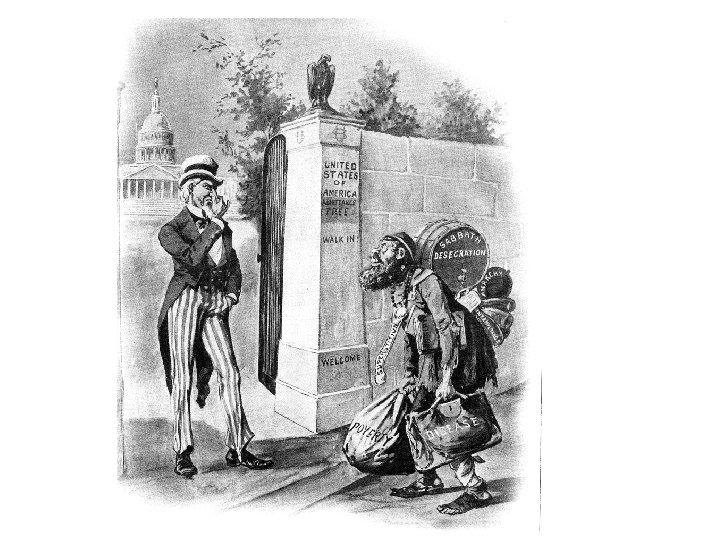
Restrict Immigration why? Prejudices – Chinese Exclusion Act(1882) NO Chinese immigrants allowed in U. S. IF leave the country NO return This Act not repealed until 1943 Gentlemen’s Agreement (1907) Immigration Act 1891, 1917
Hull House – Jane Addams (Chicago) Helped poor Taught English Cared for Children Organized sports and theater for youth – started cities first public gym Jane – first American woman to win Nobel Peace Prize 1931
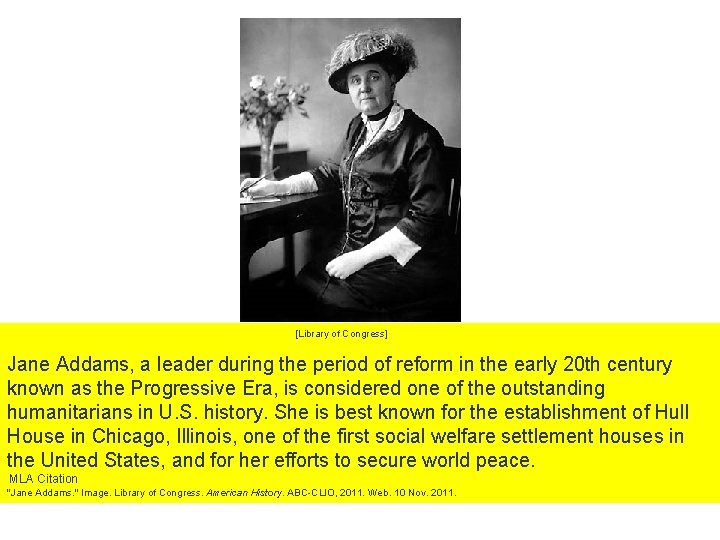
[Library of Congress] Jane Addams, a leader during the period of reform in the early 20 th century known as the Progressive Era, is considered one of the outstanding humanitarians in U. S. history. She is best known for the establishment of Hull House in Chicago, Illinois, one of the first social welfare settlement houses in the United States, and for her efforts to secure world peace. MLA Citation "Jane Addams. " Image. Library of Congress. American History. ABC-CLIO, 2011. Web. 10 Nov. 2011.

Nativism & Tenement life video clip
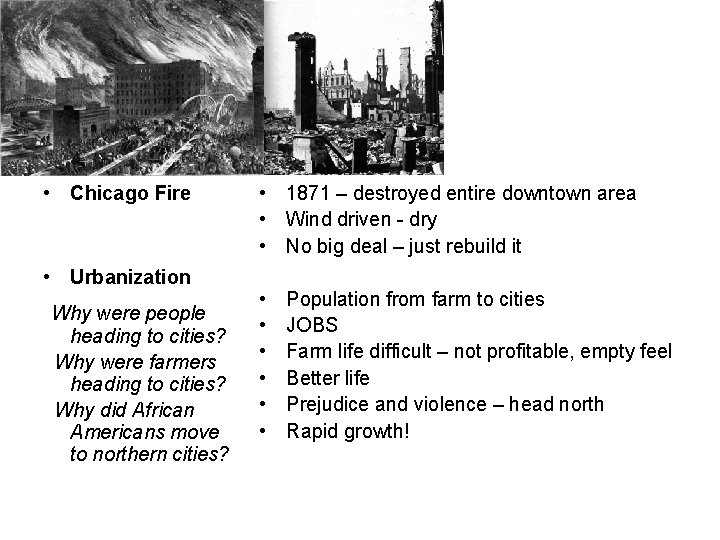
• Chicago Fire • Urbanization Why were people heading to cities? Why were farmers heading to cities? Why did African Americans move to northern cities? • 1871 – destroyed entire downtown area • Wind driven - dry • No big deal – just rebuild it • • • Population from farm to cities JOBS Farm life difficult – not profitable, empty feel Better life Prejudice and violence – head north Rapid growth!
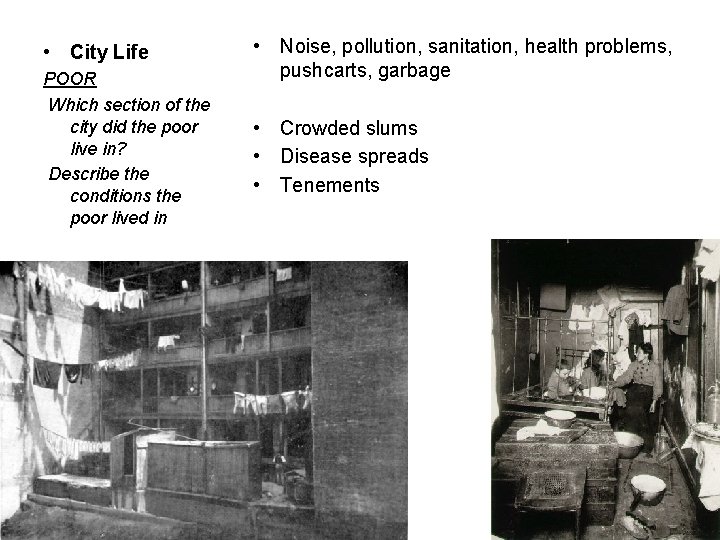
• City Life POOR Which section of the city did the poor live in? Describe the conditions the poor lived in • Noise, pollution, sanitation, health problems, pushcarts, garbage • Crowded slums • Disease spreads • Tenements
• City Life MIDDLE CLASS Which section of the city did this class of people live in? What type of jobs did these middle class people have? WEALTHY Which section of the city did the upper class live in? What were their homes like? • Away from slums • Doctors, lawyers, managers • Social groups • Outskirts of city – secluded (5 th Ave) • Excessive • Gated
• PROBLEMS with city life • • Building codes – standards for structures fire escapes, plumbing, • fire department • Police department • Water tunnel system (currently building new? ) • Lights at night on street REFORMS (solutions to the problems) • Help for the poor How were the poor helped by different organizations? Fire traps Garbage in the streets Factory pollution No building or safety codes Crime • Food, shelter, child care, social activities Salvation Army, YMCA, Mother Cabrini (hospitals)
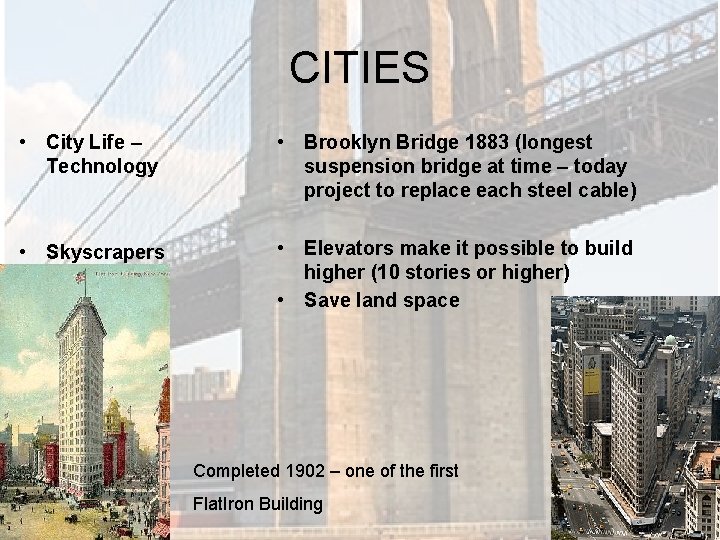
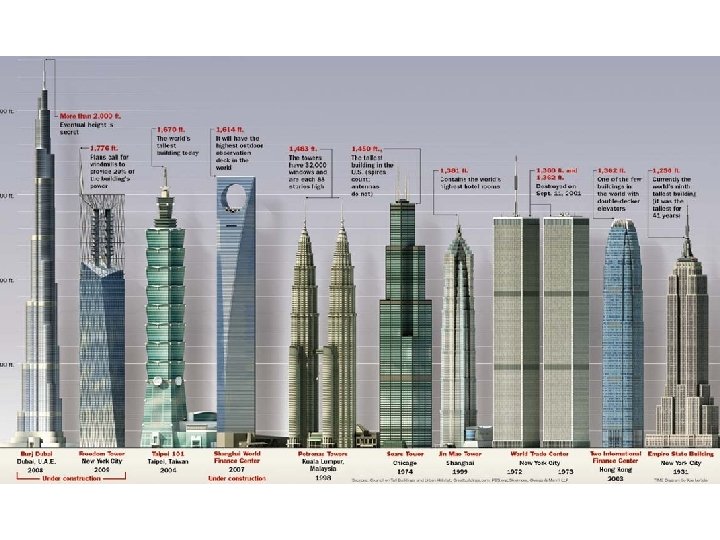
CITIES • City Life – Technology • Brooklyn Bridge 1883 (longest suspension bridge at time – today project to replace each steel cable) • Skyscrapers • Elevators make it possible to build higher (10 stories or higher) • Save land space Completed 1902 – one of the first Flat. Iron Building
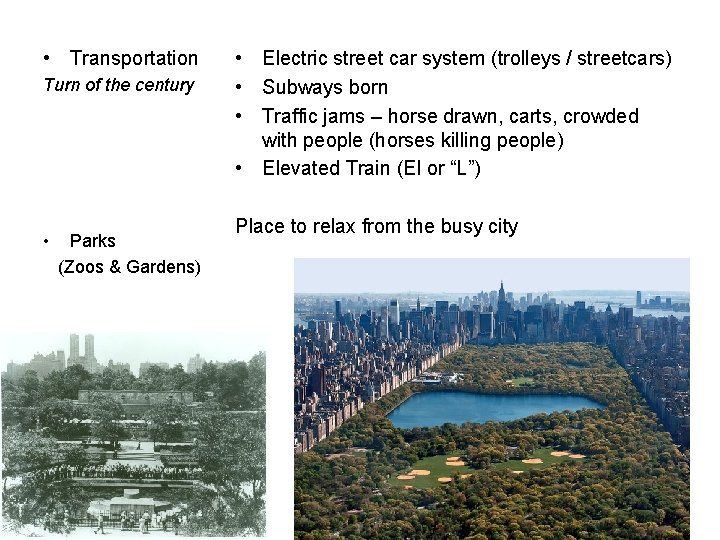
• Transportation Turn of the century • Parks (Zoos & Gardens) • Electric street car system (trolleys / streetcars) • Subways born • Traffic jams – horse drawn, carts, crowded with people (horses killing people) • Elevated Train (El or “L”) Place to relax from the busy city
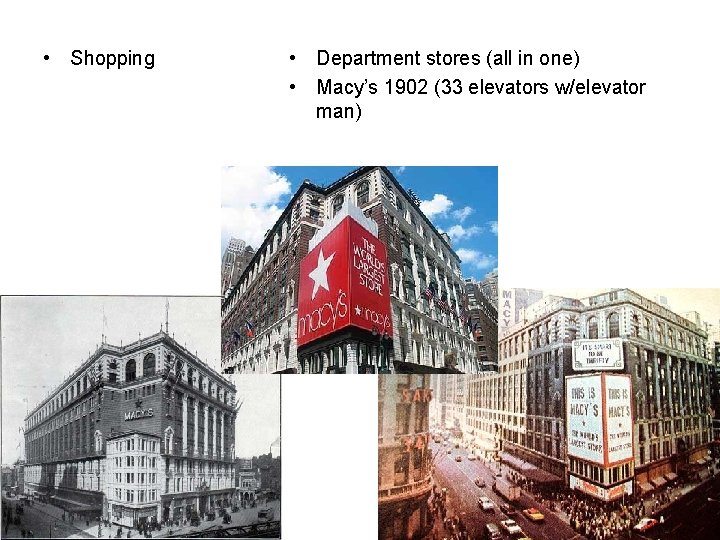
• Shopping • Department stores (all in one) • Macy’s 1902 (33 elevators w/elevator man)
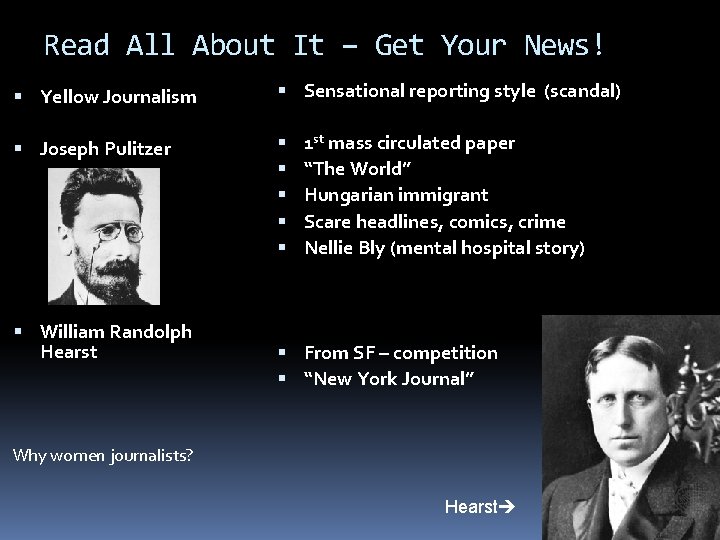
Read All About It – Get Your News! Yellow Journalism Sensational reporting style (scandal) Joseph Pulitzer William Randolph Hearst 1 st mass circulated paper “The World” Hungarian immigrant Scare headlines, comics, crime Nellie Bly (mental hospital story) From SF – competition “New York Journal” Why women journalists? Hearst
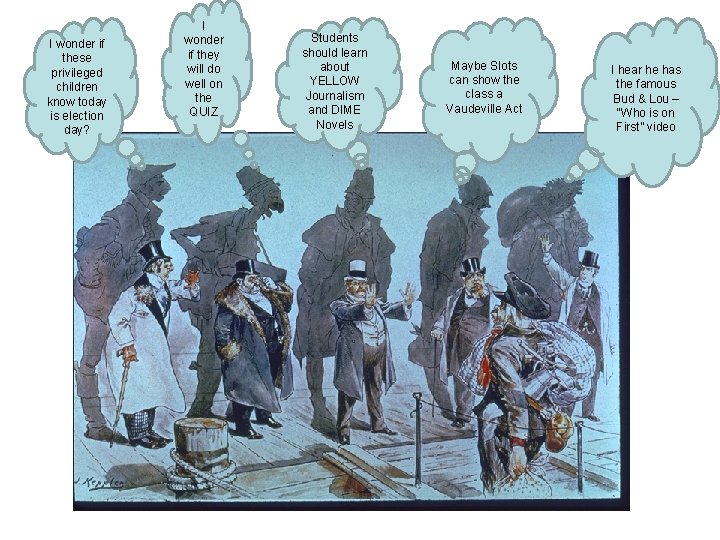
I wonder if these privileged children know today is election day? I wonder if they will do well on the QUIZ Students should learn about YELLOW Journalism and DIME Novels Maybe Slots can show the class a Vaudeville Act I hear he has the famous Bud & Lou – “Who is on First” video

“Reflipe W Thenuz”
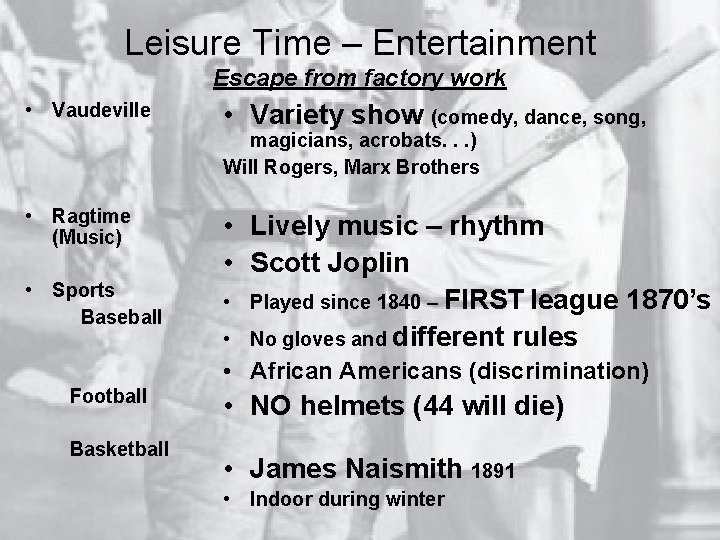
Leisure Time – Entertainment Escape from factory work • Vaudeville • Variety show (comedy, dance, song, magicians, acrobats. . . ) Will Rogers, Marx Brothers • Ragtime (Music) • Sports Baseball • Lively music – rhythm • Scott Joplin • Played since 1840 – FIRST league 1870’s • No gloves and different rules • African Americans (discrimination) Football Basketball • NO helmets (44 will die) • James Naismith 1891 • Indoor during winter
• videosvideovaudeville act. mp 4 • videosvideo-Bud and Lou routine. mp 4
School Days! Education Before Civil War less than 50% Public Schools and programs After Civil War programs established 1873 – 1 st Kindergarten Laws passed require attendance Freedmen’s Bureau role Taught English 8 am – 4 pm The 3 “R’s” Discipline and Obedience High Schools, Colleges and “shop” schools
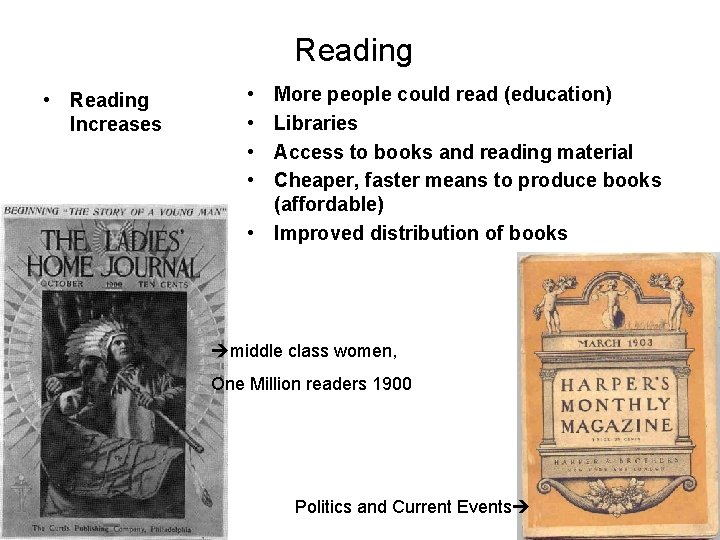
Reading • Reading Increases • • More people could read (education) Libraries Access to books and reading material Cheaper, faster means to produce books (affordable) • Improved distribution of books middle class women, One Million readers 1900 Politics and Current Events
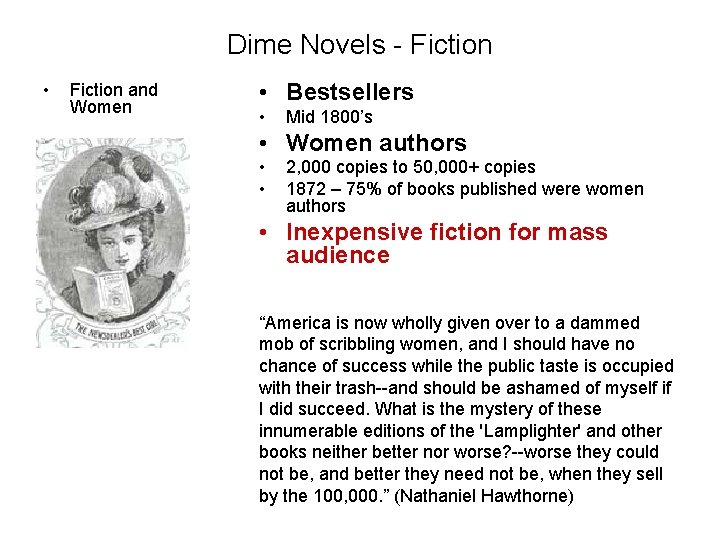
Dime Novels - Fiction • Fiction and Women • Bestsellers • Mid 1800’s • Women authors • • 2, 000 copies to 50, 000+ copies 1872 – 75% of books published were women authors • Inexpensive fiction for mass audience “America is now wholly given over to a dammed mob of scribbling women, and I should have no chance of success while the public taste is occupied with their trash--and should be ashamed of myself if I did succeed. What is the mystery of these innumerable editions of the 'Lamplighter' and other books neither better nor worse? --worse they could not be, and better they need not be, when they sell by the 100, 000. ” (Nathaniel Hawthorne)
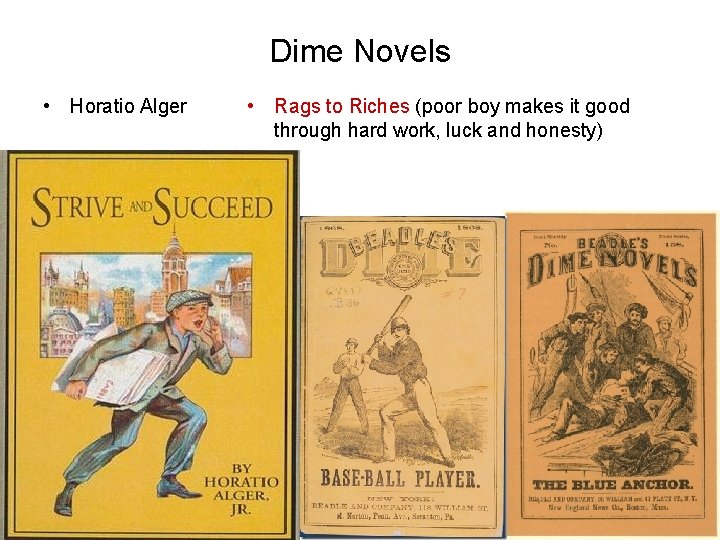
Dime Novels • Horatio Alger • Rags to Riches (poor boy makes it good through hard work, luck and honesty)
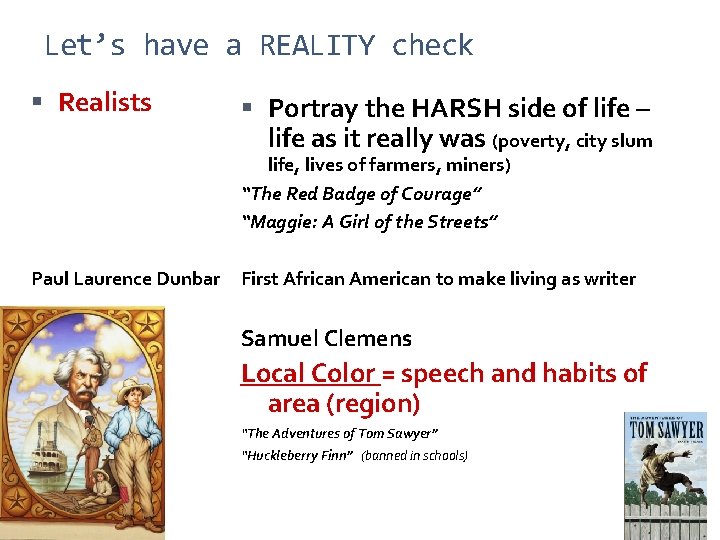
Let’s have a REALITY check Realists Portray the HARSH side of life – life as it really was (poverty, city slum life, lives of farmers, miners) “The Red Badge of Courage” “Maggie: A Girl of the Streets” Paul Laurence Dunbar Mark Twain First African American to make living as writer Samuel Clemens Local Color = speech and habits of area (region) “The Adventures of Tom Sawyer” “Huckleberry Finn” (banned in schools)
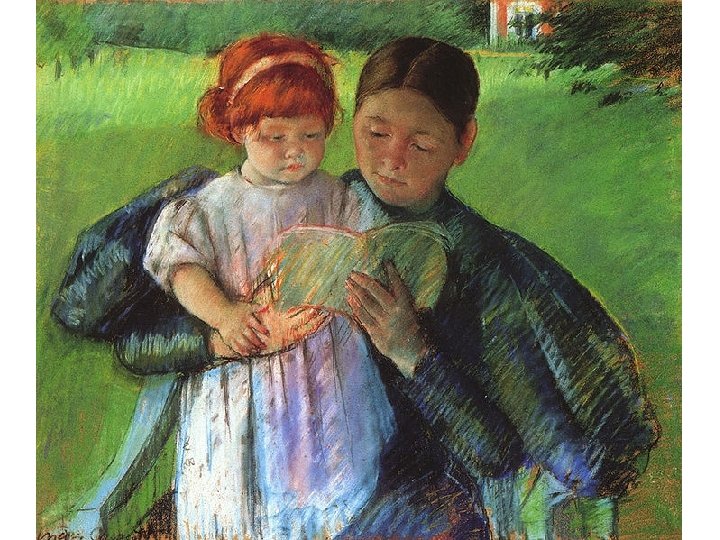
Seeing is Believing Realism in ART Winslow Homer=== Henry Tanner===== Artists capture life Civil War Battle Scenes and New England coast scenes Pictures of black sharecroppers Mary Cassatt===== Bright, colorful scenes of people in everyday situations Thomas Eakins==== Learned anatomy and dissected dead bodies – was able to paint human form accurately (medical operations)
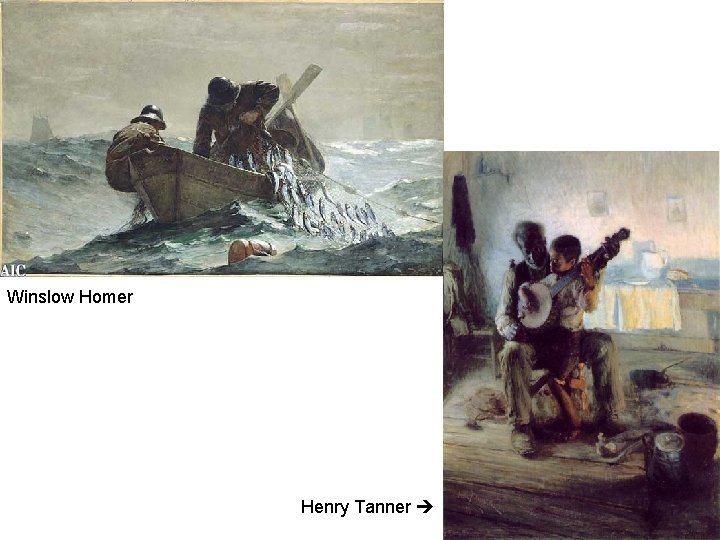
Winslow Homer Henry Tanner
- Slides: 43