
Immigration Expansion 1820 40 APUSH ch 13 part

- Slides: 19
Immigration & Expansion 1820 -40 APUSH ch. 13 part I
Immigration – 1 st wave � Nature of immigration in mid-1800 s? ◦ 1815 -40: 800, 000 Euro immigrants ◦ 1840 -60: 4. 2 million Euro immigrants � Primary immigrants groups? � Smaller (but still significant) immigrant ◦ Irish ◦ Germans groups? ◦ ◦ English, Scottish, Welsh Scandinavian (Norwegian, Swedish) Swiss Dutch
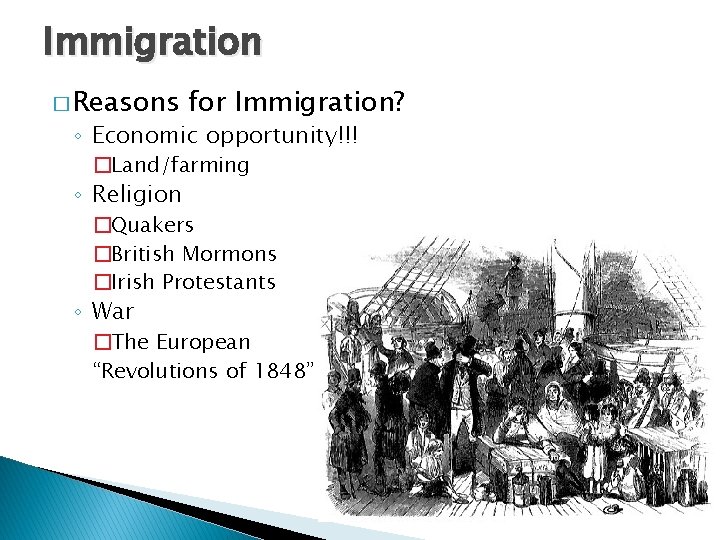
Immigration � Reasons for Immigration? ◦ Economic opportunity!!! �Land/farming ◦ Religion �Quakers �British Mormons �Irish Protestants ◦ War �The European “Revolutions of 1848”
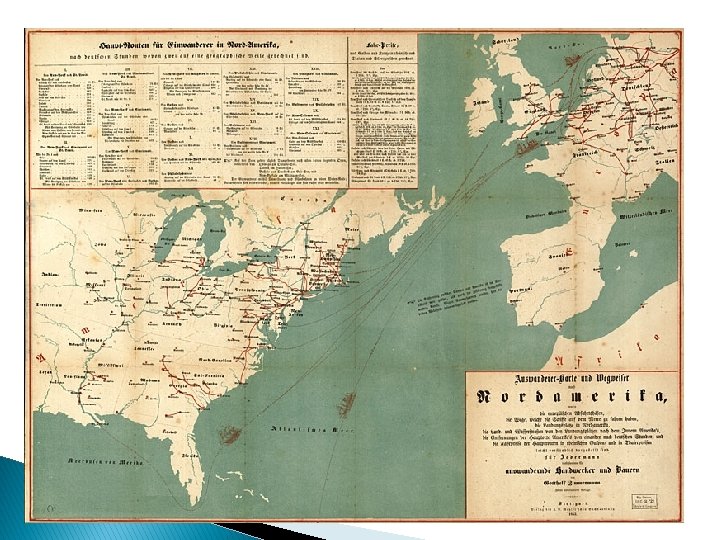
Immigration patterns � Where did Irish settle? ◦ New England (Boston), NY, NJ, Penn. � Why? ◦ Sailed on British ships headed for trade ports on Atlantic coast ◦ Didn’t have $$$ to venture out, settled in cities � Where did Germans settle? ◦ Along upper Mississippi and Ohio rivers ◦ Illinois, Ohio, Wisconsin, Missouri � Why? ◦ Sailed on cotton ships headed to New Orleans, then went up Miss. River
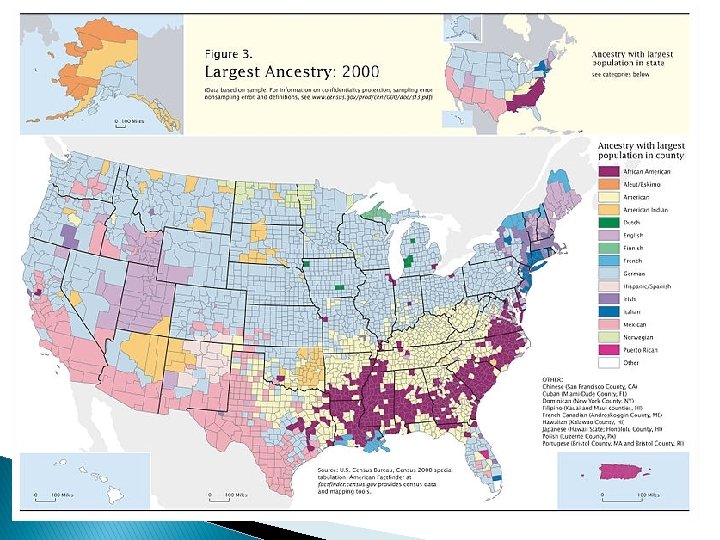
Immigration � Major immigrant cities: ◦ St. Louis (over 60% Irish or German) ◦ NY, Chicago, Cincinnati, Milwaukee, Detroit (about 50% Irish or German) ◦ New Orleans, Boston, Baltimore (about 1/3 Irish or German)
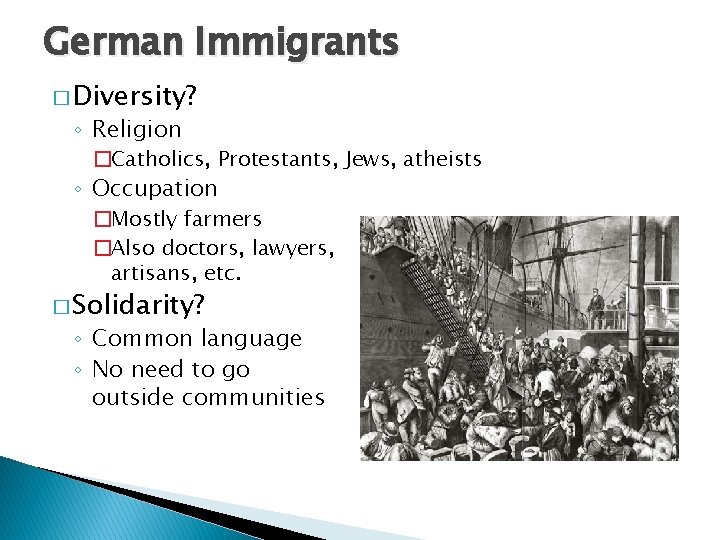
German Immigrants � Diversity? ◦ Religion �Catholics, Protestants, Jews, atheists ◦ Occupation �Mostly farmers �Also doctors, lawyers, artisans, etc. � Solidarity? ◦ Common language ◦ No need to go outside communities
Irish Immigrants � First wave: 1815 -25 ◦ Mostly Protestants from middle class ◦ Small farmers and tradespeople � Second wave: 1825 -60 ◦ Poor Catholics ◦ Tenant farmers ◦ Great Potato Famine
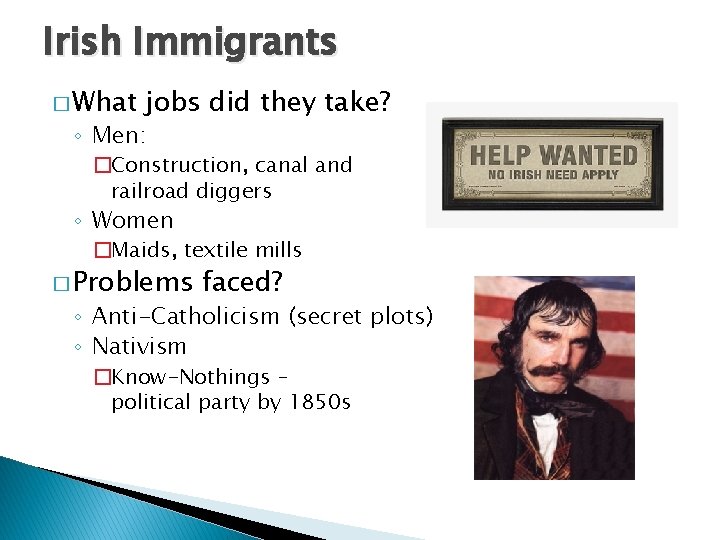
Irish Immigrants � What jobs did they take? ◦ Men: �Construction, canal and railroad diggers ◦ Women �Maids, textile mills � Problems faced? ◦ Anti-Catholicism (secret plots) ◦ Nativism �Know-Nothings – political party by 1850 s
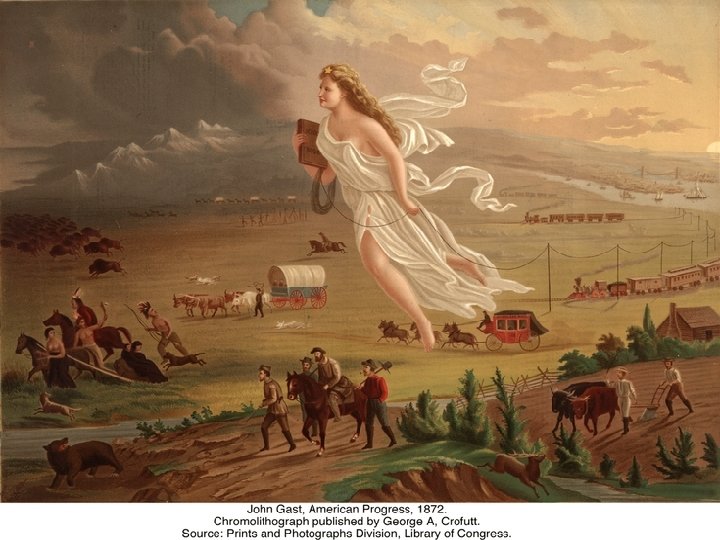
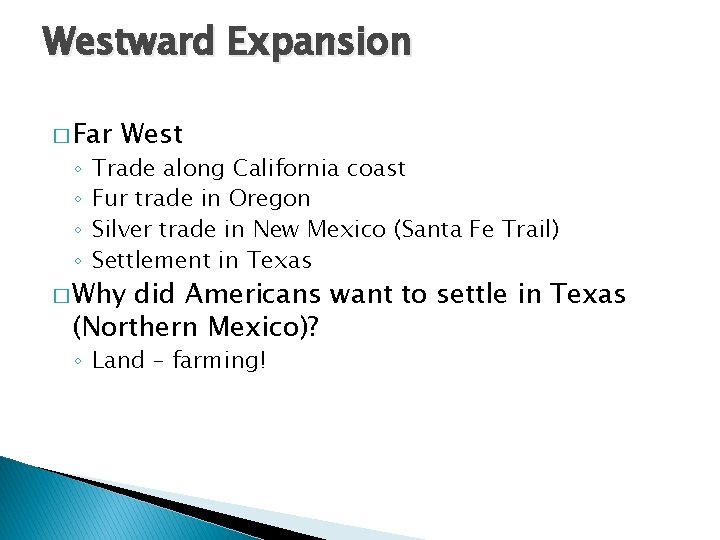
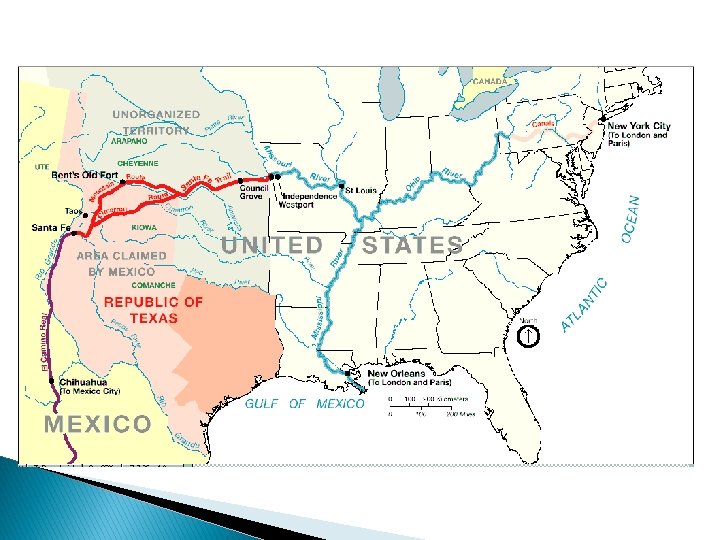
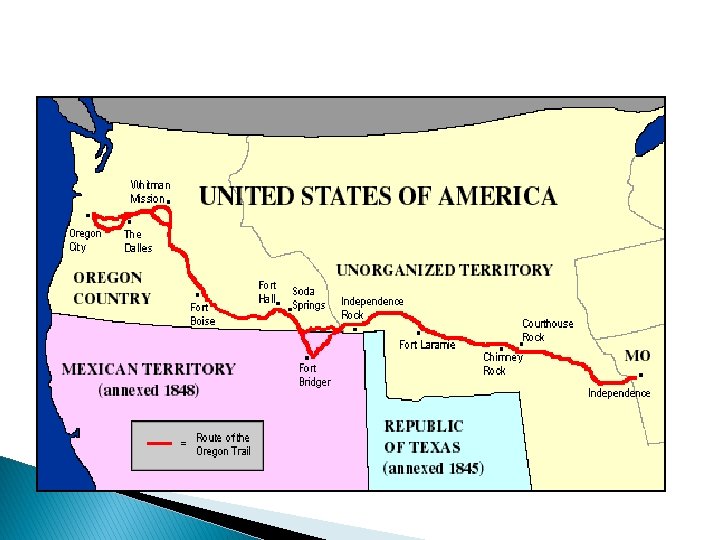
Westward Expansion � Far ◦ ◦ West Trade along California coast Fur trade in Oregon Silver trade in New Mexico (Santa Fe Trail) Settlement in Texas � Why did Americans want to settle in Texas (Northern Mexico)? ◦ Land – farming!
Texas � Why did the Mexican gov’t want Americans to settle in Texas? ◦ Buffer zone against Indian attacks ◦ Breakdown of mission system � How did Mexico lure Americans? ◦ Huge land grants to settlers (empresarios)
Texas � What problems developed b/w Mexican gov’t and Americans in Texas? ◦ Americans used slaves (outlawed in Mexico) ◦ Religious, linguistic differences � How did Rebellion begin? ◦ Mex. Pres. Santa Anna begins cracking down on local gov’ts ◦ Invades Texas to bring it under tighter control ◦ American settlers decide on independence
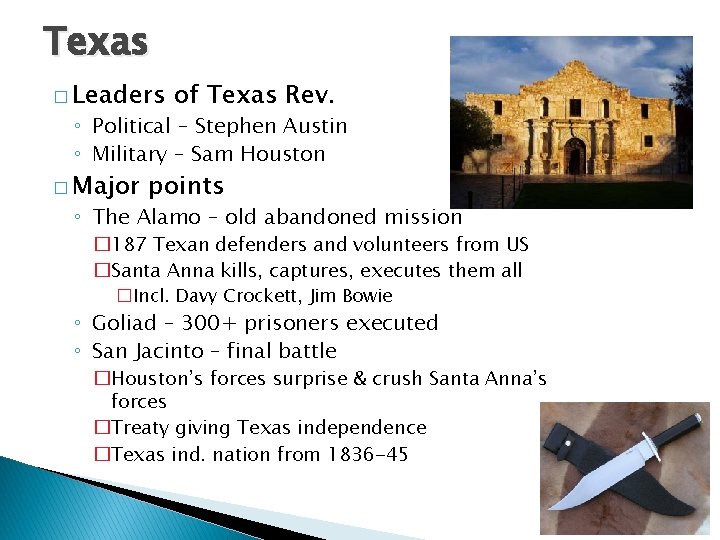
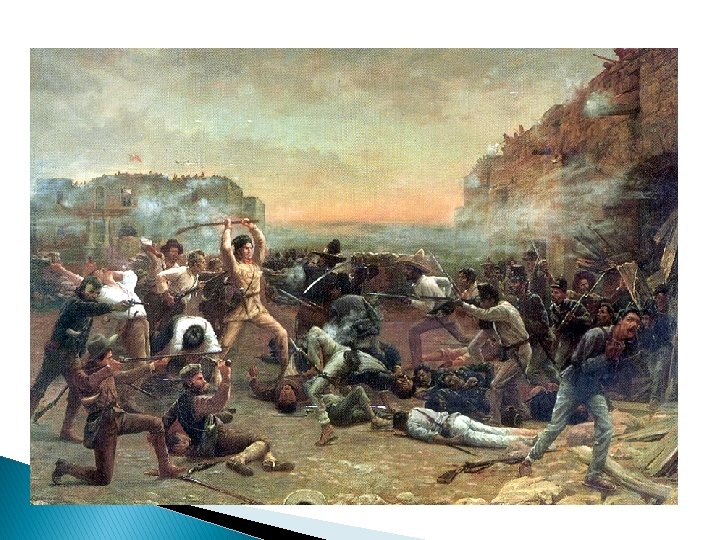
Texas � Leaders of Texas Rev. ◦ Political – Stephen Austin ◦ Military – Sam Houston � Major points ◦ The Alamo – old abandoned mission � 187 Texan defenders and volunteers from US �Santa Anna kills, captures, executes them all �Incl. Davy Crockett, Jim Bowie ◦ Goliad – 300+ prisoners executed ◦ San Jacinto – final battle �Houston’s forces surprise & crush Santa Anna’s forces �Treaty giving Texas independence �Texas ind. nation from 1836 -45