
Immigration Essential Questions In what ways is the
- Slides: 10
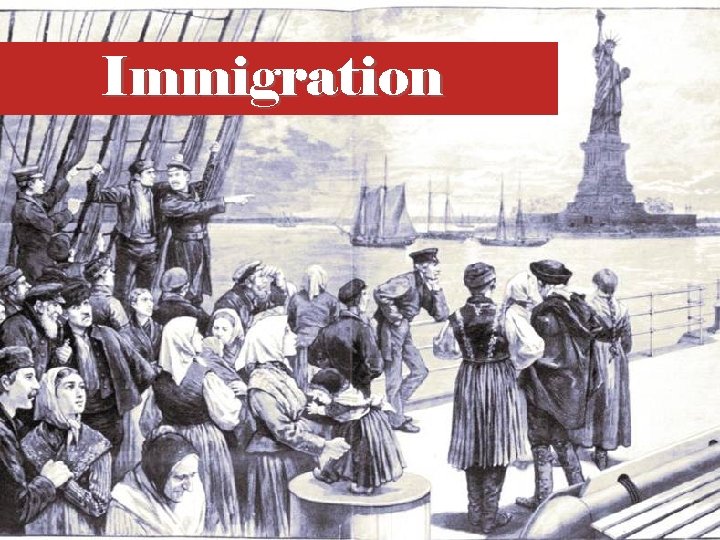
Immigration
Essential Questions • In what ways is the United States a “nation of immigrants”? • What factors might a person have to weigh when considering whether to immigrate to another country? What might it be like to be faced with this decision? • What might be some of the greatest challenges and rewards for immigrants to a new country? How might various immigrant groups from different periods of U. S. history have answered this question? • Why has anti-immigrant sentiment arisen at different points in U. S. history? • How has immigration influenced the laws and social services we have in the United States today? • How do the experiences of immigrants in various periods of United States history compare to those of immigrants today?
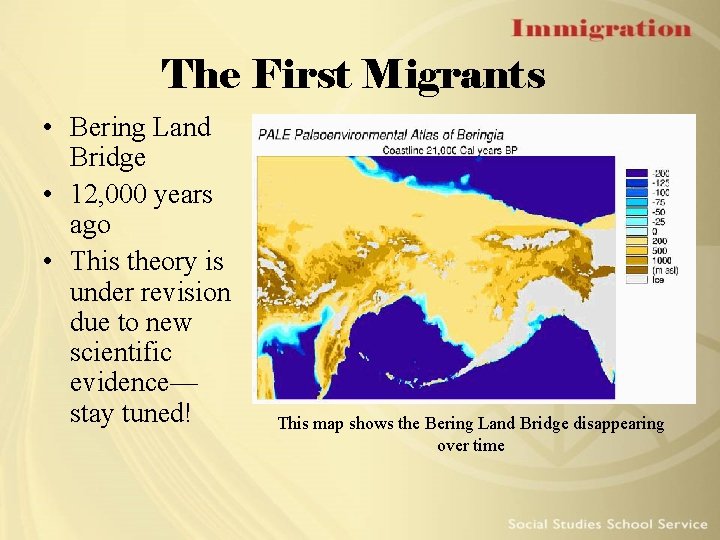
The First Migrants • Bering Land Bridge • 12, 000 years ago • This theory is under revision due to new scientific evidence— stay tuned! This map shows the Bering Land Bridge disappearing over time
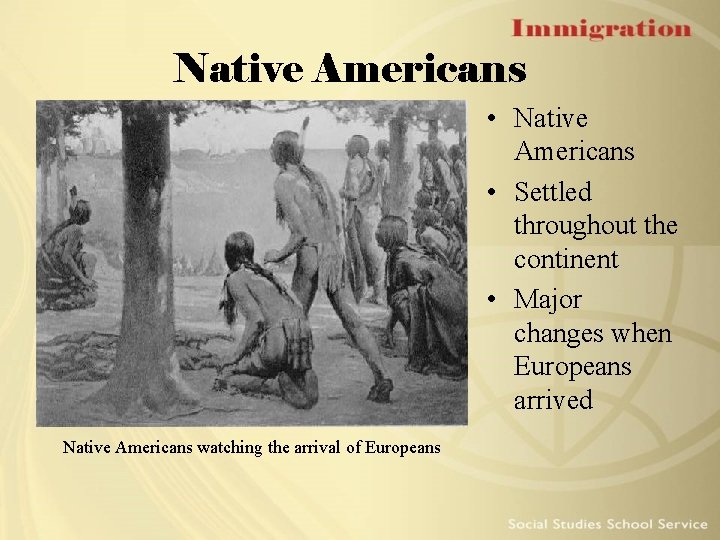
Native Americans • Settled throughout the continent • Major changes when Europeans arrived Native Americans watching the arrival of Europeans
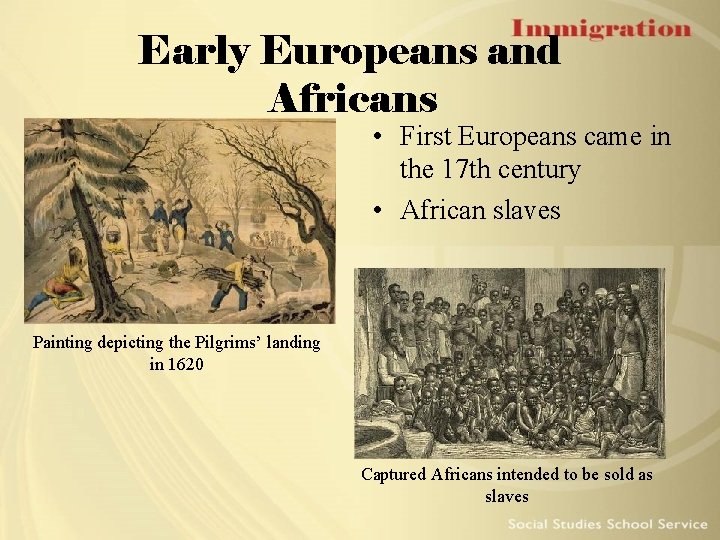
Early Europeans and Africans • First Europeans came in the 17 th century • African slaves Painting depicting the Pilgrims’ landing in 1620 Captured Africans intended to be sold as slaves
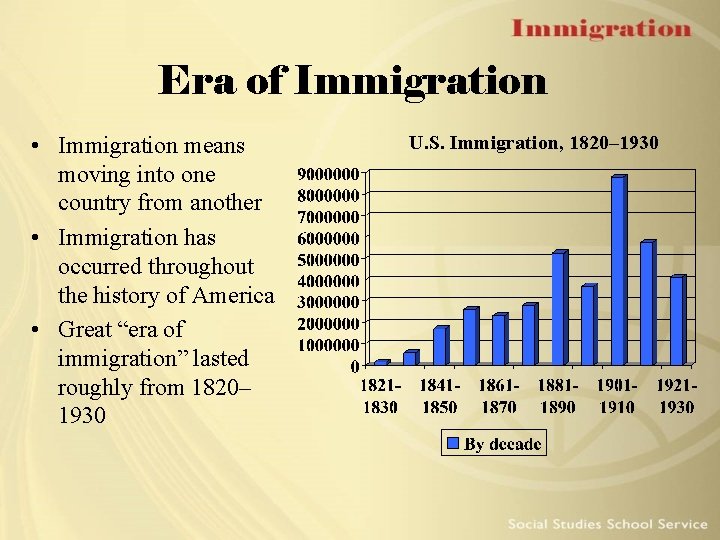
Era of Immigration • Immigration means moving into one country from another • Immigration has occurred throughout the history of America • Great “era of immigration” lasted roughly from 1820– 1930 U. S. Immigration, 1820– 1930
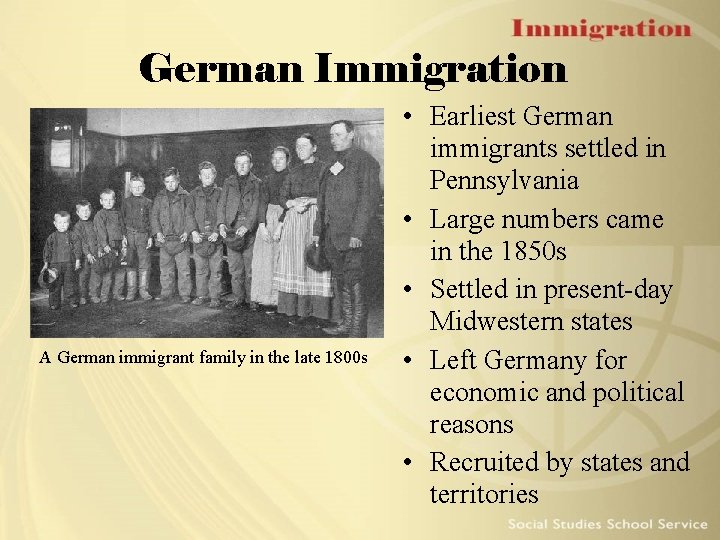
German Immigration A German immigrant family in the late 1800 s • Earliest German immigrants settled in Pennsylvania • Large numbers came in the 1850 s • Settled in present-day Midwestern states • Left Germany for economic and political reasons • Recruited by states and territories
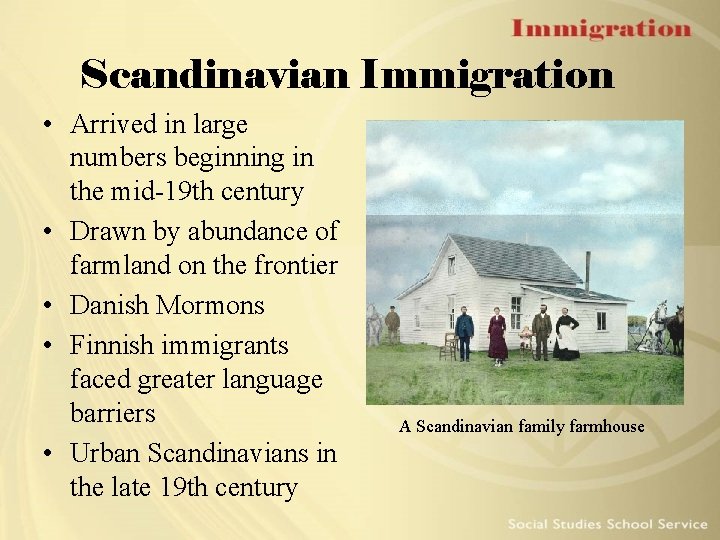
Scandinavian Immigration • Arrived in large numbers beginning in the mid-19 th century • Drawn by abundance of farmland on the frontier • Danish Mormons • Finnish immigrants faced greater language barriers • Urban Scandinavians in the late 19 th century A Scandinavian family farmhouse
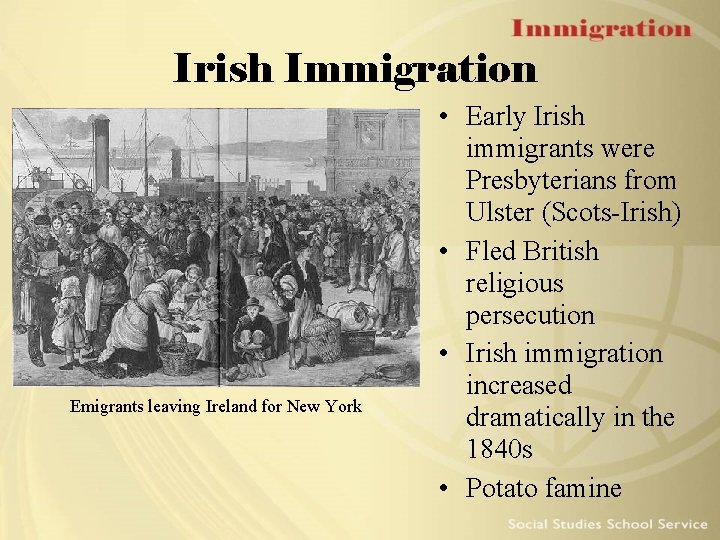
Irish Immigration Emigrants leaving Ireland for New York • Early Irish immigrants were Presbyterians from Ulster (Scots-Irish) • Fled British religious persecution • Irish immigration increased dramatically in the 1840 s • Potato famine
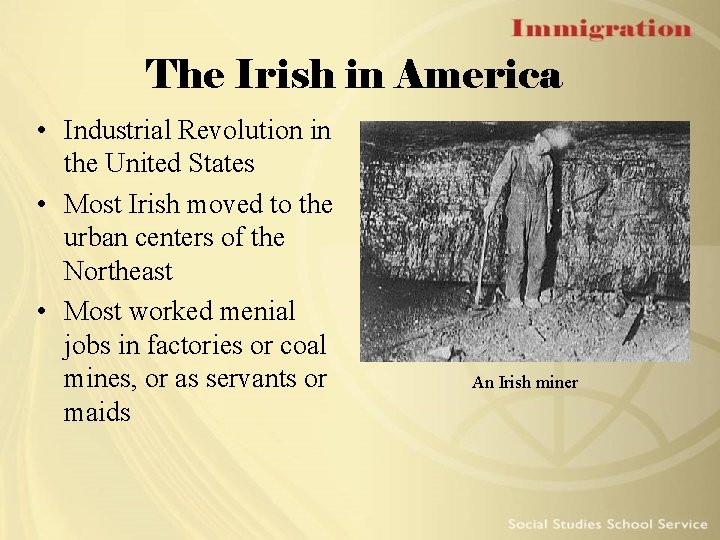
The Irish in America • Industrial Revolution in the United States • Most Irish moved to the urban centers of the Northeast • Most worked menial jobs in factories or coal mines, or as servants or maids An Irish miner