
Immigration Detention womens health wellbeing Maria Hach Adele
Immigration Detention: women's health & wellbeing Maria Hach, Adele Murdolo & Jasmin Chen Multicultural Centre for Women’s Health (MCWH)
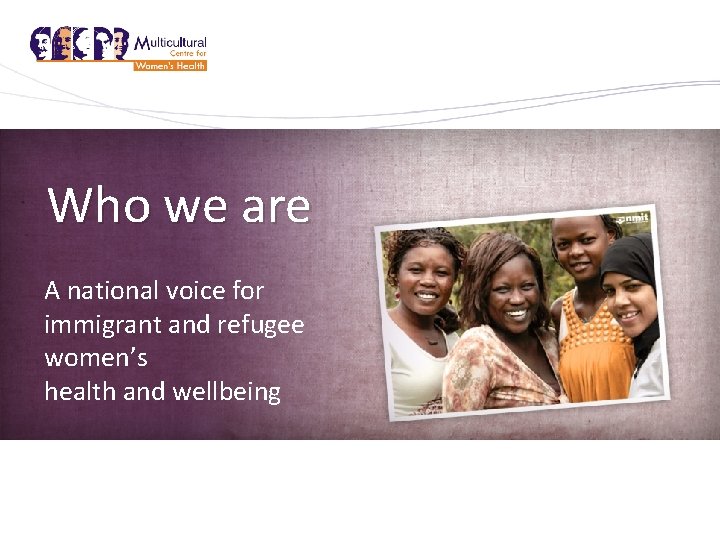
Who we are Who are we? A national voice for immigrant and refugee women’s health and wellbeing
What do we do? Who are we? • • Research & Advocacy Health Education Multilingual Library Training
Australian immigration detention • Mandatory detention policy since 1992 • Proliferation and privatisation of facilities Main provider: Serco Australia ($1. 77 bill) Health service provider: IHMS ($679. 81 mill)

Immigration detention facilities • 19 Australian facilities • 4 types – based on ‘risk’ and ‘security’ need 1. immigration detention centres (IDC) 2. immigration residential housing (IRH) 3. immigration transit accommodation (ITA) 4. alternative places of detention (APOD)
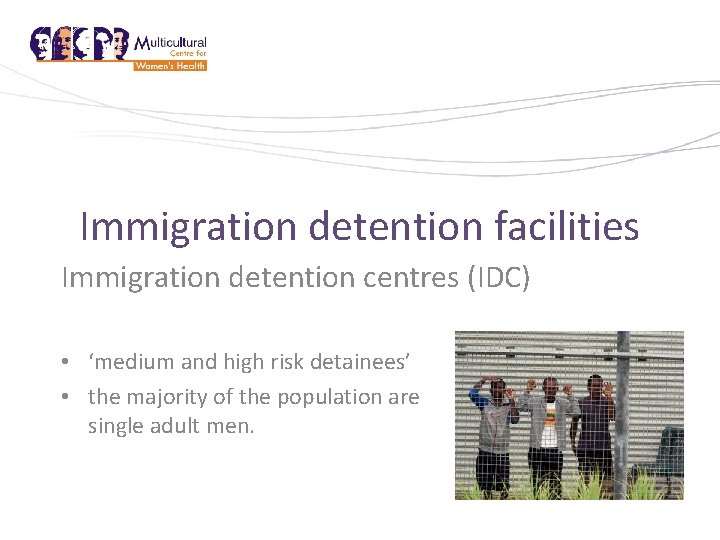
Immigration detention facilities Immigration detention centres (IDC) • ‘medium and high risk detainees’ • the majority of the population are single adult men.
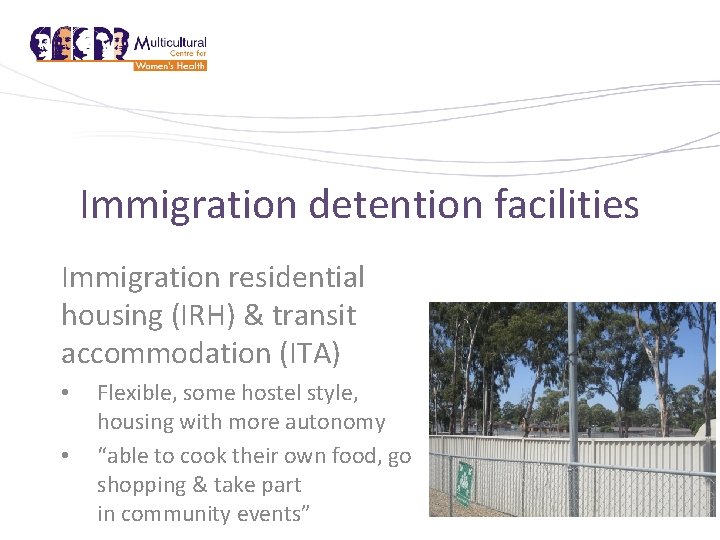
Immigration detention facilities Immigration residential housing (IRH) & transit accommodation (ITA) • • Flexible, some hostel style, housing with more autonomy “able to cook their own food, go shopping & take part in community events”

Immigration detention facilities Alternative places of detention (APOD) • For those who are considered “minimal risk to our communities” • often used to accommodate families, children and people in need of medical treatment
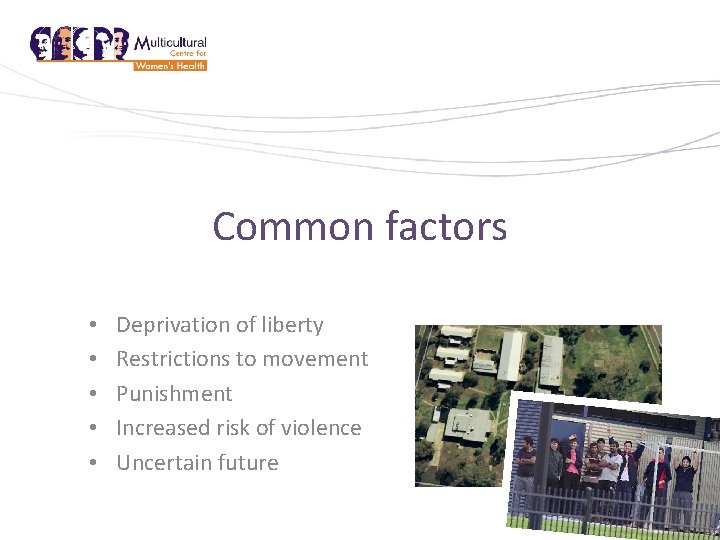
Common factors • • • Deprivation of liberty Restrictions to movement Punishment Increased risk of violence Uncertain future
Who is in immigration detention? As of the 31 st August 2014 5, 757 people • 2, 482 on the mainland • 958 on Christmas Island • 2, 317 offshore (Nauru & PNG)
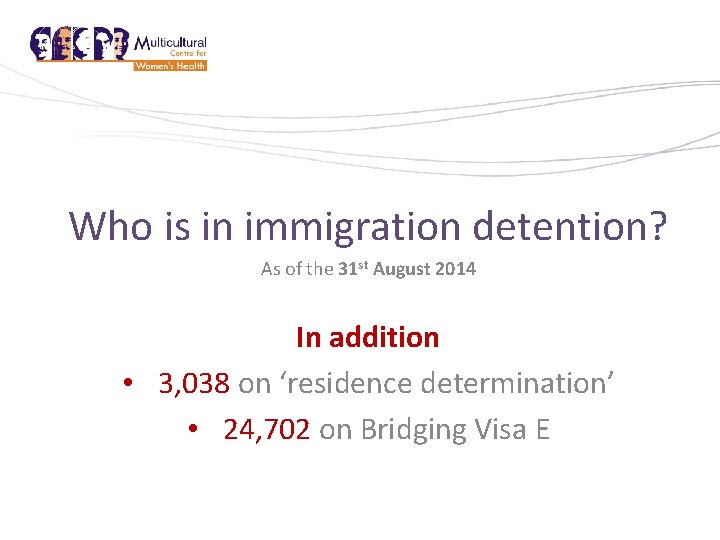
Who is in immigration detention? As of the 31 st August 2014 In addition • 3, 038 on ‘residence determination’ • 24, 702 on Bridging Visa E
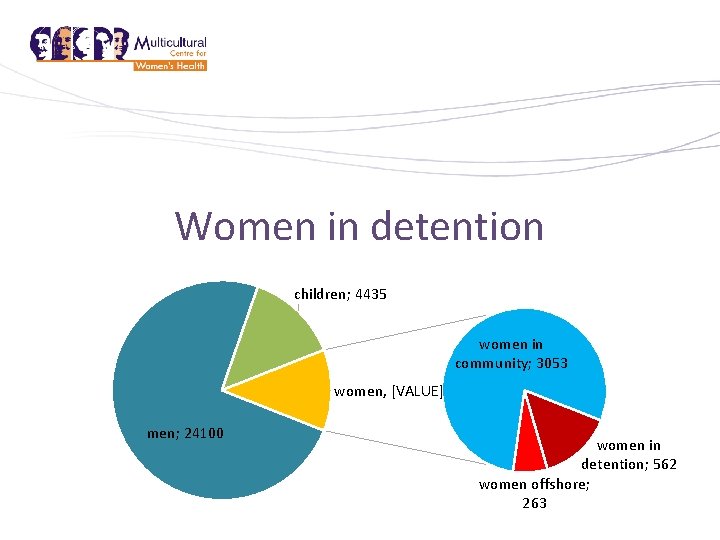
Women in detention children; 4435 women in community; 3053 women, [VALUE] men; 24100 women in detention; 562 women offshore; 263
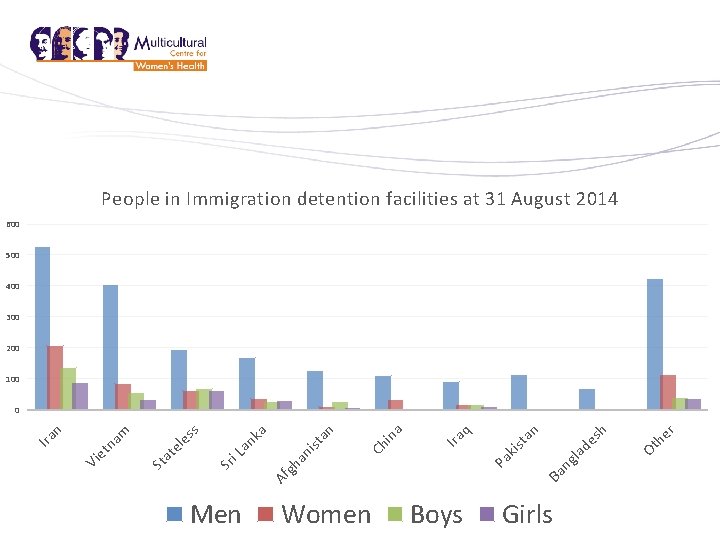
People in Immigration detention facilities at 31 August 2014 600 500 400 300 200 100 Men Women Boys Girls he r Ot sh de Ba ng la Pa kis t an q Ira in a Ch an ist Af gh an nk a i L a Sr el es s at St m na et Vi Ira n 0
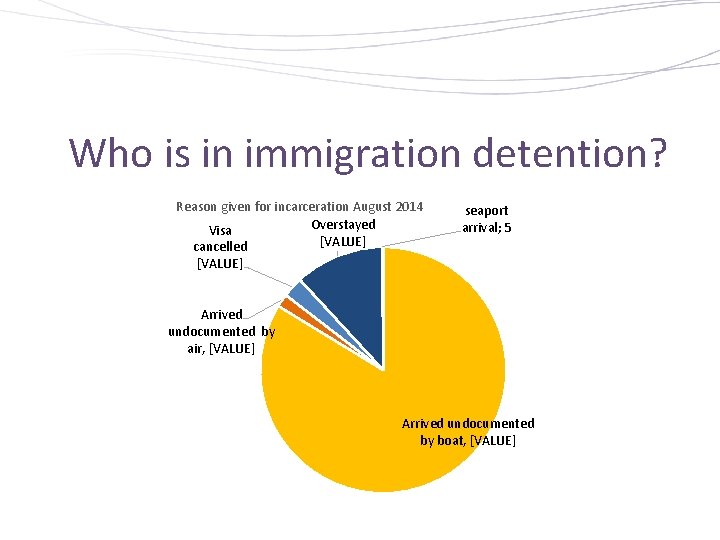
Who is in immigration detention? Reason given for incarceration August 2014 Overstayed Visa [VALUE] cancelled seaport arrival; 5 [VALUE] Arrived undocumented by air, [VALUE] Arrived undocumented by boat, [VALUE]
Concepts • Global diffusion (Flynn) • Australian nationalism/National security • ‘Crimmigration’ • Scapegoating ‘illegal’ immigrants
Global diffusion • Before the 1980 s, detention was an ad hoc tool used in crisis situations • It has became an entrenched policy apparatus to manage border control • exploited by private prison entrepreneurs.
“Crimmigration” • A growing convergence between criminal justice and migration control systems • Conflation of migration and criminality
Australian nationalism National security • ‘terror threat’ is conflated with ‘cultural threat’ • Fear of invasion by oppressive gender practices
Language • • Illegal vs undocumented Detainees vs people Boat people Irregular Maritime Arrival (IMA)
Health & wellbeing issues Pregnancy-related risk Poor access to facilities and services Depression and mental health Increased risk of gendered violence
Pregnancy & Birth • • Delays accessing ante-natal care No ante-natal care Lack of information Increased risk of adverse outcomes in birth
“ I don’t want to remember those horrible moments of my life which I spent in detention, when I cried for food and cried due to pain…I got weaker by the day. I lost 6 kg of my actual weight – it should increase in pregnancy” — a pregnant woman detained in Yarl’s Wood
Mental Health • Depression and anxiety • Uncertain future – ‘no place to bring up a baby’ • Increased risk of suicide
“There is overwhelming evidence that detention has an independent, adverse effect on mental health, over and above any pre-existing illness or trauma. This is compounded when detention is offshore and in remote locations where there is little if no access to mental health and other services (including legal, medical and interpreting services), and where the ethical delivery of such services is seriously compromised. ” — The Australian Psychological Society
Gendered violence • Increased risk of sexual assault and harassment for girls and women • Limitations to freedom of movement within detention facility
Imagining a different world • A world without detention • De-criminalisation of migrants • Women’s health at the centre
Thank you Contact Maria Hach maria@mcwh. com. au Adele Murdolo adele@mcwh. com. au Jasmin Chen jasmin@mcwh. com. au Web: www. mcwh. com. au Free Call: 1800 656 421
- Slides: 27