
Immigration and Urbanization in the United States The
Immigration and Urbanization in the United States The American Pageant, Chapter 25
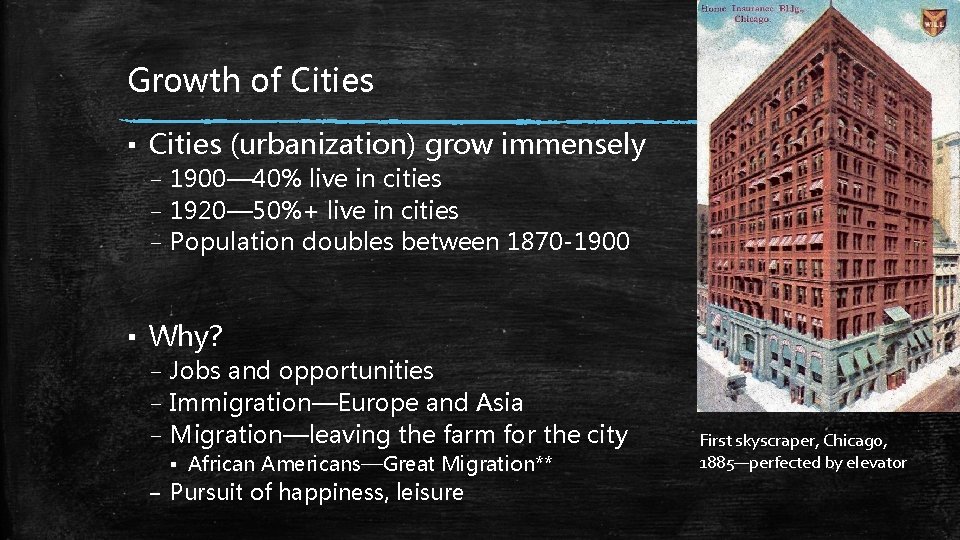
Growth of Cities ▪ Cities (urbanization) grow immensely – 1900— 40% live in cities – 1920— 50%+ live in cities – Population doubles between 1870 -1900 ▪ Why? – Jobs and opportunities – Immigration—Europe and Asia – Migration—leaving the farm for the city ▪ African Americans—Great Migration** – Pursuit of happiness, leisure First skyscraper, Chicago, 1885—perfected by elevator
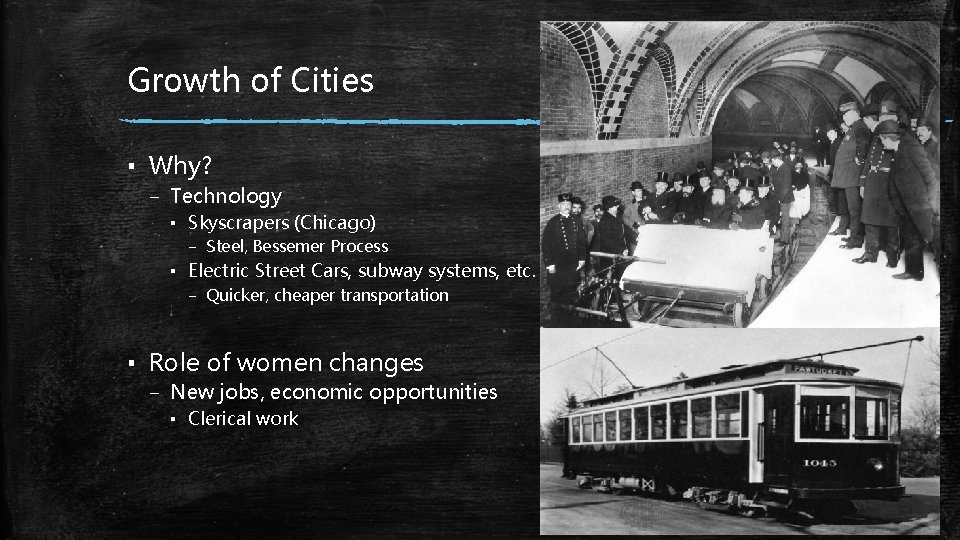
Growth of Cities ▪ Why? – Technology ▪ Skyscrapers (Chicago) – Steel, Bessemer Process ▪ Electric Street Cars, subway systems, etc. – Quicker, cheaper transportation ▪ Role of women changes – New jobs, economic opportunities ▪ Clerical work
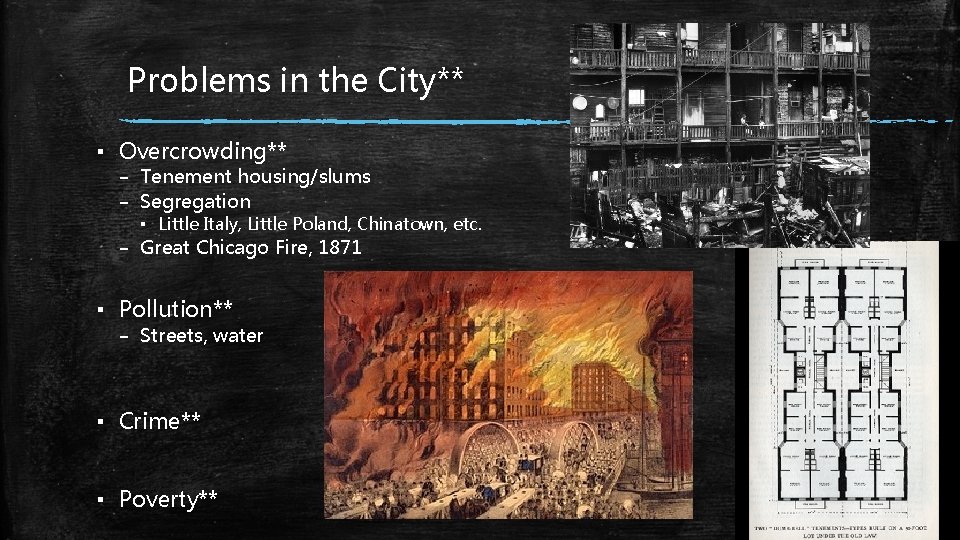
Problems in the City** ▪ Overcrowding** – Tenement housing/slums – Segregation ▪ Little Italy, Little Poland, Chinatown, etc. – Great Chicago Fire, 1871 ▪ Pollution** – Streets, water ▪ Crime** ▪ Poverty**
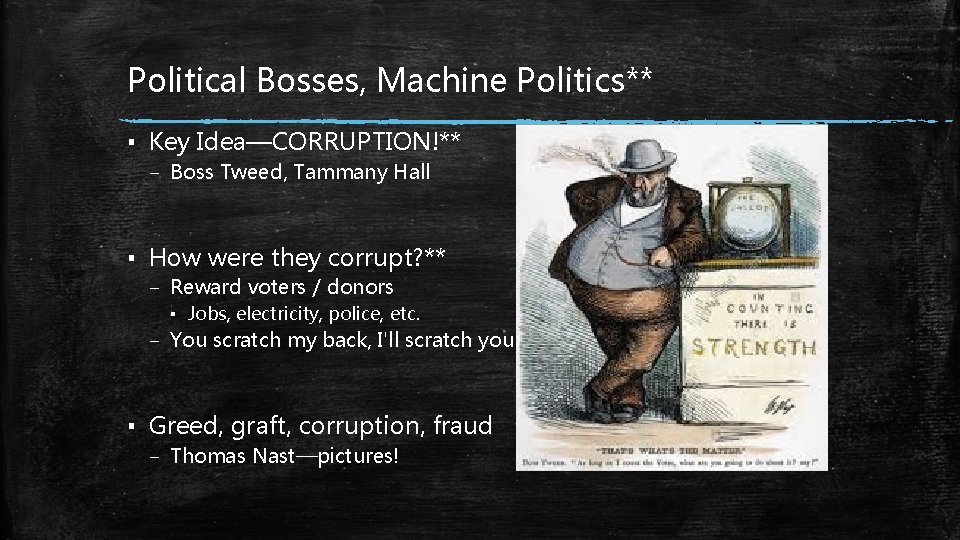
Political Bosses, Machine Politics** ▪ Key Idea—CORRUPTION!** – Boss Tweed, Tammany Hall ▪ How were they corrupt? ** – Reward voters / donors ▪ Jobs, electricity, police, etc. – You scratch my back, I'll scratch yours ▪ Greed, graft, corruption, fraud – Thomas Nast—pictures!
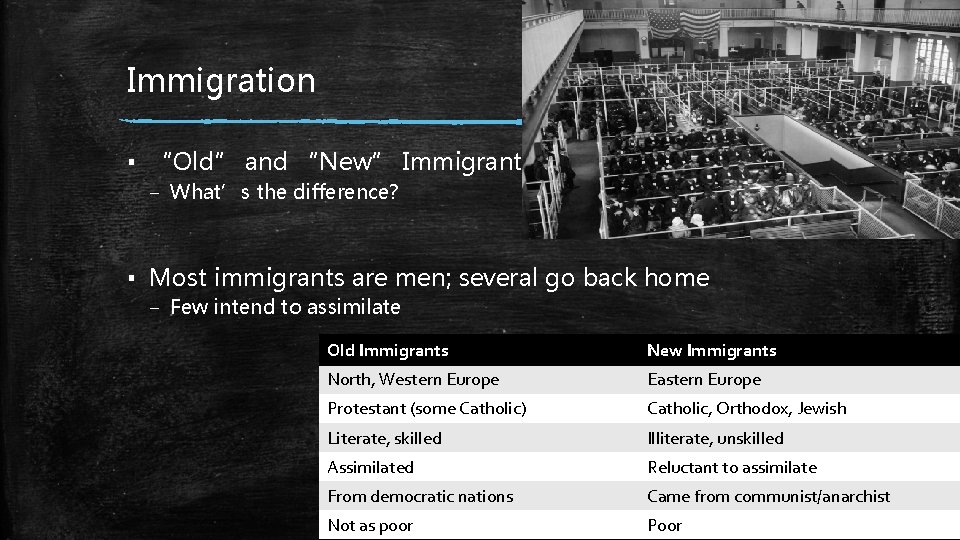
Immigration ▪ “Old” and “New” Immigrants – What’s the difference? ▪ Most immigrants are men; several go back home – Few intend to assimilate Old Immigrants New Immigrants North, Western Europe Eastern Europe Protestant (some Catholic) Catholic, Orthodox, Jewish Literate, skilled Illiterate, unskilled Assimilated Reluctant to assimilate From democratic nations Came from communist/anarchist Not as poor Poor
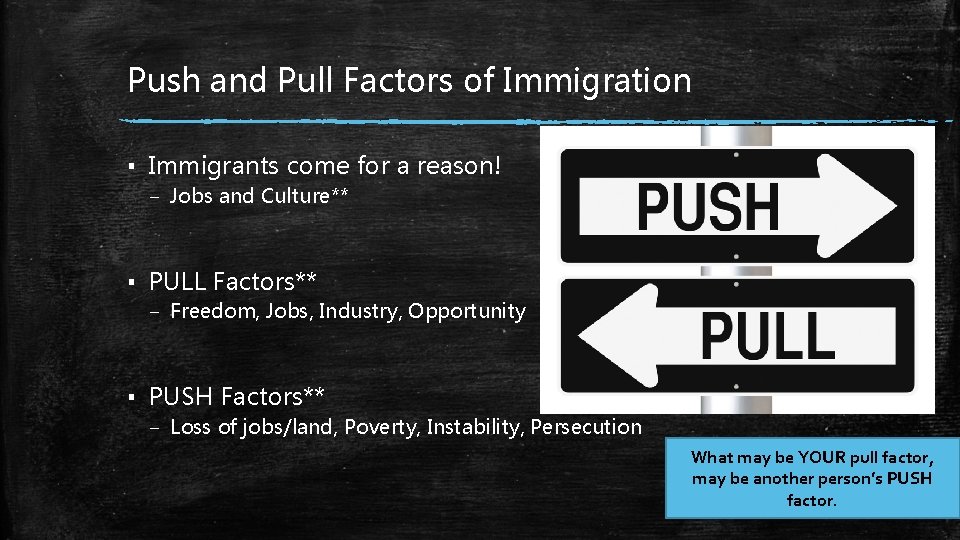
Push and Pull Factors of Immigration ▪ Immigrants come for a reason! – Jobs and Culture** ▪ PULL Factors** – Freedom, Jobs, Industry, Opportunity ▪ PUSH Factors** – Loss of jobs/land, Poverty, Instability, Persecution What may be YOUR pull factor, may be another person’s PUSH factor.
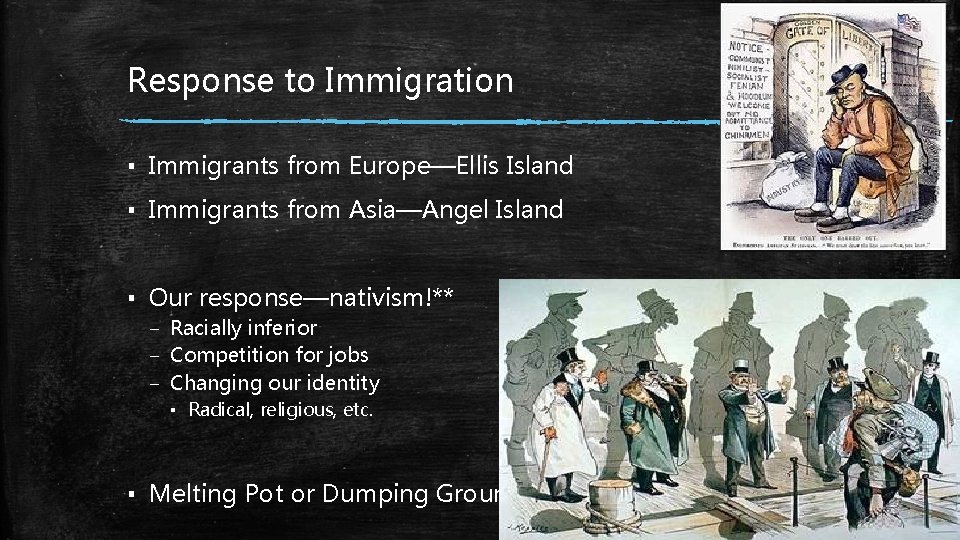
Response to Immigration ▪ Immigrants from Europe—Ellis Island ▪ Immigrants from Asia—Angel Island ▪ Our response—nativism!** – Racially inferior – Competition for jobs – Changing our identity ▪ Radical, religious, etc. ▪ Melting Pot or Dumping Ground?
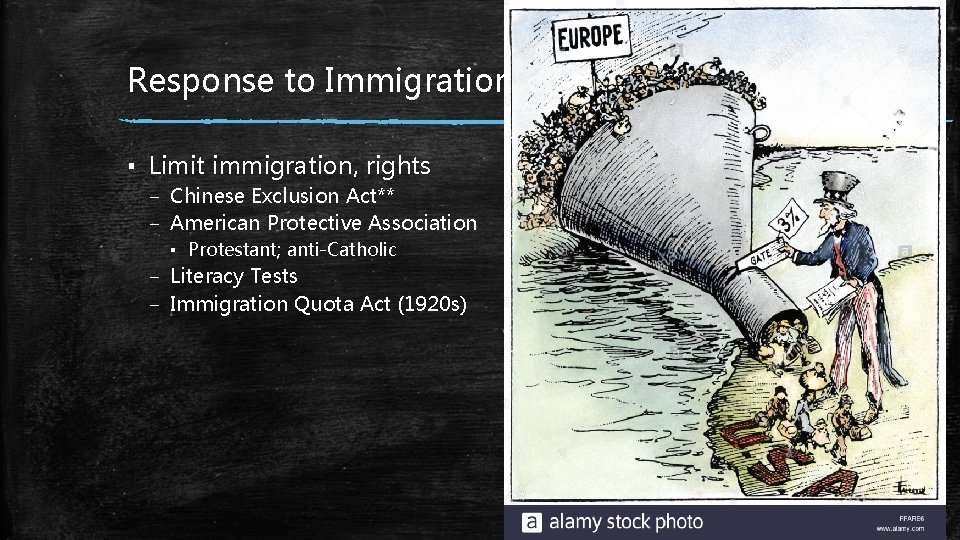
Response to Immigration ▪ Limit immigration, rights – Chinese Exclusion Act** – American Protective Association ▪ Protestant; anti-Catholic – Literacy Tests – Immigration Quota Act (1920 s)
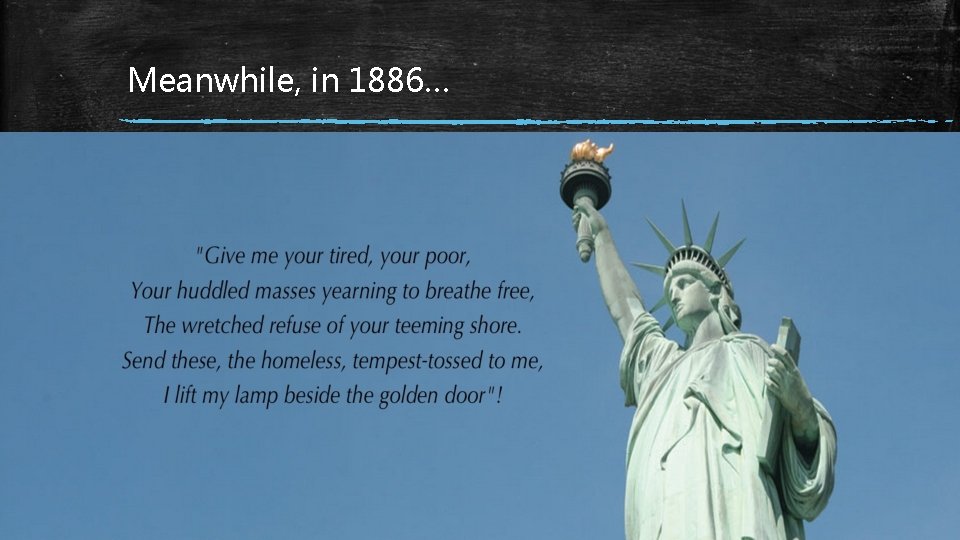
Meanwhile, in 1886…
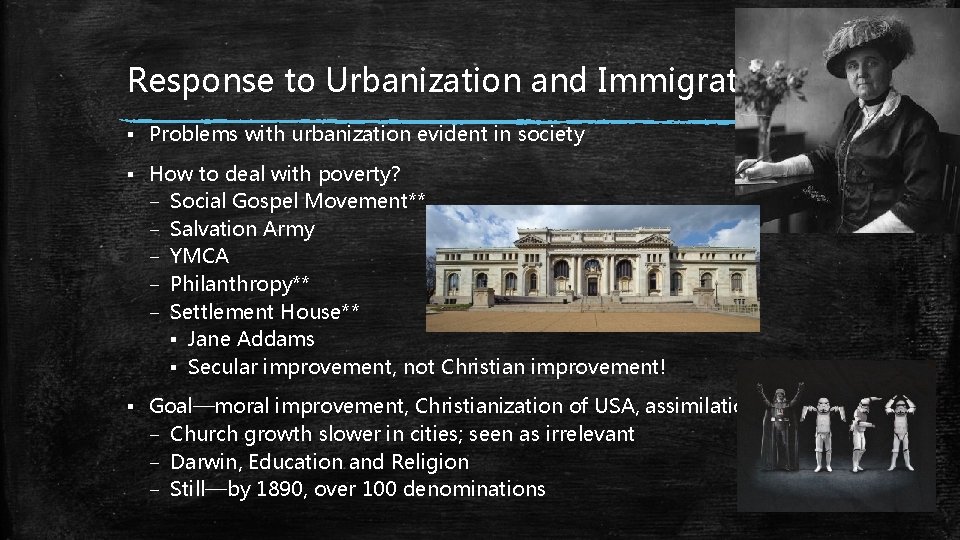
Response to Urbanization and Immigration ▪ Problems with urbanization evident in society ▪ How to deal with poverty? – Social Gospel Movement** – Salvation Army – YMCA – Philanthropy** – Settlement House** ▪ Jane Addams ▪ Secular improvement, not Christian improvement! ▪ Goal—moral improvement, Christianization of USA, assimilation – Church growth slower in cities; seen as irrelevant – Darwin, Education and Religion – Still—by 1890, over 100 denominations
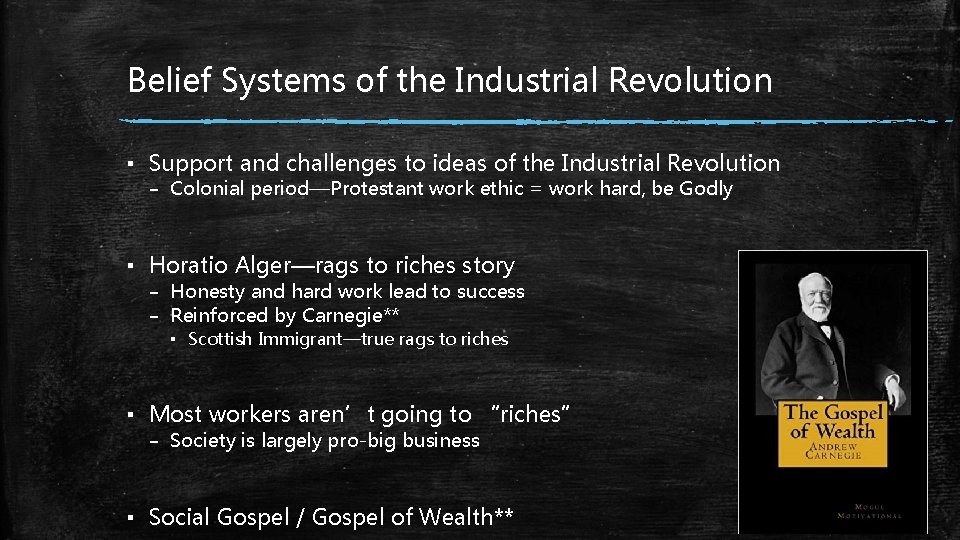
Belief Systems of the Industrial Revolution ▪ Support and challenges to ideas of the Industrial Revolution – Colonial period—Protestant work ethic = work hard, be Godly ▪ Horatio Alger—rags to riches story – Honesty and hard work lead to success – Reinforced by Carnegie** ▪ Scottish Immigrant—true rags to riches ▪ Most workers aren’t going to “riches” – Society is largely pro-big business ▪ Social Gospel / Gospel of Wealth**
Belief Systems of the Industrial Revolution ▪ Critics of industry – Gospel of Wealth, Social Darwinists, etc. ▪ Henry George—Progress and Poverty – Inequalities in society due to laissez-faire, industry ▪ Edward Bellamy—Looking Backward – Socialist society will “fix” problems ▪ More information later, but understand…. – Reform movements will take place
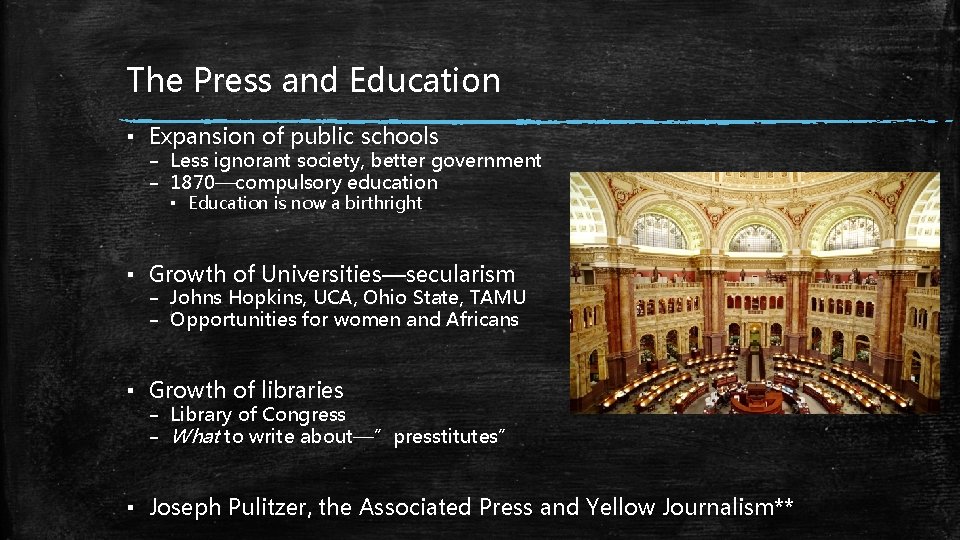
The Press and Education ▪ Expansion of public schools – Less ignorant society, better government – 1870—compulsory education ▪ Education is now a birthright ▪ Growth of Universities—secularism – Johns Hopkins, UCA, Ohio State, TAMU – Opportunities for women and Africans ▪ Growth of libraries – Library of Congress – What to write about—”presstitutes” ▪ Joseph Pulitzer, the Associated Press and Yellow Journalism**
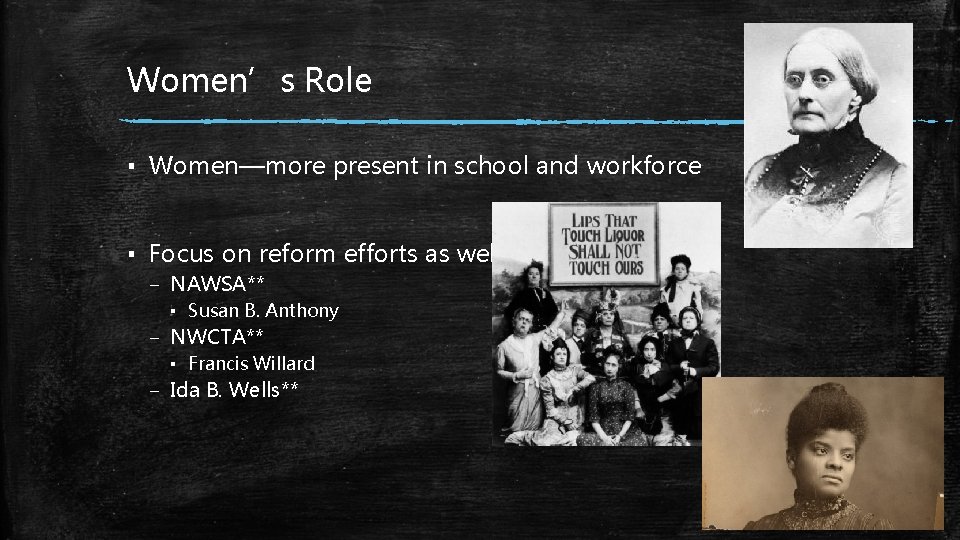
Women’s Role ▪ Women—more present in school and workforce ▪ Focus on reform efforts as well – NAWSA** ▪ Susan B. Anthony – NWCTA** ▪ Francis Willard – Ida B. Wells**
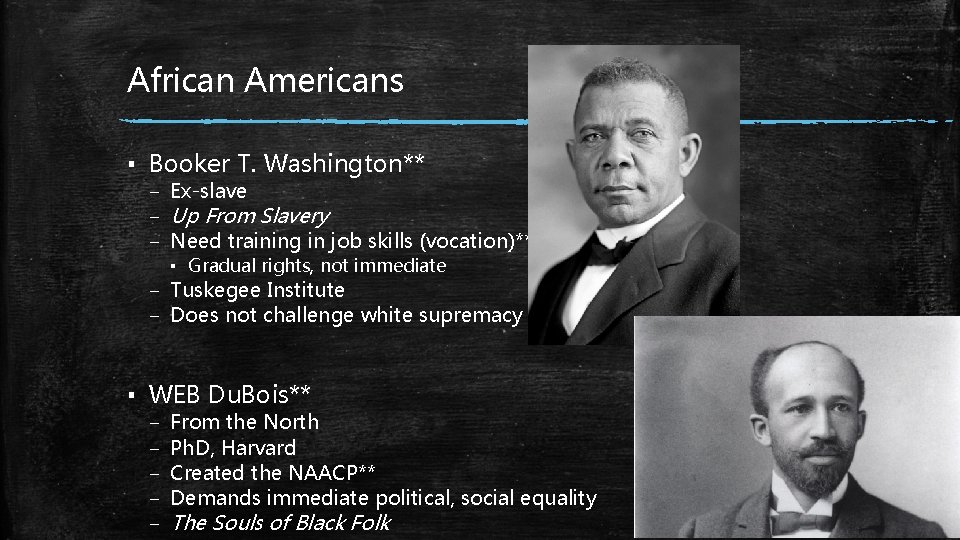
African Americans ▪ Booker T. Washington** – Ex-slave – Up From Slavery – Need training in job skills (vocation)** ▪ Gradual rights, not immediate – Tuskegee Institute – Does not challenge white supremacy ▪ WEB Du. Bois** – – – From the North Ph. D, Harvard Created the NAACP** Demands immediate political, social equality The Souls of Black Folk
- Slides: 16