
IMD and Newborn Screening Specialist Portfolio Tutorial Jenna

IMD and Newborn Screening Specialist Portfolio Tutorial Jenna Waldron 17 th March 2014
Inherited Metabolic Disease

What is IMD? • Gene mutations – prevent synthesis of protein or cause synthesis of abnormal protein ▫ Generally protein = enzyme ▫ Results in catalytic activity of enzyme in synthetic pathway Co-factor Substrate Product Enzyme Metabolites accumulate Product Deficiency
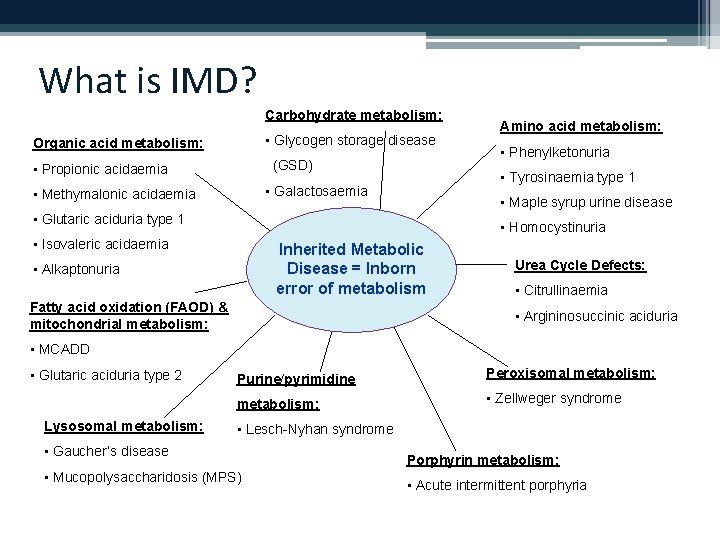
What is IMD? Carbohydrate metabolism: • Glycogen storage disease Organic acid metabolism: (GSD) • Propionic acidaemia • Phenylketonuria • Tyrosinaemia type 1 • Galactosaemia • Methymalonic acidaemia Amino acid metabolism: • Maple syrup urine disease • Glutaric aciduria type 1 • Homocystinuria • Isovaleric acidaemia Inherited. Metabolic Disease= =Inborn errorofofmetabolism • Alkaptonuria Fatty acid oxidation (FAOD) & mitochondrial metabolism: Urea Cycle Defects: • Citrullinaemia • Argininosuccinic aciduria • MCADD • Glutaric aciduria type 2 Lysosomal metabolism: Purine/pyrimidine Peroxisomal metabolism: • Zellweger syndrome • Lesch-Nyhan syndrome • Gaucher’s disease • Mucopolysaccharidosis (MPS) Porphyrin metabolism: • Acute intermittent porphyria
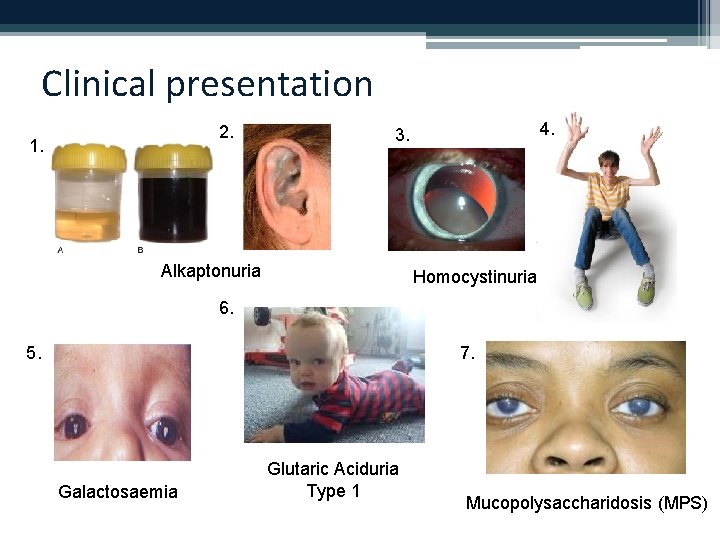
Clinical presentation 2. 1. 4. 3. Alkaptonuria Homocystinuria 6. 5. 7. Galactosaemia Glutaric Aciduria Type 1 Mucopolysaccharidosis (MPS)
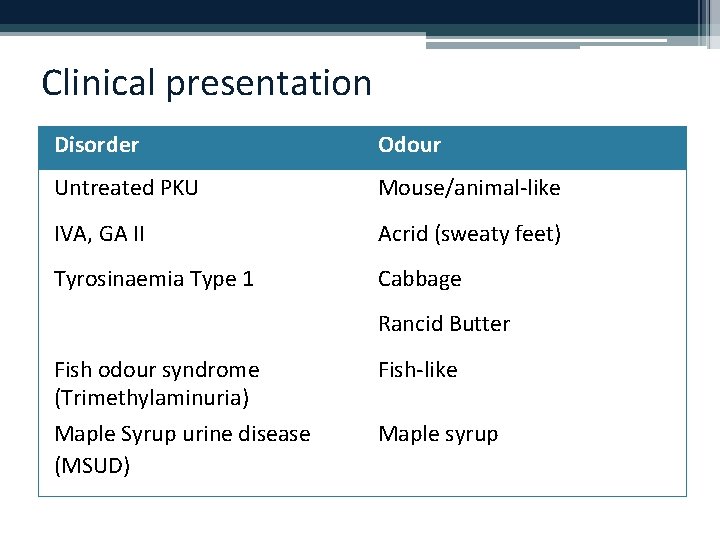
Clinical presentation Disorder Odour Untreated PKU Mouse/animal-like IVA, GA II Acrid (sweaty feet) Tyrosinaemia Type 1 Cabbage Rancid Butter Fish odour syndrome (Trimethylaminuria) Maple Syrup urine disease (MSUD) Fish-like Maple syrup
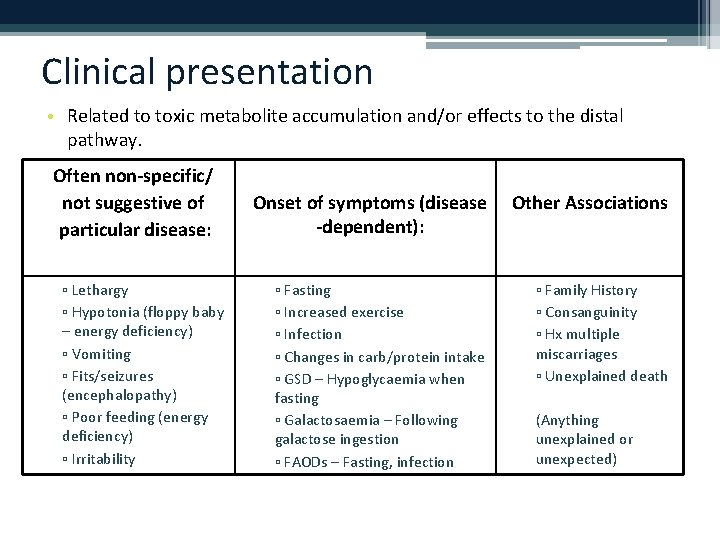
Clinical presentation • Related to toxic metabolite accumulation and/or effects to the distal pathway. Often non-specific/ not suggestive of particular disease: ▫ Lethargy ▫ Hypotonia (floppy baby – energy deficiency) ▫ Vomiting ▫ Fits/seizures (encephalopathy) ▫ Poor feeding (energy deficiency) ▫ Irritability Onset of symptoms (disease -dependent): Other Associations ▫ Fasting ▫ Increased exercise ▫ Infection ▫ Changes in carb/protein intake ▫ GSD – Hypoglycaemia when fasting ▫ Galactosaemia – Following galactose ingestion ▫ FAODs – Fasting, infection ▫ Family History ▫ Consanguinity ▫ Hx multiple miscarriages ▫ Unexplained death (Anything unexplained or unexpected)

First-line investigations
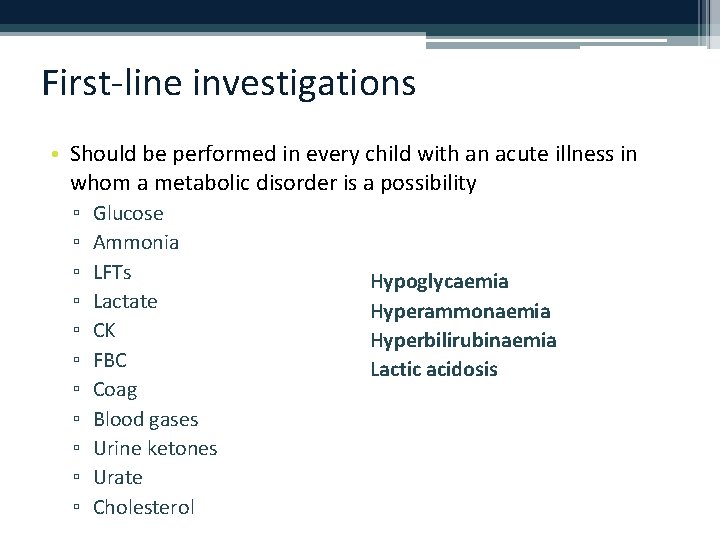
First-line investigations • Should be performed in every child with an acute illness in whom a metabolic disorder is a possibility ▫ ▫ ▫ Glucose Ammonia LFTs Lactate CK FBC Coag Blood gases Urine ketones Urate Cholesterol Hypoglycaemia Hyperammonaemia Hyperbilirubinaemia Lactic acidosis
Hypoglycaemia
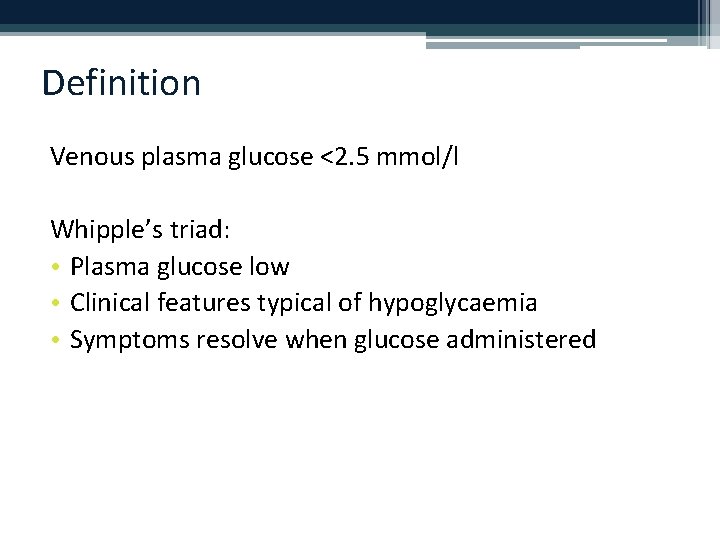
Definition Venous plasma glucose <2. 5 mmol/l Whipple’s triad: • Plasma glucose low • Clinical features typical of hypoglycaemia • Symptoms resolve when glucose administered
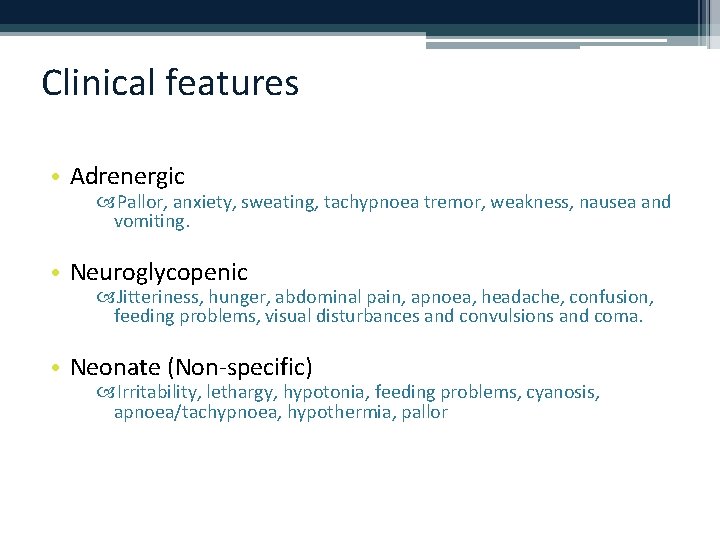
Clinical features • Adrenergic Pallor, anxiety, sweating, tachypnoea tremor, weakness, nausea and vomiting. • Neuroglycopenic Jitteriness, hunger, abdominal pain, apnoea, headache, confusion, feeding problems, visual disturbances and convulsions and coma. • Neonate (Non-specific) Irritability, lethargy, hypotonia, feeding problems, cyanosis, apnoea/tachypnoea, hypothermia, pallor
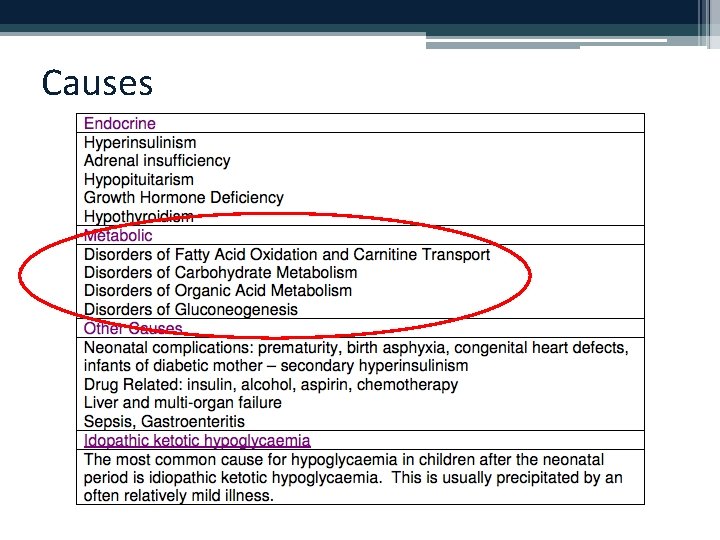
Causes
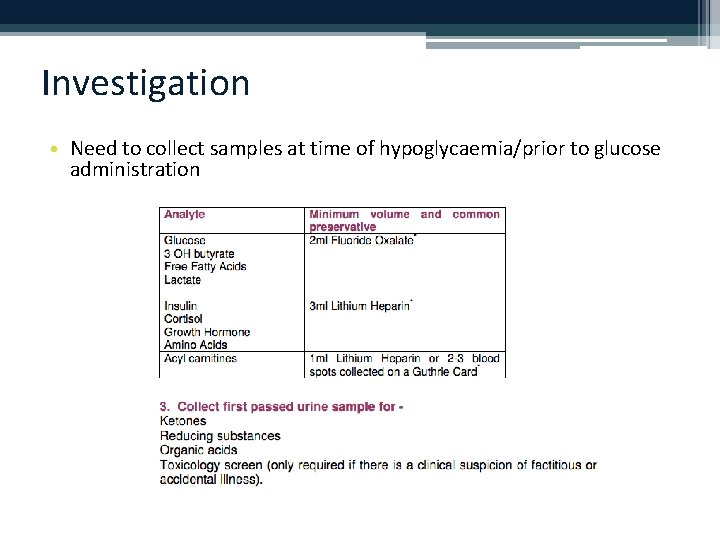
Investigation • Need to collect samples at time of hypoglycaemia/prior to glucose administration
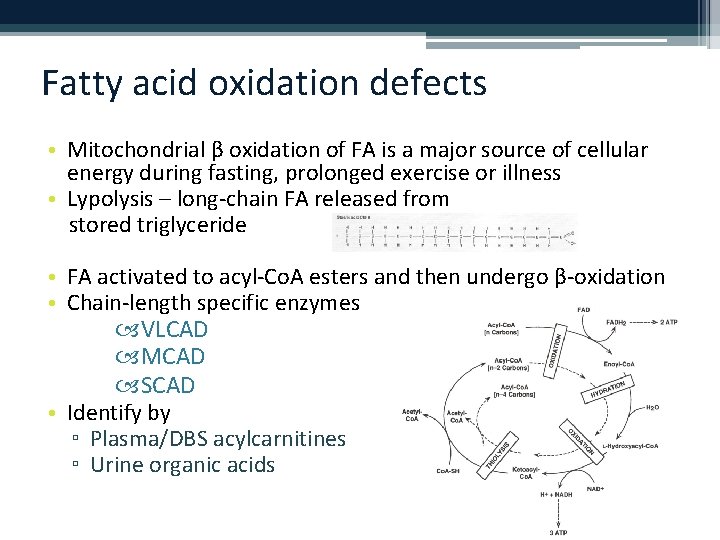
Fatty acid oxidation defects • Mitochondrial β oxidation of FA is a major source of cellular energy during fasting, prolonged exercise or illness • Lypolysis – long-chain FA released from stored triglyceride • FA activated to acyl-Co. A esters and then undergo β-oxidation • Chain-length specific enzymes VLCAD MCAD SCAD • Identify by ▫ Plasma/DBS acylcarnitines ▫ Urine organic acids
Hyperammonaemia
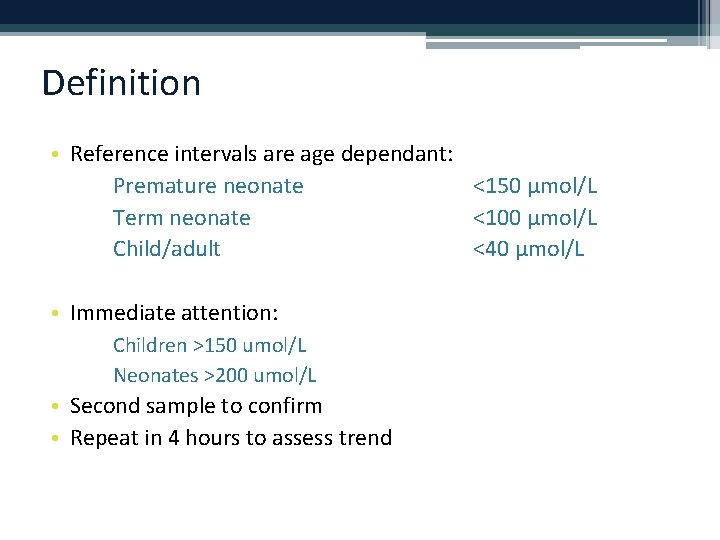
Definition • Reference intervals are age dependant: Premature neonate <150 µmol/L Term neonate <100 µmol/L Child/adult <40 µmol/L • Immediate attention: Children >150 umol/L Neonates >200 umol/L • Second sample to confirm • Repeat in 4 hours to assess trend
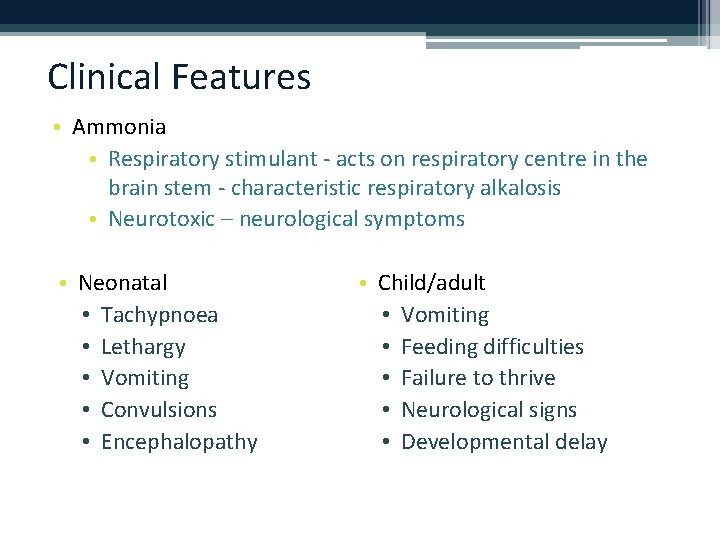
Clinical Features • Ammonia • Respiratory stimulant - acts on respiratory centre in the brain stem - characteristic respiratory alkalosis • Neurotoxic – neurological symptoms • Neonatal • Tachypnoea • Lethargy • Vomiting • Convulsions • Encephalopathy • Child/adult • Vomiting • Feeding difficulties • Failure to thrive • Neurological signs • Developmental delay
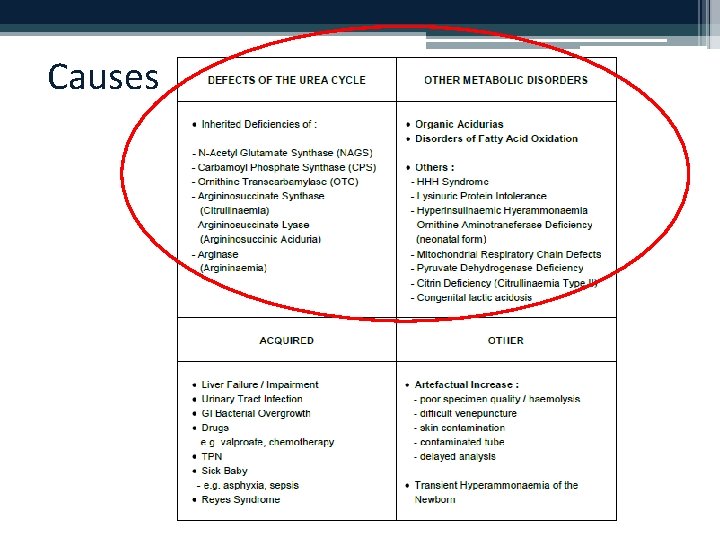
Causes
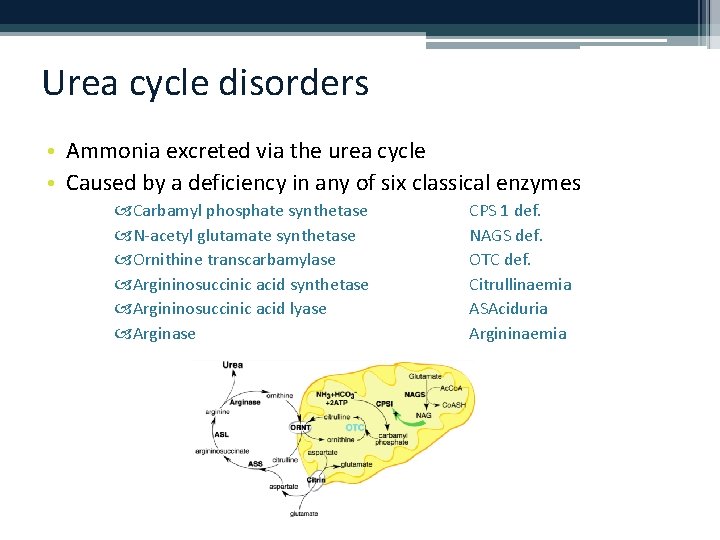
Urea cycle disorders • Ammonia excreted via the urea cycle • Caused by a deficiency in any of six classical enzymes Carbamyl phosphate synthetase N-acetyl glutamate synthetase Ornithine transcarbamylase Argininosuccinic acid synthetase Argininosuccinic acid lyase Arginase CPS 1 def. NAGS def. OTC def. Citrullinaemia ASAciduria Argininaemia
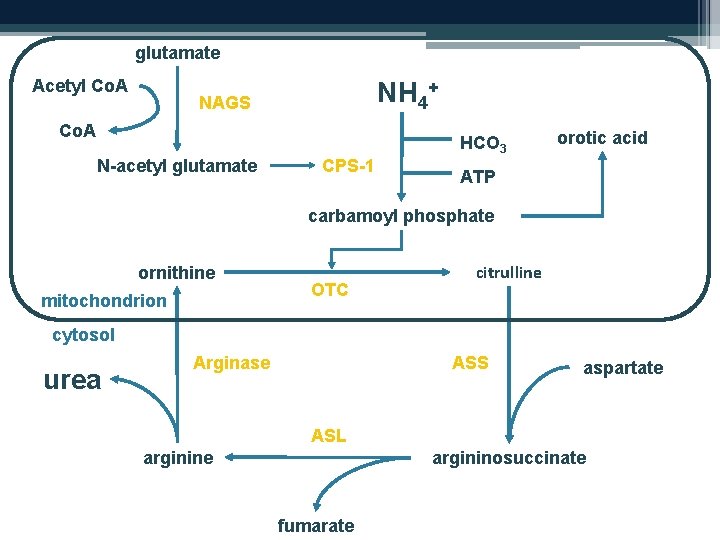
glutamate Acetyl Co. A NH 4+ NAGS Co. A N-acetyl glutamate CPS-1 HCO 3 orotic acid ATP carbamoyl phosphate ornithine mitochondrion ’ OTC citrulline cytosol urea Arginase ASS aspartate ASL arginine argininosuccinate fumarate
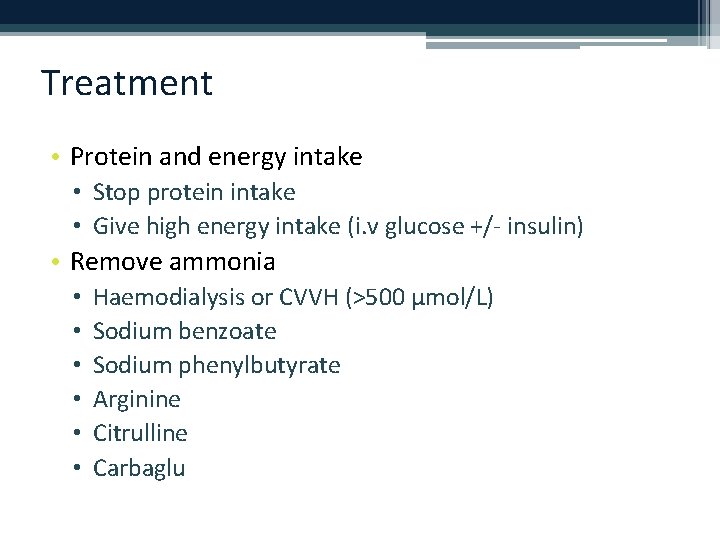
Treatment • Protein and energy intake • Stop protein intake • Give high energy intake (i. v glucose +/- insulin) • Remove ammonia • • • Haemodialysis or CVVH (>500 µmol/L) Sodium benzoate Sodium phenylbutyrate Arginine Citrulline Carbaglu
Lactic acidosis
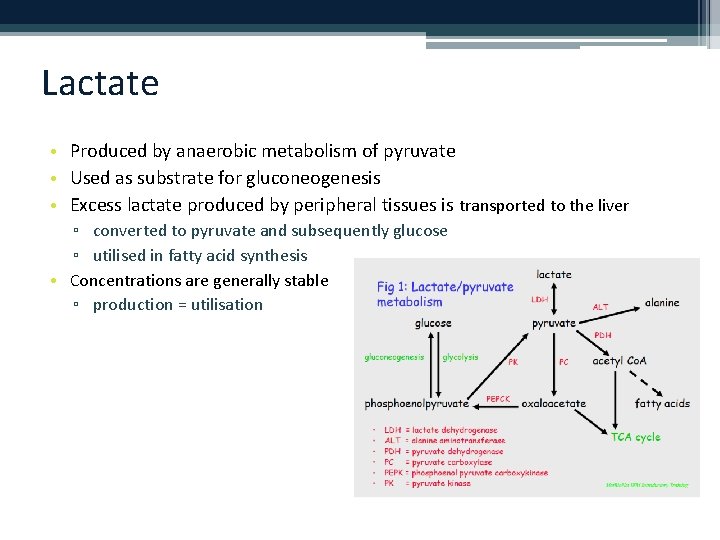
Lactate • Produced by anaerobic metabolism of pyruvate • Used as substrate for gluconeogenesis • Excess lactate produced by peripheral tissues is transported to the liver ▫ converted to pyruvate and subsequently glucose ▫ utilised in fatty acid synthesis • Concentrations are generally stable ▫ production = utilisation
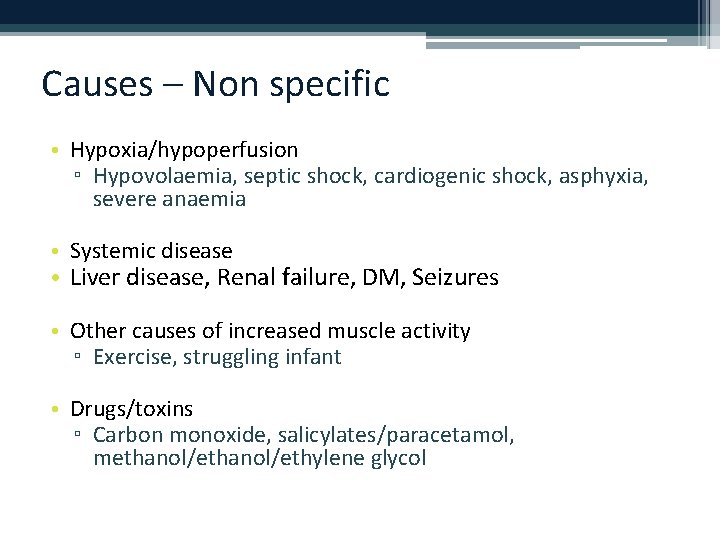
Causes – Non specific • Hypoxia/hypoperfusion ▫ Hypovolaemia, septic shock, cardiogenic shock, asphyxia, severe anaemia • Systemic disease • Liver disease, Renal failure, DM, Seizures • Other causes of increased muscle activity ▫ Exercise, struggling infant • Drugs/toxins ▫ Carbon monoxide, salicylates/paracetamol, methanol/ethylene glycol
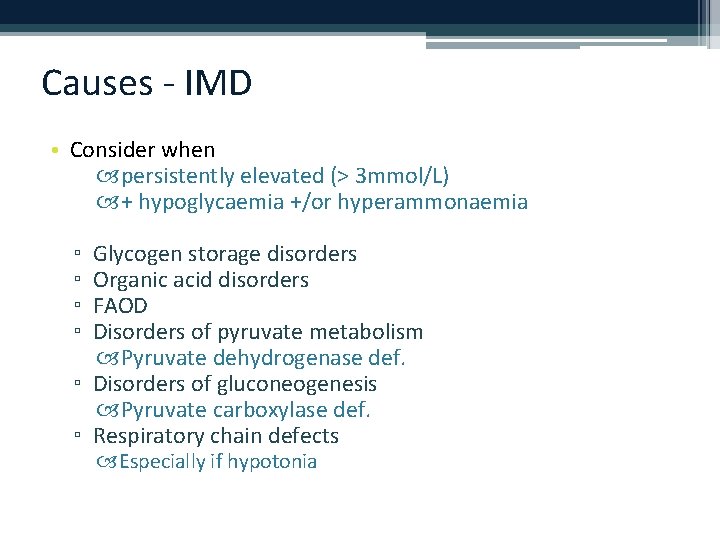
Causes - IMD • Consider when persistently elevated (> 3 mmol/L) + hypoglycaemia +/or hyperammonaemia Glycogen storage disorders Organic acid disorders FAOD Disorders of pyruvate metabolism Pyruvate dehydrogenase def. ▫ Disorders of gluconeogenesis Pyruvate carboxylase def. ▫ Respiratory chain defects ▫ ▫ Especially if hypotonia
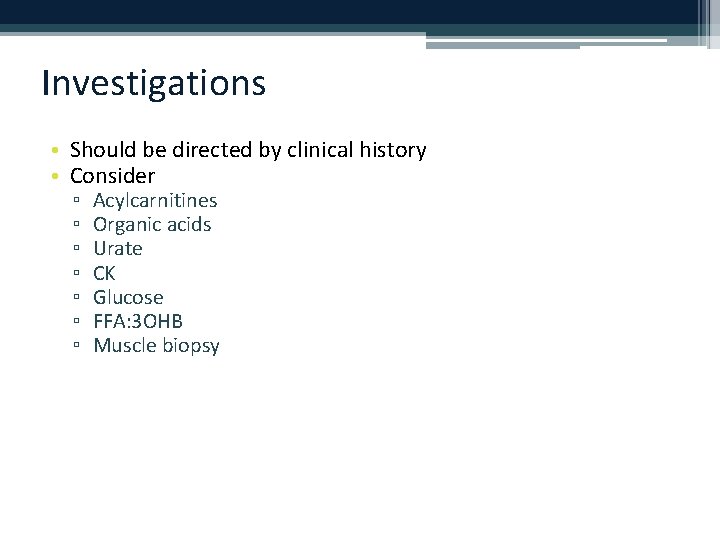
Investigations • Should be directed by clinical history • Consider ▫ ▫ ▫ ▫ Acylcarnitines Organic acids Urate CK Glucose FFA: 3 OHB Muscle biopsy
Hyperbilirubinaemia
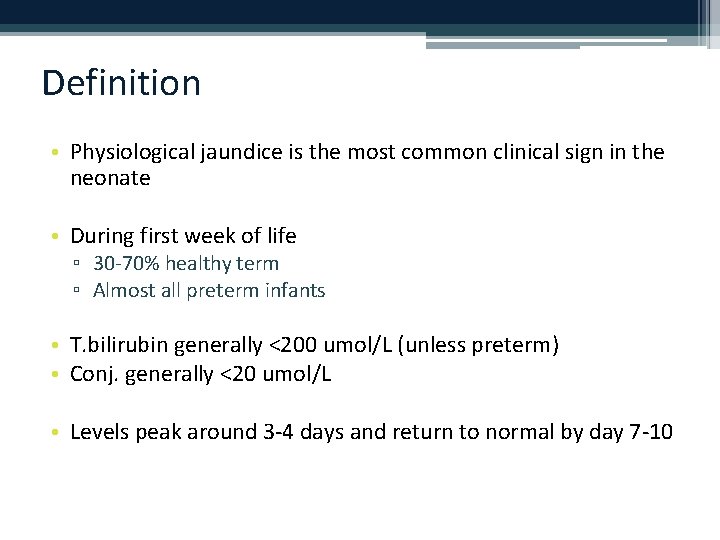
Definition • Physiological jaundice is the most common clinical sign in the neonate • During first week of life ▫ 30 -70% healthy term ▫ Almost all preterm infants • T. bilirubin generally <200 umol/L (unless preterm) • Conj. generally <20 umol/L • Levels peak around 3 -4 days and return to normal by day 7 -10
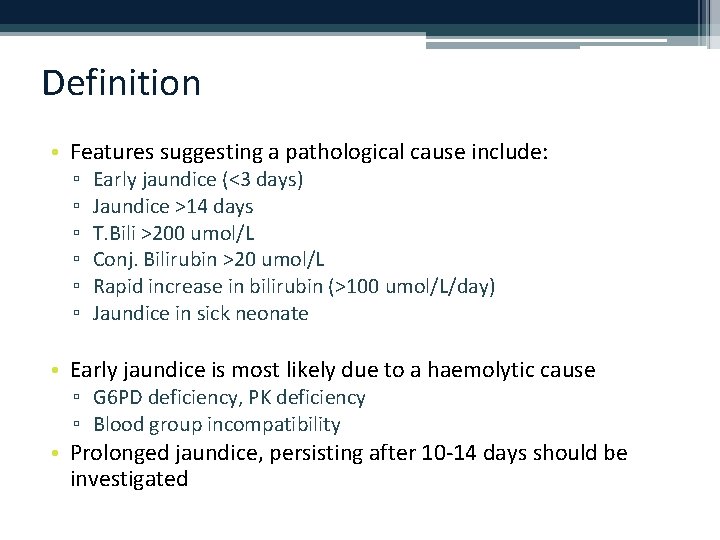
Definition • Features suggesting a pathological cause include: ▫ ▫ ▫ Early jaundice (<3 days) Jaundice >14 days T. Bili >200 umol/L Conj. Bilirubin >20 umol/L Rapid increase in bilirubin (>100 umol/L/day) Jaundice in sick neonate • Early jaundice is most likely due to a haemolytic cause ▫ G 6 PD deficiency, PK deficiency ▫ Blood group incompatibility • Prolonged jaundice, persisting after 10 -14 days should be investigated
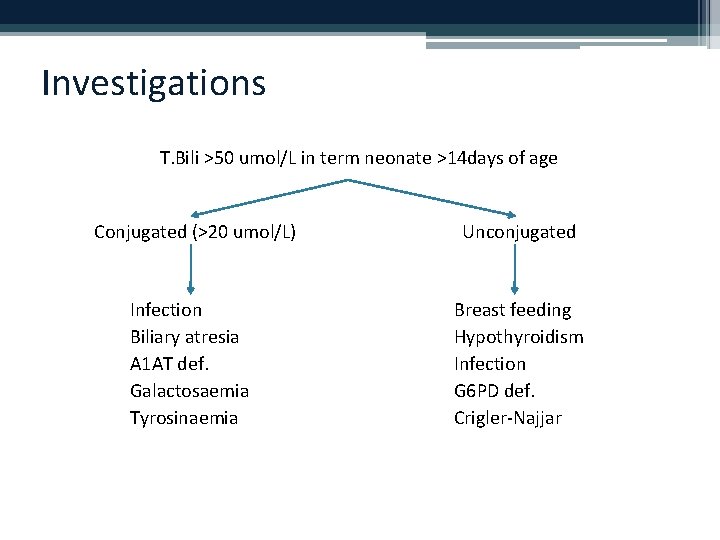
Investigations T. Bili >50 umol/L in term neonate >14 days of age Conjugated (>20 umol/L) Unconjugated Infection Biliary atresia A 1 AT def. Galactosaemia Tyrosinaemia Breast feeding Hypothyroidism Infection G 6 PD def. Crigler-Najjar
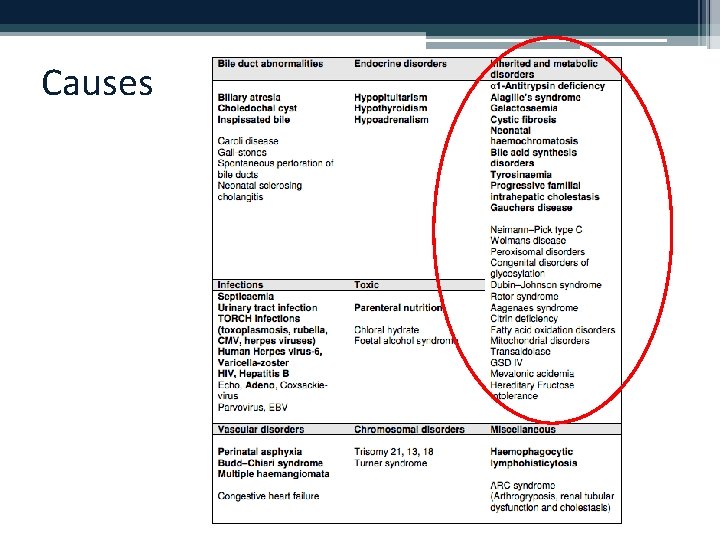
Causes
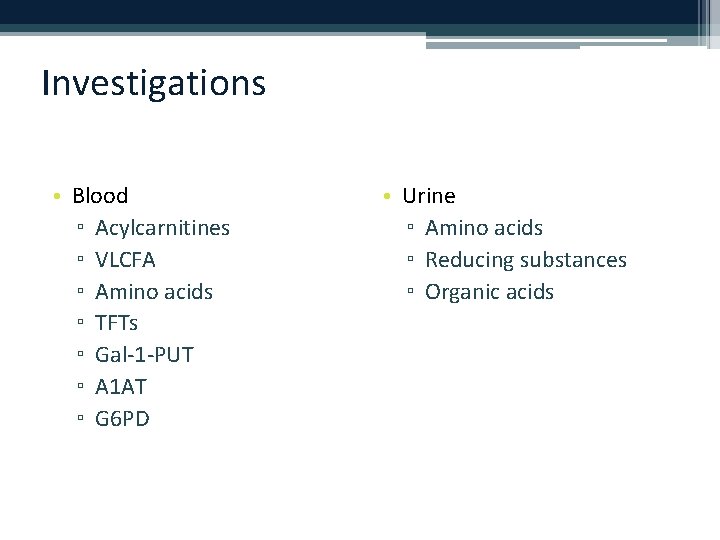
Investigations • Blood ▫ Acylcarnitines ▫ VLCFA ▫ Amino acids ▫ TFTs ▫ Gal-1 -PUT ▫ A 1 AT ▫ G 6 PD • Urine ▫ Amino acids ▫ Reducing substances ▫ Organic acids
Specialist metabolic investigations
Specialist metabolic investigations • • Organic acids (urine) Amino acids (plasma/urine/CSF) Acylcarnitines (plasma/DBS) Urine reducing substances Intermediary metabolites Glycosaminoglycans/Oligosaccharide (Urine) Gal-1 -PUT (erythrocytes) • Specific enzymes ▫ Leukocyte ▫ Skin ▫ Fibroblasts ▫ Liver • Mutation analysis
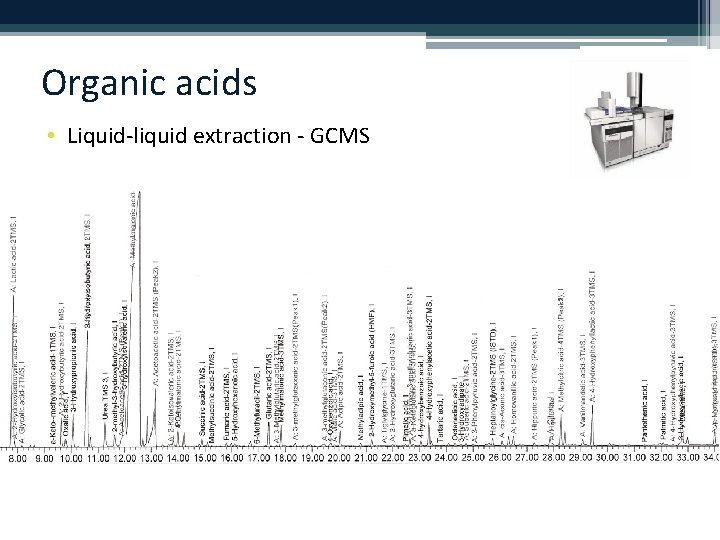
Organic acids • Liquid-liquid extraction - GCMS
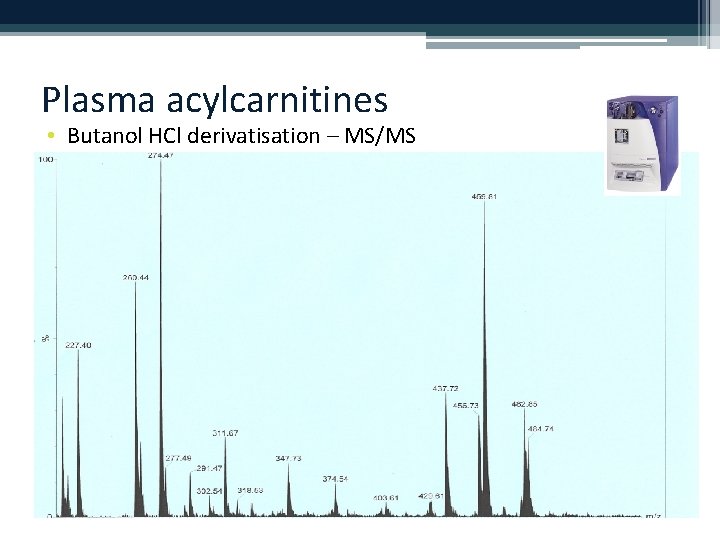
Plasma acylcarnitines • Butanol HCl derivatisation – MS/MS
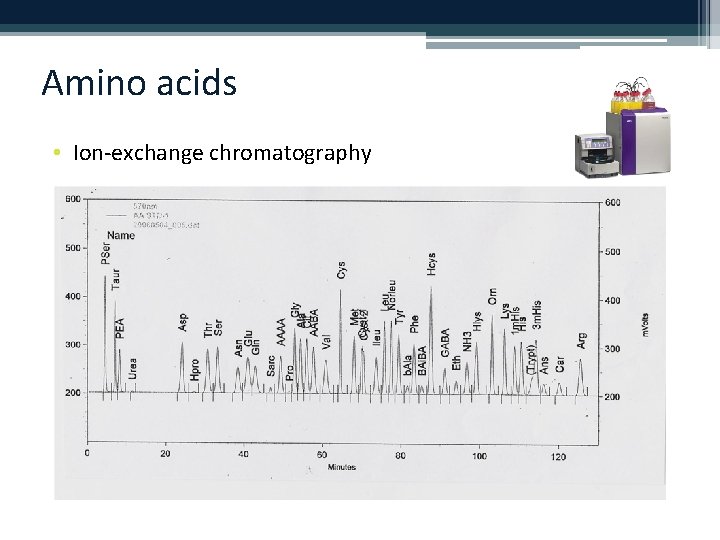
Amino acids • Ion-exchange chromatography
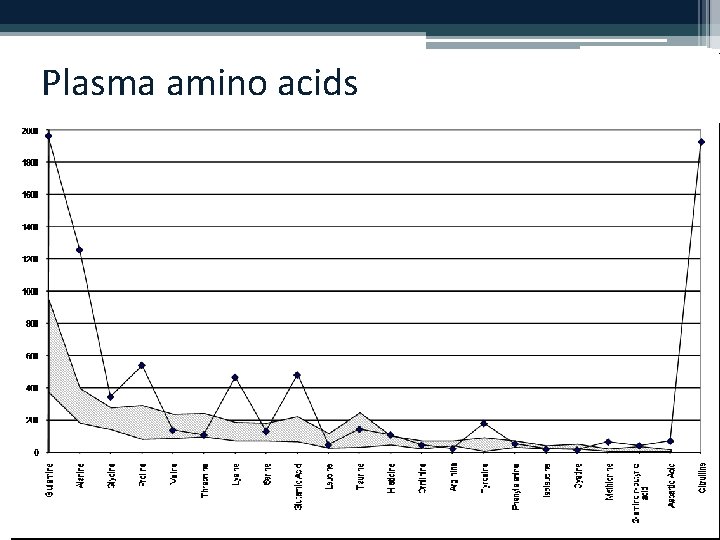
Plasma amino acids
Newborn Screening
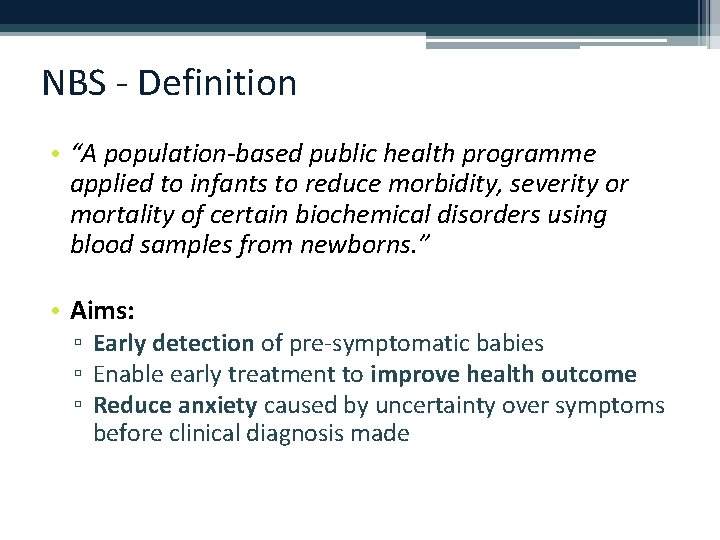
NBS - Definition • “A population-based public health programme applied to infants to reduce morbidity, severity or mortality of certain biochemical disorders using blood samples from newborns. ” • Aims: ▫ Early detection of pre-symptomatic babies ▫ Enable early treatment to improve health outcome ▫ Reduce anxiety caused by uncertainty over symptoms before clinical diagnosis made
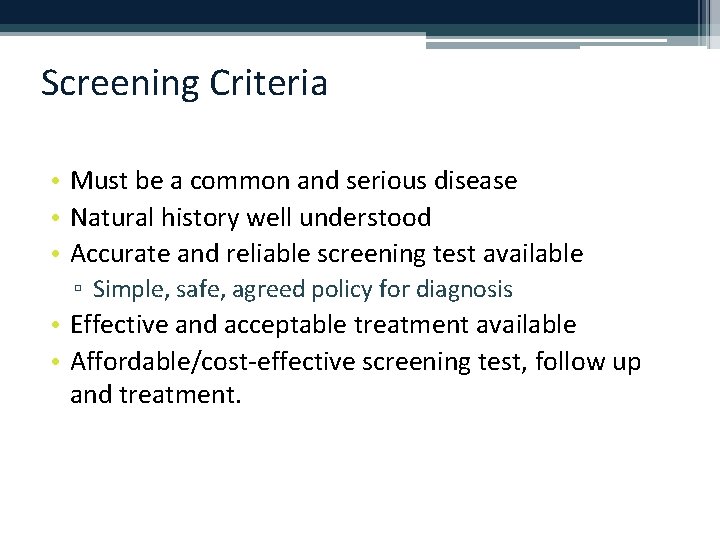
Screening Criteria • Must be a common and serious disease • Natural history well understood • Accurate and reliable screening test available ▫ Simple, safe, agreed policy for diagnosis • Effective and acceptable treatment available • Affordable/cost-effective screening test, follow up and treatment.
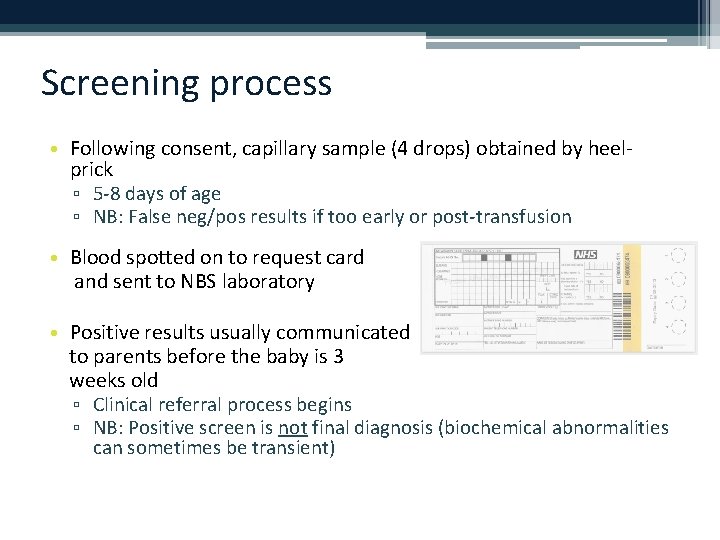
Screening process • Following consent, capillary sample (4 drops) obtained by heelprick ▫ 5 -8 days of age ▫ NB: False neg/pos results if too early or post-transfusion • Blood spotted on to request card and sent to NBS laboratory • Positive results usually communicated to parents before the baby is 3 weeks old ▫ Clinical referral process begins ▫ NB: Positive screen is not final diagnosis (biochemical abnormalities can sometimes be transient)
What is screened for? • Standard NBS programme ▫ ▫ ▫ Phenylketonuria (PKU) Congenital hypothyroidism (CHT) Sickle cell disease (SCD) Cystic fibrosis (CF) Medium-chain acyl-Co. A dehydrogenase deficiency (MCADD) All babies screened for in England, Wales, Scotland NI
Phenylketonuria (PKU) • Phenylalanine hydroxylase deficiency: Unable to metabolise phenylalanine: Phenylalanine Tyrosine • Affects approximately 1 in 10, 000 babies in UK • Inherited condition – carriers not identified • Untreated babies develop serious, irreversible, mental disability (Phe passes B-B barrier) • Clinical features: Blonde hair, blue eyes (Tyr needed for melanin) • Screening Test: ▫ Phenylalanine by MS-MS • Treatment: ▫ Strictly controlled diet (low Phe content) - prevents disability ▫ Should be start by 21 days of age
Congenital Hypothyroidism (CHT) Reduced function of thyroid gland from birth: Inadequate thyroxine Affects approximately 1 in 3, 000 babies in UK 1 in 10 cases are inherited – carriers not identified Untreated babies develop serious, permanent, physical and mental disability • Clinical features: Generally lethargic, slow feeding etc… • Screening Test: DBS TSH (and FT 4) by immunoassay • Treatment: ▫ Early institution of thyroxine tablets - prevents disability ▫ Should start by 21 days of age • •
Cystic Fibrosis (CF) • Mutation in CF transmembrane conductance regulator (CFTR) gene: regulates transport of Cl- ions and H 2 O across cell membranes • Affects approximately 1 in 2, 500 babies in UK • Inherited condition – some carriers identified. • Clinical features: ▫ Thick secretions from membranes that produce mucus, sweat, saliva and digestive enzymes ▫ Poor digestion (exocrine pancreatic insufficiency): Steatorrhea, FTT ▫ Lung disease (infections) • Screening Test: ▫ DBS Immunoreactive trypsinogen (IRT) by immunoassay ▫ DNA analysis for CF mutations, Sweat testing • Treatment: May improve health, cannot prevent progression of condition ▫ Diet - Energy, fat-sol vits, essential FAs ▫ Medication - Panc. Supplements, antibiotics, inhaled/aerosol t’ment ▫ Physiotherapy – Remove mucus
Sickle cell disease (SCD) Mutation in β-globin gene of Hb – produces Sickle Cell Hb (Hb. S) Affects approximately 1 in 2, 000 babies in UK Inherited condition – some carriers identified Clinical features: ▫ Red blood cells become sickle shaped ▫ Pain, tissue damage, infection and even death • Screening Test: ▫ Hb. S by cation-exchange HPLC and Iso-electric focussing (confirmation) • Treatment/management: ▫ Immunisations (e. g. pneumococcal vaccine), antibiotics (prophylactic) ▫ Parent education, genetic counselling ▫ Treatment should be started by 2 months of age ▫ Early treatment improves health and prevents death • •
MCADD • Medium-chain acyl-Co. A dehydrogenase deficiency • Commonest FAOD - 1 in 10, 000 • Peak age clinical presentation 12 -18 months 25% die during first attack • Screening began Oct 2003 • Clinical Presentation: Normally follows excessive period of fasting Lethargy, nausea, vomiting Acidosis, hyperammonaemia Hypoketotic hypoglycaemia FFA: 3 OHB >2 (able to liberate free fatty acids but unable to oxidise them)
MCADD • Biochemical features: Plasma/DBS AC by MS-MS: C 8 (octanoyl), C 6, ratio C 8/C 10 Urine OA: C 6 -C 10 dicarboxylic acids & glycine conjugates • Treatment: Avoid fasting Dietary management during inter-current illness Emergency regime High caloric supplement IV 10% dextrose if feeds not tolerated Advice on exercise Uncooked cornstarch
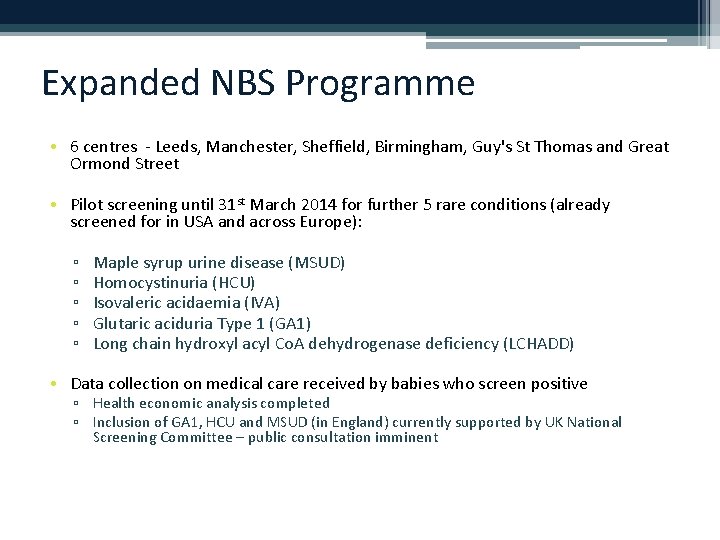
Expanded NBS Programme • 6 centres - Leeds, Manchester, Sheffield, Birmingham, Guy's St Thomas and Great Ormond Street • Pilot screening until 31 st March 2014 for further 5 rare conditions (already screened for in USA and across Europe): ▫ ▫ ▫ Maple syrup urine disease (MSUD) Homocystinuria (HCU) Isovaleric acidaemia (IVA) Glutaric aciduria Type 1 (GA 1) Long chain hydroxyl acyl Co. A dehydrogenase deficiency (LCHADD) • Data collection on medical care received by babies who screen positive ▫ Health economic analysis completed ▫ Inclusion of GA 1, HCU and MSUD (in England) currently supported by UK National Screening Committee – public consultation imminent
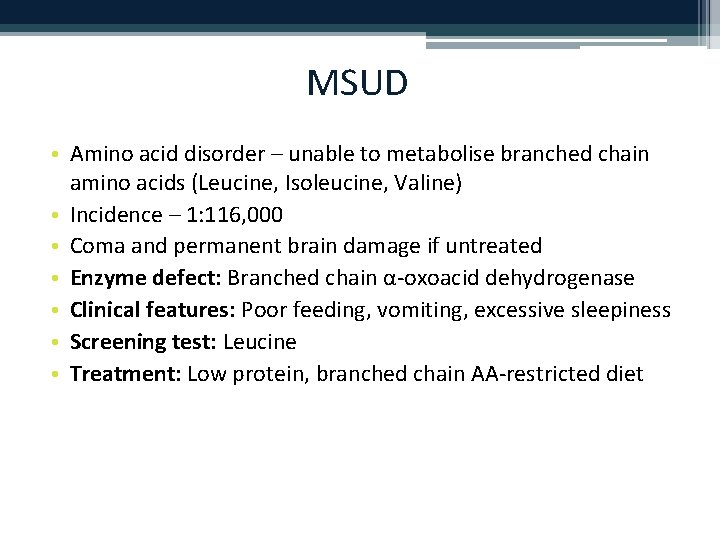
MSUD • Amino acid disorder – unable to metabolise branched chain amino acids (Leucine, Isoleucine, Valine) • Incidence – 1: 116, 000 • Coma and permanent brain damage if untreated • Enzyme defect: Branched chain α-oxoacid dehydrogenase • Clinical features: Poor feeding, vomiting, excessive sleepiness • Screening test: Leucine • Treatment: Low protein, branched chain AA-restricted diet
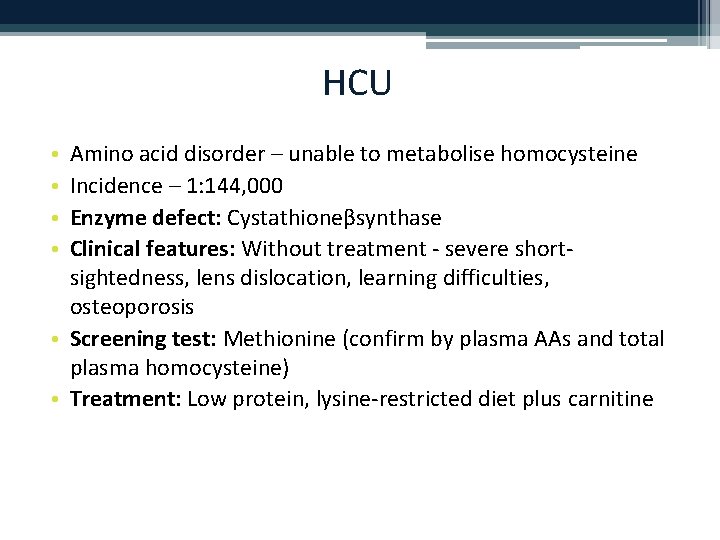
HCU Amino acid disorder – unable to metabolise homocysteine Incidence – 1: 144, 000 Enzyme defect: Cystathioneβsynthase Clinical features: Without treatment - severe shortsightedness, lens dislocation, learning difficulties, osteoporosis • Screening test: Methionine (confirm by plasma AAs and total plasma homocysteine) • Treatment: Low protein, lysine-restricted diet plus carnitine • •
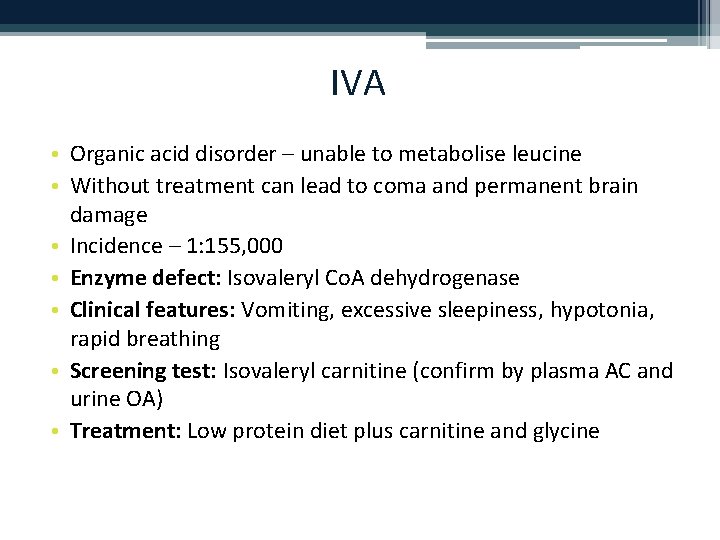
IVA • Organic acid disorder – unable to metabolise leucine • Without treatment can lead to coma and permanent brain damage • Incidence – 1: 155, 000 • Enzyme defect: Isovaleryl Co. A dehydrogenase • Clinical features: Vomiting, excessive sleepiness, hypotonia, rapid breathing • Screening test: Isovaleryl carnitine (confirm by plasma AC and urine OA) • Treatment: Low protein diet plus carnitine and glycine
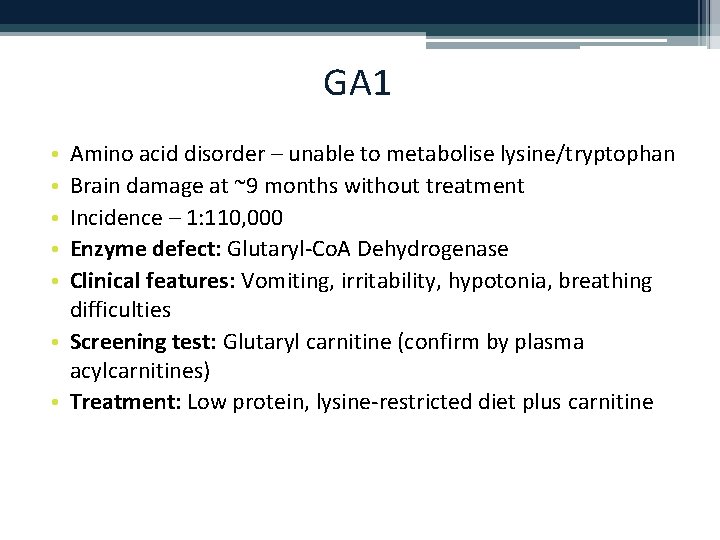
GA 1 Amino acid disorder – unable to metabolise lysine/tryptophan Brain damage at ~9 months without treatment Incidence – 1: 110, 000 Enzyme defect: Glutaryl-Co. A Dehydrogenase Clinical features: Vomiting, irritability, hypotonia, breathing difficulties • Screening test: Glutaryl carnitine (confirm by plasma acylcarnitines) • Treatment: Low protein, lysine-restricted diet plus carnitine • • •
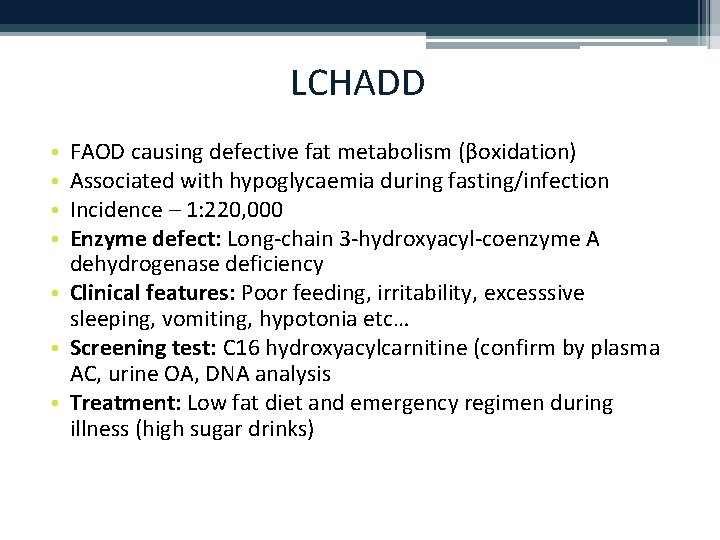
LCHADD FAOD causing defective fat metabolism (βoxidation) Associated with hypoglycaemia during fasting/infection Incidence – 1: 220, 000 Enzyme defect: Long-chain 3 -hydroxyacyl-coenzyme A dehydrogenase deficiency • Clinical features: Poor feeding, irritability, excesssive sleeping, vomiting, hypotonia etc… • Screening test: C 16 hydroxyacylcarnitine (confirm by plasma AC, urine OA, DNA analysis • Treatment: Low fat diet and emergency regimen during illness (high sugar drinks) • •
Further Reading • Books: ▫ Neonatology and Laboratory Medicine, Chpt 10 (Anne Green, ACB Venture publications 2003) • Useful links: ▫ National Metabolic Biochemistry Network (Met. Bio. Net): http: //www. metbio. net/metbio. Home. asp Best practice guidelines Met. Bio guidelines ▫ NBS Website: http: //newbornbloodspot. screening. nhs. uk/professionals ▫ Expanded NBS Website: http: //www. expandedscreening. org/site/home/start. asp
- Slides: 58